Dog Food

This category covers healthy dog food, diet tips, and safe foods for dogs

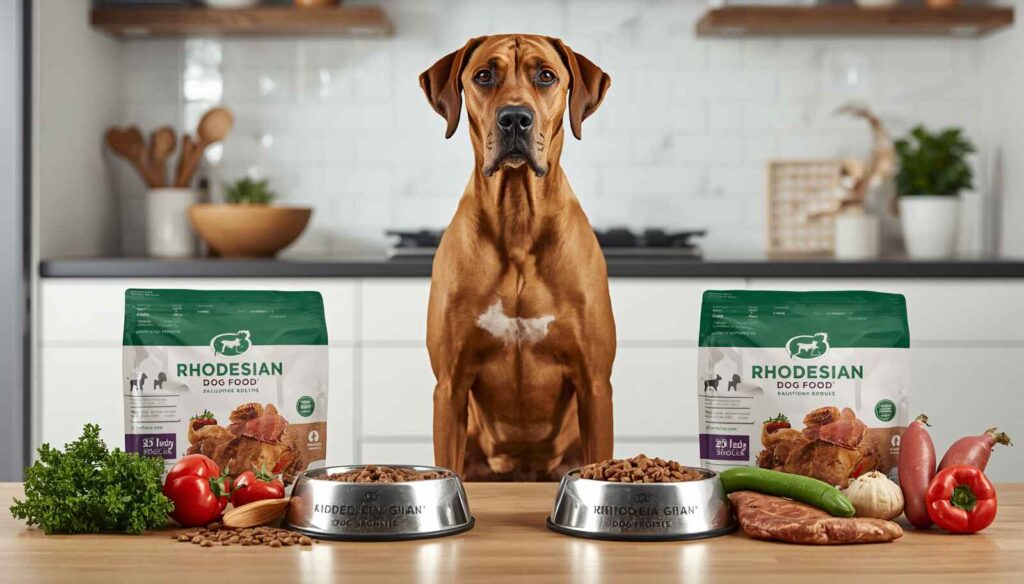
Healthy Rhodesian Ridgeback standing beside premium dog food and healthy ingredients

Best Dog Food for Rhodesian Ridgebacks: How to Choose by Age, Health and Activity

Best Dog Food for Rhodesian Ridgeback owners is not one universal product. The right choice depends on your dog’s age, activity level, body condition, digestive tolerance and overall health. A growing puppy needs a nutritionally complete large-breed growth formula with appropriately controlled calcium and energy. A healthy adult needs enough protein and calories to maintain

Best Dog Food for Rhodesian Ridgebacks: How to Choose by Age, Health and Activity Read More »

Best dog food for acid reflux comparison with a veterinarian helping a dog owner choose a suitable low-fat diet.

Best Dog Food for Acid Reflux: How to Choose the Right Diet Safely

Best dog food for acid reflux is not necessarily one particular brand or recipe. If your dog keeps licking their lips after meals, swallowing repeatedly, or bringing food back up, it may be tempting to assume reflux is the cause and immediately switch foods. However, these signs do not confirm acid reflux on their own.

Best Dog Food for Acid Reflux: How to Choose the Right Diet Safely Read More »

Curious dog beside a bowl of almonds in a clean kitchen setting

Can Dogs Eat Almonds? A Real-World Risk Guide for Worried Owners

You are halfway through a snack when one almond disappears from the table. Your dog swallows it, carries on wagging their tail, and seems completely unconcerned. Meanwhile, you are left wondering whether this is harmless or an emergency. Here is the practical answer: ordinary sweet almonds are not considered directly toxic to dogs in the

Can Dogs Eat Almonds? A Real-World Risk Guide for Worried Owners Read More »

Happy dog beside fresh watermelon slices in a bright summer setting

Can Dogs Have Watermelon? A Practical, Part-by-Part Guide

Can dogs have watermelon? Yes, most healthy dogs can enjoy a small amount of plain watermelon flesh as an occasional treat, but the rind, seeds, portion size, and your dog’s individual health all matter. Watermelon season and dog ownership often collide on the same afternoon: you’re halfway through a slice on the patio, and your

Can Dogs Have Watermelon? A Practical, Part-by-Part Guide Read More »

Dog sitting beside colorful bell peppers in a clean kitchen setting

Can Dogs Eat Peppers? What Every Owner Needs to Know Before Sharing

Can dogs eat peppers? Plain bell peppers can be an occasional treat for most healthy dogs, but hot peppers such as jalapeños and chillies are best avoided. You’re chopping peppers for dinner, your dog is doing that hopeful hover by your ankles, and a piece hits the floor before you’ve really thought it through. Then

Can Dogs Eat Peppers? What Every Owner Needs to Know Before Sharing Read More »

Healthy dog sitting beside a small bowl of plain green peas in a kitchen

Can Dogs Eat Peas? A Complete, Practical Guide for Owners

Can dogs eat peas? Yes, most healthy dogs can eat plain peas in small amounts. But before you toss a few from your dinner plate, it’s worth checking what you’re actually holding—because “peas” can mean several different foods and preparations. Whether they’re a sensible choice depends on four things: the type of pea, how it

Can Dogs Eat Peas? A Complete, Practical Guide for Owners Read More »

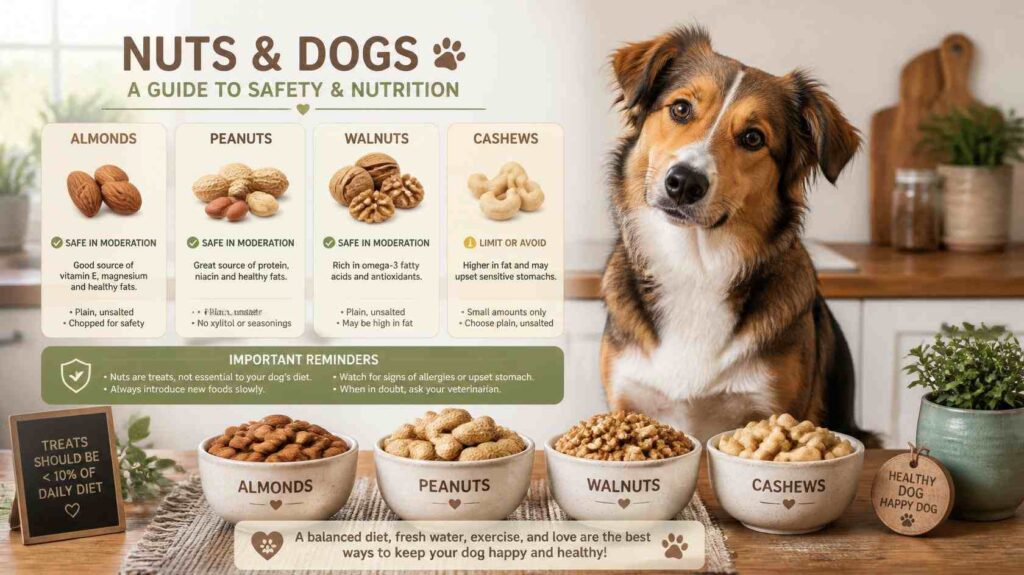
Can dogs eat nuts safely while sitting beside almonds peanuts walnuts and cashews on a table

Can Dogs Eat Nuts? A Complete Safety Guide for Worried Owners

Can dogs eat nuts? The answer depends on the type of nut, the amount eaten, your dog’s size and health, and whether the product contains dangerous ingredients such as chocolate, raisins, xylitol, salt, or seasoning. You’re halfway through a bowl of mixed nuts on a Saturday afternoon when a few roll off the coffee table

Can Dogs Eat Nuts? A Complete Safety Guide for Worried Owners Read More »