Your dog has just stolen a few strands of spaghetti from your plate. Should you panic, keep an eye on them, or call your vet?
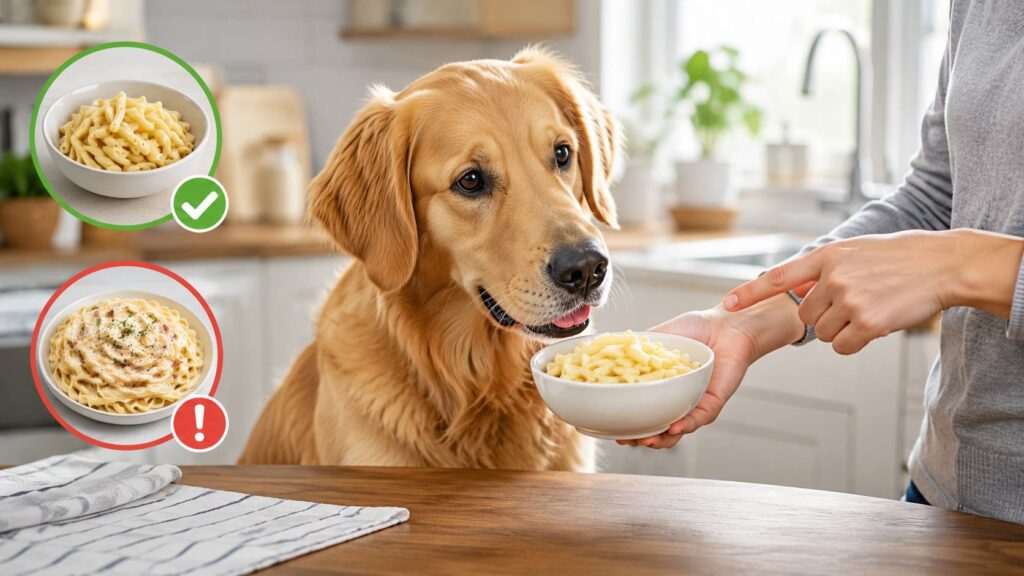
The answer usually depends less on the pasta itself and more on what was served with it, how much your dog ate, and your dog’s size and health. A few pieces of plain, cooked pasta are very different from a bowl of carbonara, Bolognese, or garlic pasta.
For most healthy dogs, a small amount of plain, fully cooked pasta is unlikely to cause harm. However, sauces, seasonings, fatty ingredients, and oversized portions can quickly change the level of risk.
The First Question Isn’t “Can Dogs Eat Pasta?” — It’s “What Exactly Did They Eat?”
Before deciding what to do, identify which type of exposure you are dealing with:
- Plain cooked pasta: Pasta without sauce, seasoning, oil, or toppings is generally low risk in small amounts.
- Pasta with sauce: Tomato-based and ready-made sauces may contain onion, garlic, excess salt, sugar, or spices.
- Pasta with garlic or onion: These ingredients can be toxic to dogs, including when cooked or used in powdered form.
- Creamy or cheesy pasta: Usually not toxic, but the fat and dairy may cause vomiting, diarrhoea, or abdominal discomfort.
- Instant noodles or ramen: The noodles are not usually the main concern. Seasoning packets can be high in sodium and may contain onion or garlic powder.
Once you know what was in the meal, you can assess the situation more accurately.
The 5-Step Pasta Safety Check
Use these five questions whenever your dog eats pasta, whether it was offered intentionally or stolen from a plate.
Step 1 — Identify Every Ingredient
Check the pasta, sauce, toppings, meat, cheese, stock, seasoning, and any side dishes your dog may also have eaten. Keep the packaging, sauce jar, or recipe if you may need to contact a veterinarian.
Step 2 — Estimate the Amount Eaten
One or two plain noodles are unlikely to affect most healthy dogs. A full bowl, especially one containing rich or toxic ingredients, deserves more caution.
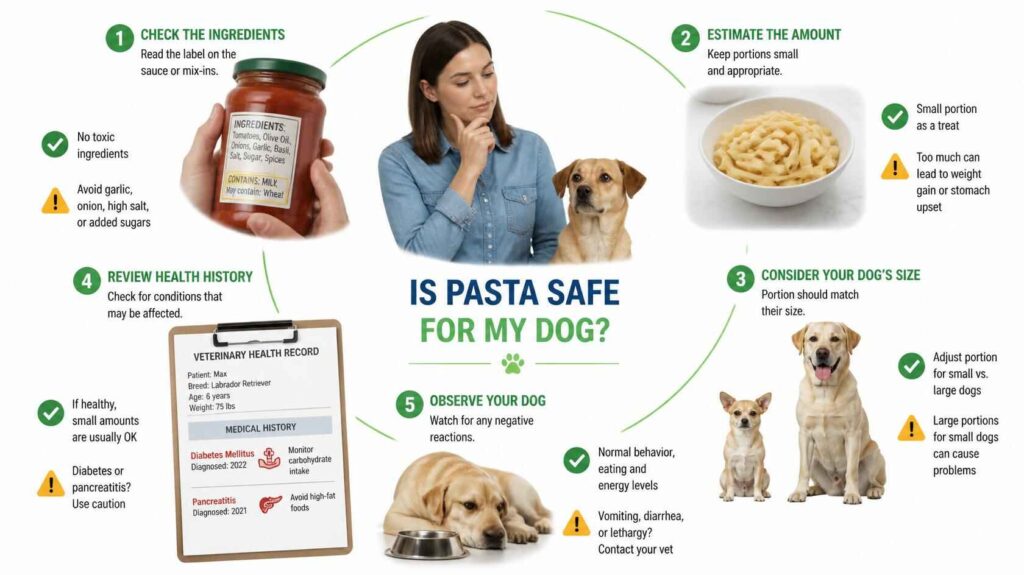
Step 3 — Consider Your Dog’s Size
The same portion represents a much larger exposure for a Chihuahua than for a Labrador. Small dogs can also become dehydrated more quickly if vomiting or diarrhoea develops.
Step 4 — Check for Existing Health Conditions
Pasta dishes may be unsuitable for dogs with:
- Pancreatitis
- Diabetes
- Obesity
- Chronic digestive disease
- Kidney or heart disease
- Food allergies or intolerances
- Prescription diets
- Veterinary elimination diets
Puppies, frail senior dogs, and dogs with swallowing difficulties may also need earlier veterinary advice.
Step 5 — Watch for Symptoms
Monitor your dog for:
- Vomiting
- Diarrhoea
- Excessive gas
- Reduced appetite
- Lethargy
- Abdominal discomfort
- Restlessness
- Pale gums
- Weakness
Do not wait for symptoms before contacting a veterinarian if the pasta contained onion, garlic, leek, chives, or an unknown seasoning mix.
Which Pasta Meals Are Lowest and Highest Risk?
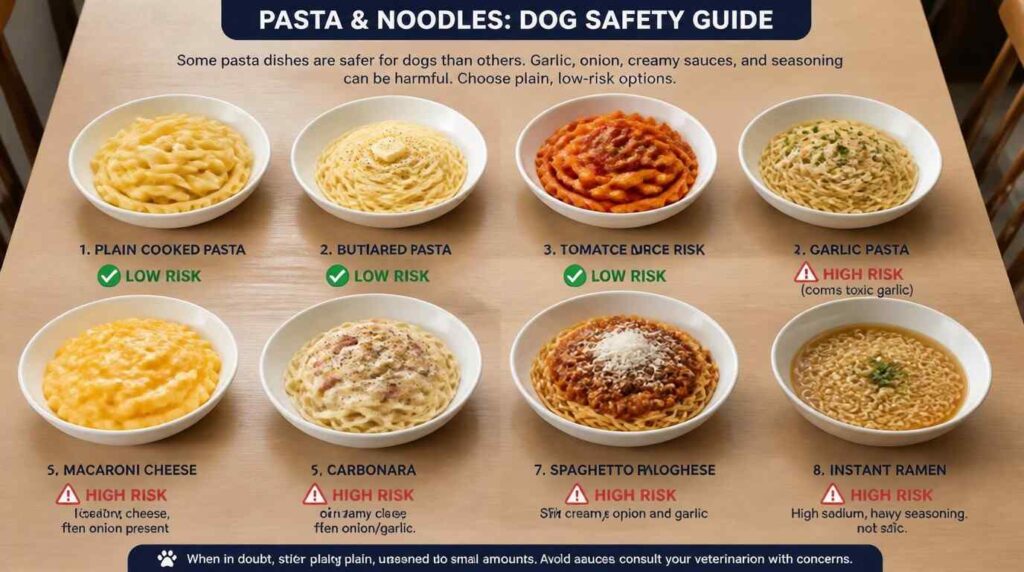
| Pasta meal | Main concern | General risk level | Safe occasionally? | When to contact a vet |
|---|---|---|---|---|
| Plain cooked pasta | Extra calories and little nutritional value | Low | A few pieces may be acceptable for a healthy dog | If vomiting, diarrhoea, choking, or unusual behaviour develops |
| Buttered pasta | Added fat | Low to moderate | Only in a very small amount | If your dog has pancreatitis or develops digestive symptoms |
| Pasta with tomato sauce | Hidden onion, garlic, salt, or spices | Moderate to high | Only when every ingredient is dog-safe | Promptly if onion, garlic, or unknown seasonings are present |
| Garlic pasta | Garlic toxicity | High | No | Contact a veterinarian promptly |
| Macaroni and cheese | Fat, dairy, and salt | Moderate | Best avoided; a small accidental taste may only require monitoring | If a large amount was eaten or symptoms develop |
| Carbonara | High fat, dairy, processed meat, and possible garlic | High | No | Contact a vet, especially for dogs with pancreatitis risk |
| Bolognese | Onion, garlic, salt, and fatty meat | High | No | Contact a veterinarian promptly |
| Pesto pasta | Garlic, oil, cheese, salt, and sometimes nuts | High | No | Contact a vet if more than a tiny amount was eaten or ingredients are uncertain |
| Instant ramen | Sodium and seasoning powders | High | No | If seasoning was eaten, the amount was large, or symptoms appear |
| Ravioli or tortellini | Unknown filling, cheese, meat, garlic, or seasoning | Moderate to high | Only if the full ingredient list is safe | If the filling is unknown or contains unsafe ingredients |
Why Plain Pasta Isn’t Toxic — but Still Isn’t an Ideal Dog Food
Most healthy dogs can digest a small amount of fully cooked pasta. Plain pasta is generally made from wheat flour and water, with some varieties also containing egg.
However, digestible does not mean nutritionally useful.
Pasta mainly provides starch and calories. It does not offer the balanced protein, fats, vitamins, minerals, and other nutrients supplied by a complete dog food. Regular servings can also contribute to weight gain, especially when they are added on top of a dog’s normal meals rather than replacing part of the daily calorie allowance.
Pasta should therefore remain an occasional extra, not:
- A regular meal
- A way to bulk out dog food
- A long-term bland diet
- A routine food for weight gain
- A major part of a homemade diet
Even replacing one complete meal with pasta can leave your dog hungry and nutritionally short-changed. Dogs eating long-term homemade diets need recipes formulated for them by a veterinarian or qualified veterinary nutrition professional—not simply pasta mixed with meat or vegetables. The WSAVA Global Nutrition Guidelines explain why complete and balanced nutrition is essential for dogs.
Which Types of Pasta Change the Risk?
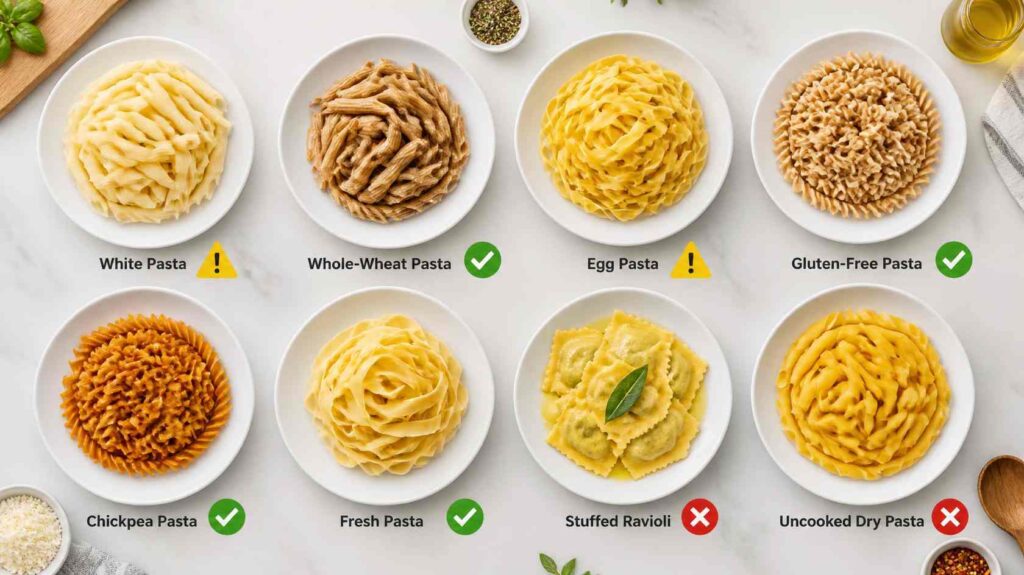
- White pasta: The most common type. A few plain, fully cooked pieces are generally low risk for a healthy dog.
- Whole-wheat pasta: Contains more fibre than white pasta, but it is not a meaningful nutritional upgrade for most dogs and may cause more gas or loose stools in sensitive dogs.
- Egg pasta: Usually tolerated unless your dog has a confirmed egg allergy or sensitivity.
- Gluten-free pasta: May suit a dog with a diagnosed wheat sensitivity, but “gluten-free” does not automatically mean healthier or safer. Check the full ingredient list.
- Chickpea and lentil pasta: Higher in fibre and plant protein, but can cause gas, bloating, or diarrhoea in some dogs.
- Dry, uncooked pasta: Best avoided. Hard pieces may cause choking, gagging, mouth injury, or digestive discomfort, particularly in small dogs or dogs that gulp food.
- Fresh pasta: Often contains egg and may include added salt or oil, so check the label before offering any.
- Stuffed pasta: The filling matters more than the pasta shell. Ravioli and tortellini may contain garlic, onion, cheese, fatty meat, or heavy seasoning.
Pasta Type Comparison
| Pasta type | Digestibility | Main concern | Better choice? | Notes |
|---|---|---|---|---|
| White pasta | Generally good when cooked | Low nutritional value and extra calories | Neutral | Fine only as an occasional, plain extra |
| Whole-wheat pasta | Generally good | Extra fibre may upset sensitive stomachs | Not necessarily | More fibre does not make it essential |
| Egg pasta | Generally good | Egg sensitivity | Neutral | Check for added salt or oil |
| Gluten-free pasta | Varies by ingredients | Added gums, seasoning, or high-calorie starches | Only when medically appropriate | Read the full label |
| Chickpea or lentil pasta | Variable | Gas, bloating, or loose stools | Not automatically | Introduce cautiously, if at all |
| Dry or uncooked pasta | Poor | Choking, gagging, and digestive discomfort | Avoid | Do not intentionally serve |
| Fresh pasta | Generally good when cooked | Egg, salt, or oil | Neutral | Check the ingredients |
| Stuffed pasta | Varies | Unsafe filling ingredients | Depends | Assess the filling and sauce first |
The Ingredients Beside the Pasta Usually Matter More Than the Pasta
This is where many owners underestimate the risk. The noodles may be plain, but the sauce, seasoning, meat, or topping can completely change the situation.
Garlic and Onion
Garlic, onion, leeks, and chives can damage a dog’s red blood cells and may lead to anaemia. Raw, cooked, dried, and powdered forms all matter. Onion powder and garlic powder in sauces, stock cubes, and seasoning sachets should not be dismissed just because no visible pieces are present.
Butter and Cream
Butter and cream are not toxic, but their high fat content can cause vomiting or diarrhoea and may trigger pancreatitis in susceptible dogs.
Cheese
Cheese adds fat, salt, and calories. Some dogs also develop gas or diarrhoea after eating dairy, although tolerance varies between individuals.
Olive Oil
A small amount is unlikely to harm most healthy dogs, but oil quickly raises the calorie and fat content of a meal.
Processed Meats
Bacon, sausage, pepperoni, and heavily seasoned meatballs are often high in fat and salt. They may also contain onion or garlic.
Spicy Ingredients
Chilli, hot sauces, and strong spices can irritate the mouth and digestive tract, causing drooling, vomiting, diarrhoea, or discomfort.
Store-Bought Sauces
Packaged sauces are unpredictable because they may contain onion powder, garlic powder, stock, salt, sugar, cream, cheese, alcohol, or flavourings. Keep the jar or ingredient label if your dog eats a prepared sauce and you need veterinary advice.
⚠ Foods That Can Turn a Safe Pasta Meal Into a Dangerous One
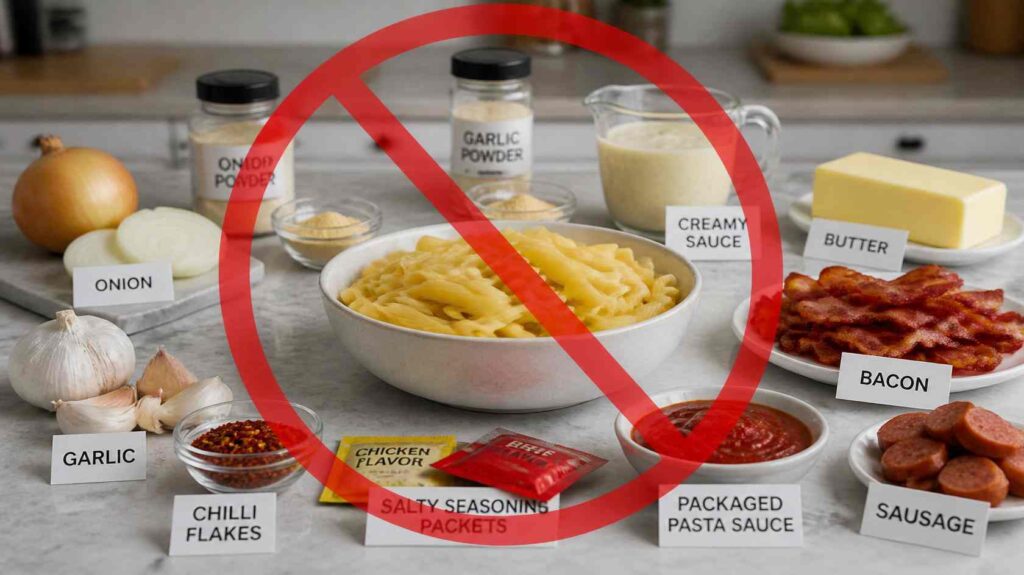
Use extra caution if the dish contains:
- Onion
- Garlic
- Onion or garlic powder
- Leeks or chives
- Stock cubes or seasoning sachets
- Creamy or high-fat sauces
- Processed meat
- Excess salt
- Unknown packaged sauces
Garlic, onion, leeks, and related Allium plants can damage a dog’s red blood cells. The Merck Veterinary Manual explains why these ingredients should never be ignored.
Do not induce vomiting or give home remedies unless a veterinarian or animal poison professional specifically instructs you to do so.
My Dog Already Ate Pasta — How Serious Is It?
One Plain Noodle
Usually a very low-risk exposure for a healthy dog. No special action is normally needed unless choking or unusual symptoms occur.
A Small Bowl of Plain Pasta
Monitor for vomiting, diarrhoea, gas, or reduced appetite. Most dogs that remain bright, comfortable, and symptom-free will not need treatment.
Pasta With Cheese
Mild gas, loose stools, or vomiting may occur because of the fat and dairy. Contact your vet if symptoms are repeated, severe, or your dog has a history of pancreatitis.
Pasta With Garlic or Onion
Contact your veterinarian promptly, even if your dog appears well. The appropriate response depends on the ingredient, amount eaten, time since ingestion, and your dog’s size and health. Some signs of red blood cell damage may be delayed.
An Entire Pasta Dinner
Check every ingredient and monitor closely. A large, rich meal can cause vomiting, diarrhoea, abdominal pain, bloating, or pancreatitis, particularly in small dogs and dogs with previous digestive problems.
Instant Ramen
The seasoning is usually more concerning than the noodles because it may contain large amounts of salt, onion powder, garlic powder, and spices. Contact your vet if the seasoning was eaten, the amount was large, or your dog is small or medically vulnerable.
Monitor at Home or Contact a Vet?
| Situation | Monitor at home | Contact a vet | Emergency care |
|---|---|---|---|
| One or two plain noodles | Usually | If symptoms develop | If choking or breathing difficulty occurs |
| Small bowl of plain pasta | Yes | If vomiting or diarrhoea persists | If severe weakness, collapse, or abdominal swelling occurs |
| Cheesy or creamy pasta | Yes, if only a small amount | If symptoms develop or pancreatitis is a concern | If repeated vomiting, severe pain, or collapse occurs |
| Garlic or onion pasta | No | Promptly, even before symptoms | If weakness, pale gums, breathing difficulty, or collapse develops |
| Full pasta dinner | Only if ingredients are known and dog remains well | If rich, seasoned, or ingredients are uncertain | If severe symptoms occur |
| Instant ramen | Not if seasoning was eaten | Yes, especially for small dogs or large exposures | If collapse, tremors, breathing difficulty, or persistent vomiting occurs |
Some Dogs Need Extra Caution Before Eating Pasta
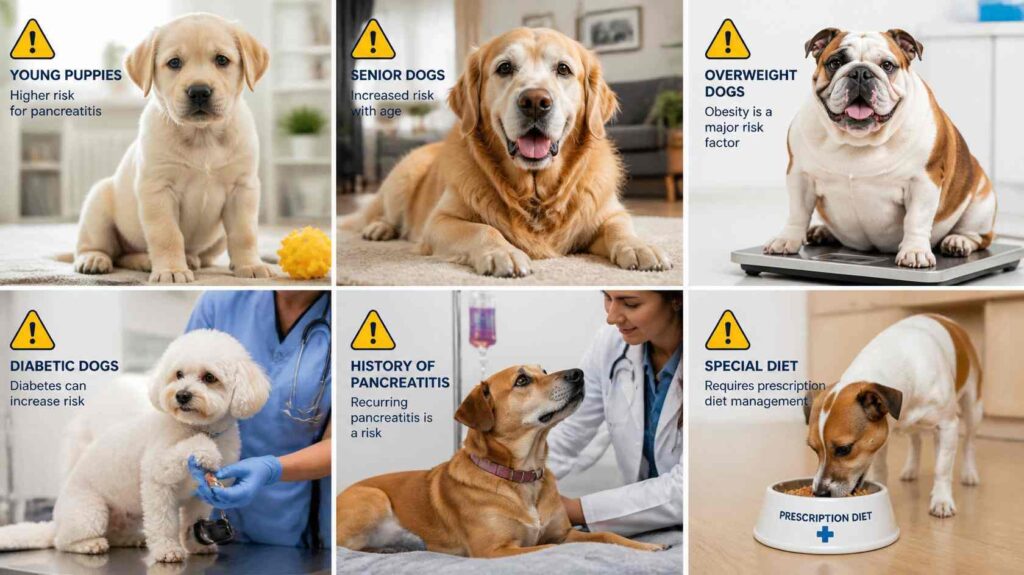
Puppies
Puppies need complete puppy food for healthy growth. Pasta should not displace a nutritionally balanced meal.
Senior Dogs
Older dogs may have lower calorie needs or underlying conditions that make table scraps less appropriate.
Overweight Dogs
Pasta adds calories without offering much nutritional benefit. Regular extras can make weight loss harder.
Diabetic Dogs
Pasta is rich in starch and may interfere with a carefully controlled feeding and insulin routine. Do not add it without veterinary approval.
Dogs With Pancreatitis
Plain pasta is not usually the main concern, but creamy sauces, butter, cheese, oil, and fatty meat can trigger a flare-up. Dogs with a history of pancreatitis should not receive rich pasta dishes.
Dogs on Prescription Diets
Even small unplanned foods can interfere with diets used for allergies, digestive disease, kidney disease, urinary problems, or weight control.
Dogs With Food Allergies
Check for wheat, egg, dairy, and other known triggers. Do not assume a digestive upset proves a wheat allergy; proper diagnosis usually requires a veterinarian-supervised elimination diet.
Vet Advice
A veterinarian will usually need to know:
- Your dog’s weight and age
- Existing medical conditions
- The exact dish eaten
- The complete ingredient list
- The estimated amount
- When it happened
- Any symptoms so far
Keep the packaging, sauce jar, or a photo of the ingredient label. Having these details ready can help the veterinary team assess the risk more quickly.
Common Situations Dog Owners Ask About
- Pasta with chicken: Usually low risk when both the pasta and chicken are plain, fully cooked, and unseasoned. Avoid sauces, stock, skin, bones, butter, and fatty drippings.
- Meatballs: Often contain onion, garlic, salt, breadcrumbs, or seasoning. Check the recipe before sharing.
- Lasagne: Best avoided because it commonly contains onion, garlic, rich cheese, fatty meat, and heavily seasoned sauce.
- Macaroni cheese: A small accidental amount may only cause mild digestive upset, but the fat, salt, and dairy make it unsuitable as a regular treat.
- Spaghetti Bolognese: Usually contains onion, garlic, salt, and fatty mince, so it should not be shared.
- Ravioli and tortellini: Safety depends on the filling and sauce. Cheese, meat, garlic, onion, herbs, and seasoning all need checking.
- Cold leftover pasta: The temperature is not the issue. It may be acceptable if plain, properly stored, and free from unsafe ingredients.
- Pasta for an upset stomach: Pasta is not a universal home remedy. A veterinarian may recommend a specific temporary diet depending on the cause, age, and health of the dog.
Pasta vs Other Common Carbohydrates for Dogs
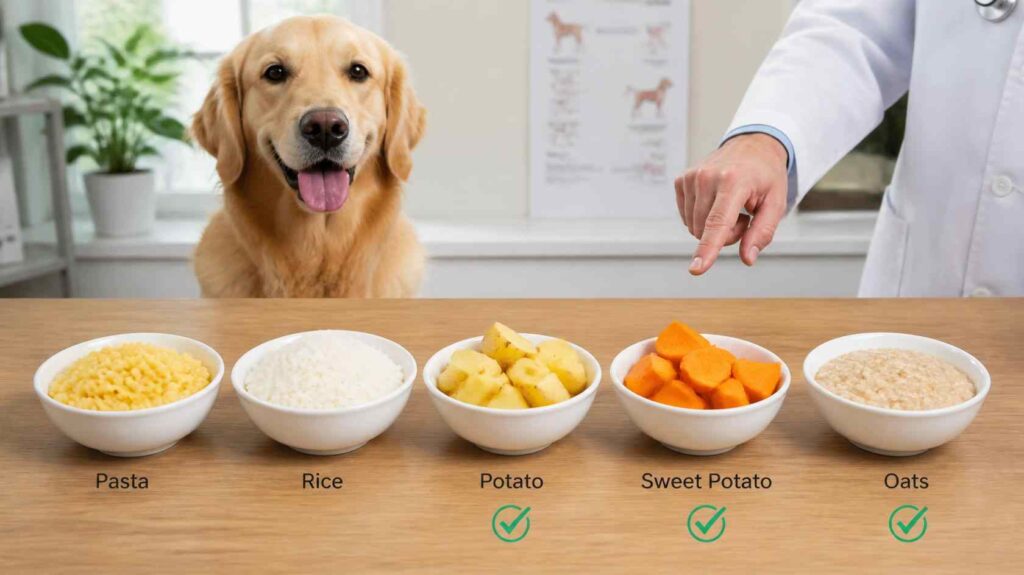
| Food | Digestibility | Calorie level | Best use | Limitations |
|---|---|---|---|---|
| Pasta | Generally good when cooked | Moderate to high | Occasional plain extra | Limited nutritional value |
| White rice | Generally easy to digest | Moderate | Sometimes used in veterinarian-directed bland diets | Low in fibre and not balanced on its own |
| Potato | Good when fully cooked | Moderate | Occasional plain addition | Never serve raw or green potato |
| Sweet potato | Generally good when cooked | Moderate | Occasional source of fibre | Too much may cause digestive upset |
| Oats | Generally good when cooked | Moderate | Occasional plain addition | Avoid flavoured or sweetened products |
No single carbohydrate is suitable for every dog. Medical conditions, calorie needs, and the rest of the diet matter more than choosing one food as universally “best.”
Common Mistakes Owners Make
- Assuming “safe” means “healthy”
- Checking only the pasta and ignoring the sauce
- Serving human-sized portions
- Feeding pasta regularly
- Assuming gluten-free pasta is automatically better
- Using pasta to replace a complete meal
- Waiting for symptoms after known garlic or onion exposure
- Giving fatty pasta dishes to a dog with pancreatitis
- Guessing at ingredients instead of reading the label
- Assuming one episode of diarrhoea proves a wheat allergy
Quick Pasta Safety Rules
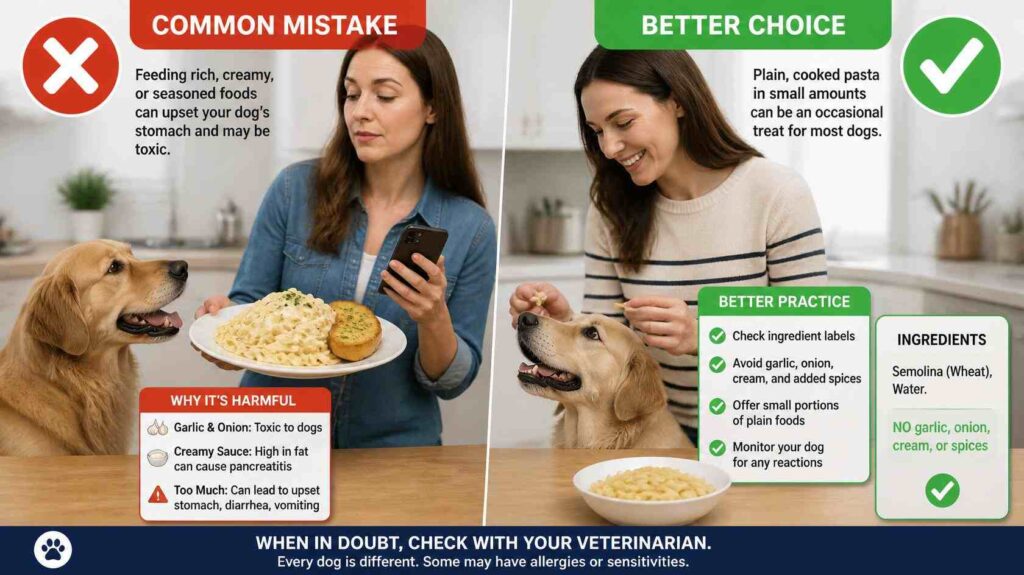
- Plain, fully cooked pasta is the lowest-risk option.
- Check the whole meal, including sauces, toppings, seasoning, and side dishes.
- Garlic and onion require prompt veterinary advice.
- Keep pasta as an occasional extra, not a meal.
- Rich sauces often create more risk than the noodles.
- Monitor for vomiting, diarrhoea, lethargy, abdominal pain, or reduced appetite.
- Contact your vet when ingredients are unknown or your dog has a medical condition.
Before Giving Pasta to Your Dog: Quick Checklist
☐ Plain and fully cooked
☐ No onion, garlic, leeks, or chives
☐ No seasoning, stock, or sauce
☐ No creamy or high-fat toppings
☐ Served in a very small amount
☐ Appropriate for your dog’s health and diet
☐ Not interfering with a prescription or elimination diet
☐ Not replacing complete dog food
The Bottom Line
Most healthy dogs can tolerate a small amount of plain, fully cooked pasta, but that does not make it a useful or necessary part of their diet.
The entire meal matters. Check the sauce, seasoning, toppings, portion size, and your dog’s health before deciding whether the exposure is low risk. Contact your veterinarian promptly if garlic, onion, unknown ingredients, repeated vomiting, severe lethargy, pale gums, abdominal swelling, or other concerning symptoms are involved.
Frequently Asked Questions
1.Can Dogs Eat Spaghetti?
Yes, most healthy dogs can eat a few pieces of plain, fully cooked spaghetti. Cut long strands into shorter pieces if your dog tends to gulp food. The main risk usually comes from the sauce, cheese, meat, or seasoning rather than the shape of the pasta.
2.Can Dogs Eat Pasta With Tomato Sauce?
Only when every ingredient is known to be dog-safe. Most jarred, tinned, takeaway, and restaurant sauces contain onion, garlic, salt, oil, or seasoning. Plain ripe tomato is different from a prepared pasta sauce, so always check the label or recipe first.
3.Can Puppies Eat Pasta?
A tiny accidental amount of plain pasta is unlikely to harm most puppies, but it should not become a regular treat. Puppies need nutrient-dense, complete food to support growth, and pasta can fill them up without providing the protein, minerals, and vitamins they need.
4.My Dog Ate Garlic Pasta—What Should I Do?
Contact your veterinarian promptly and provide your dog’s weight, the amount eaten, the time of ingestion, and the ingredient list. Do not wait for symptoms and do not induce vomiting unless a veterinary professional instructs you to do so. Signs of red blood cell damage may be delayed.
5.Is Pasta or Rice Better for a Dog With an Upset Stomach?
Neither should be treated as a universal remedy. White rice is more commonly used in some temporary bland diets, but vomiting or diarrhoea can have many causes. Puppies, seniors, medically vulnerable dogs, and dogs with persistent symptoms should receive veterinary advice rather than being managed with home feeding alone.
6.Can Dogs With Pancreatitis Eat Pasta?
Plain pasta is not especially high in fat, but most pasta dishes contain butter, cream, cheese, oil, or fatty meat. Dogs with current or previous pancreatitis should only receive foods approved by their veterinarian, as even a small rich meal may trigger digestive symptoms or a flare-up.
7.How Much Pasta Is Too Much?
There is no universal tablespoon or cup amount that suits every dog. A safe portion depends on your dog’s size, calorie needs, health, and other treats eaten that day. In practice, pasta should be limited to a few small pieces and kept within the dog’s overall treat allowance rather than served as a side dish.
#. Related Articles: