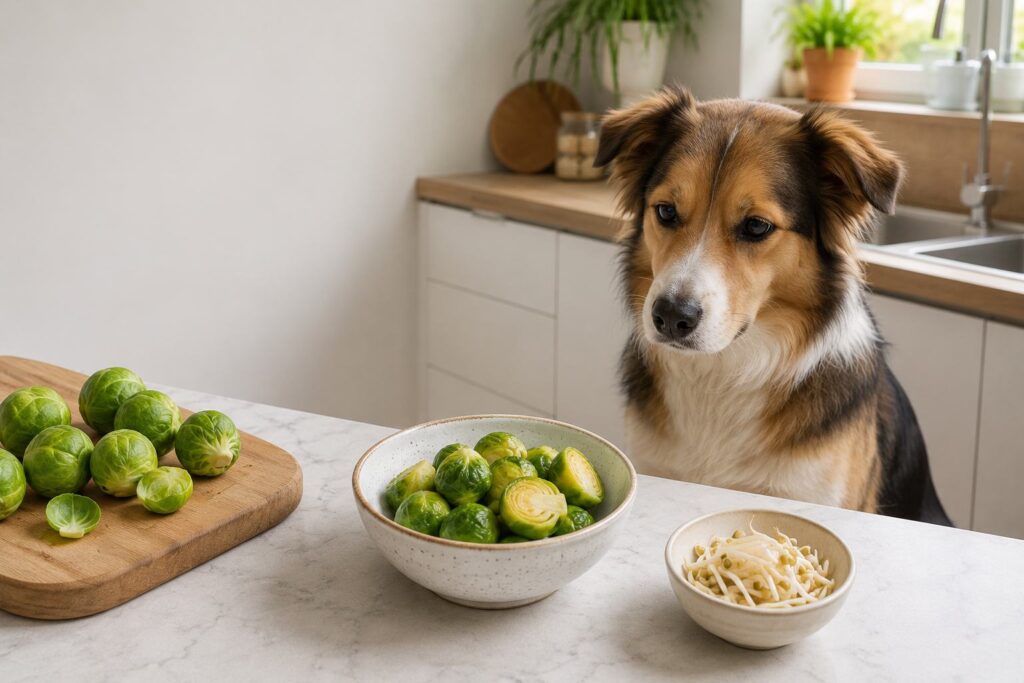
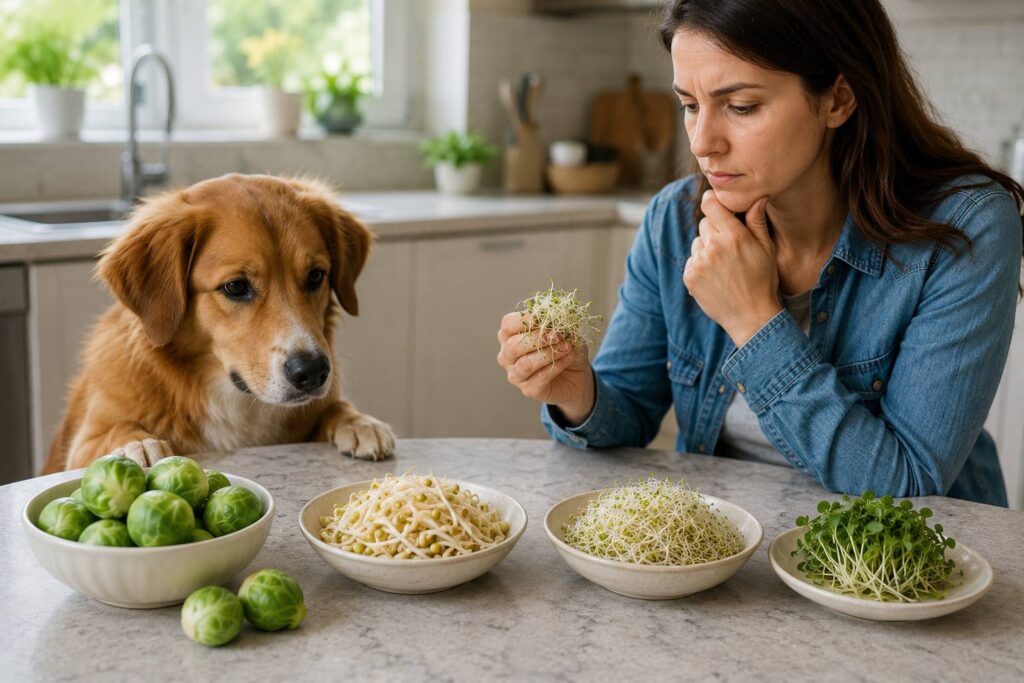
Can dogs eat sprouts? Yes, some types can be eaten safely in small amounts, but “sprouts” isn’t really one food. Plain Brussels sprouts, bean sprouts, alfalfa sprouts and onion or garlic sprouts don’t all carry the same risks.
Before deciding whether to offer them—or how concerned to be about something your dog has just grabbed off the worktop—identify exactly which type of sprout was eaten and what else was served with it.
If your dog has already eaten sprouts and you’re looking for reassurance right now, skip ahead to “Your Dog Already Ate Sprouts? Check These Five Things First.” Otherwise, start by identifying the food.
Start Here: What Kind of Sprout Did Your Dog Actually Eat?
Brussels Sprouts
This is what many UK owners mean when they ask about sprouts, especially around Christmas dinner. Brussels sprouts are cruciferous vegetables related to broccoli and cabbage.
Plain, cooked Brussels sprouts can generally be offered to a healthy dog in small amounts. They aren’t necessary for a balanced canine diet, though, and larger portions may cause gas or digestive upset.
The word “plain” matters. A steamed Brussels sprout and one served with garlic, onion, butter, bacon or gravy are not the same feeding situation.
Bean and Mung-Bean Sprouts
Bean and mung-bean sprouts are the young shoots produced by germinated beans. They need to be considered separately from Brussels sprouts.
If you choose to offer them, plain, thoroughly cooked sprouts are the more cautious option. Raw and lightly cooked sprouts have an additional food-safety concern because sprouting conditions can allow bacteria such as Salmonella and pathogenic E. coli to grow.
Alfalfa, Broccoli and Other Seed Sprouts
Don’t automatically apply Brussels sprout advice to alfalfa, broccoli, clover and other seed sprouts.
These are germinated seeds, often eaten raw by people. Raw sprouts have a recognised microbial-contamination risk, and washing them does not guarantee that harmful bacteria have been removed.
There is also no nutritional need to add raw sprouts to a dog’s diet, so there is little reason to take an avoidable food-safety risk.
Onion, Garlic or Other Allium Sprouts
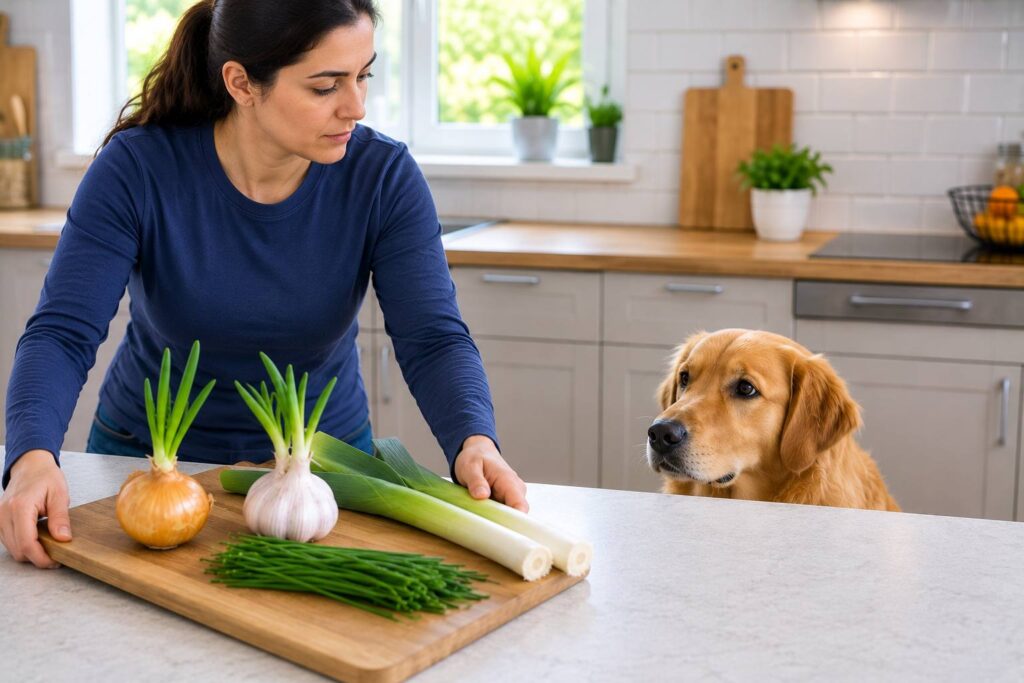
The green shoots growing from an old onion or garlic bulb belong in a completely different category.
Onions, garlic, leeks, chives and related Allium plants can be toxic to dogs. Cooking does not make them safe. If your dog has eaten an onion or garlic sprout—or a dish containing a meaningful amount of these ingredients—contact your veterinarian for advice rather than treating it like an ordinary Brussels sprout exposure.
Not every “sprout” means the same thing
| Type of sprout | What it actually is | Main concern | Raw consideration | Better approach | Extra caution |
|---|---|---|---|---|---|
| Brussels sprouts | Cruciferous vegetable | Gas and digestive upset in excess | Firm texture; whole pieces may be difficult for some dogs | Plain, cooked and appropriately chopped | Puppies, small gulpers, sensitive stomachs |
| Bean sprouts | Germinated bean shoots | GI tolerance and microbial contamination | Raw sprouts carry additional food-safety risk | Plain and thoroughly cooked | Puppies and medically vulnerable dogs |
| Mung-bean sprouts | Germinated mung beans | GI tolerance and microbial contamination | Raw sprouts carry additional food-safety risk | Plain and thoroughly cooked | Puppies and medically vulnerable dogs |
| Alfalfa sprouts | Sprouted seeds | Microbial contamination | Raw sprouts are the main concern | Thoroughly cook or simply skip | Medically vulnerable dogs |
| Broccoli sprouts | Sprouted seeds | Microbial contamination | Raw sprouts are the main concern | Thoroughly cook or simply skip | Medically vulnerable dogs |
| Onion/garlic sprouts | Allium shoots | Toxicity | Unsafe whether raw or cooked | Do not feed | Contact your vet after concerning exposure |
Your Dog Already Ate Sprouts? Check These Five Things First

If this is an accidental-ingestion question rather than future meal planning, work through these five points before deciding what to do.
1. Identify exactly what was eaten. One plain Brussels sprout is a very different situation from raw alfalfa sprouts, and different again from onion or garlic shoots.
2. Estimate how much was eaten. One dropped piece is not the same as clearing a serving bowl. For ordinary Brussels sprouts, there isn’t a useful universal number at which they suddenly become “toxic.” The amount relative to your dog’s size and digestive tolerance is more informative.
3. Check how it was prepared. Was it plain, raw, steamed, boiled, roasted, frozen or part of a leftover meal? Preparation can change both the digestive and choking considerations.
4. Check everything else in the dish. Onion, garlic, leeks, chives, gravy, butter, oil, bacon and heavy seasoning may change the risk assessment substantially. With human leftovers, the sprout itself may not be the ingredient that matters most.
5. Check your dog, not just the food. Consider your dog’s size, age, tendency to gulp food, medical history and current behaviour. A dog that seems completely normal after stealing one plain cooked sprout is a different situation from one that is repeatedly vomiting, appears painful or has difficulty swallowing.
Information to have ready if you call your vet:
- Exact type of sprout
- Approximate amount eaten
- When it was eaten
- Whether it was raw, cooked or frozen
- Other ingredients in the dish
- Your dog’s approximate weight
- Existing medical conditions or veterinary diets
- Any symptoms so far
- Packaging, ingredient list or recipe, if available
Warning: Seek veterinary advice promptly if your dog develops repeated vomiting, significant diarrhoea, marked lethargy, abdominal pain, trouble swallowing or breathing, or has eaten a potentially toxic ingredient such as onion or garlic. Breathing difficulty or active choking is an emergency.
Plain Sprouts and Dinner-Table Sprouts Are Not the Same Food

A useful rule is to assess the whole dish, not just the vegetable.
Plain steamed or boiled Brussels sprouts, cooled and cut into appropriately sized pieces, are the simplest way to offer them.
Raw Brussels sprouts are firmer than cooked ones and may be harder for some dogs to manage. A whole raw sprout can also be a poor choice for a small dog or one that tends to swallow food without chewing. If offered, cut it into manageable pieces.
Frozen Brussels sprouts aren’t automatically unsafe, but avoid handing your dog a large, rock-hard frozen sprout. Thaw or cook it and cut it appropriately before feeding.
Roasted or air-fried sprouts should be judged by what went into the pan. A lightly cooked plain vegetable is very different from sprouts coated in oil, salt, garlic or other seasonings.
Christmas dinner sprouts deserve particular attention. Butter, bacon, gravy, onion, garlic and rich cooking fats can turn an otherwise simple vegetable into something you wouldn’t deliberately feed your dog.
Preparation changes the answer
| Preparation | Suitable as an occasional treat? | What to consider |
|---|---|---|
| Plain steamed | Yes | Cool and cut appropriately |
| Plain boiled | Yes | Serve without seasoning |
| Raw | Use caution | Firmer texture and possible GI upset; cut appropriately |
| Frozen | Prepare first | Thaw or cook rather than offering large rock-hard pieces |
| Plain roasted | Possibly | Keep added oil and seasoning minimal |
| Buttered | Best avoided | Unnecessary added fat and calories |
| With gravy | Check ingredients | May contain onion, garlic, excess salt or fat |
| With onion or garlic | No | Allium ingredients can be toxic to dogs |
The Sprout May Not Be the Biggest Problem
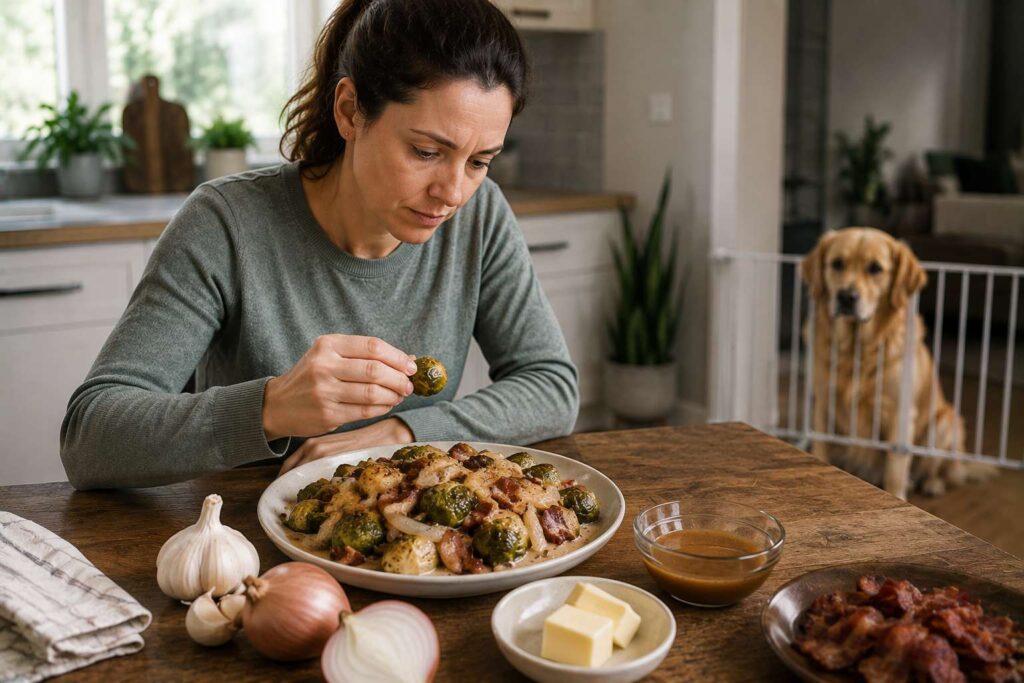
If any of the following apply, this stops being a simple feeding question and becomes a veterinary one:
- Onion, garlic or another Allium ingredient was involved
- Your dog is choking, struggling to swallow or having difficulty breathing
- A large quantity was eaten, particularly by a small dog
- There is repeated vomiting or significant diarrhoea
- Your dog seems markedly lethargic, painful or unusually unwell
- Your dog has a medical condition or is on a veterinary diet that makes dietary extras a concern
Contact your vet for advice rather than waiting for symptoms to worsen. Difficulty breathing or active choking requires urgent veterinary care. If a potentially toxic ingredient was eaten, don’t induce vomiting or give home remedies unless a veterinary professional specifically tells you to.
Why Brussels Sprouts Can Turn Into a Gassy Snack
Brussels sprouts contain fibre and fermentable plant compounds. As gut bacteria break some of this material down, gas can be produced—which helps explain their reputation for flatulence in both people and dogs.
Gas on its own isn’t usually evidence of poisoning. A dog that remains bright and comfortable but develops temporary flatulence after trying Brussels sprouts is very different from one with repeated vomiting, significant diarrhoea, abdominal pain or marked lethargy.
Tolerance also varies from dog to dog. A small taste may cause no problem, while a larger serving can overwhelm a sensitive digestive system. That’s why starting small and watching your individual dog’s response is more useful than assuming every dog can tolerate the same amount.
How Much Is Sensible? Use Context, Not a Magic Number
Be cautious with guides that give a precise number of Brussels sprouts by body weight as though it were a toxicology threshold. There isn’t a recognised Brussels-sprout poisoning dose that makes those charts medically precise.
For a first taste, offer a small piece of plain, cooked Brussels sprout and introduce it without several other new foods at the same time. That makes it much easier to identify the cause if your dog develops gas or loose stools.
Size the pieces to the dog as well as the portion. A small dog swallowing a whole firm sprout can face a choking problem even when the ingredient itself is considered safe.
Keep the bigger dietary picture in mind, too. Brussels sprouts are an optional treat, not a replacement for complete dog food. As a general nutrition principle, WSAVA recommends that treats and other extras make up no more than about 10% of a healthy dog’s daily calorie intake, with the main diet providing the nutrition the dog needs.
The low-drama way to offer Brussels sprouts:
- Serve them plain and simply cooked
- Let them cool before feeding
- Cut them into pieces appropriate for your dog
- Start with a small taste
- Introduce one unfamiliar food at a time
- Stop offering them if they repeatedly cause digestive upset
- Keep them as an occasional extra rather than a diet replacement
Do Brussels Sprouts Actually Add Anything Important?
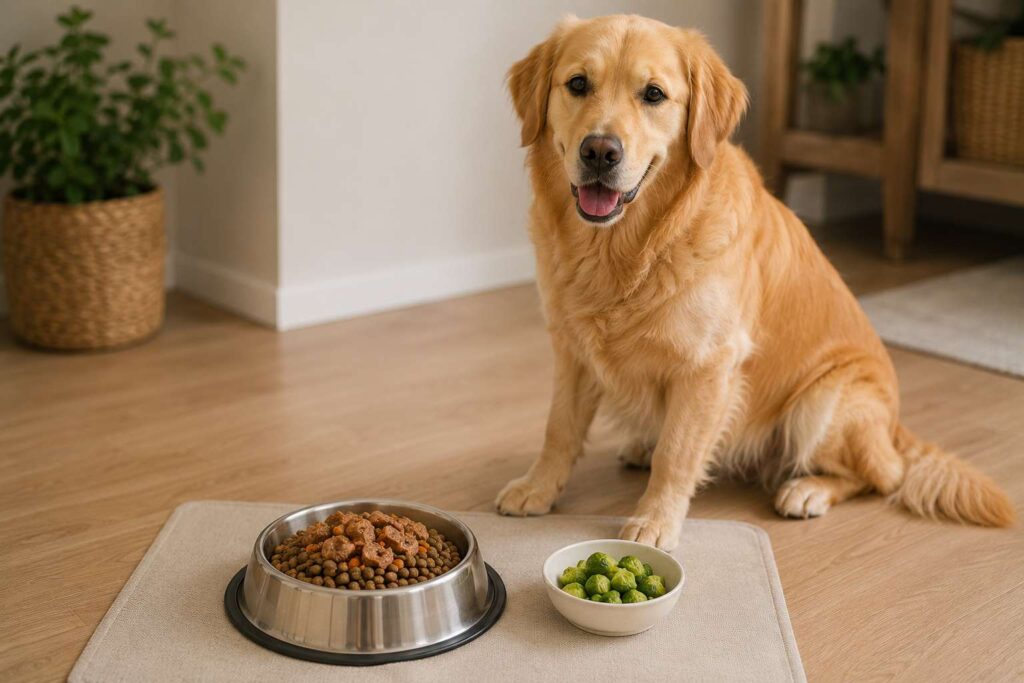
Brussels sprouts provide fibre and naturally occurring vitamins and plant compounds, but nutritious doesn’t mean necessary. A dog eating a complete and balanced commercial diet—or an appropriately formulated home-prepared diet—doesn’t need Brussels sprouts to fill a nutritional gap.
It’s also sensible to be cautious with “superfood” claims. The presence of antioxidants or glucosinolates doesn’t prove that feeding Brussels sprouts prevents cancer, treats inflammation or produces other specific health benefits in dogs.
Claims about cruciferous vegetables and thyroid function also need context. There’s no good reason to portray an occasional small serving of Brussels sprouts as a proven cause of thyroid disease in dogs. If your dog already has a thyroid disorder or another condition requiring dietary management, however, ask your veterinarian before making regular additions to the diet.
Raw Seed Sprouts Need Their Own Safety Conversation
Raw bean, alfalfa, mung-bean and similar seed sprouts belong to a different food-safety category from Brussels sprouts.
The warm, humid conditions needed for seeds to sprout can also allow bacteria such as Salmonella and pathogenic E. coli to multiply. This is a recognised food-safety concern with raw sprouts, not simply a question of whether a dog’s stomach can digest them.
Washing raw sprouts doesn’t guarantee that harmful bacteria have been removed. If you choose to offer bean or seed sprouts, thoroughly cooking them is the more cautious approach.
There’s also no nutritional reason a healthy dog needs raw sprouts. When a food offers no essential benefit and introduces an avoidable microbial risk, skipping it is a perfectly reasonable choice.
Some Dogs Deserve More Caution Than Others

A few dogs need extra consideration before sprouts are added to the bowl:
- Puppies — their smaller size and tendency to gulp food make portion size and preparation especially important. A complete and balanced puppy diet should remain the nutritional priority.
- Dogs with sensitive digestion — previous reactions to new foods or a chronic gastrointestinal condition are good reasons to introduce extras cautiously or avoid them altogether.
- Dogs with a history of pancreatic problems — rich additions such as butter, bacon, gravy or excess oil are more concerning than a small amount of plain Brussels sprout. Follow your vet’s dietary advice.
- Dogs on a veterinary or prescription diet — check with your vet before adding foods outside the prescribed plan, even when the food seems healthy.
- Dogs with known food sensitivities — individual reactions vary. If your dog has previously reacted badly to unfamiliar foods, introduce anything new cautiously.
Common Mistakes That Turn a Simple Vegetable Into a Problem
- Assuming “vegetable” means unlimited
- Offering several sprouts on the first try
- Giving a whole, firm sprout to a small dog or habitual gulper
- Assuming “cooked” automatically means “safe”
- Overlooking onion or garlic in leftovers, gravy or seasoning
- Serving oily, buttery or bacon-covered restaurant-style sprouts
- Treating raw seed sprouts the same as Brussels sprouts
- Panicking over mild gas while overlooking genuinely concerning symptoms
- Using sprouts as a home remedy for constipation or another medical problem
- Letting vegetables crowd out a complete and balanced diet
Four Situations, Four Different Decisions
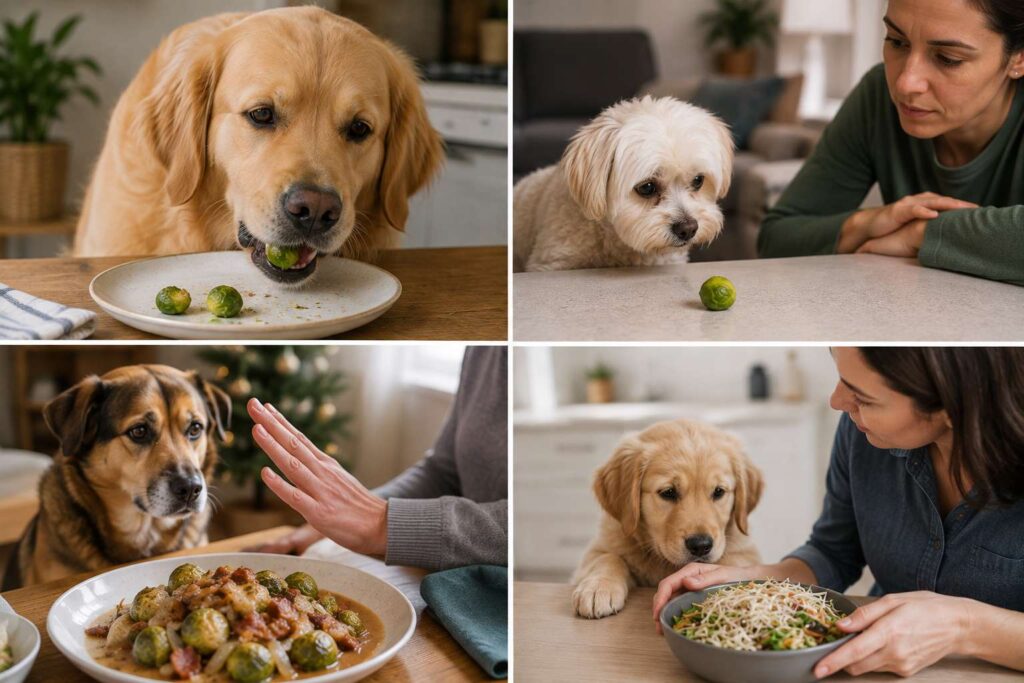
A Labrador steals two plain cooked Brussels sprouts from a plate. For an otherwise healthy dog that remains comfortable and behaves normally, this is usually a monitoring situation rather than an emergency. Some temporary gas or softer stool may follow.
A small dog swallows a whole firm sprout. The immediate concern is the size and shape of the food rather than toxicity. If the dog is coughing persistently, gagging, struggling to swallow or having difficulty breathing, seek veterinary help urgently.
A dog eats Christmas dinner sprouts with gravy, onion and butter. Now the entire recipe matters. Onion exposure deserves particular attention because Allium ingredients can be toxic to dogs. Contact your vet with the dog’s weight, approximate amount eaten and ingredient information rather than judging the situation by the number of sprouts alone.
A puppy eats raw mung-bean sprouts from a salad. Check both the raw sprouts and everything else in the salad. Onion, garlic, dressings and other ingredients may change the assessment, while raw seed sprouts introduce an additional microbial-contamination concern.
When the Question Stops Being About Nutrition and Becomes a Vet Question
Contact your vet if your dog develops repeated vomiting, significant or persistent diarrhoea, marked lethargy, abdominal pain, trouble swallowing, or any sign of choking or breathing difficulty. Breathing difficulty and active choking require urgent veterinary attention.
Ingredient exposure can matter far more than the number of sprouts eaten. If onion, garlic or another potentially harmful ingredient was involved—or you can’t establish what was in the dish—seek professional advice rather than relying on a generic serving-size rule.
Your vet may ask what was eaten, approximately how much, when it happened, your dog’s weight, current symptoms, relevant medical history and what else was in the dish. Having the packaging, ingredient list or recipe available can make that assessment easier.
Don’t induce vomiting or give DIY treatments unless a veterinarian or appropriate animal poison professional specifically instructs you to. The correct response depends on what was eaten and your dog’s condition.
Key Takeaways
- Plain, appropriately prepared Brussels sprouts can be an occasional extra for many healthy dogs.
- Bean and other seed sprouts need separate consideration, particularly when served raw.
- Raw seed sprouts can carry harmful bacteria; thorough cooking reduces that food-safety risk.
- Check the entire dish. Onion and garlic can be far more important than the Brussels sprouts themselves, while butter, bacon and rich gravy add unnecessary fat.
- Mild temporary gas can occur after Brussels sprouts; repeated vomiting, significant diarrhoea, pain or marked lethargy deserves more attention.
- There is no universal “safe number” of Brussels sprouts for every dog. Portion size, preparation, individual tolerance and the dog’s overall diet all matter.
Final Thoughts
So, can dogs eat sprouts? Some can, but first identify which type of sprout you’re dealing with.
For most healthy dogs, a small amount of plain, properly prepared Brussels sprout can be a reasonable occasional extra. Raw seed sprouts deserve more caution because of microbial contamination, while onion and garlic sprouts should not be fed at all.
If your dog has already eaten sprouts, assess what they ate, how much, what else was in the dish and how they’re behaving now. Those details are far more useful than relying on a one-size-fits-all serving number.
Frequently Asked Questions
1.Can dogs eat Brussels sprout leaves?
Plain Brussels sprout leaves can generally be offered in small amounts. Cook them simply and cut them appropriately for your dog’s size.
2.Can dogs eat Brussels sprout stalks?
It’s better to skip the thick, tough stalk. It offers no particular advantage and may be difficult for a dog to chew and digest. Stick to appropriately prepared sprouts or leaves.
3.Can dogs eat Brussels sprouts every day?
There’s usually no reason to make them a daily addition. Brussels sprouts are optional extras, not something dogs need for nutritional completeness. Occasional small servings also make digestive tolerance easier to judge.
4.What should I do if my dog has eaten a large number of Brussels sprouts?
Check whether they were plain or contained other ingredients, then contact your vet if the amount was substantial relative to your dog’s size, you’re unsure what was eaten, or symptoms such as repeated vomiting, significant diarrhoea, abdominal pain or marked lethargy develop.
5.Can dogs eat broccoli sprouts?
Broccoli sprouts are sprouted seeds rather than miniature pieces of broccoli. If offered at all, plain and thoroughly cooked is the more cautious choice because raw seed sprouts can carry harmful bacteria.
6.Are raw seed sprouts completely safe for dogs if they’re washed?
No. Washing raw sprouts doesn’t guarantee that harmful bacteria have been removed. Thorough cooking provides a greater reduction in microbial risk than washing alone.
7.Can dogs be allergic or sensitive to Brussels sprouts?
Any new food can disagree with an individual dog. Digestive upset is more likely to reflect intolerance than a true food allergy. Stop feeding the food and speak with your vet if reactions are persistent, severe or include concerning signs such as facial swelling or breathing difficulty.
#. Related Articles: