
Can dogs eat swede? Yes, most healthy dogs can eat plain swede in small amounts when it’s prepared properly. Cooked swede is usually the easiest option to chew and digest, while large pieces of raw swede can present a choking risk.
If you’re in the UK or Australia, you probably call it swede. If you’re in Canada or the US, the exact same vegetable usually lands on your chopping board labelled rutabaga. Same knobbly purple-topped root, same dog sitting by your feet waiting for a piece to drop.
Swede can be a safe, low-calorie occasional extra, but “safe” comes with a few conditions. How you prepare it, how much you serve, and what else has been added can make a big difference.
The Quick Answer for Worried Owners
Is swede toxic to dogs?
No. Swede is not considered toxic to dogs. It does not contain the same kind of dangerous compounds found in foods like onions, garlic, grapes, or chocolate.
Swede belongs to the brassica family, along with vegetables such as cabbage and turnip. For most healthy dogs, a small amount of plain swede is unlikely to cause harm.
Is cooked swede safer than raw swede?
Generally, yes. Raw swede is dense and hard, which makes it more of a choking hazard and tougher on digestion.
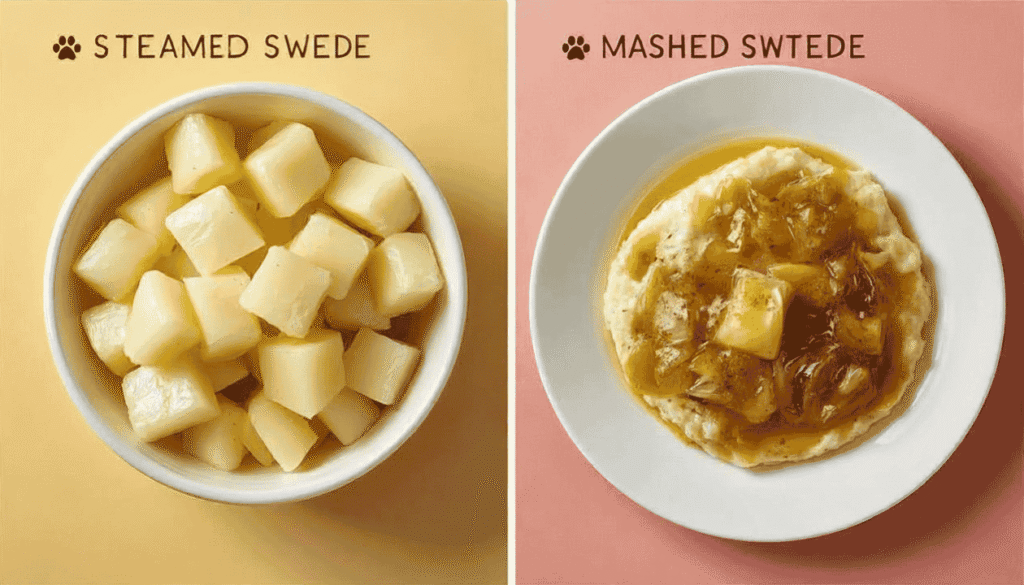
Cooked swede — boiled, steamed, or baked plain — is softer, easier to chew, and usually gentler on the stomach.
When should you call a vet?
Call your vet if:
- Your dog swallowed a large raw chunk
- Your dog is choking, gagging, or struggling to swallow
- Vomiting or diarrhoea does not settle within 24 hours
- Your dog ate swede cooked with onion, garlic, gravy, lots of butter, or heavy seasoning
- Your dog seems weak, bloated, painful, or unusually quiet
In many cases, the concern is not the swede itself. It is usually the size of the piece, the amount eaten, or unsafe ingredients mixed with it.
Swede vs Rutabaga: Same Vegetable, Different Name
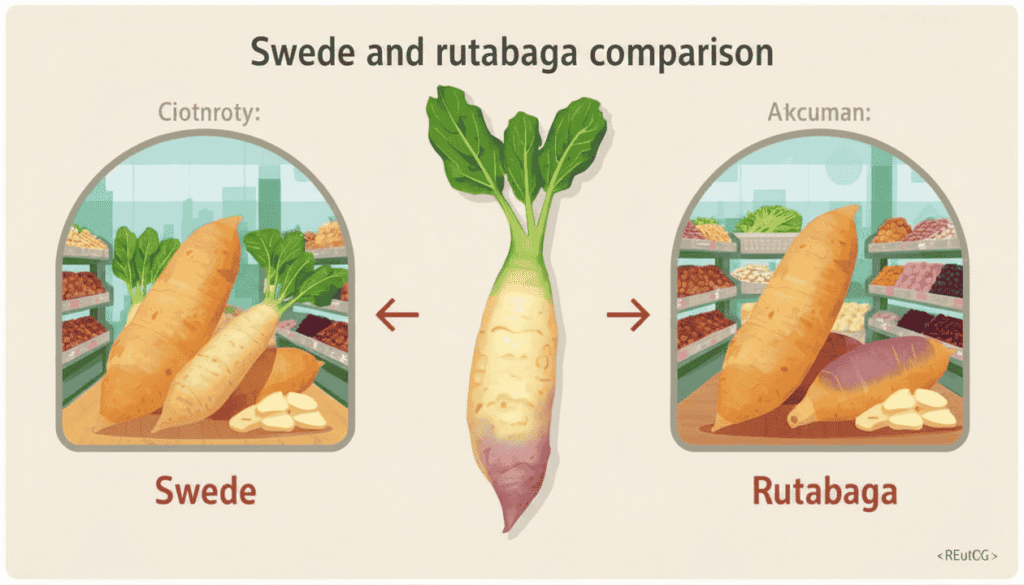
What Brits and Australians call swede
Swede is short for “Swedish turnip,” and it is the standard name across the UK and Australia. It is the purple-and-cream root often found near parsnips, carrots, and turnips in supermarkets.
What Canadians and Americans call rutabaga
In North America, the same vegetable is usually called rutabaga. It has an earthy, slightly sweet flavour and is often roasted, boiled, or mashed.
Why this naming mix-up actually matters
If you searched “can dogs eat rutabaga” and landed here, you are in the right place. If you searched “can dogs eat swede,” the advice is exactly the same.
Swede and rutabaga are the same vegetable. The safety rules, serving advice, and warnings do not change by country.
Is Swede Safe or Unsafe? Quick Reference Table
| Swede Type | Safe for Dogs? | Notes |
|---|---|---|
| Plain cooked swede | Yes | Best option overall |
| Raw swede | Sometimes | Grate or cut very small; avoid large chunks |
| Mashed swede, plain | Yes | Safe only if nothing else was added |
| Swede with butter or cream | No | Too rich and may upset the stomach |
| Swede with onion or garlic | No | Onion and garlic are toxic to dogs |
| Swede with gravy or stock | Avoid | Often salty, fatty, or seasoned |
| Canned swede | Usually avoid | May contain added salt or preservatives |
| Frozen plain swede | Usually yes | Cook thoroughly before serving |
Nutritional Benefits of Swede for Dogs

Fibre for digestion
Swede contains fibre, which can help support normal digestion when fed in sensible amounts. A small portion may be fine for many dogs, but too much fibre at once can have the opposite effect and cause gas, bloating, or loose stools.
A genuinely low-calorie treat option
Swede is naturally low in calories, which can make it a useful treat swap for dogs that need lighter snacks. This does not mean it should be fed freely, but it can be a better choice than fatty table scraps.
Vitamins and minerals worth mentioning
Swede contains vitamin C, potassium, and small amounts of other minerals. These are useful nutrients, but your dog should already be getting their essential nutrition from a complete and balanced dog food.
Why these benefits don’t mean unlimited feeding
Swede is an extra, not a diet base. Even healthy vegetables can cause digestive upset if a dog eats too much. Keep it as an occasional add-on rather than a daily replacement for proper dog food.
How Much Swede Can Dogs Eat?
Portion size should depend on your dog’s size, usual diet, and stomach sensitivity.
- Tiny dogs under 5kg: 1 teaspoon is enough
- Small dogs 5–10kg: 1–2 teaspoons to 1 tablespoon
- Medium dogs 10–25kg: 1–2 tablespoons
- Large dogs 25kg+: 2–4 tablespoons
- Giant breeds: A small handful, if they tolerate it well
Why treats should stay under 10% of daily calories
A good rule is to keep treats and extras, including vegetables, to less than 10% of your dog’s daily calories. The other 90% should come from a complete and balanced dog food.
For most dogs, that means swede should be a small occasional extra, not something added heavily to every meal.
Raw Swede vs Cooked Swede
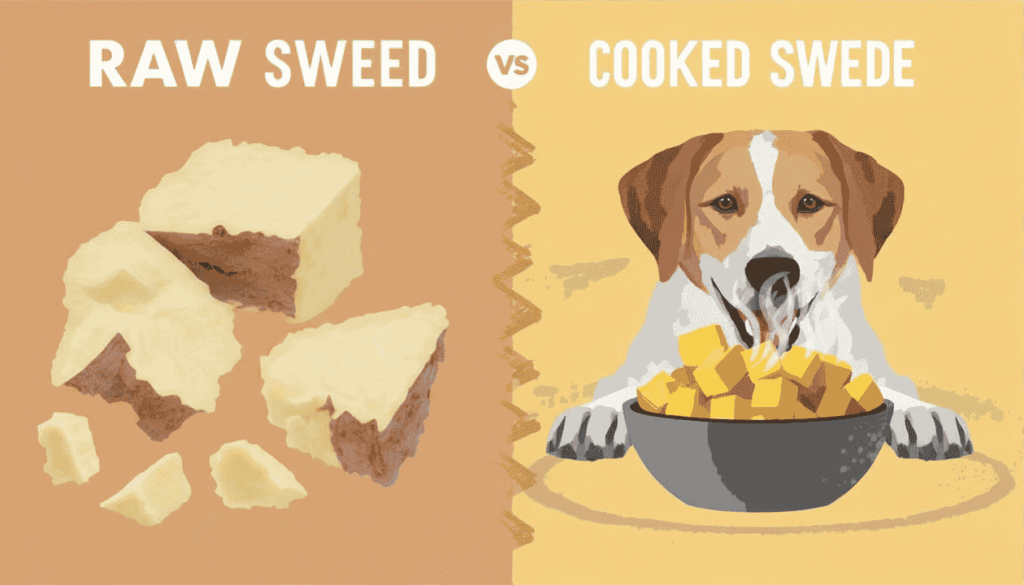
Why raw swede can be harder to chew
Raw swede is firm and fibrous. Dogs that gulp food, small breeds, puppies, seniors, and flat-faced breeds may struggle more with hard chunks.
Why cooked swede is easier to digest
Cooking softens the vegetable and makes it easier to chew. Boiled or steamed swede is usually the safest choice, especially for dogs trying it for the first time.
The choking risk from hard chunks
Never hand your dog a large raw wedge of swede. If you want to offer raw swede, grate it finely or cut it into very small pieces.
Supervise your dog the first time they try it.
How to Prepare Swede for Your Dog
- Wash the swede well.
- Peel it, especially if the skin is tough or waxed.
- Boil, steam, or bake it plain.
- Do not add salt to the cooking water.
- Let it cool fully.
- Cut it into small, bite-sized pieces.
- Serve a small amount on its own or as a light topper.
Checklist before feeding swede to your dog
- Plain only
- Cooked, ideally
- No onion
- No garlic
- No butter
- No cream
- No gravy
- No stock cubes
- Cut into small pieces
- Start with a tiny portion
- Watch stool and behaviour for 24 hours
- Never use it as a meal replacement
Warning: Never Feed Swede Like This
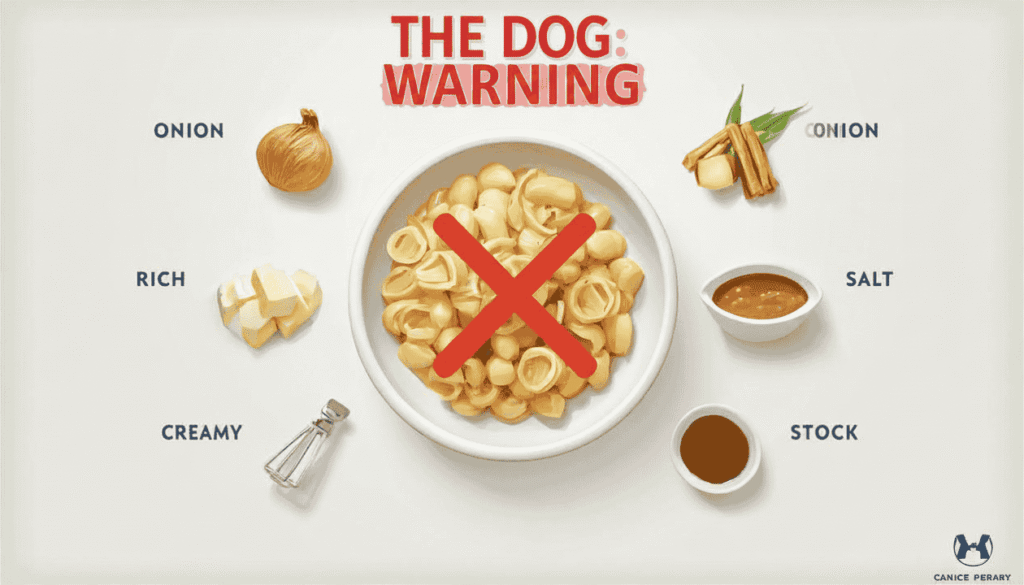
Warning: Never give your dog swede cooked with onion, garlic, salty gravy, butter, cream, stock cubes, nutmeg, or heavy seasoning.
Onion and garlic are toxic to dogs. Rich, salty, or fatty ingredients can also trigger vomiting, diarrhoea, or pancreatitis in sensitive dogs.
Plain swede is the safe version. Human dinner leftovers are often not.
What If My Dog Ate Too Much Swede?
Mild signs to keep an eye on
A dog that eats too much swede may develop:
- Gas
- Mild bloating
- Soft stool
- Temporary diarrhoea
- Mild stomach discomfort
If your dog is bright, eating normally, and symptoms are mild, monitor them closely and avoid giving more swede.
Signs that warrant a vet call
Phone your vet if your dog has:
- Repeated vomiting
- Diarrhoea lasting more than 24 hours
- Blood in stool
- Loss of appetite
- Lethargy
- Abdominal pain
- Signs of dehydration
Emergency symptoms
Get urgent veterinary help if your dog shows:
- Choking
- Difficulty breathing
- Collapse
- Severe bloating
- Severe abdominal pain
- Repeated retching without bringing anything up
These symptoms need fast attention.
Dogs That Need Extra Caution
- Puppies: Wait until they are settled on solid food, then introduce only a tiny amount.
- Senior dogs: Softer cooked swede is safer for older teeth and sensitive stomachs.
- Dogs with sensitive stomachs: Start with one small piece and watch carefully.
- Dogs with pancreatitis: Avoid swede mixed with butter, cream, gravy, or fatty foods. Ask your vet first.
- Diabetic dogs: Speak to your vet before adding new foods regularly.
- Dogs with thyroid disease: Swede is a brassica vegetable. Occasional small servings are unlikely to be a problem for most dogs, but dogs on thyroid medication should have diet changes checked with a vet.
- Dogs on prescription diets: Do not add extras without veterinary approval.
Common Mistakes Dog Owners Make
- Feeding swede from a seasoned family meal
- Giving large raw chunks
- Feeding too much on the first try
- Assuming all vegetables are safe in any amount
- Adding butter, salt, gravy, or cream
- Using swede to replace balanced dog food
- Ignoring vomiting or diarrhoea after feeding it
Swede Compared With Other Dog-Safe Vegetables
| Vegetable | Best For | Caution |
|---|---|---|
| Swede / rutabaga | Low-calorie occasional treat | Can cause gas if overfed |
| Carrot | Crunchy snack | Large pieces can be a choking risk |
| Pumpkin | Digestive support | Use plain pumpkin, not pie filling |
| Sweet potato | Fibre and energy | Higher in calories |
| Turnip | Similar root vegetable | May cause gas |
| Parsnip | Mild occasional treat | Feed in small portions |
Key Takeaways
- Dogs can eat plain swede/rutabaga in small amounts
- Cooked swede is safer than raw swede for most dogs
- Always cut it into small pieces
- Avoid butter, gravy, onion, garlic, cream, and salt
- Do not feed swede every day
- Call your vet if symptoms are severe or do not settle
- Ask your vet first if your dog has diabetes, pancreatitis, thyroid disease, or a prescription diet
The Bottom Line
Swede, or rutabaga, can be a safe occasional treat for most healthy dogs when it is served plain, cooked, and cut small.
It is not a necessary part of your dog’s diet, and it should not replace balanced dog food. But if your dog enjoys a small spoonful of plain cooked swede now and then, there is usually no reason to worry.
Frequently Asked Questions
1. Can dogs eat swede every day?
It is better as an occasional food. Daily feeding is not necessary and may cause gas or loose stools in some dogs.
2. Can dogs eat swede skin?
The skin is not known to be toxic, but it is tough and may be waxed. Peeling is the safer and easier option.
3. Can dogs eat swede and carrot together?
Yes, as long as both are plain and cooked or cut safely. Do not add butter, salt, gravy, onion, or garlic.
4. My dog ate a raw chunk of swede off the counter. What should I do?
Watch for choking, gagging, vomiting, or discomfort. If your dog swallowed it easily and seems normal, monitor them for 24 hours. If they struggle to swallow, vomit repeatedly, or seem unwell, call your vet.
5. Is turnip safer than swede for dogs?
Not really. Turnip and swede have similar safety rules. Both should be served plain, in small amounts, and preferably cooked.
6. Can I give my dog swede if they’re overweight?
Possibly, because swede is low in calories. Still, portion control matters. If your dog is on a weight-loss plan, check with your vet before adding regular extras.
7. Does swede help with a dog’s digestion like pumpkin does?
Swede contains fibre, but pumpkin is more commonly used for digestive support. If your dog has ongoing diarrhoea, constipation, or stomach issues, ask your vet instead of relying on swede.
#. Related Articles:

Pingback: Why Is My Dog's Poop Black? A Complete Guide for Dog Owners