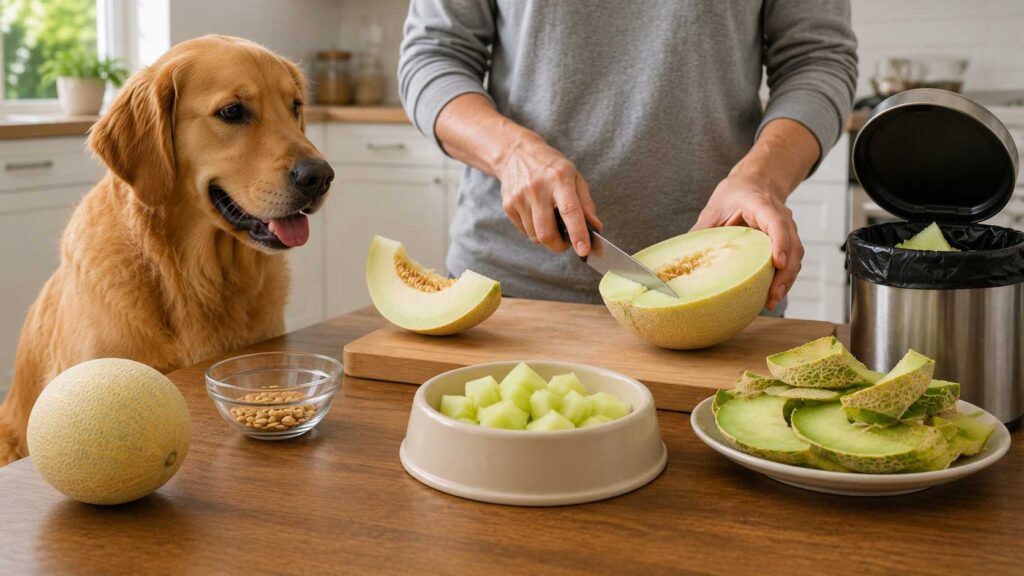
Can dogs eat honeydew melon? Yes, most healthy dogs can enjoy a few small pieces of plain, ripe honeydew as an occasional treat. However, the rind should be removed, visible seeds are best discarded, and large portions may cause digestive upset.
Your dog may already be sitting beside you, watching every slice and hoping for a taste. Before you share, here’s what you need to know about safe portions, preparation, possible risks, and when to contact a veterinarian.
Honeydew can be a healthy occasional treat when it is prepared correctly and served in moderation. The biggest risks come from the tough rind, oversized portions, and processed products rather than the ripe flesh itself.
Below, you’ll find safe preparation steps, sensible portion guidance, what to do if your dog has already eaten some, and when veterinary help is needed.
First, What Exactly Did Your Dog Eat?
The right response depends on the part consumed, the amount, your dog’s size, and whether symptoms are developing.
A Small Piece of Plain, Ripe Flesh
This is the lowest-risk situation. A healthy adult dog that steals one or two small pieces of plain honeydew will usually be fine.
Remove the remaining fruit, leave fresh water available, and monitor for vomiting, gas, abdominal discomfort, or loose stools. Avoid giving more fruit or rich treats that day.
A Large Amount of Flesh
Honeydew flesh is not considered toxic, but a large serving delivers a substantial amount of water, natural sugar, and fibre at once. This may lead to:
- Vomiting
- Gas
- Loose stools or diarrhoea
- Abdominal discomfort
- Reduced appetite
The same portion can affect a Chihuahua very differently from a Labrador. Contact your veterinarian if a small dog eats a large amount, your dog has diabetes or another medical condition, or symptoms are persistent or worsening.
The Rind
This is the part that causes the greatest concern. Honeydew rind is tough, fibrous, and difficult for dogs to digest.
A tiny chewed fragment may pass without causing a problem, but a swallowed strip or chunk can become a choking hazard or cause an intestinal blockage. The risk is greater in small dogs, puppies, and dogs that swallow food without chewing.
If your dog swallowed a substantial piece of rind, contact your veterinarian promptly rather than waiting for symptoms to appear.
Seeds
Honeydew seeds are not generally regarded as poisonous to dogs, so swallowing one or two is unlikely to cause toxicity. Even so, they provide no benefit and may present a choking or digestive risk when eaten in quantity, particularly by a small dog.
Scoop out the seed-filled centre before serving the fruit.
A Processed Honeydew Product
Honeydew yoghurt, juice, smoothies, ice cream, sorbet, dried fruit, sweets, and tinned melon in syrup should not be treated the same as fresh fruit.
These products may contain:
- Added sugar or syrup
- Xylitol or other sweeteners
- Dairy
- High-fat ingredients
- Grapes, raisins, or other unsafe fruits
- Artificial flavourings
Check the complete ingredient list. Any possibility of xylitol ingestion requires urgent veterinary advice, even if your dog appears normal.
When to Get Veterinary Help Urgently

Call your veterinarian or an emergency veterinary clinic immediately if your dog develops:
- Difficulty breathing, choking, or collapse
- Pale or bluish gums
- Repeated vomiting
- An inability to keep water down
- A swollen, tense, or painful abdomen
- Marked lethargy
- A sudden loss of appetite after eating rind
- Straining to pass stool without success
- Reduced or absent stool production
- Persistent gagging or unproductive retching
You should also seek prompt advice when:
- A large strip or chunk of rind was swallowed
- A very small dog ate a substantial amount
- The product may have contained xylitol
- Grapes or raisins were mixed into a fruit salad
- Your dog has diabetes, gastrointestinal disease, or another managed condition
When calling, be ready to tell the veterinarian your dog’s approximate weight, what part was eaten, how much was consumed, when it happened, and what symptoms you have noticed.
Warning Box
Do not try to make your dog vomit unless a veterinarian specifically instructs you to do so. Avoid home remedies such as salt, oil, milk, bread, or hydrogen peroxide. These can cause additional harm and may delay appropriate treatment.
Honeydew Safety at a Glance
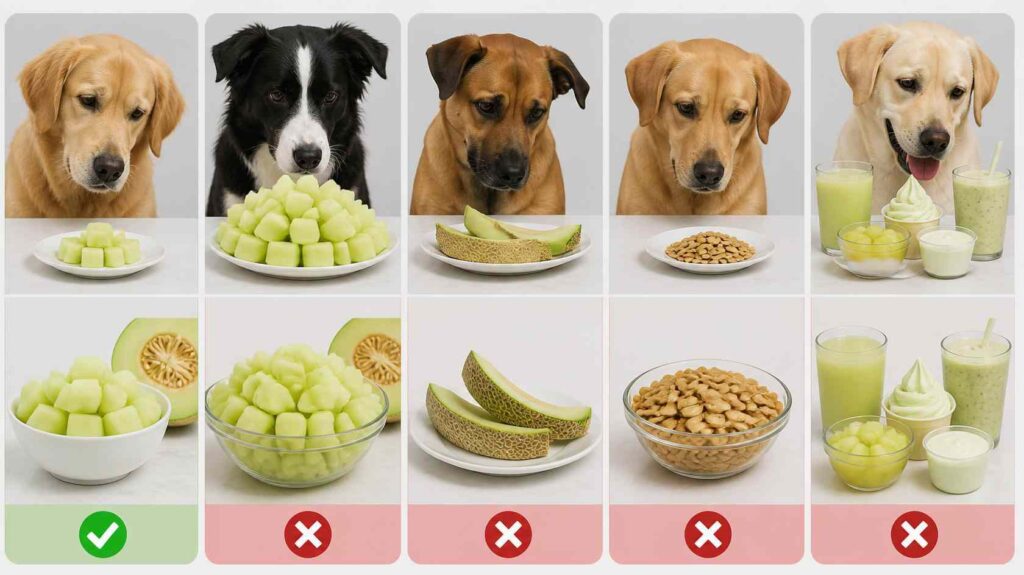
| Form | Suitability | Main concern | What to do |
|---|---|---|---|
| Fresh, ripe flesh | Fine occasionally | Sugar and overfeeding | Offer a small, plain portion |
| Visible seeds | Best removed | Choking or digestive irritation | Scoop out before serving |
| Rind or skin | Do not intentionally feed | Choking and intestinal blockage | Discard securely |
| Melon balls | Not ideal | Easy to swallow whole | Cut into smaller, irregular pieces |
| Mashed honeydew | Suitable in small amounts | Overfeeding | Serve plain and sparingly |
| Frozen purée | Fine in moderation | Portion size and hardness | Spread a thin layer or allow it to soften |
| Large frozen chunks | Avoid | Choking and dental injury | Thaw and cut into smaller pieces |
| Honeydew juice | Best avoided | Concentrated sugar and little fibre | Offer fresh water instead |
| Dried honeydew | Best avoided | Concentrated sugar and calories | Choose fresh fruit |
| Tinned or syrup-packed melon | Avoid | Added sugar and syrup | Do not serve |
| Honeydew yoghurt | Ingredient-dependent | Sugar, dairy, and sweeteners | Check every ingredient |
| Ice cream or sorbet | Avoid | Sugar, fat, dairy, or sweeteners | Use plain fresh flesh instead |
| Mixed fruit salad | Extra caution | May contain grapes, raisins, or toppings | Check every ingredient |
| Spoiled or mouldy melon | Unsafe | Foodborne illness | Discard immediately |
Is Honeydew Actually Good for Your Dog?

Honeydew provides water, natural sugars, fibre, potassium, vitamin B6, vitamin C, and folate. In practical terms, its main advantages are its high moisture content, soft texture, and lower calorie density compared with many shop-bought dog biscuits.
That does not make it a canine “superfood.” A few bites of melon will not meaningfully boost immunity, “detox” the body, or treat constipation or dehydration. Dogs eating a complete and balanced diet already receive the nutrients they need. Honeydew is an optional treat, not a supplement, meal replacement, or substitute for a veterinary diet.
It can add a little moisture to the diet, but fresh drinking water must always remain available. A dog that is dehydrated, overheated, vomiting, or refusing water needs veterinary advice rather than fruit.
Before You Give the First Piece
- Choose fresh, ripe honeydew and wash the entire outer surface.
- Use a clean knife and chopping board.
- Remove all rind and visible seeds.
- Cut the flesh into pieces smaller than your dog could swallow whole.
- Start with one or two tiny pieces.
- Avoid introducing any other new food that day.
- Supervise your dog while they eat.
- Keep fresh water available.
- Count honeydew within the normal daily treat allowance.
- Dispose of the rind in a closed bin or somewhere your dog cannot reach.
A Safe First-Taste Approach
Check Whether Your Dog Is a Suitable Candidate
A healthy adult dog with no current vomiting, diarrhoea, or dietary restrictions is usually the best candidate for a first taste.
Ask your vet before offering honeydew if your dog has diabetes, chronic digestive disease, kidney disease, pancreatitis, or is following a prescription or elimination diet.
Prepare It Properly
Wash the melon before cutting, remove the rind and seeds, check for mould or spoilage, and cut the flesh into small, soft pieces.
Washing the outside matters even though your dog will not eat it, because the knife can carry surface contamination into the flesh.
Offer a Tiny Test Portion
Give one or two small pieces with nothing added. Do not mix the honeydew with yoghurt, syrup, sweeteners, or other new foods.
The first serving is a tolerance test, not a full portion.
Watch the Response
Over the following hours, monitor:
- Appetite
- Energy level
- Stool consistency
- Vomiting
- Gas
- Abdominal discomfort
- Itching, facial swelling, or hives
Mild loose stool after a large serving is more likely to reflect overfeeding or intolerance than a true allergy.
Decide What to Do Next
- No reaction: Honeydew may be offered occasionally in a small portion.
- Mild digestive upset: Stop feeding it and allow the stomach to settle.
- Repeated vomiting, diarrhoea, pain, or reduced appetite: Contact your veterinarian.
- Facial swelling or breathing difficulty: Seek emergency veterinary care.
How Much Is Actually Reasonable?

Treats, including honeydew, should generally account for no more than about 10% of a dog’s daily calories. That allowance includes everything outside the main diet: biscuits, chews, table scraps, training rewards, and toppers.
The 10% figure is a ceiling for all extras combined, not a target amount of honeydew. The fruit should replace another treat rather than being added on top of the usual snacks.
| Dog size | Examples | Starting portion | Occasional upper range |
|---|---|---|---|
| Extra-small | Chihuahua, Yorkshire Terrier | 1 tiny piece | A few tiny pieces |
| Small | Pug, Shih Tzu | 1–2 small pieces | A small spoonful |
| Medium | Beagle, Border Collie | 2–3 small pieces | A modest handful |
| Large | Labrador, German Shepherd | A few small pieces | A small serving |
| Giant | Great Dane, Mastiff | A few small pieces | Still based on calories, not body size alone |
These are conservative examples, not medical dosages. Age, weight, activity, existing treats, health conditions, and eating style all affect what is appropriate.
Offer honeydew occasionally rather than daily, and reduce or stop it if stools become soft.
Fresh, Frozen, or Processed?
Fresh Honeydew
Fresh cubes are the simplest option because the ingredients and portion are easy to control. Serve only plain, ripe flesh.
Mashed Honeydew
Mashed fruit may suit senior dogs or dogs with limited chewing ability. It can reduce choking risk, but it does not reduce the sugar or calorie content.
Frozen Honeydew
Small, softened pieces or a thin layer of frozen purée can work as an occasional enrichment treat.
Avoid large, rock-hard chunks. They may be swallowed whole, become a choking hazard, or damage teeth, especially in dogs with dental disease.
Smoothies and Mixed Recipes
Every ingredient must be checked individually. Avoid:
- Added sugar or syrup
- Xylitol or other sweeteners
- Grapes or raisins
- Chocolate
- Alcohol
- High-fat dairy products
- Ingredients your dog does not tolerate
A “dog-friendly smoothie” is only as safe as everything added to it.
Shop-Bought Products
Read the complete ingredient label on honeydew yoghurt, sorbet, sweets, juice, dried fruit, and other processed products. Do not assume that “natural,” “fruit-based,” or “sugar-free” means dog-safe.
Xylitol is an emergency risk for dogs and requires immediate veterinary advice.
Dogs Who Need Extra Caution

Puppies
Puppies have a limited calorie allowance and high nutritional needs, so most of their intake should come from complete puppy food. Keep any first taste very small and supervise closely.
Senior Dogs
Senior dogs with dental disease, missing teeth, or swallowing difficulties may cope better with soft, mashed honeydew than cold cubes.
Small and Toy Breeds
Small dogs need smaller portions and smaller pieces. A strip of rind that might pass through a large dog could cause a more serious obstruction in a toy breed.
Dogs That Gulp Food
Avoid round melon balls, which can be swallowed whole. Use tiny irregular pieces, mash the fruit, or hand-feed one piece at a time.
Diabetic Dogs
Natural sugar still affects dietary consistency and blood glucose management. Do not introduce honeydew without approval from the veterinarian managing your dog’s diabetes.
Overweight Dogs
Honeydew may contain fewer calories than some commercial treats, but it is not calorie-free. Use it in place of another treat rather than adding it to the day’s total.
Dogs With Sensitive Stomachs or Medical Conditions
Dogs with chronic diarrhoea, inflammatory bowel disease, pancreatitis, kidney disease, recent vomiting, or other managed conditions may not tolerate new foods well.
Dogs on prescription or elimination diets should not receive honeydew unless their veterinarian approves it. Even a non-toxic fruit can interfere with a diagnostic food trial or carefully controlled nutrition plan.
What Your Vet Will Want to Know
If you need to call, have the following information ready:
- Your dog’s age and approximate weight
- Breed or general body size
- The exact part of the melon eaten
- The estimated amount consumed
- The size and shape of any rind swallowed
- When the ingestion happened
- Current symptoms
- Existing medical conditions
- Current medications
- Current diet
- The packaging or ingredient label of any processed product
These details help the veterinarian judge whether home monitoring is reasonable or an examination is needed.
My Dog Already Ate Some—What Now?

What happens next depends on which part was eaten, how much, your dog’s size, and whether symptoms are developing.
Small Amount of Plain Flesh, No Symptoms
Remove access to the rest, leave fresh water available, and skip other treats for the day. Most healthy dogs that eat one or two small pieces remain well, but monitor for vomiting, loose stool, gas, reduced appetite, or unusual tiredness.
Large Amount of Flesh
A large portion may cause digestive upset because of the sudden load of water, fibre, and natural sugar. Watch closely for vomiting, diarrhoea, bloating, or abdominal discomfort.
Call your veterinarian if:
- A very small dog ate a large quantity
- Your dog has diabetes or another medical condition
- Vomiting or diarrhoea is repeated
- Your dog cannot keep water down
- Symptoms are worsening rather than settling
Small Rind Fragment
A tiny chewed fragment may pass without causing trouble, but it still deserves closer monitoring than plain flesh. Note roughly how much was swallowed and watch appetite, energy, vomiting, abdominal comfort, and stool production.
Call your vet if you are unsure of the amount or if any symptoms appear.
Large Rind Piece
Contact your veterinarian promptly rather than waiting for signs of a blockage. A long strip or thick chunk is more concerning than a tiny fragment, especially in puppies, toy breeds, and dogs that gulp food.
Do not try to induce vomiting unless a veterinarian specifically instructs you to do so.
Processed Honeydew Product
Keep the packaging and check the complete ingredient list. Look specifically for:
- Xylitol or other sweeteners
- Grapes or raisins
- Chocolate
- Alcohol
- Large amounts of sugar
- High-fat dairy ingredients
If xylitol may be present, or the ingredients are unclear, contact your veterinarian or an animal poison service immediately.
Upset Stomach, Intolerance, or Allergy?

These are often grouped together, but they are not the same.
Overfeeding-Related Digestive Upset
Loose stool, gas, or mild discomfort after a large serving is most often caused by the quantity eaten rather than an allergy. Stop feeding honeydew and monitor your dog.
Food Intolerance
Repeated vomiting, loose stool, or gas after small servings may suggest that honeydew simply does not agree with your dog. Avoid feeding it again and discuss recurring symptoms with your veterinarian.
Possible Allergic Reaction
Facial swelling, hives, marked itching, or breathing difficulty may indicate an allergic reaction. This is uncommon, but it is more urgent than ordinary stomach upset.
Breathing difficulty, collapse, or rapidly worsening facial swelling requires emergency veterinary care.
Honeydew vs Cantaloupe vs Watermelon
All three melons can be offered in small amounts once the rind and seeds have been removed. None is automatically “best”; preparation, portion size, and individual tolerance matter more than small nutritional differences.
| Feature | Honeydew | Cantaloupe | Watermelon |
|---|---|---|---|
| Dog-safe flesh | Yes, in moderation | Yes, in moderation | Yes, in moderation |
| Rind | Remove completely | Remove completely | Remove completely |
| Seeds | Remove visible seeds | Remove visible seeds | Remove black seeds |
| Texture | Soft when ripe | Soft and slightly firmer | Juicy and crisp |
| Water content | High | High | Typically highest |
| Main concern | Sugar, excess portions, rind | Sugar, excess portions, rind | Rind, seeds, oversized pieces |
| Best serving style | Small cubes or mash | Small cubes | Seedless bite-sized pieces |
Watermelon may provide slightly more moisture, but none of these fruits should replace fresh drinking water or be used to treat dehydration.

Common Mistakes Worth Avoiding
- Handing over a whole wedge with the rind attached
- Letting the dog bite directly from the melon
- Serving round melon balls that can be swallowed whole
- Assuming “non-toxic” means unlimited
- Giving the same portion to a Chihuahua and a Labrador
- Forgetting to count honeydew alongside biscuits, chews, and training treats
- Offering flavoured products without checking the ingredients
- Using melon instead of proper care for dehydration or heat illness
- Feeding fruit that is slimy, sour-smelling, fermented, or mouldy
- Leaving rind in an open bin where the dog can retrieve it
- Introducing several new foods at once and then being unable to identify the cause of a reaction
Keeping It Hygienic
Wash the whole melon before cutting, even though the rind will be discarded. A knife can carry contaminants from the outer surface into the flesh.
Use a clean board and knife, keep the rind separate during preparation, and refrigerate cut melon promptly in a sealed container. Discard fruit that smells sour, feels slimy, shows mould, or has been left unrefrigerated for too long.
Bin the rind securely, especially if your dog is known to counter-surf or raid rubbish.
The Bottom Line
Plain, ripe honeydew flesh can be a reasonable occasional treat for most healthy dogs when it is served in small pieces with the rind and seeds removed.
The main risks are not poisoning from the flesh, but overfeeding, choking, swallowed rind, unsuitable medical conditions, and unsafe ingredients in processed products. When a large amount or rind has been eaten, or your dog has an existing health condition, calling your veterinarian is safer than guessing.
Frequently Asked Questions
1. Can Dogs Eat Honeydew Melon Every Day?
It is better offered occasionally rather than every day. Regular servings add sugar and calories, and frequent treats can gradually displace part of a complete and balanced diet.
2. Is Honeydew Melon Toxic to Dogs?
Plain, ripe honeydew flesh is not considered toxic to dogs. The more important concerns are the tough rind, oversized pieces, excessive portions, spoilage, and added ingredients in processed products.
3. What Happens if My Dog Swallows Honeydew Rind?
A tiny fragment may pass without causing a problem, but a larger strip or chunk can cause choking or an intestinal blockage. Watch for repeated vomiting, loss of appetite, lethargy, abdominal pain, reduced stool, or straining.
Contact your veterinarian promptly if a substantial piece was swallowed or you cannot estimate its size.
4. Can Puppies Have Honeydew Melon?
A puppy established on solid food may try a tiny piece of plain, ripe flesh. Keep the serving very small because puppies have limited calorie allowances, sensitive digestion, and a greater risk of choking on poorly sized pieces.
5. Is Honeydew Safe for Diabetic or Overweight Dogs?
Only with veterinary approval. Honeydew contains natural sugar and still contributes calories. For an overweight dog, it should replace another treat rather than be added to the usual daily intake.
6. Can Dogs Eat Frozen Honeydew?
Small, softened frozen pieces or a thin layer of plain frozen purée may be suitable. Avoid large, hard chunks because they can be swallowed whole, cause choking, or damage teeth.
7. Is Honeydew Better Than Watermelon for Dogs?
Not necessarily. Both can be offered occasionally when properly prepared. Watermelon generally contains more water, but the practical differences are minor compared with portion size, rind removal, seed removal, and your dog’s individual tolerance.
8. Can Honeydew Cause Diarrhoea in Dogs?
Yes. Too much honeydew may cause loose stool because of its water, fibre, and sugar content. Stop feeding it and monitor your dog. Contact your veterinarian if diarrhoea is severe, repeated, bloody, or accompanied by vomiting, pain, or lethargy.
# READ MORE :