
You’re meal prepping a big batch of chickpeas, and your dog is staring at you with those irresistible eyes. You wonder — is it actually safe to toss one over? It’s a fair question, and honestly, a smarter one than most dog owners think to ask.
The short answer is yes, dogs can have chickpeas — but there’s more to it than just dropping a handful in their bowl. Let’s walk through everything you need to know, including the safest ways to serve them, what to avoid, and when chickpeas might not be the right choice for your dog.
What Are Chickpeas, and Why Do Dogs Even Need Them?
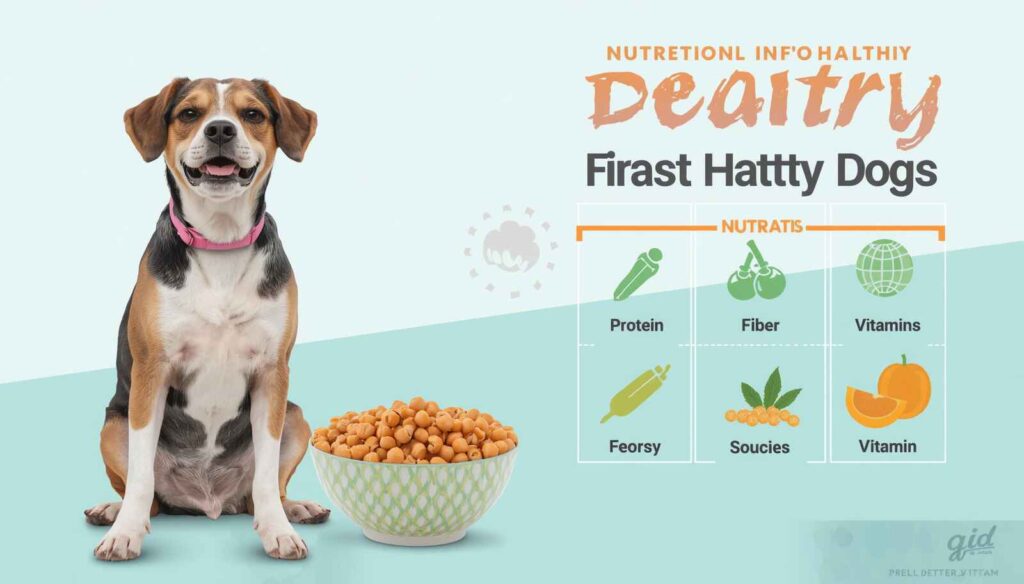
Chickpeas (also called garbanzo beans) are a legume that’s been a staple in human diets for thousands of years. They’re packed with plant-based protein, fibre, and several key nutrients — things that can actually benefit your dog in the right amounts.
Dogs are omnivores. Their bodies can digest and use plant-based foods, including legumes, alongside their regular meat-based diet. That’s why chickpeas occasionally pop up in commercial dog food labels too.
Nutritional Benefits of Chickpeas for Dogs
When given in moderation, chickpeas offer some genuine perks for your pup:
- Protein — supports muscle maintenance, especially useful for active or working dogs
- Dietary fibre — helps with healthy digestion and can ease mild constipation
- Iron and folate — support healthy red blood cells and energy levels
- Magnesium — important for nerve and muscle function
- Zinc — contributes to a healthy immune system and skin
- Low glycaemic index — chickpeas release energy slowly, which can be helpful for dogs with blood sugar concerns (though always consult your vet first)
One thing worth noting: chickpeas are relatively high in carbohydrates. If your dog is overweight or on a low-carb diet, you’ll want to factor that in.
Can Dogs Eat Canned Chickpeas?
Yes — but rinse them thoroughly first. Canned chickpeas are often packed in water with added salt and sometimes preservatives. That sodium is not great for dogs, especially over time. Too much salt can cause excessive thirst, dehydration, and in larger amounts, sodium poisoning.
What to do: Buy canned chickpeas with no added salt if possible, and always rinse them under cold water for at least 30 seconds before feeding. This removes most of the surface sodium and any brine residue.
Can Dogs Eat Raw Chickpeas?
Raw chickpeas are a no. They’re hard, difficult to chew properly, and much harder for dogs to digest. Raw legumes also contain compounds called lectins and phytic acid, which can interfere with nutrient absorption and cause digestive upset — bloating, gas, and stomach cramping.
Always cook chickpeas before giving them to your dog. Plain boiled or steamed chickpeas, with no seasoning whatsoever, are the safest bet.
Can Dogs Eat Dried Chickpeas?
Dried chickpeas need to be soaked overnight and then fully cooked before you feed them to your dog. On their own, dried chickpeas are too hard and pose a choking risk. Once properly soaked and boiled until soft, they’re perfectly safe.
Skip dried chickpeas from flavoured snack packets — those are loaded with salt, spices, and other additives that aren’t dog-friendly.
Can Dogs Eat Roasted Chickpeas?
Roasted chickpeas — the kind you find in supermarkets as a crunchy snack — are generally not a good idea for dogs. Most commercial roasted varieties contain salt, oil, and seasonings like garlic, onion powder, or paprika. Garlic and onion are toxic to dogs, even in small amounts.
Plain, home-roasted chickpeas without any seasoning are technically safer, but the hard, crunchy texture can still be a risk for dogs who gulp their food without chewing properly.
Can Dogs Eat Hummus?
No. Hummus might seem like a harmless way to share chickpeas with your dog, but the ingredients make it a problem. Traditional hummus recipes contain:
- Garlic — toxic to dogs, damages red blood cells
- Lemon juice — can cause digestive upset
- Tahini — high in fat, can trigger pancreatitis in sensitive dogs
- Salt and oil — both problematic in larger quantities
Even a small lick might not cause immediate harm, but hummus isn’t worth the risk. Keep it for yourself.
Can Dogs Eat Chickpea Flour?
Chickpea flour is actually used in quite a few homemade dog treat recipes, and it’s generally considered safe. It’s gluten-free, which makes it a good option for dogs with wheat sensitivities.
If you’re baking treats at home, chickpea flour works well as a base. Just make sure you’re not mixing it with any unsafe ingredients like xylitol, chocolate, grapes, or excessive sugar.
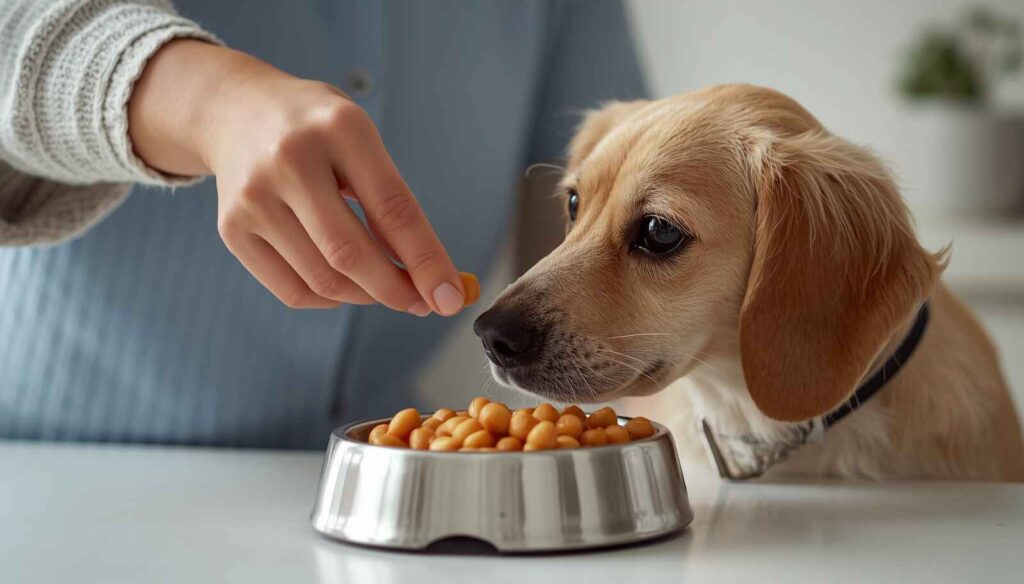
How to Safely Feed Chickpeas to Your Dog
Here are some practical guidelines to follow:
- Start small — Introduce chickpeas gradually. Try a few pieces and wait 24 hours to see how your dog’s stomach handles it. Some dogs are gassier than others when it comes to legumes.
- Plain is best — No salt, no garlic, no onion, no spices of any kind. Just plain cooked chickpeas.
- Serve as a treat, not a meal — Chickpeas should make up no more than 10% of your dog’s daily food intake. They’re a supplement, not a replacement for a balanced diet.
- Mash them for small dogs — If you have a smaller breed, mash or chop the chickpeas to reduce the risk of choking.
- Mix into their regular food — A spoonful of mashed chickpeas stirred into your dog’s usual food is a simple and safe way to add some variety.
When to Avoid Giving Chickpeas to Your Dog
Chickpeas aren’t right for every dog. Here’s when you should skip them:
- Dogs with kidney disease — The protein content can put extra strain on the kidneys
- Dogs with digestive issues — If your dog already has IBS, IBD, or a sensitive stomach, legumes may make things worse
- Dogs prone to bloat (GDV) — Large deep-chested breeds like Great Danes, German Shepherds, and Boxers are especially at risk. The gas from legumes can contribute to bloat, which is a life-threatening emergency
- Dogs on a prescription diet — Always check with your vet before adding new foods
If your dog shows signs of vomiting, diarrhoea, excessive gas, or lethargy after eating chickpeas, stop immediately and contact your vet.
Are Chickpeas Used in Commercial Dog Food?
Yes, and this is something more dog owners are starting to ask about. Chickpeas appear in many grain-free dog food formulas as a carbohydrate source and to boost protein content on the label.
However, the FDA in the US has been investigating a potential link between grain-free diets high in legumes (including chickpeas, lentils, and peas) and a heart condition called Dilated Cardiomyopathy (DCM) in dogs. The research is still ongoing and not yet conclusive, but it’s worth knowing about — especially if your dog eats a grain-free diet regularly.
Talk to your vet if you have concerns, particularly for breeds already predisposed to heart conditions.
FAQ: Can Dogs Have Chickpeas?
1.How many chickpeas can I give my dog?
A small dog can have around 2–3 chickpeas as a treat. A medium dog, 4–6, and a large dog up to 10. These are occasional treat amounts, not daily servings. Always stick to the 10% treat rule.
2.Are chickpeas and garbanzo beans the same thing?
Yes, completely. They’re two names for the same legume. You’ll see both terms used on food labels — they’re interchangeable.
3.Can puppies eat chickpeas?
It’s best to wait until your puppy is fully weaned and established on a balanced puppy diet before introducing any extras. If you do try chickpeas, stick to tiny amounts and watch carefully for any digestive reaction.
4.My dog ate hummus off my plate. Should I worry?
A small lick is unlikely to cause serious harm, but monitor your dog for vomiting, drooling, or lethargy over the next few hours. If they ate a significant amount — or if the hummus had lots of garlic — call your vet to be safe.
5.Can chickpeas help with my dog’s constipation?
The fibre in chickpeas can help with mild constipation. That said, too much fibre can actually make things worse. A small amount of plain cooked chickpeas is fine, but if your dog has ongoing digestive issues, speak to a vet rather than relying on home remedies.
6.Can dogs with allergies eat chickpeas?
Some dogs are allergic to legumes. If your dog has known food sensitivities, introduce chickpeas very slowly and watch for itching, skin irritation, ear problems, or digestive upset — all signs of a potential food reaction.
7.Are chickpeas a good protein source for dogs?
They provide some plant-based protein, but dogs absorb animal-based protein much more efficiently. Chickpeas work best as a supplemental food alongside a meat-based diet, not as a primary protein source.
The Bottom Line
So, can dogs have chickpeas? Yes — plain, cooked chickpeas are a safe and even nutritious occasional treat for most healthy dogs. They offer real benefits like fibre, protein, and key minerals, and many dogs enjoy them.
The key is keeping it simple: plain, cooked, in small amounts, and only occasionally. Avoid all the flavoured or processed forms, never feed raw chickpeas, and always watch your dog after trying any new food for the first time.
When in doubt, your vet is always the best person to ask — especially if your dog has any existing health conditions.
#.Related Articles: