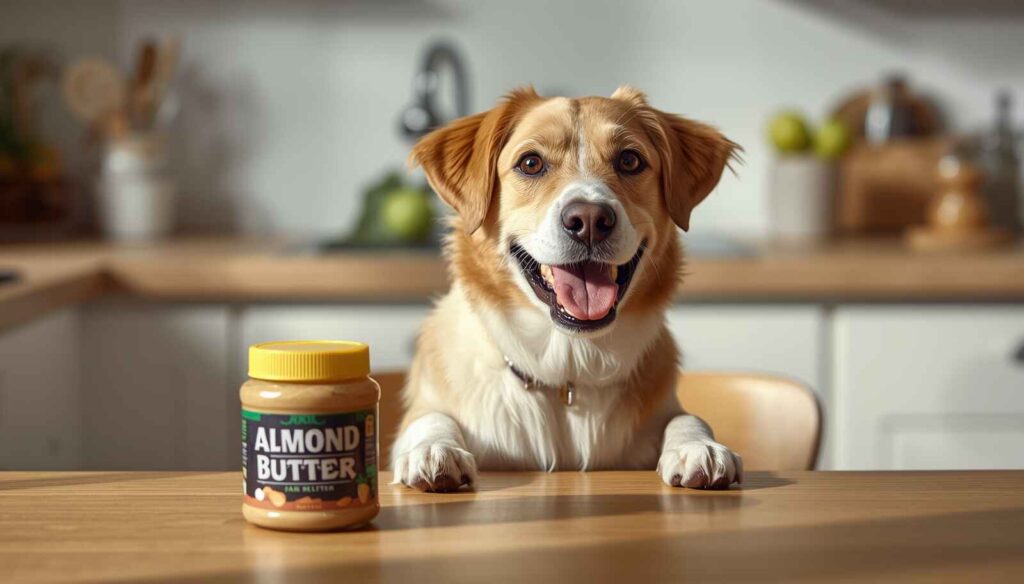
You’re in the kitchen, spreading almond butter on your toast, and those big puppy eyes are staring up at you. Sound familiar? Before you hand over a lick, it’s worth knowing exactly what almond butter does to dogs — because the answer is a bit more nuanced than a simple yes or no.
The good news? A small amount of plain almond butter is not toxic to dogs. But there are some real pitfalls that can make it harmful, and a few things you should always check before sharing any with your pup. Let’s break it all down.
Quick verdict
Plain, unsalted almond butter with no added sweeteners is generally safe for dogs in very small amounts — but it’s not ideal as a regular treat. Always read the label first. Never give almond butter containing xylitol, which is deadly to dogs.
What Is Almond Butter, Exactly?
Almond butter is simply ground-up almonds — that’s it in its purest form. Some versions sold in supermarkets (Woolworths, Tesco, Sobeys, you name it) also contain added salt, sugar, palm oil, or artificial sweeteners. Those extras are where the danger can creep in.
Unlike peanut butter, which has been a dog-treat staple for decades, almond butter is a newer arrival in most households. It’s also higher in certain nutrients but harder for dogs to digest, which matters more than most people realise.
Is Almond Butter Safe for Dogs?
Yes — in moderation, and only the right kind. Almonds themselves are not on the toxic-to-dogs list (unlike grapes, macadamia nuts, or chocolate), but they do sit in a tricky middle ground:
- Dogs can technically eat almonds, but their digestive systems aren’t well-equipped to break them down
- Whole almonds are a choking hazard and can cause digestive blockages, especially in smaller breeds
- Ground into butter, almonds become far safer — but the fat content is still high
Practical tip: Think of almond butter as an occasional reward, not a daily supplement. A fingerful once in a while is unlikely to cause harm. A tablespoon every day absolutely can.
The Xylitol Warning — This Is Non-Negotiable
If you take nothing else from this article, remember this: never give your dog almond butter that contains xylitol.
Xylitol is a sugar substitute used in many “sugar-free” or “natural” nut butters to keep calories down. It’s perfectly safe for humans, but in dogs it causes a rapid, dangerous drop in blood sugar (hypoglycaemia) and can lead to liver failure — even in small amounts.
Signs of xylitol poisoning in dogs: vomiting, weakness, staggering, collapse, or seizures. If your dog has eaten any product containing xylitol, contact your vet immediately. This is a genuine emergency.
In Australia, the UK, and Canada, xylitol may appear on labels as “birch sugar” or simply as part of a sweetener blend — so read carefully every single time.
How to Choose a Safe Almond Butter for Dogs
Not all almond butters are created equal. Here’s what to look for — and look out for — when picking one to share with your dog.
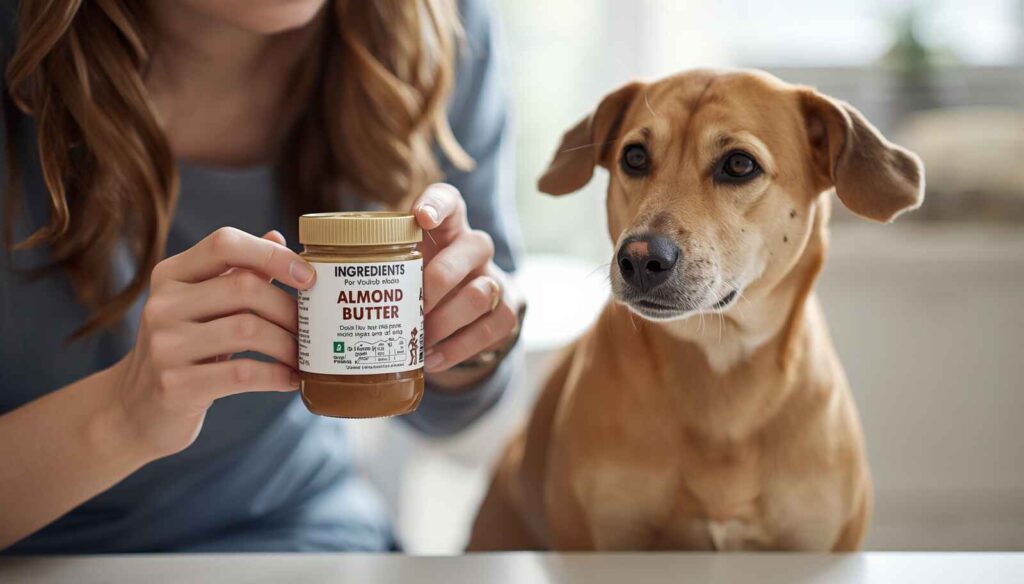
The label checklist
- Ingredients: Should ideally say “almonds” and nothing else
- No xylitol — check for it by name AND by the term “birch sugar”
- No added salt — excessive sodium causes thirst, urination, and in high amounts, sodium ion poisoning
- No chocolate — some flavoured nut butters contain cocoa, which is toxic to dogs
- No artificial sweeteners of any kind — when in doubt, choose plain
- Low or no added sugar — won’t kill them, but not great for their teeth or weight
Note for Australian dog owners: Some imported US brands popular on Amazon AU and iHerb contain xylitol — always verify the ingredients, even on a brand you’ve used before, as formulations can change.
How Much Almond Butter Can a Dog Have?
Even safe, plain almond butter is calorie-dense and high in fat. Too much can lead to weight gain, upset stomachs, and in some cases, pancreatitis — a painful and potentially serious inflammation of the pancreas.
Use this as a rough guide, based on your dog’s size:
| Dog size | Approximate weight | Safe amount (occasional treat) |
|---|---|---|
| Small (e.g. Chihuahua, Pug) | Under 10 kg | ½ teaspoon, once or twice a week |
| Medium (e.g. Beagle, Cocker Spaniel) | 10–25 kg | 1 teaspoon, a few times a week |
| Large (e.g. Labrador, Golden Retriever) | 25–45 kg | Up to 1 tablespoon, a few times a week |
| Giant (e.g. Great Dane, Mastiff) | Over 45 kg | Up to 1.5 tablespoons, a few times a week |
These are guidelines, not gospel. If your dog has existing health issues — obesity, pancreatitis, kidney disease — talk to your vet before adding any high-fat treat to their diet.
Almond Butter vs. Peanut Butter for Dogs: Which Is Better?
Peanut butter has long been the go-to dog treat. Stuffed in a Kong, smeared on a lick mat, used to hide a tablet — it’s a classic. But how does almond butter stack up?
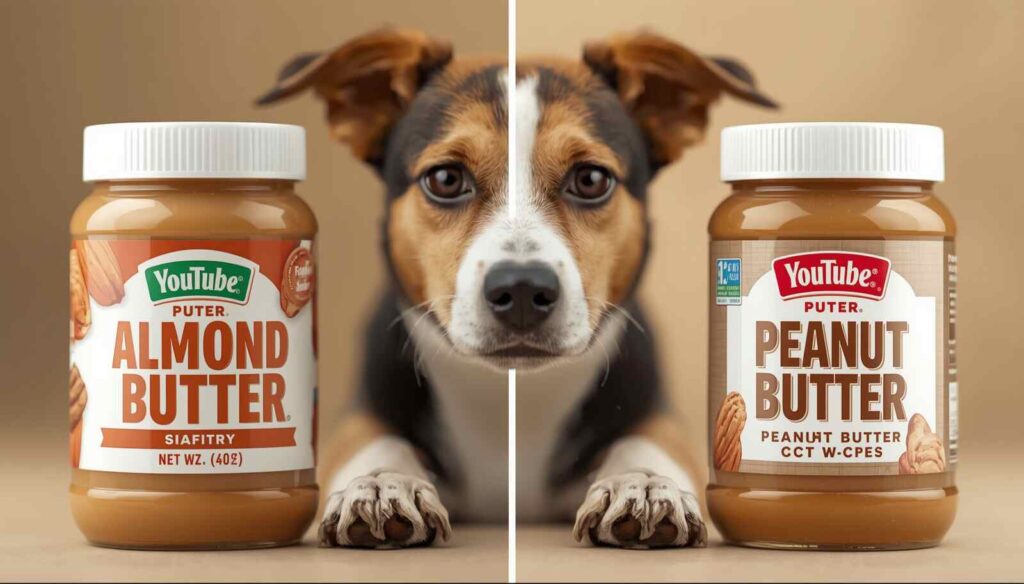
Peanut butter
- Dogs digest it more easily
- Widely available in safe (xylitol-free) forms
- Lower in fat per serving
- Good source of protein and niacin
- More affordable
Almond butter
- Higher in vitamin E and magnesium
- More fibre per serving
- Higher in fat overall
- Harder for dogs to digest
- More risk of label confusion (xylitol)
Honest verdict? Peanut butter wins for dogs — it’s easier to digest, better understood, and the xylitol risk is more widely publicised (so safer brands are easier to find). Almond butter isn’t bad, but it isn’t better either. If your dog tolerates peanut butter well, there’s no compelling reason to switch.
UK dog owners note: Brands like Whole Earth and Meridian sell natural peanut butters that are dog-safe (xylitol-free, low salt). Always double-check even familiar brands, as recipes do change.
Can Dogs Be Allergic to Almonds?
Yes, dogs can have nut allergies, though they’re less common than in humans. If you’re introducing almond butter for the first time, give a very small amount and watch for any reaction over 24–48 hours.
Allergy signs to watch for include:
- Itchy skin, especially around the face, ears, or paws
- Hives or red patches on the skin
- Swelling around the muzzle or eyes
- Vomiting or diarrhoea
- Sneezing or runny eyes
If you see any of these signs, stop giving almond butter and check in with your vet. Severe reactions are rare but possible.
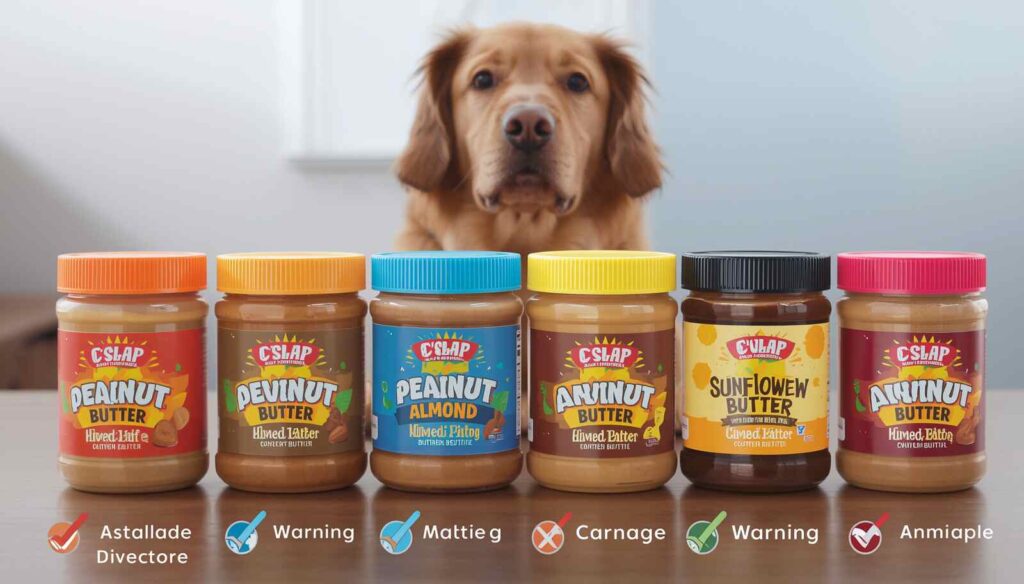
Other Nut Butters: What’s Safe and What’s Not
Peanut butter Generally safe
Best option. Stick to plain, unsalted, xylitol-free versions.
Almond butter Okay in moderation
Plain only. High fat; check labels carefully every time.
Cashew butter Small amounts only
Low toxicity but high fat and phosphorus. Not ideal.
Macadamia butter Never
Macadamia nuts are toxic to dogs. Avoid entirely.
Walnut butter Avoid
Walnuts can cause tremors and seizures in dogs.
Sunflower butter Good alternative
Nut-free, safe for most dogs. Great for nut allergy concerns.
Fun Ways to Use Almond Butter as a Dog Treat
If you’ve checked the label and decided to go ahead, here are a few practical ideas for how to use almond butter with your dog safely:
- Lick mat topping: Spread a thin layer on a lick mat — it slows your dog down and gives them mental stimulation. Great for anxious dogs during grooming or thunderstorms.
- Kong stuffing: Mix a small amount with plain pumpkin puree and freeze it. A fantastic summer treat and keeps dogs occupied for ages.
- Pill disguiser: If your dog is refusing medication, a tiny bit of almond butter around a tablet can do the trick.
- Training reward: Use a silicone squeeze tube filled with almond butter for high-value training rewards — much less messy than spooning it out.
Heads up: Almond butter is quite sticky and can cling to the roof of a dog’s mouth. Some dogs find this distressing. Always make sure fresh water is available after giving any nut butter treat.
Frequently Asked Questions
1.Can puppies eat almond butter?
It’s best to avoid giving almond butter to puppies. Their digestive systems are still developing and are more sensitive to high-fat foods. Stick to vet-approved puppy treats until they’re fully grown.
2.My dog ate a large amount of almond butter — what should I do?
Check the label immediately for xylitol. If xylitol is present, contact your vet or emergency animal hospital right away — don’t wait for symptoms. If the butter was xylitol-free, monitor your dog for vomiting, diarrhoea, or lethargy and call your vet if any symptoms appear or you’re at all unsure.
3.Is almond milk safe for dogs?
Plain, unsweetened almond milk is not toxic in very small amounts, but it offers no nutritional benefit for dogs and many commercial versions contain additives. It’s not worth adding to their diet. Water is always the best drink for dogs.
4.Can almond butter cause pancreatitis in dogs?
It can contribute to it, yes — especially in dogs already prone to the condition. Pancreatitis is triggered by high-fat diets, and almond butter is quite fatty. Dogs who’ve had pancreatitis before should avoid it entirely. Talk to your vet before introducing any high-fat treats.
5.What’s the difference between almond flour and almond butter — is almond flour safe for dogs?
Almond flour is just finely ground almonds and is generally safe in small amounts in home-baked dog treats. It’s a common wheat-flour substitute in grain-free dog biscuit recipes. Just make sure any recipe you use doesn’t include other harmful ingredients like raisins, nutmeg, or xylitol.
6.Are there any dogs who should never have almond butter?
Yes. Dogs with obesity, pancreatitis, kidney disease, or nut allergies should avoid it altogether. Senior dogs and dogs on restricted diets should only have it if a vet gives the all-clear.
7.How do I make a simple homemade almond butter that’s dog-safe?
Easy — just blend raw or dry-roasted (unsalted) almonds in a food processor for 8–10 minutes until smooth. No oil, no salt, no sweeteners needed. You know exactly what’s in it, and it keeps in the fridge for up to two weeks.
The Bottom Line
Can dogs eat almond butter? Yes — with the right precautions. A small amount of plain, unsalted, xylitol-free almond butter is unlikely to harm your dog and can even be a useful training tool or treat enrichment.
But it’s not a superfood for dogs, and it comes with real risks if you choose the wrong product or give too much. Always read the label, keep portions small, and when in doubt — ask your vet. Your dog will love you either way.
#. Related Articles: