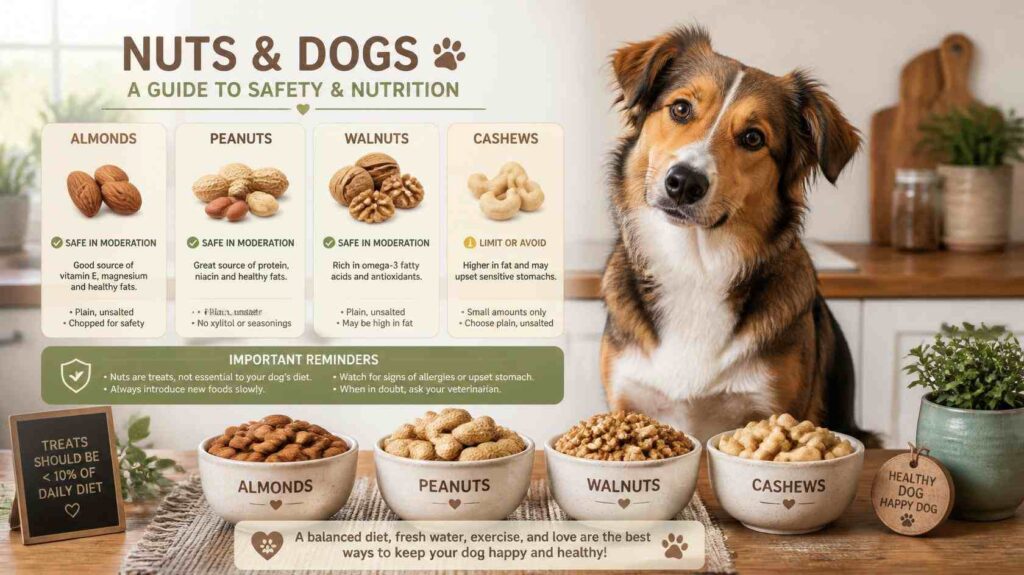
Can dogs eat nuts? The answer depends on the type of nut, the amount eaten, your dog’s size and health, and whether the product contains dangerous ingredients such as chocolate, raisins, xylitol, salt, or seasoning.
You’re halfway through a bowl of mixed nuts on a Saturday afternoon when a few roll off the coffee table and your dog hoovers them up before you can react. Now you’re wondering whether the situation is harmless or needs urgent veterinary attention.
It’s a fair question, and the honest answer is that the risk depends on the nut, the amount eaten, your dog’s size and health, and what else was in the product.
Nuts are not one single category of danger. Some, particularly macadamia nuts, can cause a recognised toxic reaction in dogs. Others are not considered directly poisonous but may still cause choking, intestinal blockage, vomiting, diarrhoea, or pancreatitis. In many real-life cases, the greatest danger is not the nut itself but an added ingredient such as chocolate, raisins, xylitol, onion powder, garlic seasoning, or excess salt.
Dogs do not need nuts in their diet. A complete and balanced dog food should already provide the protein, fats, vitamins, and minerals they require. The practical question is therefore not how to make nuts a regular treat, but how to assess an accidental exposure and decide what to do next.
This guide will help you identify what your dog ate, assess how urgent the situation may be, recognise warning signs, and know when veterinary advice is needed.
Start With the Exposure, Not the Nut List

Before searching for whether a particular nut is toxic, gather the details that determine the actual level of risk.
What You Need to Work Out
- The exact nut or product involved
- Approximately how much your dog ate
- Your dog’s weight, age, and breed
- How long ago the ingestion happened
- Whether shells or packaging were swallowed
- Whether the nuts were fresh, mouldy, salted, coated, or flavoured
- Any symptoms your dog is showing
- Any history of pancreatitis, digestive disease, obesity, or prescription diets
Why the Same Nut Does Not Carry the Same Risk for Every Dog
One plain almond accidentally eaten by a healthy 30 kg Labrador is not the same exposure as an almond swallowed whole by a 4 kg terrier. The smaller dog may face a greater choking or obstruction risk relative to its size.
Health history matters too. A dog that has previously suffered from pancreatitis may react badly to a fatty snack that causes only mild digestive upset in another dog. A single dropped nut is also very different from a dog eating half a bowl, swallowing shells, or tearing into an unidentified mixed snack.
Body size can affect the amount consumed relative to the dog’s weight, but it does not make a toxic nut safe. A large dog can still become ill after eating macadamias or a product containing chocolate, raisins, or xylitol.
Quick Exposure Checklist
- Remove the remaining nuts or product from reach.
- Identify exactly what was eaten.
- Read the complete ingredient list if the food was packaged.
- Estimate how much is missing.
- Record the approximate time of ingestion.
- Confirm your dog’s current weight.
- Check whether shells were swallowed.
- Check whether wrappers, foil, plastic, or other packaging are missing.
- Look for mould, dampness, spoilage, or nuts collected from outdoors.
- Keep the packet or photograph the label.
- Watch for vomiting, weakness, tremors, pain, coughing, or unusual behaviour.
Contact a veterinarian promptly if the exposure involves macadamia nuts, mouldy nuts, an unknown mixed product, dangerous added ingredients, swallowed shells or packaging, or any concerning symptoms. Do not wait for the dog to become visibly ill before seeking advice.
Four Different Ways Nuts Can Harm a Dog
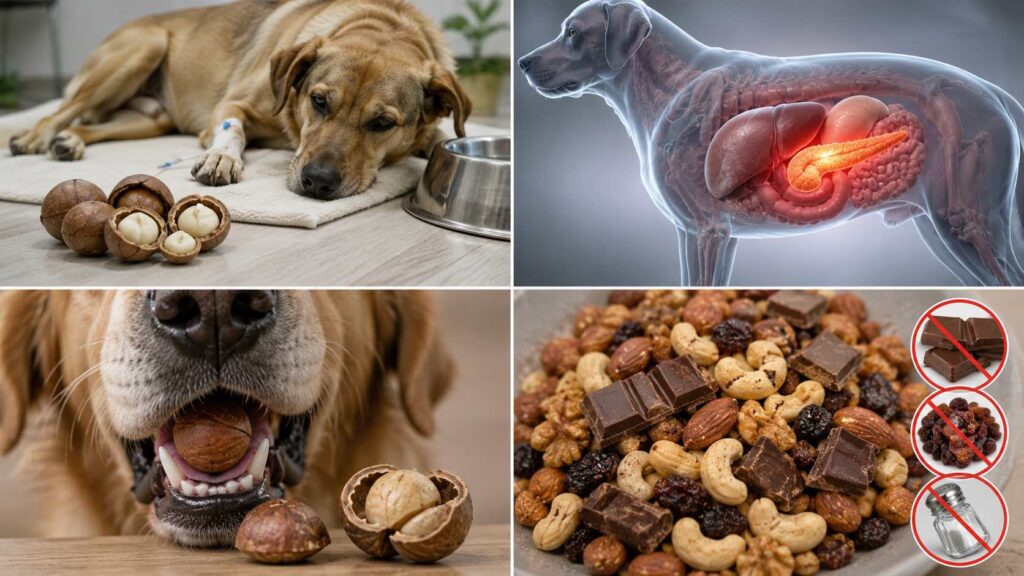
It helps to separate nut-related risks into four categories because they do not all require the same response.
Direct Toxicity
Macadamia nuts can cause a recognised toxic syndrome in dogs. The exact toxic compound has not been identified, but reported signs include:
- Vomiting
- Lethargy
- Weakness
- Hind-leg weakness
- Difficulty standing or walking
- Poor coordination
- Tremors
- Stiffness
- Increased body temperature
Symptoms may not appear immediately. A dog that seems normal shortly after eating macadamias may still develop signs several hours later.
Known or suspected macadamia ingestion warrants prompt veterinary or animal poison-service advice. Do not attempt to calculate a safe amount at home or wait for weakness and tremors to begin. For more detailed veterinary information, see the Merck Veterinary Manual’s page on macadamia nut toxicosis in animals.
Fat-Related Digestive and Pancreatic Problems
Most nuts are high in fat and calories. Eating a large amount may cause:
- Vomiting
- Diarrhoea
- Loss of appetite
- Abdominal discomfort
- Lethargy
- Pancreatitis
Pancreatitis is inflammation of the pancreas and can range from mild to severe. Dogs with previous pancreatitis, obesity, high blood-fat levels, endocrine disease, or a prescribed low-fat diet may be especially vulnerable.
Warning signs that deserve veterinary attention include repeated vomiting, abdominal pain, refusal to eat, marked lethargy, or a hunched or “prayer” posture.
Choking, Dental Injury, and Intestinal Blockage
Whole nuts and shells are hard, irregularly shaped, and easy for dogs to swallow without chewing. This is particularly concerning for:
- Puppies
- Toy and small breeds
- Flat-faced dogs
- Fast eaters
- Dogs with dental problems
- Dogs that gulp food
A nut may become lodged in the throat, while shell fragments can crack teeth, injure the gums, or block the stomach or intestines.
Choking signs may include gagging, pawing at the mouth, repeated swallowing, difficulty breathing, pale or blue gums, or collapse.
An intestinal blockage may not become obvious immediately. Possible delayed signs include repeated vomiting, inability to keep water down, abdominal pain, reduced appetite, lethargy, straining, or reduced stool production.
Hidden Ingredients and Contamination
This is one of the most commonly overlooked risks. In many cases, the nut is not the most dangerous ingredient in the product.
Potential hazards include:
- Chocolate or cocoa
- Raisins or sultanas
- Xylitol or another sugar substitute
- Onion or garlic powder
- Caffeine
- Alcohol
- Excess salt
- Spicy or oily coatings
- Wrappers and packaging
Trail mix, protein bars, cakes, biscuits, granola, chocolate-coated nuts, and flavoured snack mixes should always be assessed as complete products rather than as individual nuts.
Mouldy nuts create a separate concern. Old, damp, decomposing, composted, or fallen nuts may contain tremorgenic mould toxins that can cause agitation, vomiting, poor coordination, tremors, seizures, and increased body temperature. Treat suspected mouldy-nut ingestion as a potential poisoning exposure.
Warning
Do not give salt, hydrogen peroxide, oil, milk, bread, mustard, or other home remedies to make your dog vomit. Inducing vomiting can be dangerous in some situations and should only be done under direct veterinary instruction.
A Practical Nut Risk Guide
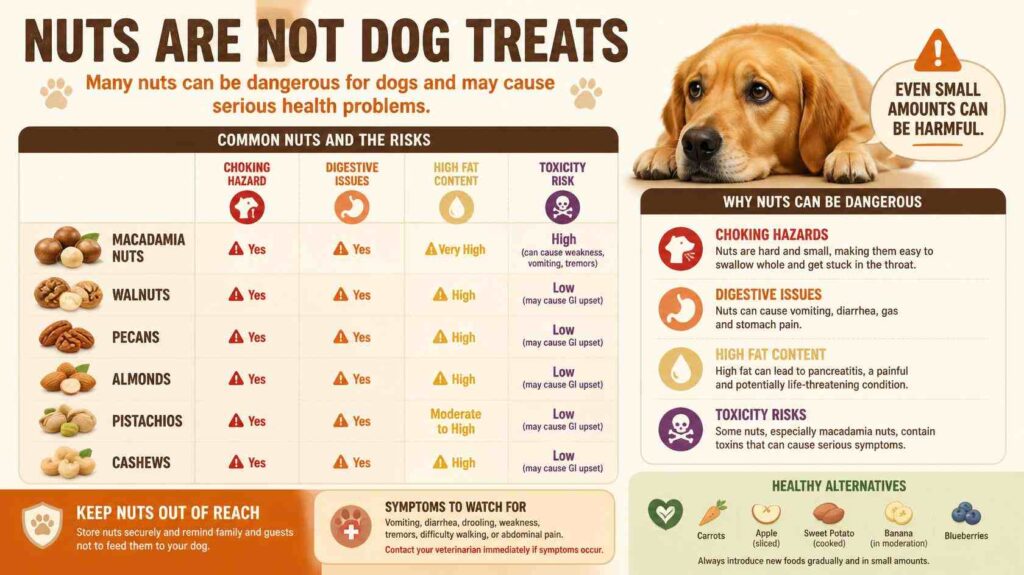
| Nut | Directly toxic? | Main concern | Shell risk | Feeding it intentionally | If your dog eats it accidentally |
|---|---|---|---|---|---|
| Macadamia | Yes, associated with a recognised toxicosis | Weakness, vomiting, tremors, poor coordination, increased temperature | Possible obstruction | Never feed | Contact a veterinarian or animal poison service promptly |
| Walnut | Risk varies by type, condition, and mould exposure | Mould toxins, high fat, digestive upset, obstruction | High | Best avoided | Greater concern if black, mouldy, fallen outdoors, composted, or eaten with the shell |
| Pecan | Not usually described as directly toxic, but not suitable | High fat, mould contamination, digestive upset | High | Avoid | Check freshness, amount, shells, and symptoms |
| Almond | Not generally classified as directly toxic | Choking, blockage, vomiting, digestive upset | High | Avoid as a routine treat | Assess dog size, amount, whether it was swallowed whole, and shell exposure |
| Pistachio | Not recommended | Fat, salt, mould, choking, shell obstruction | High | Avoid | Check seasoning, quantity, mould, and whether shells were swallowed |
| Brazil nut | Not usually directly toxic | Very high fat, digestive upset, pancreatitis risk | Moderate | Avoid | More concerning after multiple nuts or in fat-sensitive dogs |
| Hazelnut | Lower direct-toxicity concern when plain | Choking, blockage, fat, calories | Moderate | Not recommended routinely | Assess dog size, amount, and whether it was swallowed whole |
| Peanut, plain | Usually lower risk | Fat, calories, choking, salt or flavourings | Variable | Only a very small plain amount where appropriate | Check the full product, quantity, and seasoning |
| Cashew, plain | Usually lower risk | Fat, calories, vomiting, diarrhoea | Low once properly shelled | Unnecessary as a regular treat | Monitor based on amount, dog size, and medical history |
A lower-risk classification does not mean that a nut is a good everyday treat. It only means the nut is not known to cause the same direct toxic syndrome associated with macadamias.
There is also no universal “safe number” of nuts. Risk depends on the nut’s size, how it was prepared, the amount eaten, your dog’s body weight, medical history, and whether the product contained shells, coatings, mould, or other ingredients.
Use this table to identify the likely type of risk—not as permission to feed nuts regularly.
The Form of the Nut Matters as Much as the Nut Itself
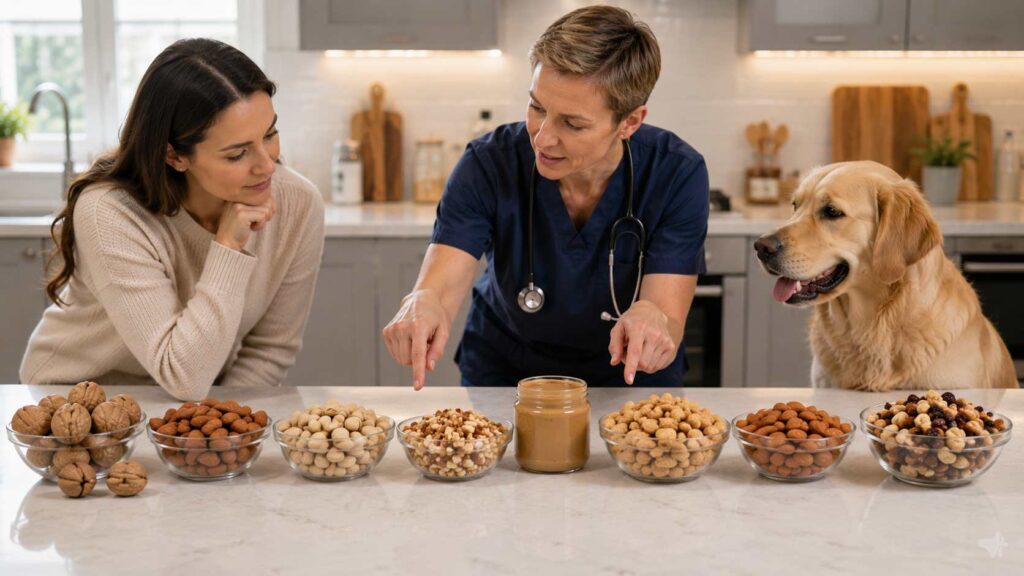
Whole Versus Chopped or Ground
Whole nuts carry the greatest choking risk, especially for small dogs, puppies, flat-faced breeds, and dogs that gulp food without chewing.
Chopping or grinding may reduce that physical risk, but it does not remove toxicity, fat, or calorie concerns. A ground macadamia is still toxic, and ground Brazil nuts remain extremely high in fat.
Shelled Versus Unshelled
Nut shells are hazardous even when the nut inside is not directly toxic. They are hard, difficult to digest, and may:
- Fracture teeth
- Injure the gums or mouth
- Become lodged in the throat
- Block the stomach or intestines
Fallen nuts found under trees or in compost are particularly concerning because they may still have shells and may also be mouldy or decomposing.
Plain Versus Salted, Roasted, or Flavoured
Roasting does not neutralise macadamia toxicity.
Salted, oil-roasted, honey-coated, and flavoured nuts introduce additional concerns such as:
- Excess sodium
- Added fat
- Onion or garlic powder
- Spices
- Sugar or sweet coatings
- Chocolate or cocoa
Even when the underlying nut is considered lower risk, its coating or seasoning may change the situation completely.
Nut Butter Versus Whole Nuts
Nut butter removes most of the whole-nut choking risk, but it brings different problems.
Always check the label for:
- Xylitol or other sweeteners
- Cocoa or chocolate
- Added sugar
- Salt
- Excess oil
- Other nut varieties, including macadamias
Do not assume a familiar brand is automatically safe. Recipes and product ranges can change, so check the label each time you buy a new jar.
Trail Mix and Mixed Products
Treat trail mix, protein bars, granola, cakes, biscuits, and snack mixes as multi-ingredient exposures rather than simple nut exposures.
The most urgent ingredient may be:
- Raisins or sultanas
- Chocolate
- Xylitol
- Caffeine
- Macadamia nuts
- Alcohol
- Swallowed packaging
Assess the full ingredient list before deciding how serious the exposure may be.
My Dog Ate Nuts—What Should I Do Now?

1. Stop Further Access
Remove the remaining food, seal the packet, and check nearby floors, bags, bins, furniture, and worktops for anything else your dog may have reached.
2. Identify Everything Involved
Write down or photograph:
- The nut variety
- The product name
- The complete ingredient list
- Any coating or flavouring
- The estimated amount missing
- Whether shells were present
- Whether packaging was swallowed
- The approximate time of ingestion
Keep the packet available in case your veterinarian needs the ingredient or nutrition information.
3. Contact a Veterinary Professional When Needed
Seek prompt advice if the exposure involves:
- Macadamia nuts
- Mouldy, damp, composted, or fallen nuts
- Black walnuts
- An unidentified nut
- Trail mix or another mixed product
- Chocolate, raisins, sultanas, or xylitol
- A sugar-free spread with an unknown sweetener
- Swallowed shells or packaging
- A dog with previous pancreatitis
- Any vomiting, weakness, tremors, pain, breathing difficulty, or unusual behaviour
If you’re unsure whether your dog’s exposure is an emergency, contact your veterinarian immediately. The ASPCA Animal Poison Control Center also provides guidance on responding to potential pet poisoning emergencies.
4. Follow Professional Instructions
Do not try to make your dog vomit unless a veterinary professional specifically instructs you to do so.
Avoid giving:
- Salt
- Hydrogen peroxide
- Oil
- Milk
- Bread
- Mustard
- A large meal intended to “soak up” the food
Do not force food or water into a dog that is vomiting, choking, unusually drowsy, or struggling to swallow.
Warning
Breathing difficulty, collapse, seizures, severe tremors, inability to stand, repeated vomiting, a swollen or painful abdomen, or pale or blue gums require immediate veterinary care.
Veterinary poison resources vary by country. UK owners may be directed to Animal PoisonLine, while Australian owners can contact the Animal Poisons Helpline. In Canada and the United States, an emergency veterinary clinic or recognised pet poison service may be appropriate. Keep your regular vet and nearest emergency clinic details saved before an accident happens.
Symptoms That Change the Level of Urgency

Possible Mild Digestive Signs
- A single episode of vomiting
- Soft stool
- Mild temporary nausea
- Slightly reduced appetite
These signs should not automatically be treated as harmless. The response still depends on the nut, amount, added ingredients, shells, and your dog’s medical history.
Signs Consistent With Macadamia Toxicosis
- Hind-leg weakness
- Difficulty standing or walking
- Poor coordination
- Tremors
- Vomiting
- Lethargy
- Stiffness
- Increased body temperature
Signs of Choking or Airway Obstruction
- Gagging
- Pawing at the mouth
- Repeated swallowing
- Coughing
- Laboured or noisy breathing
- Pale or blue gums
- Collapse
Signs of Gastrointestinal Obstruction
- Repeated vomiting
- Inability to keep water down
- Abdominal pain
- Reduced appetite
- Lethargy
- Straining
- Reduced stool production
Signs of Pancreatitis
- Repeated vomiting
- Abdominal pain
- A hunched or “prayer” posture
- Refusal to eat
- Marked lethargy
- Diarrhoea
Signs of Mould-Toxin Exposure
- Agitation
- Tremors
- Poor coordination
- Seizures
- Increased body temperature
- Sudden neurological changes
Why “My Dog Seems Fine” Is Not Always Reassuring
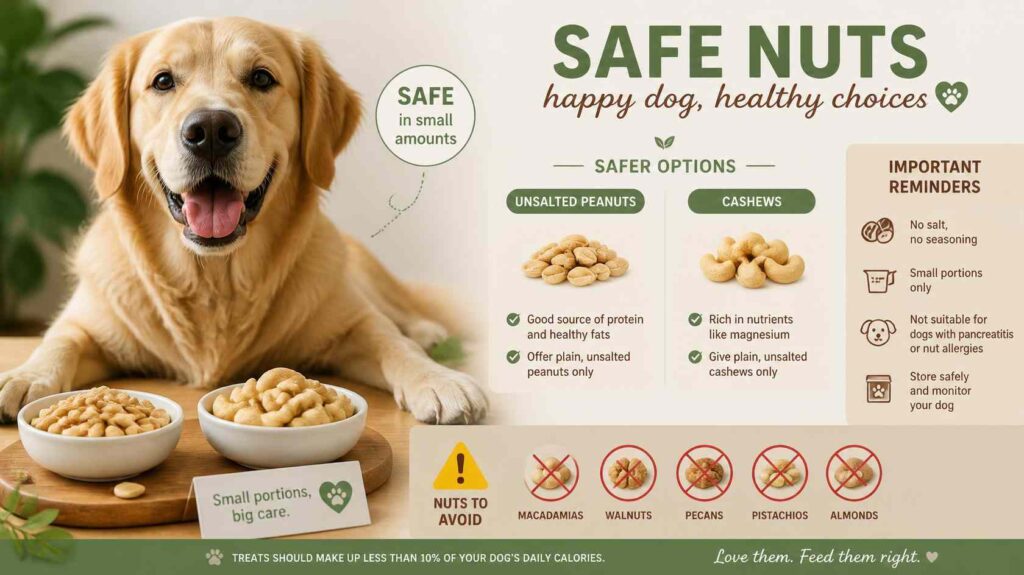
Some serious effects do not appear immediately. Macadamia toxicosis, pancreatitis, intestinal obstruction, and mould-related poisoning may take several hours—or longer in the case of a blockage—to become obvious.
One episode of vomiting does not prove that everything has left the stomach. Shell fragments, whole nuts, wrappers, or other ingredients may still remain in the digestive tract.
Dog size changes the amount consumed relative to body weight, but it does not change the identity of the hazard. A small dog may receive a proportionally larger exposure, while a large dog can still become seriously ill after eating a toxic nut or a dangerous mixed product.
Dogs at Greater Risk
Some dogs need a lower threshold for veterinary advice.
- Puppies and small breeds: They receive a larger relative dose and are more likely to swallow nuts whole.
- Flat-faced breeds and fast eaters: They may chew less effectively and face a higher choking risk.
- Dogs with previous pancreatitis: Even a modest fatty exposure may trigger another episode.
- Overweight dogs or dogs with diabetes or high blood-fat levels: Nuts add concentrated fat and calories.
- Dogs with kidney or heart disease: Salted products may be especially unsuitable.
- Older dogs and dogs with digestive disease: Vomiting, dehydration, and obstruction may have greater consequences.
- Dogs on prescription or low-fat diets: Nut exposure may interfere with medical management.
Vet Advice
Speak with your veterinarian before offering unusual human foods to a dog with pancreatitis, gastrointestinal disease, kidney or heart disease, obesity, diabetes, or a prescription diet. Safer, lower-fat dog treats are usually a better choice than nuts.
Are the Nutritional Benefits Even Worth It?
Nuts provide protein, fat, fibre, and some vitamins and minerals, but dogs can obtain those nutrients from safer and more appropriate foods. A complete and balanced commercial dog food is formulated to supply the protein, essential fats, vitamins, and minerals your dog needs in the correct proportions.
Adding nuts does not usually correct a nutritional deficiency. More often, it adds concentrated calories, fat, and avoidable risk to a diet that is already complete.
For dogs that enjoy sharing a snack, safer choices include small pieces of:
- Carrot
- Cucumber
- Green beans
- Seedless apple with the core removed
Cut treats into pieces suited to your dog’s size, and keep all extras within their daily calorie allowance.
Common Mistakes Owners Make With Nuts

- Assuming every nut carries the same risk as a macadamia
- Treating “not toxic” as meaning “recommended”
- Offering a human-sized handful instead of a dog-sized portion
- Ignoring the risks from shells
- Failing to read the full ingredient list on flavoured or mixed products
- Assuming all peanut butter is safe without checking for xylitol
- Overlooking chocolate, raisins, or sultanas in trail mix
- Waiting for symptoms before seeking advice after macadamia exposure
- Believing roasting removes toxicity
- Trying home remedies to induce vomiting
- Repeating the exposure because the dog appeared fine last time
A dog tolerating a food once does not prove that the same food, amount, or product will be safe again.
Preventing the Next Accident
Store nuts and nut products in sealed containers inside cupboards your dog cannot open. Countertops, coffee tables, handbags, lunchboxes, and low shelves are not secure storage for a determined dog.
Use bins with locking lids, and ask visitors not to share snacks without checking with you first.
If walnut, pecan, or macadamia trees grow nearby, collect fallen nuts regularly. Nuts left outdoors may become mouldy, and their shells can create additional choking and obstruction risks.
Check the ingredient label each time you buy nut butter or a snack product. Recipes can change, and a previously suitable product may later contain xylitol, chocolate, macadamias, or another unsafe ingredient.
The Bottom Line
Dogs do not need nuts, and most are better excluded from the regular treat rotation.
Macadamia ingestion warrants prompt veterinary advice because symptoms may develop after the dog initially appears well. Other nuts may not be directly toxic, but they can still cause choking, intestinal blockage, digestive upset, pancreatitis, or problems related to salt, mould, shells, and hidden ingredients.
After an accidental exposure, focus on four details:
- What your dog ate
- How much was eaten
- When it happened
- Whether any symptoms are present
When the nut or product is unknown, the ingredients are concerning, shells or packaging were swallowed, or your dog seems unwell, contact a veterinarian rather than waiting for the situation to worsen.
Frequently Asked Questions
1.Can Dogs Eat Any Nuts Safely?
A small amount of plain, unsalted, properly shelled peanut or cashew is generally lower risk for a healthy adult dog than many other nuts. However, neither is nutritionally necessary, and both add fat and calories.
Whole nuts can also be choking hazards, so safer dog treats are usually the better choice.
2.My Dog Ate One Nut—Should I Worry?
It depends on the type of nut, your dog’s size, and whether it was plain, shelled, or part of another product.
One plain peanut or cashew is unlikely to cause serious illness in most healthy adult dogs. One macadamia, an unknown nut, a mouldy nut, or a nut swallowed with its shell should be discussed with a veterinarian.
Also check whether your dog ate any packaging or other ingredients at the same time.
3.How Quickly Do Macadamia Symptoms Appear?
Signs often develop within several hours, although the timing and severity can vary. Possible symptoms include vomiting, lethargy, hind-leg weakness, tremors, stiffness, and difficulty walking.
Do not use an early absence of symptoms as reassurance. Contact a veterinarian or animal poison service as soon as you know or suspect that macadamias were eaten.
4.Can Dogs Eat Nut Shells?
No. Nut shells are difficult to digest and may cause:
Choking
Dental fractures
Mouth injuries
Stomach or intestinal blockage
A swallowed shell should be treated like any other potentially obstructive foreign object. Contact your veterinarian for advice, particularly if your dog is small or develops vomiting, pain, reduced appetite, or difficulty passing stool.
5.Can Mouldy Nuts Really Cause Seizures?
Yes. Certain moulds can produce tremorgenic mycotoxins that affect the nervous system. Exposure may cause agitation, poor coordination, tremors, increased body temperature, or seizures.
This is separate from the normal fat or toxicity profile of the nut. Suspected ingestion of mouldy, damp, composted, or decomposing nuts requires prompt veterinary attention.
6.Is Peanut Butter Safe for Dogs?
Plain peanut butter can be given occasionally in a small amount if it contains no xylitol, chocolate, macadamias, or other harmful ingredients.
Choose an unsalted product without unnecessary sugar or added oils, and check the label every time you open a new jar. Product formulas can change.
Peanut butter is high in fat and calories, so it may be unsuitable for dogs with pancreatitis, obesity, diabetes, or a prescribed low-fat diet.
7.Should I Make My Dog Vomit After They Eat Nuts?
Not unless a veterinarian or animal poison specialist specifically instructs you to do so.
Inducing vomiting is unsafe in some situations, including when a dog is choking, drowsy, having seizures, struggling to swallow, or has swallowed a sharp object. Home remedies such as salt, mustard, oil, or hydrogen peroxide can cause additional harm.
Contact a veterinary professional, explain exactly what was eaten, and follow their instructions.
#. Related Articles: