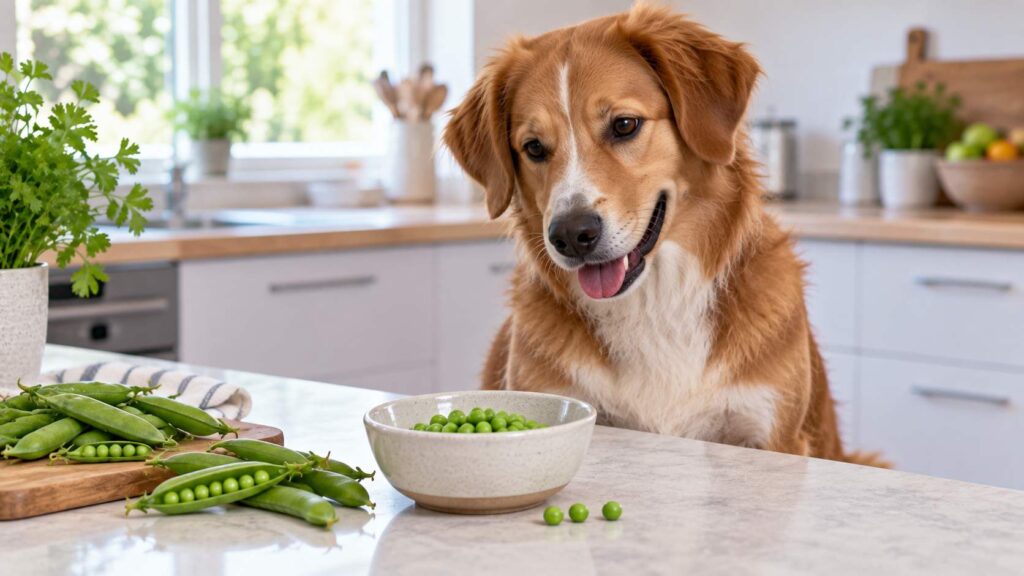
Can dogs eat peas? Yes, most healthy dogs can eat plain peas in small amounts. But before you toss a few from your dinner plate, it’s worth checking what you’re actually holding—because “peas” can mean several different foods and preparations.
Whether they’re a sensible choice depends on four things: the type of pea, how it was prepared, how much your dog ate, and whether your dog has any dietary or medical restrictions.
This guide covers all four, whether you’re considering peas as a treat, your dog has already eaten some, or you’ve noticed peas on a dog food ingredient label.
Step One: Work Out What You’re Actually Dealing With
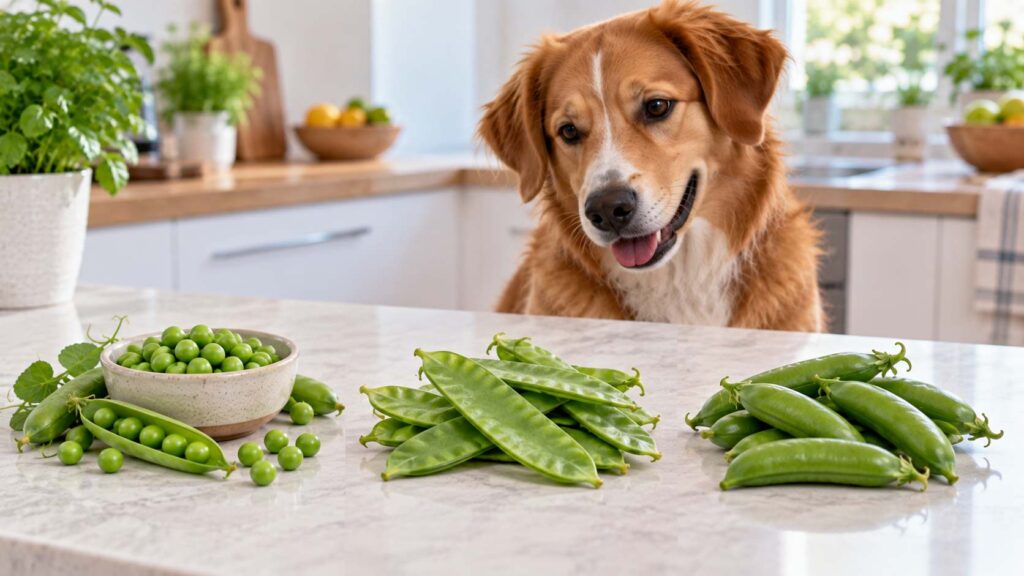
“Peas” covers more ground than most people realise, and the differences matter.
Garden or English Peas
These are the classic round green peas sold fresh, frozen, or inside a pod. The peas themselves can be offered plain in small amounts. Their tougher outer pods are usually removed rather than fed.
Snow Peas (Mangetout)
Snow peas have a flat, edible pod. They can be offered plain in small amounts, but consider the pod’s texture if you have a very small dog or one that tends to gulp food without chewing.
Sugar Snap Peas
Sugar snap peas are plumper and crunchier than snow peas, and the pod is also edible. For smaller dogs or enthusiastic eaters, chopping them into manageable pieces is a sensible precaution.
Frozen Peas
Plain frozen peas can be convenient, but they do not need to be served frozen. Thawing or lightly cooking them gives a softer texture, which may suit puppies, small dogs, dogs with dental problems, or dogs that gulp their food.
Canned or Tinned Peas
Canned peas are less suitable as a routine treat because many contain added sodium. If you’re comparing products, check the label and favour plain options without added salt rather than assuming every tin is the same. Veterinary nutrition guidance similarly cautions against routinely feeding high-sodium canned peas.
“Sweet Peas” — Identify the Plant First
Don’t assume that every plant with “pea” in its common name is the same vegetable sold for eating. Garden plants can have confusing common names and may belong to different species.
If your dog has eaten an unidentified pea-like plant, don’t guess from appearance alone. Identify the plant or contact your veterinarian or a pet poison service for guidance.
Quick Identification Checklist
Before deciding whether to share the peas, check what you’re actually dealing with:
- Garden or English peas
- Snow peas
- Sugar snap peas
- Frozen peas
- Canned or tinned peas
- Peas from a prepared meal
- An unidentified plant or pea type
What Came With the Peas Often Matters More Than the Peas Themselves
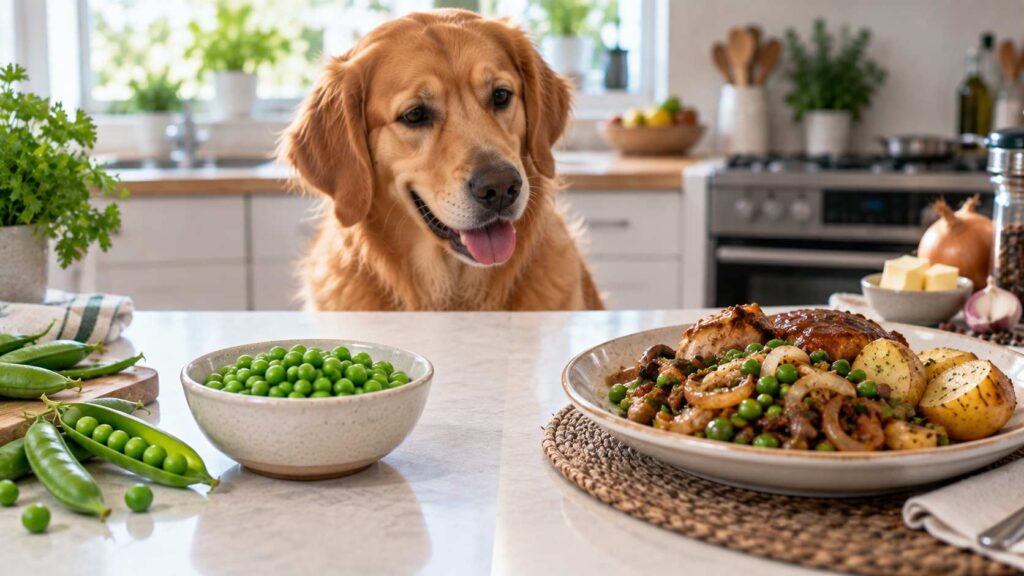
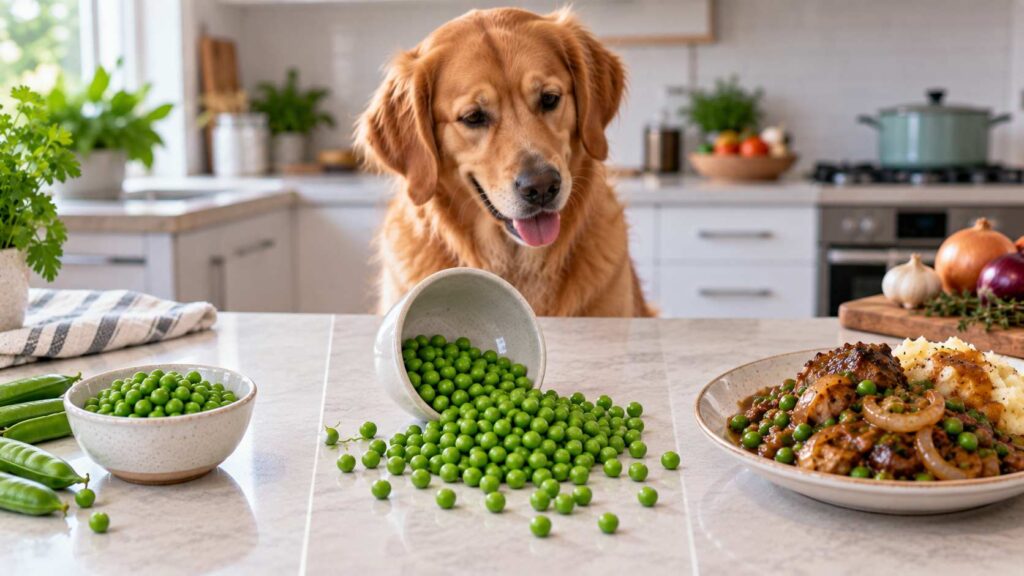
This is where many real-life exposures become more complicated. Your dog may not have eaten a bowl of plain peas; they may have eaten peas from your dinner, where the other ingredients can change the risk completely.
Plain Peas
Plain, unseasoned peas are the simplest scenario. For most healthy dogs, a small amount is unlikely to cause a problem beyond possible digestive upset if the food is new to them.
Peas With Butter, Cream, or Cheese
Once butter, cream, or cheese is added, you’re no longer dealing with a simple vegetable treat. The extra fat and calories may be particularly unsuitable for overweight dogs or dogs whose veterinarian has recommended a low-fat diet.
For a dog with a history of pancreatitis, assess the whole dish, not just the peas. Dietary management is an important part of pancreatitis care.
Peas in Gravy
Gravy can contain a substantial amount of salt and may also contain onion or garlic. Those ingredients deserve more attention than the peas themselves.
Onion and garlic can damage dogs’ red blood cells, and importantly, cooking does not make them safe. Clinical signs may also be delayed rather than appearing immediately after ingestion.
Peas From Curry, Pie, Casserole, or Takeaway
Here, asking “Are peas safe?” is the wrong question. Check the whole recipe.
Look for ingredients such as:
- onion
- garlic
- concentrated seasoning
- very salty sauces
- large amounts of butter, cream, or other rich ingredients
If you don’t know what was in the dish, don’t assume the visible peas were the only thing your dog ate.
Mushy Peas
Mushy peas are especially relevant for UK owners. Recipes and packaged products vary, so check the label rather than assuming they’re equivalent to plain cooked peas.
Added salt, butter, sauces, or other flavourings can make a human side dish less suitable for your dog.
Pea Soup or Pea Purée
A homemade purée containing only plain peas and water is very different from restaurant or packaged pea soup. Soup may contain onion, garlic, stock, cream, or substantial amounts of sodium.
Again, the recipe matters more than the word “pea.”
Warning: Check the Whole Dish
In many “my dog ate peas” situations, the peas themselves are not the main concern. Check for:
- onion
- garlic
- excessive salt
- rich sauces or gravies
- butter or cream
- seasoning blends
- coatings on processed snacks
If onion or garlic was involved, don’t wait for symptoms before seeking veterinary advice; signs of Allium toxicity can be delayed.
My Dog Already Ate Some Peas — What Now?
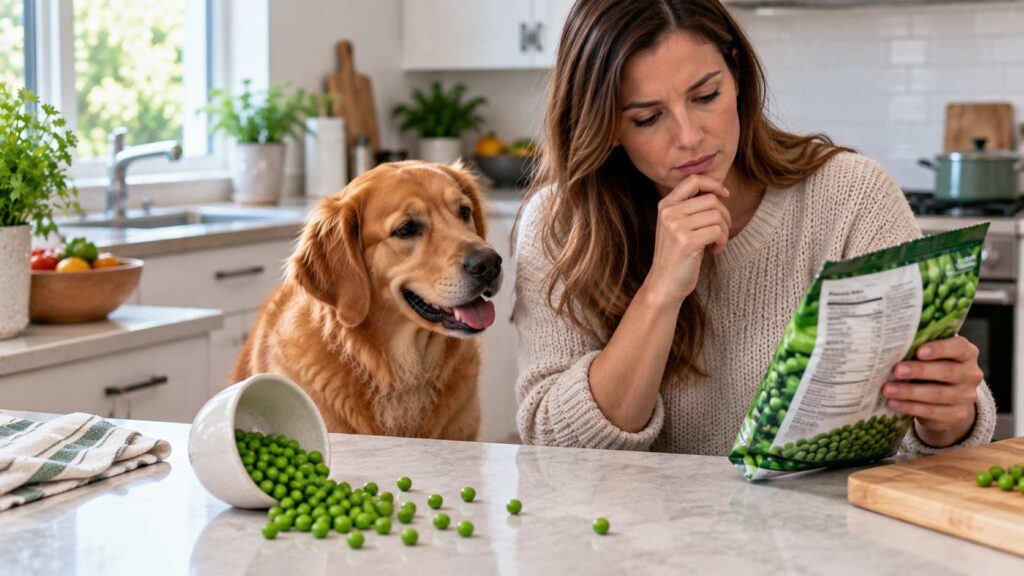
If this is why you’re here, assess what happened in order rather than judging the exposure from the word “peas” alone.
Step 1: What Exactly Was Eaten?
Was it:
- a few plain peas?
- frozen peas?
- pea pods?
- peas from a cooked meal?
- soup or gravy?
- a seasoned or processed pea snack?
That distinction immediately changes what you need to worry about.
Step 2: Roughly How Much?
A few dropped peas are very different from a dog helping itself to an entire serving. You don’t need a perfect measurement, but try to estimate the amount as accurately as you can.
Step 3: What Else Was in the Food?
Check the packaging, ingredient list, recipe, or takeaway information if available.
Pay particular attention to onion, garlic, concentrated seasonings, excessive salt, and rich ingredients.
Step 4: How Is Your Dog Doing Right Now?
A dog that remains bright and comfortable after eating a few plain peas is a very different situation from one that develops repeated vomiting, marked lethargy, abdominal discomfort, difficulty swallowing, or breathing problems.
A little gas or a single soft stool can occur after an unfamiliar food, but persistent, worsening, or significant symptoms should not simply be blamed on fibre.
Quick Decision Guide
| Situation | General Concern Level | Main Issue to Assess | What to Do |
|---|---|---|---|
| A few plain peas | Usually low | Individual tolerance | Observe your dog |
| Large amount of plain peas | Moderate | Digestive upset | Monitor closely and contact your vet if symptoms develop or persist |
| Hard/frozen peas in a small or gulping dog | Variable | Swallowing and texture | Watch for coughing, gagging, choking, or difficulty swallowing |
| Peas with gravy or from a prepared dish | Higher uncertainty | Other ingredients | Check the full recipe or ingredient list |
| Peas from food containing onion or garlic | Higher concern | Toxic co-ingredient | Contact your veterinarian promptly |
| Peas followed by repeated vomiting, marked lethargy, pain, or worsening illness | Higher concern | Clinical symptoms | Seek veterinary advice |
| Difficulty breathing or active choking | Emergency | Airway obstruction | Seek emergency veterinary care immediately |
If you’re unsure what your dog ate, the amount was substantial, your dog has an existing medical condition, or the meal contained potentially harmful ingredients, contact your veterinarian rather than waiting for symptoms to prove there’s a problem.
Thinking of Feeding Peas on Purpose? Treat It as a Trial, Not Just a Serving
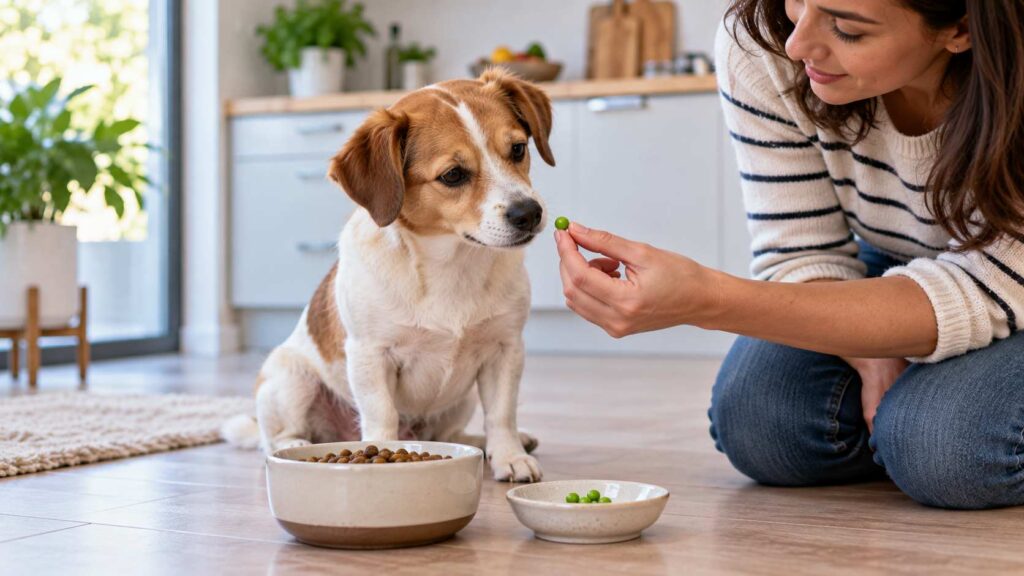
If your dog hasn’t had peas before, introduce them as you would any new food: in a small amount and without changing anything else at the same time.
First Exposure
Offer a small amount, then watch how your dog handles it over the next day or two. Introducing one new food at a time makes it much easier to identify the cause if your dog develops gas, loose stool, vomiting, or another digestive change.
Keep the Preparation Simple
Serve peas plain and unseasoned, with the texture suited to your dog’s size and eating style. A large dog may manage a sugar snap pea comfortably, while a small dog or enthusiastic gulper may do better with it chopped into smaller pieces.
Think About What the Peas Are Replacing
Peas make the most practical sense when they replace a richer treat rather than being added on top of everything your dog already eats.
A few peas instead of a piece of cheese, for example, may reduce treat calories. Adding peas to an already adequate diet simply adds more food.
Treat Calories Still Count
Even nutritious extras should stay within your dog’s overall treat allowance. WSAVA recommends that treats make up no more than about 10% of a dog’s daily calorie intake, with the main diet providing the remaining nutrition.
Quick Tips for Feeding Peas
- Keep them plain — no salt, butter, or seasoning.
- Introduce them gradually rather than by the bowlful.
- Adjust size and texture for small dogs and gulpers.
- Watch for repeated gas, loose stool, vomiting, or discomfort.
- Count peas as treats, not “free” food.
- Stop offering them if they consistently upset your dog’s stomach.
“Good for Dogs” Doesn’t Automatically Mean “Necessary for Dogs”
Peas contain useful nutrients, but that doesn’t mean your dog needs them added to an already balanced diet.
What Peas Can Contribute
Peas provide fibre, some vitamins and minerals, plant protein, and relatively modest calories compared with many richer human-food treats.
Why This Needs Context
Finding a nutrient in a food is not the same as proving that an occasional serving produces a meaningful health benefit.
A dog eating a complete and balanced diet should already be receiving the nutrients needed from their main food. Peas are therefore best viewed as an optional extra, not a nutritional foundation or “superfood.”
When Peas Make Practical Sense
They can work well as:
- an occasional treat
- a small training reward
- a lower-calorie substitute for something richer
When They Add Little Value
There is little reason to add peas if:
- your dog’s main diet is already balanced
- your dog doesn’t particularly like them
- they repeatedly cause digestive upset
- they’re simply adding calories rather than replacing another treat
Some Dogs Need a More Careful Answer
Puppies
Keep portions small and consider texture and swallowing ability. Peas should remain a minor extra; a complete puppy diet needs to provide the nutrition required for growth.
Senior Dogs
Age alone doesn’t make peas unsafe, but dental problems, digestive sensitivity, chronic disease, or a prescription diet may change whether they’re appropriate.
Dogs With Kidney Disease
Avoid blanket rules such as “all dogs with kidney disease must avoid peas.” Veterinary kidney diets are formulated around several nutritional targets, and the right choice depends on the dog’s diagnosis, disease stage, bloodwork, and current diet.
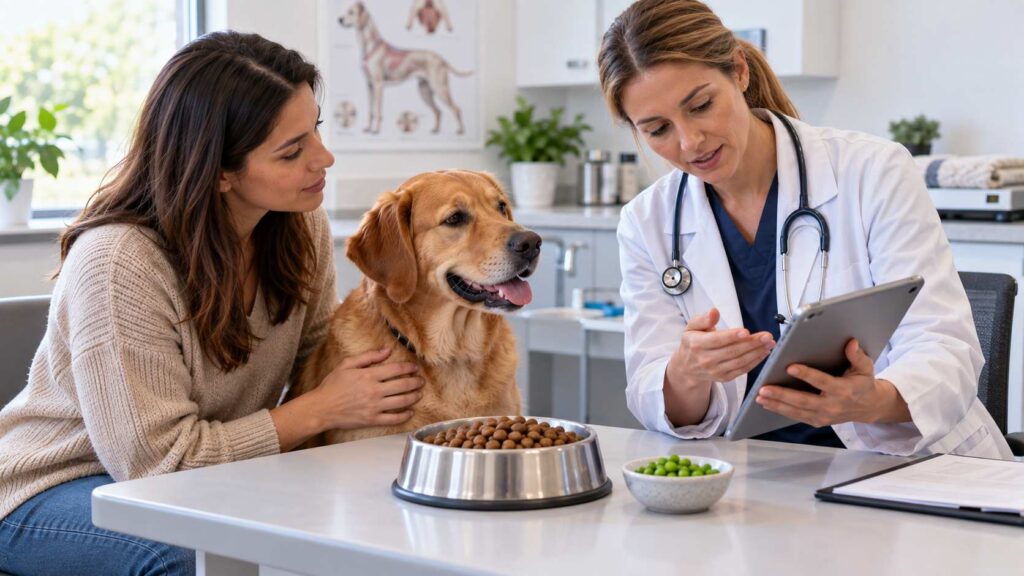
If your dog has kidney disease or is eating a therapeutic renal diet, check with your veterinarian before adding peas or other regular extras.
Dogs With Gastrointestinal Disease
Dogs with chronic diarrhoea, inflammatory digestive disease, or a particularly sensitive stomach may respond poorly to unnecessary dietary changes. If your dog is already being managed for a gastrointestinal condition, introduce new foods only with veterinary guidance.
Dogs With a History of Pancreatitis
Plain peas are naturally low in fat, but the rest of the meal matters. Butter, cream, cheese, gravy, and fatty table scraps are far more relevant than a few plain peas.
Low-fat feeding is an important part of dietary management for dogs with pancreatitis, so treats should fit the plan recommended by your veterinarian.
Dogs With Diabetes or Weight-Management Needs
Consistency matters when calories and blood-glucose control are being managed. Don’t assume a vegetable treat is automatically insignificant; include it in the feeding plan your veterinary team has recommended.
Dogs on Prescription or Elimination Diets
Do not add peas casually if your dog is on a therapeutic or elimination diet. Even a seemingly harmless extra can interfere with a carefully controlled feeding trial or medical diet.
WSAVA specifically advises owners of dogs with medical conditions, dietary sensitivities, or veterinary-prescribed diets to check with their veterinary healthcare team before choosing treats.
When to Check With Your Vet Before Adding Peas
- Your dog has kidney disease.
- Your dog has chronic gastrointestinal disease.
- Your dog has a history of pancreatitis.
- Your dog is on a prescription diet.
- Your dog is undergoing an elimination-food trial.
- Your dog has reacted badly to peas before.
- Your dog develops persistent vomiting, diarrhoea, abdominal discomfort, or lethargy after eating them.
Peas as a Treat vs Peas in Commercial Dog Food — A Different Question Entirely
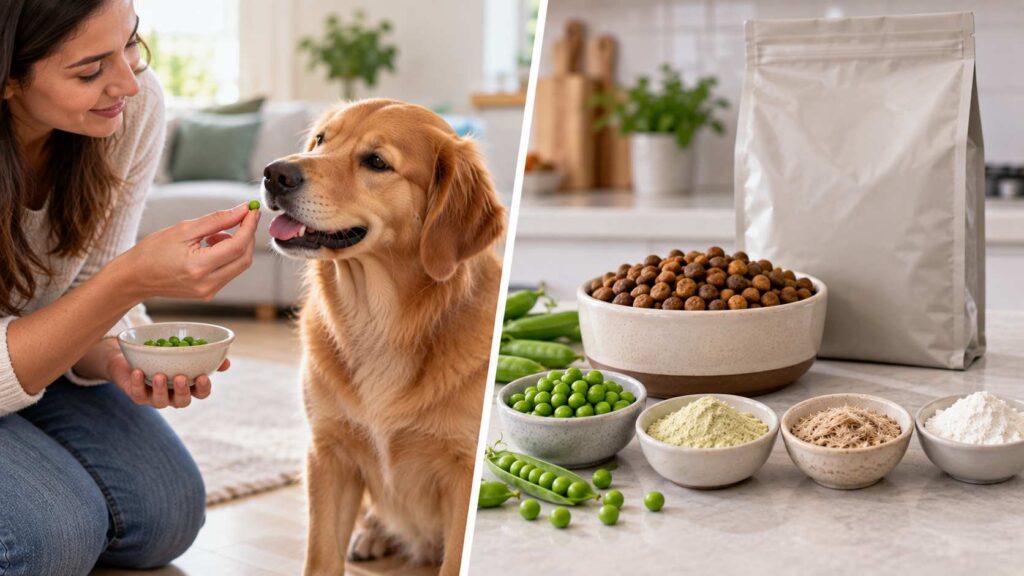
If you’ve read about grain-free dog food, you may have seen peas mentioned alongside dilated cardiomyopathy (DCM). That issue should not be confused with giving a healthy dog a few plain peas as an occasional treat.
Whole Peas vs Pea-Derived Ingredients
Commercial dog foods may contain several pea-derived ingredients, including:
- whole peas
- pea protein
- pea fibre
- pea starch
- pea flour
These ingredients have different nutritional roles, so seeing “pea” in several forms on a label is not the same situation as adding a spoonful of fresh peas to your dog’s bowl.
Peas, Pulses, and the DCM Question
The FDA has investigated reports of non-hereditary DCM in dogs eating certain diets in which peas, lentils, and other pulses appeared high on ingredient lists. However, the FDA also states that legumes and pulses have been used in pet food for many years and there is no evidence that they are inherently dangerous. The exact relationship between diet and non-hereditary DCM remains complex and may involve formulation, genetics, underlying disease, processing, and other factors.
So the useful distinction is simple:
A few plain peas as an occasional treat are not equivalent to feeding a diet in which pulse ingredients make up a substantial part of the formulation.
If you’re concerned about peas, pea protein, or other pulses in your dog’s main food, discuss the whole diet with your veterinarian rather than removing an ingredient based on the label alone. The FDA likewise recommends consulting a veterinarian before making diet changes over DCM concerns.
What the DCM Discussion Actually Involves
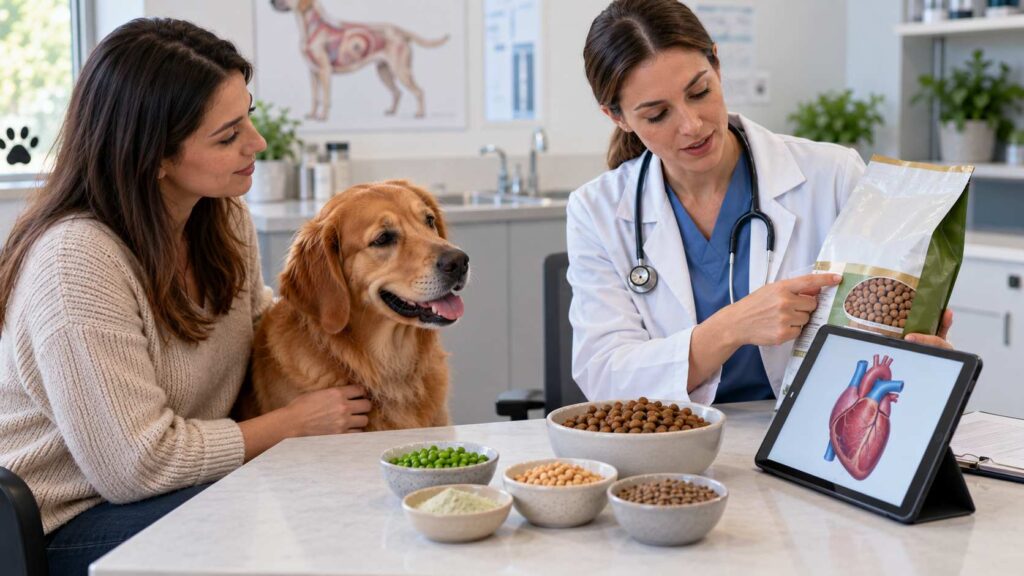
The U.S. Food and Drug Administration (FDA) has investigated reports of non-hereditary dilated cardiomyopathy (DCM) in dogs eating certain diets. Many reported diets contained peas, lentils, or other pulse ingredients high on the ingredient list, although both grain-free and grain-containing foods have been represented.
The important point is that the FDA has not established peas themselves as inherently dangerous or identified a simple cause-and-effect relationship between peas and DCM. Current evidence suggests that non-hereditary DCM can involve several interacting factors, including genetics, underlying health conditions, ingredient composition, processing, formulation, and feeding practices.
Practically, that means a few plain peas offered occasionally as a treat are a very different nutritional situation from feeding a commercial diet in which pulse ingredients make up a substantial, ongoing part of the formulation.
If you’re concerned about peas or other pulses in your dog’s main food, discuss the whole diet with your veterinarian rather than removing one ingredient based on the label alone. The FDA likewise recommends working with a veterinarian before making diet changes because of DCM concerns.
Common Mistakes Worth Avoiding
- Treating every type of pea as identical.
- Feeding canned or tinned peas regularly without checking the sodium content.
- Adding salt “just a little” for flavour.
- Serving peas from buttery, creamy, or gravy-based dishes without checking the rest of the meal.
- Overlooking onion or garlic hidden in sauces, stocks, or prepared foods.
- Starting with a large first serving instead of a small trial.
- Assuming vegetables are unlimited because they’re considered healthy.
- Letting treats displace meaningful portions of a complete and balanced diet.
- Giving extras to a dog on a prescription or elimination diet without veterinary approval.
- Relying on rigid “peas per kilogram” charts as though every dog’s calorie needs and health status are identical.
- Assuming frozen automatically means healthier than fresh.
- Assuming canned automatically means dangerous; added sodium and other ingredients are the real concerns.
- Assuming “safe occasionally” means there is a benefit to feeding peas every day.
- Confusing a few fresh peas as a treat with a pulse-heavy commercial diet—they are not the same nutritional question.
A Final Checklist Before You Share
- I know what type of pea this is.
- The peas are plain and unseasoned.
- There is no onion or garlic in the dish.
- They are not heavily salted.
- They are not covered in butter, cream, gravy, or another rich sauce.
- The amount is small.
- The size and texture suit my dog’s size and eating style.
- My dog is not on a prescription or elimination diet that restricts extras.
- I’m counting the peas as a treat, not as part of the dog’s essential nutrition.
- I’ll watch for repeated gas, vomiting, diarrhoea, or discomfort afterward.
- I know when symptoms or another ingredient in the meal mean I should contact my vet.
Final Thoughts
Peas aren’t particularly complicated, but “Can dogs eat peas?” hides a few questions worth answering first: what type of pea is it, how was it prepared, how much is involved, and does your dog have any health or dietary restrictions?
For most healthy dogs, a few plain, appropriately sized peas can be an occasional treat. Problems are more likely to arise from excessive amounts, poor tolerance, unsuitable texture, or ingredients served alongside them—such as onion, garlic, heavy seasoning, or rich sauces.
So when that hopeful face appears beside you in the kitchen, you don’t need to treat peas as either a superfood or something to fear. Check what’s in the bowl, keep the portion sensible, and let your dog’s individual diet and health needs guide the decision.
Frequently Asked Questions
1.Can dogs eat pea pods?
It depends on the pea. Snow pea and sugar snap pea pods are normally eaten whole and can be offered plain in appropriately sized pieces. Garden or English pea pods are tougher and more fibrous, so removing them is the safer, simpler option—particularly for small dogs or dogs that gulp food.
2.Is it better to feed peas raw or cooked?
Plain raw, thawed, or lightly cooked peas can all be suitable for most healthy dogs. Cooking isn’t required to make ordinary green peas non-toxic, but steaming or softening them may make the texture easier for puppies, small dogs, senior dogs, or dogs with dental problems.
Whichever form you choose, skip salt, butter, sauces, and seasoning.
3.Can peas replace part of my dog’s regular food?
They shouldn’t replace a meaningful portion of a complete and balanced diet unless a veterinarian or veterinary nutrition specialist has specifically formulated the diet that way.
For most dogs, peas are best treated as an optional extra or treat, not as a nutritional substitute for their main food.
4.How quickly would I know if peas don’t agree with my dog?
Digestive intolerance may show up after the meal or during the following day, with signs such as gas, softer stool, diarrhoea, vomiting, or abdominal discomfort.
Don’t rely on a precise timetable. If symptoms are persistent, severe, worsening, or accompanied by lethargy or pain, contact your veterinarian rather than assuming your dog simply ate too much fibre.
5.Are split peas the same as regular green peas?
Split peas are dried, hulled peas that have been split for cooking. Plain, thoroughly cooked split peas are not the same concern as a toxic food, but they’re commonly found in soups and prepared dishes containing onion, garlic, salty stock, ham, or other ingredients that may be unsuitable for dogs.
Check the entire recipe rather than judging the meal by the peas alone.
6.Can peas be used as training treats?
Yes. Small pieces of plain fresh, thawed, or cooked peas can work as training rewards for dogs that enjoy them.
They’re particularly useful when they replace, rather than accompany, richer treats. Keep all rewards within your dog’s overall daily treat allowance.
7.Do all dogs tolerate peas the same way?
No. One dog may eat a few peas without any digestive change, while another may develop gas or loose stool from the same amount.
Start small, avoid introducing several new foods at once, and judge peas by your dog’s actual response, not simply by the fact that they’re generally considered safe.
#. Related Articles: