
Can dogs eat peppers? Plain bell peppers can be an occasional treat for most healthy dogs, but hot peppers such as jalapeños and chillies are best avoided.
You’re chopping peppers for dinner, your dog is doing that hopeful hover by your ankles, and a piece hits the floor before you’ve really thought it through. Then the question lands: was that actually okay?
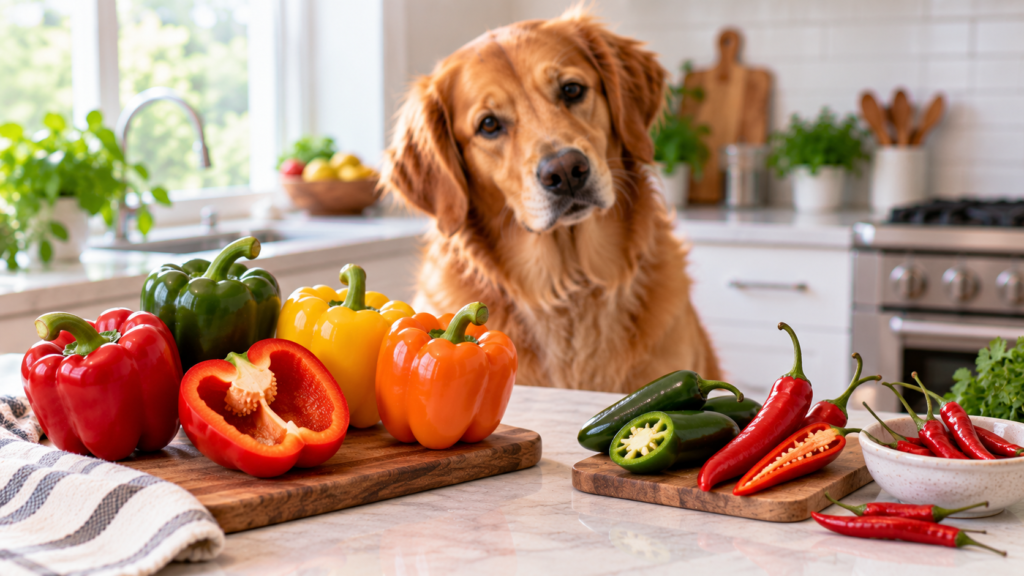
The tricky part is that “pepper” isn’t one food. It can mean a mild, crunchy bell pepper or a fiery chilli containing capsaicin, and those lead to very different answers. A plain bell pepper—or capsicum, as it’s commonly called in Australia—is not the same exposure as a jalapeño, chilli flakes, or peppers taken from a curry or fajita mix.
So before you decide whether to feed, monitor, or call your vet, don’t start with the nutrition label. Work out exactly what your dog ate, how much, and what else came with it.
Before Anything Else: Which “Pepper” Are You Holding?
This question matters more than the colour of the pepper or whether it was raw or cooked.
Bell Pepper, Sweet Pepper and Capsicum Usually Mean the Same Vegetable
Names vary by region. UK owners may say “pepper” or “sweet pepper,” Australian and New Zealand owners commonly say “capsicum,” while “bell pepper” is widely used in the United States and Canada.
Red, green, yellow and orange bell peppers are all mild varieties of the same general type of sweet pepper. For feeding purposes, plain bell peppers can generally be treated similarly regardless of colour.
Hot Peppers Are a Different Category Altogether
Jalapeños, chillies or chilies, cayenne peppers, habaneros and other hot varieties contain capsaicinoids, including capsaicin, which produce their characteristic heat.
Capsaicin can irritate a dog’s mouth and gastrointestinal tract. The Merck Veterinary Manual lists Capsicum exposure as capable of causing gastrointestinal irritation, including vomiting and diarrhoea. For that reason, hot peppers shouldn’t be deliberately offered as treats.
“Red Pepper” Isn’t a Specific Enough Term
This phrase causes plenty of confusion because it might describe:
- a red bell pepper
- a red chilli
- crushed red pepper flakes
- cayenne powder
- a seasoning blend containing several ingredients
A red bell pepper and crushed red chilli are not interchangeable from a dog-safety perspective. Identify the actual product before deciding what to do.
What About Black Pepper and Paprika?
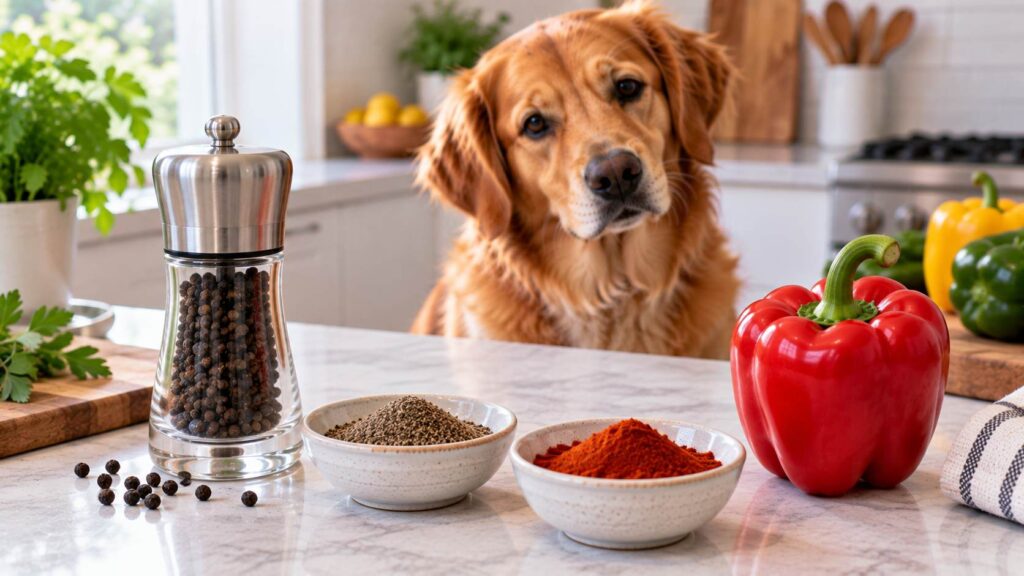
Black pepper comes from a different plant family from bell and chilli peppers. A tiny amount accidentally present on food is different from deliberately seasoning a dog’s meal, but black pepper offers dogs no useful reason to eat it and larger amounts may irritate the nose or digestive tract.
Paprika is different again: it is made from dried Capsicum peppers and can range from mild to hot depending on the variety and blend. It may also appear alongside salt, garlic or other seasonings. There’s no benefit to adding it to your dog’s food.
The 30-Second Pepper Check
Before offering pepper—or assessing something your dog has already eaten—check:
- What exact pepper or pepper product is it?
- Is it sweet or spicy?
- Is it fresh, cooked, dried or powdered?
- Was it plain or part of another dish?
- Did the food contain onion or garlic?
- Was there sauce, salt, butter or oil?
- Roughly how much did your dog eat?
- How large is your dog?
- Is your dog showing any symptoms?
Those answers are far more useful than the word “pepper” alone.
The Pepper Safety Map
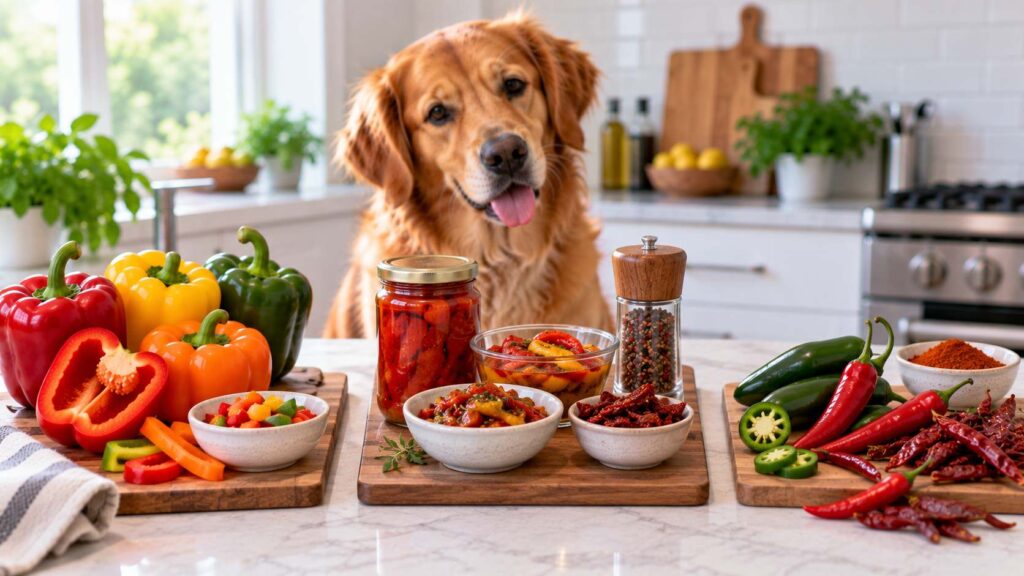
Here’s the practical difference between the forms owners most commonly encounter.
| Pepper / Form | General Concern | Main Issue | Feed Deliberately? | If Already Eaten |
|---|---|---|---|---|
| Plain bell or sweet pepper | Low for most healthy dogs | Too much may cause digestive upset | Yes, in small amounts | Assess amount and monitor |
| Red, green, yellow or orange bell pepper | Low when plain | Portion size and texture | Yes | Monitor as appropriate |
| Jalapeño | Avoid | Capsaicin irritation | No | Check amount and symptoms |
| Hot chilli | Avoid | Capsaicin irritation | No | Check amount and symptoms |
| Cayenne or chilli powder | Avoid | Concentrated spice exposure | No | Identify the product and amount |
| Seasoned pepper dish | Variable | Onion, garlic, fat, salt or other ingredients | Usually avoid | Check the full recipe |
| Jarred or roasted pepper | Variable | Brine, salt, oil or seasoning | Check ingredients first | Read the label or recipe |
Your Dog Already Ate Pepper: Change the Question

If you’re here because something has already disappeared from the kitchen counter, the useful question is no longer simply “Can dogs eat peppers?”
It’s what kind, how much, when, and what else was in it?
A Small Amount of Plain Bell Pepper
If an otherwise healthy dog grabs a small piece of plain bell pepper, serious problems aren’t generally expected.
Keep an eye on your dog, particularly if it’s a new food. Individual tolerance varies, and even foods considered safe can occasionally cause vomiting, loose stools or digestive discomfort.
Your Dog Ate a Lot of Bell Pepper
A larger amount deserves more attention—not because plain bell pepper is considered inherently toxic, but because suddenly eating a lot of unfamiliar plant material can upset the digestive system.
Watch for:
- repeated vomiting
- diarrhoea
- reduced appetite
- abdominal discomfort
- unusual lethargy
Also consider how it was eaten. A dog that swallowed large chunks quickly raises a different concern from one that carefully chewed several small pieces.
If vomiting or diarrhoea is persistent, your dog seems unwell, or you’re concerned about the amount swallowed, contact your veterinarian.
Your Dog Ate a Jalapeño or Chilli
Hot peppers can irritate both the mouth and gastrointestinal tract. Depending on the exposure, you might notice:
- drooling
- lip licking
- pawing at the mouth
- apparent mouth discomfort
- vomiting
- diarrhoea
- abdominal discomfort
Merck describes Capsicum-related exposure primarily as an irritation problem rather than an exposure expected to be lethal, but that doesn’t mean every incident should be dismissed. The pepper’s heat, amount eaten, your dog’s size, symptoms and any other ingredients all matter.
If your dog is significantly distressed, develops repeated vomiting or diarrhoea, has eaten a large or unknown amount, or the product contained other potentially harmful ingredients, contact your veterinarian or an appropriate animal poison service.
The Pepper Came From Someone’s Dinner
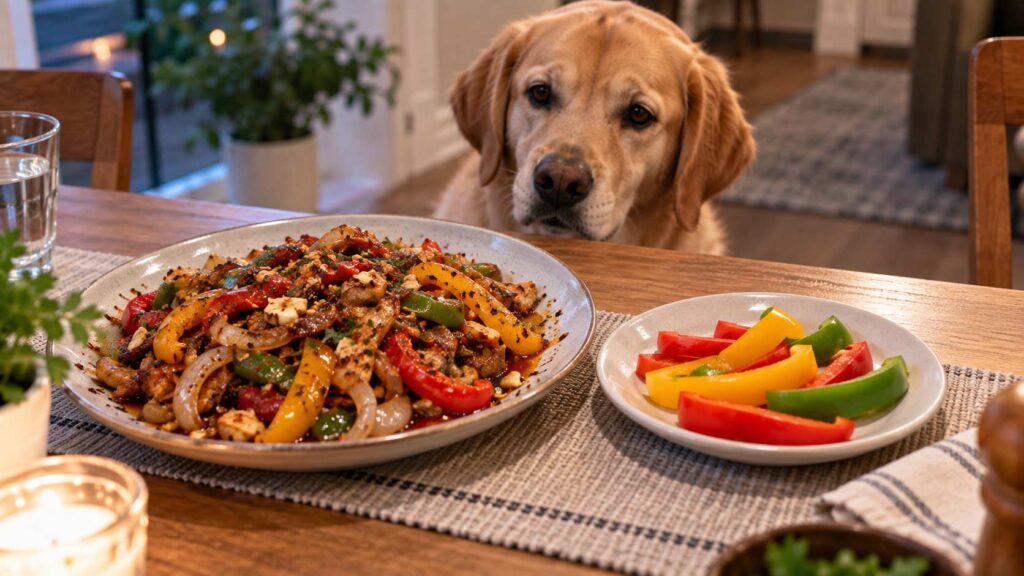
This can change the assessment completely.
Check the entire recipe for:
- onion
- garlic
- rich or fatty ingredients
- heavily salted sauces
- spicy seasonings
- other foods your dog shouldn’t have
Onion and garlic deserve particular attention because they belong to the Allium family and are toxic to dogs. They can damage red blood cells, so a pepper taken from an onion- or garlic-containing dish should not be assessed as “just a pepper.”
Your Dog Chewed the Pepper Plant
Eating the fruit and chewing the plant itself aren’t necessarily equivalent exposures.
The Merck Veterinary Manual notes that Capsicum annuum foliage can contain compounds including solanine and scopoletin, while mature hot fruits contain capsaicinoids. If your dog has chewed leaves, stems or an ornamental pepper plant—or you’re not certain which plant was involved—contact your veterinarian or a poison advice service rather than assuming the advice for a piece of supermarket bell pepper applies.
Warning: Check the Whole Dish
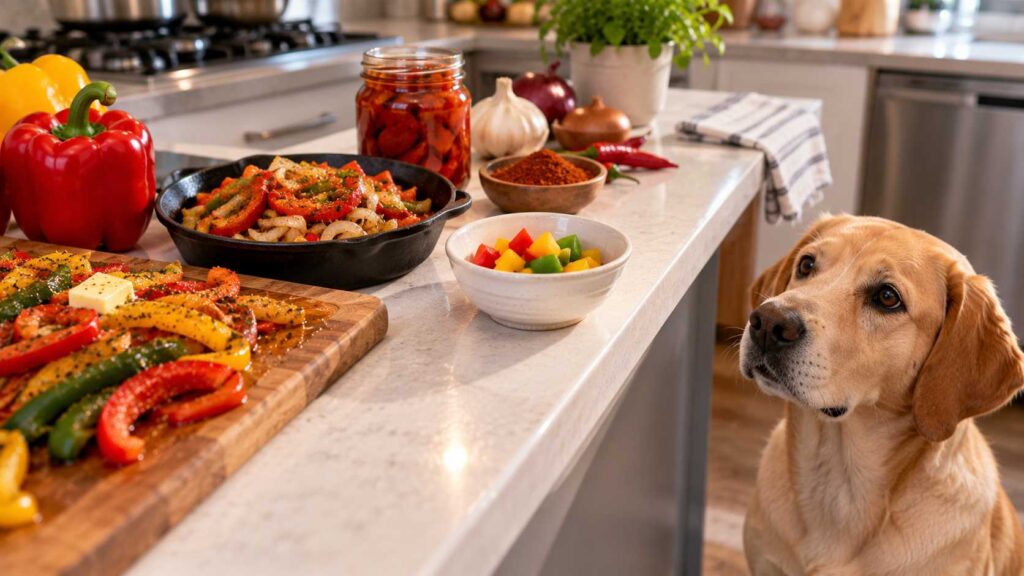
If the pepper came from fajitas, curry, pizza, salsa, stuffed peppers, stir-fry, takeaway food or heavily seasoned leftovers, don’t judge the situation by the pepper alone. Onion, garlic, fatty ingredients, salt or another component may matter more than the pepper itself.
Why Sweet and Hot Peppers Don’t Get the Same Answer
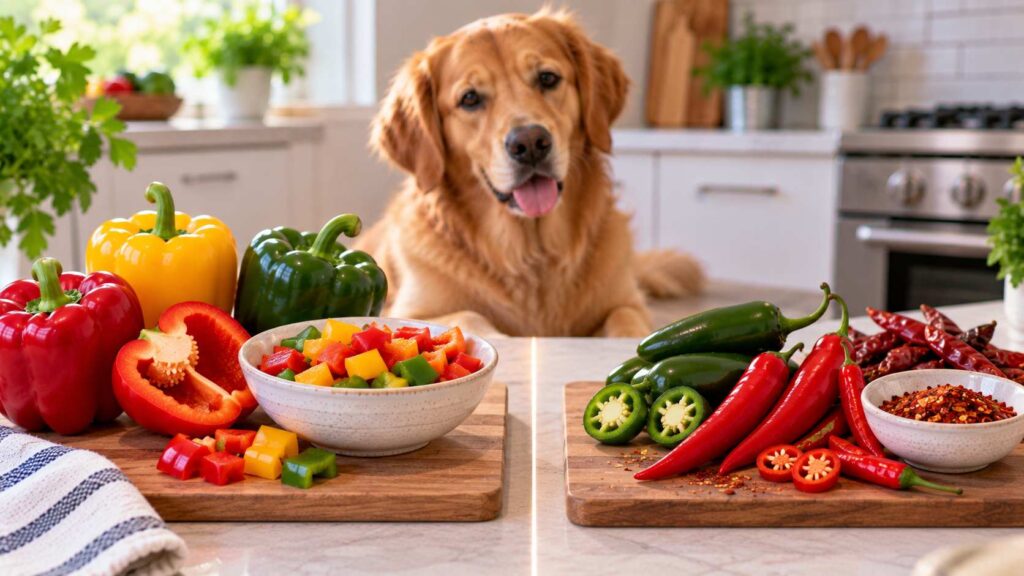
What Capsaicin Actually Changes
Capsaicin is one of the compounds responsible for the burning sensation produced by hot peppers. For dogs, its presence changes the practical advice because it can irritate the mouth, stomach and intestines.
That’s why a piece of plain bell pepper may be offered occasionally, while jalapeños, chillies and other hot peppers are better left off the menu altogether.
Irritation Isn’t the Same as Poisoning
Precise wording matters here.
Hot-pepper exposure shouldn’t automatically be described as the same kind of systemic poisoning associated with foods such as onions. Merck describes Capsicum exposure as irritating to the gastrointestinal tract and notes that it is not likely to be lethal.
That distinction prevents unnecessary panic, but it isn’t a reason to ignore symptoms. A small lick and a large exposure to concentrated chilli powder aren’t equivalent situations. Amount, concentration, dog size, accompanying ingredients and clinical signs all influence what should happen next.
Cooking Doesn’t Make a Hot Pepper Dog-Friendly
Cooking can soften a pepper, but it doesn’t reliably remove the capsaicin that makes a chilli irritating.
A cooked jalapeño is therefore still a poor choice for a dog. And if it has been cooked with onion, garlic, oil or seasoning, there may be additional reasons to keep it out of the bowl.
Bell Pepper Is Safe to Eat — But Does Your Dog Actually Need It?
What Bell Peppers Actually Contribute
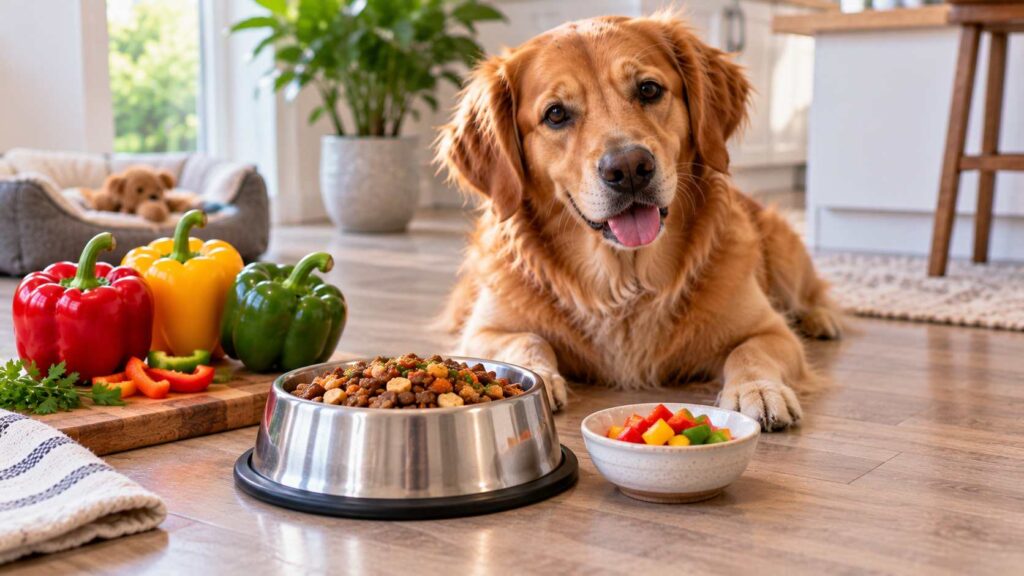
Bell peppers provide water, fibre, beta-carotene, vitamins, and antioxidant compounds. Those nutrients are real, but their presence doesn’t automatically make bell pepper an important part of a dog’s diet.
For most dogs, its practical value is much simpler: a small piece of plain bell pepper can be a crunchy, relatively low-calorie treat.
Containing Nutrients Isn’t the Same as Being Necessary
A dog eating a complete and balanced diet should already be receiving the nutrients they need from their regular food. Bell pepper is therefore an optional extra, not something that needs to be added to prevent a deficiency.
That distinction matters because human foods are often promoted according to the nutrients they contain without asking whether the dog actually needs more of those nutrients.
Don’t Turn a Vegetable Into a Health Claim
Claims that bell peppers “boost immunity,” “support joints,” or provide other broad health benefits often go further than the evidence justifies.
There’s nothing wrong with appreciating bell pepper for what it is: an occasional plain vegetable treat that some dogs enjoy. It doesn’t need a superfood label.
A useful rule for human foods is:
Non-toxic, nutritious, and necessary are three different questions.
A food can satisfy the first two without being something your dog needs in their bowl.
Red, Green, Yellow or Orange: Does Colour Change the Decision?
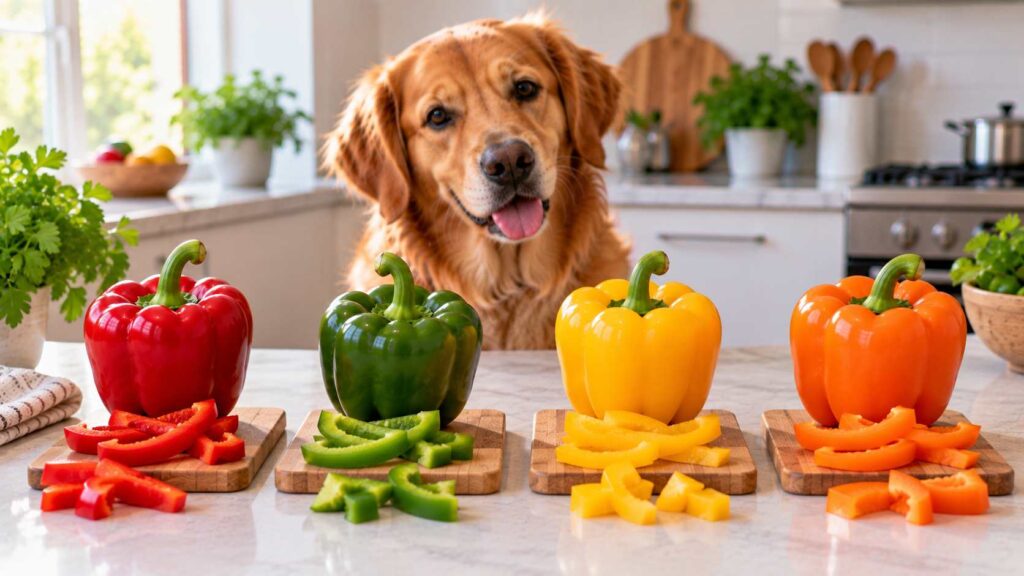
From a practical safety standpoint, there is no meaningful reason to rank one bell pepper colour above another. Plain red, green, yellow, and orange bell peppers can all be treated similarly for most healthy dogs.
Their colour reflects differences in variety and ripeness, which can also change their nutrient profile. Those differences may be interesting nutritionally, but they don’t turn one colour into a uniquely “safe” dog treat or another into a dangerous one.
Two common misconceptions are worth clearing up:
- Red doesn’t mean spicy. A red bell pepper is still a sweet pepper; its colour doesn’t make it comparable to a red chilli.
- Green doesn’t mean toxic. A normal green bell pepper shouldn’t automatically be treated as dangerous simply because it is less ripe than a red one.
The more useful questions are still what type of pepper it is, how it was prepared, and how much your dog is getting.
From Cutting Board to Dog Bowl: Make the Pepper Boring
The safest way to share bell pepper is also the least exciting: plain, washed, and cut into manageable pieces.
Raw bell pepper is fine for dogs that chew it comfortably. Plain cooked pepper—such as steamed or gently softened pepper with nothing added—may be easier for dogs that struggle with crunchy foods.
The different parts of the pepper don’t all carry the same concern:
- Skin: generally fine to eat.
- Seeds and white pith: not considered toxic, but removing them keeps preparation simple and may make the pepper easier to eat.
- Stem and tough core: best removed, particularly because awkward, fibrous pieces are unnecessary and may be harder to chew or swallow.
Jarred, roasted, or grilled peppers need a closer look. They may contain salt, brine, oil, garlic, onion, or other seasonings, so don’t assume a processed pepper is equivalent to a fresh, plain one.
Quick Tips for Safer Sharing
- Wash fresh pepper before serving.
- Make sure you’ve identified it as a sweet bell pepper, not a hot variety.
- Keep it plain—no seasoning, sauces, or dips.
- Remove the tough stem and core.
- Cut pieces to suit your dog’s size and eating style.
- Start with a small amount, especially the first time.
- Count it as a treat rather than part of the main diet.
- Stop offering it if it repeatedly causes digestive upset.
How Much Pepper Makes Sense Without a Made-Up Magic Number?
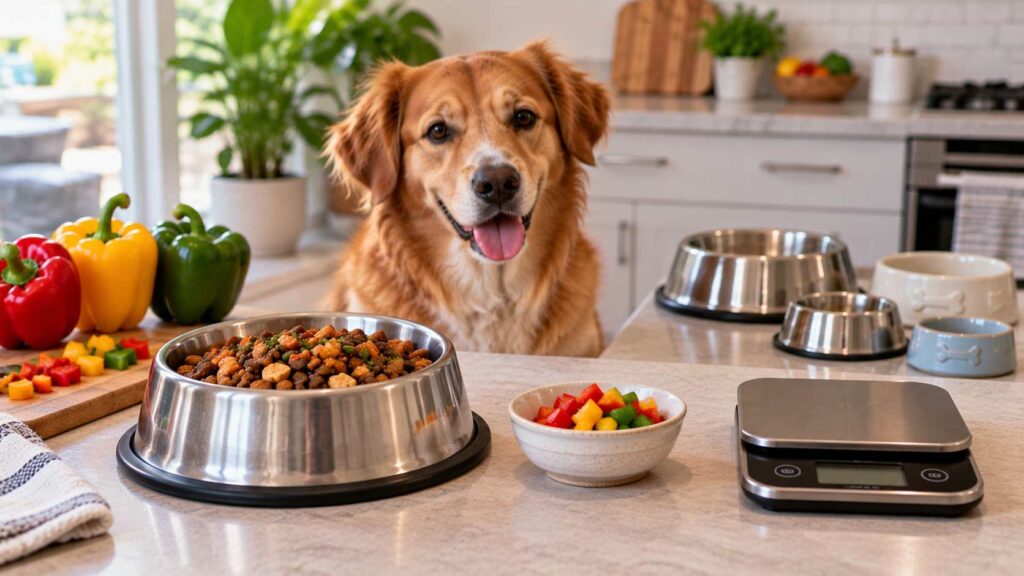
You’ll find plenty of exact slice counts and gram-based charts online, but there isn’t one evidence-based bell pepper portion that works for every dog.
A more useful approach starts with the dog’s whole diet.
Bell pepper counts alongside every other extra your dog receives—training rewards, chews, table scraps, dental treats, and other snacks. WSAVA guidance recommends that treats generally provide no more than about 10% of a dog’s daily calories, leaving the majority of intake to a complete and balanced diet.
For a first taste, keep the amount small. The aim isn’t to discover the largest serving your dog can tolerate; it’s to find out whether the food agrees with them at all.
A large dog can usually handle a larger piece than a toy breed, but that doesn’t mean bigger dogs need correspondingly large vegetable treats. Portion size should reflect the dog’s overall calorie needs, normal diet, and individual tolerance.
| Dog Context | What Changes | Practical Consideration |
|---|---|---|
| First exposure | Tolerance is unknown | Offer only a small amount |
| Small dog | Portion and texture matter more | Cut into appropriately small pieces |
| Fast eater | Large pieces may be swallowed poorly | Adjust size and texture |
| Weight management | Extras still add calories | Include all treats in the daily allowance |
| Sensitive digestion | New foods may trigger GI upset | Introduce cautiously |
| Prescription diet | Extra foods may interfere with the diet’s purpose | Ask your veterinarian before adding them |
Some Dogs Need a Different Answer, Even With Plain Bell Pepper
Puppies
Puppies can generally have small pieces of plain bell pepper once they’re eating solid food, but treats shouldn’t crowd out the complete puppy diet they need for growth.
Pay particular attention to piece size and chewing ability, especially with very small puppies or enthusiastic gulpers.
Senior Dogs
Age itself doesn’t make bell pepper unsafe. What matters more is the individual dog.
A senior with dental disease may find raw pepper difficult to chew, while a dog with a medical condition or therapeutic diet may need to avoid unnecessary extras altogether. Softening the pepper can help with texture, but it doesn’t override medical dietary restrictions.
Dogs With Sensitive Digestion
If your dog is prone to vomiting, diarrhoea, or food-related stomach upset, introduce any unfamiliar treat cautiously.
A small amount that causes no problem for one dog may not suit another. If bell pepper repeatedly causes digestive signs, there’s no benefit in continuing to offer it simply because it appears on a list of “safe” vegetables.
Dogs on Weight-Loss, Elimination, or Prescription Diets
This is where generic safe-food lists become much less useful.
If your veterinarian has prescribed a specific diet to manage a health problem, additional foods can interfere with calorie control, an elimination trial, or the nutritional purpose of the diet. Even an otherwise harmless vegetable may be inappropriate in that context.
Vet Advice
Ask your veterinarian before adding bell pepper or other extras if your dog is on a therapeutic or prescription diet, is undergoing a food-elimination trial, has recurring digestive problems, or has previously reacted unexpectedly to foods. Your dog’s individual diet plan should take priority over general feeding advice.
Five Pepper Situations That Look Similar But Aren’t

A few real-life examples show why “my dog ate pepper” isn’t enough information on its own.
A Large Dog Steals Half a Plain Bell Pepper
The amount matters, but plain bell pepper itself is generally a low-concern food for most healthy dogs. The main thing to watch for after a larger serving is digestive upset, such as vomiting, loose stool, or abdominal discomfort.
A Small Dog Eats a Jalapeño Slice From Nachos
Now both the pepper type and the dog’s size matter. Jalapeños contain capsaicin, which can irritate the mouth and digestive tract. Watch for drooling, pawing at the mouth, vomiting, diarrhoea, or obvious discomfort.
Also check what else was on the nachos. Onion, garlic, rich cheese, sauces, or other ingredients may change the assessment.
A Dog Steals Peppers From a Fajita Mix
This is a good example of why the pepper itself may not be the main concern. Fajita mixtures often contain onion, garlic, salt, oil, or spicy seasoning.
Check the full ingredient list rather than assuming the situation is safe because the visible pepper was a bell pepper.
A Puppy Chews on a Garden Pepper Plant
This is different from eating a piece of supermarket bell pepper. The fruit, stems, leaves, and ornamental pepper plants shouldn’t automatically be treated as the same exposure.
If you’re unsure which plant was chewed, which part was eaten, or how much disappeared, contact your veterinarian or an appropriate animal poison service for advice.
A Dog Eats a Stuffed Pepper
With stuffed peppers, the filling often matters more than the pepper shell.
Common ingredients may include:
- onion
- garlic
- fatty meat
- cheese
- sauces
- salt
- seasonings
Work out what was actually in the recipe before deciding whether the exposure is low concern.
In all five situations, the same decision process helps:
Identify the pepper → estimate the amount → check other ingredients → consider the dog’s size and health → assess symptoms → decide whether monitoring or veterinary advice is appropriate.
Common Pepper Mistakes Worth Avoiding
- Treating all “peppers” as interchangeable
- Assuming red automatically means spicy
- Assuming green bell pepper is dangerous
- Offering a large first serving instead of starting small
- Adding butter, oil, salt, sauces, or dips
- Feeding seasoned leftovers without checking the recipe
- Overlooking onion or garlic in mixed dishes
- Assuming cooking makes chilli harmless
- Describing every hot-pepper exposure as severe poisoning
- Treating bell pepper as nutritionally necessary
- Following rigid online portion charts without considering the dog’s whole diet
- Giving extras despite a veterinarian-prescribed diet
- Using chilli powder or hot pepper as a chewing or scavenging deterrent
When Your Dog’s Reaction Matters More Than the Food List
A dog that has eaten a small amount of plain bell pepper and remains completely normal usually needs little more than sensible observation.
Mild digestive signs can occur after unfamiliar food or a larger serving. A slightly softer stool or a single episode of vomiting may settle without intervention, but don’t assume every reaction is trivial.
Contact your veterinarian if you notice:
- repeated or persistent vomiting
- significant or ongoing diarrhoea
- obvious abdominal pain or distress
- marked lethargy
- difficulty breathing
- substantial drooling or persistent mouth discomfort after a hot pepper
- a large or uncertain quantity eaten
- possible onion, garlic, or another harmful ingredient
- worsening symptoms rather than gradual improvement
Breathing difficulty, collapse, severe distress, or rapidly worsening signs should be treated as urgent.
Before calling, gather:
- your dog’s approximate weight
- the exact pepper, product, or dish involved
- roughly how much was eaten
- when it happened
- the ingredient list or packaging, if available
- anything else your dog ate at the same time
- the symptoms you’ve noticed
- relevant medical conditions or dietary restrictions
That information helps your veterinarian assess the exposure more accurately.

Before Pepper Goes in the Bowl: A Final Five-Question Test
- Which pepper is it, exactly?
- Is it plain, with nothing potentially harmful added?
- How much am I offering?
- Can my dog chew and swallow it safely?
- Does my dog’s health or diet make extras inappropriate?
If all five checks are clear, an occasional small piece of plain sweet bell pepper is a reasonable treat for most healthy dogs.
If you can’t confidently identify the pepper or its ingredients, don’t feed it until you can. If it’s a hot pepper, skip it. If your dog is on a therapeutic diet or has a medical condition that affects feeding, let their individual veterinary plan take priority over general treat advice.
A Final Word
Bell peppers can be a perfectly reasonable occasional treat for many dogs when they’re plain, appropriately sized, and offered in moderation.
Hot peppers are different. Their capsaicin content can irritate the mouth and digestive tract, so there’s no good reason to offer them deliberately.
And when peppers come from a prepared meal, don’t stop your ingredient check at the vegetable. Onion, garlic, rich sauces, salt, fat, or seasonings may be far more important to the risk assessment.
Identify what your dog actually ate, consider the whole dish, and pay attention to how your dog is responding. When the type, amount, ingredients, or symptoms leave you uncertain, your veterinarian is the right person to help make that call.
Frequently Asked Questions
1.Can Dogs Eat Pepper Seeds?
The seeds inside a sweet bell pepper aren’t generally considered toxic to dogs. Removing them is still a sensible preparation step because they add nothing useful and can make the pepper less tidy or comfortable to eat.
2.Can Dogs Eat Roasted Peppers From a Jar?
Sometimes, but check the ingredient list first.
Jarred roasted peppers may contain salt, brine, oil, garlic, spices, or other seasonings. A plain roasted bell pepper and a heavily seasoned jarred product should not be treated as the same food.
3.Can Dogs Eat Peppers Cooked With Onion or Garlic?
No. Onion and garlic are toxic to dogs, so peppers cooked with either ingredient should not be deliberately fed.
If your dog has already eaten a dish containing onion or garlic, assess the entire exposure rather than focusing only on the pepper and contact your veterinarian if you’re unsure how much was consumed.
4.Does Cooking Make Chilli Safe for Dogs?
No. Cooking changes a chilli’s texture but doesn’t make capsaicin-containing hot peppers suitable for dogs.
A cooked jalapeño or chilli can still irritate the mouth and gastrointestinal tract.
5.Can Dogs Eat Bell Peppers Every Day?
A small amount may be tolerated by some dogs, but there is usually no nutritional reason to feed bell pepper every day.
It is better thought of as an occasional treat within the dog’s overall treat allowance rather than a required part of the diet.
6.Can Dogs With Sensitive Stomachs Eat Peppers?
Some can tolerate small amounts of plain bell pepper, while others may develop digestive upset.
Introduce it cautiously, keep the first serving small, and stop offering it if it repeatedly causes vomiting, diarrhoea, or discomfort.
7.Can Dogs on Prescription Diets Eat Bell Peppers?
Not automatically.
If your veterinarian has prescribed a therapeutic diet, extra foods can interfere with calorie control, elimination trials, or the diet’s intended purpose. Check with your veterinarian before adding bell pepper or other treats.
#. Related Articles: