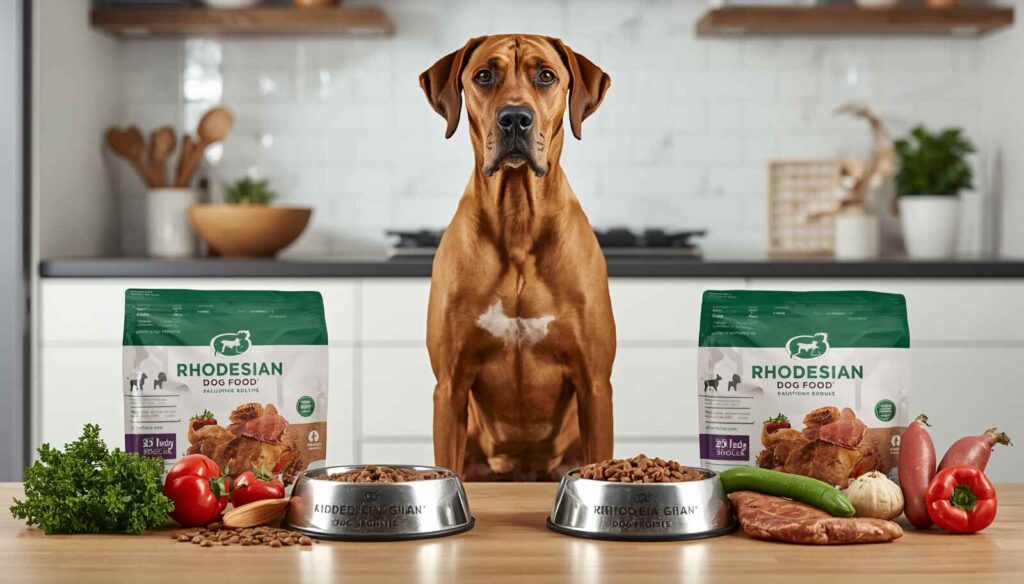
Best Dog Food for Rhodesian Ridgeback owners is not one universal product. The right choice depends on your dog’s age, activity level, body condition, digestive tolerance and overall health.
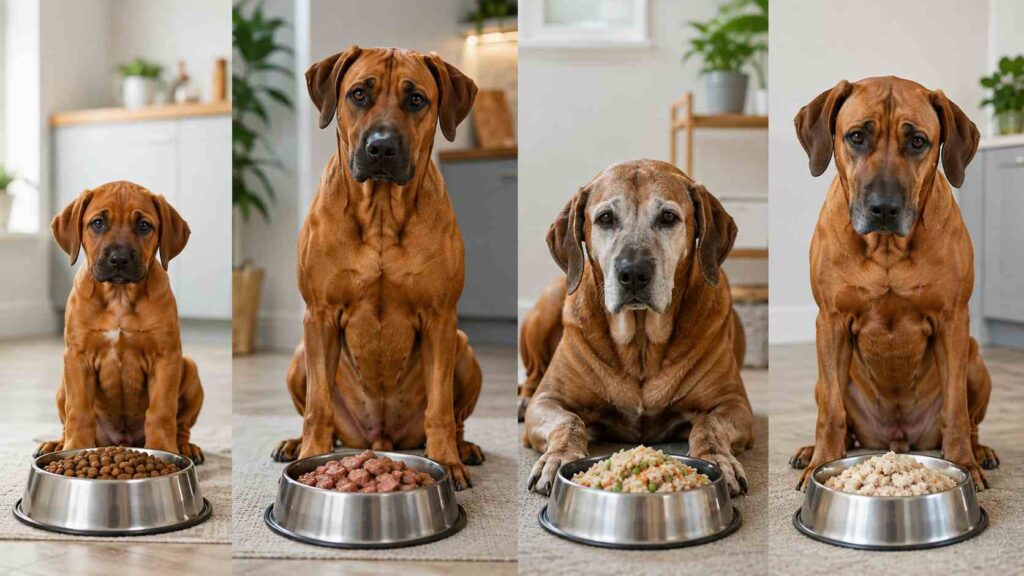
A growing puppy needs a nutritionally complete large-breed growth formula with appropriately controlled calcium and energy. A healthy adult needs enough protein and calories to maintain lean muscle without gaining excess fat. A senior may need fewer calories, but still requires adequate high-quality protein unless a veterinarian recommends otherwise for a diagnosed condition.
Choose the right food category for your dog first. Compare individual products second.
If you have two Ridgebacks at home—perhaps a six-month-old puppy and a seven-year-old adult who is becoming less active—you already know that “buy a large-breed food” is not specific enough. Their calorie requirements, feeding frequency and nutritional priorities are different.
Even one dog’s needs can change after neutering, injury, reduced exercise, pregnancy, ageing or the development of a digestive or medical problem.
This guide is not another generic list of highly rated foods. It gives you a practical way to assess what your Ridgeback needs, whether you are shopping in the UK, US, Canada or Australia. That matters because products with similar names may have different recipes, calorie densities or label wording between countries.
No dog food can guarantee protection from inherited conditions or emergencies such as hip dysplasia or gastric dilatation-volvulus (GDV). Good nutrition supports healthy growth, body condition and recovery, but it does not replace responsible breeding, appropriate exercise or veterinary care.
Start With Your Ridgeback, Not the Brand

Before comparing products, assess the dog in front of you.
What Life Stage Is Your Dog In?
A puppy, healthy adult, senior, or pregnant or nursing dog has different nutritional needs.
For puppies, the food must be suitable for growth, especially the growth of large-size dogs. Adult maintenance food is not an appropriate substitute for a growing Ridgeback unless your veterinarian has specifically advised it.
How Active Is Your Dog, Really?
Be realistic about daily exercise.
A Ridgeback that gets two brisk walks and spends much of the day resting does not have the same energy requirements as a dog regularly doing canicross, endurance work or other sustained exercise.
Overestimating activity can lead owners to choose calorie-dense performance food that the dog does not need. This often causes gradual weight gain, even when the measured portion looks reasonable.
What Does Your Dog’s Body Condition Show?
Run your hands lightly over the ribs. They should be easy to feel without pressing through a thick layer of fat. Viewed from above, the dog should have a visible waist; from the side, there should be an abdominal tuck.
A fit Ridgeback is naturally lean. Depending on build, movement and coat, the outline of the last rib may sometimes be visible without the dog being underweight. Look at the whole dog rather than using rib visibility alone.
Also check muscle condition. A senior dog can maintain the same body weight while losing muscle over the spine or hindquarters. Simply feeding more may add fat without correcting the underlying problem.
Are There Digestive, Skin or Appetite Problems?
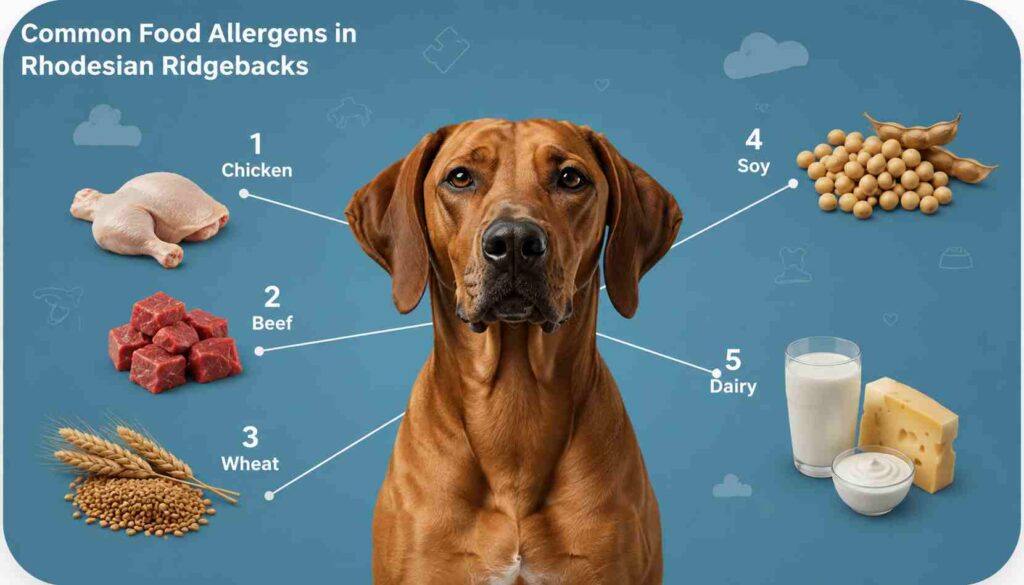
Consider whether your dog has:
- Repeated loose stools or diarrhoea
- Excessive gas
- Vomiting
- Itchy paws or skin
- Recurring ear inflammation
- Poor coat condition
- Unexplained weight loss or gain
- Constant hunger
- Difficulty chewing
- Reduced appetite
These signs do not automatically prove that the food is responsible. Parasites, dental pain, infections, environmental allergies and gastrointestinal disease can cause similar problems.
Persistent or severe symptoms need veterinary assessment rather than repeated diet changes.
Before You Buy: A Quick Checklist
- The food is appropriate for your dog’s life stage.
- Puppy food is suitable for the growth of large-size dogs.
- The label confirms that the food is nutritionally complete, not merely complementary.
- Calories are listed per cup, can, tray or 100 grams.
- The exact formula is available in your country.
- You have checked the individual product, not relied on the brand name alone.
- The calorie density suits your dog’s activity and body condition.
- The feeding guide is being used as a starting point, not a fixed prescription.
- Treats, chews and toppers are included in the daily calorie allowance.
- Vitamins, minerals or calcium are not being added unnecessarily.
- Ongoing medical symptoms have been discussed with a veterinarian.
Matching the Food Category to Your Dog
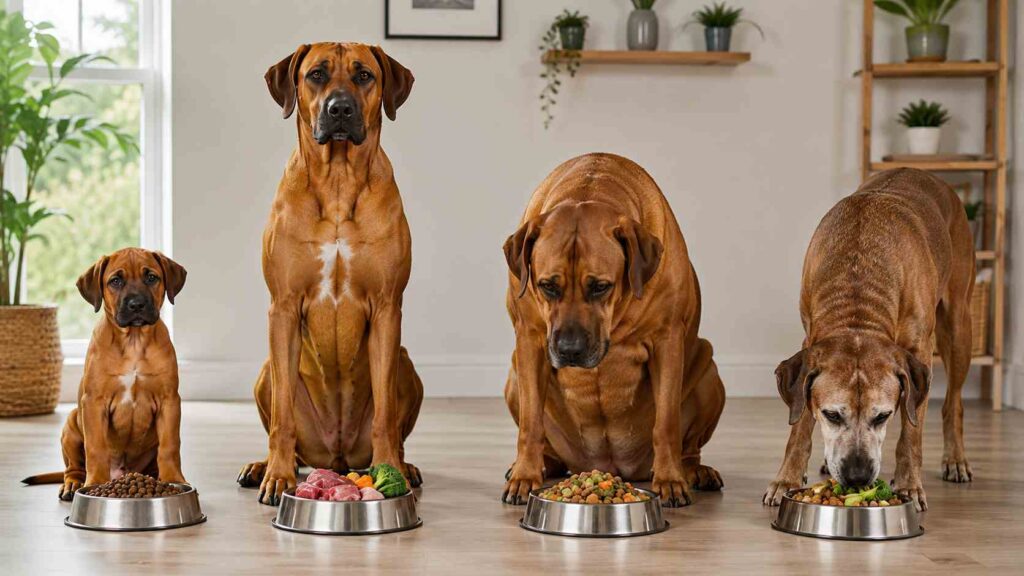
Rhodesian Ridgeback Puppies
Rhodesian Ridgeback puppies generally need a complete large-breed growth formula. These diets are designed to support steady development with appropriate mineral levels and energy density.
The goal is controlled growth—not making the puppy grow as quickly or become as large as possible.
Look for:
- Nutritional adequacy for large-breed growth
- Appropriately controlled calcium and phosphorus
- Suitable calorie density
- Adequate protein for growth and tissue development
- DHA and essential fatty acids
- Clear feeding instructions
Avoid adding calcium, bone meal or mineral supplements to a complete puppy food unless your veterinarian has prescribed them. Excess mineral intake can disrupt the balance of an otherwise suitable diet.
Monitor weight and body condition throughout growth. If a puppy is becoming round through the ribs or losing its waist, reducing excess calories is usually more appropriate than switching to an adult formula.
Healthy Adult Rhodesian Ridgebacks
Most healthy adults do well on a complete adult maintenance food that provides digestible protein, essential fats and enough calories for their real activity level.
Ridgebacks have an athletic outline, but that does not mean every adult needs a high-protein or performance formula. The highest protein percentage on the shelf is not automatically the best choice, and crude protein alone does not reveal protein quality or digestibility.
A suitable adult food should help the dog maintain:
- Easily felt ribs
- A visible waist
- Strong, stable muscle condition
- Consistent stools
- Appropriate energy
- Healthy skin and coat
Judge the food by how the individual dog responds, not by marketing terms such as “premium,” “ancestral” or “high meat.”
Highly Active or Working Ridgebacks
A genuinely active working or endurance dog may benefit from a more energy-dense formula, particularly when large food volumes are impractical.
However, increased calories should match sustained activity. A dog that exercises hard only at weekends may not need performance food every day.
Monitor:
- Weight and body condition
- Recovery after exercise
- Stool quality
- Appetite
- Hydration
- Seasonal changes in workload
Increase or reduce the portion gradually. Do not assume that an athletic breed automatically requires a high-fat diet, especially if the dog has a history of digestive upset, fat intolerance or pancreatitis.
Neutered or Overweight Ridgebacks
After neutering or a reduction in activity, some dogs need fewer calories even though their appetite remains strong.
A lower-calorie weight-management food may provide more protein, fibre, vitamins and minerals per calorie than simply feeding a very small portion of regular maintenance food.
Useful strategies include:
- Weighing meals in grams
- Dividing the daily ration into measured meals
- Limiting high-calorie chews and table food
- Using part of the daily kibble allowance for training
- Rechecking weight and body condition every two to four weeks
- Adjusting portions in small steps
Do not rely on body weight alone. A muscular Ridgeback may weigh more than expected, while an overweight dog may still appear powerful and athletic from a distance.
Senior Rhodesian Ridgebacks
Senior dogs often become less active and may need fewer calories, but protein should not automatically be reduced. Adequate protein helps support ageing muscle unless a veterinarian recommends a different approach for a diagnosed condition.
Choose food according to the dog’s current health rather than the word “senior” on the packaging.
Consider:
- Muscle condition
- Dental health
- Digestive tolerance
- Mobility
- Appetite
- Kidney, liver or heart disease
- Unexplained weight change
A senior maintaining the same weight while losing muscle over the back or hindquarters needs veterinary assessment. Adding more calories without identifying the cause may increase body fat while muscle loss continues.
Ridgebacks With Sensitive Digestion
Dogs with mild digestive sensitivity may benefit from a consistent, highly digestible diet with an appropriate fat and fibre profile.
Avoid changing foods every few days. Frequent switching can make it difficult to tell whether the main diet, treats, scavenging or the transition itself is causing the problem.
Keep a simple record of:
- Food and treats eaten
- Portion size
- Stool consistency and frequency
- Vomiting or gas
- Appetite
- Weight
Persistent diarrhoea, repeated vomiting, blood or black stool, weight loss or abdominal discomfort requires veterinary attention.
Suspected Food Allergy
Itchy paws, recurring ear problems or loose stools do not confirm a food allergy. Environmental allergies, parasites, skin infections and gastrointestinal disorders can cause similar signs.
A suspected food allergy should be investigated through a veterinarian-guided elimination diet using an appropriate hydrolysed-protein or genuinely novel-protein food.
The trial must be strict. Treats, chews, table scraps, supplements and flavoured medications can invalidate the result.
Randomly moving from chicken to lamb, then duck, salmon or another protein is not a reliable allergy test. It can also reduce the number of genuinely novel proteins available for a future diagnostic trial.
Which Type of Food Fits Your Ridgeback?
| Dog profile | Food category | What to check | Main advantage | Watch out for |
|---|---|---|---|---|
| Large-breed puppy | Large-breed growth formula | Life-stage statement, controlled calcium and calorie density | Supports steady, controlled growth | Overfeeding can still cause excessively rapid growth |
| Healthy adult | Adult maintenance food | Calories, digestibility and nutritional completeness | Practical everyday feeding | May not suit dogs with diagnosed medical conditions |
| Highly active adult | Performance or energy-dense food | Fat level, calories and actual workload | Provides more energy in a smaller portion | Can quickly cause weight gain in a moderately active dog |
| Overweight adult | Weight-management formula | Calories, protein and fibre | Provides a satisfying portion with fewer calories | Treats, chews and toppers still need strict control |
| Senior | Senior or individually selected adult food | Protein quality, calories, digestibility and health status | Helps maintain an appropriate weight and muscle condition | “Senior” on the label does not automatically make a food suitable |
| Sensitive stomach | Digestive-support formula | Digestibility, fat level and fibre type | May improve stool consistency and reduce digestive upset | Persistent symptoms need investigation, not repeated food changes |
| Suspected food allergy | Veterinarian-guided elimination diet | Hydrolysed or genuinely novel protein | Can help diagnose an adverse food reaction when followed correctly | Treats, chews and flavoured medicines can invalidate the trial |
Reading the Label Properly
Look past marketing terms such as “premium,” “holistic” and “natural.” They do not tell you whether a food is nutritionally complete, appropriately formulated or suitable for your dog.
Start with the nutritional adequacy statement. It should confirm that the food is complete and identify the life stage for which it is intended. For a Ridgeback puppy, check that the formula is suitable for the growth of large-size dogs rather than relying on the word “puppy” alone.
If you’re unsure how to evaluate a dog food beyond marketing claims, the WSAVA Global Nutrition Guidelines provide practical advice on selecting nutritionally appropriate diets and questions to ask pet food manufacturers.
Next, check the calorie content per cup, can, tray or 100 grams. Two foods with similar ingredient lists can provide very different numbers of calories, so the correct portion may vary considerably.
For puppies, avoid adding calcium, bone meal or mineral supplements to a complete large-breed growth food unless your veterinarian has prescribed them. More calcium is not better and can disrupt the carefully balanced mineral intake needed during growth.
A Note for the UK, Canada and Australia
Products sold under the same brand name may not have identical recipes in every country.
UK foods commonly use “complete” and “complementary” labelling aligned with European nutritional guidance. US products generally carry an AAFCO-style nutritional adequacy statement; AAFCO establishes model nutrient profiles but does not approve individual foods. Canadian foods may use similar wording, particularly when manufactured for both Canadian and US markets.
Australian products and imported foods may follow different manufacturing or labelling requirements. Always check the actual package sold in your country, including its life-stage claim, calorie content and feeding directions, rather than assuming that an overseas review applies to the local formula.
How Much Should a Rhodesian Ridgeback Eat?
There is no reliable universal portion in cups or grams. The correct amount depends on:
- The food’s calorie density
- Your dog’s age and body condition
- Current activity level
- Neuter status
- Treat and topper intake
- Pregnancy, illness or recovery
- Whether the goal is weight maintenance, gain or loss
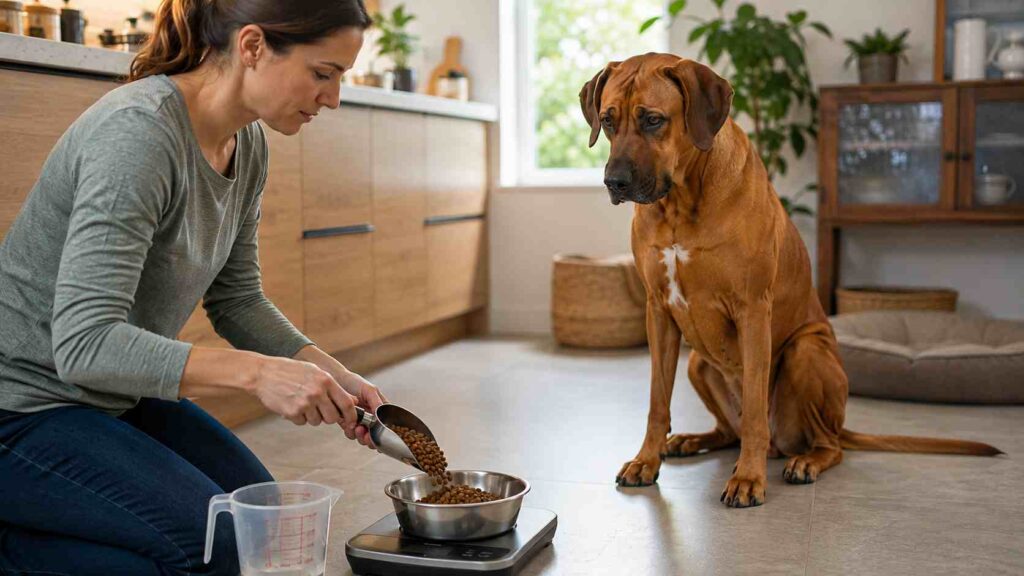
Use the manufacturer’s feeding guide as a starting point, then weigh each portion in grams. Measuring cups are less accurate because kibble size and shape vary between products.
Recheck your dog’s weight and body condition after two to four weeks. Reduce the amount slightly if the ribs are becoming difficult to feel or the waist is disappearing. Seek veterinary advice rather than simply increasing food if your Ridgeback is losing weight, losing muscle or remaining unusually hungry despite an adequate ration.
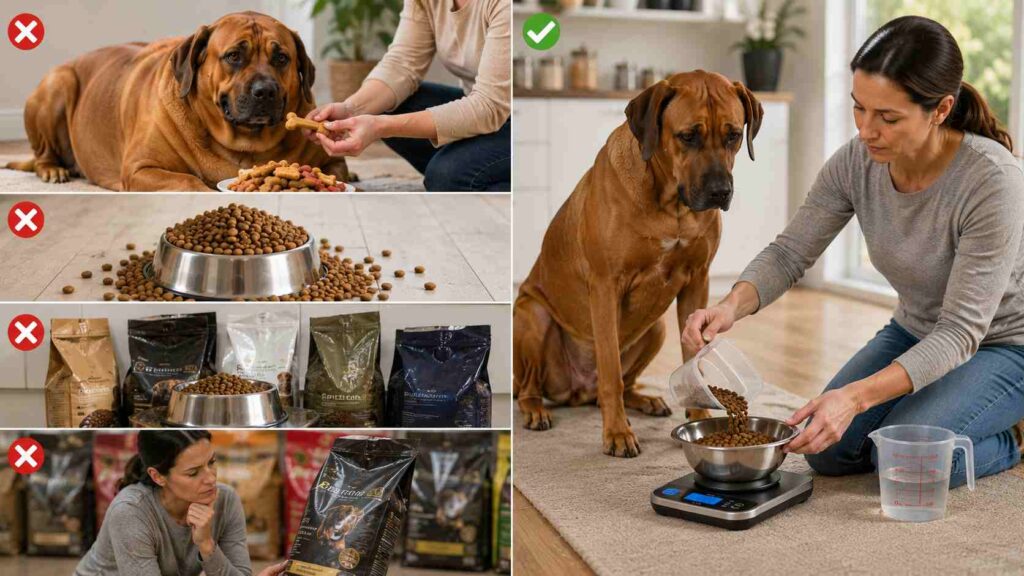
Training treats, dental chews, table scraps and toppers all contribute calories. A common mistake is carefully measuring the main food while overlooking the extras given throughout the day.
Feeding Schedule and Bloat Risk
Rhodesian Ridgebacks are deep-chested dogs and can develop gastric dilatation-volvulus, commonly called GDV or bloat. This is a life-threatening emergency in which the stomach becomes distended and may twist.
Dividing the daily ration into two or more measured meals can help avoid one very large meal. Discourage rapid gulping and allow a calm period around mealtimes rather than vigorous running, rough play or intense training. These measures are sensible, but no bowl, food type or feeding routine can guarantee that GDV will not occur.
Emergency Warning
Contact an emergency veterinarian immediately if your Ridgeback develops:
- Repeated, unproductive retching
- A rapidly enlarging or tight abdomen
- Restlessness or inability to settle
- Excessive drooling
- Weakness
- Pale gums
- Breathing difficulty
- Collapse
Do not wait for the symptoms to pass, and do not offer food, water or home remedies.
Owners of deep-chested dogs may also wish to ask their veterinarian whether preventive gastropexy is appropriate for their individual dog.
What Food Can and Cannot Fix
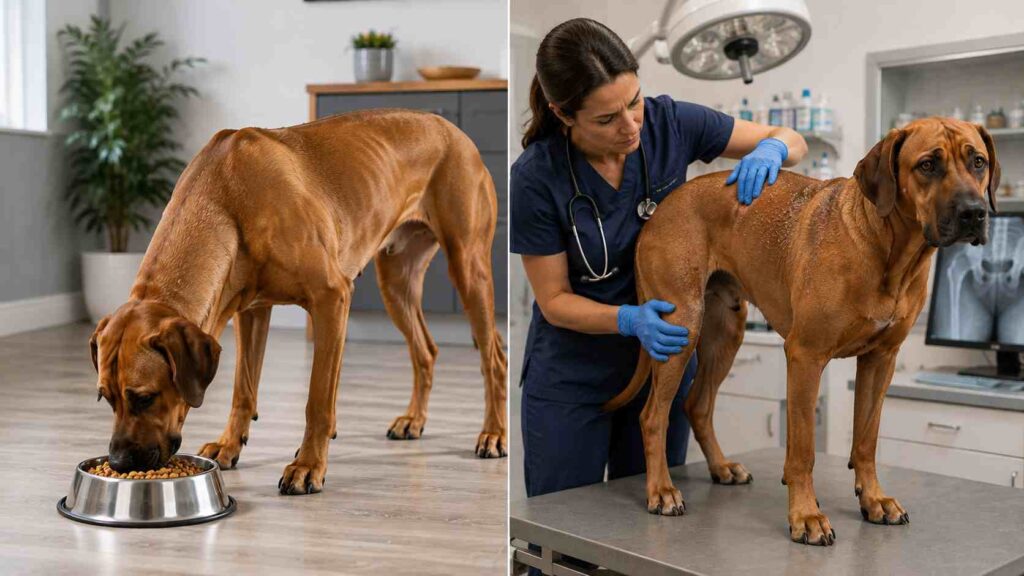
Good nutrition helps maintain lean muscle, an appropriate body weight, normal stools and healthy skin and coat. It can also support dogs receiving treatment for certain conditions.
However, food cannot prevent or cure every health problem associated with the breed. Hip and elbow dysplasia have important genetic and developmental components. Dermoid sinus is congenital, and hypothyroidism requires veterinary diagnosis and treatment.
Persistent itching, recurring ear inflammation, repeated vomiting, chronic loose stools, difficulty chewing or unexplained weight change should not be managed through endless food switching. These signs may be caused by parasites, environmental allergies, dental disease, infection, gastrointestinal illness or another medical condition.
A food change is most useful when it is chosen for a clear reason, introduced carefully and assessed using measurable signs such as body condition, stool quality, appetite and weight.
Common Feeding Mistakes
- Choosing a food purely because meat is listed first
- Assuming grain-free automatically means allergy-friendly
- Feeding performance food to a moderately active pet
- Free-feeding instead of offering measured meals
- Ignoring the calories in treats, chews and toppers
- Switching foods after a single soft stool
- Assuming itchy skin always means a food allergy
- Comparing wet and dry protein percentages without accounting for moisture
- Adding calcium or supplements to an already complete diet
- Using a food change instead of seeking veterinary advice for ongoing symptoms
Switching Food Safely
Change food gradually over about seven days unless your veterinarian recommends a different plan.
- Days 1–2: Mostly old food with a small amount of the new food
- Days 3–4: Roughly half old food and half new food
- Days 5–6: Mostly new food with a small amount of the old food
- Day 7 onward: Fully new food
Dogs with sensitive digestion may need a slower transition. During the change, monitor stool consistency, appetite, energy, vomiting, gas and skin symptoms.
Mild stool softening can happen briefly, but blood in the stool, black stool, repeated vomiting, refusal to eat, abdominal pain or marked lethargy are not normal transition signs. Stop the change and contact your veterinarian rather than trying to “push through.”
The Bottom Line
Choose the right food category before comparing brands: puppy, healthy adult, highly active dog, weight-conscious adult, senior, sensitive digestion or veterinarian-directed therapeutic diet.
Check the label for life-stage suitability, nutritional completeness and calorie content. Weigh portions rather than guessing with cups, count treats and toppers, and reassess your dog’s body and muscle condition every few weeks.
The best food is not the one with the boldest claims. It is the one that safely meets your individual Ridgeback’s needs, produces consistent results and remains practical to feed.
Frequently Asked Questions
1.Does a Rhodesian Ridgeback need large-breed dog food?
As a puppy, usually yes. A large-breed growth formula is designed to support steady development with appropriate energy and mineral levels. As an adult, many Ridgebacks do well on a complete adult maintenance food, provided the calories and nutrient profile suit their body condition and activity level.
2.Is grain-free food necessary for Rhodesian Ridgebacks?
No, not for most healthy dogs. Grain-free does not automatically mean more digestible or less likely to cause allergies. If a dog needs a special diet, the choice should be based on a clear clinical reason rather than the absence of grains alone.
Some grain-free and legume-rich diets have been investigated in relation to diet-associated dilated cardiomyopathy in dogs. The issue is complex, so avoid making the decision based on marketing claims and speak with your veterinarian if you have concerns about a particular formula.
3.Should feeding change after neutering?
Often, yes. Some dogs need fewer calories after neutering, especially if their activity also drops.
Keep the same food initially if it is otherwise suitable, but watch the ribs, waist and weight closely over the following weeks. If body fat starts to increase, reduce the portion gradually or discuss a lower-calorie formula with your veterinarian.
4.Why does my Ridgeback always seem hungry?
Some Ridgebacks are naturally food-motivated, and begging does not always mean the dog is underfed.
Check body condition, weight trend, stool quality and activity before increasing the ration. If your dog is losing weight, drinking or urinating more, scavenging unusually, or staying ravenously hungry despite adequate feeding, arrange a veterinary check.
5.Can a slow feeder prevent bloat?
No. A slow feeder may reduce gulping and make meals last longer, but it cannot prevent gastric dilatation-volvulus.
Use it as part of sensible feeding management, not as protection against GDV. Divide the daily ration into measured meals, avoid intense exercise around large meals and learn the emergency signs of bloat.
6.How do I know if my Ridgeback is underweight rather than naturally lean?
A naturally lean Ridgeback should still have good muscle over the shoulders, spine and hindquarters. The ribs may be easy to feel and the waist should be visible, but the spine, hips and ribs should not look sharply prominent.
Ongoing weight loss, poor muscle tone, chronic diarrhoea, vomiting or a normal appetite with failure to gain weight warrants veterinary investigation rather than simply adding more food.
7.Can I feed my Ridgeback a homemade diet?
Yes, but it should be formulated by a properly qualified veterinary nutrition professional.
Meat, rice and vegetables may look wholesome but can still be deficient in calcium, trace minerals, vitamins or essential fatty acids. This is especially risky for puppies, pregnant dogs and dogs with medical conditions.
#. Related Articles:
1. Best Dog Food for Acid Reflux?