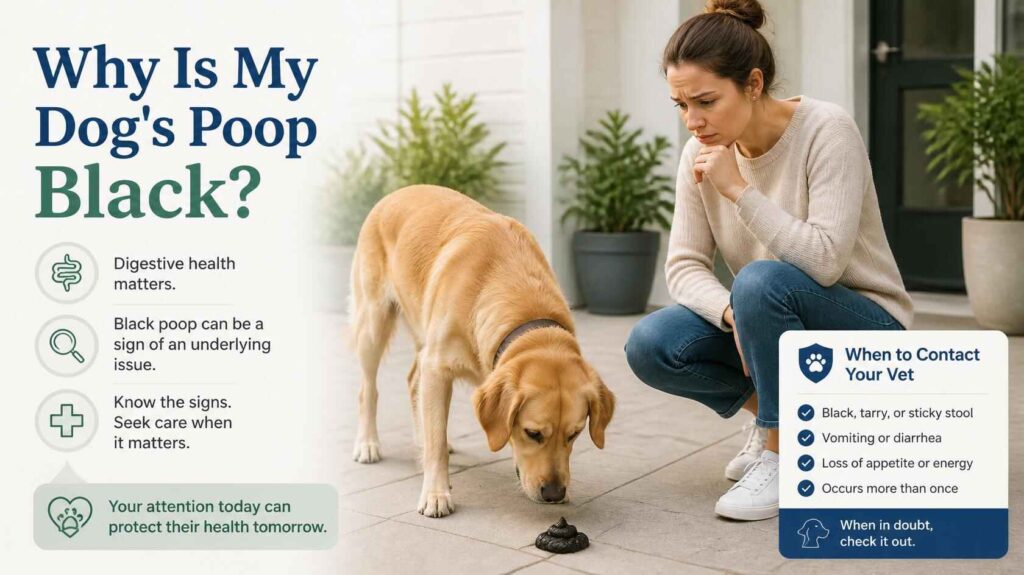
Common causes of diarrhoea in dogs include eating something unusual, sudden diet changes, intestinal parasites, infections, stress, medication side effects, and food intolerances. Less commonly, diarrhoea can be linked to pancreatitis, a swallowed foreign object, toxins, or an underlying medical condition.
Diarrhoea isn’t a disease in itself. It’s a sign that something has changed in your dog’s digestive system, and the circumstances around it often provide the best first clues.
One soft stool after stealing unfamiliar food is very different from repeated watery diarrhoea accompanied by vomiting, weakness, pain, or loss of appetite. The useful questions are: What changed recently? Is anything else wrong? Is this a one-off episode or a recurring pattern?
Before You Search for a Cause, Ask What Changed
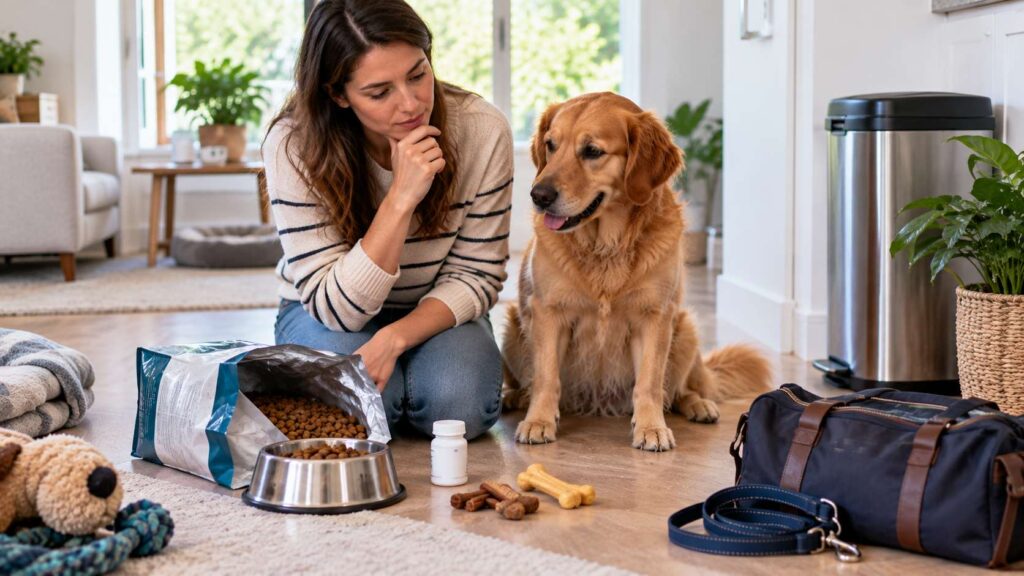
Many short-lived episodes follow something that happened recently. Think through the previous few days rather than concentrating only on what the stool looks like.
Food and treats. New kibble, a sudden brand switch, unusually rich food, extra treats, a new chew, or something stolen from a plate can upset the digestive tract. Even a suitable new food may cause loose stools if the transition is too abrupt.
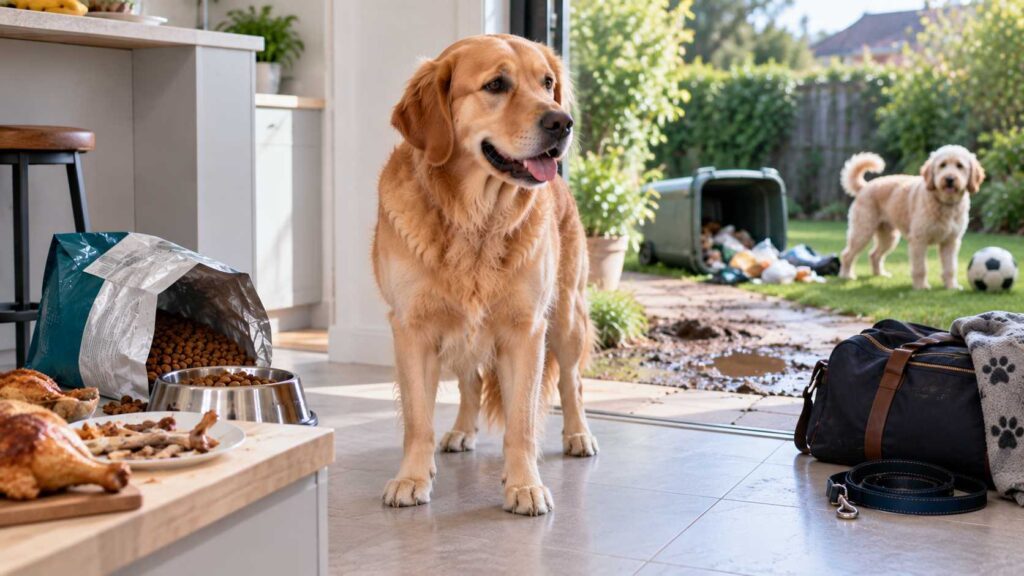
Something they found. Consider bins, compost, spoiled leftovers, another pet’s food, discarded food outdoors, or anything eaten during an unsupervised moment. Vets often refer to this broad category as dietary indiscretion.
New places or new dogs. Boarding, daycare, travel, dog parks, or drinking from puddles can increase exposure to parasites and infectious organisms. Exposure doesn’t prove infection, but it’s useful information for your vet.
Medication. If diarrhoea started after a new prescription or during a course of medication, tell your vet what your dog is taking and when it was started. Don’t stop prescribed medication without veterinary advice unless you’ve been specifically instructed to do so.
Stress. Boarding, travel, fireworks, moving house, a new pet, or another major routine change can trigger digestive upset in some dogs. Stress-related large-bowel irritation may cause frequent small stools, urgency, mucus, or fresh blood.
Finding a plausible trigger is useful, but it isn’t proof. A dog that raided the bin can still have an unrelated illness, so persistent, worsening, or recurrent diarrhoea deserves a broader look.
The 60-Second Check Before You Decide What to Do
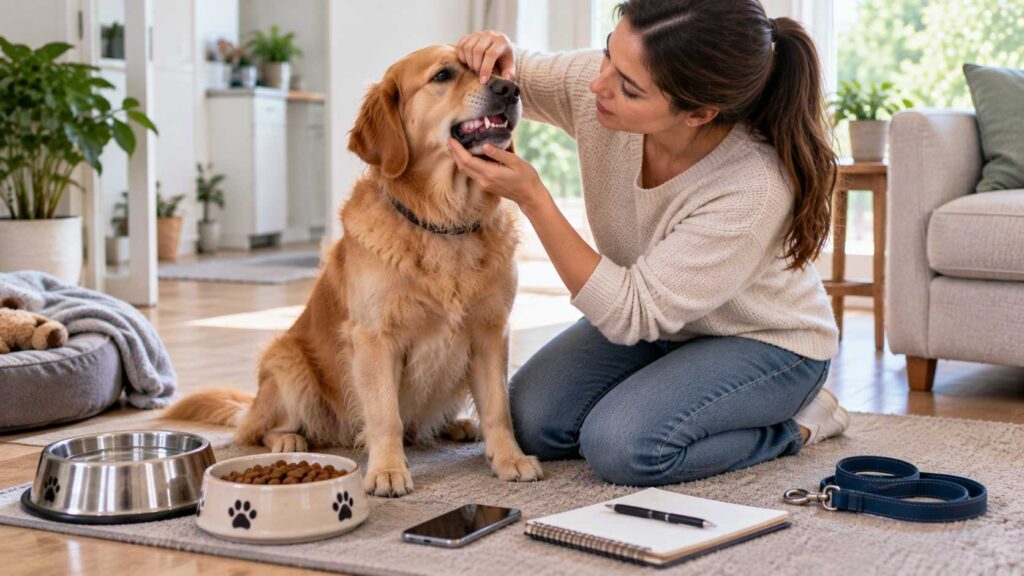
Before trying to identify the cause, run through these questions:
- When was the last normal stool?
- Has this happened once or repeatedly?
- Is the stool soft, watery, mucus-covered, bloody, or black and tarry?
- Is your dog vomiting?
- Can they keep water down?
- Are they eating normally?
- Is their energy level normal?
- Do they seem painful, restless, or uncomfortable around the abdomen?
- Was there a recent food change, new treat, or access to rubbish?
- Could they have swallowed a sock, toy, bone, or another object?
- Have they started any medication recently?
- Have they recently travelled, boarded, or mixed with unfamiliar dogs?
- Is parasite prevention current and appropriate for their lifestyle?
- Is vaccination up to date, particularly in a puppy?
- Is your dog very young, elderly, frail, or living with another medical condition?
These answers won’t diagnose the cause, but they can help you and your vet narrow the possibilities and judge how urgently your dog needs attention.
The Most Common Causes of Diarrhoea in Dogs
Food-Related Digestive Upset
Dietary indiscretion is an obvious place to start when a previously well dog suddenly develops loose stools. Cornell University College of Veterinary Medicine lists dietary indiscretion and switching to a new food too quickly among the common transient causes of diarrhoea in dogs.
Possible triggers include:
- Eating rubbish or spoiled food
- Table scraps
- Rich or fatty foods
- Too many treats
- Abrupt diet changes
- New chews
- Eating much more than usual
- Food intolerance or another adverse food reaction
Don’t automatically label diarrhoea after eating something as a food allergy. A dog may simply have eaten too much, eaten something unusually rich, or had its diet changed faster than its digestive system could comfortably adapt.
Fatty foods deserve extra caution because digestive upset isn’t the only possibility. Pancreatitis can also cause vomiting, reduced appetite, lethargy, abdominal pain, dehydration, and diarrhoea.
Intestinal Parasites and Protozoa
Parasites are another important cause, particularly in puppies and dogs with frequent environmental exposure.
Possible culprits include:
- Roundworms
- Hookworms
- Whipworms
- Giardia
- Coccidia
Routine parasite prevention lowers the risk, but it doesn’t rule parasites out completely. Different products cover different organisms, and some infections require specific faecal tests.
Giardia, for example, can cause intermittent or persistent diarrhoea, although some infected dogs show few or no obvious signs.
Viral and Bacterial Infections
Several infectious diseases can cause diarrhoea.
Parvovirus is particularly important in young or inadequately vaccinated dogs, especially when diarrhoea occurs with vomiting, lethargy, appetite loss, or rapid deterioration.
Bacterial gastrointestinal disease is more complicated than simply finding bacteria in a stool sample. Some bacteria can also occur in healthy animals, so test results need to be interpreted alongside the dog’s symptoms, history, and examination.
Stress-Related Diarrhoea
Stress can affect bowel function, particularly the large intestine.
Common triggers include:
- Boarding
- Travel
- Fireworks
- Moving house
- A new animal in the home
- Separation or major routine changes
- Intense excitement
Stress-related large-bowel diarrhoea may involve urgency, frequent small stools, straining, mucus, or fresh red blood.
However, don’t assume stress is responsible simply because a stressful event happened. Parasites, dietary problems, infection, and inflammation can produce similar signs.
Inflammation and Chronic Gut Disease
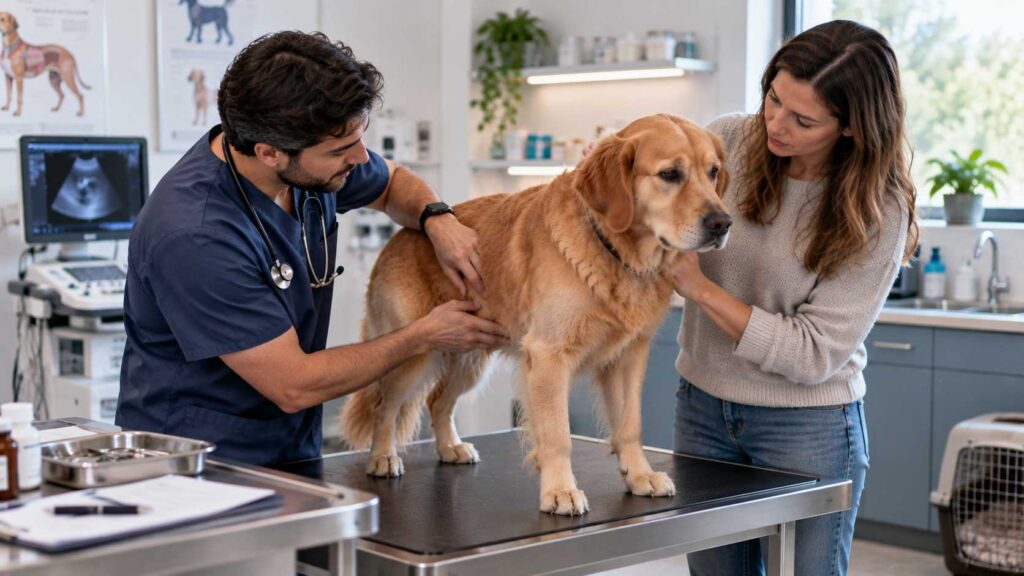
Inflammation of the gastrointestinal tract can cause acute or recurring diarrhoea. Gastroenteritis, colitis, and chronic enteropathies are not interchangeable diagnoses, even though owners may encounter all of these terms when researching digestive problems.
One short episode does not mean your dog has inflammatory bowel disease.
Chronic gastrointestinal disease becomes more relevant when diarrhoea persists or repeatedly returns, particularly alongside:
- Weight loss
- Poor body condition
- Appetite changes
- Recurrent vomiting
- Other ongoing digestive signs
Pancreatic Disease
Pancreatic disorders can cause diarrhoea in different ways.
Pancreatitis may cause:
- Vomiting
- Reduced appetite
- Lethargy
- Abdominal pain
- Dehydration
- Diarrhoea
Exocrine pancreatic insufficiency (EPI) is different. The pancreas doesn’t provide enough digestive enzymes, which can lead to poor digestion, abnormal or large-volume stools, and weight loss.
Neither condition can be diagnosed from stool appearance alone.
Foreign Objects and Intestinal Blockage
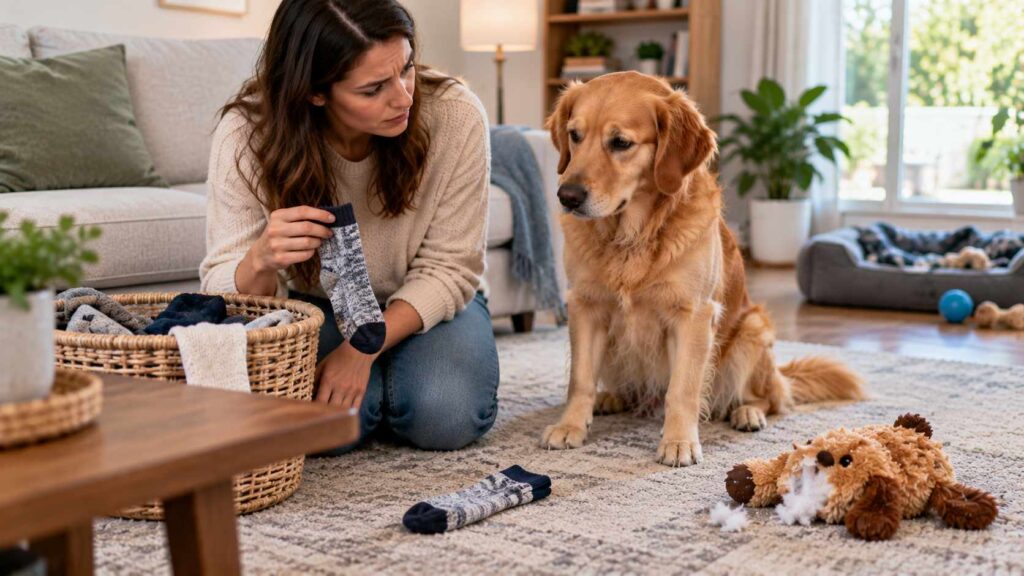
Dogs sometimes swallow socks, toys, fabric, bones, corn cobs, or other objects that can become lodged in the gastrointestinal tract.
A particularly dangerous misconception is that an obstructed dog cannot have diarrhoea.
A partial intestinal obstruction can still allow liquid stool to pass. The Merck Veterinary Manual notes that intestinal obstruction may be partial or complete, and signs can include vomiting, lethargy, loss of appetite, diarrhoea, abdominal pain, dehydration, and abdominal swelling.
If something is missing and your dog is becoming unwell, don’t use the fact that they’re still passing stool as reassurance.
Toxins and Medication Effects
Poisonous foods, household chemicals, toxic plants, human medicines, and some veterinary medications can cause gastrointestinal signs.
The safest response depends on what was swallowed, not simply on whether diarrhoea develops. If poisoning is possible, contact a veterinarian or appropriate animal poison service rather than waiting for symptoms or trying to induce vomiting yourself.
Prescription drugs can also cause digestive side effects. If diarrhoea appears after starting medication, contact the prescribing veterinarian rather than stopping or changing the dose yourself.
Diseases Outside the Digestive Tract
Not every cause begins in the intestines.
Diarrhoea can occur with underlying conditions such as:
- Addison’s disease
- Liver disease
- Kidney disease
- Pancreatic disease
- Other metabolic or systemic disorders
- Some cancers
These possibilities become more relevant when diarrhoea is persistent or keeps returning without an obvious trigger, particularly when accompanied by weight loss, weakness, appetite changes, or other signs of illness.
What Context Can Tell You About the Possible Cause
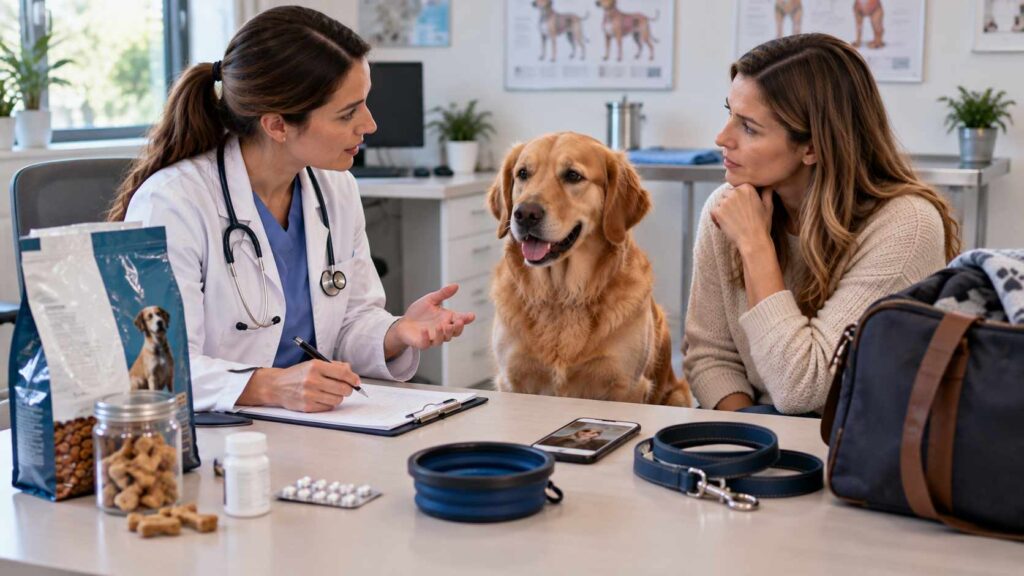
| Situation | Possible Cause Category | Other Clues That Matter | Concern Level |
|---|---|---|---|
| One loose stool after stealing table scraps | Dietary indiscretion | Otherwise bright, eating and drinking normally | Often reasonable to monitor closely |
| Diarrhoea after boarding | Stress or infectious exposure | Mucus, urgency, vomiting, contact with other dogs | Depends on other signs |
| Puppy with repeated watery diarrhoea and vomiting | Infection or parasites among the possibilities | Lethargy, appetite loss, dehydration | Contact a vet promptly |
| Missing sock followed by vomiting | Foreign body | Abdominal pain, appetite loss, lethargy | Urgent |
| Recurring loose stools with weight loss | Chronic gastrointestinal or systemic disease | Appetite or body-condition changes | Veterinary investigation needed |
| Diarrhoea with vomiting and abdominal pain | Pancreatic, gastrointestinal, or other illness | Poor appetite, lethargy, dehydration | Veterinary assessment recommended |
These are clues, not diagnoses. Two dogs can produce similar-looking diarrhoea for completely different reasons. Context helps narrow the possibilities; it cannot confirm the underlying disease.
What the Stool Itself Can—and Can’t—Tell You
Stool appearance can help narrow down where irritation may be occurring, but it shouldn’t be used to diagnose the cause.
One soft stool versus repeated watery diarrhoea. A single softer-than-usual stool in an otherwise well dog is different from repeated watery episodes. The latter means greater fluid loss and deserves closer monitoring.
Mucus and frequent small amounts. Frequent small stools with urgency, straining, or mucus often fit a large-bowel or colitis-type pattern. Stress, parasites, dietary upset, inflammation, and other conditions can all produce it.
Fresh red blood. Fresh blood in or on the stool is called hematochezia and commonly comes from the lower gastrointestinal tract. A tiny streak can occur with irritation or straining, but repeated or substantial bleeding—especially with vomiting, weakness, pain, or lethargy—needs prompt veterinary advice.
Black or tarry stool. Black, sticky, tar-like faeces may represent melena, or digested blood. If you suspect melena, contact your vet promptly rather than waiting to see whether another bowel movement looks normal.
Yellow, green, or otherwise unusual stool. Diet, medications, bile, and intestinal transit time can all affect colour. Colour alone cannot diagnose Giardia, liver disease, infection, or another specific condition.
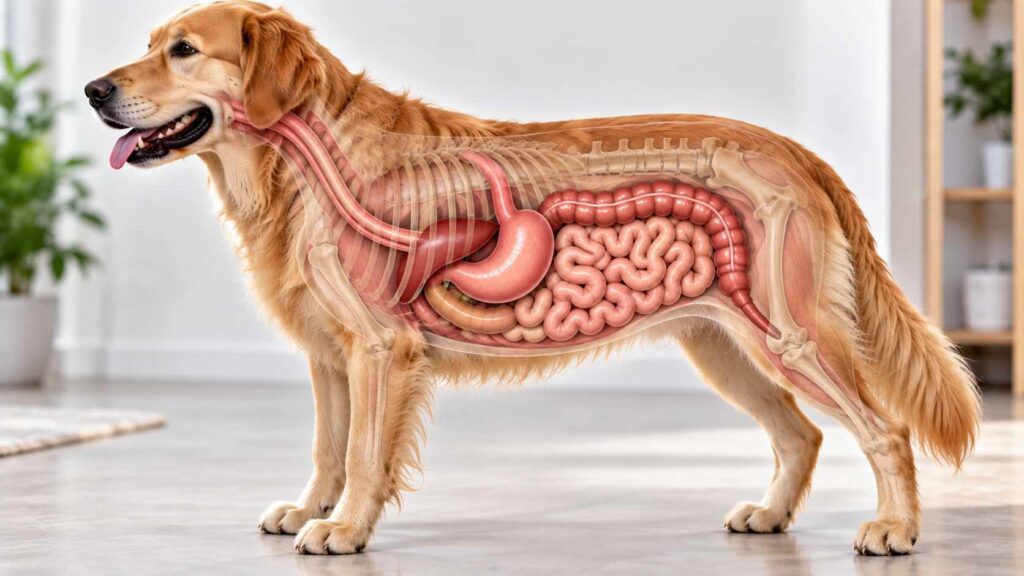
Small-Bowel Versus Large-Bowel Diarrhoea
| Feature | Small-Bowel Pattern | Large-Bowel Pattern |
|---|---|---|
| Stool volume | Often larger | Often smaller |
| Frequency | Normal to moderately increased | Often frequent |
| Urgency | Less prominent | Common |
| Straining | Less typical | Common |
| Mucus | Less typical | More typical |
| Fresh red blood | Less typical | Can occur |
| Weight loss over time | More relevant in chronic disease | Less specific |
This distinction can help a veterinarian work out where in the gastrointestinal tract the problem may be occurring. It’s useful information to describe during an appointment, but it isn’t a home diagnosis tool.
Does the Diarrhoea Keep Coming Back?
The duration and pattern can change which causes deserve more attention.
Acute diarrhoea starts suddenly and may follow dietary indiscretion, a rapid food change, stress, infection, medication, toxin exposure, or another short-term trigger.
Recurrent diarrhoea disappears and then returns. Episodes associated with particular foods or stressful events may reveal a pattern, but parasites, chronic enteropathy, pancreatic disease, and other conditions may also need consideration.
Persistent or chronic diarrhoea, particularly with weight loss, appetite changes, poor body condition, or unusually large stools, deserves veterinary investigation. Chronic enteropathy, EPI, Addison’s disease, and other systemic conditions are among the possibilities a vet may investigate.
There isn’t one universal number of hours that separates “safe” from “serious.” Age, severity, hydration, accompanying symptoms, and the suspected cause matter more than the clock.
Warning Signs That Change the Situation
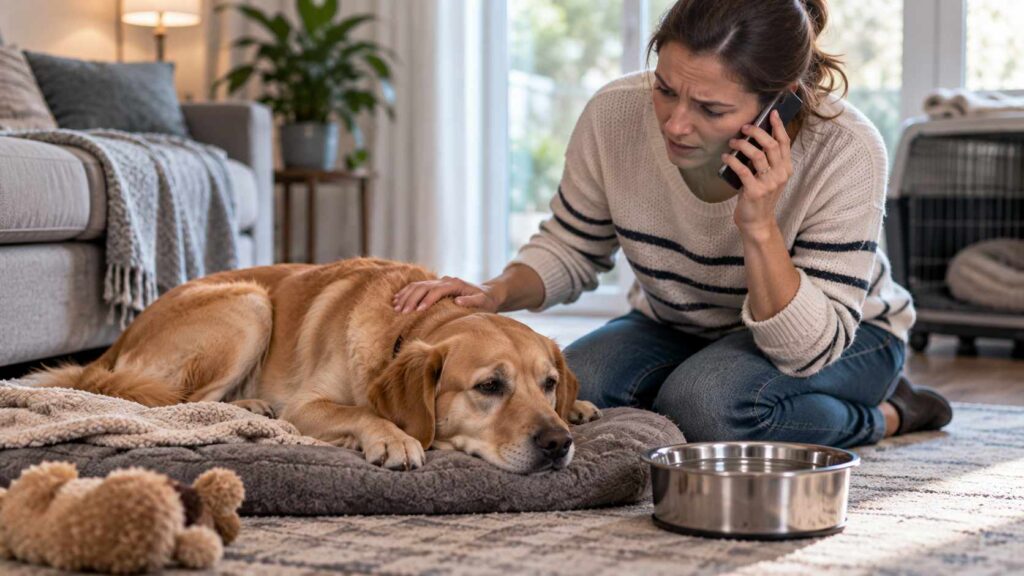
Seek prompt veterinary advice if diarrhoea occurs with:
- Repeated vomiting or inability to keep water down
- Collapse, severe weakness, or marked lethargy
- Significant abdominal pain
- A swollen or distended abdomen
- Pale or white gums
- A large amount of fresh blood
- Black, tarry stool
- Profuse or rapidly worsening watery diarrhoea
- Suspected toxin exposure
- A suspected swallowed object
- Signs of dehydration
- Rapid deterioration
Very young puppies, frail seniors, and dogs with significant existing medical conditions also deserve a lower threshold for veterinary assessment.
A dog that still seems fairly normal can occasionally have a developing problem, so behaviour alone shouldn’t be used to rule out something serious.
Why Puppies Need More Caution
Puppies have less physiological reserve than healthy adult dogs and can become dehydrated more quickly when diarrhoea is frequent or accompanied by vomiting.
Infectious and parasitic causes also deserve particular attention at this age, including parvovirus, coccidia, Giardia, and intestinal worms.
Vaccination and exposure history matter. An incompletely vaccinated puppy with repeated diarrhoea after contact with unfamiliar dogs or shared outdoor areas needs more caution than a healthy adult dog with one loose stool.
Avoid relying on a rigid “wait 12 hours” or “wait 24 hours” rule. Repeated watery diarrhoea, vomiting, blood, lethargy, poor appetite, or reduced drinking in a puppy are reasons to contact a veterinarian promptly.
What Your Vet Will Want to Know
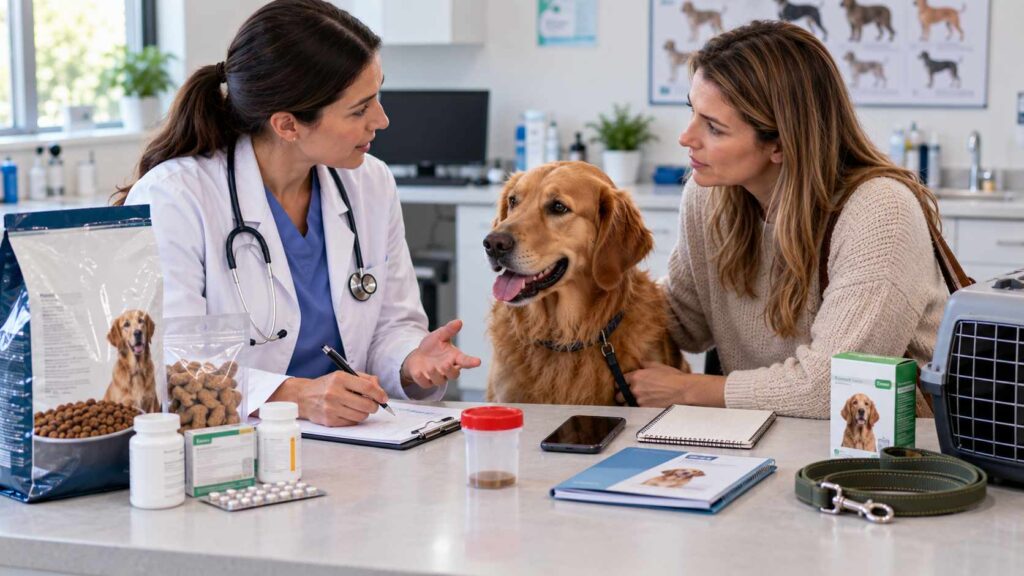
The history can be just as useful as the stool itself when a veterinarian starts narrowing down possible causes.
Try to have the following information ready:
- When the diarrhoea started
- When the last normal stool was
- How often your dog is passing stool
- What the stool looks like
- Whether your dog is vomiting
- Whether appetite or drinking has changed
- Recent food or treat changes
- Bin raids or scavenging
- Possible toxin exposure
- Recent boarding, travel, or dog contact
- New medications or recent antibiotics
- Vaccination status
- Parasite-prevention details
- Unexplained weight loss
- Any missing sock, toy, bone, or other object
A fresh stool sample can be useful if your clinic requests one. Depending on the history and physical examination, your vet may recommend faecal testing, bloodwork, electrolyte checks, radiographs, ultrasound, or more specific investigations.
Not every dog needs every test. The aim is to choose investigations that fit the pattern.
Useful things to bring: a clear stool photo, fresh sample if requested, food or treat packaging, medication details, suspected toxin packaging, and relevant vaccination or parasite-prevention information.
Common Mistakes Owners Make
Assuming it must be something they ate. Dietary indiscretion is common, but parasites, infection, medication, foreign bodies, and underlying disease can look similar.
Calling every food reaction an allergy. A one-off upset after unfamiliar or rich food is not the same as a true food allergy or chronic food-responsive disease.
Switching foods repeatedly. Multiple rapid diet changes can further upset the gut and make the original trigger harder to identify.
Trying several home remedies at once. Combining different diets, pumpkin, probiotics, and supplements makes it difficult to know what helped—or what made things worse.
Giving human anti-diarrhoeal medication without veterinary advice. Medicines used for people aren’t automatically safe or appropriate for dogs.
Using leftover antibiotics. Diarrhoea has many causes, and unnecessary antibiotics may be ineffective and can disrupt the intestinal microbiome.
Assuming parasite prevention makes parasites impossible. Risk is reduced, not eliminated, and coverage differs between products.
Ignoring black, tarry stool. True melena can indicate gastrointestinal bleeding and warrants prompt veterinary advice.
Assuming an obstruction means no stool can pass. A partial blockage can still allow diarrhoea through.
Repeating bland diets every time diarrhoea returns. Recurring episodes deserve investigation rather than endless symptom management.
What Helps at Home When the Cause Appears Mild
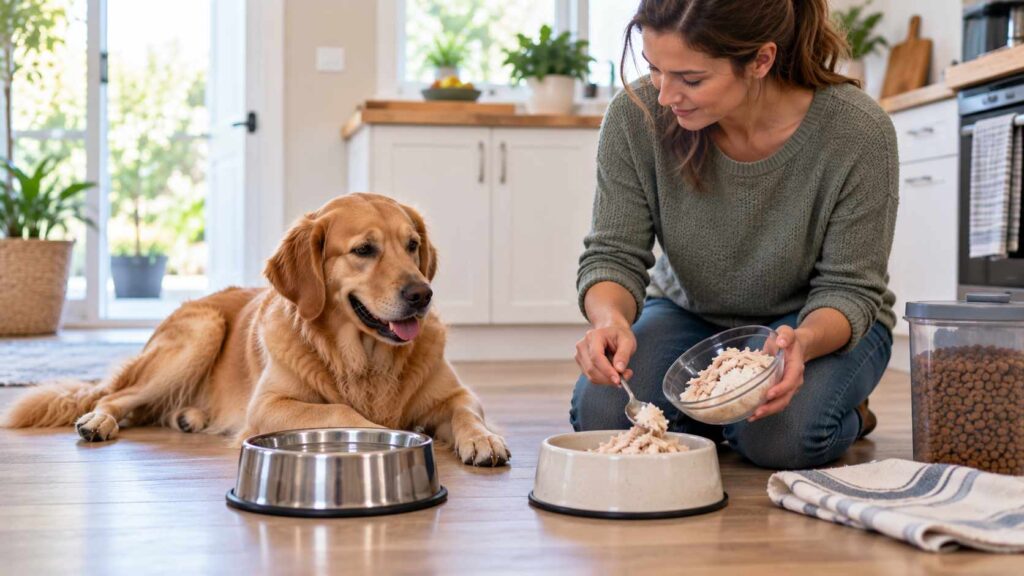
Home monitoring is most appropriate for an otherwise healthy adult dog with mild diarrhoea who remains bright, is drinking, isn’t repeatedly vomiting, and has no significant blood, suspected toxin exposure, or possible foreign body.
Fresh water should always be available. Contact your vet if your dog stops drinking, repeatedly vomits after drinking, becomes weak or lethargic, or shows other signs of dehydration or illness.
Routine prolonged fasting isn’t appropriate for every dog. Small, frequent portions of an easily digestible diet may be suitable in some mild cases. A veterinary gastrointestinal diet provides a more nutritionally complete option when one is needed. Homemade chicken or white fish with rice may sometimes be used briefly on veterinary advice, but it isn’t complete and balanced for long-term feeding.
Avoid rich foods, fatty leftovers, excessive treats, and further sudden diet changes while the digestive tract settles.
A veterinarian-recommended canine probiotic may be useful in some situations, but probiotic products differ considerably and shouldn’t be treated as interchangeable.
If your dog worsens, develops another symptom, or the diarrhoea isn’t improving as expected, contact your veterinary practice rather than simply extending home treatment.
Prevention Worth Doing
Reduce the common preventable causes where you can:
- Introduce diet changes gradually rather than switching overnight
- Keep bins, compost, leftovers, medications, and toxins securely out of reach
- Supervise dogs that regularly scavenge outdoors
- Teach reliable “leave it” and “drop” cues
- Keep vaccinations current
- Use parasite prevention appropriate to your dog’s age, lifestyle, and local risks
If diarrhoea keeps returning, record food, treats, chews, medications, stressful events, travel, boarding, and when each episode occurs. Patterns can give your vet valuable clues that aren’t obvious from one isolated episode.
Key Takeaways
- Common causes of diarrhoea in dogs include dietary indiscretion, sudden diet changes, parasites, infections, stress, and medication effects
- Pancreatic disease, toxins, foreign bodies, and systemic illness are important less-obvious causes
- Recent food, scavenging, stress, medication, and environmental exposure can help narrow the possibilities
- Stool appearance provides clues but cannot diagnose the underlying cause
- A dog acting normally doesn’t completely rule out a serious problem
- Puppies, frail seniors, and dogs with significant medical conditions need earlier veterinary advice
- Recurring diarrhoea deserves investigation rather than repeated home-treatment cycles
Final Thoughts
The common causes of diarrhoea in dogs range from everyday problems such as dietary indiscretion, rapid food changes, and stress to parasites, infections, pancreatic disease, foreign bodies, toxins, and underlying medical conditions.
Rather than trying to diagnose the cause from the stool alone, look at the whole situation: what changed recently, how often the diarrhoea is happening, whether other symptoms are present, and whether this is an isolated episode or a recurring pattern.
For a mild one-off episode in an otherwise healthy adult dog, careful monitoring may be reasonable. If the diarrhoea is severe, keeps returning, comes with warning signs, or simply doesn’t fit a straightforward digestive upset, contact your veterinarian for individual advice.
Frequently Asked Questions
1.What is the most common cause of diarrhoea in dogs?
Dietary indiscretion—eating something unusual, rich, spoiled, or simply too much—is a common reason for sudden diarrhoea. Abrupt diet changes are another frequent trigger. However, you shouldn’t assume food is responsible if diarrhoea is severe, recurrent, or accompanied by other symptoms.
2.Why does my dog have diarrhoea but seem completely fine?
Mild dietary upset, stress, or another short-lived trigger can cause diarrhoea without making an otherwise healthy adult dog appear ill.
One mild episode may be reasonable to monitor closely, but contact your vet if diarrhoea becomes frequent or severe, persists, or is joined by vomiting, blood, pain, appetite changes, or lethargy.
3.Can changing dog food cause diarrhoea?
Yes. Switching diets abruptly can upset the digestive tract even when both foods are suitable for your dog. A gradual transition generally gives the gut more time to adapt.
4.Why is there mucus in my dog’s diarrhoea?
Increased mucus commonly appears when the large intestine is irritated. Stress, dietary upset, parasites, and inflammation are among the possible causes.
Persistent or recurrent mucus, particularly with straining, blood, vomiting, pain, or weight loss, deserves veterinary assessment.
5.Can stress really cause diarrhoea in dogs?
Yes. Boarding, travel, fireworks, household changes, and other stressful events can contribute to large-bowel diarrhoea or colitis in some dogs.
However, don’t assume stress is the cause simply because a stressful event occurred; other gastrointestinal problems can produce a similar pattern.
6.Can parasites cause diarrhoea even if my dog is regularly dewormed?
Yes. Parasite prevention lowers risk, but different products target different organisms and exposure can occur between treatments. Protozoa such as Giardia also aren’t covered by every routine worming product.
7.Can pancreatitis cause diarrhoea?
Yes. Diarrhoea can occur with pancreatitis, although vomiting, reduced appetite, lethargy, dehydration, and abdominal pain may be more prominent. Veterinary assessment is needed to determine whether pancreatitis or another condition is responsible.
8.Can an intestinal blockage cause diarrhoea?
Yes. A partial intestinal obstruction can still allow liquid stool to pass.
If your dog may have swallowed a sock, toy, corn cob, bone, or another object and develops vomiting, abdominal pain, poor appetite, or lethargy, seek urgent veterinary advice.
9.Is there a set number of hours after which diarrhoea needs a vet?
No single time limit works for every dog. Severity, frequency, hydration, age, medical history, vomiting, blood, suspected toxins, possible foreign bodies, and your dog’s overall condition all matter.
A puppy with repeated watery diarrhoea requires a different level of caution from a healthy adult dog with one soft stool.
10.Should I take a stool sample to the vet?
If your veterinary clinic requests one, a fresh, uncontaminated sample can be useful for faecal testing. A clear photograph of the stool and a brief record of frequency, diet changes, vomiting, medications, and recent exposures can also help.
#. Related Articles: