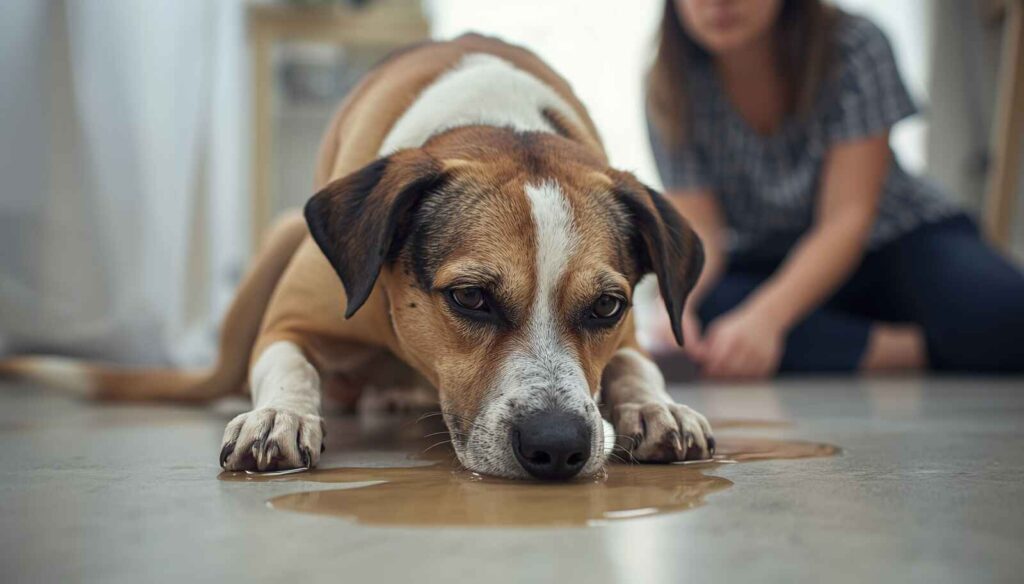
You come downstairs and find a clear, watery puddle on the kitchen floor, with your dog standing nearby looking slightly sheepish. Your first reaction is probably somewhere between “gross” and “is this serious?”
The appearance of the liquid cannot answer that question on its own. What matters more is how it came up, how many times it has happened, and how your dog is behaving now. A dog that vomits once and then returns to normal is in a very different situation from one that keeps retching, cannot hold down water, or appears painful.
Seek emergency veterinary care immediately if your dog has:
- Repeated retching or attempts to vomit with little or nothing coming up
- A swollen, tight, or painful abdomen
- Collapse, severe weakness, disorientation, or wobbliness
- Difficulty breathing
- Pale, blue, grey, or unusually dark-red gums
- Suspected poisoning
- A possible swallowed toy, sock, bone, string, or other foreign object
- Blood in the vomit or material that resembles coffee grounds
Repeated unproductive retching combined with abdominal swelling, drooling, or restlessness can be a sign of gastric dilatation-volvulus, commonly called bloat. This is a life-threatening emergency and should never be monitored at home.
When none of these warning signs is present, you can assess the episode more carefully while watching closely for any change.
Quick answer: Clear liquid brought up by a dog may be water, saliva, mucus, or stomach fluid. One isolated episode in an otherwise alert, comfortable adult dog may follow rapid drinking, an empty stomach, or mild digestive irritation. Repeated episodes, inability to keep water down, or vomiting accompanied by pain, lethargy, diarrhoea, excessive thirst, or appetite loss requires veterinary advice.
Start With the Event, Not the Puddle
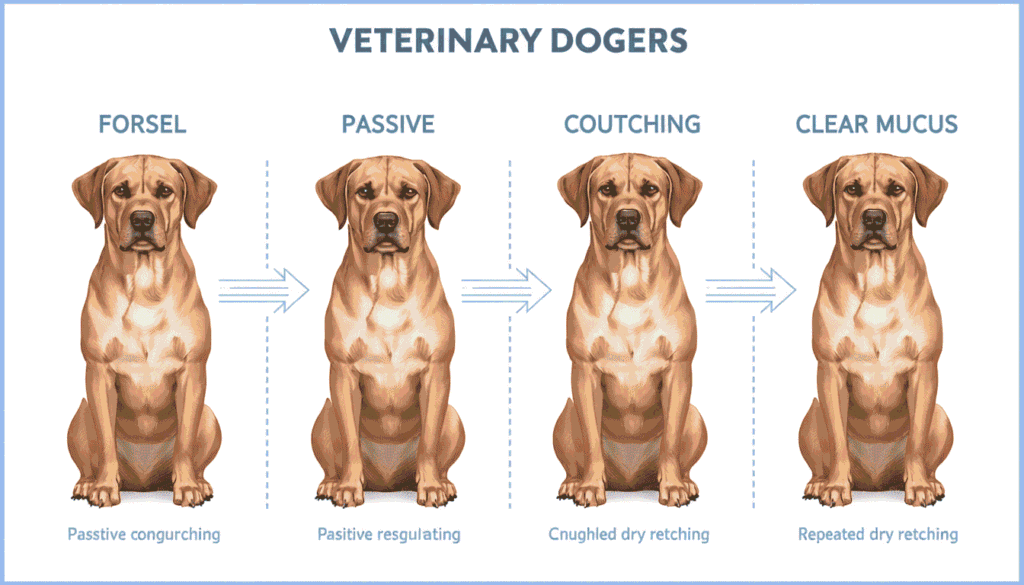
Before considering possible causes, work out what actually happened. Owners often use “vomiting” to describe regurgitation, coughing, gagging, and retching, but these events can point to different parts of the body and may require different levels of urgency.
What Happened Just Before the Liquid Appeared?
Signs such as lip licking, drooling, repeated swallowing, restlessness, or visible abdominal contractions often occur with nausea and vomiting.
A cough, gag, or choking-like movement before the fluid appears may suggest irritation involving the throat or airway instead. Clear mucus or saliva produced after coughing can easily be mistaken for vomit.
How Did the Liquid Come Up?
Vomiting is usually active. The dog may lower its head, tense the abdomen, heave, and forcefully expel fluid or food.
Regurgitation is generally more passive. Water, saliva, or undigested food may come back up suddenly without obvious nausea or strong abdominal effort. It often occurs soon after eating or drinking and may indicate a problem involving the oesophagus rather than the stomach.
Dry retching is different again. The dog repeatedly tries to vomit but produces little or nothing. Persistent dry retching should be treated seriously, especially when accompanied by abdominal swelling, drooling, restlessness, weakness, or collapse.
What Happened Afterwards?
A dog that quickly returns to normal, remains alert, and keeps down small amounts of water is generally less concerning than one that:
- Continues vomiting or retching
- Refuses food or water
- Vomits every time it drinks
- Appears painful or unusually restless
- Develops diarrhoea
- Becomes weak, quiet, or difficult to rouse
- Shows a swollen or tense abdomen
Even when a dog appears normal between episodes, repeated vomiting still deserves attention. Early obstruction, toxin exposure, and some illnesses can begin with mild or intermittent signs.
| Event | Typical body movement | Common warning signs | What it may suggest |
|---|---|---|---|
| Vomiting | Visible abdominal effort with forceful expulsion | Drooling, lip licking, nausea, restlessness | Stomach, intestinal, pancreatic, toxic, or systemic problem |
| Regurgitation | Passive return with little or no abdominal effort | Often little warning; may occur soon after eating or drinking | Oesophageal disorder or swallowing problem |
| Coughing | Repeated chest and throat movement | Coughing, gagging, throat-clearing sounds | Respiratory or throat irritation |
| Dry retching | Repeated attempts with little or nothing produced | Drooling, restlessness, abdominal enlargement | Possible bloat or obstruction; urgent if persistent |
When possible, safely record a short video if the event happens again. The dog’s posture, sounds, and body movements may help your veterinarian distinguish vomiting from regurgitation, coughing, or retching more accurately than a description of the puddle alone.
What Is That Clear Liquid, Really?
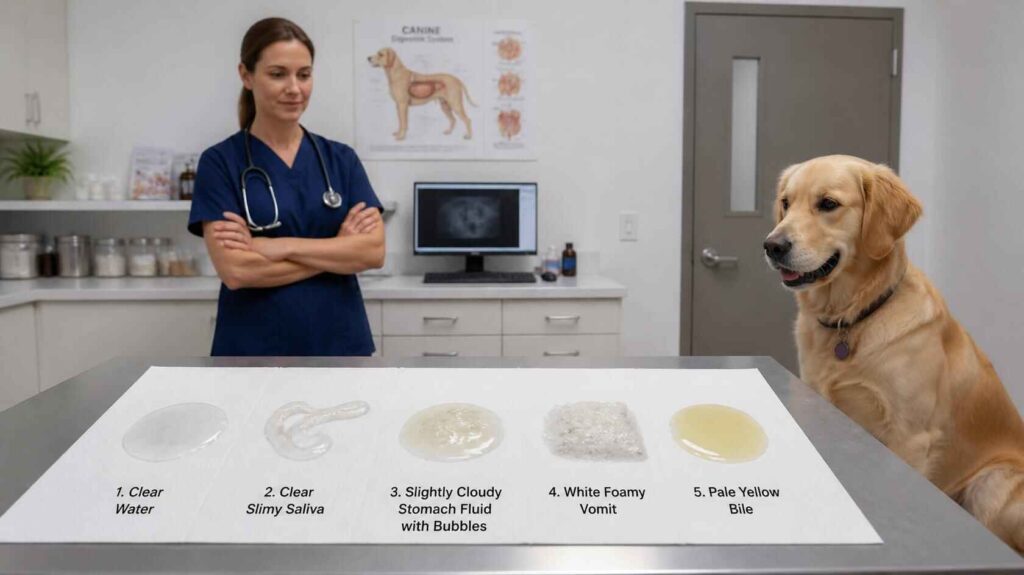
“Clear” can describe several different fluids, depending on what is mixed in:
- Water: Often brought back up shortly after drinking, especially if your dog gulped a large amount quickly.
- Saliva and mucus: Usually clear, slimy, or stringy and may appear with nausea, coughing, gagging, or throat irritation.
- Gastric fluid: Clear or slightly cloudy, sometimes with bubbles, and more noticeable when the stomach contains little or no food.
- White foam: Saliva or stomach fluid mixed with air. It is not a separate substance, but its foamy appearance can make it look different.
- Pale yellow fluid: More likely to contain bile and is not truly clear. It may appear in recurring early-morning vomiting patterns.
Colour alone cannot confirm the cause. Timing, body movement, frequency, and your dog’s behaviour are more useful.
When it is safe to do so, record a short video if another episode occurs. A photo of the fluid against a white paper towel can also help reveal a faint yellow, pink, red, or brown tinge that may not be obvious on the floor.
Run the Six-Clue Check
Instead of trying to diagnose the puddle, work through these six clues. Together, they provide a much clearer picture of how urgent the situation may be.
1. How Many Episodes Have There Been?
One isolated episode is different from several episodes close together or a pattern that has continued for days or weeks. Recurrent vomiting deserves veterinary investigation even when your dog seems normal between episodes.
2. Can Your Dog Keep Water Down?
A dog that can retain small amounts of water is generally less concerning than one that vomits every time it drinks. Repeatedly bringing up even small amounts of water can lead to dehydration and may indicate more than simple water gulping.
3. How Is Your Dog Behaving Between Episodes?
A dog that remains bright, responsive, and interested in normal activities is less worrying than one that is:
- Quiet or withdrawn
- Restless
- Weak or wobbly
- Difficult to rouse
- Clearly painful
- Repeatedly changing position because it cannot get comfortable
Normal behaviour is reassuring, but it does not completely rule out an early obstruction, toxin exposure, or developing illness.

4. Are There Other Symptoms?
Look for:
- Diarrhoea
- Blood in vomit or stool
- Black, tarry stool
- A swollen or painful abdomen
- Excessive thirst
- Changes in urination
- Loss of appetite
- Breathing difficulty
- Weakness or collapse
The combination of symptoms matters more than the liquid’s colour.
5. Could Your Dog Have Been Exposed to Something?
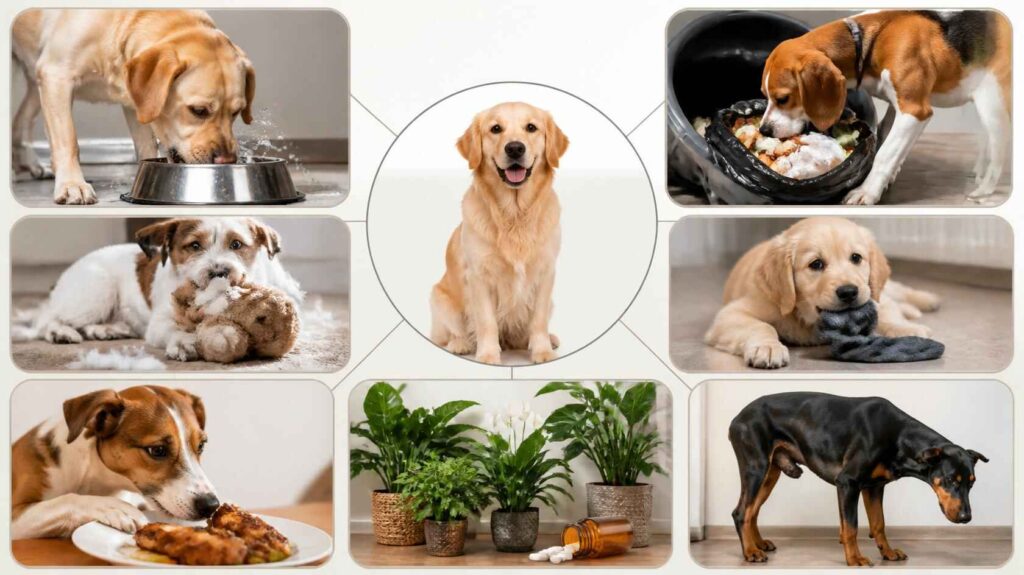
Think back over the previous several hours. Possible clues include:
- A new food or treat
- Bin-raiding or scavenging
- Fatty table scraps
- A damaged toy
- Missing socks, string, bones, or food packaging
- Human medication
- Household chemicals
- Toxic foods or plants
- Seawater, pond water, puddles, or stagnant water
Do not wait for symptoms to worsen if poisoning or a swallowed object is possible.
6. Does Your Dog Have a Higher Risk Profile?
Use a lower threshold for contacting a vet if your dog is:
- A young puppy
- A toy or very small breed
- A senior
- Pregnant or nursing
- Diabetic
- Taking prescription medication
- Living with kidney, liver, heart, or endocrine disease
- Recovering from recent surgery or illness
Before calling the vet, note the timing of each episode, what the fluid looked like, whether it was vomiting or regurgitation, the last meal and water intake, appetite, energy level, stool, urination, medications, and anything your dog may have accessed. This is far more useful than simply saying, “My dog has been sick a few times.”
Does Timing Give You a Clue?
Right After Drinking
Rapid drinking is a common explanation, particularly after exercise, excitement, or hot weather. However, if your dog repeatedly brings water straight back up despite drinking slowly, contact your vet. Excessive drinking may also be a symptom of nausea, dehydration, kidney disease, diabetes, or another medical problem rather than the original cause.
Before Breakfast or Early in the Morning
An empty or irritated stomach can contribute to early-morning vomiting. Bilious vomiting patterns more commonly produce pale yellow fluid rather than perfectly clear liquid.
Some dogs improve when meals are divided into smaller portions or when a small late-evening meal is introduced. Repeated morning vomiting should still be discussed with a vet rather than automatically labelled as acid reflux.
After Eating
Possible explanations include:
- Eating too quickly
- A sudden diet change
- Dietary indiscretion
- Food intolerance
- A rich or fatty meal
- Pancreatitis
- A swallowed foreign object
The concern increases when vomiting is repeated or accompanied by pain, lethargy, appetite loss, or abdominal swelling.
Overnight
Night-time vomiting may be related to long gaps between meals, but it can also occur with gastrointestinal irritation, reflux, regurgitation, or a developing illness. A repeated pattern is more important than one isolated episode.
After Exercise or Heat Exposure
Vomiting after exercise may follow rapid water consumption. However, weakness, heavy panting, poor coordination, very red or pale gums, collapse, or confusion can indicate heat illness and requires urgent veterinary care.
After Swimming or Drinking From Puddles, Ponds, or the Sea
Seawater can cause vomiting and electrolyte disturbances when enough is swallowed. Stagnant or contaminated water may contain bacteria, parasites, chemicals, or harmful algal toxins.
Seek prompt veterinary advice if vomiting follows suspicious water exposure, especially when accompanied by diarrhoea, weakness, tremors, breathing changes, or poor coordination.
Causes Worth Knowing About
Short-Lived Stomach Upset
A single mild episode may follow something your dog ate or drank. The dog should otherwise remain comfortable, responsive, and able to retain water.
Drinking Too Quickly
This is common after walks, play, or excitement. Slowing the drinking pace may help, but repeated vomiting after water should not be dismissed as simple gulping.
Gastroenteritis or Dietary Indiscretion
Vomiting with diarrhoea commonly follows scavenging, spoiled food, or sudden dietary changes. Repeated episodes can quickly lead to dehydration, particularly in puppies and smaller dogs.
Regurgitation or Oesophageal Problems
Passive return of water or undigested food, often soon after eating or drinking, may point to an oesophageal problem. Recurrent regurgitation requires veterinary assessment because inhaling fluid or food into the lungs can cause aspiration pneumonia.
Foreign Body or Obstruction
Socks, string, bones, corn cobs, stones, damaged toys, and food packaging are common risks. Warning signs include:
- Repeated vomiting
- Inability to retain water
- Loss of appetite
- Abdominal discomfort
- Lethargy
- Straining or changes in stool
A dog may still pass stool during the early stages of a partial obstruction, so normal bowel movements do not rule it out. For more information about vomiting associated with gastrointestinal disease, see the MSD Veterinary Manual.
Pancreatitis
Pancreatitis may follow a rich or fatty meal, although it can occur without an obvious trigger. Look for repeated vomiting, reduced appetite, lethargy, abdominal pain, or a hunched or “prayer” posture.
Clear liquid alone does not identify pancreatitis.
Toxin or Medication Exposure
Potential causes include:
- Human medicines
- Household chemicals
- Toxic plants
- Grapes or raisins
- Xylitol-containing products
- Onions or garlic
- Pest-control products
- Accidental medication overdose
Do not induce vomiting or give a homemade remedy unless a veterinarian or animal poison professional specifically instructs you to do so.
Infections or Parasites
These are especially concerning in puppies, unvaccinated dogs, and dogs with incomplete parasite control. Vomiting may occur with diarrhoea, poor appetite, fever, weight loss, or lethargy.
Kidney, Liver, or Metabolic Disease
These conditions are more likely to cause recurring vomiting than one isolated episode. Other clues may include:
- Increased drinking
- Increased or reduced urination
- Weight loss
- Appetite changes
- Weakness
- Bad breath
- Yellowing of the gums or eyes
Bloat or Gastric Dilatation-Volvulus
Bloat is a life-threatening emergency, seen more often in large, deep-chested breeds but possible in any dog.
The typical warning pattern includes:
- Repeated attempts to vomit with little or nothing produced
- A swollen or tense abdomen
- Heavy drooling
- Restlessness
- Rapid breathing
- Weakness or collapse
Do not wait to see whether these signs settle.
Don’t Wait If You See These Signs
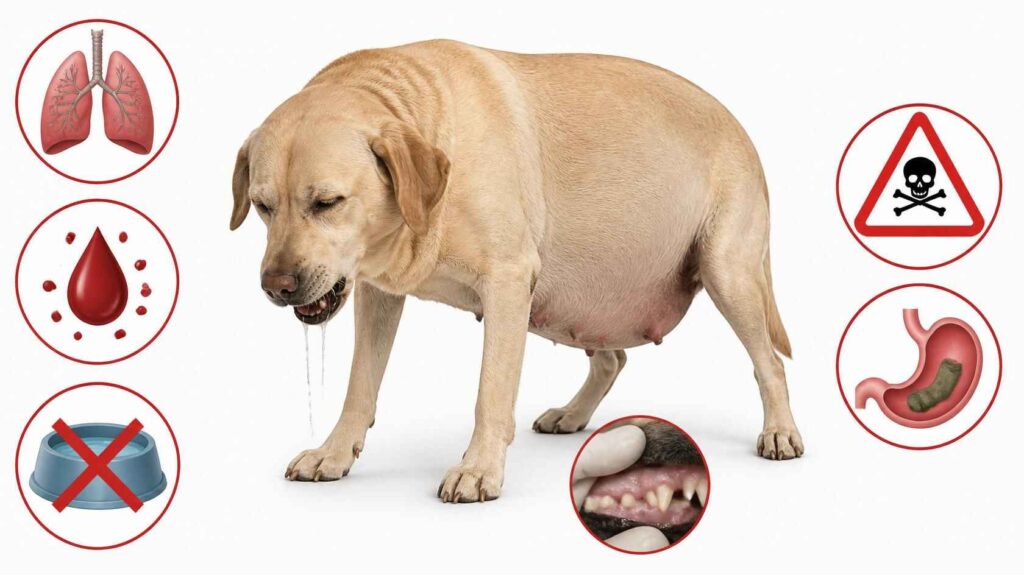
Seek urgent or emergency veterinary care for:
- Repeated retching with little or nothing coming up
- A swollen, tight, or painful abdomen
- Collapse, severe weakness, or disorientation
- Pale, blue, grey, or unusually dark-red gums
- Breathing difficulty
- Blood or coffee-ground-like material in the vomit
- Black, tarry, or bloody stool
- Inability to keep water down
- Suspected toxin exposure
- Possible swallowed object
- String hanging from the mouth or rectum
- Severe diarrhoea with vomiting
- Heat exposure followed by weakness or poor coordination
Never pull visible string from your dog’s mouth or rear end. It may be anchored inside the digestive tract, and pulling it can cause serious intestinal injury.
What to Do in the Next Few Hours
If it was one mild episode and your dog has no warning signs:
- Move your dog to a calm area where you can observe them.
- Prevent access to bins, plants, toys, food, and anything else they might swallow.
- Check the fluid for blood, food, plant matter, or foreign material.
- Avoid direct contact if poisoning or infectious material is possible.
- Do not allow your dog to gulp a full bowl of water immediately.
- Offer small, controlled amounts of water rather than forcing them to drink.
- Avoid a large or rich meal straight away.
- Monitor energy, appetite, comfort, stool, urination, and any further vomiting.
Do not apply a blanket 24-hour fast to every dog. Puppies, toy breeds, seniors, diabetic dogs, pregnant dogs, and dogs with existing health problems may need individual feeding advice from a vet.
If even small amounts of water repeatedly come straight back up, contact your vet rather than continuing home monitoring. The PDSA also advises seeking veterinary advice when vomiting persists or your dog cannot keep water down.
What Not to Do
- Do not give human medication. Antacids, painkillers, anti-diarrhoeal drugs, anti-nausea medication, and leftover prescriptions may be unsafe or may mask an important underlying problem.
- Do not induce vomiting without professional instructions. Salt, mustard, oil, and hydrogen peroxide can cause additional harm.
- Do not force food or water. Syringe feeding or forcing fluids can increase the risk of choking or aspiration.
- Do not offer rich food, milk, fatty treats, or bones immediately after vomiting.
- Do not pull visible string from the mouth or rectum.
- Do not assume normal stool rules out an obstruction. Partial blockages can still allow some material to pass.
- Do not rely on vomit colour alone. The dog’s behaviour, frequency of episodes, ability to retain water, and accompanying symptoms are far more important.
How Urgent Is It? A Simple Way to Decide
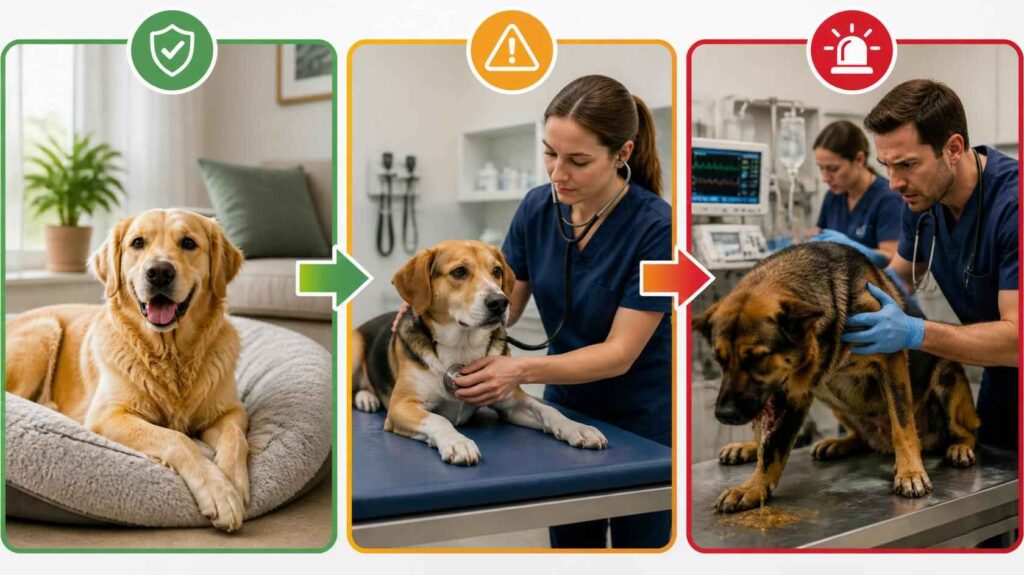
| Situation | Recommended response |
|---|---|
| One isolated episode, your dog is bright and comfortable, there is no known toxin or foreign-object exposure, and small amounts of water stay down | Monitor closely at home |
| Repeated vomiting, reduced appetite, diarrhoea, recurring morning episodes, medication involvement, or vomiting in a puppy, senior, or medically vulnerable dog | Contact your vet the same day |
| Dry heaving, a swollen or painful abdomen, collapse, breathing difficulty, blood, suspected poisoning or foreign-object ingestion, or inability to keep water down | Seek emergency veterinary care now |
Acting normal is reassuring, but it is not a guarantee that nothing serious is developing. Some obstructions cause intermittent symptoms, some toxins take time to produce obvious effects, and dogs can hide discomfort surprisingly well.
Puppies, toy breeds, seniors, pregnant dogs, and dogs with existing health conditions deserve a lower threshold for veterinary advice because they may dehydrate or deteriorate more quickly.
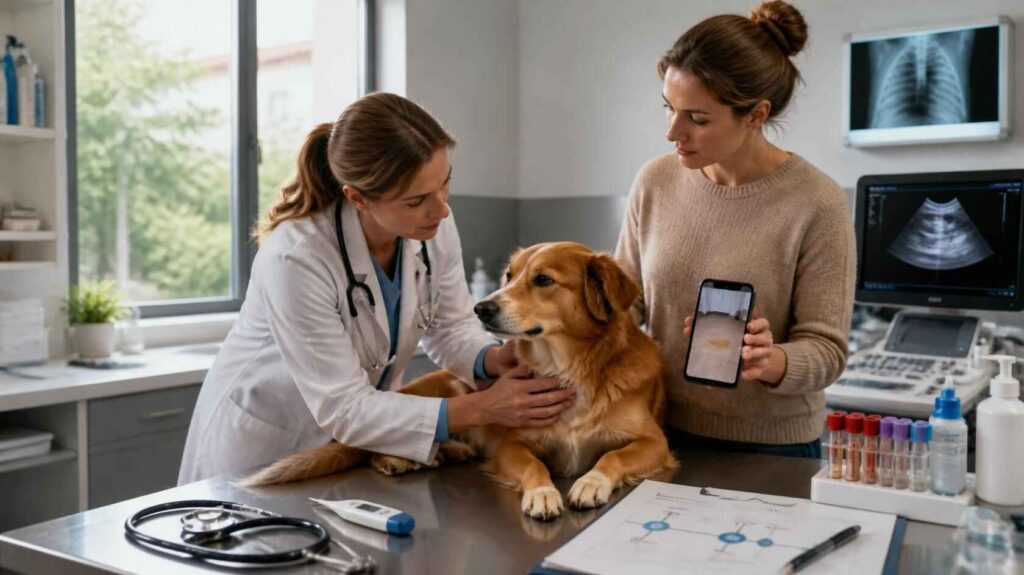
What the Vet Will Likely Ask and Check
Your vet will usually want to know:
- When the problem started
- How many episodes have occurred
- Whether the event looked like vomiting, regurgitation, coughing, or retching
- What your dog recently ate and drank
- Whether your dog could have accessed rubbish, medication, chemicals, toxic foods, plants, or foreign objects
- Which medications and supplements your dog takes
- Whether appetite, energy, stool, thirst, or urination has changed
During the examination, the vet may assess hydration, gum colour, temperature, breathing, heart rate, abdominal pain, and abdominal swelling.
Depending on the history and examination findings, further testing may include:
- Blood tests
- Urinalysis
- Faecal testing
- X-rays
- Ultrasound
- Pancreatic or other condition-specific tests
These tests help distinguish a short-lived stomach upset from problems such as dehydration, pancreatitis, organ disease, poisoning, or gastrointestinal obstruction.
When possible, bring:
- A short video of an episode
- A photograph of the fluid
- Medication or toxin packaging
- Details of anything your dog may have swallowed
- A clear timeline of meals, water intake, vomiting, stool, and behaviour
Specific information is far more useful than saying only that your dog has “been sick a few times.”
Cutting Down on Future Episodes
Once a serious medical cause has been ruled out, these steps may reduce preventable episodes:
- Slow down fast eating with a suitable slow-feeder bowl.
- Prevent frantic water gulping after exercise by encouraging calm, controlled drinking.
- Keep bins, compost, chemicals, toxic foods, and human medication securely out of reach.
- Choose sturdy, size-appropriate toys and replace damaged ones before pieces can be swallowed.
- Supervise dogs that chew socks, string, bones, stones, or household objects.
- Introduce dietary changes gradually.
- Prevent access to seawater, stagnant ponds, puddles, and visibly contaminated water.
- Record recurring episodes, including their relationship to meals, exercise, and medication.
If vomiting repeatedly happens before breakfast, discuss meal timing with your vet. A small late-evening meal or smaller, more frequent meals may help some dogs, but persistent morning vomiting should not automatically be dismissed as an empty-stomach problem.
Do not accept recurrent mild vomiting as “normal for this dog.” Even infrequent episodes can justify investigation when they form a pattern.
The Bottom Line
One episode of clear-liquid vomiting in an otherwise bright, comfortable adult dog may be minor. The situation becomes more concerning when vomiting repeats, water will not stay down, the abdomen appears swollen or painful, or your dog develops weakness, diarrhoea, appetite loss, breathing changes, or unusual behaviour.
Possible poisoning, foreign-object ingestion, repeated dry heaving, or abdominal enlargement should never be managed by waiting at home. When the signs do not fit a clearly mild, isolated episode, contact your vet for advice.
FAQ: Your Questions Answered
1. Why Is My Dog Throwing Up Clear Liquid but Acting Completely Normal?
A single episode may follow rapid drinking, mild stomach irritation, or vomiting when little food is present. If your dog remains bright, comfortable, interested in food, and able to keep small amounts of water down, close monitoring may be reasonable.
Contact your vet if the vomiting happens again, your dog’s behaviour changes, or there is any chance of toxin or foreign-object exposure. Acting normal between episodes does not completely rule out an early obstruction or developing illness.
2. Why Does My Dog Vomit Water Right After Drinking?
Dogs sometimes bring water back up after drinking too quickly, particularly after exercise, excitement, or hot weather. Encourage calm drinking and avoid allowing your dog to empty a full bowl in one rush.
If water repeatedly comes back up despite slower drinking, contact your vet. Repeated vomiting after drinking may reflect nausea, regurgitation, gastrointestinal irritation, or an obstruction rather than simple gulping.
3. Is Clear, Slimy Vomit Actually Saliva Rather Than Stomach Contents?
It may be saliva, mucus, stomach fluid, or a mixture. Clear, stringy material is more likely to contain saliva or mucus, especially when it follows coughing, gagging, repeated swallowing, or throat-clearing movements.
Watch how the fluid appears. Forceful abdominal contractions suggest vomiting, while passive fluid return may be regurgitation. A short video can help your vet tell the difference.
4. What Is the Difference Between Clear Vomit and White Foam?
White foam is often clear stomach fluid or saliva mixed with air during retching. The appearance may differ, but neither clear liquid nor white foam points to one specific diagnosis.
Frequency, body movement, water retention, behaviour, and other symptoms are more useful than colour or texture alone.
5. Why Does My Dog Throw Up Clear Liquid Before Breakfast?
Long gaps between meals can contribute to stomach irritation in some dogs. However, true bilious vomiting more often has a pale yellow colour rather than being completely clear.
A small late-evening meal or smaller, more frequent meals may help some dogs. Speak to your vet if the pattern continues, becomes more frequent, or occurs with appetite loss, pain, weight loss, diarrhoea, or lethargy.
6. Can an Intestinal Blockage Happen Even If My Dog Is Still Passing Stool?
Yes. A partial or early obstruction may still allow stool to pass, particularly material that was already beyond the blockage.
Repeated vomiting, inability to keep water down, appetite loss, abdominal pain, lethargy, or known access to socks, toys, bones, string, or packaging requires prompt veterinary assessment. Never pull visible string from your dog’s mouth or rectum.
7. What Should I Record or Photograph Before Calling the Vet?
Record or photograph:
How the episode happened
The liquid’s colour and texture
The time and number of episodes
Recent food and water intake
Appetite and energy level
Stool and urination changes
Current medication
Possible toxin or foreign-object exposure
A short video of the event and a photograph of the fluid against a white background can be especially useful.
#. Related Articles: