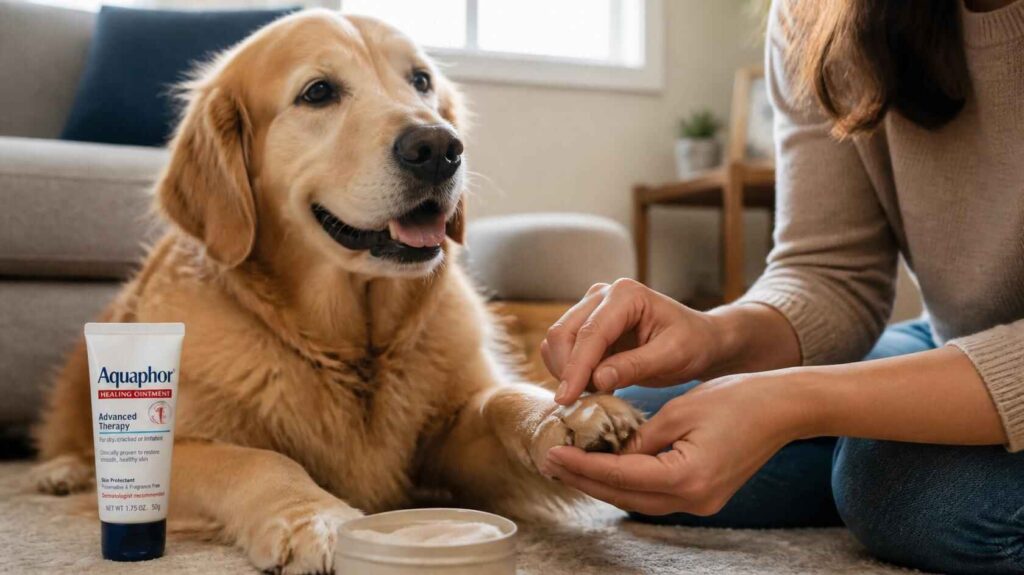
You’ve just noticed your dog’s paws are cracked and sore. You glance at the bathroom shelf and spot the Aquaphor. A quick search later and you’re still not sure if it’s safe. Let’s clear that up — properly.
Aquaphor is one of those products that quietly lives in most households. It’s brilliant for chapped lips and dry winter skin, and it’s only natural to wonder whether it might help your dog too. The short answer is: it depends on where you use it and how you use it.
This guide covers everything — the ingredients, the safe uses, the real risks, and what vets actually recommend. No jargon, no fluff.
What Exactly Is Aquaphor?
Aquaphor Healing Ointment is a petroleum-based skin protectant made by Beiersdorf. The main active ingredient is petrolatum (41%), which forms a breathable seal over the skin to lock in moisture and keep irritants out.
The other key ingredients include:
- Mineral oil – softens and lubricates dry skin
- Ceresin and lanolin alcohol – help thicken the formula and add moisturising properties
- Panthenol (pro-vitamin B5) – supports skin repair
- Bisabolol – a soothing compound derived from chamomile
- Glycerin – draws moisture into the skin
None of these ingredients are outright toxic to dogs in small amounts. But that doesn’t mean Aquaphor is completely without risk — which is why context matters.
Quick answer: Aquaphor is generally considered safe for external use on dogs in small amounts on areas like paw pads and noses. It becomes a concern when used on wounds, hot spots, ears, or anywhere your dog can easily lick a large amount of it off.
The Body-Part Breakdown: Where You Can (and Can’t) Use It
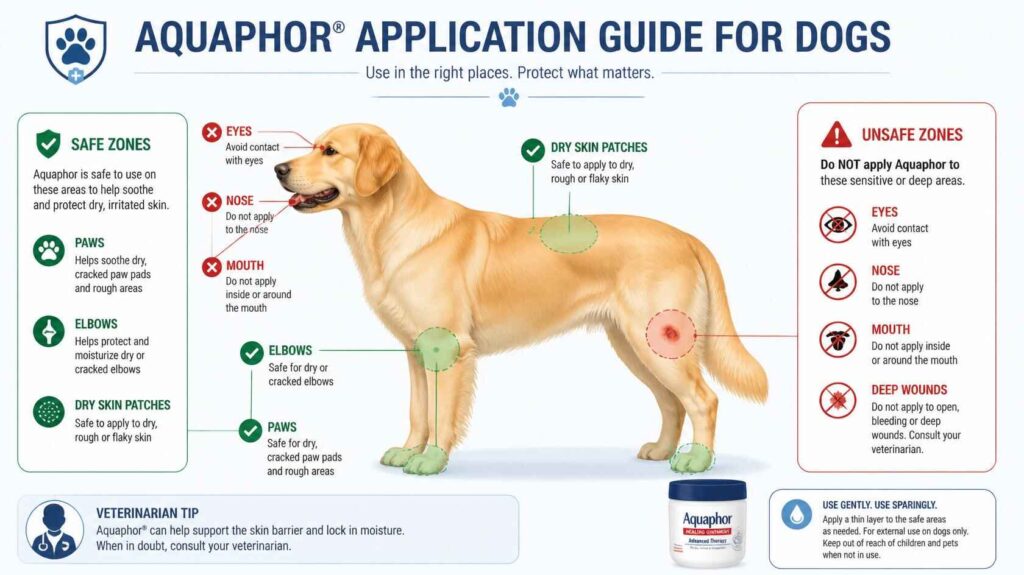
This is the practical bit most articles gloss over. The safety of Aquaphor on dogs isn’t a yes/no — it genuinely depends on the body part. Here’s a clear breakdown:
✓ Generally fine Paw pads -> Dry, cracked, or rough pads respond well to Aquaphor. Apply a thin layer after walks, then distract your dog for 5–10 minutes.
✓ Generally fine Dry nose -> A small dab on a crusty or flaky nose can offer relief. Don’t pack it on — a thin smear is plenty.
✓ Generally fine Urine scald -> Acts as a barrier on skin irritated by urine contact. Helpful for incontinent or elderly dogs.
⚠ Use with caution Minor wounds -> Can be used briefly to keep a small graze moist, but it can also seal bacteria in. Ask your vet first.
⚠ Use with caution Stitches / post-surgery -> Only if your vet specifically says so. Do not apply to stitched skin without professional guidance.
⚠ Use with caution Dry, itchy skin -> May soothe temporarily, but if itching is ongoing, it needs a diagnosis — not ointment.
✗ Avoid Hot spots -> Hot spots are moist, infected lesions. Sealing them with Aquaphor makes things worse, not better.
✗ Avoid Inside the ears -> Never put Aquaphor in or around your dog’s ear canal. It can trap moisture and cause infection.
✗ Avoid Deep or infected wounds -> These need veterinary treatment. Aquaphor is not a substitute for proper wound care.
Is Aquaphor Toxic If My Dog Licks It?
This is the question that really matters — because let’s be honest, if you put something on your dog, they are going to try to lick it off.
The good news: Aquaphor is not acutely toxic to dogs. A small lick is unlikely to cause serious harm. The ASPCA lists petrolatum-based products as minimally toxic.
The concern kicks in if your dog licks off a large amount repeatedly. Here’s what can happen:
- Mild stomach upset – loose stools, nausea, or vomiting, especially if they’ve had more than a small lick
- Diarrhoea – petrolatum has a mild laxative effect in larger quantities
- Aspiration risk – if a dog somehow inhales an oily substance (rare), it can cause lipoid pneumonia, a serious lung condition
Worth knowing: Dogs are drawn to Aquaphor’s scent and texture. Some seem to actively seek it out. If your dog is obsessively licking an area where you’ve applied it, that’s a sign to either use a cone or switch to a dog-safe alternative.
If your dog has eaten a significant amount — say, they got into the whole tub — contact your vet or the Animal Poisons Line (UK: 01202 509000 / Australia: 1300 869 738 / Canada: contact your local emergency vet).
How to Apply Aquaphor to Your Dog Safely
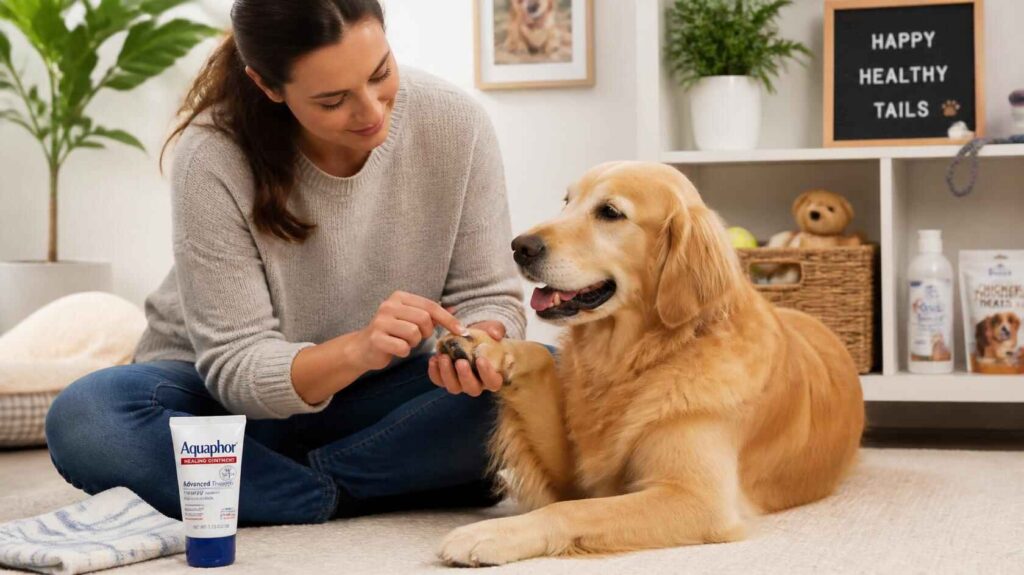
If you’ve decided to use Aquaphor on your dog’s paws or nose, here’s the right way to do it:
- Clean the area first. Use a damp cloth to remove any dirt, debris, or dried discharge. Let the skin dry completely before applying.
- Apply a thin layer — very thin. You don’t need to load it on. A smear the size of a pea is enough for a paw pad. More is not better here.
- Rub it in gently. Work it into the cracks rather than leaving a thick glob on the surface (which is just easier to lick off).
- Distract your dog. Take them for a short walk, give them a chew, or put a sock over the paw for 10 minutes. The goal is to give the ointment time to absorb.
- Apply at night. Bedtime application works well for paw pads — your dog is less active and less likely to lick while drowsy.
Practical tip: If you’re applying to paw pads regularly in winter (common in Canada and the UK where grit and ice salt are an issue), consider getting your dog comfortable with having their paws handled first. A few weeks of gentle paw massage before winter makes the whole process easier.
Signs That Something Is Wrong
After applying Aquaphor, keep an eye on things for the first 24–48 hours. Watch for:
- Increased redness, swelling, or heat around the application area
- Your dog licking or chewing at the spot more than usual
- A new rash, hives, or bumps appearing on the skin
- Discharge or a bad smell developing (signs of infection)
- Vomiting, diarrhoea, or lethargy after ingestion
Any of these symptoms means you should stop using Aquaphor and ring your vet. Allergic reactions to lanolin (one of the ingredients) are rare but not unheard of in dogs.
Aquaphor vs. Vaseline for Dogs: Is There a Difference?
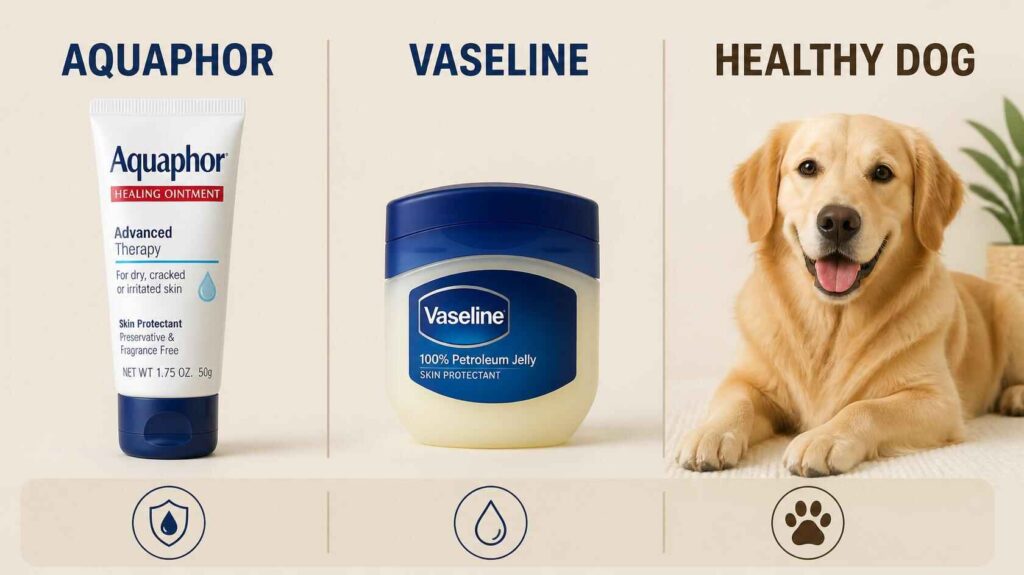
People often ask whether Vaseline (pure petrolatum) is safer than Aquaphor. The honest answer is: Vaseline is slightly simpler.
| Product | Key ingredients | Main concern for dogs |
|---|---|---|
| Vaseline (Pure Petroleum Jelly) | 100% petrolatum | Licking — laxative effect in large amounts |
| Aquaphor Healing Ointment | Petrolatum + mineral oil, lanolin, panthenol, bisabolol | Licking + rare lanolin allergy |
Neither is truly “better” for dogs — both are designed for humans. Vaseline’s single-ingredient formula does make it slightly less likely to trigger a skin reaction, but Aquaphor’s extra ingredients (particularly panthenol) do offer marginally better healing support.
If your dog has very sensitive skin, Vaseline is a safer bet. If you’re dealing with cracked, painful paw pads, the extra actives in Aquaphor can help more.
Better Alternatives Designed for Dogs
If you want to avoid the licking worry entirely, these dog-specific products are worth knowing about:
- Musher’s Secret (paw wax) – extremely popular in Canada for protecting paws against ice and road salt. Absorbs quickly and is non-toxic if licked.
- Vet’s Best Moisture Mist – a spray-on skin conditioner formulated for dogs, available in the UK and Australia.
- Pet Head Oatmeal Paw Butter – oat-based, dog-safe, and pleasantly scented.
- Coconut oil – not perfect (high in fat, can cause digestive upset if eaten in quantity), but safe in small amounts and naturally soothing.
- Dermoscent BIO BALM – a vet-recommended paw and nose balm, widely available in Europe and online in Australia.
For anything beyond minor dryness — persistent itching, skin infections, wounds, or recurring paw problems — a vet visit is genuinely the right move. Prescription options like Vetericyn or chlorhexidine sprays will outperform any human product for healing.
Frequently Asked Questions
1.Can I put Aquaphor on my dog’s paw pads every day?
Short-term daily use is generally fine if pads are genuinely dry or cracked. For long-term maintenance (e.g., through a whole winter), a product specifically made for dog paws — like a wax or balm — is a better fit, since it won’t create the same licking temptation.
2.My dog licked a small amount of Aquaphor off their paw. Should I call the vet?
A small lick is very unlikely to cause harm. Monitor for loose stools or vomiting over the next few hours. If your dog consumed a large amount or seems unwell, contact your vet or a pet poisons helpline in your country.
3.Is Aquaphor safe for puppies?
Extra caution is warranted with puppies. Their skin is more sensitive, and they’re far more likely to lick anything applied to them. If you need to treat a puppy’s dry skin or paws, consult your vet before using any human product — even one considered safe for adult dogs.
4.Can Aquaphor help with my dog’s dry nose?
Yes, a small thin smear can soften a crusty or flaky nose. However, a persistently dry, cracked, or discoloured nose can sometimes signal an underlying health issue (like pemphigus or hyperkeratosis). If it’s not resolving in a few days, get a vet to take a look.
5.Why does my dog seem desperate to lick the Aquaphor off?
Dogs are drawn to oily and waxy textures — there’s something in the scent and feel that many dogs find irresistible. It’s not a sign something is wrong; it’s just a dog being a dog. Using a dog-specific product with a less appealing flavour (or applying it at bedtime) usually solves this.
6.Can I use Aquaphor on my dog’s hot spots?
No — avoid this. Hot spots are already moist, inflamed, and often infected. Applying a thick occlusive ointment like Aquaphor will trap heat and bacteria, making the infection worse. Hot spots need to be cleaned, dried, and treated with an appropriate veterinary product or prescription medication.
7.What should I do if I’m just not sure whether to use Aquaphor on my dog?
When in doubt, don’t. The safest default is always a quick call or message to your vet. Many UK, Canadian, and Australian vet practices now offer a free nurse advice line or online triage — it takes two minutes and removes all the guesswork.
The Bottom Line
Aquaphor isn’t a dangerous product for dogs — but it’s also not designed for them. For occasional use on dry paw pads or a flaky nose, in thin amounts, it’s a reasonable short-term fix. The main thing to manage is licking, and the main thing to avoid is using it on hot spots, ears, or any wound that might be infected.
If your dog’s skin issues keep coming back, skip the bathroom cabinet and speak to your vet. There are products made specifically for dogs that work better and carry less risk. Your dog’s skin is worth the extra step.
#. Related Articles:
1. Can You Put Sudocrem on a Dog?