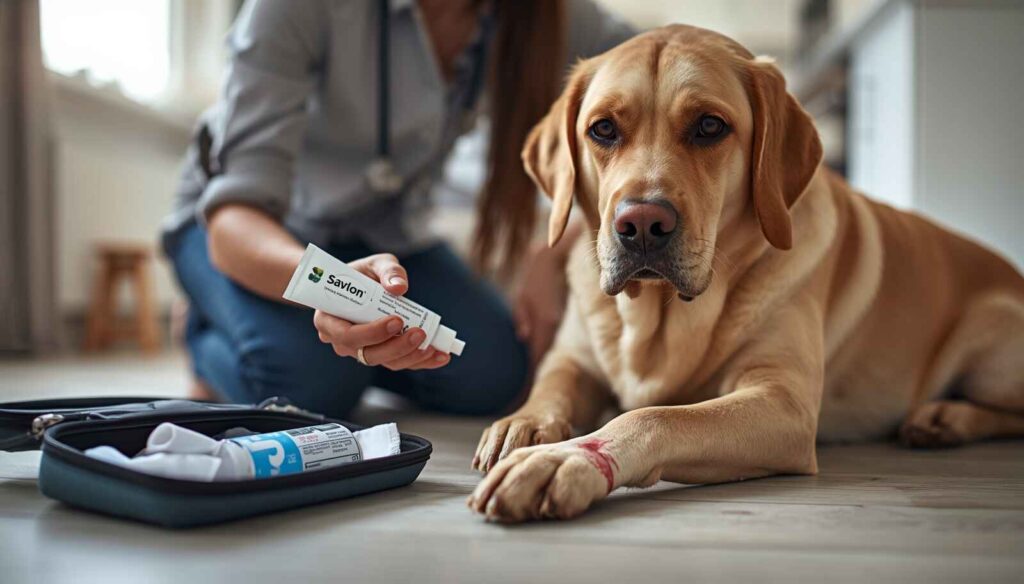
Can you use Savlon on dogs? It’s a common question for dog owners dealing with a cut, scrape, or other minor wound.
Your dog limps in from the garden with a fresh cut on her paw pad. You rush to the bathroom cabinet, spot the Savlon, and pause with the lid half-open. Is this actually okay to use on a dog?
Here’s the short answer: no, Savlon isn’t generally recommended for dogs. It’s formulated for human skin, and its ingredients and concentrations aren’t designed with canine skin or normal dog behaviour in mind. Because dogs instinctively lick wounds, even a product that’s tolerated on the skin can become a problem if swallowed.
The confusion is understandable. Savlon comes in several formulations (such as cream, liquid, and spray), and one of its ingredients—chlorhexidine—is also used in veterinary medicine. However, that doesn’t mean every Savlon product is suitable for dogs. The exact formulation, ingredient combination, concentration, and the type of wound all influence whether a product is appropriate.
If you’ve already applied a small amount, don’t panic. In many cases, simply preventing further licking, gently removing any residue if advised, and monitoring your dog is enough. However, deeper wounds, persistent bleeding, or signs of illness should always be assessed by a veterinarian.
This guide explains why the answer isn’t simply yes or no, how to assess your dog’s wound before applying anything, what to do if Savlon has already been used, and which safer alternatives are commonly recommended for canine first aid.
Why This Question Isn’t as Simple as It Looks
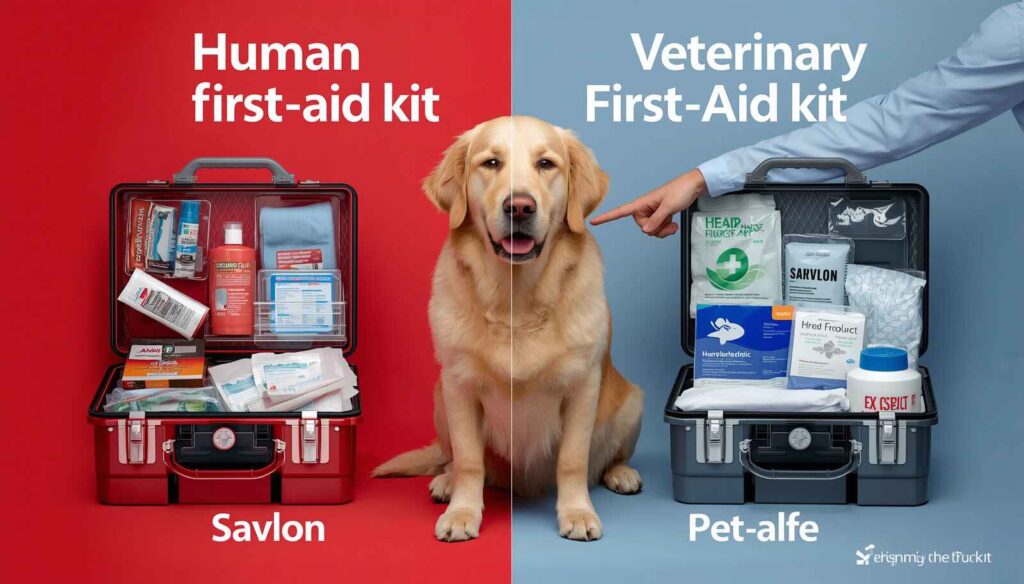
Human antiseptics vs veterinary wound products
Products made for people are formulated, tested, and labelled for human skin—not for dogs. Canine skin differs from human skin in both structure and sensitivity, especially on areas such as the paws, ears, nose, and abdomen. Just as importantly, dogs groom themselves by licking, so anything placed on the skin may also be swallowed.
Veterinary wound-care products are selected with these differences in mind. They are intended for animal use and are typically recommended based on the type, location, and severity of the wound rather than simply because they contain an antiseptic ingredient.
Why ingredients matter more than the brand name
One of the biggest misconceptions is assuming every product sold under the Savlon name is the same.
Savlon’s classic antiseptic cream contains chlorhexidine and cetrimide. Chlorhexidine, at appropriate veterinary concentrations, is commonly used by veterinarians to help clean certain wounds and skin conditions. However, human Savlon products also contain additional ingredients and concentrations that aren’t formulated specifically for dogs.
For example, cetrimide may irritate damaged skin and can cause stomach upset if a dog licks enough of the product. Different Savlon products may also contain different active ingredients depending on the formulation and country where they’re sold.
The key takeaway is simple: don’t judge a product by the brand name alone. Always consider the exact formulation and follow veterinary guidance rather than assuming a human antiseptic is safe because it contains an ingredient used in veterinary medicine.
Quick Answer Box
| Question | Quick Answer |
|---|---|
| Is Savlon generally recommended for dogs? | No. Veterinary-approved wound products are a safer choice. |
| Is accidental skin contact an emergency? | Usually not. Watch for redness, irritation, or discomfort. |
| What if my dog licks it? | A small lick is unlikely to cause serious problems in most dogs, but monitor for drooling, vomiting, mouth irritation, or unusual behaviour. |
| What should I do first? | Gently rinse the area with clean water or sterile saline, prevent further licking, and assess the wound. |
| When should I contact a vet? | If your dog swallowed a significant amount, develops symptoms, or the wound is deep, heavily contaminated, bleeding excessively, or appears infected. |
Assess the Wound Before You Reach for Anything
Not every wound should be treated the same way, and choosing a product isn’t the first decision you should make. The priority is understanding what type of wound your dog has.
Minor wounds suitable for home first aid
Small superficial scrapes, shallow scratches, and minor abrasions that are clean, not actively bleeding, and located away from sensitive areas can often be managed at home while being monitored closely.
Basic first aid usually includes:
- Applying gentle pressure if there’s minor bleeding.
- Flushing away dirt with clean water or sterile saline.
- Preventing your dog from licking or scratching the area.
- Checking the wound at least once or twice daily for signs of healing.
If the wound becomes more painful, swollen, starts producing discharge, or fails to improve over the next couple of days, arrange a veterinary examination.
Wounds that need veterinary advice, not home treatment
Home treatment should not replace professional care for injuries such as:
- Puncture wounds
- Bite wounds from another animal
- Deep cuts or lacerations
- Burns
- Wounds involving the eyes, eyelids, ears, mouth, or genitals
- Paw pad injuries with significant tissue loss
- Embedded foreign objects
- Heavy or persistent bleeding that doesn’t stop after about 10 minutes of steady pressure
- Any wound exposing fat, muscle, tendon, or bone
These injuries often require more than simple cleaning and may need pain relief, stitches, antibiotics, or further investigation.
PDSA advises that deep wounds, bite wounds, heavy bleeding, and other serious injuries should always be assessed by a veterinarian.
Why small wounds can hide bigger problems
One of the most common mistakes owners make is judging a wound by its surface appearance.
A tiny puncture from a thorn, nail, or another animal’s tooth may leave only a small opening while carrying bacteria deep beneath the skin. Bite wounds are especially deceptive because they can seal over quickly, trapping infection underneath.
Similarly, a small paw pad cut may appear minor but repeatedly reopens because of pressure from walking.
If a wound becomes increasingly swollen, warm, painful, develops discharge, produces an unpleasant smell, or your dog becomes lethargic or starts limping more, it’s safest to have the injury examined by your veterinarian rather than continuing home treatment.
Home-Care Wounds vs Veterinary Wounds
| Wound Type | Home Care Appropriate? | Vet Visit Recommended? | Why? |
|---|---|---|---|
| Superficial scrape | Yes | Only if it worsens | Shallow skin injury with a relatively low risk of infection when cleaned promptly. |
| Small abrasion | Yes | Only if it worsens | Minor tissue damage that usually heals well with proper cleaning and monitoring. |
| Paw pad cut | Sometimes | Often | Paw pads are difficult to keep clean and are constantly exposed to pressure, dirt, and moisture, increasing the risk of reopening or infection. |
| Bite wound | No | Always | Bite wounds often seal over quickly while trapping bacteria deep beneath the skin. |
| Deep laceration | No | Always | May involve underlying tissue and often requires stitches, pain relief, or antibiotics. |
| Puncture wound | No | Always | Small surface openings can hide deeper tissue damage and infection. |
| Burn | No | Always | Burn injuries are often more severe than they first appear and require professional assessment. |
| Surgical incision | No | Always | Only use aftercare products and instructions specifically recommended by your veterinarian. |
| Eye injury | No | Always | Even minor eye injuries can threaten vision without prompt treatment. |
If You’ve Already Used Savlon on Your Dog
First, don’t panic. A single accidental application is not usually an emergency, especially if only a small amount was used on intact skin. The next steps depend on which Savlon product was used, whether your dog licked it, and how the wound looks.
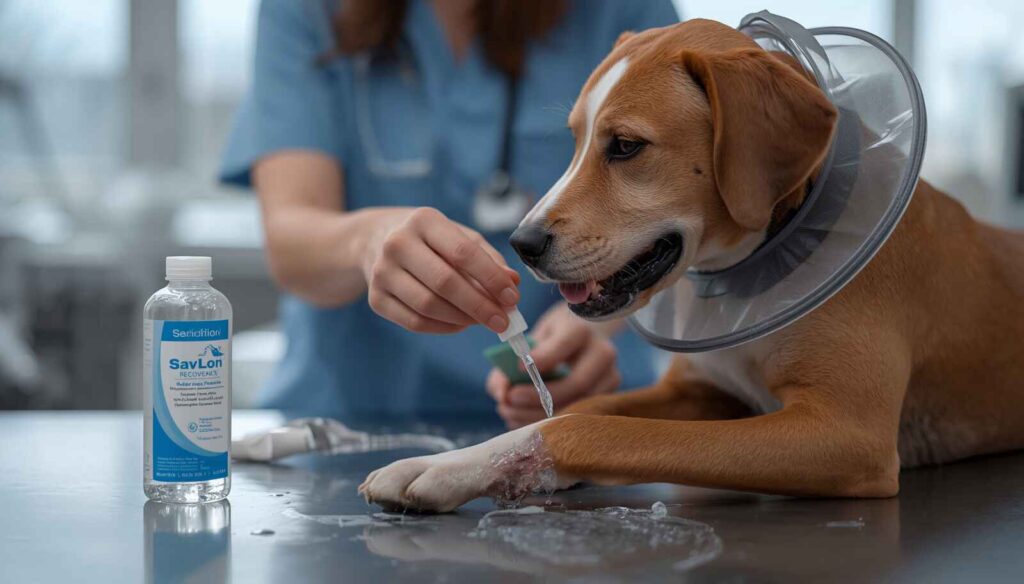
Identify the exact product
Check whether you used the cream, liquid, or spray, then read the ingredient label if possible. Savlon products are not all formulated the same way, so identifying the product helps your veterinarian give more accurate advice if needed.
Check if your dog has licked it
If your dog licked the treated area, try to estimate how much may have been swallowed and when it happened. Most dogs that ingest only a tiny amount may experience no problems or only mild stomach upset, but larger amounts or the development of symptoms should always be taken seriously.
When gentle cleaning helps
If the treated skin appears irritated or you realise Savlon wasn’t the right choice, gently rinse the area with clean running water or sterile saline. Avoid scrubbing the wound, as this can damage healthy tissue that’s trying to heal.
Signs that need immediate advice
Contact your veterinarian or an animal poison service promptly if your dog develops:
- Persistent vomiting
- Excessive drooling
- Mouth irritation or pawing at the mouth
- Facial swelling
- Difficulty breathing
- Severe skin irritation or blistering
- Weakness, collapse, or unusual behaviour
If the wound itself becomes increasingly swollen, painful, develops discharge, or has a foul smell, it should also be examined by a veterinarian.
Step-by-Step First Aid Checklist
✔ Stay calm—your dog will often respond to your behaviour.
✔ Stop active bleeding with gentle, steady pressure using clean gauze or a clean cloth.
✔ Examine the wound in good light to assess its size, depth, and location.
✔ Flush away dirt with clean water or sterile saline.
✔ Avoid unsuitable household antiseptics, including Savlon, unless your veterinarian has specifically advised otherwise.
✔ Prevent licking with an Elizabethan collar (cone), recovery suit, or another vet-approved method.
✔ Check the wound at least once or twice daily over the next 24–72 hours for any signs of worsening.
✔ Contact your veterinarian immediately if the wound deteriorates or any warning signs develop.
Why Savlon Isn’t the Same as Veterinary Chlorhexidine
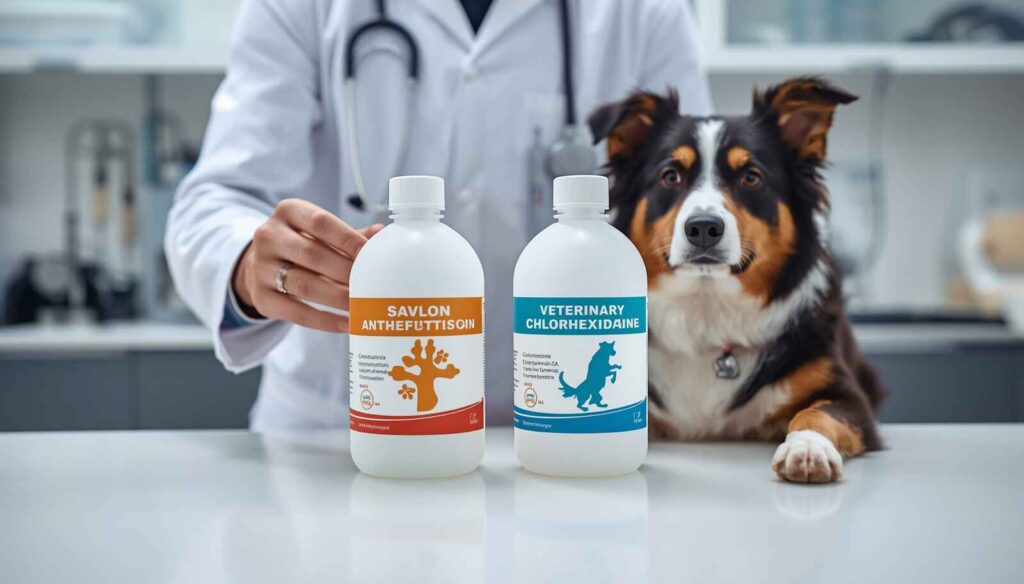
Understanding chlorhexidine
Chlorhexidine is a broad-spectrum antiseptic that is widely used in both human and veterinary medicine. This is one reason owners become confused—seeing chlorhexidine listed on a Savlon label can make it appear similar to veterinary wound products.
However, veterinarians don’t recommend a product simply because it contains chlorhexidine. They consider the complete formulation, concentration, intended use, and the type of wound being treated.
Why formulation and concentration matter
Veterinary chlorhexidine products are formulated specifically for animal use and are commonly diluted to concentrations appropriate for cleaning skin and certain wounds while minimising irritation.
Savlon, by contrast, is designed for human use and typically combines chlorhexidine with cetrimide, another antiseptic ingredient that may be more irritating to damaged canine skin and can cause stomach upset if swallowed during grooming.
That’s why human Savlon should not be viewed as a substitute for a veterinary chlorhexidine product, even though both may contain chlorhexidine.
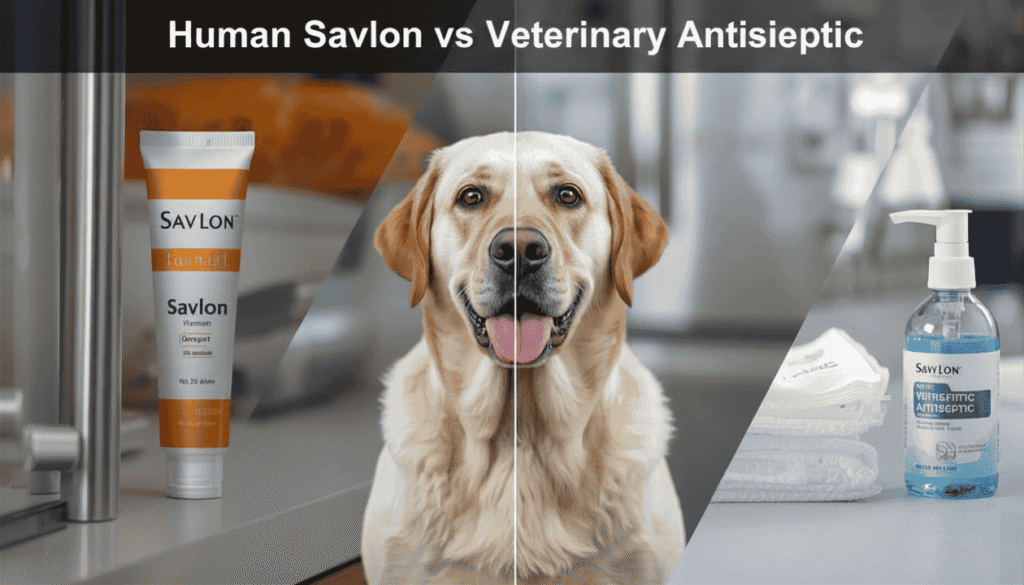
Human Savlon vs Veterinary Antiseptic
| Feature | Human Savlon | Veterinary Antiseptic |
|---|---|---|
| Intended user | Humans | Dogs and other animals |
| Active ingredients | Chlorhexidine with additional ingredients such as cetrimide (depending on formulation) | Veterinary-formulated chlorhexidine or other pet-approved antiseptics |
| Concentration | Formulated for human skin | Selected or diluted specifically for animal tissues |
| Safety if licked | Not intended to be swallowed | Designed with veterinary use in mind, though excessive licking should still be prevented |
| Open wound suitability | Generally not recommended for dogs | May be appropriate when recommended by a veterinarian |
| Veterinary recommendation | No | Yes, when used according to veterinary guidance |
Where the Wound Is Matters Too
A cut on the shoulder is very different from one on the paw, near the eye, or inside the mouth. The location of the wound often influences both the risk of infection and the safest treatment approach.
Paw pads
Paw pad injuries are exposed to constant pressure, dirt, moisture, and rough surfaces. Even small cuts can reopen during normal walks, so they require careful monitoring and sometimes veterinary treatment.
Eyes, nose, and mouth
Household antiseptics should never be applied in or around the eyes, inside the mouth, or on the nose unless specifically instructed by a veterinarian. These areas are highly sensitive and absorb products more readily than normal skin.
Ears
Do not place Savlon or other household antiseptics inside the ear canal. Ear problems often have different underlying causes, and inappropriate products can make irritation worse.
Surgical wounds
If your dog has recently had surgery, follow your veterinarian’s aftercare instructions exactly. Applying creams, sprays, or antiseptics that weren’t prescribed may interfere with healing or hide early signs of infection.
⚠️ Warning
Never use household antiseptics, including Savlon, around the eyes, ear canals, mouth, deep puncture wounds, burns, surgical stitches, or large open wounds. These situations require veterinary assessment or products specifically recommended for animal use.
What Happens If a Dog Licks Savlon?
A small accidental lick—such as immediately after application before you can stop your dog—is unlikely to cause serious problems in most healthy adult dogs. You may notice brief drooling, lip-smacking, or pawing at the mouth because of the unpleasant taste.
A larger ingestion, such as chewing an open tube or licking off a significant amount of cream, is more concerning. Signs can include:
- Excessive drooling
- Vomiting
- Mouth or throat irritation
- Loss of appetite
- Lethargy or unusual behaviour
If your dog has swallowed a significant amount, is a puppy, or develops any of these symptoms, contact your veterinarian or an animal poison helpline promptly. Do not induce vomiting unless a veterinary professional specifically advises you to do so.
Safer Ways to Clean Minor Dog Wounds
For most minor cuts and scrapes, thorough cleaning is more important than applying an antiseptic cream. Removing dirt and bacteria early gives the wound the best chance to heal normally.
VCA Animal Hospitals recommends cleaning most dog wounds with warm water or sterile saline before using any topical product.
Warm running water can be used to gently flush away debris for a minute or two. Sterile saline is even gentler and is widely recommended for rinsing minor wounds. If an antiseptic is needed, use only a veterinary-approved chlorhexidine product or another product recommended by your veterinarian.
Avoid using household disinfectants simply because they’re available in the medicine cabinet. Products that are suitable for human skin aren’t automatically safe for dogs.
Common Household Products Compared
| Product | Recommended? | Reason |
|---|---|---|
| Savlon | ❌ No | Formulated for humans and not intended for dogs. |
| Sterile saline | ✅ Yes | Gentle wound irrigation and safe if accidentally licked. |
| Veterinary chlorhexidine | ✅ Yes | Formulated for animal use at appropriate concentrations. |
| Povidone-iodine | ⚠️ With veterinary guidance | May be suitable when properly diluted, but concentration matters. |
| Hydrogen peroxide | ❌ No | Can damage healthy tissue and delay healing. |
| Rubbing alcohol | ❌ No | Painful, irritating, and slows normal healing. |
| Dettol | ❌ No | Can be toxic to dogs if ingested. |
| Essential oils | ❌ No | Many are toxic or irritating to dogs. |
Common Mistakes Dog Owners Make
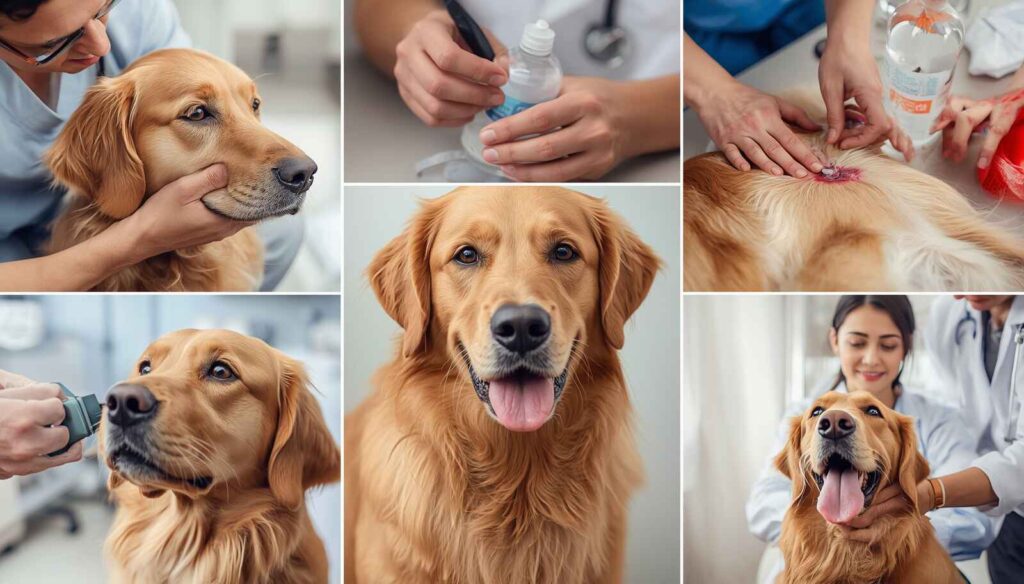
Owners often assume that if a product is safe for people, it’s safe for their dog too—but that’s rarely the case.
Other common mistakes include:
- Applying too much antiseptic.
- Using human products without checking the ingredients.
- Letting a dog repeatedly lick the treated area.
- Treating puncture wounds or bite wounds at home instead of seeing a veterinarian.
- Scrubbing the wound aggressively instead of gently flushing it.
- Waiting too long after signs of infection begin to appear.
Avoiding these simple mistakes can significantly reduce the risk of delayed healing and complications.
Vet Advice
In many cases, cleaning the wound properly is more important than applying multiple products afterward. Not every scrape needs an antiseptic cream—sometimes clean water or sterile saline is all that’s required for initial first aid.
Bite wounds deserve extra caution, even when they look small. Tiny puncture marks can hide deeper tissue damage and trapped bacteria beneath the skin.
After cleaning, monitor the wound closely over the next 24 to 72 hours, and prevent your dog from licking or chewing the area. If swelling, discharge, worsening pain, or a foul smell develops, arrange a veterinary examination rather than continuing home treatment.
How to Monitor Healing at Home
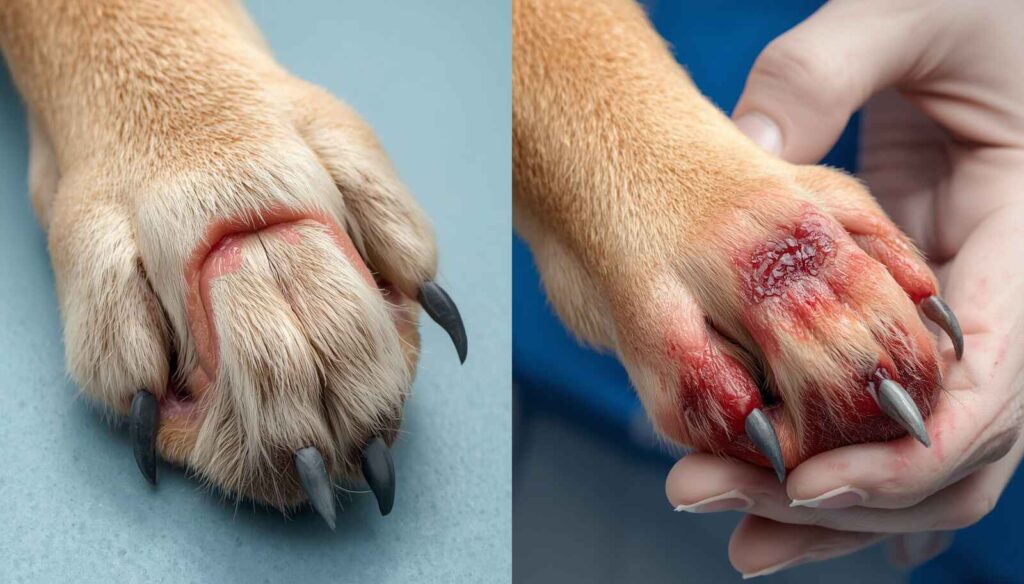
Normal healing should be gradual and consistent. You should notice the wound becoming cleaner, less tender, and slightly smaller each day.
Signs of normal healing include:
- Mild redness that gradually fades
- A clean, dry scab forming
- Reduced tenderness over time
- A wound that looks a little better each day
- Normal appetite and energy levels
Contact your veterinarian if you notice:
- Increasing swelling
- Pus or cloudy discharge
- Worsening pain
- A foul smell
- Redness spreading beyond the wound
- Limping that becomes worse
- Lethargy or reduced appetite
Normal Healing vs Needs Veterinary Attention
| Normal Healing | Needs Veterinary Attention |
|---|---|
| Mild redness | Severe or spreading swelling |
| Dry scab | Pus or discharge |
| Reduced tenderness over time | Increasing pain |
| Gradual daily improvement | Bad smell |
| Normal appetite and energy | Lethargy or reduced appetite |
Myth vs Fact
Myth: Dogs heal wounds by licking them.
Fact: Excessive licking usually delays healing, introduces bacteria, and increases the risk of infection.
Myth: All chlorhexidine products are interchangeable.
Fact: The concentration and complete formulation matter. A veterinary chlorhexidine product is not the same as a human antiseptic that also contains chlorhexidine.
Myth: More antiseptic means faster healing.
Fact: Using too much antiseptic or the wrong product can irritate healthy tissue and slow recovery.
Building a Dog First-Aid Kit
Having a basic first-aid kit ready before an accident happens can make wound care quicker and less stressful.
Include:
- Sterile saline
- Sterile gauze pads
- Non-stick dressings
- Disposable gloves
- Blunt-ended scissors
- Self-adhesive veterinary bandage
- Elizabethan collar (cone) or recovery suit
- Your veterinarian’s daytime and emergency contact numbers
Check the kit every few months and replace expired or damaged supplies.
Final Thoughts
It’s completely understandable to reach for the nearest antiseptic when your dog gets hurt, especially if Savlon is already in your medicine cabinet. However, because it’s formulated for human use rather than canine wound care, it’s generally not the best choice for dogs.
For most minor injuries, prompt cleaning with clean water or sterile saline, preventing your dog from licking the wound, and monitoring healing carefully are often the most important first steps. Keeping a few veterinary-approved first-aid supplies at home means you’ll be prepared when accidents happen.
If you’re ever unsure about the severity of a wound or your dog’s condition changes, it’s always safest to contact your veterinarian. Early advice can prevent a minor injury from becoming a much bigger problem.
Frequently Asked Questions
1. Can I use Savlon on a puppy?
No. Puppies are smaller, have more sensitive skin, and are more likely to lick or chew treated areas. Use sterile saline for initial cleaning and seek veterinary advice about suitable wound-care products.
2. Should I wash Savlon off my dog if I’ve already applied it?
In most cases, yes. Gently rinsing the area with clean water or sterile saline helps remove residue and reduces the chance of your dog licking it.
3. Can Savlon be used on paw pad cuts specifically?
No. Paw pad injuries are difficult to keep clean because they’re exposed to dirt, moisture, and constant pressure. A veterinary-approved antiseptic and appropriate wound management are safer options.
4. Is Savlon cream safer than Savlon liquid for dogs?
No. Neither product is formulated for veterinary use, so both carry similar concerns regarding skin irritation and accidental ingestion.
5. Can I use salt water instead of buying sterile saline?
Yes. If sterile saline isn’t available, you can make a simple saline rinse by dissolving ½ teaspoon of salt in one cup (about 250 ml) of cooled, boiled water. This is suitable for cleaning minor wounds but should be freshly prepared and discarded after use.
6. Can I bandage my dog’s wound after cleaning it?
For some minor wounds, a clean non-stick dressing may help protect the area. The bandage should be secure but never tight enough to affect circulation. If you’re unsure how to bandage the wound safely, ask your veterinarian for guidance.
7. How long should a minor wound take to heal?
Most minor scrapes begin showing visible improvement within a few days and are largely healed within one to two weeks. If the wound is getting worse, hasn’t improved after three to four days, or develops signs of infection, your dog should be examined by a veterinarian.
#. Related Articles:
1. Can You Put Sudocrem on a Dog?