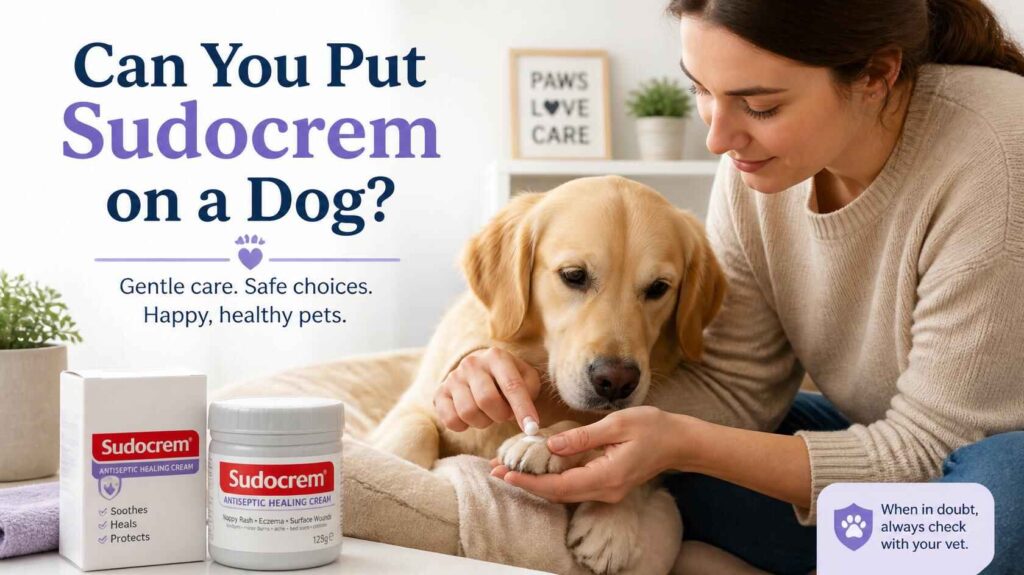
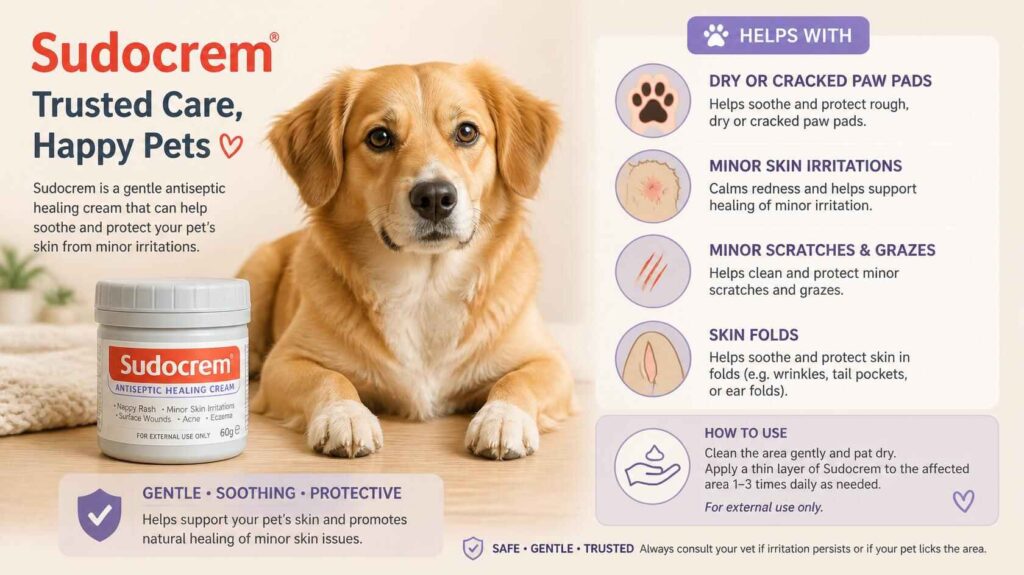
Your dog has a red, sore patch of skin, and before you have finished examining it, they are already trying to lick the area. You may be considering the tub of Sudocrem in the bathroom cabinet—or perhaps you have already applied some and are now wondering whether it could cause harm.
These situations need slightly different advice. Sudocrem is made for human skin and is not a routine veterinary treatment for dogs. Brief contact is unlikely to carry the same risk as repeated licking or eating cream directly from the container, but that does not make it suitable for every skin problem.
The safest decision depends on how much was used, where it was applied, what type of skin problem your dog has, and whether any cream was swallowed.
Can You Put Sudocrem on a Dog? Start With These Five Checks
Before deciding what to do, work through the following questions.
1. Was It Applied or Swallowed?
A small amount placed on the skin is different from:
- One brief lick
- Repeated licking over several hours
- Eating cream directly from the tub
- Chewing and swallowing part of the container
The route and amount of exposure affect the level of concern.
2. How Much Was Used?
A small smear on one patch of intact skin carries less risk than:
- A thick visible layer
- Cream spread over a large area
- Several applications in one day
- An unknown quantity missing from the container
Repeatedly replacing cream that a dog has licked off can create more exposure than the owner realises.
3. What Type of Skin Problem Is Present?
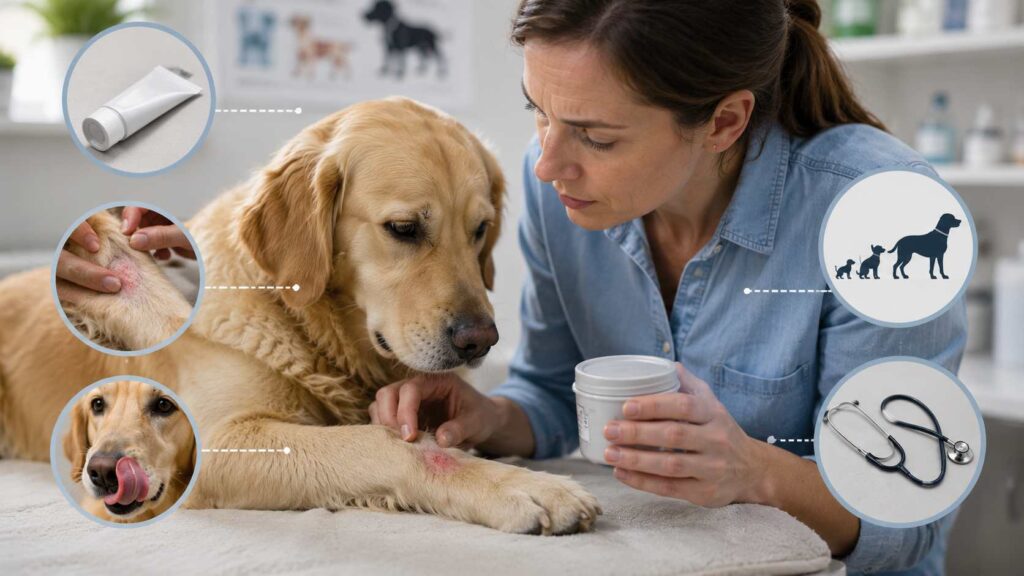
Dry, mildly irritated skin is not the same as:
- A moist hot spot
- An open or bleeding wound
- A puncture or bite
- An infected sore
- A burn
- A surgical incision
Sudocrem is not designed to diagnose or treat these conditions. Its thick barrier may also hide redness, discharge or worsening tissue damage.
4. Can Your Dog Reach the Area?
Paws, legs, the belly and the hindquarters are easy for most dogs to lick. A patch on the upper back or shoulders may be harder to reach, but supervision is still important.
Persistent licking may also mean that the area is painful, itchy, infected or irritated by a foreign object. Preventing licking does not replace finding the cause.
5. Is Your Dog at Higher Risk?
Use extra caution with:
- Puppies
- Toy and small breeds
- Elderly dogs
- Pregnant or nursing dogs
- Dogs with kidney or liver disease
- Dogs with anaemia
- Dogs with chronic skin conditions
- Dogs taking several medications
The same swallowed amount represents a larger exposure for a small dog than for a large dog.
Quick verdict: Sudocrem is not recommended as a routine first-choice treatment for dogs. A veterinarian may occasionally approve limited use for a specific condition, but the dog must be prevented from licking it. Repeated licking, a significant or unknown ingestion, symptoms, or a chewed container warrant veterinary advice.
Sudocrem Has Already Been Applied—What Should You Do?
Do not panic, but take a few sensible steps.
Stop Further Licking
Supervise your dog and prevent access to the treated area. A properly fitted recovery collar may help, although some dogs can still reach their paws or hindquarters while wearing one.
Do not continue reapplying the cream each time your dog removes it. This can turn several apparently small licks into repeated ingestion.
Examine the Skin Before Cleaning It
Check whether the area is:
- Dry or wet
- Red or swollen
- Bleeding
- Producing discharge
- Warm or painful
- Foul-smelling
- Rapidly increasing in size
Take a clear photograph before removing the cream. This can help you track changes and may be useful if a veterinarian needs to assess the problem.
Remove Excess Cream Gently
Use a soft damp cloth and lukewarm water to wipe away excess product. Avoid vigorous scrubbing, which may further irritate damaged skin.
Do not use:
- Household disinfectants
- Alcohol
- Harsh human shampoo
- Essential oils
- Additional human creams
Take care not to spread the product into the eyes, mouth, nose or ear canal.
Record What Happened
Before contacting a veterinarian, note:
- The exact product name
- The country where it was purchased
- The ingredient label
- How much was applied
- How much may have been swallowed
- The time of exposure
- Your dog’s approximate weight
- Any symptoms
- Whether plastic, foil or part of the lid is missing
Keep the container or take a clear photograph of the label.
Decide Whether Monitoring Is Enough
A tiny amount on intact skin, with no licking and no irritation, can often be monitored.
Contact a veterinarian when:
- Your dog repeatedly licked the area
- More than a brief lick may have been swallowed
- The quantity is unknown
- The product was applied to damaged or infected skin
- Your dog is small, young, elderly or medically vulnerable
- Vomiting, diarrhoea, lethargy or reduced appetite develops
- The container was chewed
Sudocrem Exposure and Urgency
| Situation | Main Concern | Immediate Action | Suggested Care Level |
|---|---|---|---|
| Tiny amount on intact skin | Local irritation or possible licking | Prevent access and observe | Usually monitor |
| One brief lick | Mild digestive irritation | Stop further licking and monitor | Contact a vet if symptoms develop |
| Repeated licking | Ongoing ingestion | Remove access and seek advice | Prompt veterinary guidance |
| Thick layer on damaged skin | Irritation, trapped moisture and ingestion | Prevent licking and contact a vet | Routine or prompt assessment |
| Large or unknown amount swallowed | Gastrointestinal effects or zinc-related toxicity | Contact a veterinarian or animal poison service | Urgent |
| Tub, lid or seal chewed | Cream ingestion and possible obstruction | Save the packaging and call a vet | Urgent |
| Weakness, pale gums or dark urine | Possible systemic illness | Do not monitor at home | Emergency |
Why Sudocrem Creates Different Risks for Dogs
It Is a Human Skin Product
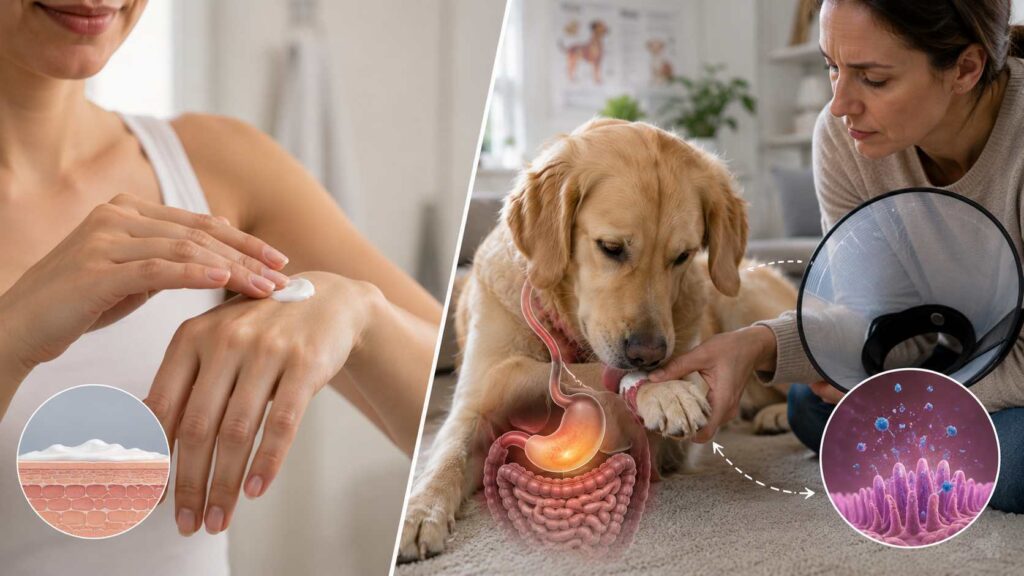
Sudocrem was formulated for human skin and human use. Dogs are more likely to lick a treated area, rub it into their eyes or spread it across their coat.
Human application instructions should not automatically be treated as safe directions for canine skin.
Zinc Oxide Is the Main Ingestion Concern
Zinc oxide helps form a protective barrier on human skin. When swallowed, however, zinc-oxide creams can cause gastrointestinal irritation.
Possible early signs include:
- Drooling
- Vomiting
- Diarrhoea
- Reduced appetite
- Abdominal discomfort
- Lethargy
A single small lick is more likely to cause mild digestive irritation than severe poisoning. However, large or repeated exposure can be more serious. Significant zinc toxicity may damage red blood cells and affect other organs.
Warning signs can include:
- Persistent vomiting
- Weakness
- Pale gums
- Yellow gums or eyes
- Dark or reddish urine
- Collapse
Do not try to calculate a “safe dose” at home. Risk depends on the exact formulation, the quantity swallowed, the dog’s body weight, the frequency of exposure and the dog’s health.
For additional information on zinc-containing topical products and potential risks to pets, see the MSD Veterinary Manual.
Other Ingredients May Irritate Sensitive Dogs
Sudocrem formulations may include ingredients such as lanolin, benzyl alcohol and fragrance-related compounds. Some dogs may develop local irritation or sensitivity, particularly when the product is applied to already inflamed or damaged skin.
Stop using the product and seek advice if you notice:
- Increasing redness
- More intense itching
- Hives
- Facial swelling
- Worsening discomfort
Breathing difficulty or rapidly developing facial swelling requires emergency veterinary care.
Thick Cream Can Trap Moisture
Sudocrem forms a dense barrier. That may be unsuitable for wet, infected or oozing skin because it can:
- Trap moisture against the lesion
- Conceal pus or discharge
- Make spreading redness harder to see
- Encourage repeated licking
- Delay diagnosis of the underlying condition
A moist hot spot should not be treated in the same way as a small patch of dry skin.
Formulations Can Differ
Sudocrem-branded products and generic zinc creams are not necessarily identical. Ingredients and labelling may vary between the UK, Canada, Australia and the United States.
Check the exact product in your home rather than relying on advice for another formulation.
Key Ingredients and What They Mean for Dogs
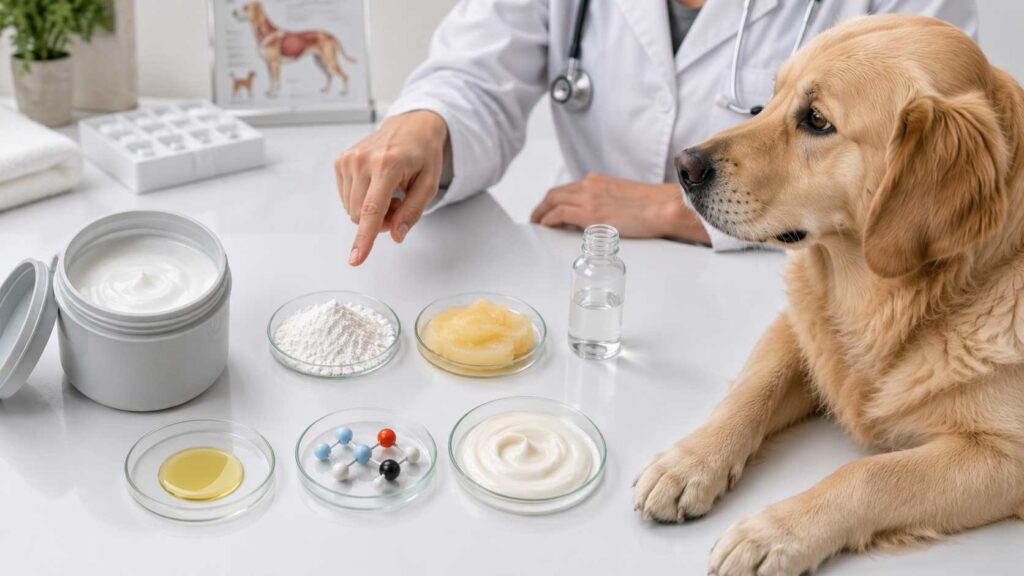
| Ingredient | Purpose in the Human Product | Possible Dog Concern | Question to Ask |
|---|---|---|---|
| Zinc oxide | Forms a protective skin barrier | Digestive irritation after ingestion; larger or repeated exposure can be more serious | Was it swallowed once, repeatedly, or in a large amount? |
| Lanolin | Softens and protects skin | Local sensitivity or worsening irritation in some dogs | Did redness, itching or swelling increase after application? |
| Benzyl alcohol | Preservative and formulation ingredient | May irritate sensitive or damaged skin; licking increases oral exposure | Was it applied near the mouth or to broken skin? |
| Fragrance components | Improve product scent and formulation | Possible contact irritation in sensitive dogs | Was the skin already inflamed or allergy-prone? |
| Thick oily base | Creates a protective coating | Encourages licking and may trap moisture or discharge | Is the lesion wet, infected, oozing or poorly ventilated? |
The exact ingredients can vary between Sudocrem products and countries, so use the label on the container you have rather than relying on a generic online ingredient list.
The Skin Problem Matters More Than the Cream
Dry, mildly chafed skin is not the same as a moist hot spot, infected sore or puncture wound. Treating all of them with the same household cream is where owners can unintentionally delay the right care.
Even a small wound may need veterinary attention if it was caused by a bite, reaches deeper tissue, sits near an eye or joint, continues bleeding, or is clearly painful. Punctures are especially easy to underestimate because the opening may look minor while bacteria and tissue damage extend beneath the skin.
A thick layer of cream can also hide the changes you most need to monitor, including spreading redness, swelling, pus, tissue discolouration or wound separation. If the skin problem keeps returning, the real issue is no longer which cream to use. Recurring irritation may be caused by allergies, fleas, mites, yeast, bacteria, moisture, pain or a foreign body and needs a proper diagnosis.
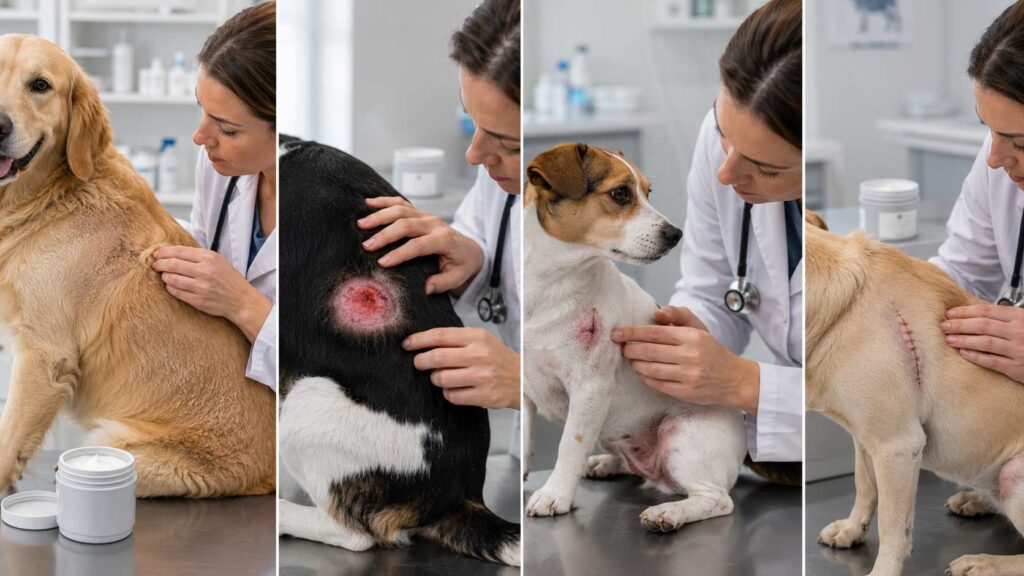
Skin Problems and Better Next Steps
| Skin Problem | Main Concern | Why Sudocrem May Not Fit | Better Step |
|---|---|---|---|
| Mild dry irritation | Allergy, friction or another underlying trigger | May irritate sensitive skin and does not address the cause | Identify the trigger and use veterinarian-approved care |
| Superficial scrape | Contamination and licking | Can conceal worsening redness or discharge | Clean appropriately and monitor closely |
| Moist hot spot | Infection, inflammation and trapped moisture | A thick barrier may keep the area damp and hide progression | Seek veterinary-directed treatment |
| Deep cut | Tissue damage, bleeding or contamination | Topical home care is not enough | Arrange a veterinary examination |
| Puncture or bite | Hidden infection and deeper injury | Surface damage may look less serious than it is | Seek prompt veterinary care |
| Surgical incision | Infection or wound breakdown | May interfere with prescribed aftercare and hide complications | Contact the operating clinic |
| Recurring rash | Allergy, yeast, parasites or chronic irritation | May temporarily cover symptoms without treating the cause | Arrange a diagnostic work-up |
Warning: Do not apply Sudocrem without veterinary advice if the wound is deep, gaping or punctured; the skin is wet, infected or oozing; another animal caused the injury; the area is near the eyes, mouth or ear canal; the site is a surgical incision; a large area is affected; your dog will not stop licking; or the problem keeps returning.
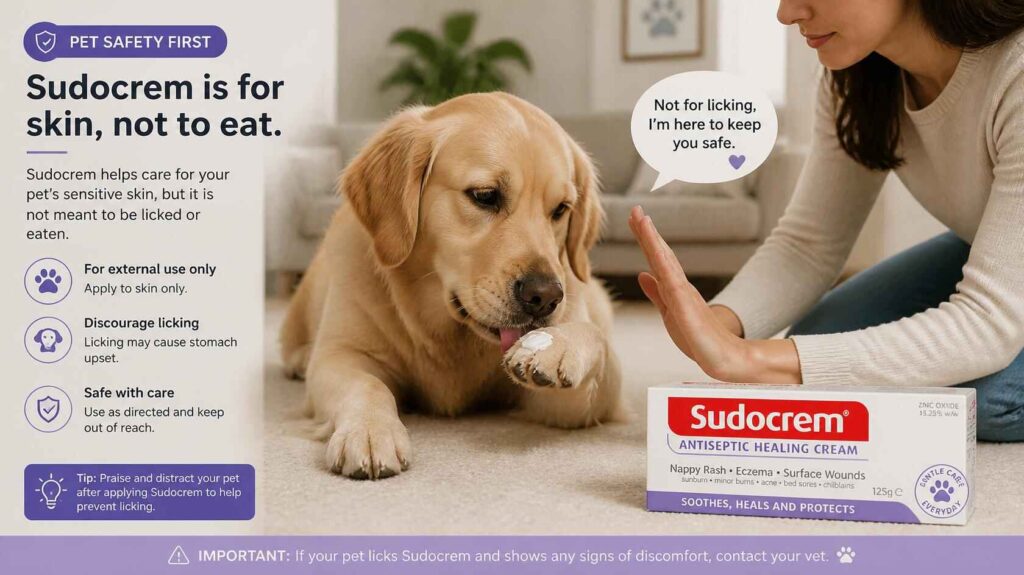
What Happens If a Dog Licks Sudocrem?
A single small lick is less concerning than repeated licking or eating directly from the tub, but mild digestive upset is still possible. Prevent further access and monitor your dog’s appetite, energy level and bowel movements.
Repeated licking deserves more caution, particularly in puppies and small dogs, because the total amount swallowed can build up over time. It also tells you that the area may be itchy, painful or infected, so preventing access is only part of the solution.
A large or unknown amount warrants immediate advice from a veterinarian or animal poison service. Keep the packaging, estimate how much is missing and note the time of exposure. Do not wait for symptoms before calling when the quantity may be significant.
If your dog chewed the tub, there is an additional foreign-body risk. Plastic, foil seals and lid fragments may cause choking, stomach irritation or an intestinal blockage, even if the cream itself causes no immediate symptoms.
Symptoms to Monitor After Exposure
Possible mild or early signs include:
- Drooling
- Nausea
- Vomiting
- Loose stool
- Reduced appetite
- Mild lethargy
- Increased redness or itching at the application site
Contact your veterinarian promptly if you notice:
- Repeated vomiting
- Persistent diarrhoea
- Refusal to eat
- Increasing lethargy
- Facial swelling or hives
- Worsening skin inflammation
- A significant or unknown amount swallowed
Seek emergency veterinary care if your dog develops:
- Weakness or collapse
- Pale or yellow gums
- Dark or reddish urine
- Breathing difficulty
- Severe facial swelling
- Repeated vomiting with marked lethargy
- Possible ingestion of plastic, foil or lid fragments
Do not induce vomiting or give home remedies unless a veterinarian or poison professional specifically instructs you to do so.
What a Vet Will Want to Know
Before calling, try to have the following information ready:
- Exact product name
- Photograph of the ingredient list
- Country where the product was purchased
- Your dog’s age and weight
- Approximate amount applied
- Estimated amount swallowed
- Number of licking episodes
- Time of exposure
- Current symptoms
- Existing health conditions
- Any missing plastic, foil or lid pieces
- A clear photograph of the skin problem
Treatment depends on both the exposure and the reason the skin is damaged. A bacterial infection, allergy, foreign body, hot spot and superficial graze may look similar to an owner but require very different care. Persistent licking is therefore both an ingestion risk and a useful clue about the underlying problem.
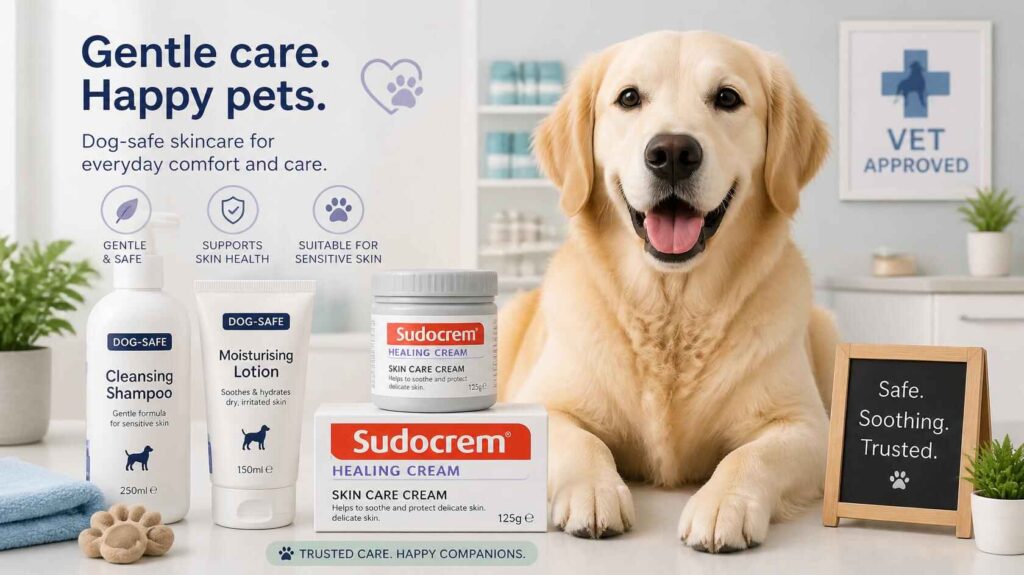
Body Areas Where Extra Caution Is Needed
Paws and Between the Toes
Paws are easy for dogs to lick repeatedly. Redness between the toes may be linked to allergies, yeast, infection, a grass seed, a splinter or an injured nail rather than simple dryness. Ongoing licking, swelling or limping should be assessed.
Nose and Mouth
Cream applied around the muzzle is highly likely to be licked. Avoid using Sudocrem on the nose, lips or around the mouth unless a veterinarian has specifically advised it.
Eyes and Eyelids
Do not apply Sudocrem near the eyes. If cream is rubbed into an eye, rinse gently with clean lukewarm water or sterile saline and contact a veterinarian if squinting, redness, discharge or discomfort continues.
Outer Ear and Ear Canal
Skin on the outer ear is different from the ear canal. Human cream should never be inserted into the canal because ear infections, mites, foreign bodies and ruptured eardrums require proper examination and diagnosis.
Genitals and Hindquarters
These areas are sensitive, easily contaminated and frequently licked. Irritation may be related to urine or faecal scald, diarrhoea, anal-gland disease, infection or incontinence, so treating only the visible redness may miss the cause.
Surgical Incisions
Never apply Sudocrem to a surgical incision unless the operating veterinarian has instructed you to do so. Cream can hide swelling, discharge, wound separation or damaged sutures. Contact the clinic if the incision becomes increasingly red, painful, swollen, wet or open.
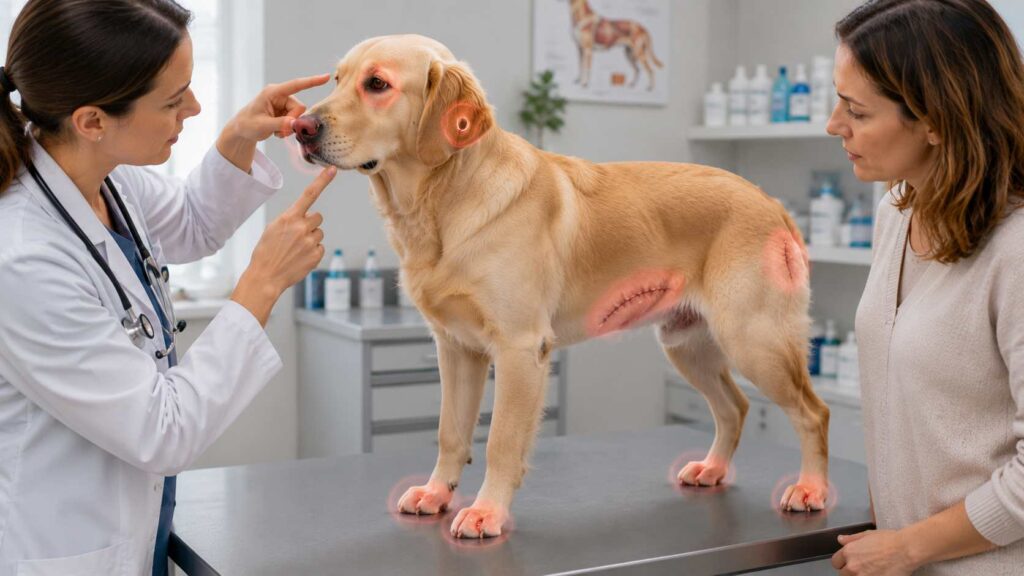
Safer Alternatives Depend on the Problem
The safest alternative depends on what is wrong with the skin.
For simple cleaning, sterile saline or clean lukewarm water applied with gauze is often enough. There is no need to use a medicated product on every minor scrape.The PDSA also recommends gently cleaning minor wounds, preventing licking and seeking veterinary care for deeper or infected injuries.
To prevent licking, a properly fitted Elizabethan collar, recovery suit or protective boot—where appropriate—usually does more good than repeatedly reapplying cream. Check any collar or covering regularly to make sure it is not rubbing, trapping moisture or restricting circulation.
Suspected infection needs a veterinary examination. Depending on the cause, your vet may recommend diagnostic testing, a dog-specific cleanser, prescription medication or treatment for an underlying problem such as allergies, parasites or yeast.
Genuinely dry or irritated skin is best managed with a diagnosis-specific moisturiser or barrier product recommended by your vet, especially when the problem is recurring.
It is also worth saying clearly that “natural” does not automatically mean safer. Coconut oil, kitchen honey, essential oils and homemade balms can irritate skin, trap moisture or encourage licking. Household honey is not the same as the sterile, medical-grade honey sometimes used under veterinary supervision.
Sudocrem and Common Alternatives
| Option | Purpose | Advantage | Limitation |
|---|---|---|---|
| Sudocrem | Human barrier cream | Widely available | Not a routine canine treatment; easy to lick |
| Sterile saline | Gentle cleaning | Simple and non-medicated | Does not treat infection |
| Dog-specific wound cleanser | Canine wound care | Formulated for veterinary use | Must still suit the wound type |
| Veterinary barrier cream | Selected skin conditions | Used for a defined purpose | Not appropriate for every lesion or body area |
| Prescription topical treatment | Confirmed disease | Targets the underlying problem | Requires veterinary diagnosis |
| Medical-grade honey | Selected wound care | Sterile, controlled formulation | Not suitable for every wound |
| Coconut oil | Household moisturiser | Easy to obtain | Encourages licking and may trap moisture |
Quick Tips
- Photograph the skin before applying or removing anything.
- Check whether the area is dry, wet, swollen, painful or oozing.
- Prevent licking instead of repeatedly replacing the cream.
- Keep the original container and ingredient label.
- Know your dog’s approximate weight.
- Record when the exposure happened.
- Check whether any plastic, foil or lid pieces are missing.
- Keep Sudocrem away from the eyes, nose, mouth and ear canals.
- Do not cover an unknown lesion with a tight bandage.
- Treat recurring redness as a problem to diagnose, not simply cover.
Common Mistakes Dog Owners Make
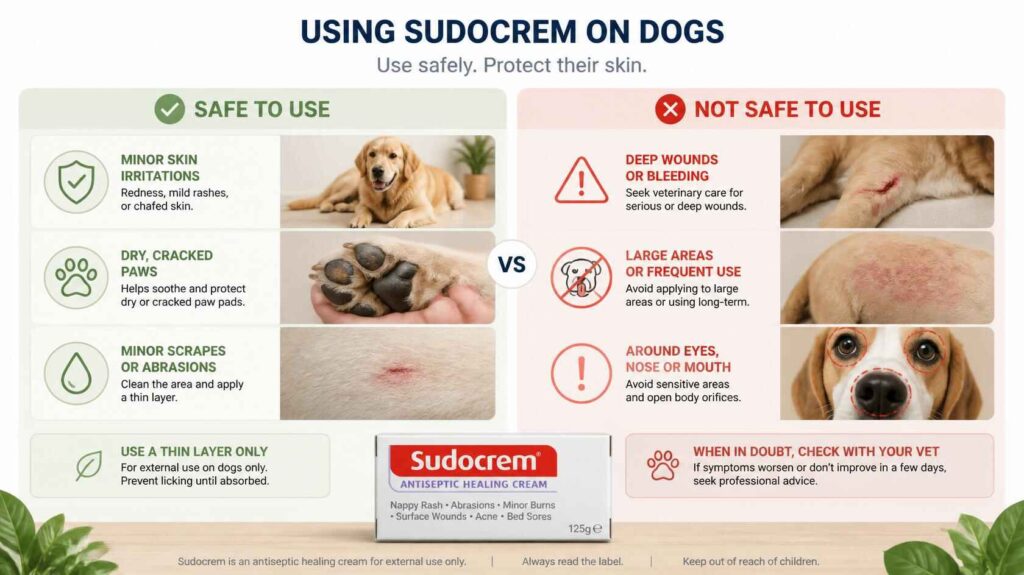
Assuming Human Antiseptic Creams Are Interchangeable
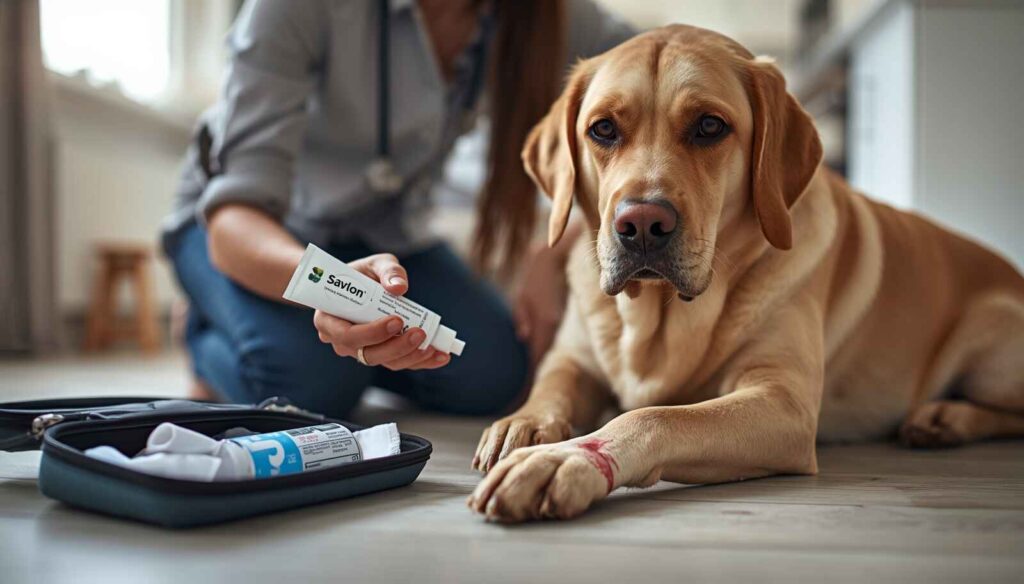
Sudocrem, Savlon, Germolene and veterinary antiseptics contain different ingredients and are intended for different uses. A product being suitable for people does not make it appropriate for dogs.
Applying a Thick Layer
A thick coating is easier to lick, may trap moisture and makes it harder to inspect the skin beneath it.
Reapplying Every Time the Dog Licks It Off
Several small applications can result in more total ingestion than one application. If your dog keeps licking, prevent access and address why the area is uncomfortable.
Treating a Hot Spot Like Dry Skin
Hot spots are usually moist, inflamed and painful. They may require clipping, cleaning and veterinary treatment rather than a barrier cream.
Applying a Tight Bandage
An incorrectly fitted bandage can trap moisture, conceal infection and impair circulation. Toes below a bandage that become cold, swollen or discoloured need urgent attention.
Using It on a Surgical Wound
Do not apply Sudocrem or any other unapproved product to an incision. Contact the operating clinic if the wound becomes increasingly red, swollen, painful, wet or open.
Trying to Induce Vomiting at Home
Do not use salt, mustard, hydrogen peroxide or other home remedies. Inducing vomiting can cause additional harm and should only be done under direct veterinary or poison-service guidance.
Ignoring the Container
A chewed tub creates two separate concerns: cream ingestion and swallowed plastic, foil or lid fragments.
Checklist Before Using Any Cream on a Dog
Before applying any topical product, ask:
- Is it labelled for dogs, or has a vet recommended it for this specific problem?
- Is the skin intact, dry and superficial?
- Is there any pus, odour, swelling, heat, bleeding or discharge?
- Is the area away from the eyes, mouth and ear canal?
- Can the dog reach it to lick?
- Is this the first episode, or does the problem keep returning?
- Is the dog otherwise eating, drinking and behaving normally?
- Do you know exactly what the product contains?
- Can you supervise the dog after application?
If several of these questions raise concern, the safer next step is veterinary advice rather than experimenting with another cream.
When to Contact a Vet—and When It Is an Emergency
Home Monitoring May Be Reasonable When
- Only a tiny amount touched intact skin
- There was no continued licking
- No symptoms developed
- The skin problem is minor and not worsening
- Your dog has no relevant health complications
- No part of the container is missing
Contact a Vet Promptly When
- The amount swallowed is unknown
- More than one brief lick occurred
- Your dog is very small, young, elderly or medically vulnerable
- Vomiting, diarrhoea or reduced appetite develops
- The skin is wet, painful, swollen or infected
- The problem keeps returning
- The cream was applied near a sensitive area
- Your dog chewed the tub or lid
Seek Emergency Veterinary Care When
- A large amount may have been swallowed
- Vomiting is repeated
- Your dog becomes weak or collapses
- The gums look pale or yellow
- Urine appears dark or reddish
- Breathing becomes difficult
- Facial swelling is severe
- Plastic, foil or lid fragments may have been swallowed
Animal poison-service contact details differ by country. Use a current service recommended for your location or contact the nearest emergency veterinary clinic directly.
The Bottom Line
Sudocrem is not a routine first-choice treatment for dogs. It was made for human skin, not canine wounds, and the main practical concern is that dogs can lick and swallow it.
The level of risk depends on how much was used, where it was applied, how often it was licked and what type of skin problem is present. In many cases, the cause of the sore or rash matters far more than the cream in the bathroom cabinet.
If your dog has already been exposed, stop further licking, keep the packaging and contact your vet when the amount is uncertain, symptoms develop or the container has been chewed.
Frequently Asked Questions
1. My Dog Licked Sudocrem Once—What Should I Do?
Prevent further licking and monitor your dog’s appetite, energy level and bowel movements. One brief lick is less concerning than repeated or large ingestion, but contact your vet if symptoms develop or you are unsure how much was swallowed.
2. Should I Wash Sudocrem Off My Dog?
Yes, if your dog can reach the area or excess cream remains. Remove it gently with lukewarm water and a soft cloth. Do not scrub or use harsh human shampoo, and avoid spreading the cream into the eyes or mouth.
3. How Much Sudocrem Is Dangerous to a Dog?
There is no universal safe amount. Risk depends on the exact product, the quantity swallowed, the dog’s body weight, repeated exposure and existing health conditions. Small dogs and repeated licking generally warrant more caution.
4. Can Sudocrem Be Used on a Dog’s Hot Spot?
It is not recommended without veterinary advice. Hot spots are moist, inflamed and often infected. A thick barrier can trap moisture and hide worsening redness or discharge.
5. Can I Put Sudocrem on My Dog’s Paw?
Paws are easy to lick, so repeated ingestion is likely. Paw redness can also be caused by allergies, yeast, infection, injury or a foreign body. Persistent licking, swelling or limping should be assessed rather than repeatedly treated with cream.
6. Can Sudocrem Be Used on an Open Wound?
Do not use it on a deep, bleeding, punctured, infected or gaping wound. These injuries require appropriate cleaning and veterinary assessment. Sudocrem does not treat infection and may make deterioration harder to see.
7. What Should I Do If My Dog Ate Sudocrem From the Tub?
Contact your veterinarian or an animal poison service promptly, especially if the amount is unknown. Keep the packaging, estimate how much is missing and check whether any plastic, foil or lid fragments were swallowed. Do not wait for symptoms before seeking advice.
#. Related Articles:
1. Why Is My Dog’s Poop Black?