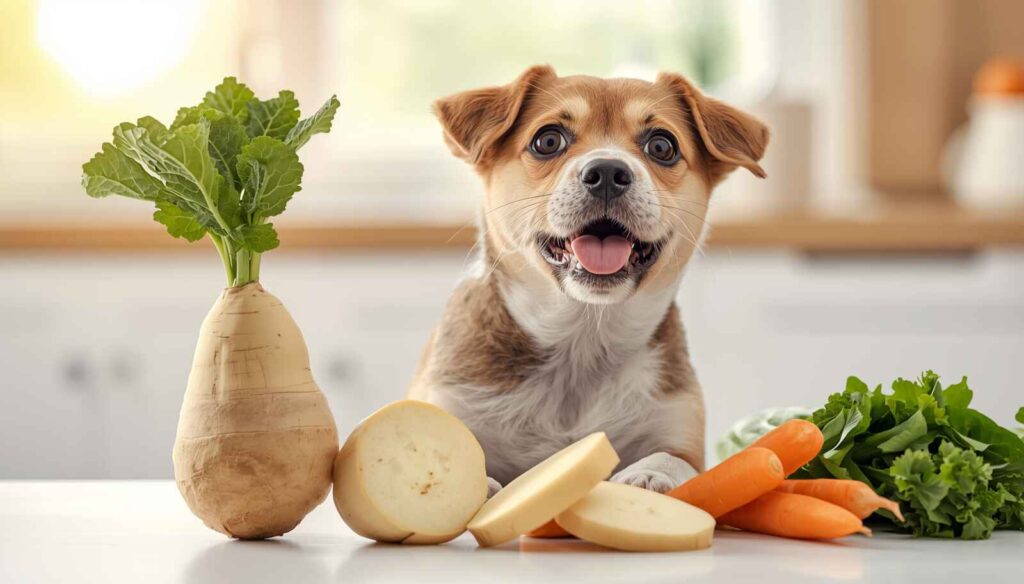

You’re prepping a Sunday roast, chopping parsnips, and those big brown eyes are staring up at you. You toss one down — then immediately wonder: wait, can dogs actually eat parsnips?
Good news: yes, they can. But there’s a bit more to it than just lobbing a chunk across the kitchen floor. This guide covers everything — the benefits, the risks, how much to give, and exactly how to prepare them — so you can treat your dog confidently.
Are Parsnips Safe for Dogs?
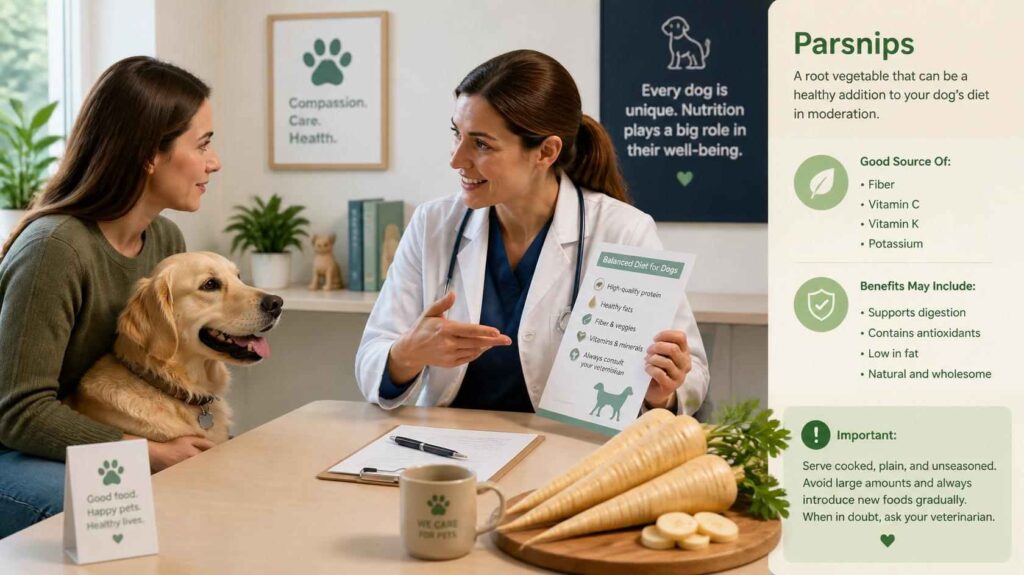
Parsnips are completely non-toxic to dogs. They don’t appear on any veterinary “dangerous foods” list, and unlike onions, grapes, or certain other vegetables, there’s no compound in parsnips that causes harm to dogs.
That said, “safe” doesn’t automatically mean “give as much as you want.” Parsnips are a root vegetable with a naturally high sugar content — higher than carrots, actually — which is worth keeping in mind, especially for certain dogs (more on that shortly).
The short answer: yes, dogs can eat parsnips, and most dogs will happily munch on them.
What’s Actually in a Parsnip? The Nutritional Breakdown
Before getting into the benefits, it helps to understand what you’re actually feeding your dog. Here’s what parsnips contain:
- Fibre — both soluble and insoluble, which supports healthy digestion
- Vitamin C — an antioxidant that supports immune function
- Vitamin K — important for blood clotting and bone health
- Folate (B9) — helps with cell repair and is particularly useful for growing puppies
- Potassium — supports heart and muscle function
- Zinc — plays a role in immune response and skin health
- Manganese — supports bone development and enzyme function
One thing worth noting: dogs produce their own Vitamin C, so they don’t rely on food for it the way humans do. But the fibre and minerals in parsnips genuinely do support a dog’s wellbeing when given in sensible amounts.

Real Health Benefits of Parsnips for Dogs
Good for Digestion
The fibre in parsnips helps keep your dog’s gut moving. If your dog tends to get a bit blocked up (or swings the other way), adding small amounts of fibre-rich veg like parsnip to their diet can help regulate things.
Kidney Support
Parsnips contain compounds that may help support kidney function. Some integrative vets recommend them for dogs with mild kidney concerns, though this shouldn’t replace proper veterinary care.
Antioxidant Properties
The antioxidants in parsnips — particularly Vitamin C and falcarinol — help reduce oxidative stress in the body. Think of antioxidants as your dog’s internal clean-up crew.
Naturally Low Calorie (in small portions)
Compared to many commercial dog treats, a small chunk of parsnip is relatively low in calories. For dogs that are a little on the chunky side, it can be a smarter snack swap.
How Much Parsnip Can a Dog Eat?
This is where a lot of articles give vague answers like “a small amount.” Let’s be more specific.
| Dog Size | Approximate Portion |
|---|---|
| Small dog (under 10kg) | 1–2 small slices or cubes (thumbnail-sized) |
| Medium dog (10–25kg) | 2–4 small pieces |
| Large dog (25kg+) | Up to a small handful of cubes |
Parsnips should be treated as an occasional treat, not a daily addition. Aim for no more than 1–2 times per week, keeping it well under 10% of their daily calorie intake.
The reason? Parsnips contain more natural sugar than many vegetables. Too much over time can contribute to weight gain or blood sugar fluctuations, especially in less active dogs.
Raw vs Cooked Parsnips: Which Is Better for Dogs?
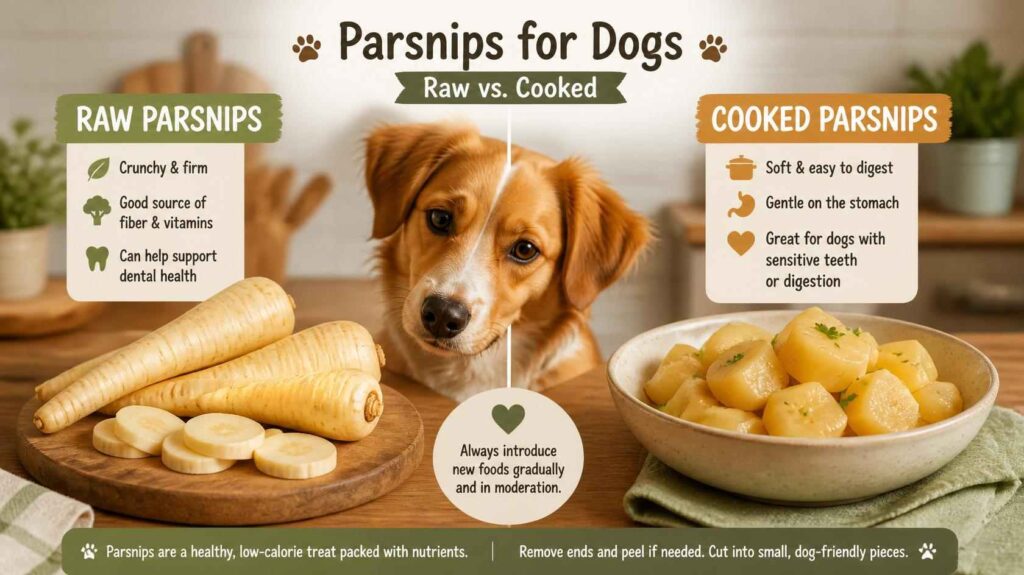
This question comes up a lot, and the honest answer is: cooked is generally safer and easier on their digestion, but raw is technically fine for most dogs.
Raw Parsnips
- Dogs can eat raw parsnips in small amounts
- The tough texture can be a choking hazard, especially for smaller breeds
- Raw parsnip is harder to digest and may cause gas or loose stools in sensitive dogs
- If giving raw, grate it or cut into very small pieces
Cooked Parsnips
- Easier for dogs to digest
- Softer texture = lower choking risk
- Best cooking methods: boiling (plain), steaming, or baking without any oil or seasoning
- Avoid: roasting in oil, adding butter, salt, pepper, garlic, or onion — all of these are harmful or unhelpful for dogs
Quick tip: Just boil or steam a small piece plain before adding it to their bowl. That’s all it needs to be dog-safe.
What About Roasted or Seasoned Parsnips?
This is important, especially around the holidays.
Honey roasted parsnips? No. The honey adds unnecessary sugar, and many commercial glazes contain other additives.
Parsnips roasted with garlic or onion? Absolutely not. Both garlic and onion are toxic to dogs and can cause red blood cell damage even in small amounts.
Parsnips cooked in goose fat or butter? Not ideal. High fat foods can trigger digestive upset and, over time, contribute to pancreatitis in predisposed dogs.
The rule is simple: if it’s been cooked for humans with seasonings, sauces, or fats — keep it away from your dog.
Can Puppies Eat Parsnips?
Yes, puppies can eat parsnips, but with extra care.
Puppies have more sensitive digestive systems than adult dogs. Introduce parsnip in very small amounts — a pea-sized piece of soft, cooked parsnip — and watch for any signs of tummy upset over the following 24 hours.
The folate in parsnips is actually beneficial for growing puppies, supporting healthy cell development. But their small stomachs don’t need much, so keep portions tiny.
Dogs That Should Avoid Parsnips (or Be Extra Careful)
Most healthy dogs handle parsnips without any issue. But for some dogs, it’s worth being more cautious:
Diabetic dogs — The natural sugars in parsnips can affect blood sugar levels. Check with your vet before feeding parsnip to a diabetic dog.
Overweight dogs — Not off-limits, but keep portions very small given the sugar content.
Dogs with kidney disease — Parsnips contain oxalates in small amounts, which can be relevant for dogs already managing kidney or bladder issues. Ask your vet.
Dogs with known food sensitivities — If your dog reacts to new foods easily, introduce parsnip slowly and one at a time.
Signs Your Dog Doesn’t Tolerate Parsnips
Most dogs will be totally fine, but occasionally a dog’s stomach just doesn’t agree with a new food. Watch for:
- Loose stools or diarrhoea within a few hours
- Vomiting
- Excessive gas or bloating
- Lethargy after eating
If any of these happen, parsnips probably aren’t the right treat for your particular dog. Simply remove them from the menu — no drama needed.
How to Prepare Parsnips for Your Dog: Step-by-Step
Here’s the simplest safe method:
- Wash the parsnip thoroughly — remove any dirt or pesticide residue
- Peel it — the skin is edible but slightly tougher and can cause digestive irritation in some dogs
- Cut it into small, bite-sized pieces — roughly 1–2cm cubes for medium dogs, smaller for small breeds
- Boil or steam until soft — no salt, no oil, no butter
- Let it cool completely before giving to your dog
- Start with one piece the first time, and observe for 24 hours
That’s genuinely all there is to it.
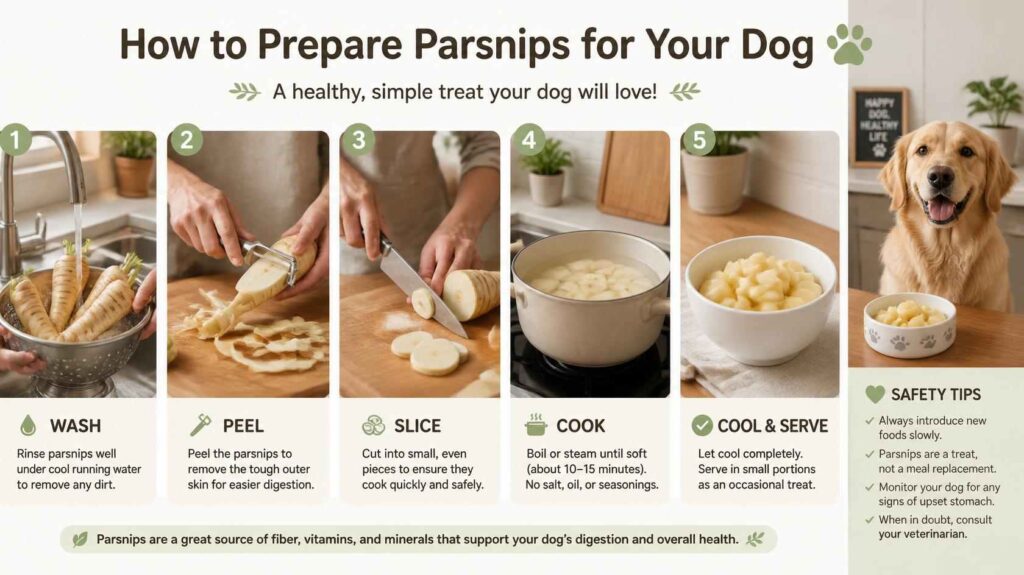
Always wash peel and cut parsnips into small pieces before serving them to your dog.
What Other Vegetables Are Safe for Dogs?
If your dog loves parsnips, chances are they’ll enjoy other dog-safe vegetables too. Good options include:
- Carrots — great for teeth, very low calorie
- Courgette (zucchini) — gentle on digestion, low sugar
- Broccoli — fine in small amounts (large amounts can cause gas)
- Green beans — excellent low-calorie snack
- Cucumber — hydrating, minimal calories
- Sweet potato — nutritious but higher in sugar, so moderate it
Vegetables to avoid completely: onions, garlic, leeks, chives, grapes, raisins, avocado.
Frequently Asked Questions
1.Can dogs eat parsnip skin?
Yes, technically — it’s not toxic. But the skin is tougher and can be harder to digest. Peeling it is the safer, more comfortable option for your dog.
2.Can dogs eat parsnip noodles (spiralised parsnip)?
Yes, as long as they’re plain and cooked. Spiralised raw parsnip can be a choking hazard for some dogs, so soften them first.
3.Can dogs eat frozen parsnips?
Yes, once they’ve been properly thawed and cooked. Frozen parsnips that were pre-blanched (as most commercial ones are) are fine — just heat them through without adding seasonings.
4.Can dogs eat parsnip tops / leaves?
The green tops of parsnips are generally considered safe, but some dogs can have a reaction to the sap in the leaves (it can cause mild skin or mouth irritation). It’s best to stick with just the root vegetable.
5.Is parsnip good for dogs with bad breath?
Not particularly — there’s no strong evidence for this. Carrots are a better choice if you’re looking for a crunchy veg that may help with dental hygiene.
6.How often can I give my dog parsnips?
1–2 times per week in appropriate portion sizes is a sensible guideline for most healthy adult dogs.
7.My dog ate a large amount of roasted parsnip at Christmas. Should I be worried?
If it was plain roasted parsnip with no garlic, onion, or toxic seasonings, a one-off larger amount is unlikely to cause serious harm — but may cause a temporary upset stomach. If they’re vomiting repeatedly, lethargic, or you’re unsure what seasonings were used, call your vet.
The Bottom Line
Parsnips are a genuinely healthy, dog-safe treat when prepared simply and served in sensible amounts. They’re a great option for dogs who love a bit of variety in their diet, and they offer real nutritional value — fibre, vitamins, and minerals — without the artificial nasties found in many commercial treats.
Just remember: plain, cooked, small pieces, in moderation. Skip the honey glaze, leave the garlic in the cupboard, and enjoy sharing a little of the Sunday prep with your dog.
They’ll love you for it.
#. Related Articles: