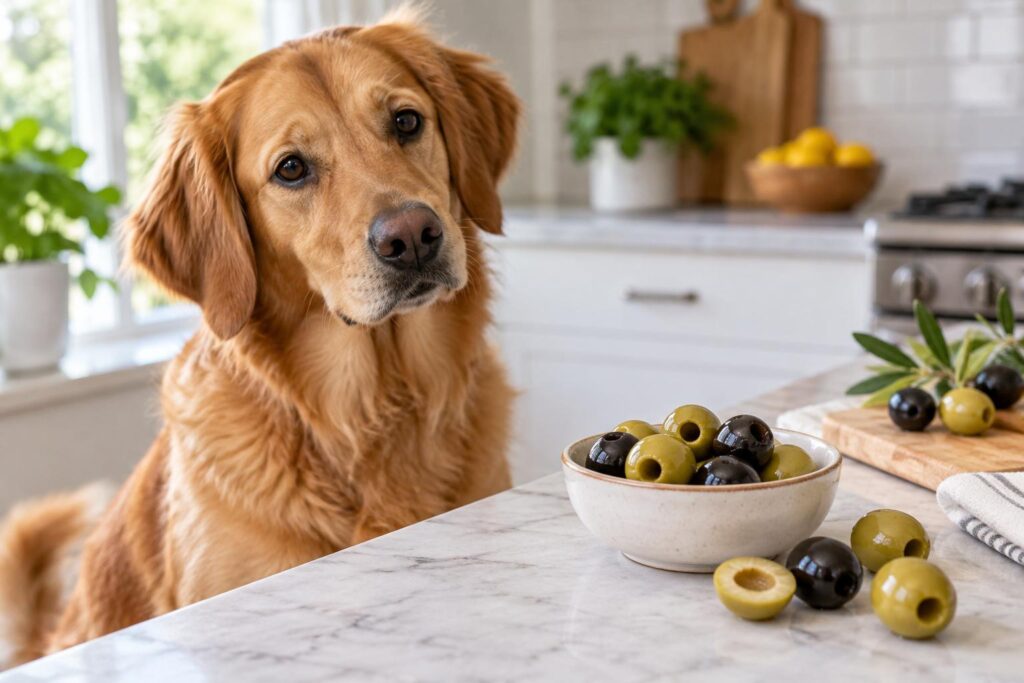
Can dogs eat olives? Plain, pitted olives without unsafe seasonings aren’t considered inherently toxic to dogs, but that doesn’t automatically make them a good treat. Before you hand over the olive your dog is staring at, there’s a more useful question to ask: what kind of olive is it?
A dog stealing one plain, pitted olive is a very different situation from a dog polishing off half a jar of garlic-stuffed olives or swallowing several olive pits. The aim is to identify the actual exposure rather than treating every olive incident the same way.
First, Work Out What Your Dog Actually Ate
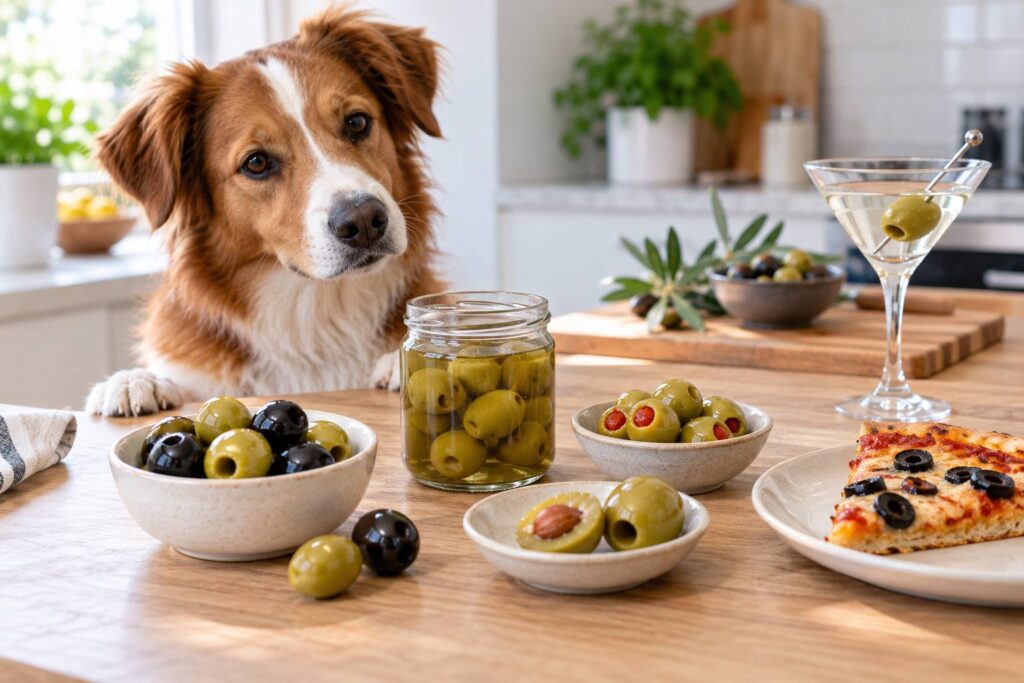
Before worrying about green versus black olives, work out which situation applies.
A plain, pitted olive. An unseasoned olive with the pit removed and little or no added salt is generally the lowest-risk option. Even then, olives are best viewed as an occasional extra rather than something a dog needs nutritionally.
An olive with the pit still in. This changes the assessment. A pit can present a choking hazard, damage a tooth, or become a gastrointestinal foreign body. Whether it was swallowed whole or chewed, how many were eaten, and your dog’s size all matter.
A jarred or canned olive. Many are stored in salty brine. Check the nutrition and ingredient label rather than assuming that a small olive contains too little sodium to matter.
A stuffed or marinated olive. Garlic, onion, pimento, cheese, anchovy, chilli, herb oils and other fillings or marinades can change the risk considerably. In some cases, the added ingredient matters more than the olive itself.
An olive from another dish. Pizza, pasta, focaccia, salads, cheese boards and tapenade can contain several other ingredients. Assess the whole food, not just the visible olive.
A cocktail or martini olive. This deserves separate attention because alcohol exposure may be involved alongside brine, seasonings or a stuffing.
Once you know exactly what your dog ate, deciding what to do becomes much easier.
The Four Questions That Actually Matter
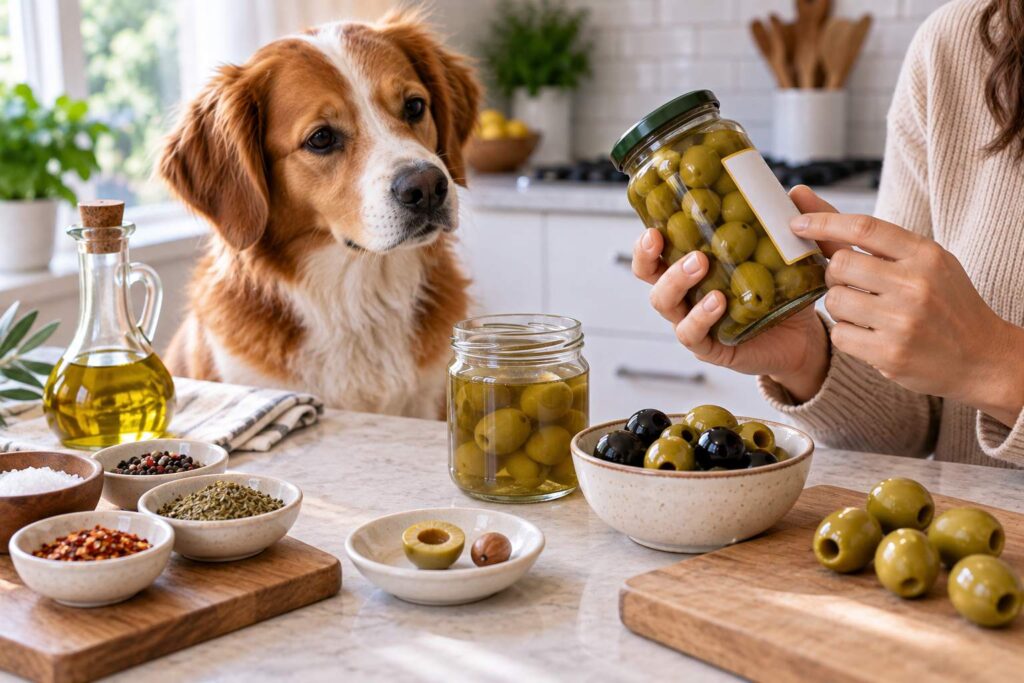
Rather than memorising rules for every olive variety, run through these four questions:
- Was there a pit? A pit introduces choking, dental and gastrointestinal foreign-body concerns.
- How was it prepared? Plain, brined, pickled and oil-marinated olives have very different sodium and fat profiles.
- What else was added? Garlic and onion are toxic to dogs. Cheese and oil can substantially increase the fat content, while alcohol introduces a separate poisoning risk.
- How much was eaten? One plain olive and half a jar are not comparable exposures. Dog size, the amount consumed and any brine swallowed all affect the assessment.
Quick checklist before feeding or after an accident
- Is the olive pitted?
- Is it packed in brine?
- Does the ingredient list contain garlic or onion?
- Is there cheese or another filling?
- Is it marinated in oil, herbs or spices?
- Did it come from an alcoholic drink?
- Roughly how many olives were eaten?
- Was any of the brine consumed too?
- How long ago did it happen?
- Is your dog showing any symptoms?
- Does your dog have a medical condition or follow a prescribed veterinary diet?
If your dog has eaten an unknown quantity, swallowed pits, consumed a product containing garlic, onion or alcohol, or is showing concerning symptoms, contact your veterinarian rather than relying on a generic “safe number” of olives.
Not All Olives Carry the Same Risk
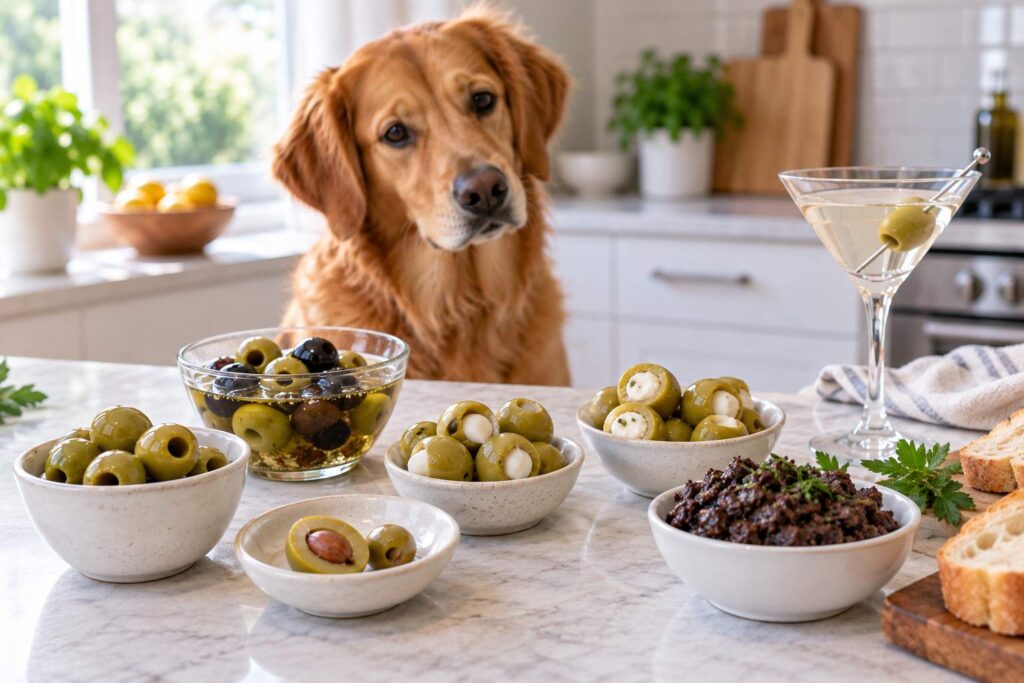
| Olive or product | Pit concern | Sodium concern | Added-ingredient concern | Suitable as a treat? |
|---|---|---|---|---|
| Plain, pitted olive | Low | Depends on preparation | Low | Occasionally, in a small amount |
| Plain green or black olive | Depends | Depends on preparation | Usually low if unseasoned | Check the label first |
| Kalamata olive | Often relevant | Commonly brined | Possible seasonings | Poor routine choice |
| Canned or jarred olive | Depends | Often significant | Possible | Usually not ideal; check the label |
| Garlic-stuffed olive | Depends | Possible | Garlic is toxic to dogs | Avoid |
| Cheese-stuffed olive | Depends | Possible | Extra fat and dairy | Avoid as a routine treat |
| Tapenade | Usually none if smooth | Often significant | May contain garlic, capers, anchovy, oil or seasonings | Best avoided unless every ingredient is known |
| Cocktail olive | Depends | Possible | Possible alcohol exposure | Avoid |
| Olive with the pit still in | High | Depends | Depends | Never intentionally feed |
The table is a starting point, not a substitute for checking the actual product. Two jars of the same olive variety can have very different sodium levels, fillings and seasonings.
Green or Black? That’s Usually the Wrong Question
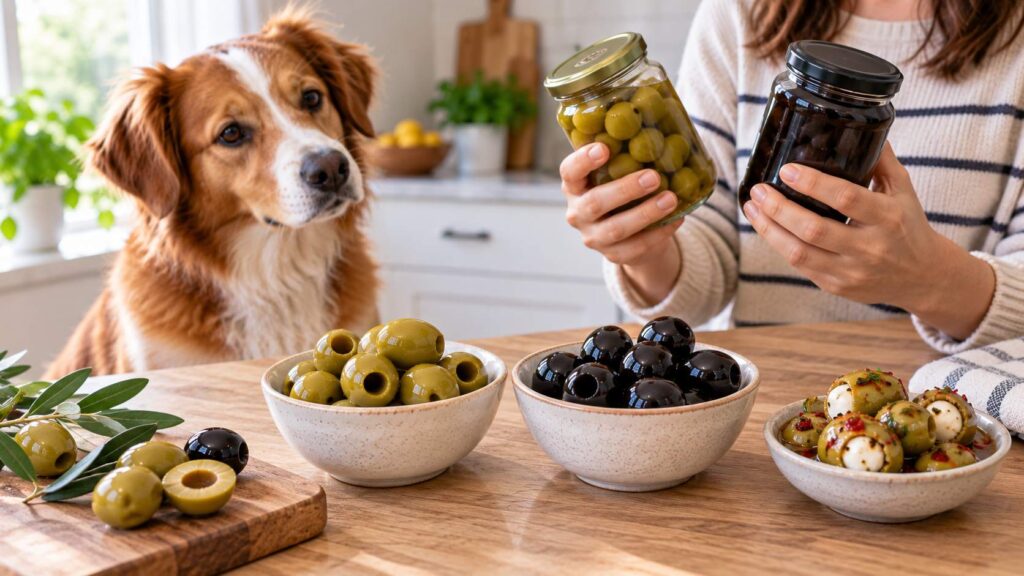
Green and black olives differ mainly in ripeness and processing, but colour alone does not tell you whether an olive is suitable for your dog.
A plain, pitted black olive may be less concerning than a green olive packed in salty brine with garlic. The reverse could just as easily be true with different products. The practical questions are:
- Is there a pit?
- How much sodium does it contain?
- Is it stuffed or seasoned?
- Is it packed in oil or brine?
- Are there any unsafe added ingredients?
If you’re thinking about sharing an olive, read the ingredient and nutrition label rather than judging it by colour. That single check usually tells you far more about the real risk.
Why the Pit Changes Everything
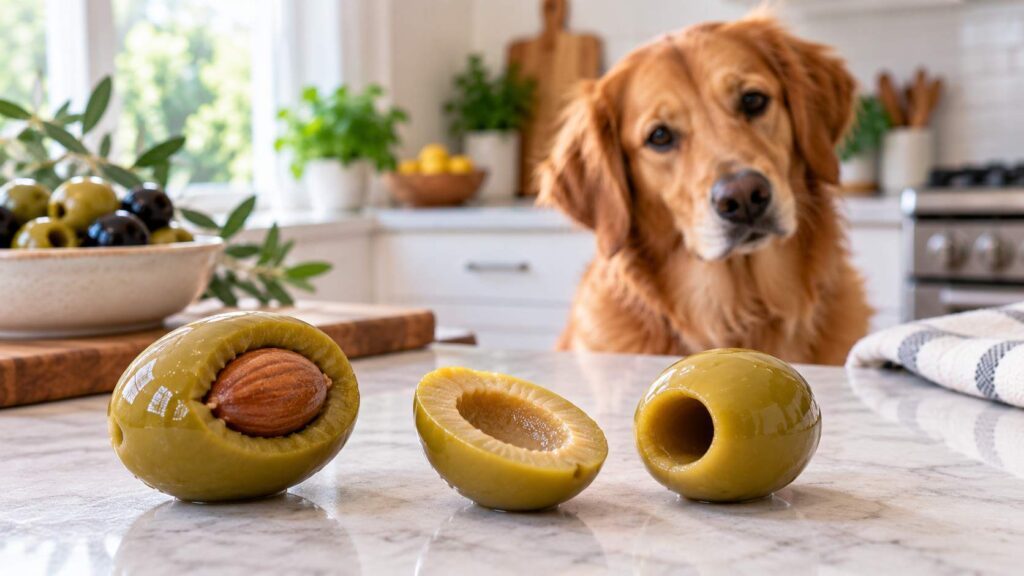
An olive pit isn’t just an inconvenience — it introduces risks that aren’t present with the flesh alone.
Choking. Small dogs and dogs that gulp food without chewing carefully may be at greater risk if a pit becomes lodged in the throat or airway.
Cracked teeth. Olive pits are hard. A dog that bites down on one can damage or fracture a tooth.
Gut blockages. A swallowed pit may become lodged in the stomach or intestines, particularly in a smaller dog or when several pits have been eaten. There’s no reliable way to predict at home whether a pit will pass safely; the dog’s size, the number and size of the pits, and any developing symptoms all matter.
If your dog looks completely normal after swallowing a pit, that’s reassuring, but it doesn’t rule out a later problem. Signs of a gastrointestinal obstruction can develop after the initial incident.
Call your vet promptly if you notice:
- Difficulty breathing or persistent gagging
- Repeated vomiting
- Abdominal pain or a noticeably swollen abdomen
- Marked lethargy
- Loss of appetite alongside vomiting or abdominal discomfort
- Straining to pass stool, particularly if vomiting or pain is also present
If your dog has swallowed one or more pits and you’re unsure what to do, call your vet with your dog’s weight, the approximate number of pits swallowed, when it happened, and any symptoms you’ve noticed.
Don’t try to make your dog vomit unless a veterinarian specifically tells you to. With a hard foreign object involved, attempting this at home can create additional risk.
Salt Is the Everyday Problem Most Owners Miss
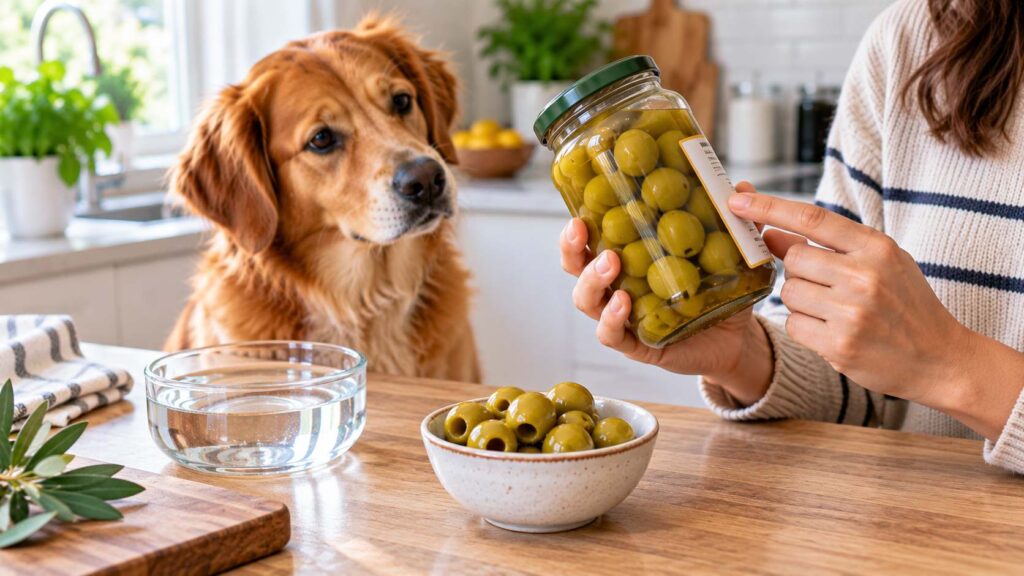
Most olives sold in jars, cans, or deli counters have been cured or stored in salty brine. That doesn’t make every brined olive an emergency, but it does make them a poor choice for regular dog treats.
A healthy dog that steals one or two ordinary brined olives is in a very different situation from a dog that eats a large quantity or drinks the brine itself. Dog size, the amount consumed, access to fresh water, and any existing dietary restrictions all affect how concerning the exposure is.
It’s also important not to confuse unnecessary dietary sodium with salt toxicosis. True salt poisoning generally involves a much more substantial or concentrated sodium exposure than a single olive. However, a dog that has consumed a significant amount of olive brine or a large quantity of very salty olives should be assessed more cautiously.
Contact your vet if the exposure was substantial or your dog develops signs such as:
- Repeated vomiting
- Marked weakness or lethargy
- Unusual unsteadiness
- Tremors
- Seizures
- Other sudden neurological or behavioural changes
Rinsing a brined olive may remove some salt from the surface, but it doesn’t turn a heavily processed olive into an ideal dog treat. It also does nothing about unsafe fillings, seasonings, or marinades.
Sometimes the Olive Isn’t the Real Issue
Once an olive has been stuffed, marinated, or added to another dish, the ingredients around it may matter more than the olive itself.
Garlic- or onion-stuffed olives are more concerning because garlic and onion can damage canine red blood cells. If either ingredient is involved, assess the exposure based on the amount of garlic or onion eaten rather than assuming the olive itself is the main issue.
Cheese-stuffed olives add extra fat and calories. That matters particularly for dogs with a history of pancreatitis, dogs prescribed a low-fat diet, or dogs that don’t tolerate rich foods well.
Pimento-stuffed olives aren’t automatically in the same risk category as garlic-stuffed olives, but the full ingredient list still matters. Commercial products may contain additional seasonings, brine, or oils.
Tapenade can contain garlic, capers, anchovies, oil, salt, herbs, and other ingredients. Don’t assess it as though it were simply mashed olives.
Olives from pizza, pasta, focaccia, salads, or cheese boards should be assessed as part of the entire dish. Onion, garlic, cheese, fatty meats, sauces, and seasoning may be more relevant than the olive.
Cocktail or martini olives introduce another concern: alcohol exposure. If your dog has eaten food or drunk liquid containing alcohol, contact your veterinarian for advice rather than treating it as an ordinary olive incident.
The practical rule is simple: if a toxic or risky ingredient is present, assess that ingredient first.
Are Olives Actually Worth Feeding?
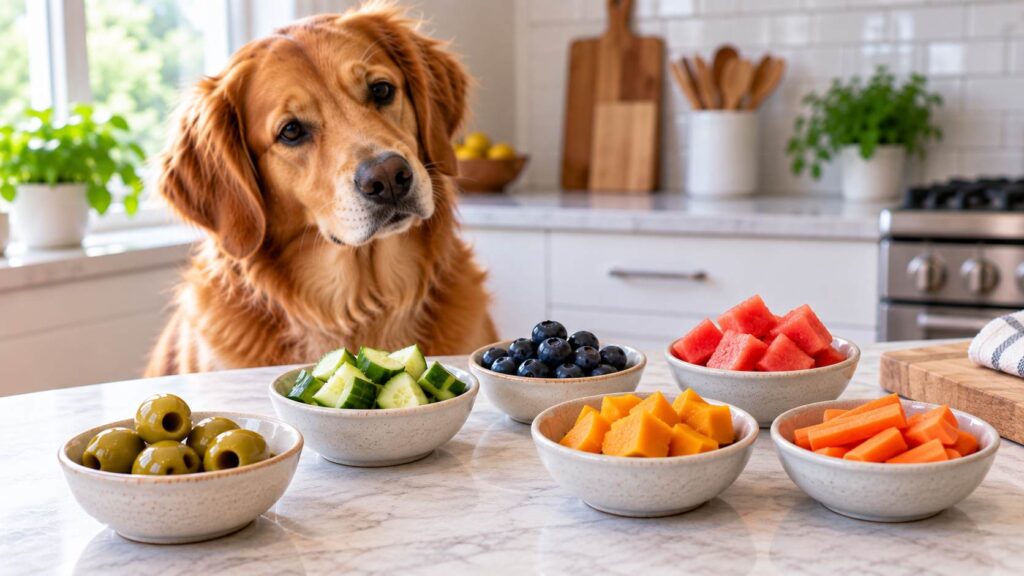
Plain olives contain monounsaturated fat, some fibre, and various plant compounds, but that doesn’t make them a necessary addition to a dog’s diet.
Many of the health claims associated with olives and olive oil come from human nutrition research. Those findings shouldn’t automatically be turned into claims that olives improve a dog’s heart health, reduce inflammation, or protect against disease.
A dog eating a complete and balanced diet should already be receiving the nutrients needed for normal health. So while a plain, pitted olive may be tolerated as an occasional extra by many healthy dogs, there’s little nutritional reason to make olives a regular treat.
For everyday sharing, foods that are naturally lower in sodium, pit-free, and easier to portion are usually more practical.
How Much Is Too Much?
There isn’t a reliable universal rule such as “one olive for a small dog and three for a large dog.” Olive size, sodium content, preparation, your dog’s body size, medical history, and the rest of that day’s treats all change the answer.
For a healthy dog, think in terms of occasional and small, not a daily serving target.
WSAVA guidance recommends that treats and other extras generally account for no more than about 10% of a healthy dog’s daily calories. That is a limit for all treats combined — not permission to use the entire allowance on olives.
If you do choose to offer one:
- Use a plain, fully pitted olive
- Prefer little or no added salt
- Avoid marinades and unknown fillings
- Offer only a small piece at first
- Count it alongside the rest of the day’s treats
- Stop if it causes vomiting, diarrhoea, or other digestive upset
Puppies deserve extra restraint. Their diets need to support growth, and their smaller size means human-food extras take up a larger share of their daily intake. A pit also presents a proportionally greater choking or foreign-body concern in a small puppy.
Dogs Who Need a Different Answer

For many healthy adult dogs, accidentally eating a single plain, pitted olive isn’t a major concern. But some dogs are better off skipping olives unless their veterinarian says otherwise:
- Dogs with a history of pancreatitis or prescribed low-fat diets
- Dogs following a veterinarian-prescribed sodium restriction
- Dogs on therapeutic or prescription diets
- Dogs with chronic gastrointestinal sensitivity
- Dogs on a structured weight-management plan
- Puppies
For dogs with heart or kidney disease, don’t assume that every olive is automatically dangerous. The important question is whether your veterinarian has prescribed sodium restriction or advised against table foods. When a medical diet is part of treatment, even a technically non-toxic human food may not fit the plan.
Already Happened? Here’s How to Triage It
One plain, pitted olive, no symptoms: Usually a low-concern situation for an otherwise healthy dog. Make sure there were no unsafe seasonings or fillings, then monitor for digestive upset.
Several brined olives: Check how many were eaten, your dog’s size, and whether any brine was consumed. A few salty olives are not the same as salt poisoning, but a large intake — especially involving the brine — deserves veterinary advice.
A swallowed pit (or several): The concern shifts to choking, tooth damage, or a gastrointestinal foreign body. Call your vet for advice, particularly if your dog is small, swallowed several pits, or develops vomiting, abdominal pain, loss of appetite, lethargy, gagging, or difficulty breathing.
Garlic, onion, or an unidentified stuffing: Treat this as a possible toxic-ingredient exposure. Don’t wait for symptoms before contacting your vet if garlic or onion was eaten.
A cocktail or martini olive: Alcohol may matter more than the olive itself. Contact your vet or an appropriate animal poison service for advice if alcohol exposure is possible.
Half a jar, a substantial amount of brine, or an unknown quantity: Uncertainty itself is a reason to get professional advice. Don’t try to calculate a “safe dose” at home when the amount or ingredients aren’t clear.
Have this ready when you call:
- Your dog’s weight
- Product name and packaging, if available
- A photo of the ingredient and nutrition labels
- Approximate number of olives eaten
- Whether pits were swallowed
- Whether brine or alcohol was consumed
- When the incident happened
- Any symptoms you’ve noticed
- Relevant medical conditions or prescribed diets
Don’t induce vomiting or give home remedies unless a veterinary professional specifically instructs you to.
Whole Olives vs Olive Oil: Different Questions Entirely
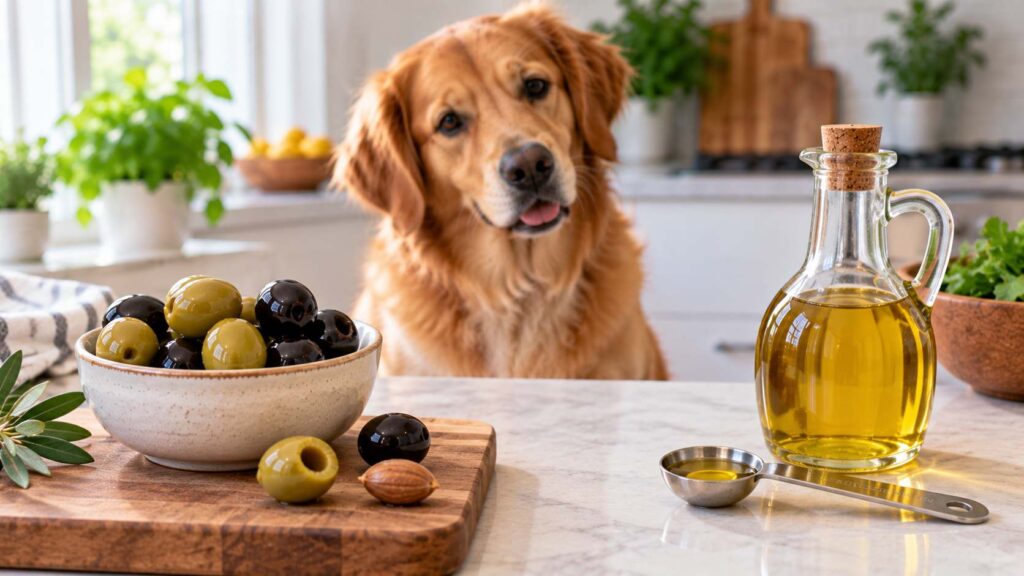
| Factor | Whole olives | Olive oil |
|---|---|---|
| Pit or choking risk | Possible | None |
| Sodium | Can be significant | Usually minimal if plain |
| Fat density | Moderate | Very high |
| Portion control | Count individual olives | Easy to over-pour |
| Main concern | Pits, sodium, fillings and seasonings | Fat and calories |
Plain olive oil doesn’t carry the pit or brine concerns of whole olives, but it’s calorie-dense and easy to overdo. There is rarely a nutritional reason to add it routinely to the diet of a healthy dog already eating complete and balanced food unless your veterinarian has recommended it.
So “olive oil doesn’t contain the same hazards” should not be interpreted as “olive oil should be added to your dog’s meals.”
Common Mistakes Worth Avoiding
- Assuming all olives are basically the same
- Focusing on green versus black instead of checking preparation
- Feeding olives straight from salty brine
- Leaving the pit in “just this once”
- Assuming a dog will spit out the pit
- Ignoring what a stuffed olive actually contains
- Treating “pitted” as automatically meaning “safe”
- Assuming rinsing removes all the sodium
- Assessing pizza, tapenade, or antipasto based only on the olives
- Making olives a daily habit because they’re considered healthy for people
- Using a fixed serving number regardless of dog size, product, or health
Better Options for Everyday Snacking
If you simply want to share a snack, there are easier options that don’t usually come with pits, brine, or complicated ingredient lists:
- Plain cucumber pieces
- Blueberries
- Seedless watermelon flesh with the rind removed
- Plain cooked pumpkin
- Small pieces of plain carrot
Introduce unfamiliar foods in small amounts, and keep all treats and extras within your dog’s overall calorie allowance.
The Bottom Line
For most healthy dogs, accidentally eating one plain, pitted olive is unlikely to be a major concern. That doesn’t make olives an especially useful everyday treat.
With olives, the details matter more than the colour or variety. Check the pit, brine, filling, other ingredients, quantity eaten, and your dog’s individual health needs. A plain pitted olive, several swallowed pits, and a garlic-stuffed cocktail olive are three very different situations.
If the quantity is substantial, a pit was swallowed, a toxic ingredient or alcohol may be involved, or your dog develops concerning symptoms, contact your veterinarian rather than waiting for the situation to declare itself.
Frequently Asked Questions
1.Is one olive too much for a very small dog?
One plain, pitted olive is unlikely to cause serious problems in most otherwise healthy dogs, but there’s little reason to give a tiny dog the whole olive. A small piece is easier to portion, and brined, stuffed, or seasoned olives should be assessed differently.
2.Does rinsing salty olives actually make them safe?
Rinsing can remove some surface brine, but it doesn’t remove all the sodium absorbed during processing. It also does nothing about garlic, onion, alcohol, or unsafe fillings. Rinsing may reduce one concern; it doesn’t automatically make the product dog-safe.
3.Can olives cause diarrhoea even without toxic ingredients?
Yes. An unfamiliar food, particularly one containing fat, oil, or plenty of salt, can cause vomiting or diarrhoea in some dogs. Persistent symptoms, significant abdominal discomfort, or repeated vomiting warrant veterinary advice.
4.What if my dog swallowed an olive pit but seems completely fine?
Looking normal immediately afterwards doesn’t guarantee that the pit will pass safely. Contact your vet for advice based on your dog’s size, the number of pits swallowed, and when it happened. Seek prompt care if vomiting, abdominal pain, loss of appetite, lethargy, gagging, breathing difficulty, or other concerning signs develop.
5.Should I try to make my dog spit an olive out?
If the olive is still loose and can be removed calmly without putting your fingers at risk, you may be able to take it away. Don’t chase, force open your dog’s mouth, reach deep into the throat, or try to induce vomiting at home. If a pit or unsafe ingredient has already been swallowed, contact your vet for guidance.
6.Are dried or oil-cured olives different from brined ones?
Yes, but “oil-cured” or “dried” doesn’t automatically mean suitable for dogs. These products may still contain substantial salt, oil, garlic, herbs, or other seasonings. Check the complete ingredient and nutrition labels.
7.Can dogs get used to eating olives regularly without issues?
A dog may tolerate olives without obvious digestive problems, but tolerance doesn’t make them nutritionally necessary. Because many commercial olives contain considerable sodium and some contain added oil or fillings, they’re better treated as an occasional extra than a routine snack.
#. Related Articles: