
Can dogs eat broccoli? Yes, most dogs can eat plain broccoli in small amounts. Your dog may be sitting under the table, eyes fixed on the broccoli you’ve just cut for dinner, but whether it’s safe to share depends on how much you offer, how it’s prepared, and whether your dog chews it properly.
What matters is how much your dog eats, how the broccoli is prepared, and whether they chew it properly. A few small pieces of plain steamed broccoli are very different from a large stalk swallowed whole or broccoli covered in garlic sauce.
If your dog has already helped themselves to some, don’t focus only on the word “broccoli.” Check what form it was in, how much disappeared, what else was in the dish, and how your dog is behaving now.
Before You Share Broccoli, Identify What You Actually Have
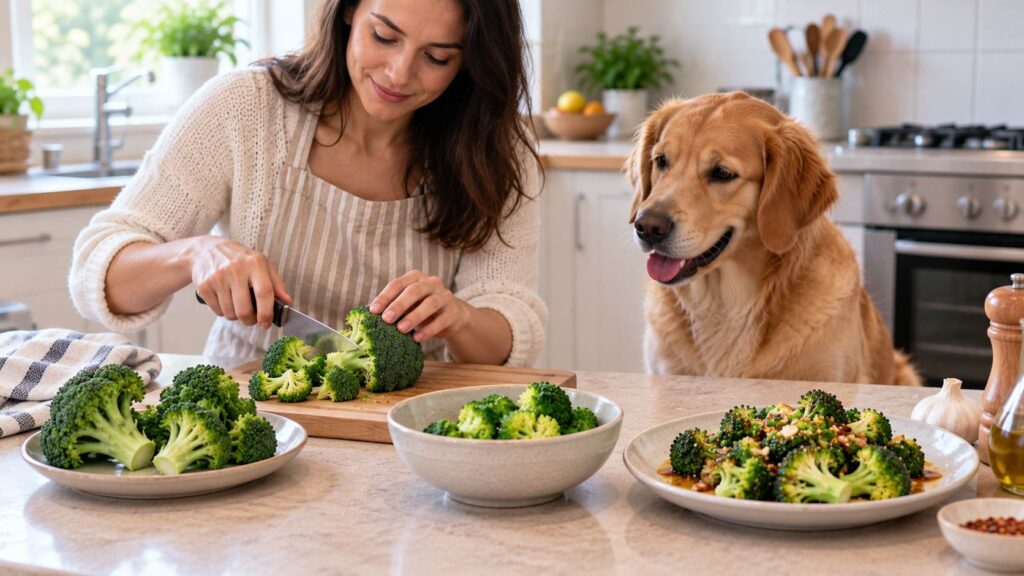
Not all “broccoli” presents the same risk.
Plain Broccoli
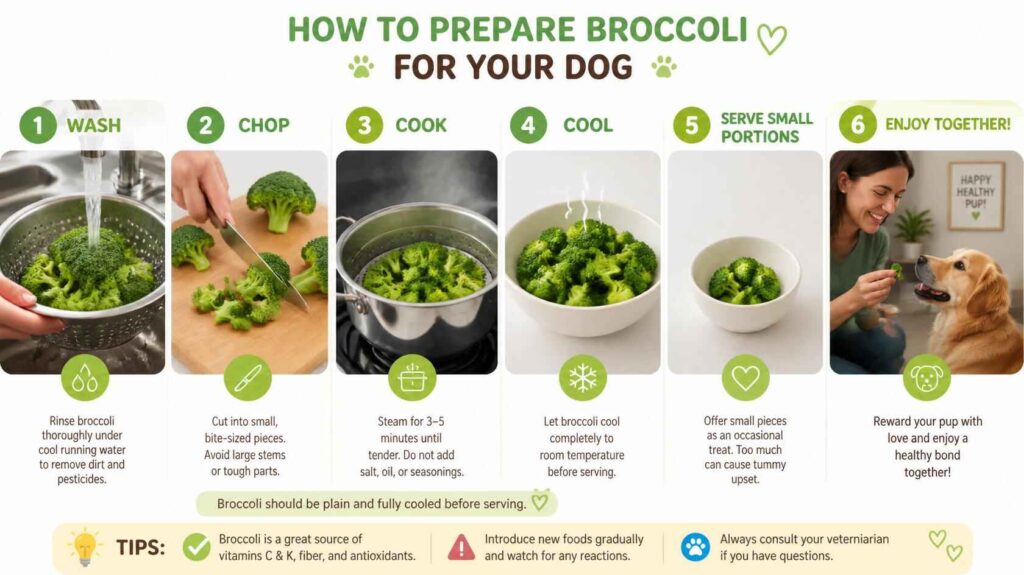
Raw, steamed, boiled, or otherwise cooked broccoli can be offered in small amounts as long as it is plain and cut into manageable pieces. Frozen broccoli can also be used, although large hard pieces may need thawing or chopping first.
This is the type of broccoli we’re talking about when we describe it as dog-safe.
Broccoli From Your Dinner Plate
Broccoli from your own plate may contain butter, oil, salt, cheese, sauces, or seasoning. At that point, the broccoli may no longer be the ingredient that matters most.
There’s no nutritional reason to add butter, oil, salt, or sauce to broccoli intended for a dog. Plain is the safer and simpler option.
Broccoli Inside a Recipe
Broccoli cheddar soup, casserole, stir-fry, takeaway vegetables, pasta bakes, and similar dishes should be judged by their full ingredient list, not by the broccoli alone.
A small amount of broccoli may be harmless while another ingredient in the same dish creates a genuine problem.
Why Garlic and Onion Can Change the Whole Answer
Garlic and onion belong to the Allium family and are toxic to dogs. If your dog ate broccoli from a dish containing either ingredient, don’t assume the broccoli is the main concern.
Try to work out:
- what the dish contained;
- approximately how much your dog ate;
- your dog’s weight;
- when the food was eaten.
If a meaningful amount of garlic, onion, or an unknown seasoned dish was eaten, contact your veterinarian for advice rather than waiting for symptoms to appear.
Your Dog Already Ate Broccoli? Check These Five Things First
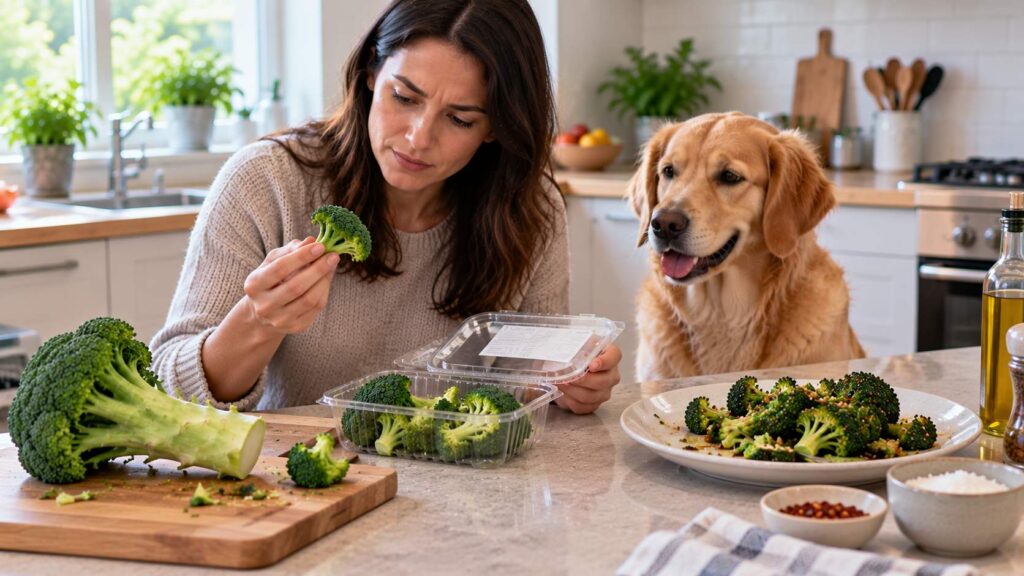
“Broccoli is generally safe” is not enough information when your dog has already eaten some. Use this quick assessment instead.
Broccoli Exposure Check
- Was it plain broccoli, or part of a dish?
- Roughly how much was eaten?
- Was it florets, stalk, leaves, sprouts, or a mixture?
- Did your dog chew it, or swallow a large piece whole?
- Are they showing any symptoms now?
One Small Plain Piece
If a healthy dog steals one small piece of plain broccoli and swallows it normally, serious problems are unlikely.
You can usually monitor at home for digestive upset such as gas, vomiting, or loose stool. A single small exposure does not automatically require an emergency vet visit if your dog is otherwise behaving normally.
A Large Amount of Broccoli
A larger quantity is more likely to cause gastrointestinal irritation. Some dogs may simply become gassy, while others may develop vomiting, diarrhoea, reduced appetite, or abdominal discomfort.
There is no reliable universal number of florets that guarantees safety because broccoli pieces vary enormously in size and dogs vary in body weight and tolerance.
If your dog develops repeated vomiting, significant diarrhoea, obvious abdominal pain, marked lethargy, or symptoms that are worsening rather than settling, contact your veterinarian.
A Whole or Large Stalk Was Swallowed
This is a different problem.
A large, fibrous stalk swallowed with little chewing may create a mechanical choking or swallowing hazard, even though broccoli itself is not considered a classic poison.
Seek urgent veterinary help if your dog is:
- struggling to breathe;
- gagging or repeatedly retching;
- pawing frantically at the mouth;
- drooling excessively;
- struggling or refusing to swallow;
- repeatedly bringing food or water back up.
Do not rely on a “wait and see” approach when breathing or swallowing appears affected.
The Broccoli Contained Other Ingredients
Go back to the recipe.
Garlic or onion warrants particular attention. Rich sauces containing a lot of fat may also cause significant digestive upset and can be more concerning in dogs with a history of pancreatitis or those on medically restricted diets.
When you’re unsure what was in the dish, save the packaging, recipe, or ingredient list if possible. It can be useful when speaking to your vet.
Not Every Part of Broccoli Creates the Same Problem
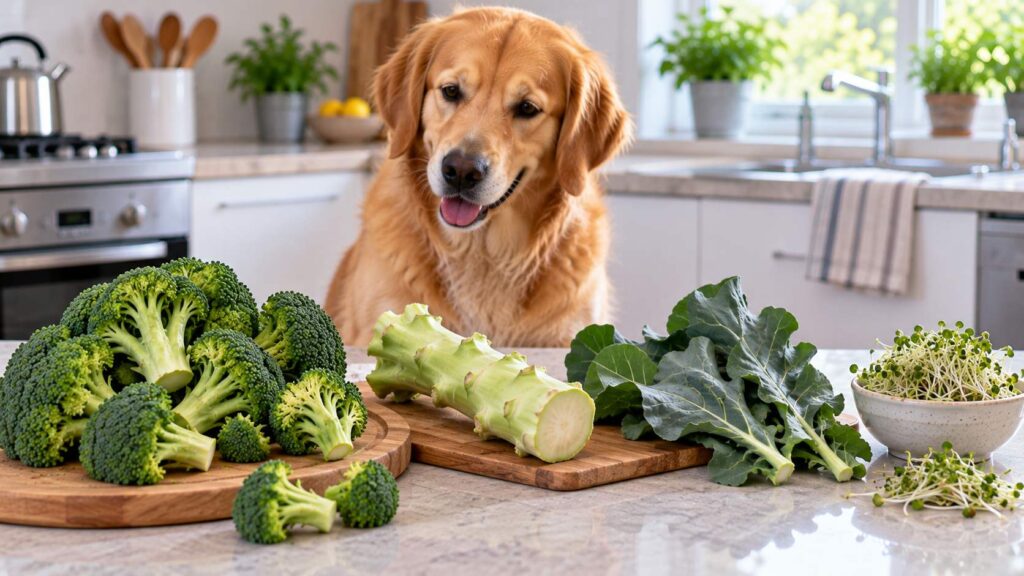
Florets
The green flowering tops are generally suitable in small portions.
Broccoli florets contain naturally occurring compounds called isothiocyanates. In larger amounts, these can contribute to gastrointestinal irritation in dogs. That doesn’t make a small floret poisonous, but it is one reason broccoli should remain an occasional extra rather than a major part of the diet.
Stems and Stalks
Broccoli stalks are edible, but their dense, fibrous texture makes them harder to chew than soft florets.
Don’t use a whole broccoli stalk as a chew toy. If you want to offer stalk, cut it into pieces appropriate for your dog’s mouth and chewing habits.
A small dog that gulps food needs a different piece size from a large dog that chews slowly and thoroughly.
Leaves
Plain broccoli leaves in small amounts are not usually a particular concern, but there is no need to seek them out for nutritional reasons.
Treat them the same way as the rest of the vegetable: plain, modest portions, and appropriately cut.
Broccoli Sprouts
Broccoli sprouts shouldn’t automatically be treated as identical to mature broccoli. Their concentrations of some plant compounds differ, and concentrated broccoli-sprout or sulforaphane products are not the same thing as feeding a few pieces of ordinary broccoli.
Avoid using human supplements simply because broccoli itself can be eaten by dogs. Concentrated products should only be used with veterinary guidance.
Raw, Cooked, Steamed or Frozen — Which Form Makes Most Sense?
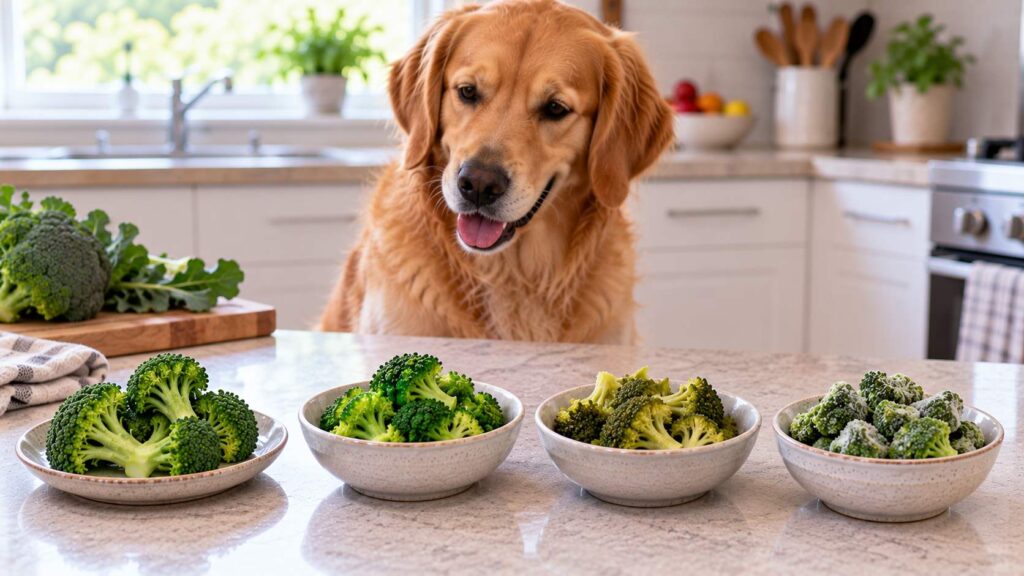
| Broccoli Form | Can Dogs Have It? | Main Advantage | Main Concern | Best Use |
|---|---|---|---|---|
| Raw | In small amounts | Plain and easy to prepare | Tougher texture; may be harder to chew | Cut into small pieces |
| Steamed | In small amounts | Softer and easier to chew | Still needs portion control | Practical first option |
| Boiled | In small amounts | Very soft texture | Some nutrients enter the cooking water, though this matters little for treat-sized portions | Serve plain |
| Frozen | Usually, in suitable pieces | Convenient | Large hard pieces may be difficult to chew | Thaw or chop when needed |
| Seasoned | Best avoided | No meaningful advantage | Garlic, onion, excess salt, butter, oils, or sauces | Prepare a plain portion separately |
| Soup or casserole | Recipe-dependent | — | Multiple hidden ingredients | Check the entire ingredient list |
Does Cooking Make Broccoli “Safer”?
Cooking softens broccoli, which can make it easier to chew and may make it more comfortable for some dogs to eat.
It does not turn broccoli into an unlimited food or remove every compound that can irritate the digestive tract. Portion size still matters.
Should Frozen Broccoli Be Thawed?
That depends more on your dog than on the broccoli.
A large dog that chews carefully may manage a small frozen piece without difficulty. A puppy, small dog, senior dog with dental problems, or habitual gulper may be safer with broccoli that has been thawed and cut into smaller pieces.
Avoid giving a whole frozen floret simply because it looks like a convenient treat.
Does Preparation Change Nutrition Enough to Matter?
Not enough to obsess over for the tiny quantities a dog should be eating.
Broccoli is an optional treat, not a nutritional requirement. Whether you lightly steam or boil it matters far less than keeping it plain, appropriately sized, and modest in quantity.
The Real Portion Question Is More Complicated Than “How Many Florets?”

Why “One Floret” Is an Imprecise Measurement
Florets vary hugely in size. One supermarket bag may contain tiny pieces alongside chunks close to the size of a golf ball, so advice such as “give two florets” can be misleading.
A better approach is to think in terms of small, bite-sized pieces relative to your dog’s size, start with less rather than more, and see how your dog tolerates it.
Use Dog Size as a Starting Point, Not a Medical Dose
Portion guidance should be treated as a starting point, not a prescription. An extra-small or small dog may only need one small, finely chopped piece, while a medium or large dog can usually manage a few appropriately sized pieces.
There is no medically established “number of florets” that suits every dog. Floret size, body weight, chewing habits, and individual digestive tolerance all matter, so start small—especially if your dog has never eaten broccoli before.
The 10% Rule Does Not Mean 10% Broccoli
You may have seen the general veterinary nutrition guideline that treats and other extras should make up no more than about 10% of a healthy dog’s daily calories.
That is a limit for all treats and extras combined, not permission to make 10% of the diet broccoli. In practice, broccoli’s fibre and natural plant compounds may cause gas or digestive upset well before calorie intake becomes the main concern.
Quick Tips: Portion Control
- Start with a smaller portion than you think you need
- Cut pieces to suit your dog’s mouth and chewing habits
- Count broccoli as part of all daily treats and extras
- Introduce one new food at a time
- Stop offering it if it repeatedly causes digestive upset
- Never use a long broccoli stalk as a chew stick
Why Broccoli Can Upset Some Dogs Even When It Is Not “Poison”

Isothiocyanates in Simple Terms
Broccoli contains naturally occurring compounds called isothiocyanates, which are also found in other cruciferous vegetables. They don’t make a small serving of broccoli poisonous, but larger quantities can irritate a dog’s gastrointestinal tract.
That’s one reason portion size matters even when the food itself is generally considered safe in moderation.
Fibre and Gas
Broccoli contains fibre, and gut bacteria ferment some of that fibre during digestion. The result can be extra gas, particularly when a dog eats a large portion or isn’t accustomed to fibrous vegetables.
A little wind after trying broccoli does not automatically mean something dangerous has happened, but repeated discomfort is a good reason to choose a different treat.
Vomiting or Loose Stool After Broccoli
A dog may develop vomiting, soft stool, or diarrhoea after eating too much broccoli or after having a new food introduced too quickly.
If the reaction is mild and your dog otherwise seems well, stop the broccoli and monitor them. Repeated vomiting, significant diarrhoea, abdominal pain, marked lethargy, or worsening symptoms deserve veterinary advice rather than simply reducing the portion next time.
Intolerance Is Not the Same as Food Allergy
These terms are often used interchangeably, but they describe different problems.
Eating too much broccoli may cause gastrointestinal irritation. An individual dog may also simply tolerate the food poorly. A true food allergy involves an immune response and is a different condition again. None of those automatically means broccoli poisoning has occurred.
For most dogs that react to broccoli, digestive tolerance—not allergy—is the more practical issue.
Broccoli’s Biggest Risk May Be Physical, Not Chemical
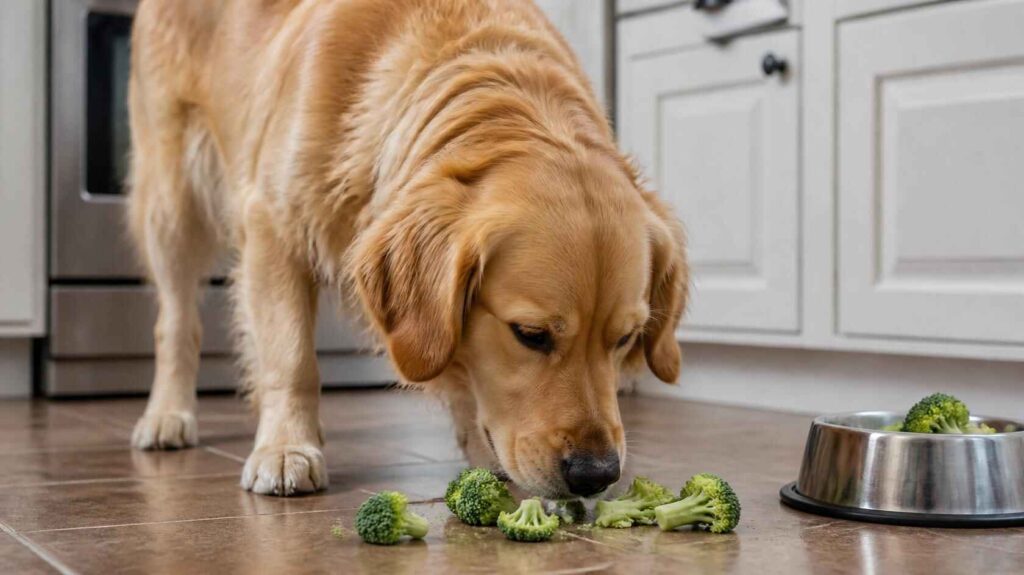
Why Stalks Can Become a Choking Problem
A long, fibrous piece of broccoli stalk swallowed without enough chewing creates a mechanical hazard. It may be difficult to swallow or become lodged, regardless of whether broccoli itself is toxic.
That makes the size and shape of the piece just as important as the amount being fed.
Dogs Most Likely to Have Trouble With Large Pieces
Take extra care with:
- small dogs
- puppies
- dogs that gulp food
- dogs with significant dental problems
- dogs with known swallowing difficulties
For these dogs, cutting food into manageable pieces may matter more than following a generic serving chart.
Choking vs Oesophageal Obstruction vs Stomach Upset
These are three different situations.
Choking means the airway is blocked and is an emergency.
A piece lodged in the oesophagus may not completely stop breathing, but it can cause repeated gagging, retching, drooling, difficulty swallowing, or repeated attempts to bring something back up. That also needs urgent veterinary assessment.
Digestive upset, such as gas or mild diarrhoea after eating too much broccoli, is different again and may settle once the food is stopped. Persistent or severe symptoms should still be assessed by a vet.
Do Not Wait on a Blog Article If…
- Your dog is struggling to breathe
- They appear to be actively choking
- There is repeated gagging or retching
- They are having difficulty swallowing
- Vomiting is repeated or persistent
- Diarrhoea is severe or persistent
- Your dog shows obvious abdominal pain
- They seem markedly weak or lethargic
- You suspect a large piece of stalk is lodged
These signs warrant prompt veterinary attention. Breathing difficulty or active choking should be treated as an emergency.
Is Broccoli Actually Good for Dogs — or Just Safe to Share?
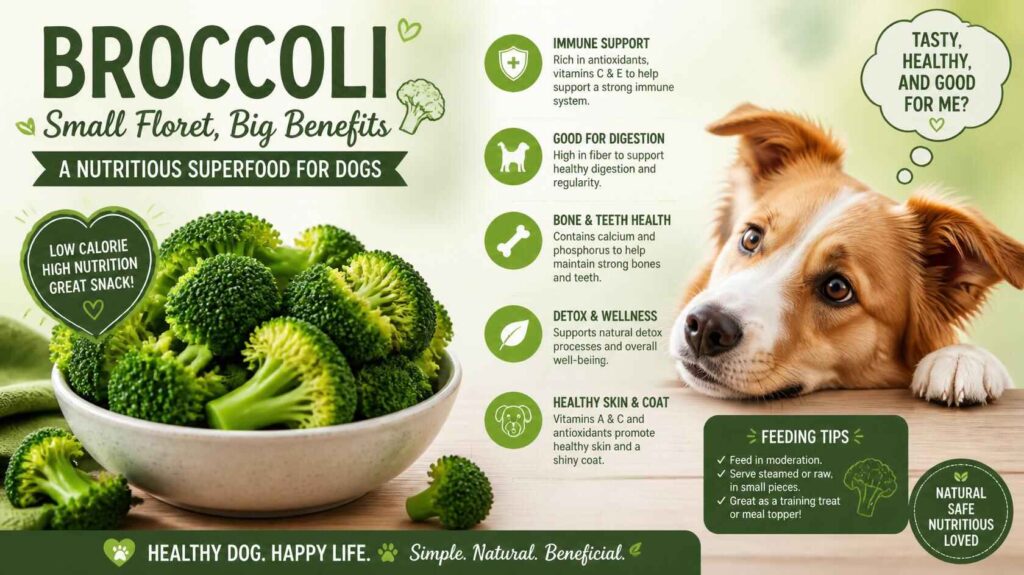
Broccoli provides fibre and nutrients including vitamin C, vitamin K, and folate, along with several naturally occurring plant compounds.
That doesn’t mean your dog needs it.
A dog eating a complete and balanced diet appropriate for their life stage should already receive the nutrients they need from their main food. Broccoli is best thought of as an optional treat or source of variety, not a way to correct nutritional deficiencies.
Its relatively low calorie content can make it a useful alternative to richer treats for some dogs, but “low calorie” does not mean unlimited. Portion size and digestive tolerance still matter.
Be cautious with claims that ordinary broccoli prevents cancer, detoxifies the liver, boosts immunity, or treats disease. Broccoli-derived compounds such as sulforaphane have been studied scientifically, including in limited canine research, but that is not the same as proving that feeding broccoli as a treat produces those clinical benefits.
Some Dogs Need a Different Answer
Puppies
Puppies can have small, soft pieces of plain broccoli once they’re eating solid food, but extras should never crowd out a complete puppy diet formulated for growth.
Start with a tiny amount, use pieces that are easy to chew, and pay particular attention to choking risk in puppies that gulp food.
Small Dogs and Food Gulpers
For these dogs, how they eat can matter as much as how much they weigh.
A small dog or habitual gulper should receive smaller pieces even when the total portion is modest. Never assume a piece is safe simply because another dog of the same weight manages it well.
Dogs With Sensitive Stomachs
Start with a very small amount—or skip broccoli entirely if your dog already has frequent digestive problems.
If broccoli repeatedly causes gas, loose stool, vomiting, or discomfort, there’s no benefit in trying to make your dog “get used to it.” Choose another suitable treat instead.
Dogs on Prescription or Elimination Diets
Don’t add broccoli or any other extra casually.
Prescription and elimination diets are often used for a specific medical or diagnostic reason, and adding apparently harmless foods can interfere with that plan. Check with the veterinarian managing your dog’s diet before introducing extras.
Dogs in Weight-Loss Programmes
Plain broccoli can be lower in calories than many commercial treats, but it isn’t “free food.”
Keep it within your dog’s planned daily treat allowance and avoid adding butter, cheese, oil, or sauces that can quickly undo the calorie advantage.
Common Broccoli Feeding Mistakes
- Treating broccoli as unlimited because it’s a vegetable
- Giving a whole stalk as a chew
- Offering large frozen florets to a dog that gulps food
- Sharing seasoned broccoli straight from the dinner plate
- Assuming cheese sauce makes broccoli a better treat
- Starting with too large a first portion
- Treating the 10% rule as a broccoli-specific allowance
- Using vegetables to replace complete and balanced dog food
- Assuming every loose stool means broccoli toxicity
- Assuming every dog tolerates broccoli the same way
- Following generic “number of florets” charts without considering actual piece size
- Giving concentrated broccoli or sulforaphane supplements simply because ordinary broccoli can be fed in small amounts
When Broccoli Is Not the Best Vegetable Treat
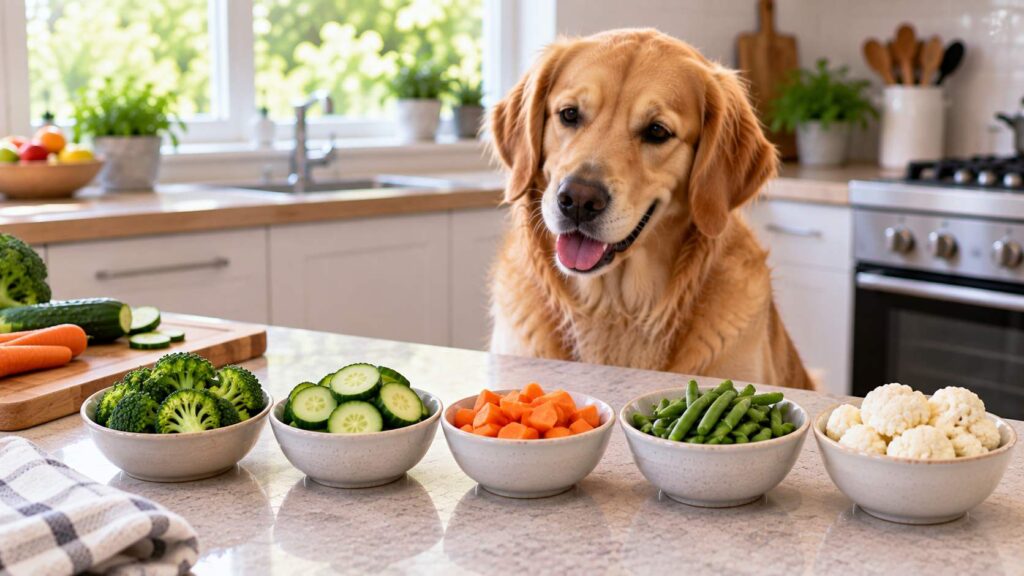
| Vegetable | Main Advantage | Main Limitation | Useful For |
|---|---|---|---|
| Broccoli | Low in calories and can be served soft or crunchy | May cause gas or digestive irritation; large stalks can be a choking hazard | Occasional variety |
| Cucumber | High water content and easy to cut into small pieces | Large chunks can still be difficult to chew or swallow | A light, refreshing snack |
| Carrot | Convenient and easy to portion | Raw carrot can be too hard for some dogs | Small treat or training pieces |
| Green beans | Easy to portion and relatively low in calories | Should be served plain, without salt, butter, or seasoning | Lower-calorie treat option |
| Cauliflower | Similar to broccoli and easy to prepare plainly | May also cause gas or digestive upset | Occasional alternative |
If broccoli repeatedly makes your dog gassy, doesn’t suit their stomach, or is awkward for them to chew, there’s no reason to force it. Another dog-safe vegetable may simply be a better fit.
A Simple First-Time Broccoli Test
- Choose plain, unseasoned broccoli
- Cut it into pieces appropriate for your dog’s size and chewing habits
- Offer only a very small amount at first
- Don’t introduce another unfamiliar treat at the same time
- Watch for gas, vomiting, loose stool, or obvious discomfort
- Stop offering it if your dog consistently reacts poorly
Quick tip: Tolerance is individual. Avoid assuming a particular breed is naturally “good” or “bad” with broccoli unless your veterinarian has given you breed- or dog-specific advice.
When to Ask Your Vet Before Adding Broccoli
Check with your veterinarian before making broccoli a regular extra if your dog:
- is on a prescription or elimination diet
- has ongoing digestive problems
- has difficulty swallowing
- has significant dental disease
- is following a tightly controlled weight-loss plan
- repeatedly becomes unwell after eating broccoli
If your dog has already swallowed a large stalk or develops persistent vomiting, significant diarrhoea, marked abdominal pain, lethargy, gagging, or difficulty swallowing, seek veterinary advice rather than simply adjusting the portion next time.
What to Tell the Vet
Before you call, try to have the following information ready:
- your dog’s approximate weight
- how much broccoli may have been eaten
- whether it was florets, stalk, leaves, or sprouts
- whether it was raw, cooked, or frozen
- whether it contained garlic, onion, sauces, or other ingredients
- when the exposure happened
- any symptoms you’ve noticed
- relevant medical conditions or dietary restrictions
The packaging, recipe, or ingredient list can also be useful if the broccoli came from a prepared dish.
The Bottom Line
Plain broccoli can be a suitable occasional treat for most healthy dogs when it’s served in small, appropriately sized pieces.
The practical questions matter more than whether broccoli is simply labelled “safe”: how much was eaten, how it was prepared, what else was in the dish, and whether your dog chews food safely.
If your dog tolerates it well, broccoli can provide a little variety. If it causes repeated digestive upset or doesn’t suit the way your dog eats, choose another treat instead. There’s no nutritional need to keep broccoli on the menu.
Frequently Asked Questions
1. Can dogs eat broccoli every day?
A small amount may be tolerated by some dogs, but there’s no benefit to making broccoli a daily requirement. It is better treated as an occasional extra within your dog’s overall treat allowance rather than a regular part of every meal.
2. Can dogs eat broccoli and cauliflower together?
Yes, in small amounts, provided both are plain and appropriately cut. Because broccoli and cauliflower can both contribute to gas or digestive upset, offering generous portions of both at once may be harder on a sensitive stomach.
3. Why does broccoli make my dog gassy?
Broccoli contains fibre and fermentable plant material that gut bacteria can break down, producing gas in the process. Larger portions are more likely to cause trouble, although some dogs are simply more sensitive than others.
4. Can broccoli cause a true food allergy in dogs?
A food allergy is possible with many ingredients, but digestive upset after broccoli does not automatically mean an allergy. Gas, vomiting, or loose stool after a large serving is more consistent with gastrointestinal irritation or poor tolerance.
If reactions are recurrent—particularly if there are also skin or ear problems—discuss them with your veterinarian rather than trying to diagnose a food allergy at home.
5. Should frozen broccoli be thawed before feeding?
For puppies, small dogs, dogs with dental problems, and dogs that gulp their food, thawing and cutting frozen broccoli into smaller pieces is the safer choice.
A dog that chews carefully may manage a small frozen piece, but there’s no particular advantage to serving broccoli rock-hard.
6. Is broccoli necessary if my dog already eats complete dog food?
No. A complete and balanced diet appropriate for your dog’s life stage should already supply the nutrients they need.
Broccoli is an optional treat, not a supplement your dog requires.
7. What should I do if my dog eats broccoli cooked with garlic or onion?
Contact your veterinarian for advice, particularly if you don’t know how much garlic or onion was in the dish.
Garlic and onion are toxic to dogs, so in this situation the added ingredients may be more important than the broccoli itself. Keep the recipe, packaging, or ingredient list available when you call.
#. Related Articles: