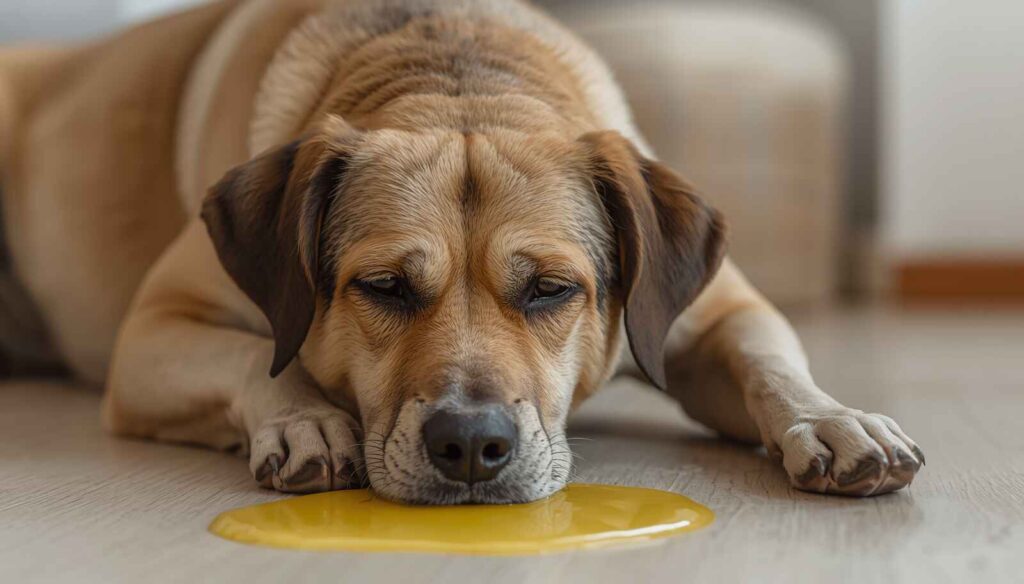
You walk into the kitchen in the morning and there it is — a puddle of yellow goo on the floor, and your dog looking up at you with that guilty-but-confused face. Sound familiar?
If your dog is throwing up yellow, you’re not alone. It’s one of the most common concerns dog owners in the UK, Canada, and Australia bring to their vets. And while it can look alarming, it doesn’t always mean something serious is wrong.
This guide will walk you through exactly what that yellow stuff is, why it happens, when to worry, and what to do about it — in plain, no-nonsense language.
What Is That Yellow Stuff, Actually?
That yellow liquid your dog brought up is bile — a digestive fluid made by the liver and stored in the gallbladder. Its job is to help break down food in the small intestine.
When a dog’s stomach is empty for too long, bile can irritate the stomach lining. The body’s response? Push it back out. That’s why you’ll often see it first thing in the morning or late at night — right before a meal.
On its own, bile is harmless. It’s the reason it’s coming up that matters.
Why Is My Dog Throwing Up Yellow? The Main Causes
1. Empty Stomach (The Most Common Reason)
This is behind the majority of yellow vomit cases, especially in dogs that eat just once a day or go long stretches between meals.
Without food to neutralise it, bile builds up and the stomach becomes irritated. Your dog might seem perfectly fine otherwise — bouncy, hungry, normal. That’s a good sign.
Fix: Try splitting meals into two smaller portions — one in the morning, one in the evening. Many dogs stop vomiting yellow entirely once their feeding schedule is adjusted.
2. Bilious Vomiting Syndrome (BVS)
This sounds scarier than it is. Bilious Vomiting Syndrome is basically a pattern where a dog regularly vomits yellow bile — usually in the early hours or before breakfast — and then acts completely normal afterwards.
It’s more of a chronic nuisance than a serious illness. Dogs with BVS often have a slightly sensitive digestive system and simply don’t do well with long gaps between meals.
What helps: A small snack before bed (think a few plain biscuits or a spoonful of their regular food) can make a huge difference. It gives the stomach something to work with overnight.
3. Dietary Indiscretion (a.k.a. Eating Something Dodgy)
Dogs eat things they shouldn’t — grass, sticks, compost bin contents, that mysterious thing they found at the park. When the stomach objects, yellow vomit (sometimes mixed with foam or bits of plant matter) is often the result.
If your dog vomited once, is acting normally, and hasn’t eaten anything genuinely toxic, this is usually a wait-and-watch situation.
4. Food Sensitivities or a Sudden Diet Change
Switching foods too quickly is a recipe for an upset stomach. Even a “better” food can cause vomiting if introduced too fast.
Dogs with food sensitivities (common with certain proteins like chicken or grain-heavy diets) may also vomit yellow regularly until the offending ingredient is removed.
Transition tip: Always switch foods gradually over 7–10 days. Mix 25% new food with 75% old food to start, then slowly shift the ratio.
5. Gastritis or General Stomach Inflammation
Gastritis simply means an inflamed stomach. It can be caused by eating something irritating, a bacterial infection, stress, or even certain medications (like anti-inflammatory drugs given on an empty stomach).
Dogs with gastritis may vomit multiple times, seem lethargic, and lose interest in food. It’s usually short-lived but worth a vet call if it lasts more than 24–48 hours.
6. Pancreatitis or Liver Issues
In more serious cases, yellow vomiting can be linked to the pancreas or liver not functioning properly. This is less common but important to rule out — especially if vomiting is frequent, your dog seems unwell between episodes, or you notice other symptoms like yellowing of the eyes or skin (jaundice).
These conditions need professional diagnosis and treatment. Don’t try to manage them at home.
7. Intestinal Blockage
If your dog ate something it shouldn’t — a sock, a toy, a corn cob — and is now vomiting yellow repeatedly while also seeming bloated, uncomfortable, or straining, this is an emergency.
Blockages are life-threatening and need immediate veterinary attention.
Yellow Vomit vs. Yellow Foam: Is There a Difference?
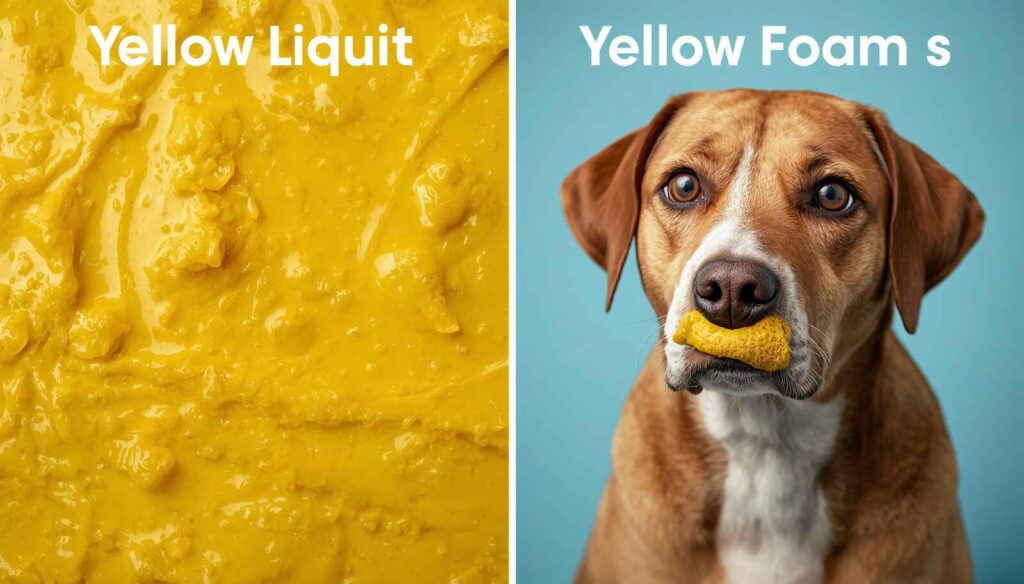
Yes, slightly. Both involve bile, but here’s the quick distinction:
| Appearance | What It Usually Means |
|---|---|
| Yellow liquid | Bile on its own — often empty stomach |
| Yellow foam | Bile mixed with saliva/air — also often hunger-related |
| Yellow with mucus | Possible GI irritation or infection |
| Yellow with blood | See a vet immediately |
| Bright/neon yellow | Possible ingestion of something toxic — call a vet |
Neon or fluorescent yellow is a red flag. That colour isn’t normal bile — it may indicate your dog ate a chemical, plant toxin, or rodenticide. Don’t wait on this one.
When to See a Vet — Don’t Ignore These Signs
Most single-episode yellow vomiting in an otherwise happy dog isn’t an emergency. But contact your vet if you notice:
- Vomiting more than 2–3 times in one day
- Blood in the vomit (red streaks or dark coffee-ground material)
- Your dog seems lethargic, weak, or in pain
- Swollen or hard belly
- Your dog hasn’t eaten in 24+ hours
- Diarrhoea alongside the vomiting
- Known or suspected ingestion of something toxic
- Puppies, elderly dogs, or dogs with existing health conditions vomiting at all
When in doubt, ring your vet. A quick phone call can save a lot of stress.
What to Do at Home (For Mild Cases)
If your dog vomited once, is acting fine, and shows none of the red flags above, here’s a sensible approach:
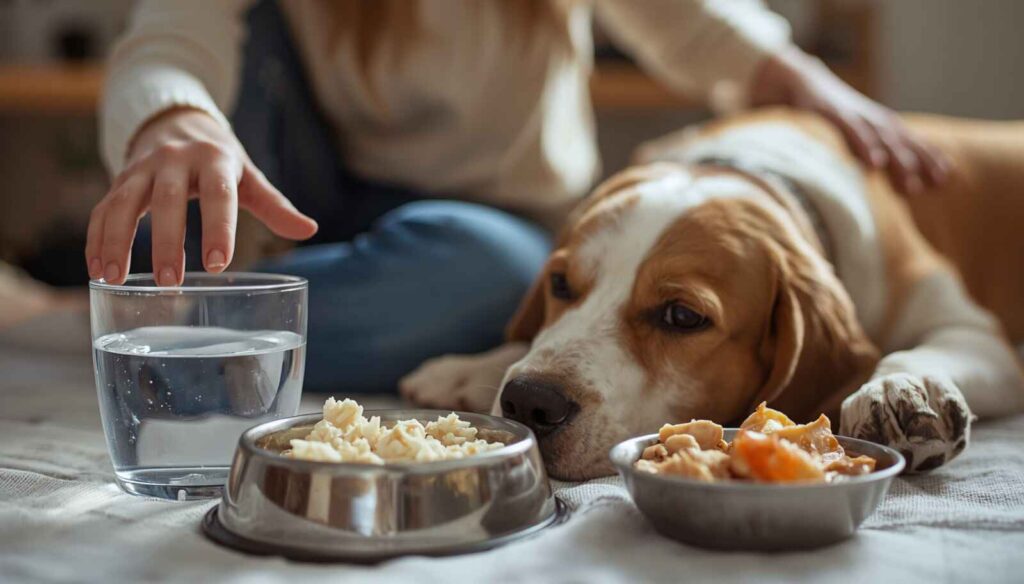
- Withhold food for 2–4 hours to let the stomach settle (not longer for puppies or small breeds — they can become hypoglycaemic quickly)
- Offer small sips of water — don’t let them gulp a large amount, which can trigger more vomiting
- Introduce a bland diet — plain boiled chicken with white rice is a classic for a reason. Offer small amounts for 24–48 hours
- Watch and wait — monitor for any worsening symptoms
- Avoid rich treats or fatty food while they’re recovering
Do not give human medicines like Pepto-Bismol, ibuprofen, or antacids without speaking to your vet first. Some are toxic to dogs.
Preventing Yellow Vomit in Dogs: Practical Steps
Prevention is mostly about routine and diet:
- Feed twice a day rather than once — it keeps stomach acid in check
- Give a small bedtime snack if your dog vomits regularly in the morning
- Transition new foods slowly over 7–10 days
- Keep bin lids shut and clear your garden of anything your dog might eat
- Don’t exercise your dog right after eating — wait at least 45 minutes
- Regular vet check-ups — catching underlying conditions early prevents chronic vomiting issues
FAQ: Dog Throwing Up Yellow
1.My dog throws up yellow every morning but seems totally fine. Should I be worried?
This is a classic sign of Bilious Vomiting Syndrome. It’s usually not dangerous, but it does warrant a vet mention. In the meantime, try a small snack before bed. If it resolves, great. If not, your vet may want to investigate further.
2.Is yellow vomit in dogs always serious?
Not always. A single episode in an otherwise healthy, lively dog is often just an empty stomach or a minor dietary hiccup. Multiple episodes, or vomiting alongside other symptoms, is when it becomes a concern.
3.Why does my dog eat grass and then vomit yellow?
Dogs often eat grass when their stomach is unsettled — it can help induce vomiting to clear whatever’s bothering them. Yellow bile may come up along with it. Occasional grass-eating isn’t a problem, but if it’s happening frequently, check in with your vet.
4.Should I feed my dog after they’ve vomited yellow?
Wait 2–4 hours before offering anything. Then start small — a tablespoon or two of bland food. If they keep that down, gradually increase portions over the next 12–24 hours.
5.Can puppies get Bilious Vomiting Syndrome?
Yes, puppies can vomit yellow bile too, though BVS is more often diagnosed in adult dogs. Puppies should always be seen by a vet if they vomit, as they’re more vulnerable to dehydration and other complications.
6.How do I clean yellow dog vomit from carpet?
Act fast. Blot (don’t rub) the excess with paper towels. Mix one tablespoon of washing-up liquid with two cups of cold water, apply to the stain, and blot repeatedly. Finish with a sprinkle of bicarbonate of soda to absorb odour, leave for 15 minutes, then vacuum.
7.My dog vomited yellow once and now won’t eat. What should I do?
A mild loss of appetite after vomiting is normal — their stomach is likely still unsettled. Offer bland food in small amounts. If they refuse food for more than 24 hours, or seem unwell, contact your vet.
Final Thoughts
A dog throwing up yellow is something most owners will see at least once. In many cases, it’s a straightforward fix — adjust the feeding schedule, let the stomach rest, and keep an eye on things.
But knowing the warning signs that separate “this can wait” from “we need the vet now” makes all the difference. Trust your instincts as a dog owner. You know your dog’s normal — if something feels off beyond the vomit itself, get it checked.
A healthy, happy dog is worth the occasional early-morning clean-up. You’ve got this.
#. Related Articles: