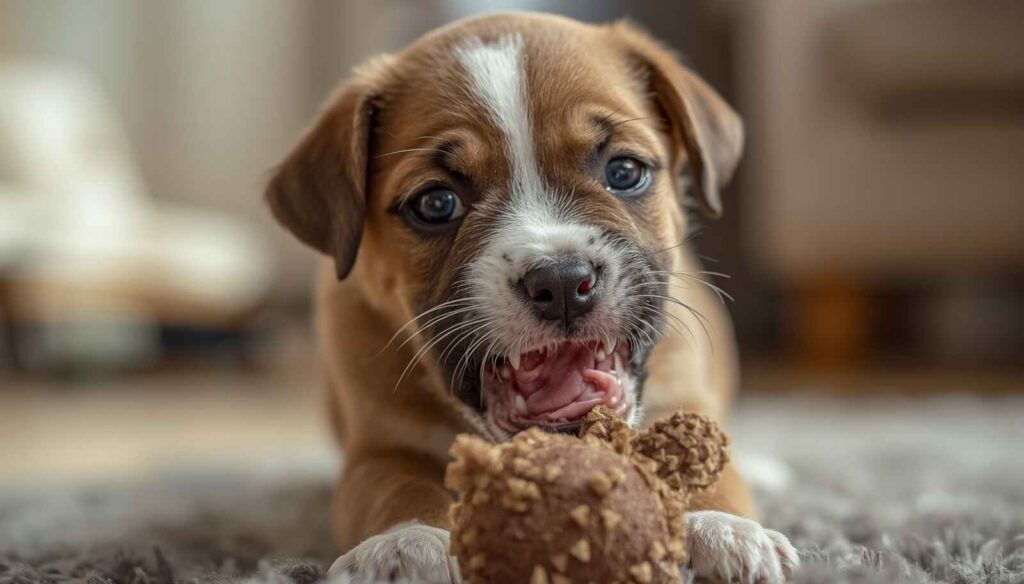
You just brought home the fluffiest, most adorable puppy in the world — and two weeks later, they’re chewing through your favourite shoes, nipping your ankles, and leaving little needle-sharp marks on everything they touch.
Sound familiar?
Here’s the good news: this is completely normal. Your pup is teething, and it will end. But knowing exactly how long puppy teething lasts, what to expect at each stage, and how to actually survive it — that’s what this guide is for.
Whether you’re in the UK, Canada, or Australia, puppy teething works the same way. Let’s walk through it together.
What Is Puppy Teething, Exactly?
Teething is the process where your puppy loses their 28 baby teeth (also called milk teeth or deciduous teeth) and grows in 42 permanent adult teeth. It’s uncomfortable for them — a bit like when human babies teethe — which is why puppies chew so much during this stage.
The chewing isn’t bad behaviour. It’s pain relief.
Understanding that simple fact changes everything about how you respond to it.
How Long Does Teething Last for a Puppy?
The full teething process typically lasts from around 3 weeks of age to 6–7 months.
But that’s a big window, so let’s break it down properly.
There are two distinct teething phases:
- Phase 1 (3–8 weeks): Baby teeth come in. You won’t see this — it happens before most puppies leave the litter.
- Phase 2 (3–7 months): Baby teeth fall out and adult teeth grow in. This is the phase you’ll live through as a new owner.
So when people ask “how long does puppy teething last?” — the active phase you’ll deal with at home is roughly 3 to 5 months (from when your pup is about 3 months old to 6–7 months old).
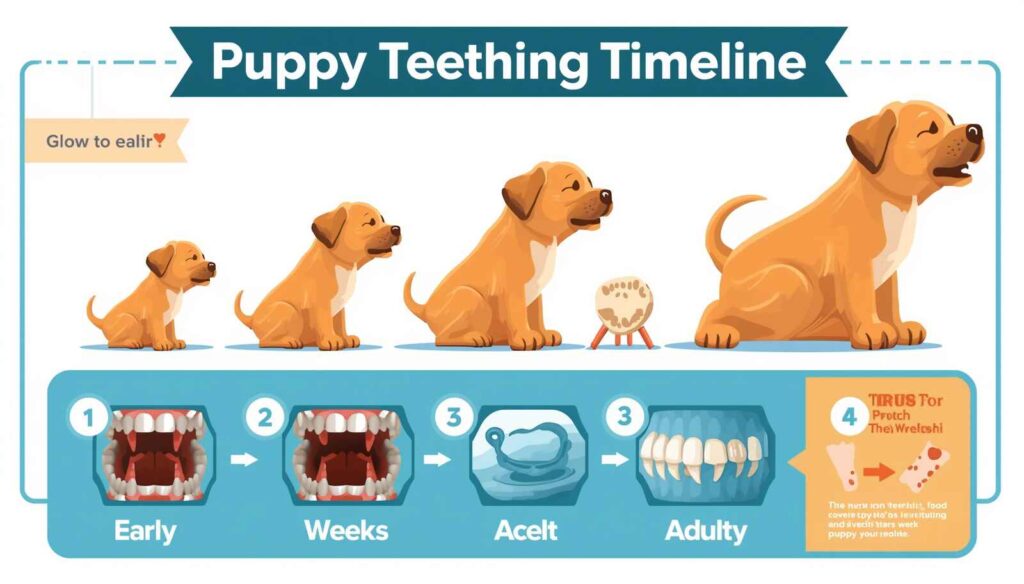
The Puppy Teething Timeline: Week by Week
Here’s a clear breakdown of what’s happening inside your puppy’s mouth at each stage:
2–4 Weeks Old: Baby Teeth Begin to Erupt
Puppies are born without teeth. Around 2–3 weeks, the first tiny teeth (incisors) push through the gums. By week 4–6, all 28 baby teeth are usually in place. This all happens while puppies are still with their mum and littermates.
3–4 Months Old: The Big Swap Begins
This is when things kick off for you. Your puppy’s baby teeth start falling out — starting with the incisors at the front. You might find tiny teeth on the floor, or notice your pup’s mouth looks a bit gappy. Totally normal.
4–5 Months Old: Canine Teeth Follow
Those sharp fang-like canine teeth (the ones doing the most damage to your hands) start falling out and being replaced. This stage is often the most uncomfortable for puppies.
5–6 Months Old: Premolars and Molars Come In
The back teeth grow in last. These are larger, so eruption can feel more intense. You may notice more drooling or face-rubbing during this phase.
6–7 Months Old: Full Adult Teeth
By 6–7 months, most puppies have all 42 adult teeth. The teething phase is officially over, and chewing behaviour usually calms down significantly.
8 Signs Your Puppy Is Teething (Not Just Being Naughty)
A lot of owners mistake teething behaviour for disobedience. Here’s what’s actually going on:
- Chewing everything in sight — furniture, shoes, cables, your hands. They’re trying to relieve gum pressure.
- More drooling than usual — especially in the 4–6 month window.
- Whimpering or being unsettled — their gums genuinely hurt.
- Red, swollen, or slightly bleeding gums — this is normal during tooth transitions.
- Small teeth appearing on the floor or in their bed — baby teeth often just fall out quietly.
- Going off food — hard kibble can hurt sore gums.
- Rubbing their face on the carpet or sofa — they’re trying to ease the discomfort.
- Blood spots on toys — a small amount of blood when a tooth falls out is completely normal.
If you notice excessive bleeding, swelling around the jaw, or your puppy refuses to eat for more than a day, that’s worth a call to your vet.
How to Help Your Teething Puppy (Practical, Tested Tips)
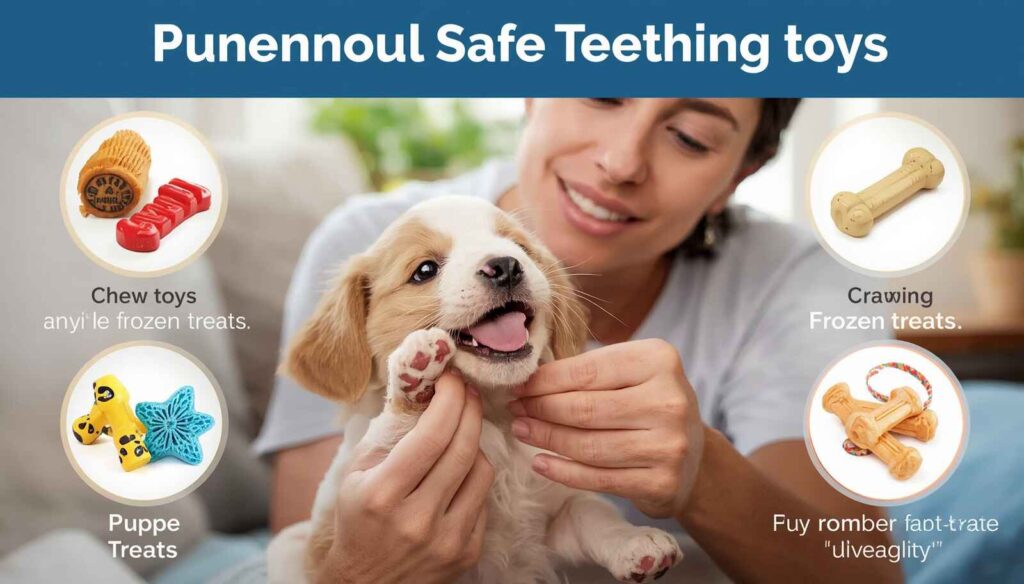
1. Cold Is Your Best Friend
Cold numbs sore gums. Try these:
- Freeze a wet flannel/washcloth and let your pup chew on it
- Frozen carrots (a firm favourite in UK and Australian dog owner communities)
- Ice cubes — simple and effective
- Frozen puppy Kong toys stuffed with peanut butter or wet food
Don’t give large blocks of ice that could crack a tooth. Crushed or small cubes are safer.
2. Choose the Right Chew Toys
Not all chew toys are created equal for teething puppies. Look for:
- Rubber teething toys designed for puppies (softer than adult dog toys)
- Rope toys — great for gentle chewing and easy on gums
- Nylon chews — durable but soft enough not to damage baby teeth
Avoid anything too hard — if you press your thumbnail into it and it doesn’t give at all, it’s too hard for a teething pup. That includes real bones, antlers, and hard nylon toys marketed for adult dogs.
3. Puppy-Proof Your Home Now
Don’t wait until your puppy destroys something expensive. Walk through your home at puppy level and move:
- Electrical cables (cable tidies are cheap and essential)
- Shoes and clothing left on the floor
- Low-level furniture with wooden legs
- Kids’ toys
Redirect every time — give them their toy instead of scolding. They don’t understand why one chewy thing is fine and another isn’t. You have to show them.
4. Adjust Their Food If Needed
If your puppy is struggling with hard kibble, try:
- Soaking dry kibble in warm water for 10–15 minutes to soften it
- Mixing in some wet food for easier eating
- Smaller, more frequent meals if they’re going off food
This is temporary. Once teething is done, they can go back to their normal diet.
5. Start Teeth Brushing Early
Teething is the ideal time to get your puppy comfortable with having their mouth touched. Use a finger brush and puppy-safe toothpaste (never human toothpaste — it’s toxic to dogs).
Even if you just let them lick the paste off the brush at first, you’re building a habit that protects their adult teeth for life. Most vets across the UK, Canada, and Australia recommend starting tooth brushing as early as 8 weeks.
What About Retained Baby Teeth?
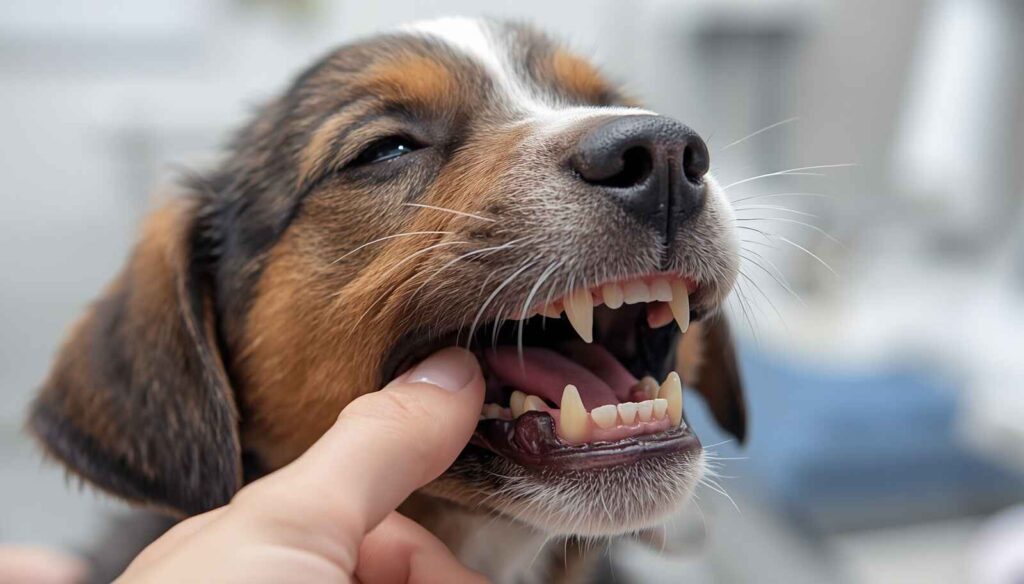
Sometimes a baby tooth doesn’t fall out even after the adult tooth has come in — this is called a retained (or persistent) puppy tooth. It’s more common in small breeds like Chihuahuas, Maltese, and Yorkshire Terriers.
Retained teeth cause the adult tooth to grow in the wrong position, which leads to bite problems, crowding, and painful tartar build-up.
If a baby tooth is still there when the adult tooth is fully through — see your vet. Most retained teeth need to be extracted under anaesthetic. Catching it early is much easier (and cheaper) than dealing with dental problems later.
When Should You See a Vet?
Most teething is straightforward, but call your vet if you notice:
- Heavy bleeding from the gums (not just a spot or two)
- Swelling around the jaw or face
- Your puppy hasn’t got all adult teeth by 8 months
- A tooth that seems to be growing in the wrong position
- Your puppy is in significant distress or completely off food for more than 24 hours
Your vet will check teeth at routine vaccinations anyway — bring it up at those visits if you’re unsure about anything.
FAQs About Puppy Teething
1.Do puppies swallow their baby teeth?
Yes, quite often! Puppies frequently swallow their baby teeth while eating or playing. This is harmless — the teeth are tiny and digest without any issues. You may never find a single one.
2.Are ice cubes safe for puppies?
Small ice cubes or crushed ice are fine and great for soothing sore gums. Just don’t let them chew on large chunks that could be a choking hazard or crack their teeth.
3.Can I give my puppy a carrot for teething?
Absolutely. A chilled or frozen carrot is one of the best natural teething aids out there — it’s low-calorie, nutritious, and most puppies love it. Just supervise them and remove any large chunks that break off.
4.Why are puppy teeth so sharp if they fall out anyway?
Great question. Those needle-sharp baby teeth help puppies learn bite pressure through play — both with littermates and with people. Getting bitten hard teaches the “ouch” response. Think of it as nature’s way of teaching bite inhibition before adult teeth come in.
5.My puppy’s gums are bleeding. Is that normal?
A tiny amount of blood when a tooth falls out is normal. If you’re seeing consistent bleeding from the gums without a tooth falling out, or the bleeding doesn’t stop within a few minutes, get your vet to check it out.
6.Should I change my puppy’s food during teething?
Not necessarily, but you might need to adapt temporarily. Softening kibble with warm water or adding wet food can make eating more comfortable during the worst weeks of teething.
7.When do puppies stop biting?
Most puppies naturally bite less as teething ends around 6–7 months. However, biting behaviour also requires consistent training — teething ending doesn’t automatically stop nipping. Redirect to toys, reward calm behaviour, and be consistent.
A Quick Word on Training During Teething
Teething and the bitey-chewing phase often happen at the same time as your puppy is learning the rules of the house. Don’t put training on hold because they’re teething.
Short, positive sessions work best. Keep it to 5 minutes at a time, use high-value treats (soft ones if their gums are sore), and always end on a win. The habits you build now — including how they interact with your hands and furniture — stick for life.
Conclusion
So, how long does teething last for a puppy? You’re looking at the active phase running roughly from 3 months to 7 months, with the most intense chewing and discomfort usually peaking between 4 and 6 months.
It can feel relentless when you’re in it — chewed skirting boards, bitten fingers, shoes that have seen better days. But it genuinely does pass.
Your job during this time is simple: provide appropriate outlets (cold toys, safe chews, frozen treats), protect your home, keep gently handling their mouth, and start good dental habits early.
Before you know it, you’ll have a dog with a full set of beautiful adult teeth and zero memory of the chaos they caused getting them.
Always consult your vet if you’re concerned about your puppy’s teething progress or dental health. This article is for informational purposes and does not replace professional veterinary advice.
#. Related Articles: