You’re on your morning walk, bag in hand, and you notice it — a strange slimy coating on your dog’s poop. Cue the panic spiral. Is it serious? Did they eat something bad? Is it worms?
Take a breath. A small amount of mucus in dog poop is actually more common than most owners realise — and it doesn’t always mean something is wrong. But it can sometimes be a signal your dog’s gut is struggling, and knowing the difference could save you a stressful (and expensive) vet visit — or help you catch a problem before it gets worse.
This guide covers everything you need to know: what mucus in dog poop actually is, the most common causes, when it’s totally fine vs. when to call your vet, and what you can do at home right now.
What Is Mucus in Dog Poop, and Is It Normal?
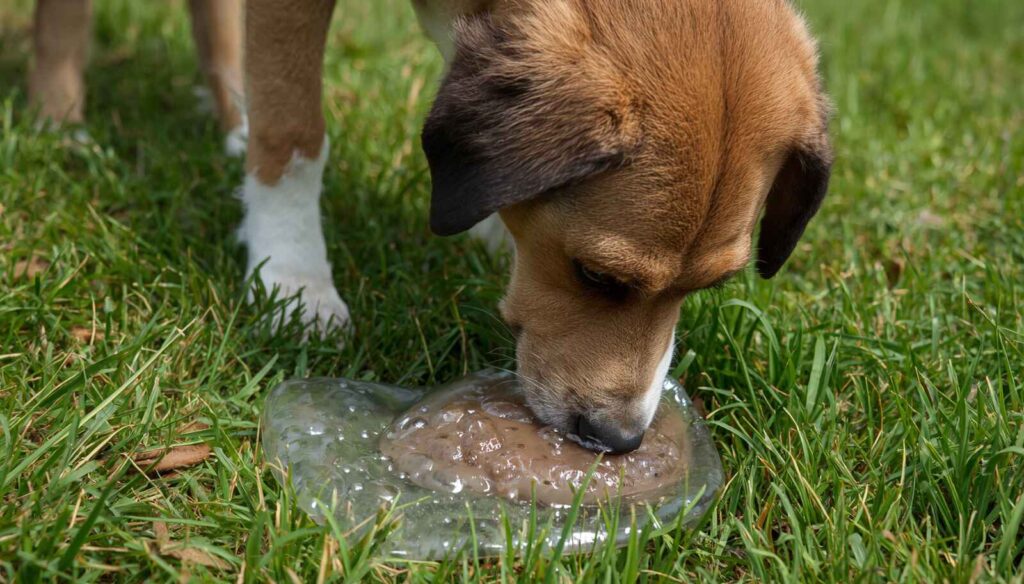
Mucus is a slippery, gel-like substance naturally produced by the lining of your dog’s intestines. Its job is to help food and waste slide through the digestive tract smoothly, and to protect the gut wall from bacteria and irritants.
Here’s the thing most people don’t know: mucus is always present in your dog’s gut. You just don’t normally see it in their poop. When the intestines become irritated or inflamed, they produce extra mucus, and that’s when it becomes visible — sometimes as a clear jelly coating, sometimes as a yellowish or white blob, and sometimes streaked with blood.
Quick rule of thumb: A small, occasional smear of clear mucus with an otherwise normal poo? Probably fine. Loads of mucus, frequent episodes, blood, or a sick-looking dog? Time to act.
What does it actually look like?
- Clear or white jelly coating over the outside of the stool — the most common presentation
- Stringy or slimy streaks mixed through soft poo
- Yellow or greenish mucus — often alongside diarrhoea
- Mucus with red streaks or blood — needs prompt vet attention
Common Causes of Mucus in Dog Poop
There’s no single answer here. Mucus in your dog’s stool can come from a dozen different things, ranging from “they just ate grass” to “this needs treatment now.” Let’s break it down.
Diet change -> Switching food too fast upsets gut bacteria balance
Parasites -> Worms, Giardia, and other gut parasites
Infection -> Bacterial or viral gastroenteritis
Food intolerance -> Sensitivity to an ingredient in their regular diet
Stress -> Anxiety, travel, new pets, or loud events
Colitis / IBD -> Chronic gut inflammation
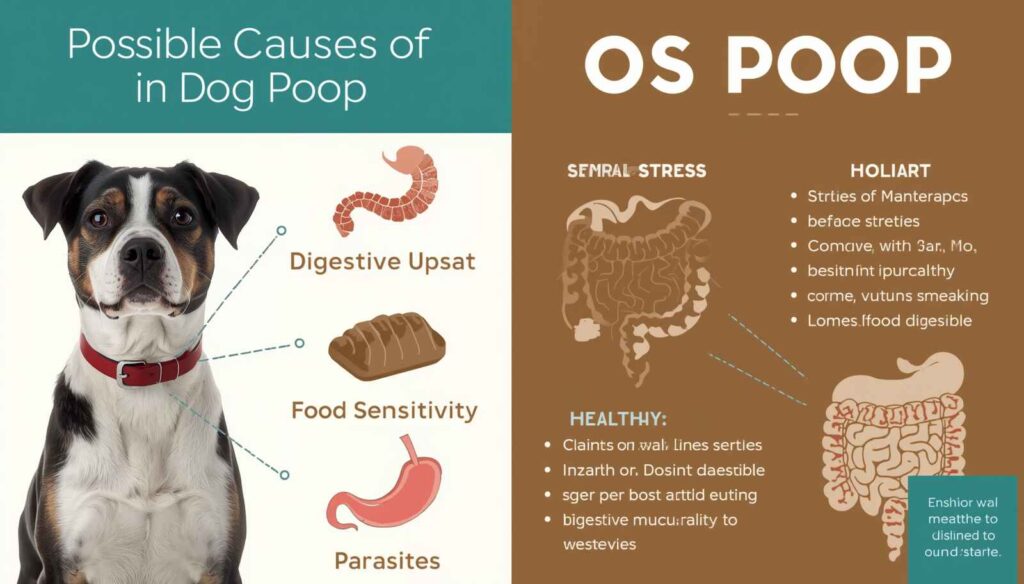
1. Sudden diet changes
This is one of the most common culprits. If you switched your dog’s food recently — even to a “better” brand — their digestive system needs time to adjust. A quick change throws off the balance of gut bacteria, leading to loose stools with mucus.
The fix: Always transition over 7–10 days. Mix the old and new food gradually — start with 25% new, then 50%, then 75%, then full switch.
2. Parasitic infections
Worms (roundworms, hookworms, whipworms) and single-celled parasites like Giardia or Tritrichomonas are frequent causes — especially in puppies, dogs who scavenge outdoors, or those who drink from puddles or streams.
Giardia in particular is notorious for causing smelly, mucus-heavy diarrhoea that comes and goes. Many dogs show no other signs, so it’s easy to miss.
Important for UK owners: Lungworm (Angiostrongylus vasorum) is on the rise in many parts of England and Wales. It can affect the gut, and regular lungworm prevention (separate from standard flea/worm products) is strongly recommended.
3. Stress and anxiety
Dogs have incredibly sensitive guts, and stress hits them physically — not just emotionally. A stay at the kennels, a fireworks night (common concern in the UK and Australia), a house move, or even a new baby in the family can trigger stress colitis.
Stress colitis typically causes mucus-heavy stools that may have fresh blood, along with urgency (your dog suddenly needs to go right now). The good news: it usually resolves within a few days once the stressor is gone.
4. Dietary indiscretion
Translation: your dog ate something they shouldn’t have. Compost bins, dead animals on the beach, food scraps at the park — dogs are opportunistic eaters and their guts often pay the price. This is sometimes called “garbage gut” and typically causes a short, sharp episode of mucusy diarrhoea.
5. Food intolerance or allergies
Unlike a reaction to something they ate once, food intolerances are ongoing. Common culprits include beef, dairy, chicken, wheat, and soy. Signs include persistent soft stools, mucus, itchy skin, and ear infections.
Food intolerances can develop even in dogs who’ve eaten the same food for years — so don’t rule it out just because you haven’t changed anything recently.
6. Colitis and inflammatory bowel disease (IBD)
Colitis means inflammation of the large intestine (colon). It can be acute (a one-off flare) or chronic (ongoing). IBD is a related condition involving persistent inflammation that can affect the whole digestive tract.
Both conditions cause mucus in the stool — often with blood, urgency, straining, and frequent small amounts. IBD usually requires long-term dietary management and sometimes medication.
7. Bacterial or viral infections (gastroenteritis)
Parvovirus, Campylobacter, Salmonella — gut infections vary in seriousness but most involve vomiting, diarrhoea, and mucus. Parvovirus is particularly dangerous in unvaccinated puppies. If your dog is very young, unvaccinated, and has bloody mucus in their stool alongside vomiting, treat it as an emergency.
8. Rectal or anal gland issues
This one’s often missed. Impacted or infected anal glands can produce discharge that looks like mucus coating the end of the stool. You might also notice your dog scooting on the floor or licking at their rear end frequently.
Breed-Specific Considerations
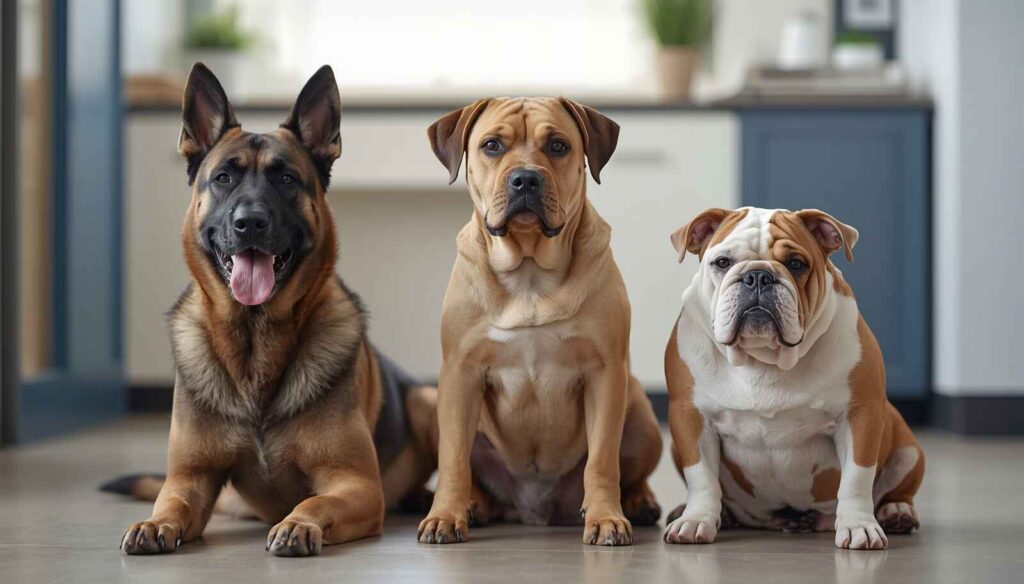
Some dogs are naturally more prone to gut issues than others — and it’s worth knowing if yours is one of them.
- German Shepherds are prone to exocrine pancreatic insufficiency (EPI) and IBD, which frequently cause mucus in stools.
- Bulldogs and French Bulldogs have sensitive digestive systems and often react to dietary changes with mucusy stools.
- Boxers have a breed-specific form of IBD called histiocytic ulcerative colitis.
- Yorkshire Terriers are prone to protein-losing enteropathy, which can include mucus and watery stools.
- Border Collies and working breeds are particularly sensitive to stress colitis.
When Should You Actually Worry?
Here’s an honest, no-nonsense guide to when mucus in your dog’s poop goes from “watch and wait” to “call the vet today.”
Seek urgent veterinary care if you notice: bloody mucus alongside vomiting and lethargy (especially in unvaccinated puppies), a dog who seems in pain, is straining without producing stool, appears very dehydrated (sunken eyes, dry gums, skin that doesn’t spring back), or has had mucusy diarrhoea for more than 48 hours.
Monitor at home if:
- There’s a small amount of clear mucus on an otherwise solid, normal-shaped poo
- It happened once or twice and your dog seems completely normal otherwise
- You recently changed their food or they went through an obvious stressful event
- They’re eating, drinking, and behaving normally
Book a routine vet appointment if:
- You’ve been seeing mucus on and off for more than a week
- There’s any fresh blood in the stool
- Your dog is losing weight, seems lethargic, or is eating less
- The mucus keeps returning despite diet tweaks
- Your dog has never been checked for worms or Giardia
What You Can Do at Home
If your dog seems otherwise fine and you suspect a mild gut upset, there are a few sensible steps to try before booking a vet visit.
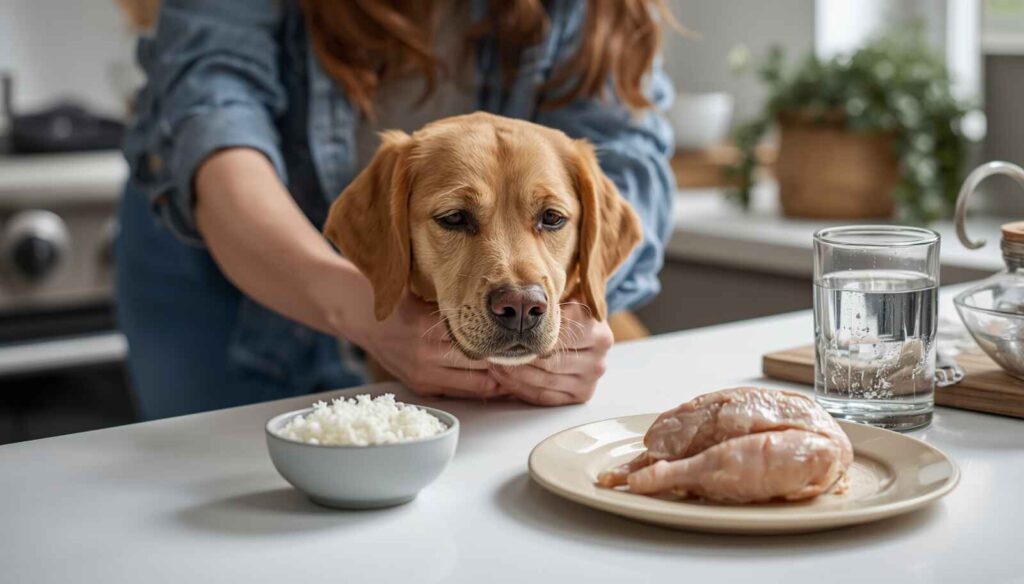
Bland diet for 48–72 hours
Boiled chicken (plain, no seasoning) and plain white rice in a 1:2 ratio is the classic approach — and it works. The idea is to give the gut a break from rich or complex foods. Feed small amounts, frequently. After 2–3 days, slowly reintroduce their normal food.
Make sure they’re drinking
Diarrhoea and mucus in stools can quickly lead to dehydration, especially in smaller dogs or puppies. Encourage water intake. If they won’t drink, a small amount of low-sodium chicken stock (no onion or garlic) added to water can help.
Try a probiotic
Gut-specific dog probiotics (not human ones) can help restore healthy gut bacteria, especially after dietary upsets, antibiotic use, or stress episodes. Look for products containing Lactobacillus or Bifidobacterium strains formulated for dogs.
Remove potential triggers
Stop all treats, chews, table scraps, and new foods for a few days. Sometimes the culprit is an ingredient in a treat you’ve been giving regularly rather than their main food.
Don’t do this: Don’t give your dog over-the-counter anti-diarrhoea medications meant for humans (like Imodium / loperamide) without vet guidance. Some breeds — particularly Collies and related breeds — can have a genetic mutation (MDR1/ABCB1) that makes loperamide toxic to them.
What to Expect at the Vet
If you do take your dog in, here’s what the vet will likely do — so you’re not caught off guard.
- Physical exam — they’ll feel the belly, check hydration, assess overall condition
- Fecal test — looking for parasites like Giardia, worms, or Coccidia under a microscope
- Dietary history — they’ll ask what your dog has been eating, any recent changes, scavenging habits
- Blood tests — if IBD, EPI, or systemic illness is suspected
- Ultrasound or colonoscopy — only if chronic inflammatory disease is a possibility
Pro tip: Bring a fresh stool sample in a clean container — ideally collected within a few hours of the appointment. This saves time and can get you answers faster.
Preventing Future Episodes
Once you’ve sorted the immediate issue, these habits will help keep your dog’s gut in better shape long-term.
- Stick to a consistent diet — dogs thrive on routine
- Keep up with regular parasite prevention, including products that cover lungworm (particularly relevant in the UK)
- Transition any food changes slowly over a week or more
- Avoid letting your dog scavenge on walks
- Consider a daily probiotic if your dog has a history of gut sensitivity
- Manage stress proactively — calming supplements, DAP diffusers, or anxiety wraps before known triggers like fireworks
Frequently Asked Questions
1.Is mucus in dog poop ever completely normal?
Yes — a very small amount of clear mucus on an otherwise normal, well-formed stool is within the range of normal. The gut produces mucus naturally; it just doesn’t usually show up in large visible amounts. If it’s the first time, your dog seems well, and it doesn’t recur, you can usually watch and wait for 24–48 hours.
2.Can worms cause mucus in dog poop?
Absolutely. Intestinal parasites like whipworms, roundworms, and single-celled parasites like Giardia are among the most common causes of mucus-heavy stools in dogs. Regular faecal testing and parasite prevention is the best defence — especially if your dog spends time outdoors or around other dogs.
3.My dog has mucus in their poop but seems perfectly fine. Should I still be worried?
Not immediately — but don’t completely ignore it either. If it only happened once and your dog is eating, drinking, and behaving normally, give it a day or two on a bland diet and monitor closely. If it keeps coming back, or if any other symptoms appear, get a vet check. Some conditions (like Giardia) cause no obvious signs beyond mucus in the stool.
4.Is mucus in dog poop contagious to humans or other pets?
Mucus itself isn’t contagious, but the underlying cause might be. Giardia, Campylobacter, and Salmonella are zoonotic — meaning they can, in rare cases, spread to humans, especially children or immunocompromised individuals. Always wash your hands thoroughly after handling dog poop, and keep children away from infected stools. Keep other pets away from a dog showing symptoms until a diagnosis is confirmed.
5.What colour of mucus is most concerning?
Clear or white mucus is the least alarming. Yellow or green mucus alongside diarrhoea can indicate an infection and warrants a vet visit. Mucus that is streaked with bright red blood means there’s bleeding in the lower bowel and should be assessed by a vet promptly. Black, tarry stools with mucus can indicate bleeding higher up in the digestive tract and are a more urgent concern.
6.Can stress really cause mucus in dog poop?
Yes — stress colitis is a recognised and very common condition in dogs. The gut and brain are closely linked (known as the gut-brain axis), and emotional stress causes real, physical changes to the digestive tract. Kennels, fireworks, house moves, new family members, or even a change in routine can trigger an episode. It usually resolves within a few days once the trigger passes.
7.Should I bring a poop sample to the vet?
Yes — it’s genuinely one of the most helpful things you can do. A fresh sample (collected within a few hours of the appointment, stored in a clean, sealed container) allows the vet to run a faecal test on the spot to check for parasites. This can save a second appointment and help you get a faster, more accurate diagnosis.
The Bottom Line
Mucus in dog poop can be alarming when you first spot it — but in many cases, it’s your dog’s gut simply telling you something minor is off. A diet blip, a stressful week, or eating something dodgy on the walk are all common culprits that usually sort themselves out quickly.
What matters is knowing your dog’s normal. If you know what their healthy poop looks like day to day, you’ll be much better placed to spot when something’s genuinely wrong. Keep an eye on the frequency, the amount, the colour, and whether any other symptoms appear alongside it.
When in doubt, a quick call to your vet — or a same-day telemedicine consult if that’s available to you — is always worth it. A fresh stool sample and a brief description of your dog’s recent diet and behaviour is all they’ll need to point you in the right direction.
#. Related Articles: