
Can dogs burp? Your dog finishes dinner, settles beside you on the sofa, and then—brrp. A small, unmistakable burp. It may be funny the first time. By the tenth time that week, you may start wondering whether it is actually normal.
The reassuring answer is yes, dogs can burp, and an occasional burp is usually harmless. However, frequent burping is not always “just gas.” It can reflect a feeding habit that needs adjusting, digestive discomfort that deserves attention, or, in rare cases, an urgent medical problem.
The most useful way to judge your dog’s burping is to look at what it sounds like, when it happens, how often the pattern has changed, and whether any other symptoms appear with it.
The Bottom Line
Dogs release swallowed air through the mouth, much as people do. An occasional burp after eating, drinking, or panting is usually harmless.
Contact your vet if burping becomes frequent or is accompanied by vomiting, regurgitation, appetite loss, weight loss, diarrhoea, pain, or unusual behaviour.
A swollen or painful abdomen combined with repeated attempts to vomit that produce little or nothing may indicate gastric dilatation-volvulus, commonly called GDV or bloat. This is an emergency and should never be monitored at home.
First, Make Sure It Is Actually a Burp
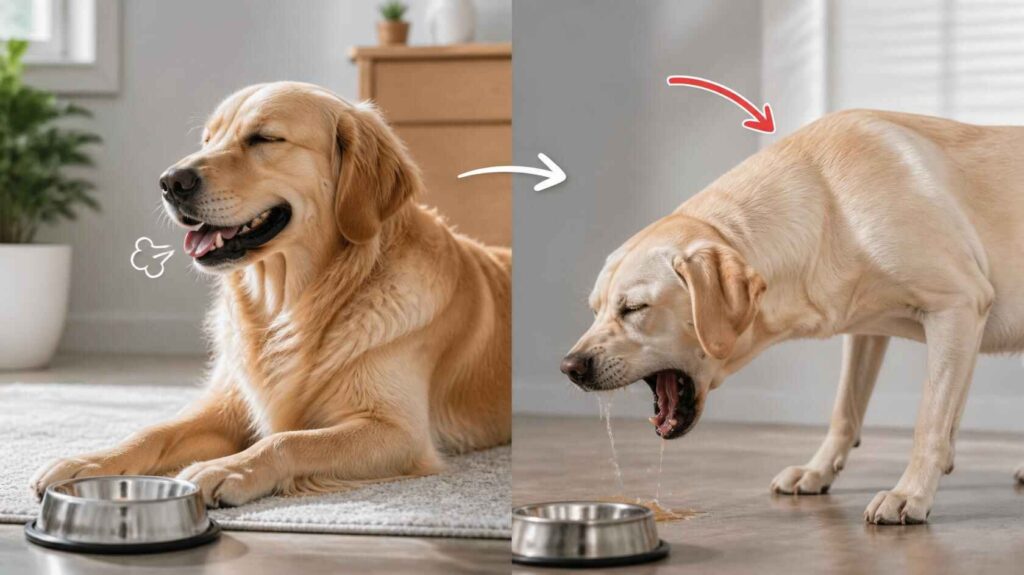
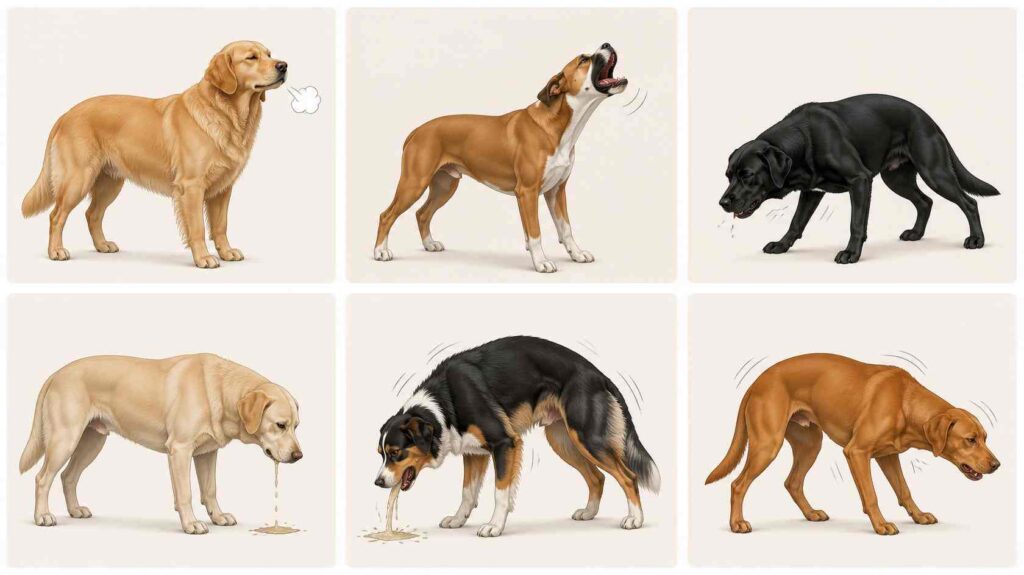
Before trying to work out why your dog is burping, make sure that burping is what you are actually seeing. Owners sometimes use the word “burp” to describe gagging, coughing, regurgitation, vomiting, or dry heaving, but these signs can have very different causes and levels of urgency.
A Typical Dog Burp
- A brief sound from the mouth
- Little or no visible body effort
- Often occurs after eating, drinking, or heavy panting
- No repeated abdominal contractions
- Nothing, or very little, comes up
- The dog behaves normally immediately afterward
Signs It May Be Something Else
- Food or water returns to the mouth
- The neck repeatedly stretches forward
- The abdomen visibly contracts
- The sound is more like coughing or honking
- The dog makes repeated forceful inward snorts
- There are repeated attempts to vomit without producing anything
- The dog appears distressed, restless, or unable to settle
Burping Compared With Similar Symptoms
| Symptom | Typical body effort | What may come up | Common pattern | Usual level of concern |
|---|---|---|---|---|
| Burping | Minimal | Usually nothing | Often after eating or drinking | Usually low if occasional |
| Gagging | Throat and neck effort | Saliva or foam | May follow throat irritation or swallowing difficulty | Depends on frequency and cause |
| Coughing | Chest effort | Usually nothing | Often linked to airway or lung irritation | More concerning with breathing changes |
| Regurgitation | Usually passive | Undigested food or water | Often shortly after eating | Needs veterinary assessment if repeated |
| Vomiting | Abdominal contractions | Digested food, bile, or fluid | Timing varies | Depends on frequency, severity, and other signs |
| Unproductive retching | Repeated forceful effort | Little or nothing | Often sudden | Potential emergency |
If your dog brings food or water back up rather than simply releasing air, learn the difference between vomiting and regurgitation in dogs. Regurgitation is usually more passive and may point to a problem involving the oesophagus, while vomiting typically involves visible abdominal effort.
Look at the Pattern, Not a Number
There is no medically useful number of burps per day that separates normal from abnormal. One dog may rarely burp, while another may burp after rushed meals without having an underlying illness.
What matters more is whether the pattern is new, increasing, persistent, or accompanied by other symptoms.
Ask yourself:
- When did the burping begin?
- Does it happen after every meal or only occasionally?
- Does it follow eating, drinking, exercise, panting, excitement, or sleep?
- Has your dog’s food, treats, medication, or feeding routine changed?
- Is your dog licking their lips, swallowing repeatedly, gagging, or bringing food back up?
- Are appetite, stools, energy, or body weight changing?
- Does the abdomen look enlarged or painful?
Simple Burping Observation Checklist
Keep a brief record for several days if your dog is otherwise comfortable:
- Time of each episode
- Relation to meals or water
- Meal size
- How quickly the dog ate
- Recent exercise or heavy panting
- Food, treats, chews, and table scraps
- Recent diet changes
- Medicines and supplements
- Vomiting or regurgitation
- Stool changes
- Appetite
- Energy level
- Lip licking or repeated swallowing
- Abdominal swelling or discomfort
A short video can be especially helpful. Try to capture your dog’s face, neck, abdomen, the sound being made, and whether anything comes up. This may help your vet distinguish a harmless burp from coughing, gagging, regurgitation, or retching.
Do not delay emergency care to record a video if your dog has a swollen abdomen, repeated unproductive retching, severe pain, pale gums, weakness, or collapse.
Where Is the Extra Air Coming From?
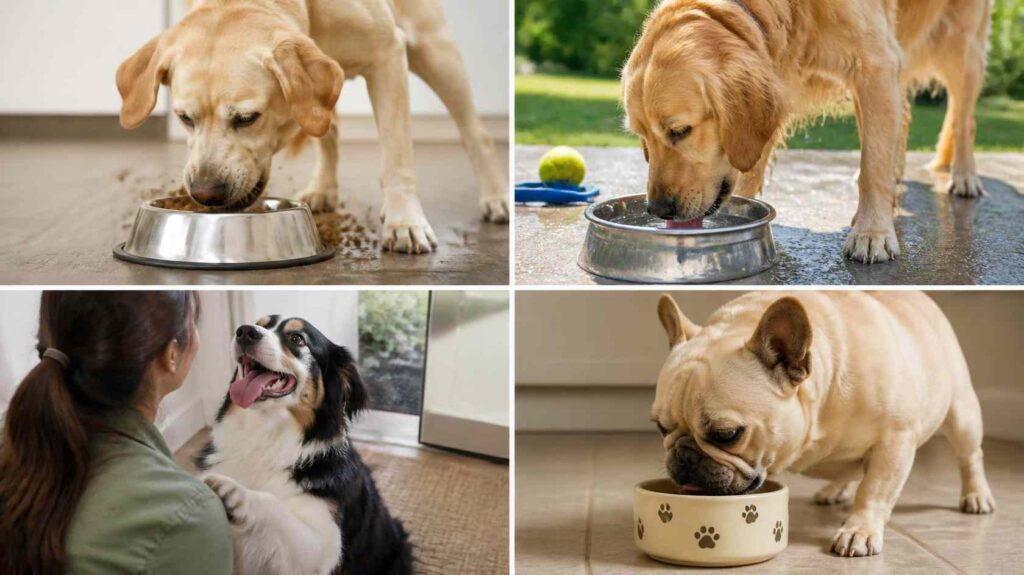
Gulping Food
Large mouthfuls, minimal chewing, strong food motivation, and long gaps between meals can all encourage rushed eating. The faster a dog eats, the more air they are likely to swallow with the food.
Drinking Too Quickly
Dogs that empty the water bowl after exercise, especially while still panting heavily, may swallow a considerable amount of air along with the water.
Panting, Excitement, and Stress
Heavy panting can increase air swallowing. Excited or anxious dogs may pant more around mealtimes, car journeys, visitors, or other pets, which can make post-meal burping more likely.
Breathing or Chewing Difficulty
Flat-faced breeds, dental pain, oral disease, and difficulty chewing can all interfere with normal eating and swallowing. In these cases, the dog may take in extra air because the underlying problem makes each mouthful less controlled.
A Labrador that finishes dinner in under a minute, burps once, and remains completely comfortable is more likely releasing swallowed air than showing signs of illness. In a multi-dog home, two dogs fed side by side may rush to finish first; feeding them in separate spaces often reduces the competition and the gulping.
If your dog regularly bolts their food, see our guide on how to slow down a dog that eats too fast.
Does Timing Point to a Trigger?
The timing of the burping can provide useful clues, although it cannot confirm a diagnosis on its own.
- Immediately after eating: More consistent with fast eating, a large meal, poor chewing, or food competition.
- Immediately after drinking: Often linked to gulping water, particularly after exercise or heavy panting.
- Several hours after a meal: May warrant consideration of reflux, stomach irritation, food intolerance, or another digestive problem.
- At night or after lying down: Can fit a reflux-type pattern, especially with lip licking, repeated swallowing, restlessness, or regurgitation.
- Unrelated to meals: Raises the possibility of an airway or oesophageal problem, medication effect, or a cough or gag being mistaken for a burp.
When Burping Points Beyond Swallowed Air
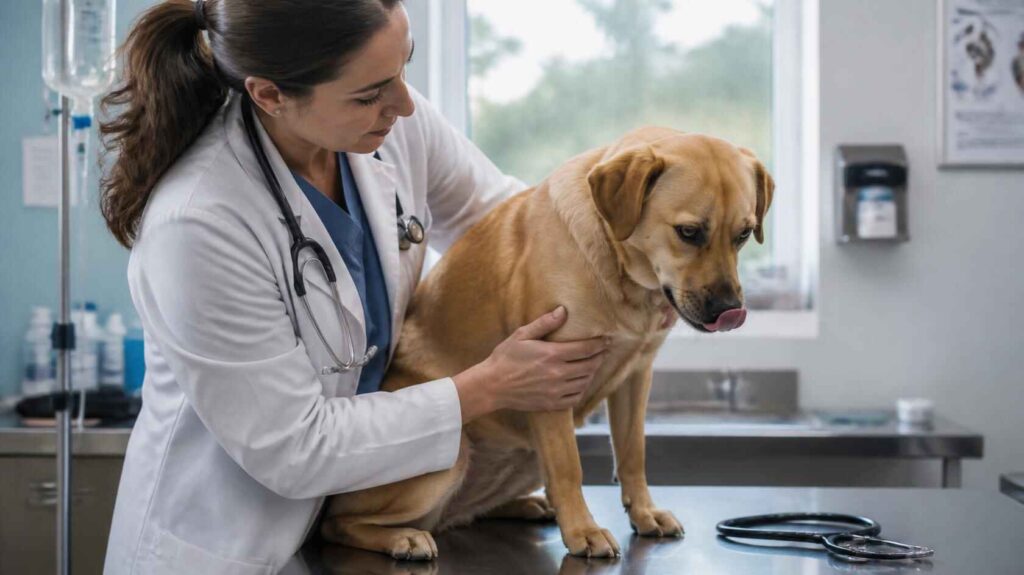
Burping by itself rarely identifies the cause. The signs that appear with it are usually more important.
Reflux-Type Irritation
Possible accompanying signs include:
- Lip licking
- Repeated swallowing
- Reduced appetite
- Discomfort after eating
- Nighttime restlessness
- Regurgitation
These signs can occur with reflux or oesophageal irritation, but they still require veterinary assessment rather than treatment based on guesswork.
Gastritis or Gastroenteritis
Burping accompanied by vomiting, diarrhoea, appetite loss, lethargy, abdominal discomfort, or dehydration is more concerning than burping alone.
If your dog is burping along with vomiting, diarrhoea, appetite loss, or lethargy, it’s worth reviewing the PDSA advice on digestive problems in dogs. It explains common digestive conditions, warning signs, and when veterinary treatment is recommended.
Food Intolerance
Food intolerance is best suspected from a recurring pattern of digestive signs, not from a single burp or the smell of a burp. Avoid repeatedly changing foods, removing ingredients at random, or switching to grain-free diets without a clear reason. When a food reaction is genuinely suspected, a structured veterinary-guided elimination trial is more reliable.
Oesophageal Conditions
Conditions such as oesophagitis, hiatal hernia, and megaesophagus may cause food or water to return passively, sometimes shortly after eating. Repeated regurgitation also carries a risk of aspiration if food or liquid enters the lungs.
Veterinarians may also consider pancreatitis, intestinal parasites, gastrointestinal obstruction, chronic intestinal disease, medication effects, or dental pain. Persistent burping therefore needs a diagnosis, not a series of home remedies.
For related symptoms, see our guides to dog acid reflux symptoms and upset stomach in dogs.
Flat-Faced and Deep-Chested Dogs: Different Concerns Entirely
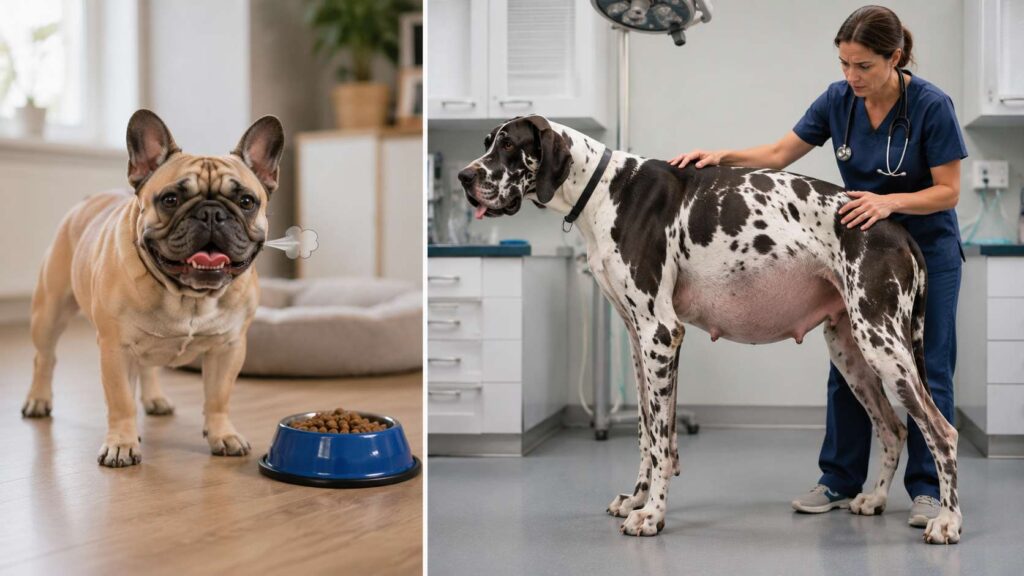
Flat-Faced Dogs
French Bulldogs, Pugs, English Bulldogs, Boston Terriers, and other brachycephalic breeds may swallow more air because breathing requires greater effort.
Frequent burping combined with any of the following should not be dismissed as “normal for the breed”:
- Noisy breathing
- Loud snoring
- Gagging
- Heat intolerance
- Poor exercise tolerance
- Sleep disturbance
- Frequent regurgitation
In these dogs, treating an underlying airway problem may be more important than changing the food. See our guide to brachycephalic airway syndrome for more detail.
Deep-Chested Dogs
Great Danes, German Shepherds, Standard Poodles, Dobermans, Weimaraners, Irish Setters, and other deep-chested breeds have a higher risk of gastric dilatation-volvulus, commonly called GDV or bloat.
Burping alone does not mean GDV is developing. The concern rises sharply when burping or apparent gas occurs with abdominal swelling, repeated unsuccessful retching, drooling, pain, restlessness, weakness, or collapse.
A Simple Four-Level Way to Decide What to Do
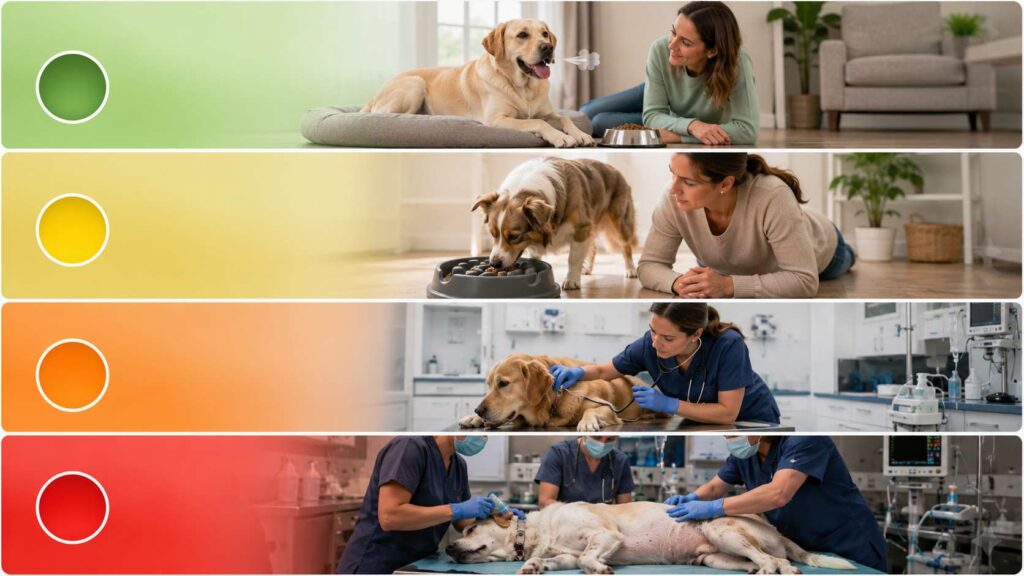
Level 1 — Observe
Appropriate when:
- One or two burps follow fast eating or drinking
- Your dog remains comfortable
- Appetite, stools, energy, and behaviour are normal
- The abdomen looks normal
No treatment is usually needed beyond watching for a change in pattern.
Level 2 — Adjust and Monitor
Appropriate when:
- Burping repeatedly follows meals
- Your dog is a known fast eater
- Burping follows rapid drinking
- There is no pain, vomiting, regurgitation, appetite loss, or lethargy
Try practical feeding changes, such as slowing the meal, reducing competition, or dividing the same daily food amount into smaller portions.
Level 3 — Contact Your Vet
Arrange veterinary advice for:
- A new or persistent change
- Burping after most meals
- Regurgitation
- Vomiting or diarrhoea
- Appetite loss
- Weight loss
- Low energy
- Abdominal discomfort
- Repeated lip licking or swallowing
- Breathing changes
- Foul-smelling burps accompanied by other symptoms
Contact the vet sooner for puppies, senior dogs, brachycephalic breeds, or dogs with existing digestive or respiratory disease.
Level 4 — Seek Emergency Care Now
Emergency signs include:
- A swollen, tense, or painful abdomen
- Repeated attempts to vomit without producing anything
- Heavy drooling
- Severe restlessness
- Rapid breathing
- Pale gums
- Weakness
- Collapse
Emergency Warning
Do not treat these signs as ordinary gas. A swollen abdomen combined with unproductive retching needs immediate emergency veterinary attention.
Do not massage the abdomen, induce vomiting, offer food or water, or give antacids or anti-gas products. Do not delay leaving for the clinic to record a video.
This combination can indicate GDV, a life-threatening condition that can worsen rapidly.
If you’d like to understand why gastric dilatation-volvulus (GDV) is considered a life-threatening emergency, the Merck Veterinary Manual’s guide to Gastric Dilatation and Volvulus (Bloat) in Dogs explains how the condition develops, why immediate treatment is critical, and what veterinarians look for during diagnosis and treatment.
For more detail, see signs of bloat in dogs and why dogs dry heave.
A Safer Way to Adjust Feeding Over a Week
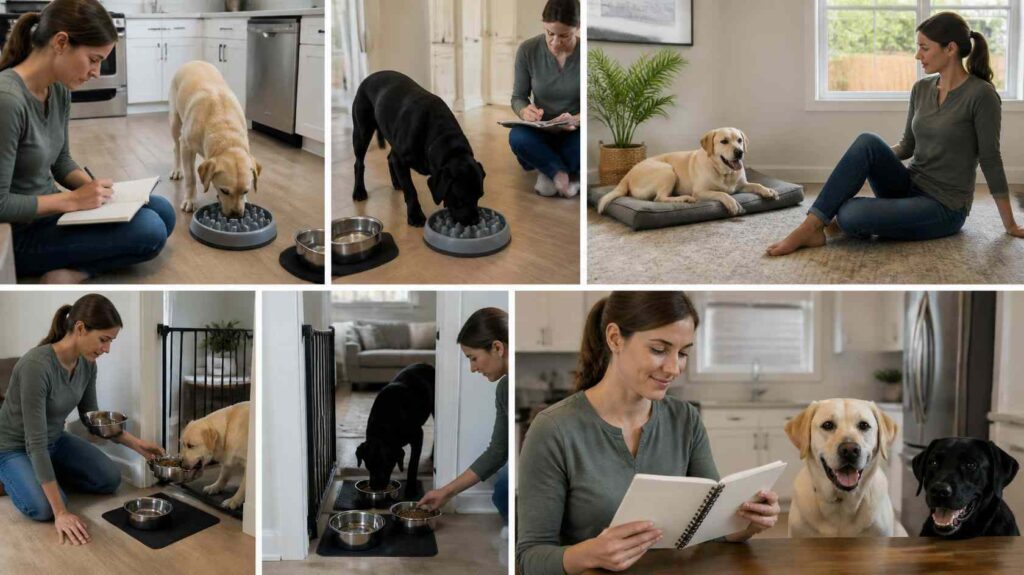
If your dog’s burping fits Level 1 or 2, a gradual feeding review is usually more useful than changing foods overnight.
Day 1
Record your dog’s:
- Current food and treats
- Portion sizes
- Meal times
- Eating speed
- Water-drinking habits
- Exercise around meals
- Burping pattern
Days 2–3
Introduce one safe method to slow eating, such as:
- A suitable slow-feeder bowl
- A puzzle feeder
- Dividing the meal into two smaller servings
- Scattering dry food over a clean, safe area
Choose a feeder that matches your dog’s muzzle shape and allows comfortable access to the food. Stop using it if your dog becomes frustrated, bites the bowl, or struggles to reach the meal.
Days 4–5
Feed dogs separately if competition is causing them to rush.
Avoid offering a full meal while your dog is still panting heavily after exercise. Let breathing return to normal first, but continue to provide normal access to fresh water.
Days 6–7
Compare the week’s burping pattern with your Day 1 notes.
Look for changes in:
- How often burping occurs
- How quickly your dog eats
- Comfort after meals
- Lip licking or repeated swallowing
- Regurgitation, vomiting, or stool changes
Keep the total daily food amount consistent unless your vet has advised otherwise. Change only one variable at a time so you can tell what helped.
Never restrict water to reduce burping. Dogs should have access to fresh water unless a veterinarian has given specific instructions for a medical reason.
Mistakes Worth Avoiding
Changing Food Too Quickly
Switching foods immediately can cause digestive upset and make the original trigger harder to identify. Unless your vet recommends an urgent change, introduce a new diet gradually.
Relying on Marketing Labels
Terms such as “premium,” “natural,” “raw,” or “grain-free” do not guarantee that a food will be easier for your dog to digest. The right diet depends on the individual dog, not the wording on the packaging.
Giving Human Digestive Medicines
Do not give antacids, simethicone, probiotics, or other digestive products without veterinary guidance. Some human products contain unsuitable ingredients, and even commonly used medicines need the correct dose and a clear reason for being given.
Diagnosing by Smell
A foul-smelling burp does not confirm food intolerance, bacterial overgrowth, or another specific condition. Smell becomes more relevant when it appears with appetite loss, diarrhoea, vomiting, weight loss, or ongoing discomfort.
Mistaking Retching for Burping
A burp is brief and requires little effort. Repeated forceful attempts to vomit that produce little or nothing are different and may signal an emergency, particularly if the abdomen is swollen or painful.
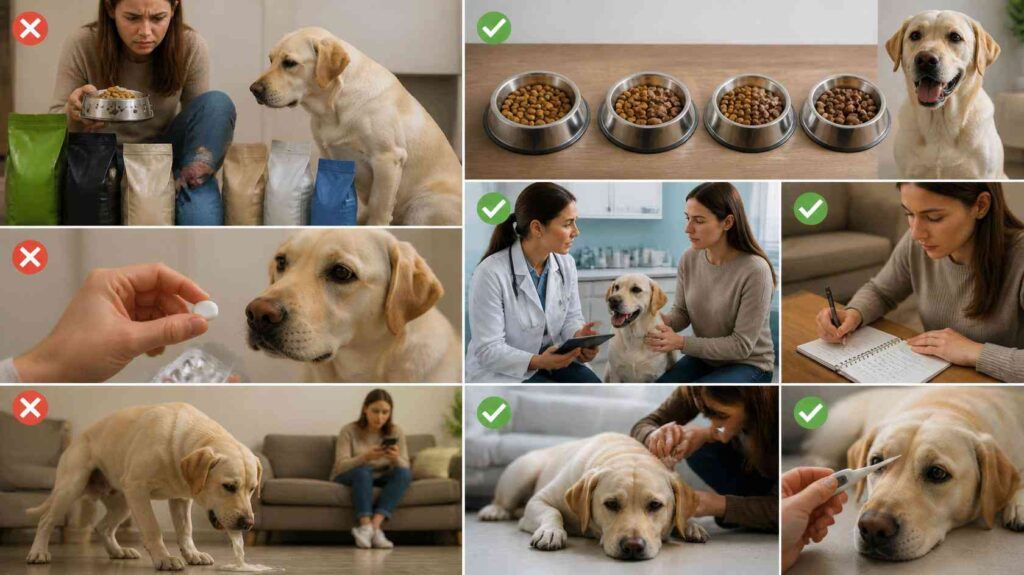
What a Vet Assessment Usually Involves
Your vet will usually ask:
- When the burping began
- How often it occurs
- Whether it happens before or after meals
- How quickly your dog eats
- Whether food, treats, supplements, or medicines have changed
- Whether there is vomiting, regurgitation, diarrhoea, coughing, weight loss, or reduced appetite
The physical examination may include the mouth, teeth, throat, airway, chest, and abdomen.
Depending on your dog’s symptoms and examination findings, further tests may include:
- Faecal testing
- Blood tests
- X-rays
- Ultrasound
- Contrast imaging
- Endoscopy
Not every dog needs extensive testing. A healthy dog that burps after gulping food may only need feeding changes, while repeated regurgitation, weight loss, pain, or breathing problems may require a more detailed investigation.
Bring the following to the appointment when possible:
- Your dog’s food packaging or ingredient list
- A list of treats, chews, medicines, and supplements
- A short symptom timeline
- Photos of vomit or regurgitated material
- A video of an episode
These details can help your vet distinguish burping from coughing, gagging, vomiting, or regurgitation.
A Note on Puppies
Weaned puppies do not usually need to be burped like human babies. An occasional burp after eating too quickly may be normal, but persistent abdominal swelling, poor appetite, vomiting, diarrhoea, weakness, or failure to gain weight should be checked by a vet.
Bottle-fed newborn puppies require more careful handling:
- Feed them belly-down, never on their back
- Use a puppy milk replacer rather than cow’s milk
- Make sure the nipple flow is slow and controlled
- Stop feeding if milk comes from the nose
- Watch for coughing, choking, or breathing difficulty
Milk coming from the nose or coughing during feeds may indicate that liquid has entered the airway, creating a risk of aspiration.
A distended abdomen, constant crying, weakness, poor feeding, breathing difficulty, or failure to gain weight in a newborn puppy warrants prompt veterinary advice.
The Takeaway
Usually harmless:
- Occasional burping
- Clearly linked to fast eating or drinking
- No pain or abdominal swelling
- Normal appetite, stools, energy, and behaviour
Needs veterinary advice:
- A new or persistent pattern
- Burping after most meals
- Regurgitation
- Vomiting or diarrhoea
- Weight loss or appetite changes
- Repeated lip licking or swallowing
- Breathing difficulty
Emergency:
- Swollen or tense abdomen
- Repeated unproductive retching
- Heavy drooling
- Severe restlessness
- Pale gums
- Weakness or collapse
The next time you hear a small burp from the sofa, look at the whole picture rather than the sound alone. A comfortable dog that has just eaten too quickly is very different from one that is retching, regurgitating, or showing pain.
Track the pattern, make feeding changes gradually, and contact your vet whenever the burping is persistent or accompanied by other symptoms.
Frequently Asked Questions
1.Can Dogs Burp Like Humans Do?
Yes. Dogs burp when gas or swallowed air moves back up through the oesophagus and out of the mouth. They have less voluntary control over it than people, so it usually happens naturally after eating, drinking, or panting.
2.How Often Is It Normal for a Dog to Burp?
There is no fixed number. An occasional burp in a comfortable dog is usually harmless. What matters is whether the burping is new, becoming more frequent, or appearing with symptoms such as vomiting, regurgitation, appetite loss, pain, diarrhoea, or breathing changes.
3.Why Does My Dog Burp After Drinking Water?
Dogs often swallow air when they drink quickly, particularly after exercise or heavy panting. That air may come back up as a burp shortly afterward.
Let your dog’s breathing settle after exercise, but do not withhold water. Seek veterinary advice if drinking triggers repeated coughing, gagging, regurgitation, or breathing difficulty.
4.Why Does My Dog Burp and Lick Its Lips?
Lip licking with burping can occur with nausea, reflux-type irritation, anxiety, or something unpleasant in the mouth.
An occasional episode may not be urgent if your dog remains comfortable. Arrange veterinary advice if it happens repeatedly or is accompanied by reduced appetite, repeated swallowing, regurgitation, vomiting, restlessness, or pain.
5.Is My Dog Burping or Regurgitating?
Burping is usually a brief sound with little effort and nothing produced.
Regurgitation is the passive return of undigested food, water, or saliva, often shortly after eating or drinking. Repeated regurgitation should be assessed by a vet because it may indicate an oesophageal problem and can increase the risk of aspiration.
6.Can Burping Be a Sign of Bloat?
Burping alone does not mean a dog has bloat. The emergency concern is a swollen or painful abdomen combined with repeated unsuccessful retching, heavy drooling, restlessness, weakness, pale gums, or collapse.
Seek emergency veterinary care immediately if these signs appear.
7.Can I Give My Dog an Antacid or Gas Medicine?
Not without veterinary advice. Human digestive medicines may contain unsuitable ingredients, interact with other medication, or mask symptoms that need investigation.
Your vet can decide whether medication is appropriate, identify the likely cause, and calculate a safe dose for your dog.
#. Related Articles: