
You are halfway through a snack when one almond disappears from the table. Your dog swallows it, carries on wagging their tail, and seems completely unconcerned. Meanwhile, you are left wondering whether this is harmless or an emergency.
Here is the practical answer: ordinary sweet almonds are not considered directly toxic to dogs in the same way as macadamia nuts or chocolate. One plain almond accidentally eaten by a healthy dog is therefore not usually a poisoning emergency. However, almonds are still not suitable dog treats. They can cause choking, digestive upset, gastrointestinal obstruction and, particularly after a larger intake or in a susceptible dog, pancreatitis.
Whether you should monitor your dog or contact a veterinarian depends on four things:
- Your dog’s size, age and health
- How many almonds were eaten
- The exact almond product involved
- What your dog is doing right now
Working through these four factors gives you a far more useful answer than a simple statement that almonds are “safe” or “unsafe.”
Can Dogs Eat Almonds? The Short Answer Depends on What Happened
Almonds sit in an awkward middle ground. They are not known for causing the predictable acute toxicity associated with foods such as macadamia nuts, but “not directly toxic” does not mean “safe to feed.”
Whole almonds are hard, calorie-dense and high in fat. They can be swallowed without being chewed properly, irritate the digestive system or become lodged in the throat or gastrointestinal tract. Dogs also gain no meaningful dietary advantage from eating them if they already receive a complete and balanced diet.
For these reasons, veterinarians generally do not recommend intentionally feeding almonds, even though a single accidental exposure will not always require emergency treatment.
One Accidental Almond Is Not the Same as Feeding Almonds as Treats
A healthy adult Labrador that picks up one plain almond is in a very different situation from a toy-breed dog that swallows several whole almonds or a dog that is regularly given nuts as treats.
With one accidental almond, the main questions are usually whether it was swallowed safely and whether the dog develops digestive symptoms. Repeated or larger servings increase the fat and calorie intake and may be more concerning in dogs with a history of pancreatitis, obesity or digestive disease.
A dog appearing normal is reassuring, but it does not answer every question. It may indicate that there is no obvious immediate airway emergency, yet it cannot completely rule out later vomiting, abdominal discomfort or an obstruction.
Why “Not Toxic” Does Not Automatically Mean “Dog-Safe”
There is no single condition accurately described as “almond poisoning” after an ordinary sweet almond is eaten. Instead, several separate risks must be considered:
- Mechanical risk: choking or obstruction
- Digestive risk: vomiting, diarrhoea or abdominal discomfort
- Dietary risk: excessive fat and possible pancreatitis
- Product risk: salt, seasonings, chocolate, xylitol, raisins, macadamia nuts or other ingredients
A food does not have to be poisonous to be inappropriate or dangerous for a dog.
Quick tip: Before looking for a “safe number” of almonds, identify the exact product and estimate how much is missing. Those details often matter more than the word almond itself.
Use the Four-Check Almond Risk Test
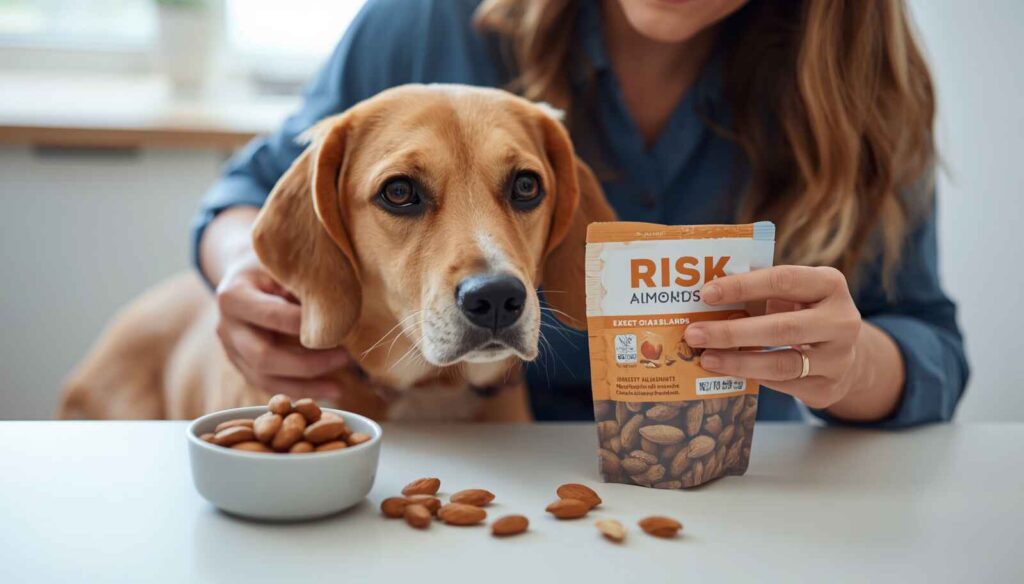
Use these four checks to judge whether the situation may be suitable for careful observation or requires prompt veterinary advice.
Check 1 — Which Dog Ate the Almonds?
Your dog’s size, eating habits and medical history can significantly change the level of concern.
Consider:
- Is your dog a puppy, toy breed or small adult?
- Does your dog swallow food quickly without chewing?
- Is your dog elderly, overweight or on a restricted diet?
- Has your dog previously had pancreatitis?
- Does your dog have a gastrointestinal condition or known difficulty tolerating fatty foods?
The same almond represents a very different mechanical and dietary exposure for a 5 kg terrier than for a 30 kg Labrador. However, size is not the only factor. A larger dog that bolts food can still choke on or swallow several almonds whole.
Check 2 — How Much Was Eaten?
One almond, several almonds and an unknown quantity from an open bag should not be treated as identical situations.
Try to establish:
- Was it one almond, several or an unknown amount?
- Were the almonds chewed or swallowed whole?
- Were shells also eaten?
- Is any plastic, foil or packaging damaged or missing?
- Was this a one-off accident or have almonds been given repeatedly?
There is no reliable universal “almonds per kilogram” toxicity formula. Almond risk is not normally assessed using a single poison threshold. The amount matters because it influences the likelihood of digestive upset, excessive fat intake, choking and obstruction.
Check 3 — What Exact Almond Product Was It?
This is often the most important check and the one most easily overlooked.
The exposure may involve:
- Plain raw almonds
- Plain roasted almonds
- Salted or seasoned almonds
- Chocolate-coated almonds
- Sugar-free or “diet” almond products
- Almond-containing trail mix
- Almond butter
- Almond milk
- Almond flour or almond meal
- Marzipan, cakes, biscuits or pastries
- Bitter almonds or concentrated almond products
- Stale, damp or visibly mouldy nuts
Processed almond foods must be assessed by their full ingredient list, not by the almonds alone. Trail mix, for example, may also contain raisins, chocolate or macadamia nuts, which can be more urgent concerns. Sugar-free products may contain xylitol, sometimes labelled as birch sugar.
Do not assume the almond is the most dangerous ingredient in the product.
Check 4 — What Is the Dog Doing Right Now?
Observe your dog carefully for any change in breathing, swallowing, behaviour or digestion.
Concerning signs include:
- Coughing, repeated gagging or excessive drooling
- Difficulty breathing
- Repeated swallowing or pawing at the mouth
- Vomiting, particularly repeated vomiting
- Diarrhoea
- Refusing food
- Abdominal discomfort, restlessness or a hunched posture
- Marked lethargy or weakness
- Tremors, seizures or collapse
Difficulty breathing, obvious choking, collapse, severe distress, repeated unproductive retching or neurological signs require urgent veterinary attention. Do not wait for additional symptoms to appear.
The 60-Second Almond Exposure Check
- Check your dog’s breathing and immediate condition.
- Remove the remaining almonds and packaging from reach.
- Identify the exact product involved.
- Read the complete ingredient list.
- Estimate how many almonds or how much food was eaten.
- Note whether the almonds were chewed or swallowed whole.
- Record the approximate time of ingestion.
- Check whether shells, wrappers or packaging are missing.
- Consider your dog’s size, age and medical history.
- Keep the packaging or photograph the label.
- Contact your veterinarian if the amount is large or unknown, your dog is small or medically vulnerable, the product contains another hazardous ingredient, or any symptoms develop.
Do not induce vomiting or give milk, oil, salt, hydrogen peroxide or another home remedy unless a veterinarian or animal poison professional specifically instructs you to do so.
Why Whole Almonds Create More Than One Type of Risk
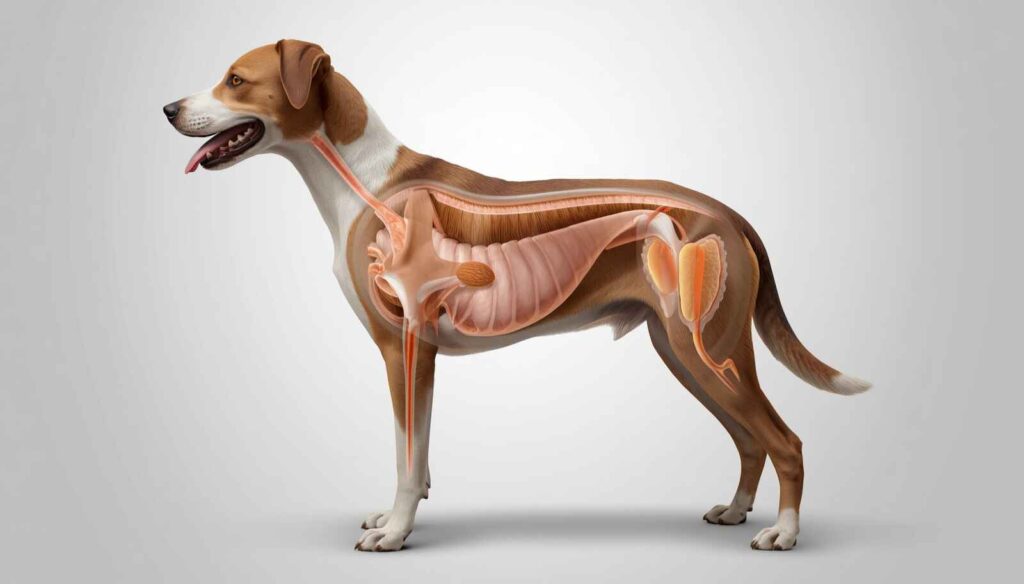
The Immediate Risk — Choking and Swallowing Whole Almonds
Whole almonds are hard, dense and easy for a dog to swallow without chewing properly. A dog that gulps food — something seen in dogs of every size — may end up with an almond lodged in the throat or oesophagus.
This is different from ordinary digestive upset. Choking or an oesophageal blockage can cause sudden distress, repeated gagging, excessive drooling, difficulty swallowing or breathing problems. Any difficulty breathing or obvious choking requires immediate veterinary attention.
The Digestive Risk — Vomiting, Diarrhoea and Stomach Upset
More commonly, almonds irritate the digestive system. After eating one or more, a dog may develop:
- Vomiting
- Loose stools or diarrhoea
- Gas
- Reduced appetite
- Mild abdominal discomfort
Not every dog will become unwell after a small accidental exposure, but the risk increases with the amount eaten, added ingredients and the dog’s individual sensitivity.
The Delayed Concern — Obstruction
Several whole almonds may be difficult to pass, particularly in a small dog or one that swallowed them without chewing. Shells and torn packaging create an additional foreign-body risk.
An obstruction may not cause obvious signs immediately. Concerning symptoms include:
- Repeated vomiting
- Refusing food
- Increasing lethargy
- Straining to pass stool
- A painful, tense or swollen abdomen
- Repeated unproductive retching
A dog appearing normal shortly after eating almonds is reassuring, but it does not completely rule out a problem developing later. Contact your veterinarian if several whole almonds were swallowed, the quantity is unknown or symptoms appear.
The High-Fat Concern — Pancreatitis in Susceptible Dogs
Almonds are high in fat. A single plain almond is unlikely to trigger pancreatitis in an otherwise healthy dog, but a larger intake may be more concerning — especially in dogs with previous pancreatitis, obesity, digestive disease or known sensitivity to fatty foods.
Signs that may warrant veterinary assessment include repeated vomiting, loss of appetite, marked lethargy and abdominal pain. Do not assume that every upset stomach is pancreatitis, but tell your veterinarian about any previous episodes because that history changes the risk assessment.
Vet insight: There is no single “almond poisoning syndrome.” The main concern changes according to the form of the almond, the amount eaten, any additional ingredients and your dog’s size and medical history. That is why an individual risk assessment is more useful than a simple yes-or-no answer.
The Almond May Not Be the Most Dangerous Ingredient
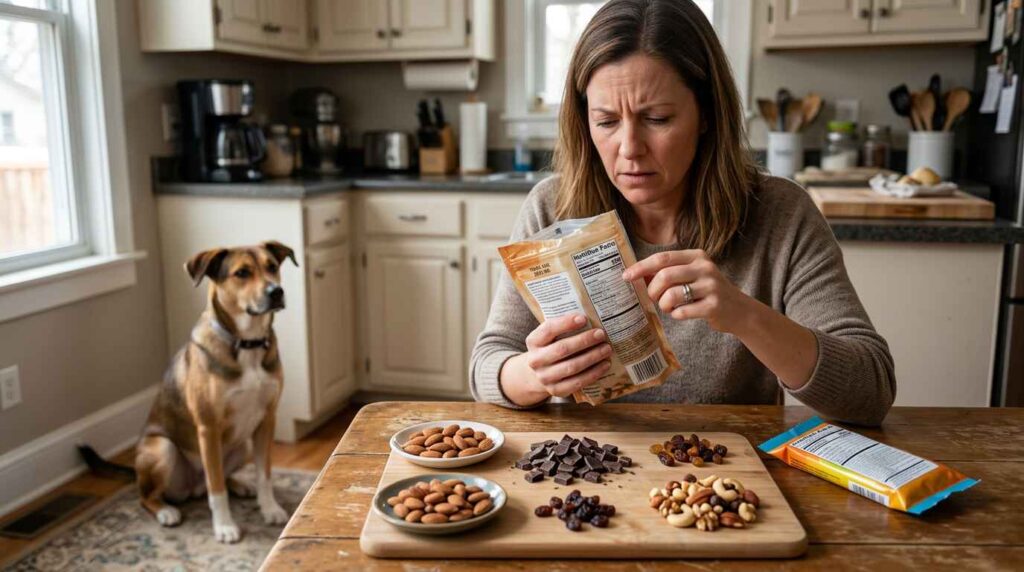
Trail Mix Must Be Assessed Ingredient by Ingredient
If your dog ate trail mix, the almonds may not be the most urgent concern. Check the complete ingredient list for:
- Raisins or sultanas
- Chocolate
- Macadamia nuts
- Sugar-free sweeteners
- Other nuts
- Onion or garlic seasoning
- Plastic or foil packaging that may also be missing
Treat trail mix as a multi-ingredient exposure, not simply as almonds, because ingredients such as raisins, sultanas and macadamia nuts can be dangerous to dogs. Keep the packet and tell the veterinary team exactly what it contained.
Chocolate-Covered Almonds Create a Different Emergency Question
Chocolate-coated almonds should not be assessed like plain almonds. The risk depends on the type of chocolate, the amount eaten and your dog’s body weight.
Because both the chocolate and the whole almonds must be considered, contact a veterinarian or recognised animal poison service for product-specific advice rather than relying on home monitoring alone.
Sugar-Free Almond Products Require an Ingredient-Label Check
Some sugar-free or diet products contain xylitol, which may also appear on labels as birch sugar. Xylitol is dangerous to dogs and requires prompt veterinary advice.
If xylitol is listed — or you cannot confirm which sweetener was used — do not wait for symptoms before seeking help.
Salted and Seasoned Almonds Add New Concerns
Salted and flavoured almonds introduce risks that plain almonds do not. Check for:
- High levels of salt
- Onion or garlic powder
- Chilli or strong spice blends
- Added oils
- Chocolate or sweet coatings
- Ingredients your dog is already known to react to
A small taste of seasoning does not automatically mean severe poisoning, but the complete product and the amount consumed should guide the decision.
Warning — do not wait for symptoms if:
- Your dog is struggling to breathe or appears to be choking.
- Your dog has collapsed, is severely weak or is in obvious distress.
- The product contains xylitol.
- The food contains raisins, sultanas or macadamia nuts.
- A concerning or unknown amount of chocolate was eaten.
- Your dog swallowed a large or unknown quantity.
- Shells, plastic or other packaging may also have been swallowed.
Contact a veterinarian, emergency veterinary clinic or recognised animal poison service immediately.
Almond Form Changes the Risk — A Practical Comparison
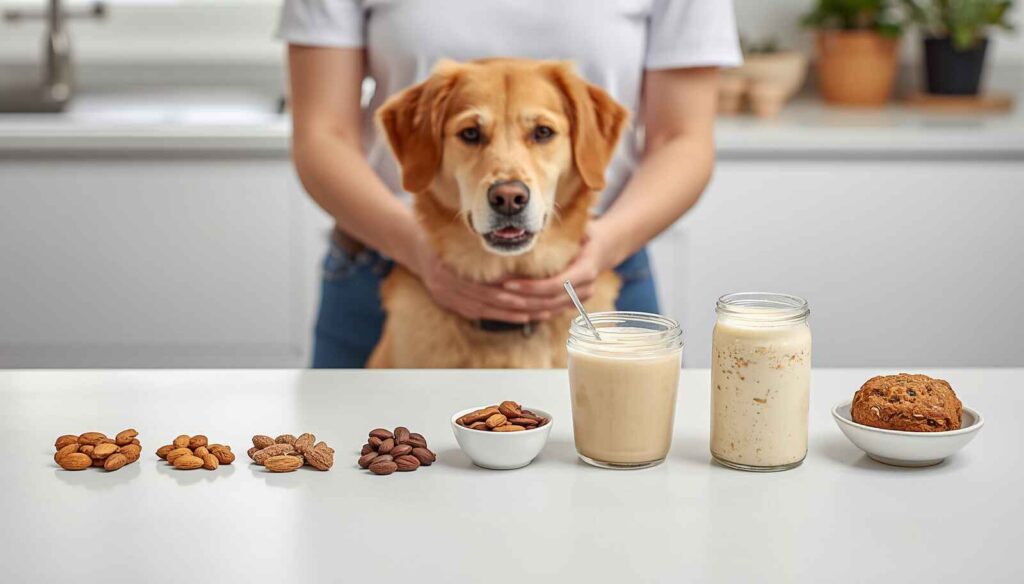
| Almond product | Main concern | What to check | Intentional feeding? |
|---|---|---|---|
| Whole plain almonds | Choking, digestive upset, fat and obstruction | Amount and whether they were swallowed whole | Not recommended |
| Roasted or salted almonds | Core almond risks plus salt, oil or seasoning | Salt content and added ingredients | Avoid |
| Flavoured almonds | Potentially unsafe coatings or seasonings | Complete ingredient list | Avoid |
| Chocolate-coated almonds | Chocolate exposure plus whole-almond risks | Chocolate type, quantity and dog’s weight | Avoid |
| Trail mix | Multiple possible hazards | Every ingredient, plus missing packaging | Avoid |
| Almond butter | High fat and possible unsafe sweeteners | Xylitol, salt and other additives | Separate assessment |
| Almond milk | Added ingredients and little nutritional value for dogs | Sweeteners and formulation | Not needed |
| Almond flour or meal | Recipe-dependent exposure | Complete recipe or product label | Depends on the finished food |
| Marzipan or baked goods | Sugar, fat and potentially hazardous ingredients | Chocolate, raisins, sweeteners and quantity | Assess the whole recipe |
| Bitter almond products | Separate toxicology concern | Exact product and amount | Seek professional advice |
Almond butter is different from whole almonds because it does not carry the same whole-nut choking risk. However, its high fat content and added ingredients still matter. If you’re wondering, can dogs eat almond butter, check the full ingredient list and understand the risks before offering it as a treat.
Raw Versus Roasted Does Not Solve the Main Problem
Roasting does not remove the whole-nut choking risk or reduce the almond’s fat content. Roasted almonds may also contain added salt, oil or flavouring, making the final product more concerning than a plain raw almond.
Ground Almonds and Almond Flour Change the Mechanical Risk, Not the Whole Recipe
Ground almonds and almond flour do not carry the same whole-nut choking risk, but that does not make every almond-based food suitable for dogs.
If your dog ate cake, biscuits, pastries or a protein bar made with almond flour, assess the complete recipe. Chocolate, raisins, xylitol, macadamia nuts and a high overall fat content may matter more than the flour itself.
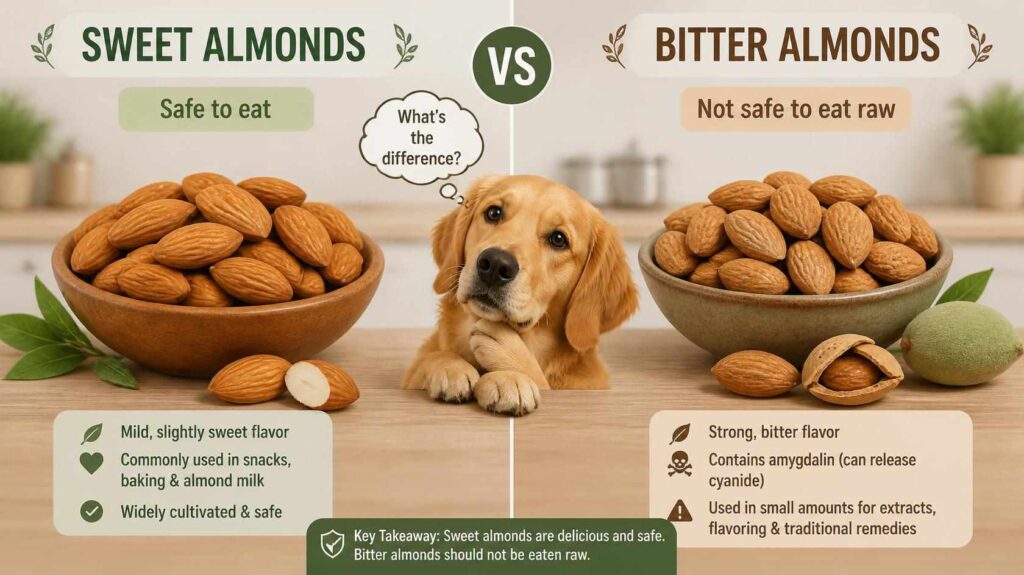
Bitter Almond Products Should Not Be Confused With Grocery-Store Sweet Almonds
Most almonds sold for everyday snacking are sweet almonds. Bitter almonds and concentrated bitter almond products are different and raise separate toxicology concerns.
If you have reason to believe your dog consumed bitter almonds, bitter almond oil or another concentrated product rather than ordinary supermarket almonds, contact a veterinarian or animal poison service promptly.
Quick tip: If your dog ate an almond-based product rather than plain almonds, photograph the ingredient list before calling your veterinarian. It saves time and helps the veterinary team assess the exposure accurately.
My Dog Ate Almonds — What Should I Do Right Now?

First, Stop Further Access and Check Your Dog
Remove any remaining almonds, wrappers and packaging from reach. Then check your dog’s breathing and immediate behaviour.
Seek emergency veterinary care immediately if your dog is struggling to breathe, appears to be choking, collapses or shows severe distress.
Identify the Product Before You Decide to “Just Monitor”
Gather the details a veterinarian is likely to ask for:
- Product name
- Full ingredient list
- Approximate amount eaten
- Time of ingestion
- Whether the almonds were swallowed whole
- Your dog’s weight
- Relevant medical history, including previous pancreatitis
- Any symptoms already present
These details are often more useful than simply saying your dog “ate almonds.”
Keep the Package — It May Answer the Most Important Question
Photograph the front of the packet and the complete ingredient list. Check whether the product also contained chocolate, raisins, macadamia nuts, xylitol, seasonings or other snacks.
Also look for damaged or missing plastic, foil or other packaging that your dog may have swallowed.
Know When Home Observation Is Not Enough
Contact a veterinarian rather than relying on home monitoring if:
- The amount eaten was large or unknown
- Your dog is small or very young
- Several whole almonds were swallowed
- Symptoms have developed
- The product contained a hazardous co-ingredient
- Your dog has previously had pancreatitis
- Shells or packaging may also have been swallowed
- You are unsure exactly what the product contained
Do not attempt home remedies without veterinary direction. Do not induce vomiting or give hydrogen peroxide, salt, milk, oil or activated charcoal unless a veterinarian or animal poison professional specifically instructs you to do so. The wrong treatment can cause further harm or delay appropriate care.
How Urgent Is It? Common Scenarios

| Scenario | Main concern | General direction |
|---|---|---|
| Healthy large dog ate one plain almond and appears normal | Possible mild digestive upset | Observe closely and contact your vet if symptoms develop or you remain concerned |
| Small dog swallowed several whole almonds | Choking or obstruction | Seek prompt veterinary advice |
| Unknown amount eaten from a large bag | Uncertain exposure | Contact a veterinarian |
| Salted or seasoned almonds eaten | Sodium and added ingredients | Check the product and seek advice based on the amount and ingredients |
| Chocolate-covered almonds eaten | Chocolate exposure plus whole-almond risks | Seek prompt, product-specific advice |
| Almond trail mix eaten | Raisins, chocolate, macadamias or other hazards | Assess urgently and contact a veterinarian |
| Dog with previous pancreatitis ate several almonds | High-fat exposure | Use a lower threshold for veterinary advice |
| Repeated vomiting or abdominal pain | Active gastrointestinal or pancreatic concern | Arrange veterinary assessment |
| Breathing difficulty or obvious choking | Airway emergency | Seek emergency care immediately |
These are general directions, not guaranteed outcomes. Your veterinarian is best placed to assess your dog’s size, health history, symptoms and exact exposure.
Some Dogs Deserve a Lower Threshold for Veterinary Advice
Puppies and toy breeds have smaller airways and digestive tracts, so whole almonds may present a greater mechanical risk. Dogs that gulp food are also more likely to swallow almonds without chewing, regardless of their size.
Extra caution is also sensible for:
- Dogs with previous pancreatitis
- Dogs known to react poorly to fatty foods
- Senior dogs
- Overweight dogs
- Dogs with gastrointestinal disease
- Dogs on medically restricted diets
Vet advice: Mention relevant medical history before asking whether home observation is appropriate. The same amount may be assessed very differently in a healthy adult dog and one with previous pancreatitis or digestive disease.
Common Mistakes Owners Make After a Dog Eats Almonds
- Assuming “not directly toxic” means almonds are safe to feed regularly
- Waiting for symptoms after known exposure to xylitol, raisins, macadamia nuts or a concerning amount of chocolate
- Focusing only on the almonds in trail mix
- Searching for a universal “safe number” of almonds
- Inducing vomiting without veterinary advice
- Giving milk, oil, salt or other home remedies
- Throwing away the packaging before checking the label
- Forgetting to check whether wrappers or shells are missing
- Assuming roasted almonds are automatically safer
- Continuing to feed almonds because the dog tolerated them previously
- Assuming a large dog cannot choke
Previous tolerance does not guarantee future safety, particularly when the amount, product or dog’s health changes.
Almonds vs Other Nuts — The Risks Are Not All the Same
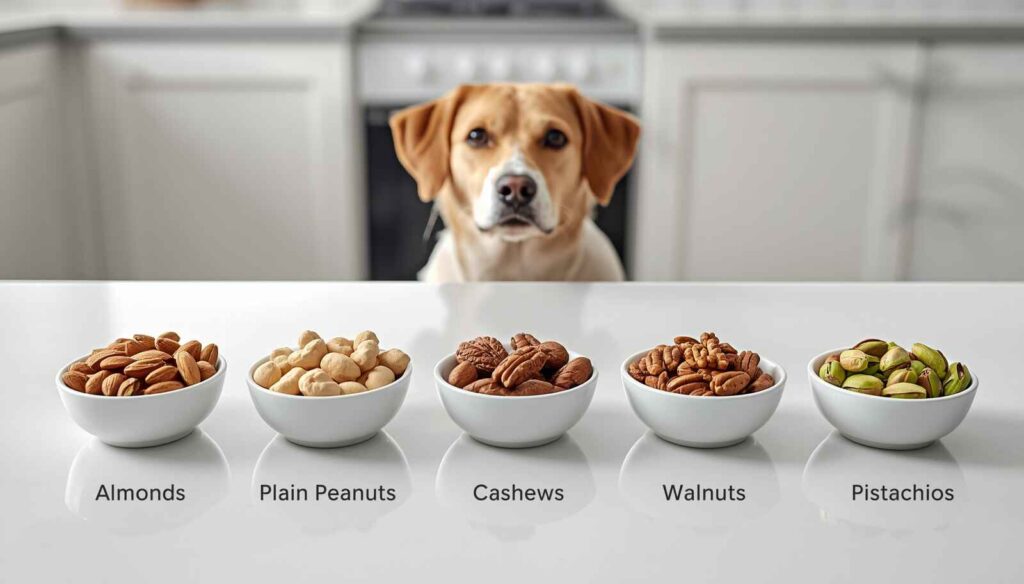
| Nut | Main concern | General guidance |
|---|---|---|
| Almonds | Choking, digestive upset, fat and obstruction | Not recommended |
| Macadamia nuts | Recognised toxicity in dogs | Avoid and seek veterinary advice after exposure |
| Peanuts | Fat, salt and preparation | Plain, unsalted forms may suit some dogs in small amounts |
| Cashews | Fat and portion size | Plain forms may suit some dogs in small amounts |
| Walnuts | Fat, mould and digestive concerns | Generally avoid as a routine treat |
| Pecans | Fat and mould-related concerns | Avoid |
| Pistachios | Fat, shells and salt | Not recommended as a routine treat |
Macadamia nuts are in a different category from ordinary sweet almonds because they can cause a recognised toxic reaction in dogs. This distinction matters when mixed nuts or trail mix are involved.
Even nuts sometimes described as “safer” are not suitable in unlimited amounts. Preparation, salt, fat, portion size and your dog’s medical history still matter.
Better Crunchy Treats Than Almonds
Dogs that enjoy crunchy treats have safer options, including:
- Small pieces of carrot
- Cucumber slices
- Apple with the seeds and core removed
- Appropriately sized low-fat dog treats
Choose treats that suit your dog’s size and health. A dog managing obesity or recovering from pancreatitis may need different options from a healthy, active adult dog. When in doubt, ask your veterinarian which treats fit your dog’s diet.
The Bottom Line
Ordinary sweet almonds are not considered directly toxic to dogs in the same way as macadamia nuts, but they are still not safe or useful treats.
After an accidental ingestion, assess:
- Your dog’s size and medical history
- The amount eaten
- The exact product and its full ingredient list
- Any symptoms that develop
Mixed or processed almond foods require extra care because another ingredient may be more dangerous than the almonds themselves. Breathing difficulty, collapse, repeated vomiting or severe abdominal pain always warrant urgent veterinary attention.
Wondering whether almond butter is different from the whole nut? It carries a different risk profile, especially because of fat, added ingredients and possible sweeteners.
FAQ: Can Dogs Eat Almonds?
1. My dog ate one plain almond and seems fine — should I worry?
One plain almond is unlikely to cause serious harm in a healthy adult dog, although mild digestive upset is possible. Check that the product was genuinely plain, watch for vomiting, diarrhoea, gagging or appetite changes, and contact your veterinarian if symptoms appear.
Puppies, toy breeds and dogs with pancreatitis or digestive disease deserve a lower threshold for professional advice.
2. Can a Dog Actually Digest a Whole Almond?
Dogs may pass a whole almond, but they do not always chew nuts thoroughly. This is why whole almonds can create more concern than ground almonds: they may cause choking, become lodged in the oesophagus or, less commonly, contribute to an obstruction.
Risk depends on the dog’s size, the number swallowed and whether symptoms develop.
3. How Long After Eating Almonds Might a Dog Become Unwell?
Choking or swallowing problems usually cause signs quickly. Digestive symptoms such as vomiting, diarrhoea or reduced appetite may appear later.
Problems involving obstruction or pancreatitis may take longer to become obvious, so do not rely on a dog appearing normal immediately after ingestion. Contact your veterinarian if symptoms develop or the quantity was large or unknown.
4. Can Almonds Cause an Intestinal Blockage?
It is possible, particularly if a small dog swallows several whole almonds or also eats shells or packaging.
Warning signs include repeated vomiting, refusal to eat, worsening lethargy, straining, abdominal pain or a swollen abdomen. These symptoms require veterinary assessment.
5. Should I Make My Dog Vomit After They’ve Eaten Almonds?
No, not unless a veterinarian or animal poison professional specifically tells you to do so.
Inducing vomiting is not appropriate in every situation and may be dangerous if the dog is choking, showing neurological symptoms or at risk of inhaling vomit. Contact a professional for advice based on the exact product and exposure.
6. Are Roasted Almonds Safer for Dogs Than Raw Ones?
No. Roasting does not remove the fat content or the choking risk associated with a whole almond.
Roasted products may also contain added oil, salt, garlic, onion or other seasonings, so the complete ingredient list still needs to be checked.
7. Can Puppies Eat Almonds?
No. Almonds are not suitable puppy treats.
Puppies have smaller airways and digestive tracts and may be more likely to choke or develop digestive upset. Their growing bodies also need a complete, balanced puppy diet rather than calorie-dense human snacks.
#. Related Articles: