
Is avocado oil good for dogs? It’s a common question because avocados appear on many “toxic foods for dogs” lists, yet avocado oil is also used in some commercial dog foods and skin products. That apparent contradiction causes understandable confusion.
The important point is that plain avocado oil is not the same exposure as avocado skin, leaves, pits or seasoned avocado dishes. Food-grade avocado oil is not generally regarded as a major persin-poisoning risk for dogs. However, that does not mean it is necessary, beneficial for every dog or safe in unlimited amounts.
Four separate questions matter:
- Is it toxic?
- Can a dog tolerate it?
- Does a dog actually need it?
- Are its claimed benefits supported by good canine evidence?
Quick Answer
Plain, food-grade avocado oil is not considered a major persin-poisoning risk for dogs. It is still a concentrated source of fat and calories, however, and most dogs eating a complete and balanced diet do not need it added to their meals.
Dogs with a history of pancreatitis, obesity, high blood fats, chronic digestive problems or a prescribed low-fat diet may need to avoid added oils unless their veterinarian approves them. A healthy dog licking a small amount from a plate is also very different from a small dog drinking an unknown quantity from a bottle.
Why Avocado Oil Is Not the Same as an Avocado
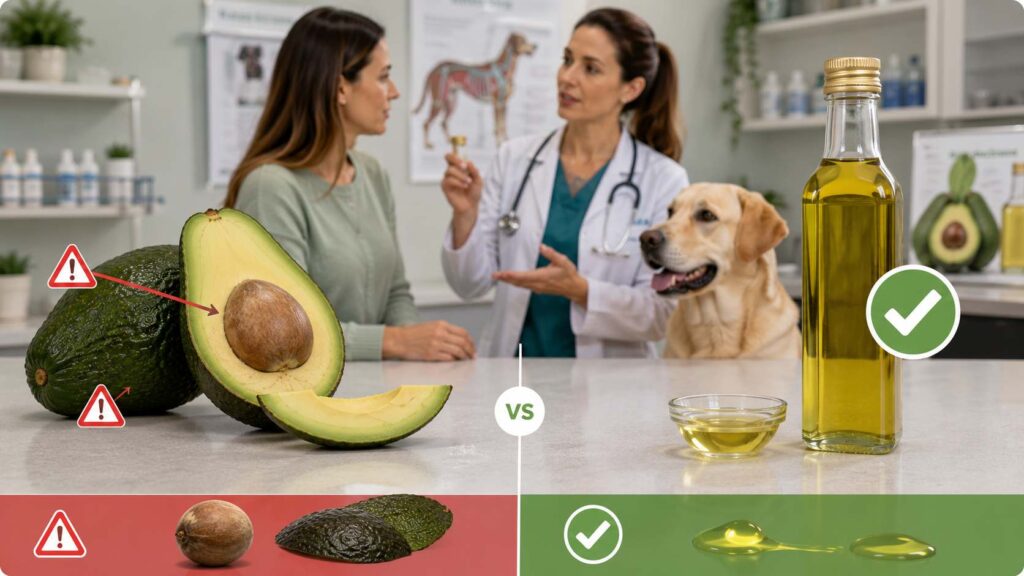
The compound most often associated with avocado safety concerns is persin. Higher concentrations are found in parts of the avocado plant such as the leaves, bark, skin and pit. Food-grade avocado oil is produced mainly from the fruit’s flesh and is not considered comparable to those higher-risk plant parts.
The Merck Veterinary Manual notes that persin concentrations vary across different parts of the avocado plant, with the leaves, bark and other plant tissues presenting greater concern than refined food-grade avocado oil. This helps explain why plain avocado oil should not be viewed as having the same level of risk as the whole plant or products containing other avocado parts.
That distinction matters because “avocado exposure” can describe several very different situations:
- A dog licking a small amount of plain avocado oil
- A dog eating avocado flesh
- A dog chewing the skin
- A dog swallowing the pit
- A dog eating guacamole containing onion or garlic
Each situation carries a different type and level of risk.
The avocado pit deserves particular attention. Its greatest danger is physical rather than nutritional: it can cause choking or an intestinal blockage. A swallowed pit requires prompt veterinary advice, even if the dog initially appears well.
Guacamole should also be treated separately from plain avocado oil. Onion and garlic are harmful to dogs, while chilli, excessive salt and a high fat content can create additional problems. In many cases, the added ingredients are more concerning than the avocado itself.
Avocado Products and Their Main Risks
| Product or exposure | Main concern | Typical risk level | What to do |
|---|---|---|---|
| Small amount of plain avocado oil | Mild fat-related digestive upset | Usually low in a healthy dog | Remove access and monitor |
| Large or unknown amount of oil | Vomiting, diarrhoea and pancreatitis risk | Moderate to high | Contact a veterinarian |
| Avocado flesh | Fat and possible stomach upset | Depends on the amount and the dog | Monitor or seek advice |
| Avocado skin | Digestive irritation and greater persin exposure | Higher concern | Contact a veterinarian |
| Avocado pit | Choking or intestinal obstruction | Urgent | Seek immediate veterinary advice |
| Guacamole | Onion, garlic, salt, chilli and fat | Potentially serious | Check ingredients and call a veterinarian |
| Garlic- or onion-infused oil | Toxic added ingredients | Potentially serious | Contact a veterinarian promptly |
| Commercial dog food containing avocado ingredients | Ingredient used within a formulated diet | Different from home supplementation | Follow the manufacturer’s feeding directions |
What Avocado Oil Actually Gives Your Dog
Once the marketing claims are stripped away, avocado oil’s main nutritional feature is straightforward: it is concentrated fat. It is particularly rich in monounsaturated fat, including oleic acid, and therefore contains a large amount of energy in a small volume.
Avocado oil may also contain vitamin E and other antioxidant compounds. However, the presence of a nutrient does not prove that adding the oil will produce a noticeable health benefit. Processing can affect nutrient levels, and dogs eating a nutritionally complete commercial food should already receive appropriate amounts of essential fats, vitamins and minerals.
It is also important not to confuse avocado oil with fish oil. Avocado oil is mainly associated with omega-9 fatty acids. The better-established veterinary uses of fish oil are linked primarily to the marine omega-3 fatty acids EPA and DHA. Avocado oil does not provide these in meaningful therapeutic amounts and should not be treated as a direct replacement for a veterinary omega-3 supplement.
The most easily overlooked issue is calorie intake. Oils add substantial energy without making the meal appear much larger. When poured over an already complete diet, avocado oil may increase calories without correcting a nutritional deficiency. Repeated additions can contribute to weight gain, particularly in small, inactive or already overweight dogs.
Common owner mistake: assuming that a fat described as healthy for humans must also improve a dog’s diet. Dogs have different nutritional needs, and a balanced food may already provide all the fat they require.
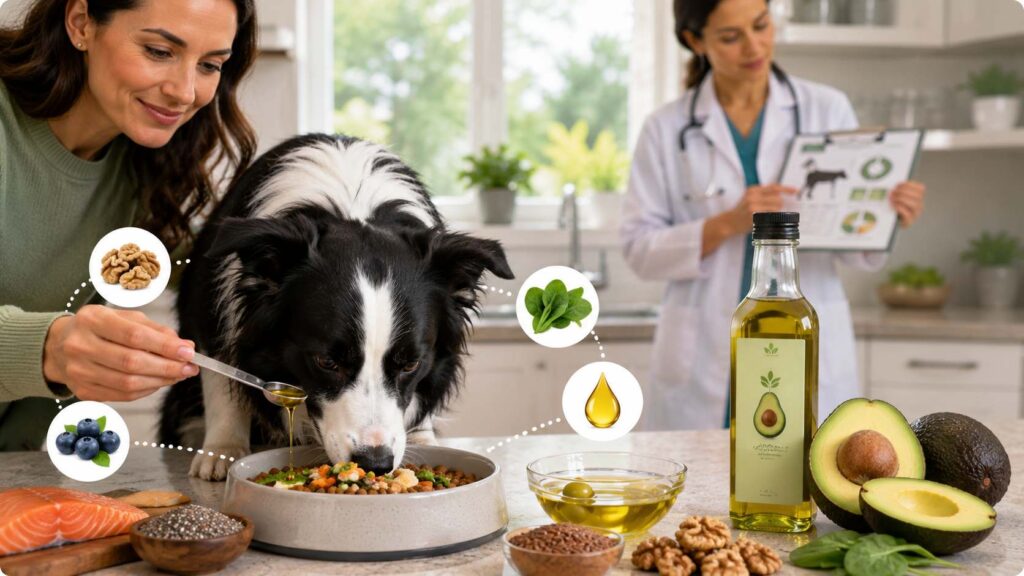
Do the Claimed Benefits Actually Hold Up?
This is where much of the online advice starts to go beyond what is actually known.
Skin and Coat
Dietary fat can support normal skin and coat health, but there is limited evidence that ordinary avocado oil provides a specific benefit for dogs. A dull coat may also point to a different problem, such as parasites, allergies, infection, poor grooming or an unbalanced diet.
Adding oil may improve coat shine in some dogs simply because it increases dietary fat. That does not prove it has corrected the underlying cause.
Itching and Allergies
Avocado oil is not a treatment for itching. Environmental allergies, food allergies, fleas, mites, yeast infections and bacterial skin infections are all common causes, and none can be diagnosed by trying an oil at home.
Using avocado oil may also delay proper treatment if the itching is caused by infection or parasites. Persistent redness, hair loss, odour, scabs, ear problems or repeated licking should be assessed by a veterinarian.
Joint Support
This claim often comes from confusion between two different products.
Avocado–soybean unsaponifiables, or ASUs, are specialised compounds used in some joint supplements. They are not the same as culinary avocado oil. Research or product claims involving ASUs should not be used as proof that pouring avocado oil over a dog’s food will relieve arthritis.
For dogs that need dietary joint support, fish oil provides EPA and DHA, which have better-established veterinary use than the fats found in avocado oil. Joint pain still requires a complete management plan rather than relying on one supplement.
Digestion and Immunity
There is no strong clinical evidence that ordinary avocado oil improves digestion or “boosts” immunity in dogs.
In fact, added fat may cause:
- Loose stools
- Vomiting
- Nausea
- Reduced appetite
- Abdominal discomfort
These reactions are more likely when a dog receives too much oil or already has a sensitive digestive system.
Benefit Evidence Check
| Claimed benefit | Evidence for ordinary avocado oil | Main limitation | Better next step |
|---|---|---|---|
| Shinier coat | Limited | Diet, grooming or skin disease may be responsible | Review overall diet and skin health |
| Reduced itching | Weak | Itching usually has an underlying cause | Arrange a veterinary skin assessment |
| Joint support | Insufficient for culinary oil | ASUs, fish oil and avocado oil are different products | Use a vet-guided joint plan |
| Better digestion | Weak | Added fat may cause loose stools or vomiting | Identify the digestive cause |
| Immune support | Vague and unproven | No clear clinical outcome | Focus on complete nutrition and appropriate veterinary care |
| Extra energy | Plausible | May cause unhealthy weight gain | Use a vet-calculated calorie plan |
Warning: Safe does not automatically mean useful
A non-toxic ingredient can still be unnecessary or poorly tolerated. Most dogs eating a complete and balanced diet do not need extra oil, and avocado oil should not be used to treat arthritis, allergies, itching or digestive disease.
Dogs That Should Avoid Added Oil Without Veterinary Approval

Some dogs are more vulnerable to the effects of extra dietary fat:
- Dogs with a history of pancreatitis
- Dogs with hyperlipidaemia or high triglycerides
- Overweight or inactive dogs
- Dogs with chronic vomiting, diarrhoea or fat intolerance
- Dogs on prescription low-fat or gastrointestinal diets
- Dogs completing an elimination-diet trial
- Puppies eating a carefully balanced growth diet
- Senior dogs with ongoing medical conditions
- Dogs already receiving fish oil or another fatty supplement
For these dogs, “just a small amount” is not automatically safe. Even when the oil itself is not considered highly toxic, the added fat can interfere with medical or nutritional management.
Vet Advice
Ask your veterinarian before adding avocado oil if your dog has pancreatitis, high blood fats, obesity, chronic digestive disease or a prescribed diet. Owners feeding homemade diets should also seek advice from a qualified veterinary nutrition professional rather than adding oils independently.
Avocado Oil Compared With Other Oils
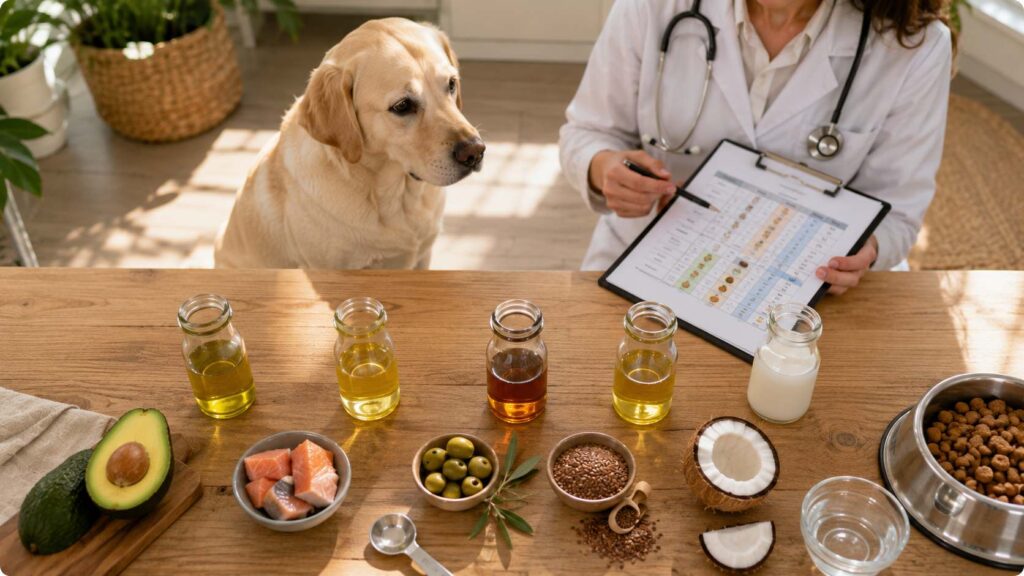
| Oil | Main fat type | Direct EPA/DHA source? | Evidence for dogs | Main concern |
|---|---|---|---|---|
| Avocado oil | Mostly monounsaturated fat | No | Limited | Calories and fat intolerance |
| Fish oil | EPA and DHA | Yes | Stronger for selected conditions | Oxidation and correct dosing |
| Flaxseed oil | ALA, a plant omega-3 | No | Limited to moderate | Limited conversion to EPA and DHA |
| Olive oil | Monounsaturated fat | No | Limited | Calories |
| Coconut oil | High in saturated fat | No | Weak therapeutic evidence | Calories and digestive upset |
For owners seeking omega-3 support for the skin, joints or certain inflammatory conditions, fish oil has substantially better veterinary evidence than the plant oils in this table. That does not mean every dog needs fish oil; the product and dose should still match the dog’s diet and health needs.
What About Using Avocado Oil on Your Dog’s Skin?
Topical use is not automatically safer than feeding it because dogs frequently lick products from their paws and coat. This turns an external application into an uncontrolled oral exposure.
Oil can also make some skin problems worse. A greasy layer may trap moisture and debris, encourage licking or complicate bacterial and yeast infections.
Do not apply avocado oil to:
- Hot spots
- Open or bleeding wounds
- Oozing skin
- Greasy or foul-smelling areas
- Unexplained rashes
- Skin that is painful or intensely itchy
Dry or irritated skin may be caused by fleas, mites, allergies, infection, excessive bathing, hormonal disease or poor overall nutrition. Persistent symptoms need a diagnosis rather than repeated trials of household oils.
What to Do If Your Dog Gets Into Avocado Oil

| Scenario | Main concern | Monitor or call a vet? | What to do |
|---|---|---|---|
| Tiny lick of plain oil | Mild stomach upset | Usually monitor | Remove access and observe |
| Small amount in plain cooked food | Fat and calories | Monitor most healthy dogs | Check for seasoning and other ingredients |
| Several spoonfuls | Vomiting, diarrhoea and pancreatitis risk | Call a veterinarian | Record the amount and time |
| Unknown amount from a spilled bottle | Large fat exposure | Call promptly | Keep the bottle and label |
| Garlic- or onion-infused oil | Toxic added ingredients | Call promptly | Do not induce vomiting |
| Guacamole | Onion, garlic, salt and fat | Call | List every ingredient |
| Swallowed avocado pit | Choking or obstruction | Urgent | Seek immediate veterinary care |
When calling a veterinarian, be ready to provide:
- Your dog’s weight
- The estimated amount consumed
- The time of exposure
- The full ingredient list
- Any existing medical conditions
- Current symptoms
If the avocado oil was flavoured or infused with garlic or onion, let your veterinarian know immediately, as these ingredients can be toxic to dogs. The Merck Veterinary Manual explains that garlic and onion poisoning can damage red blood cells and may require prompt veterinary treatment.
Warning: Do Not Induce Vomiting at Home
Oily substances can be inhaled into the lungs during vomiting, creating a serious aspiration risk. Do not use hydrogen peroxide or another home remedy unless a veterinarian or animal poison professional specifically instructs you to do so.
Watch for signs that change the situation from monitoring to urgent veterinary advice:
- Repeated vomiting
- Persistent diarrhoea
- Refusal to eat
- Marked lethargy
- A tense or painful abdomen
- Repeated stretching into a “prayer position”
- Weakness
- Collapse
- Breathing difficulty
- Choking
Collapse, breathing difficulty, choking or suspected obstruction are emergencies.
Common Mistakes Owners Make
- Treating every avocado product as equally risky
- Assuming “not toxic” means healthy enough to feed every day
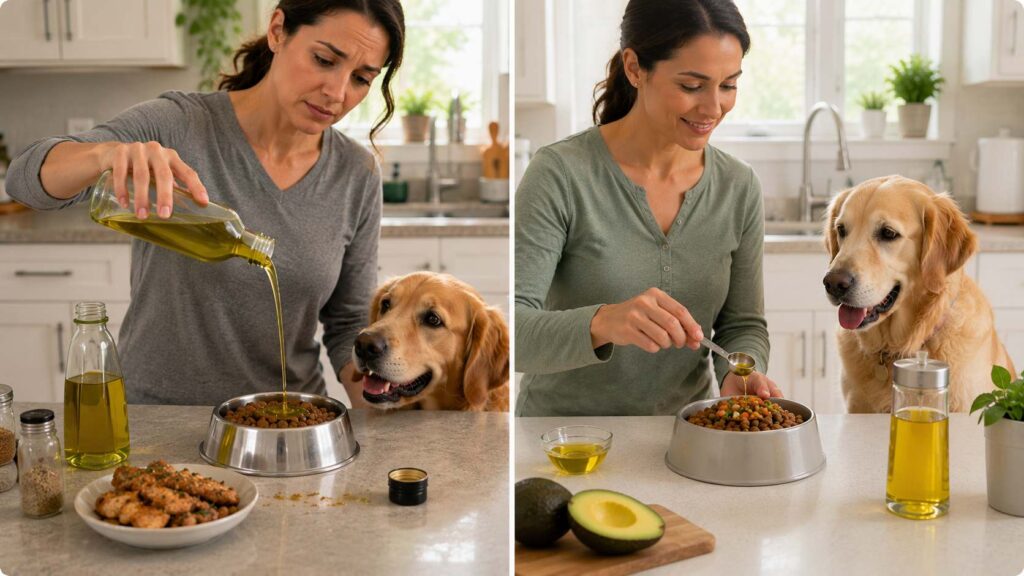
- Pouring oil over food without measuring it
- Forgetting to account for the extra calories
- Giving added oil to a dog with a history of pancreatitis or fat intolerance
- Replacing fish oil with avocado oil and expecting the same omega-3 benefits
- Using oil to manage itching, arthritis or digestive problems without identifying the cause
- Applying it to infected, inflamed or broken skin
- Overlooking garlic, onion or other unsafe ingredients in flavoured oils
- Continuing to use it after vomiting, diarrhoea or appetite changes appear
Final Thoughts
Avocado oil is generally a low-concern exposure for most healthy dogs, but low concern does not mean nutritionally useful. Dogs eating a complete and balanced diet rarely need extra oil, and its high fat and calorie content means it should be used cautiously rather than added casually.
A small accidental lick of plain avocado oil is unlikely to be an emergency in an otherwise healthy dog. A larger amount, repeated digestive symptoms or exposure involving guacamole, infused oil, avocado skin or a pit requires more caution.
Before using avocado oil as a supplement, ask one practical question: What specific problem am I trying to solve? For joint pain, itching, dry skin or digestive trouble, there are usually better-supported options—and often an underlying cause that needs veterinary attention.
Frequently Asked Questions
1.Is plain avocado oil toxic to dogs?
Plain, food-grade avocado oil is not considered a major persin-poisoning risk for dogs. That makes it different from avocado leaves, skin and other plant parts.
It is still concentrated fat, however, so large amounts may cause vomiting, diarrhoea or pancreatitis in susceptible dogs. Flavoured oils containing onion or garlic should be treated as a separate and potentially more serious exposure.
2.Can dogs eat food cooked in plain avocado oil?
A small amount of plain avocado oil in otherwise dog-safe food is unlikely to harm most healthy dogs. Check the entire dish before offering it, because onion, garlic, sauces, excessive salt, chilli and rich seasonings are often the greater concern.
Even safe table food should remain an occasional extra rather than replacing a complete dog diet.
3.Can avocado oil cause pancreatitis?
Avocado oil can contribute to pancreatitis risk because it is high in fat, although the risk depends on the amount consumed and the individual dog.
Dogs with previous pancreatitis, obesity, high triglycerides or known fat intolerance are more vulnerable. Contact your veterinarian if a dog consumes a large amount or develops repeated vomiting, abdominal pain, lethargy or loss of appetite.
4.Is avocado oil better than fish oil for joint support?
No. Fish oil provides EPA and DHA, the marine omega-3 fatty acids associated with better-established veterinary evidence for joint and inflammatory support.
Avocado oil is mainly a source of monounsaturated fat and does not provide the same fatty acids. It should not be used as a direct replacement for a properly selected fish-oil product.
5.Can avocado oil help with dry or itchy skin?
There is limited evidence that ordinary avocado oil provides a specific benefit for dry or itchy skin in dogs. It may add dietary fat, but it will not treat common causes such as allergies, fleas, mites, yeast, bacterial infection or hormonal disease.
Persistent itching, redness, odour, hair loss or repeated paw licking should be assessed by a veterinarian.
6.Is it safe to put avocado oil directly on my dog’s paws?
It may be tolerated on a small area of healthy, unbroken skin, but dogs commonly lick it off, turning topical use into an uncontrolled oral dose.
Avoid applying it to cracked pads, open wounds, hot spots, infected skin or unexplained inflammation. A veterinary paw balm or treatment chosen for the underlying problem is usually a better option.
7.Can puppies have avocado oil?
A puppy eating a complete and balanced growth diet should not need added avocado oil. Extra fat can upset digestion, add unnecessary calories and alter the balance of an already formulated diet.
Speak to your veterinarian before adding any oil to a puppy’s food, especially if the puppy has loose stools, poor growth, a medical condition or is eating a homemade diet.
#. Related Articles:
2. Can Dogs Drink Alkaline Water?