
Why do dogs snore? It’s a question that often comes to mind when you’re half asleep and a low, rattling snore starts somewhere near your feet. You look over, and there’s your dog, completely out cold, making enough noise to wake the room.
Your first reaction is probably to smile. Your second may be a small flicker of doubt: is that actually normal?
The answer depends on the pattern. Occasional snoring can happen in perfectly comfortable dogs, especially during deep sleep or in certain positions. But snoring can also be an early clue that something is narrowing your dog’s upper airway. The sound alone can’t tell you which you’re dealing with.
A better way to judge it is to ask the questions that matter clinically: Has your dog always snored, or is this new? Does it happen only during sleep? Is breathing otherwise easy? Are any other symptoms appearing with it?
Those clues can help you decide whether you’re hearing a harmless bedtime habit or something that deserves veterinary attention.
What’s Actually Happening When a Dog Snores
Snoring happens when airflow through the upper airway becomes turbulent enough to make nearby tissues vibrate.
Normally, air moves through the nose and throat with relatively little noise. If part of that pathway narrows—often around the nasal passages, soft palate, or back of the throat—the tissues can vibrate as air moves past them. That’s what creates the familiar snoring sound.
During sleep, muscles supporting the upper airway relax. That helps explain why a dog who breathes quietly all day may become surprisingly noisy once they’re deeply asleep.
Sleeping position can play a role too. A dog may snore more when lying on their back or with their head and neck positioned in a way that narrows the airway. If the snoring disappears when they shift onto their side and their breathing remains easy, that pattern is generally less concerning.
What matters most isn’t the noise by itself. It’s whether the snoring is new, worsening, accompanied by increased breathing effort, or happening when your dog is awake.
Has Your Dog Always Snored, or Is This New?

This is one of the most useful questions you can ask.
Long-Standing, Occasional Snoring
If your dog has snored occasionally for months or years, only does it while asleep, breathes comfortably while awake, exercises normally, and hasn’t shown any recent change, the pattern is more reassuring.
Sleep position and individual anatomy may simply make some dogs noisier sleepers than others.
There is one important exception: don’t assume long-standing snoring is automatically harmless in a flat-faced dog. Brachycephalic breeds are more prone to anatomical airway narrowing, and chronic noisy breathing can sometimes be part of brachycephalic obstructive airway syndrome (BOAS). VCA notes that affected dogs may snort or snore even when mildly affected.
Snoring That’s Suddenly Started
New snoring in a dog who previously slept quietly deserves more attention because something has changed.
Possible explanations range from temporary nasal inflammation to respiratory disease or material lodged in a nasal passage. Merck Veterinary Manual lists snoring alongside signs such as sneezing, nasal discharge, open-mouth breathing, and labored breathing in dogs with rhinitis or sinusitis.
Look at what appeared around the same time. Did your dog also begin sneezing? Is there nasal discharge? Did the change follow a period of intense sniffing outdoors? Has their breathing become noisier while awake?
You don’t need to identify the cause yourself. The goal is to recognize that a new symptom deserves more attention than an unchanged lifelong habit.
Snoring That’s Gradually Getting Worse
Progressive snoring is another pattern worth discussing with your veterinarian.
Book an assessment if the snoring is becoming more frequent or is accompanied by changes such as:
- Noisy breathing while awake
- Increased effort to breathe
- Repeated waking or restless sleep
- Gasping during sleep
- Reduced exercise tolerance
- Heat intolerance
- Persistent nasal discharge
- Changes in bark or voice
- Gagging or coughing around food or water
This is especially important when an older dog develops new or progressively louder upper-airway noise.
A useful rule is to compare your dog’s breathing with their own normal baseline, not with how loudly another dog snores.
Use the Clues Around the Snoring to Narrow Things Down

Once you know whether the snoring is old, new, or worsening, the symptoms around it become far more useful than the volume of the snore.
Snoring that changes with sleeping position. If your dog snores mainly on their back and becomes quiet after shifting onto their side, while otherwise breathing easily and behaving normally, position may be contributing. Don’t repeatedly wake or reposition a comfortable dog simply because the sound is annoying.
Snoring in a short, flat-faced breed. French Bulldogs, Pugs, English Bulldogs, Boston Terriers, Shih Tzus, and other brachycephalic dogs can have narrowed nostrils and other upper-airway changes that restrict airflow. BOAS may cause snoring, snorting, exercise intolerance, gagging, labored breathing, or open-mouth breathing. Cornell also lists collapse and bluish gums among severe signs.
The key point is simple: common for the breed does not necessarily mean healthy.
Snoring alongside recent weight gain. Excess body condition can worsen breathing problems in some dogs, particularly when an already narrow airway is involved. Rather than assuming weight is the entire explanation, ask your vet to assess your dog’s body condition and airway if the snoring is new or worsening.
Snoring plus sneezing or nasal discharge. This combination points toward a nasal problem rather than ordinary positional snoring. Rhinitis and sinusitis can cause sneezing, discharge, snoring, and increased breathing effort.
Sudden snoring with repeated sneezing or pawing at the nose. A foreign object in the nasal passage becomes more plausible when symptoms begin abruptly, particularly when there is discharge from only one nostril. Merck notes that facial pawing together with one-sided nasal discharge can suggest a nasal foreign body.
Snoring with bad breath, facial swelling, or mouth pain. Dental or oral disease may occasionally affect nearby tissues and contribute to changes in airflow. These signs warrant an oral examination rather than simply treating the noise as a sleep problem.
Progressive snoring with one-sided discharge or a nosebleed. This should be examined by a veterinarian. There are several possible causes, so don’t jump straight to the worst conclusion, but persistent one-sided symptoms or bleeding shouldn’t be written off as allergies. Nasal masses are among the conditions that can produce sneezing, nosebleeds, and snoring.
Snoring-like noise combined with a changed bark, gagging, or trouble after exercise. If the sound occurs while your dog is awake as well as asleep, it may not actually be ordinary snoring. Problems involving the throat or larynx can create abnormal airway noise, particularly when exercise, eating, or drinking brings on other symptoms.
Wait—Is It Actually Snoring?
Not every strange breathing noise is snoring. The distinction matters most when a noise continues while your dog is awake.
| Sound | When it usually happens | What owners may notice | Why the difference matters |
|---|---|---|---|
| Snoring | Mostly during sleep | Rhythmic, low rattling or vibrating sound | Often reflects narrowing of the upper airway during sleep |
| Snorting | Awake or asleep | Brief nasal bursts | May be normal in some situations but differs from continuous snoring |
| Reverse sneezing | Usually while awake | Sudden repeated inward-snorting episode | Commonly mistaken for choking or breathing distress |
| Wheezing | Awake or asleep | Whistling or higher-pitched breathing sound | May involve a different part of the respiratory tract |
| Stertor | Awake or asleep | Low-pitched, snore-like upper-airway noise | Can indicate narrowing in the nose or throat |
| Stridor | Usually while breathing while awake | Harsh, higher-pitched airway noise | Can indicate significant upper-airway narrowing and deserves prompt attention, especially with increased breathing effort |
You don’t need to identify the exact sound yourself. A 30–60 second phone video that captures the noise along with your dog’s chest, abdomen, and head position can be much more useful to your veterinarian than trying to reproduce or describe it from memory.
If your dog is visibly struggling to breathe, however, don’t delay care to record the perfect video.
Warning: breathing difficulty is not ordinary snoring.
Seek urgent veterinary care if your dog develops open-mouth breathing that isn’t normal panting, obvious abdominal effort with each breath, an extended head and neck while trying to breathe, blue or grey gums, marked weakness, or collapse. Cornell identifies these as signs of canine respiratory distress.
The Most Important Distinction: Sleeping Snore or Noisy Breathing While Awake?
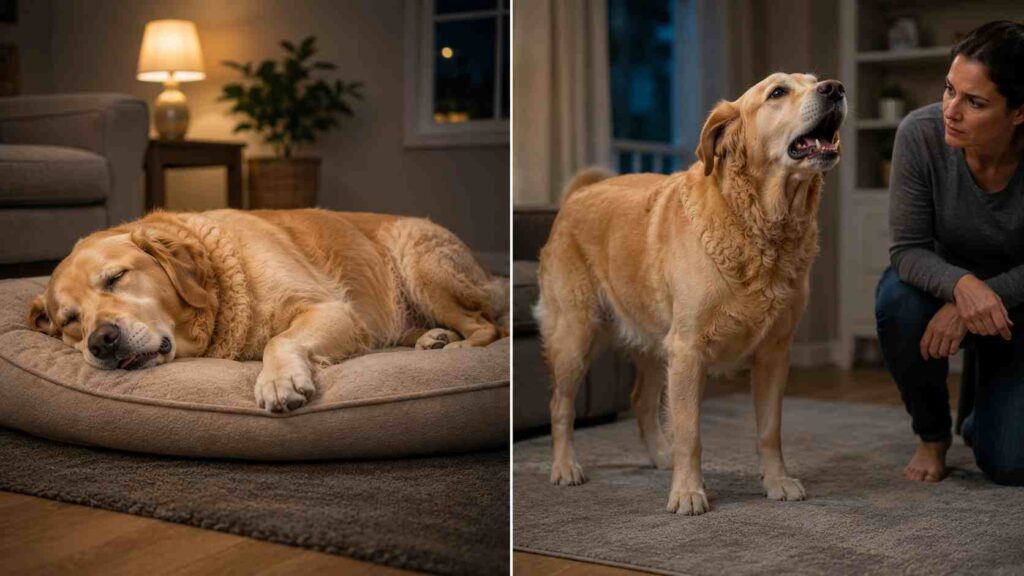
This may be the single most useful clue when deciding how concerned to be.
If the noise stops when your dog wakes up, and their breathing immediately returns to being quiet, easy, and comfortable, that’s generally reassuring—especially if the snoring is long-standing or clearly linked to sleeping position.
If the noisy breathing continues while your dog is awake, treat it differently. Snorting, wheezing, stertor, or other airway noise during normal activity can point to an upper-airway problem rather than simple sleep-related snoring. Pay particular attention if it comes with reduced exercise tolerance, heat intolerance, gagging, a changed bark or voice, or visible effort to breathe.
Loudness alone is a poor guide to severity. A dog may snore impressively while sleeping yet breathe comfortably otherwise, while another dog may make relatively little noise but show concerning abdominal effort or difficulty moving air. Breathing effort, progression, awake symptoms, sleep disruption, and exercise tolerance matter more than volume.
Special Attention for Flat-Faced Dogs
If you own a brachycephalic dog, snoring may seem so familiar that it’s easy to dismiss. But “he’s always snored” doesn’t necessarily mean the airway is functioning normally.
Flat-faced breeds have shortened skulls and may also have narrowed nostrils, an elongated or thickened soft palate, and other anatomical changes that reduce space in the upper airway. These abnormalities can contribute to Brachycephalic Obstructive Airway Syndrome (BOAS). Cornell lists noisy breathing, reduced ability to exercise, gagging, laboured breathing, open-mouth breathing, blue gums, and collapse among possible signs.
Snoring alone does not diagnose BOAS. But if your French Bulldog, Pug, Bulldog, Boston Terrier, Shih Tzu, or other flat-faced dog also tires quickly, struggles in warm weather, gags after eating or drinking, breathes noisily while awake, or has difficulty settling comfortably to sleep, ask your veterinarian for an airway assessment.
The important distinction is simple: a breathing problem can be common within a breed without being healthy or harmless.
Could a Snoring Dog Have Sleep Apnoea?

Snoring by itself isn’t enough to diagnose sleep apnoea. Many dogs snore without having repeated airway obstruction during sleep.
Sleep-disordered breathing has been documented in dogs, and research from the University of Helsinki found it was more common in brachycephalic dogs, although it can also occur in longer-muzzled dogs.
Patterns worth discussing with your vet include:
- Repeated pauses in breathing during sleep
- Gasping or suddenly waking after a pause
- Restless or repeatedly interrupted sleep
- Frequent changes in sleeping position
- Sleeping with the head and neck stretched out
- Other signs of airway trouble while awake
If you notice these episodes, a short video showing your dog’s breathing and body position can be useful for your veterinarian. Snoring volume itself matters less than whether breathing repeatedly stops or becomes difficult.
Quick Decision Table: Monitor, Book a Vet Visit, or Seek Urgent Help
| Pattern | Monitor at home | Book a vet visit | Emergency |
|---|---|---|---|
| Occasional, sleep-only snoring with easy breathing | Yes | ||
| Snoring gradually getting worse | Yes | ||
| New, persistent snoring | Yes | ||
| Noisy breathing while awake | Yes | If breathing is difficult | |
| Persistent one-sided nasal discharge | Yes | ||
| Nosebleed with worsening nasal blockage | Yes | If breathing is compromised | |
| Repeated pauses or gasping during sleep | Yes | If breathing does not recover normally | |
| New exercise or heat intolerance | Yes | If severe | |
| Obvious struggle to breathe | Yes | ||
| Blue or grey gums | Yes | ||
| Collapse | Yes |
This table is meant to help you judge urgency, not diagnose the cause. When you’re unsure, particularly with new or progressive breathing changes, contact your veterinarian.
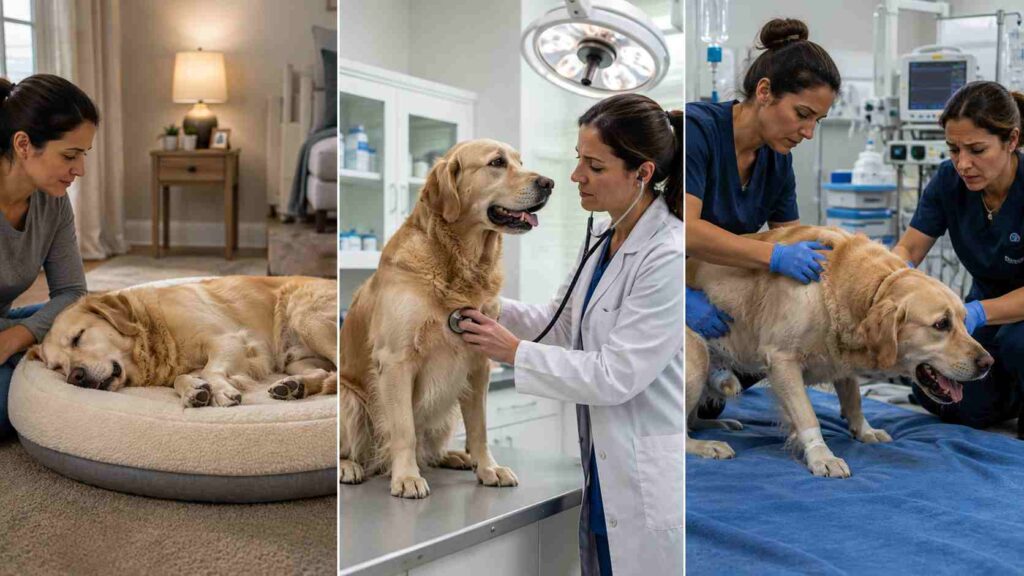
Don’t Mistake Breathing Difficulty for Ordinary Snoring
A few signs should never be brushed off as “just snoring.” Cornell identifies increased breathing sounds, abdominal effort, open-mouth breathing, an extended head and neck, blue-tinged gums, weakness, and collapse among signs of canine respiratory distress.
Seek urgent veterinary care if your dog has:
- Obvious difficulty getting air in or out
- Strong or exaggerated abdominal effort with each breath
- Rapid open-mouth breathing that isn’t normal panting
- Blue or grey gums or muzzle
- Collapse or marked weakness
- Head and neck stretched forward to breathe
- Increasingly noisy or strained breathing
- Breathing difficulty that’s rapidly getting worse
These are not “wait and see” symptoms. If your dog appears unable to breathe comfortably, treat it as an emergency rather than waiting to see whether the noise settles on its own.
Before Calling Your Vet, Collect Better Clues
A short history can tell your vet a lot. Before you call, run through this checklist:
- Has the snoring always happened, or is it new?
- Is it occasional or nightly?
- Is it becoming louder or more frequent?
- Does it only happen while asleep?
- Does it continue once your dog wakes up?
- Does changing sleeping position affect it?
- Is the chest moving comfortably, or is the abdomen working hard with each breath?
- Does your dog wake restless, gasp, or seem unable to settle?
- Any sneezing, nasal discharge, or nosebleeds—and from one nostril or both?
- Any coughing, gagging, or change in bark or voice?
- Any trouble after eating, drinking, exercise, or in warm weather?
- Has your dog’s weight or body condition changed recently?
- Have you recorded a short video with sound?
That last one can be especially useful. A brief clip showing the noise along with your dog’s chest, abdomen, and head position gives your vet a chance to see an episode that may not happen in the examination room.
If your dog is visibly struggling to breathe, though, don’t delay emergency care just to record a video.
What Can You Safely Do at Home?

For occasional, position-related snoring: let your dog choose a comfortable sleeping position. A supportive bed may help some dogs settle on their side, but there’s no need to repeatedly wake or reposition a dog who is sleeping comfortably and breathing easily.
To reduce airway irritants: keep your dog’s sleeping area smoke-free, wash bedding regularly, and limit exposure to aerosols, heavily fragranced products, and other obvious airborne irritants.
To support a healthy body condition: if you’re unsure whether your dog is overweight, ask your vet to assess their body condition rather than relying on appearance alone. If weight loss is recommended, gradual changes to food intake and activity should be tailored to the individual dog—particularly if breathing or exercise tolerance is already limited.
Treat the cause, not just the noise. Persistent or worsening snoring needs cause-specific management. BOAS, nasal inflammation, dental disease, and physical nasal obstruction are very different problems and shouldn’t be treated with the same home remedy.
Quick Tips for Tonight
- Compare tonight’s breathing with your dog’s normal pattern.
- Notice whether the noise stops after waking.
- Watch breathing effort, not just volume.
- Note whether sleeping position changes the sound.
- Look for sneezing, nasal discharge, or nosebleeds.
- Watch for repeated waking, gasping, or restless sleep.
- Record a short video if your dog is otherwise stable.
- Keep flat-faced dogs cool and don’t dismiss chronic noisy breathing as simply “normal for the breed.”
- If breathing becomes difficult, treat it as urgent rather than waiting until morning.
Common Mistakes Dog Owners Make With Snoring
- Assuming all snoring is harmless.
- Assuming flat-faced dogs are simply “supposed” to breathe noisily.
- Judging severity only by how loud the sound is.
- Ignoring a sudden or progressive change.
- Overlooking noisy breathing that continues while the dog is awake.
- Labelling every nasal symptom as an allergy.
- Assuming snoring automatically means sleep apnoea.
- Confusing reverse sneezing, wheezing, or other airway noises with snoring.
- Brushing off new exercise or heat intolerance.
- Ignoring persistent discharge from one nostril.
- Repeatedly waking the dog instead of observing and documenting the pattern.
- Trying to stop the noise without investigating why it started.
Merck Veterinary Manual notes that rhinitis can cause sneezing, nasal discharge, snoring, open-mouth breathing, and laboured breathing; facial pawing with discharge from one nostril can also suggest a nasal foreign body.
A Note on Home Remedies and Medication

It’s tempting to reach for something that helped your own blocked nose, but don’t give your dog human decongestants, cold medicines, nasal sprays, sleep medications, or antihistamines unless your veterinarian specifically recommends the product and dose.
Some over-the-counter human decongestants can be toxic to dogs, and combination products may contain other unsafe ingredients.
If you think congestion is behind the snoring, contact your vet before trying medication or concentrated essential oils. Removing obvious environmental irritants is safer than attempting to medicate an unexplained breathing noise at home.
What Your Vet May Want to Know
Your dog’s history can be almost as helpful as hearing the sound itself. Be ready to explain:
- When the snoring started
- Whether it is stable or getting worse
- Whether it occurs only during sleep
- Whether noisy breathing happens while awake
- Your dog’s breed and body condition
- Any nasal or dental symptoms
- Changes in exercise or heat tolerance
- Any coughing, gagging, or trouble eating or drinking
Bring the video if you have one. Ideally, it should show the sound along with your dog’s chest, abdomen, and head position.
From there, your vet may consider causes such as positional airway narrowing, brachycephalic airway disease, nasal inflammation, infection, a nasal foreign body, dental disease, or another upper-airway disorder. Persistent nasal disease may require more than a routine examination; depending on the findings, diagnostic testing can include imaging or examination of the nasal passages.
Key Takeaways
- Snoring occurs when airflow causes tissues in a narrowed upper airway to vibrate.
- Long-standing, sleep-only snoring with comfortable breathing is generally more reassuring than a new or worsening pattern.
- New, progressive, or awake noisy breathing deserves veterinary attention.
- Loudness alone doesn’t determine severity—breathing effort and accompanying symptoms matter more.
- Flat-faced breeds commonly make airway noise, but chronic breathing difficulty should not be accepted as healthy simply because of breed anatomy. Brachycephalic dogs can develop obstructive airway problems related to their shortened facial structure.
- Blue or grey gums, collapse, or obvious breathing distress are emergencies.
The Bottom Line
Plenty of dogs snore occasionally without anything being wrong. Sleeping position and individual anatomy can make an otherwise comfortable dog surprisingly noisy.
What matters is the pattern. Ask yourself: Is this new? Is it getting worse? Does it stop when my dog wakes up? Is breathing easy otherwise? Are any other symptoms appearing with it?
If everything is unchanged and your dog breathes comfortably while awake, monitoring may be reasonable. If the pattern has changed, the noise continues while awake, or other symptoms have appeared, record an episode if it’s safe to do so and arrange a veterinary assessment.
Frequently Asked Questions
1.Is it normal for a puppy to snore?
Occasional sleep-only snoring can happen in puppies, particularly in short-muzzled breeds or certain sleeping positions. Persistent snoring, noisy breathing while awake, poor exercise tolerance, or visible breathing effort shouldn’t simply be assumed to disappear as the puppy grows.
2.Can allergies cause a dog to snore?
They can contribute in some dogs if nasal inflammation narrows the airway. Merck Veterinary Manual notes that allergic rhinitis can cause watery nasal discharge and sneezing, while rhinitis more broadly can also cause snoring. However, allergies are only one possible explanation for nasal symptoms, so persistent snoring and discharge shouldn’t automatically be labelled an allergy.
3.Why does my older dog suddenly snore when they never used to?
Any new breathing noise in an older dog deserves attention, particularly if it is persistent or accompanied by nasal discharge, nosebleeds, facial changes, dental problems, or noisy breathing while awake. It doesn’t automatically indicate a serious disease, but “old age” by itself isn’t a diagnosis.
4.Does snoring mean my dog is sleeping deeply?
Not necessarily. Snoring reflects airflow through a narrowed or relaxed upper airway; it doesn’t reliably tell you how deep or restorative your dog’s sleep is. Repeated waking, gasping, or restless sleep is more useful information to share with your vet.
5.Can changing my dog’s diet reduce snoring?
Diet doesn’t directly cure snoring. If excess body weight is contributing to airway problems, an appropriate weight-management plan may help, but the underlying cause should still be considered—especially when snoring is new or accompanied by other breathing symptoms.
6.Is snoring worse in hot weather?
Heat is particularly important for flat-faced dogs because obstructed upper airways can make effective breathing and cooling more difficult. If a dog that snores also struggles noticeably in warm conditions or during exercise, that combination deserves veterinary assessment rather than being dismissed as a breed quirk.
7.Should I wake my dog when they’re snoring?
Usually not if they’re sleeping comfortably and breathing without effort. It’s more useful to observe the pattern or record a short video. If the “snoring” is accompanied by gasping, marked breathing effort, abnormal gum colour, severe weakness, or another sign of respiratory distress, seek veterinary help instead of simply waking the dog and watching to see what happens.
#. Related Articles: