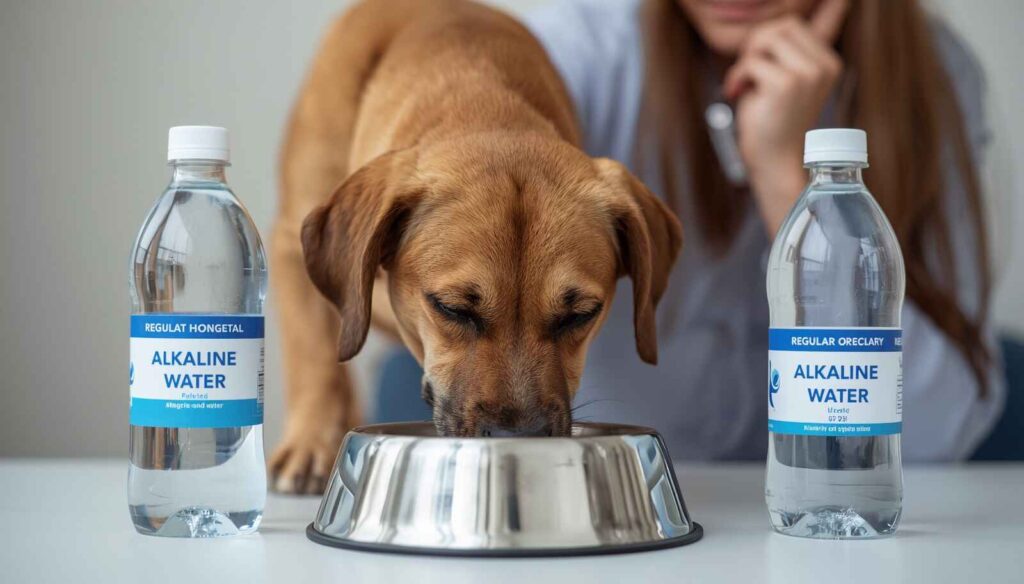
Can dogs drink alkaline water safely? A few sips of plain, potable alkaline water are unlikely to harm a healthy dog, but there is no strong evidence that it provides routine health benefits.
Picture three different dogs. The first is a healthy Labrador who takes a couple of sips from a bottle labelled pH 9.5 during a walk. The second has a history of bladder stones, and someone has suggested switching him to alkaline water to change his urine chemistry. The third has just drunk from the strongest setting on a household water ioniser.
All three situations may be described as “drinking alkaline water,” but they do not carry the same level of risk.
A few sips of plain, potable alkaline water are unlikely to harm a healthy dog. However, there is no strong evidence that alkaline water provides routine health benefits for dogs. What matters more is the exact product, the amount consumed, your dog’s medical history, and whether any symptoms appear.
“Unlikely to cause immediate harm” does not mean “beneficial” or “recommended for daily use.” Here is how to tell the difference.
Start With a Four-Factor Check
Before deciding how concerned you need to be, work through four questions.
1. What Did Your Dog Actually Drink?
Plain bottled alkaline water and naturally alkaline spring water are very different from:
- Mineral-added water
- Electrolyte-enhanced water
- Flavoured or vitamin-enriched water
- Carbonated alkaline water
- High-pH water from a household ioniser
- Concentrated or non-potable alkaline products
Check the full label rather than relying on the word “alkaline” on the front. Added sodium, caffeine, sweeteners, flavourings, supplements, or other ingredients may be more important than the water’s pH.
2. How Much Did Your Dog Drink, and How Often?
A few licks or sips are not the same as:
- Drinking an entire bowl
- Receiving alkaline water every day
- Using it as the dog’s only water source
- Repeatedly drinking from an unknown ioniser setting
The amount, concentration, and length of exposure all affect the level of concern.
3. Is Your Dog Healthy or Medically Vulnerable?
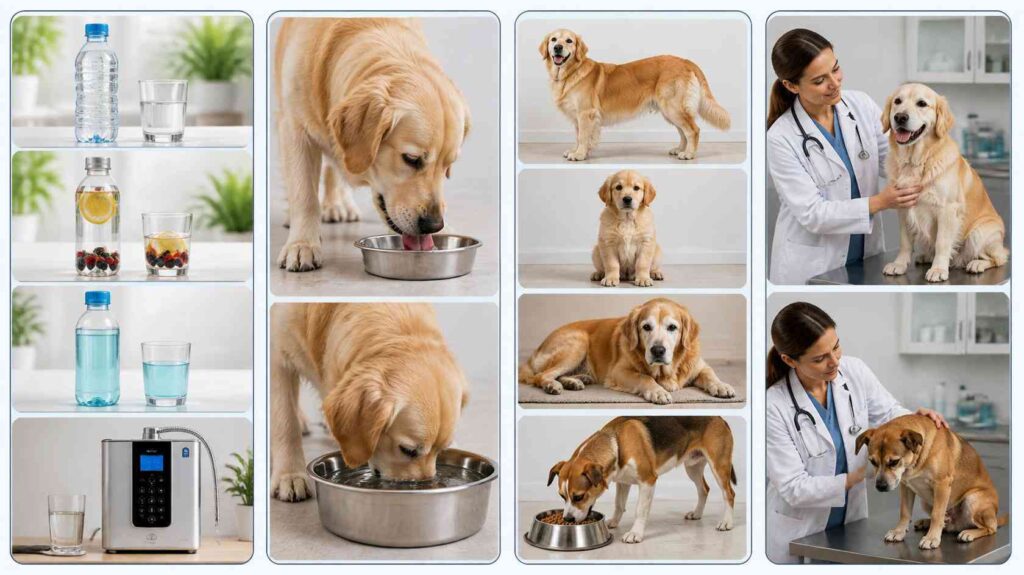
Extra caution is appropriate for:
- Puppies
- Senior dogs
- Pregnant or nursing dogs
- Dogs with kidney or heart disease
- Dogs with urinary crystals or bladder stones
- Dogs with gastrointestinal disease
- Dogs taking regular medication
- Dogs eating a prescription renal or urinary diet
A mineral profile that causes no obvious problem in a healthy adult may not suit a dog whose sodium, fluid, or electrolyte intake is being medically managed.
4. Are Any Symptoms Present?
No symptoms after a small amount of potable alkaline water is reassuring. Watch more closely for:
- Vomiting
- Diarrhoea
- Excessive drooling
- Lip licking or mouth irritation
- Weakness or marked lethargy
- Abdominal discomfort
- Refusal to drink
- Trouble swallowing
- Unusual thirst or urination
Quick Risk Guide
- Usually low concern: A healthy dog drinks a small amount of plain, potable alkaline water and remains completely well.
- Contact your veterinarian for guidance: The product contains added minerals or other ingredients, the dog drank a large amount, it has been used regularly, or your dog has an existing medical condition.
- Seek urgent veterinary advice: Your dog drank concentrated alkaline liquid or non-drinking ioniser output, or develops drooling, repeated vomiting, mouth irritation, weakness, breathing difficulty, or trouble swallowing.
Warning: Potable alkaline drinking water is not the same as a strong caustic alkali. Concentrated alkaline products can damage the mouth, oesophagus, and digestive tract.
What “Alkaline” Actually Tells You—and What It Does Not
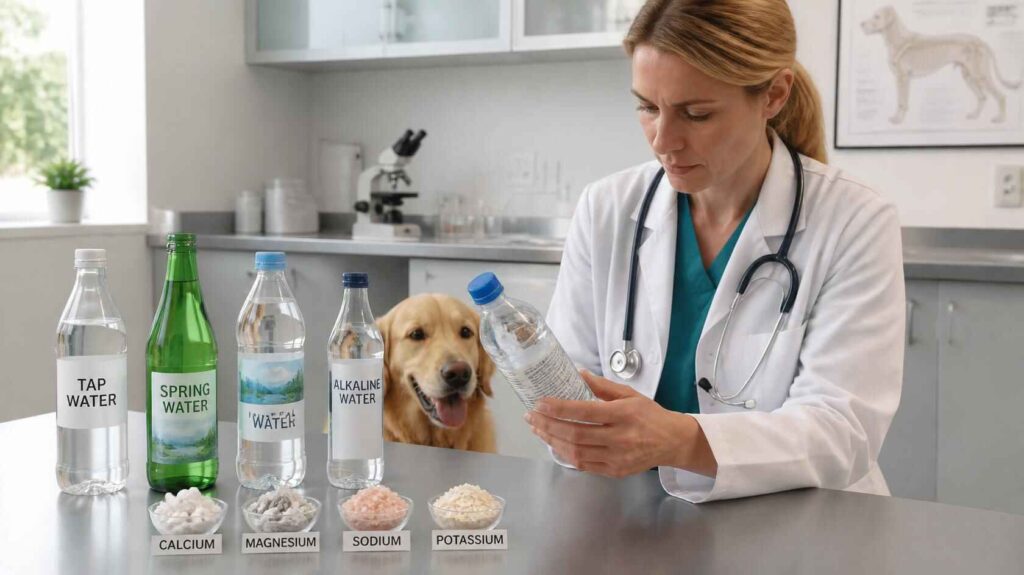
Water is measured on a pH scale. A pH of 7 is neutral, while values above 7 are alkaline. Commercial alkaline drinking water is usually mildly alkaline and intended for human consumption.
That is very different from a strongly alkaline cleaning product, concentrate, or non-potable ioniser output, which may be corrosive.
Alkalinity can occur naturally when water passes through mineral-rich rock. It can also be created by:
- Adding minerals
- Filtration systems
- Electrolysis in a household water ioniser
Two products can display the same pH while having very different compositions. One may be plain filtered water with naturally occurring minerals. Another may contain added sodium, potassium, magnesium, flavourings, sweeteners, or vitamins.
The pH number alone does not tell you whether a product is appropriate for your dog. Its ingredients, mineral content, source, and intended use matter more.
So, Can Dogs Drink Alkaline Water? Three Separate Questions
Treating this as three questions gives a more useful answer.
Will a Small Amount Harm a Healthy Dog?
Usually not. A modest amount of plain, potable alkaline water without unsafe additives is unlikely to cause poisoning in an otherwise healthy dog.
For example, a healthy Labrador taking several sips from an owner’s bottle during a walk would generally need observation, not emergency treatment, provided the product contains nothing concerning and the dog remains well.
Is It Suitable as Everyday Drinking Water?
There is no established need for healthy dogs to drink alkaline water, and research on long-term routine use in dogs is limited.
Fresh, clean, palatable water remains the safest default. A speciality water product should not cause a dog to drink less because the taste is unfamiliar, and ordinary water should never be withheld to force a transition.
Dogs with kidney, cardiac, urinary, or gastrointestinal disease should not have their regular water changed without discussing it with the veterinarian managing their condition.
Does It Provide the Claimed Health Benefits?
There is no good canine evidence that alkaline water:
- Hydrates dogs better than ordinary safe water
- Detoxifies the body
- Improves immunity
- Treats acid reflux
- Repairs kidney function
- Prevents bladder stones
- Improves joint health
- Strengthens puppy bones
- Treats allergies or hair loss
- Extends a dog’s lifespan
Human studies and owner testimonials should not be presented as proof of benefit in dogs.
| Claim | Evidence level | How owners should interpret it |
|---|---|---|
| Fresh water supports normal hydration | Established veterinary principle | Reliable and relevant |
| A few sips of potable alkaline water are unlikely to poison a healthy dog | Practical, risk-based conclusion | Reassuring, but not proof of benefit |
| Alkaline water hydrates dogs better | Unproven in dogs | Do not treat as fact |
| Alkaline water detoxifies or alkalises the body | Unsupported | Misleading health claim |
| Alkaline water treats kidney, urinary, skin, digestive, or joint disease | Unsupported | Do not replace diagnosis or treatment |
Why “Alkalising Your Dog’s Body” Does Not Work That Way
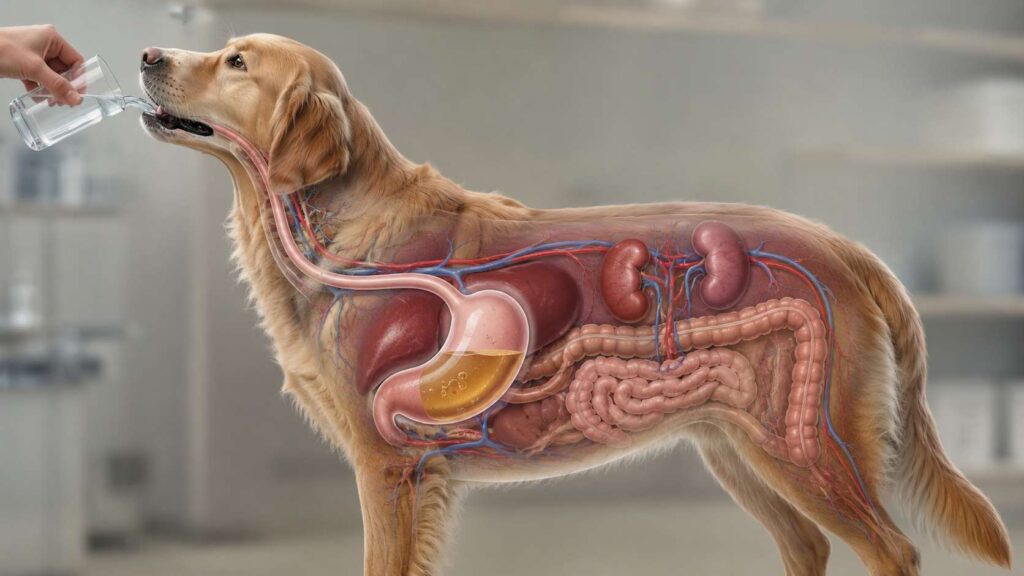
Marketing around alkaline water often suggests that changing what is in the bowl can reset a dog’s internal chemistry. The body is more tightly controlled than that.
Blood pH Is Carefully Regulated
A healthy dog’s blood pH is maintained within a narrow range by the lungs, kidneys, and natural buffering systems. Drinking mildly alkaline water does not meaningfully “alkalise” the blood or flush acidic toxins from the body.
A significant change in blood pH would be a medical problem, not a wellness benefit.
The Stomach Is Supposed to Be Acidic
The stomach’s acidic environment supports digestion and helps control swallowed microbes. Mildly alkaline drinking water may temporarily mix with stomach contents, but it does not permanently neutralise gastric acid.
There is also no clear canine evidence that alkaline water should routinely be separated from meals or that it provides a reliable treatment for acid reflux.
A dog with repeated regurgitation, vomiting, swallowing discomfort, or poor appetite needs a veterinary assessment rather than a change in water pH.
Urine pH Is More Complicated
Urine pH can change, but it is influenced by several factors, including:
- Diet
- Urinary infection
- Medication
- Kidney function
- Hydration and urine concentration
- Mineral balance
- Metabolic disease
- The type of urinary crystals or stones present
Drinking-water pH alone does not determine urine pH.
This matters because different urinary stones require different management. A strategy that may be appropriate for one stone type could be unsuitable for another. Owners should not try to raise or lower a dog’s urine pH using bottled water or home test strips without a veterinary diagnosis.
Vet Advice: A dog with urinary crystals, bladder stones, recurrent infections, kidney disease, or a prescription urinary diet should remain on the veterinarian’s recommended feeding and hydration plan. Alkaline water is not a substitute for urinalysis, urine culture, imaging, stone analysis, or prescription treatment.
Claims that alkaline water “balances body pH,” “removes acidic toxins,” or “makes digestion alkaline” do not reflect how canine blood, stomach, and urinary systems actually work.
Where This Gets Genuinely Risky: Urinary Health

Urinary health is the area where well-meaning advice about alkaline water can cause real problems.
Bladder stones are not one condition. Struvite, calcium oxalate, urate, and cystine stones form under different circumstances, and the management that suits one type may be unsuitable for another. In dogs, struvite stones are often associated with urinary tract infection rather than diet alone. Trying to raise urine pH without knowing the cause of the problem can therefore work against the treatment your dog actually needs.
A home urine-pH strip cannot diagnose a urinary disorder. It cannot identify the stone type, detect infection, assess urine concentration, or replace urinalysis, urine culture, imaging, or stone analysis.
| Situation | Why caution matters | What to do |
|---|---|---|
| No urinary history | There is no reason to deliberately alter urine pH | Provide clean, fresh, palatable water |
| Recurrent urinary infections | Infection itself can affect urine pH | Ask your vet about urinalysis and urine culture |
| Struvite crystals or stones | Often associated with infection in dogs | Follow the prescribed treatment and diet |
| Calcium oxalate history | Urine-pH management differs from struvite management | Use an individual veterinary plan |
| Unknown stone type | Guessing the wrong strategy may increase risk | Identify the stone or crystal type first |
| Prescription urinary diet | Added minerals or other changes may interfere with the diet’s purpose | Check with the prescribing veterinarian before changing water |
Warning: Do not try to manipulate your dog’s urine pH through alkaline water, supplements, or home test strips. Urinary treatment should be based on a confirmed diagnosis.
If your dog has a history of urinary crystals, bladder stones, painful urination, blood in the urine, or recurrent infections, discuss any regular water change with your vet first.
For more information about urinary diseases and stone management in dogs, see the MSD Veterinary Manual.
Dogs Who Need a Vet’s Input Before Regular Use
Some dogs need individual advice before alkaline water becomes part of their daily routine.
- Dogs with kidney disease: Mineral and sodium content may matter, especially when the dog is eating a prescription renal diet or has specific fluid and electrolyte requirements.
- Dogs with heart disease: Sodium restriction and medication are often part of the treatment plan, so mineral-enhanced water may be inappropriate.
- Puppies, particularly large-breed puppies: Healthy growth depends on carefully balanced calcium, phosphorus, energy, and vitamin D from a complete diet. Extra minerals are not automatically beneficial.
- Pregnant, nursing, senior, or medically fragile dogs: Reduced water intake or an unexpected change in mineral intake may have greater consequences.
- Dogs with gastrointestinal disease or reflux: There is no good evidence that alkaline water treats the underlying condition, and persistent digestive signs need proper assessment.
- Dogs taking regular medication: Avoid assuming alkaline water interacts with every medicine, but ask the prescribing vet before making it the dog’s exclusive water source.
- Dogs on prescription renal or urinary diets: These diets are designed around controlled mineral and nutrient levels, so unplanned additions may undermine the treatment strategy.
Seek veterinary advice if your dog is drinking noticeably more or less than usual. A sudden change in thirst can be a sign of kidney disease, diabetes, hormonal illness, infection, medication effects, or another medical problem—not simply a preference for a new type of water.
Read the Label Before You Read the Marketing

Before offering any alkaline water product, check that it is clearly labelled as potable drinking water and has a complete ingredient list.
Product-Label Checklist
- Plain drinking water rather than a concentrate or non-potable ioniser output
- No xylitol or other unsafe sweeteners
- No caffeine
- No energy-drink or sports-drink ingredients
- No unnecessary flavourings
- No unexplained herbal or vitamin blend
- No unusually high sodium content
- No excessive mineral or electrolyte load
- No carbonation if it causes discomfort or reduces drinking
- Normal fresh water remains available
“Electrolyte water” deserves particular caution. Most products are formulated for people and may contain sodium, sugar, sweeteners, vitamins, or flavourings that a dog does not need.
It is also important to distinguish electrolyte water from veterinary fluid therapy. A dog that is dehydrated because of repeated vomiting, diarrhoea, heat illness, kidney disease, or another medical problem may need examination and professionally selected fluids—not a human hydration drink.
How Alkaline Water Stacks Up Against Other Options
| Water type | Main advantage | Main concern | Everyday use? |
|---|---|---|---|
| Regulated tap water | Convenient and routinely monitored | Taste, plumbing issues, or local water advisories | Usually suitable when the local supply is safe |
| Filtered tap water | May improve taste and remove selected substances | Filters and reservoirs need regular cleaning and replacement | Often a practical choice |
| Bottled spring water | Portable and usually palatable | Cost and variable mineral content | Usually suitable if plain |
| Mineral water | Naturally contains minerals | Sodium and mineral levels vary | Check the label before regular use |
| Alkaline water | No established canine advantage | Added minerals, additives, and unsupported health claims | Generally unnecessary |
| Distilled water | Very low mineral content | No clear reason to use it as the routine default | Usually unnecessary |
| Electrolyte water | Product-dependent | Human formulation, sodium, sugar, sweeteners, or supplements | Use only with veterinary guidance |
| Flavoured water | May attract some reluctant drinkers | Sweeteners, caffeine, flavourings, and reduced ingredient transparency | Generally avoid |
| Carbonated water | No established benefit | Gas, discomfort, and poor palatability | Not preferred |
The best water for most dogs is not the most expensive option on the shelf. It is water that is:
- Safe
- Fresh
- Clean
- Additive-free
- Readily available
- Palatable enough that the dog drinks normally
The source also matters. Households using private wells, bore water, or rainwater tanks may need periodic water-quality testing and careful system maintenance. Local contamination or boil-water notices should be taken seriously. In those situations, checking microbial and chemical safety is more important than choosing water based on pH.
If Your Dog Has Already Drunk Alkaline Water
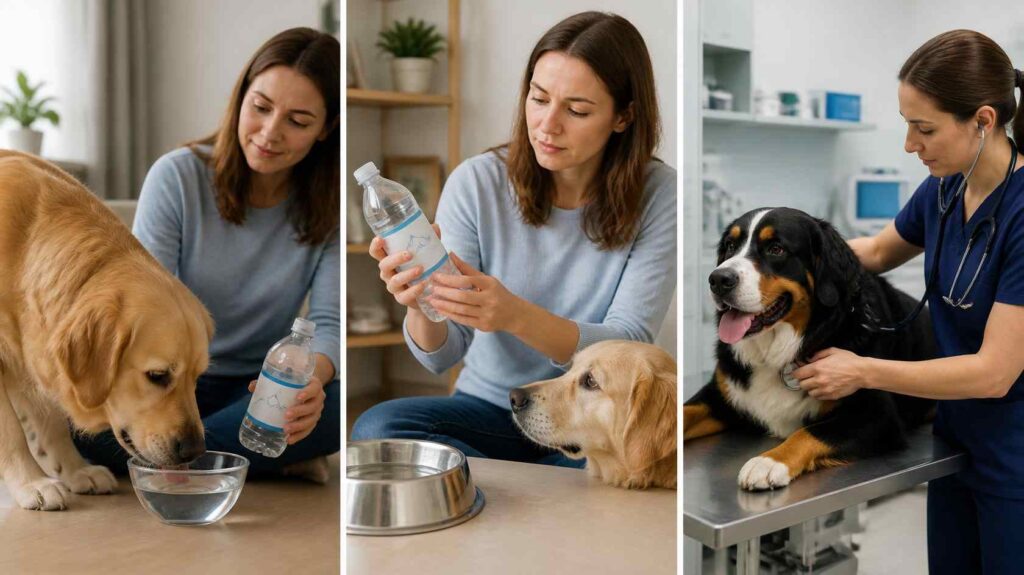
The right response depends on what your dog drank, how much they consumed, and whether they’re showing any symptoms.
A Few Sips of Plain Bottled Alkaline Water
If your dog has taken only a few sips of plain, potable alkaline water:
- Check the ingredient list to make sure it contains no added sweeteners, caffeine, or other unnecessary ingredients.
- Offer their usual fresh drinking water.
- Monitor their appetite, energy level, and digestion over the next 24 hours.
Most healthy dogs will not need treatment after a small accidental exposure.
A Full Bowl or Regular Daily Use
If your dog has drunk a full bowl or has been drinking alkaline water regularly:
- Review the product’s ingredients and mineral content, not just its pH.
- Consider your dog’s age, health conditions, medications, and diet.
- If your dog has kidney disease, heart disease, urinary problems, or eats a prescription diet, discuss the change with your veterinarian before continuing.
Flavoured, Mineral-Enhanced, or Electrolyte Products
These deserve more caution than plain alkaline water.
Carefully check for:
- High sodium
- Xylitol or other sweeteners
- Caffeine
- Added vitamins or herbal ingredients
- Excessive mineral content
If you cannot confirm exactly what your dog drank, contact your veterinarian for advice.
Strong Ioniser Output or a Concentrated Alkaline Product
This is the situation that requires urgent attention.
- Remove access immediately.
- Do not induce vomiting unless specifically instructed by a veterinarian or an animal poison service.
- Keep the bottle, label, or ioniser settings available, as this information helps your veterinary team assess the risk.
- Seek urgent veterinary advice as soon as possible.
When to Contact Your Veterinarian
Arrange veterinary advice promptly if your dog develops:
- Repeated vomiting
- Persistent diarrhoea
- Reduced appetite
- Drinking much less than usual
- Lethargy
- Abdominal pain or discomfort
- Changes in urination
When to Seek Emergency Care
Seek emergency veterinary attention immediately if your dog develops:
- Excessive drooling
- Mouth burns or irritation
- Difficulty swallowing
- Breathing difficulty
- Collapse
- Tremors
- Repeated unproductive retching
- Suspected exposure to a concentrated alkaline or caustic product
One final point is worth remembering. A sudden increase in thirst is not evidence that your dog “likes” alkaline water more. Increased drinking can be an early sign of kidney disease, diabetes, hormonal disorders, infection, or medication side effects, so it deserves veterinary attention regardless of the type of water in the bowl.
Better Hydration—Without the Gimmicks
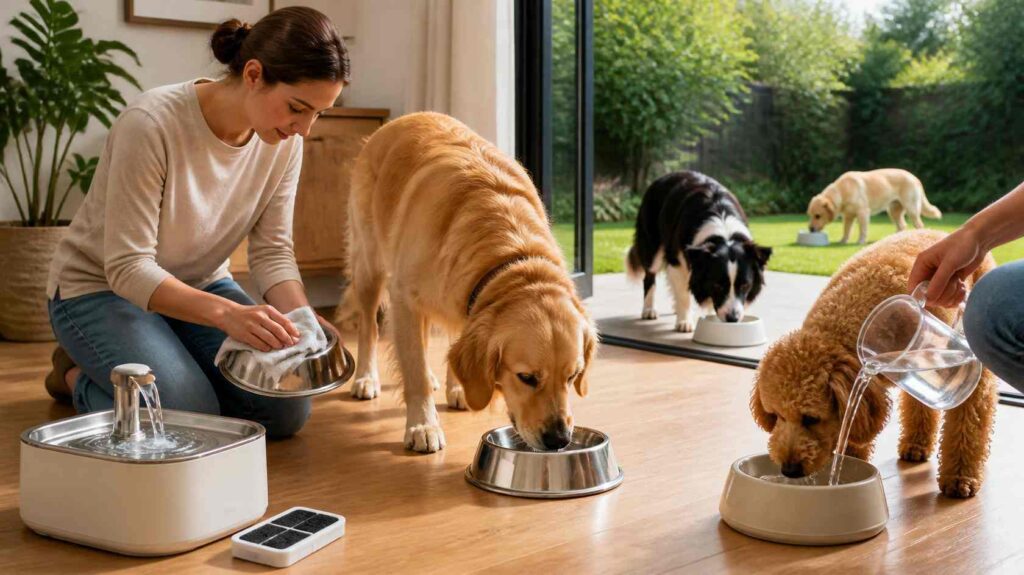
If your goal is simply to help your dog stay well hydrated, proven habits matter far more than buying speciality water.
- Keep multiple bowls in easy-to-reach locations, particularly for senior dogs or multi-pet households.
- Replace drinking water daily and wash bowls regularly to prevent biofilm from developing.
- Clean water fountains thoroughly and replace filters according to the manufacturer’s instructions.
- Offer fresh water after walks, exercise, and play.
- Add a little water to wet food if your veterinarian agrees and your dog naturally drinks less.
- Keep water cool and fresh, and experiment with bowl material or location if your dog seems reluctant to drink.
These practical hydration habits are consistent with recommendations in the AAHA Fluid Therapy Guidelines for Dogs and Cats, which emphasise maintaining appropriate hydration based on a dog’s individual medical needs rather than relying on speciality water products.
Quick Tip: Never remove your dog’s normal drinking water while “testing” alkaline water. If they dislike the new water, they should always have access to a familiar, safe alternative.
Common Mistakes Owners Make
- Choosing water based only on its pH while ignoring the ingredient list.
- Assuming alkaline water hydrates better than ordinary drinking water despite a lack of canine evidence.
- Using alkaline water to treat kidney disease, bladder stones, acid reflux, or other medical conditions without veterinary guidance.
- Trying to alter urine pH without knowing which type of urinary stone or crystal is present.
- Overlooking sodium and mineral content in “enhanced” waters.
- Giving human electrolyte or flavoured drinks without checking for unsuitable ingredients.
- Assuming the highest ioniser setting is the healthiest option.
- Believing that no immediate symptoms mean a product is safe for long-term daily use.
Key Takeaways
- A few sips of plain, potable alkaline water are unlikely to harm a healthy dog.
- There is no strong evidence that alkaline water offers routine health benefits over ordinary safe drinking water.
- Urinary disease is the situation where self-treating with alkaline water can create problems, so always work from a veterinary diagnosis rather than urine-pH theories.
- The ingredient list, mineral content, and your dog’s health are far more important than the pH printed on the label.
- For most dogs, fresh, clean, additive-free water remains the best everyday choice.
If you are ever unsure about a specific alkaline water product, check the complete ingredient list before offering it to your dog. Dogs with kidney disease, heart disease, urinary problems, digestive disorders, or prescription diets should have any regular water changes discussed with their veterinarian first. For the vast majority of healthy dogs, fresh, clean, additive-free drinking water remains the safest and most reliable choice.
Frequently Asked Questions
1.Is a few sips of alkaline water dangerous for a healthy dog?
Usually not. A healthy dog that drinks a small amount of plain, potable alkaline water is unlikely to experience harmful effects. Simply provide their usual drinking water and monitor them for vomiting, diarrhoea, reduced appetite, or other unexpected symptoms.
2.Can dogs drink alkaline water every day?
There is no established need for healthy dogs to drink alkaline water every day, and current canine research has not shown clear health benefits. Fresh, clean drinking water remains the recommended everyday option for most dogs.
3.Can alkaline water prevent bladder stones?
No. Different urinary stones develop under different conditions. A strategy that may help manage one type could be inappropriate for another. Never try to prevent or treat bladder stones by changing your dog’s water without veterinary diagnosis and guidance.
4.Is alkaline water safe for dogs with kidney disease?
Do not make that decision without veterinary advice. Dogs with kidney disease often require carefully controlled diets, fluid intake, and mineral balance. Your veterinarian can advise whether any change in water source is appropriate.
5.Can puppies drink alkaline water?
An accidental sip is unlikely to cause concern in a healthy puppy, but there is no proven benefit to making alkaline water part of their routine. Puppies obtain the minerals they need from a complete, balanced puppy diet rather than speciality water.
6.What should I do if my dog drank strong ioniser water or a concentrated alkaline product?
Remove access immediately and seek urgent veterinary advice. Do not induce vomiting unless specifically instructed to do so. If possible, take the product label or details of the ioniser settings with you to help the veterinary team assess the exposure.
7.Does alkaline water affect a dog’s blood pH?
Not in any meaningful way. A healthy dog’s blood pH is tightly regulated by the lungs, kidneys, and natural buffering systems. Drinking mildly alkaline water does not “alkalise” the body or change blood pH in a clinically significant manner.
#. Related Articles: