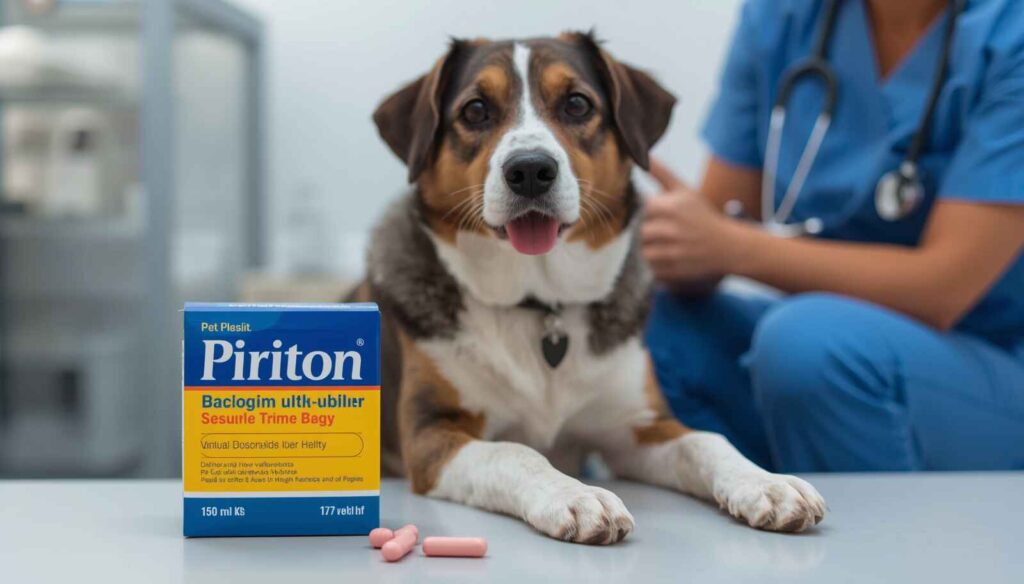
Your dog is itchy, swollen, or reacting to something — maybe a bee sting, maybe an allergy flare-up — and you’ve just remembered there’s a box of Piriton in your bathroom cabinet.
Before you reach for it, pause for a moment.
Piriton can sometimes help dogs with mild allergic symptoms, but it is not automatically safe for every dog, every product, or every situation. The safest answer is: dogs may be given Piriton only when your vet says it is appropriate for your dog.
This guide explains when Piriton may be useful, when it is not the right choice, what to check on the label, and what to do if your dog reacts badly or eats it accidentally.
Fast Safety Answer Before You Give Anything
Can dogs have Piriton?
Yes, some dogs can take Piriton under veterinary guidance. Piriton contains chlorphenamine maleate, also called chlorpheniramine, which is a first-generation antihistamine. It has been used by vets for mild allergic symptoms such as itching, hives, and some insect sting reactions.
But this does not mean you should give it without advice. The right decision depends on your dog’s size, age, health history, symptoms, and any other medicine they are taking.
Why vet guidance still matters
“Generally used in dogs” is not the same as “safe for your dog right now.”
A vet can help you confirm:
- Whether Piriton is suitable for your dog’s symptoms
- Whether the product you have is safe
- The correct dose for your dog’s weight
- Whether your dog needs urgent treatment instead
- Whether another condition, such as fleas or infection, is causing the itching
For a mild reaction, a quick phone call to your vet may be enough. For breathing trouble, collapse, severe swelling, or suspected overdose, you should not wait.
Why human medicine can be risky for dogs
The biggest risk is not always chlorphenamine itself. The danger often comes from other ingredients inside human allergy, cold, flu, or night-time medicines.
Some products may contain ingredients that are unsafe or toxic to dogs, including:
- Paracetamol/acetaminophen
- Pseudoephedrine or other decongestants
- Caffeine
- Alcohol
- Xylitol
- Extra sedating ingredients
- Multi-symptom cold and flu ingredients
Always read the full label. Do not rely only on the brand name.
Do Not Give Piriton If Your Dog Has:
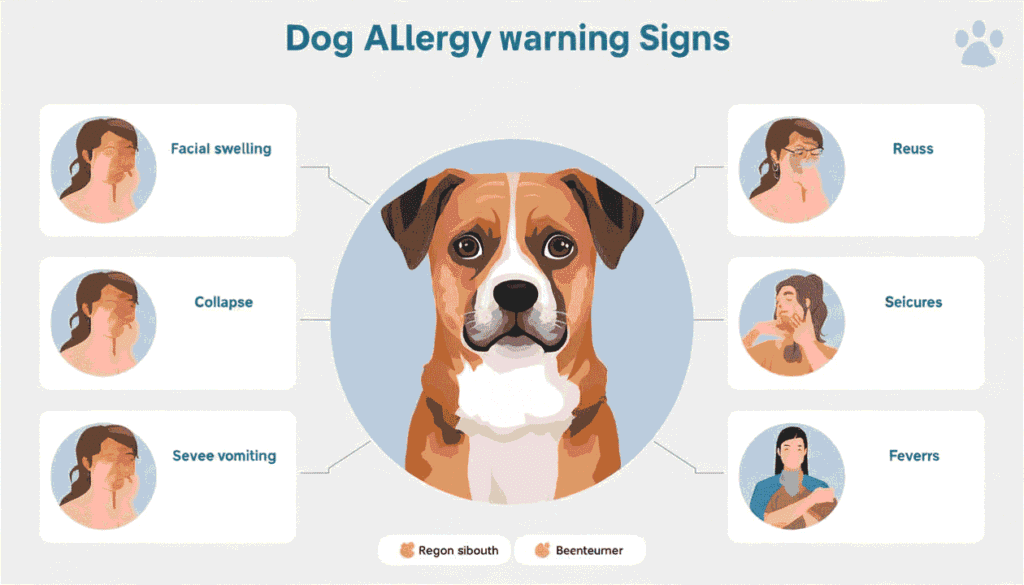
Do not give Piriton at home if your dog shows any of these signs:
- Trouble breathing
- Severe facial swelling
- Swelling around the throat or mouth
- Collapse
- Pale, grey, or blue gums
- Repeated vomiting
- Seizures
- Extreme weakness
- Loss of consciousness
- A suspected overdose of any medication
If you see any of these, skip home treatment and contact an emergency vet immediately.
These signs may point to a severe allergic reaction, poisoning, or another urgent medical problem. Antihistamines are not enough for serious reactions.
What Piriton Actually Is
Piriton is a brand name commonly used in the UK for chlorphenamine maleate, also known as chlorpheniramine maleate. It is a first-generation antihistamine originally made for people with hay fever, itching, and allergic reactions.
It works by blocking some effects of histamine, a chemical involved in allergic reactions. Histamine can contribute to itching, redness, swelling, hives, and irritation.
Reference:
Merck Veterinary Manual – First-Generation Antihistamines
Piriton commonly comes as:
- 4 mg tablets — often the form vets prefer when they approve chlorphenamine for dogs
- Liquid or syrup forms — sometimes used for small dogs, but only if the full ingredient list is safe
Liquid products need extra care because some may contain sweeteners or other ingredients that are unsuitable for dogs.
Piriton vs. allergy medicines in other countries
The name “Piriton” is most familiar in the UK. Dog owners in the United States, Canada, or Australia may be more likely to see products labelled by the active ingredient, such as chlorpheniramine or chlorphenamine, rather than the Piriton brand name.
Because names and formulas vary by country, always check the active ingredient, not just the product name.
Why brand names confuse dog owners
Piriton, Piriteze, Benadryl, and other allergy medicines can sound similar, but they are not the same.
For example:
- Piriton usually contains chlorphenamine/chlorpheniramine
- Piriteze usually contains cetirizine
- Benadryl may contain different ingredients depending on the country and product type
They are not automatically interchangeable. A safe dose of one antihistamine does not mean the same dose of another is safe.
When a Vet May Consider Piriton
A vet may consider Piriton for certain mild allergic symptoms, especially when the dog is otherwise stable and breathing normally.
Possible situations include:
- Mild allergic reactions
- Hives
- Mild itching
- Insect stings
- Seasonal allergy support
- Mild reactions after environmental exposure, such as pollen, grass, or mould
It may be used as part of a wider plan, not always as the only treatment.
Why it may not work for chronic itching
Piriton mainly targets histamine. But many long-term skin problems in dogs are not driven by histamine alone.
If your dog has been itchy for days, weeks, or months, the cause may be something else, such as:
- Fleas
- Mites
- Yeast infection
- Bacterial skin infection
- Ear infection
- Food allergy
- Environmental allergy
- Atopic dermatitis
This is why some owners give Piriton and see little or no improvement. The medicine may not be the problem — the diagnosis may be.
When Piriton Is Not the Right Answer
Piriton will not fix every itchy dog. It may even delay proper treatment if the real cause is missed.
Piriton is not the right answer if your dog’s symptoms are caused by:
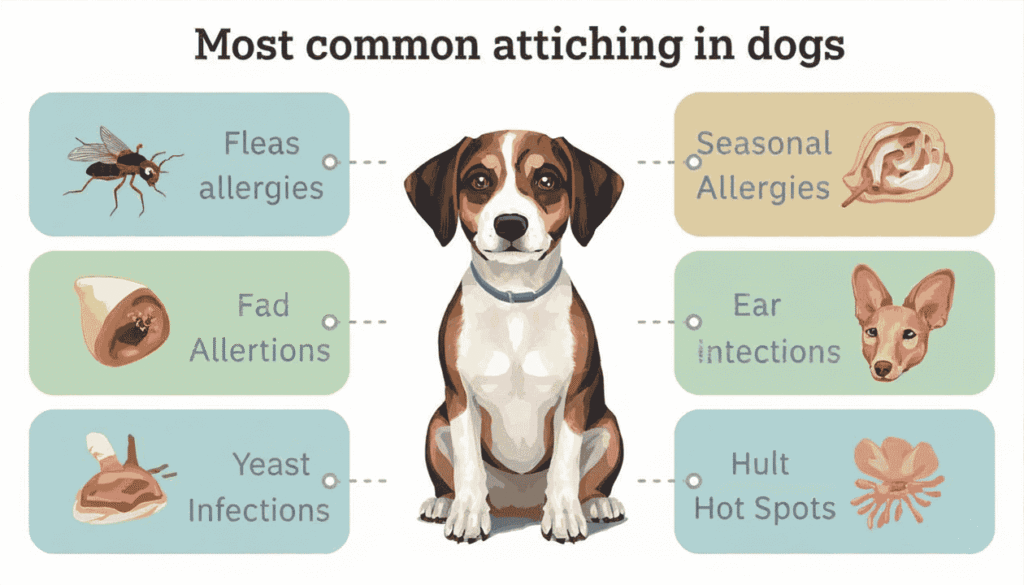
- Fleas — needs effective flea control and environmental treatment
- Ear infections — needs vet diagnosis and appropriate ear treatment
- Yeast or bacterial skin infection — may need medicated shampoos or prescription treatment
- Food allergy — usually needs a strict elimination diet guided by a vet
- Hot spots — often need cleaning, clipping, pain relief, and vet care
- Atopic dermatitis — usually needs a long-term allergy management plan
If your dog’s itching keeps returning, it is time to look for the cause rather than repeatedly using an antihistamine.
Checklist: Before You Give Piriton
Before giving Piriton, make sure you can confidently answer “yes” to every point below:
- Has your vet approved it for your dog?
- Is the active ingredient only chlorphenamine or chlorpheniramine?
- Is it free from paracetamol/acetaminophen?
- Is it free from decongestants such as pseudoephedrine?
- Is it free from xylitol, alcohol, caffeine, and cold/flu ingredients?
- Is your dog breathing normally?
- Is there no severe facial, throat, or mouth swelling?
- Is your dog not vomiting repeatedly?
- Is your dog not collapsed, weak, or having seizures?
- Have you checked whether your dog is already on other medication?
- Is your dog not pregnant, nursing, very young, senior, or unwell without vet clearance?
- Do you know the correct vet-approved dose for your dog’s weight?
If you cannot tick every box, call your vet before giving anything.
Piriton Dosage for Dogs
This is where many owners make mistakes. Some give too little and assume it “doesn’t work.” Others give too much and risk side effects or overdose.
A commonly referenced veterinary dosing range for chlorphenamine/chlorpheniramine is based on body weight, but your dog’s exact dose should come from your vet.
| Dog’s Weight | General Reference Only |
|---|---|
| Under 10 kg | Often requires a small dose; confirm with your vet |
| 10–20 kg | Vet-approved dose depends on weight and symptoms |
| 20–40 kg | Vet-approved dose depends on weight and product strength |
| Over 40 kg | Must be confirmed with your vet |
These are not prescriptions. Do not guess the dose from a table alone.
Your vet may adjust the dose depending on:
- Your dog’s weight
- Age
- Liver or kidney health
- Heart health
- Other medication
- Severity of symptoms
- Whether your dog has reacted badly to antihistamines before
A note on syrup
Some liquid antihistamines may contain sweeteners or extra ingredients that are not suitable for dogs. Xylitol is especially dangerous for dogs, even in small amounts.
If xylitol appears anywhere on the ingredients list, do not use the product.
When in doubt, take a photo of the label and send it to your vet before giving it.
Medicine Label Safety Guide
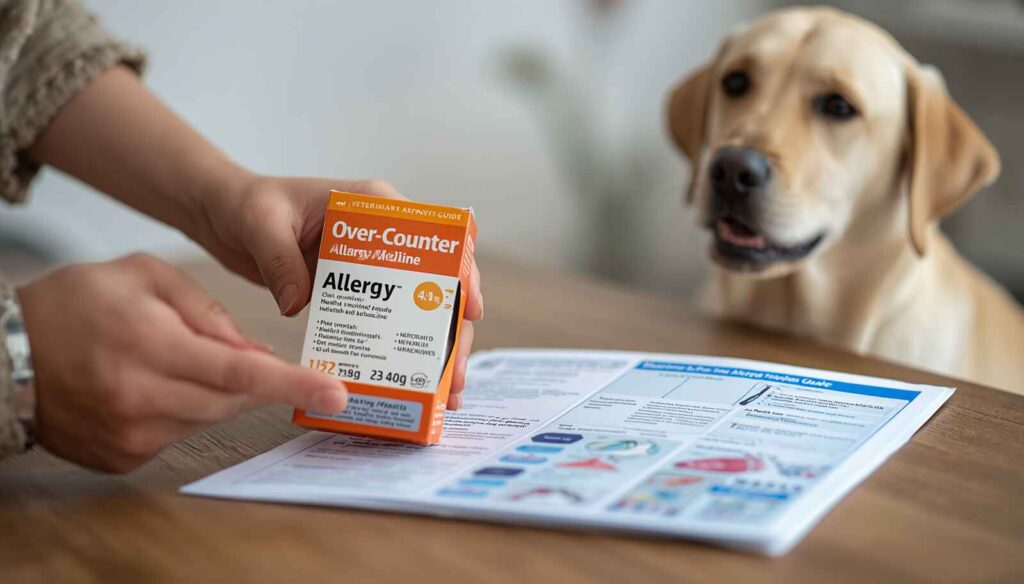
Ingredients to look for
The safest product, when approved by your vet, is usually one that lists only:
- Chlorphenamine maleate
- Chlorpheniramine maleate
No extra active ingredients should be present unless your vet has specifically approved that product.
Ingredients to avoid
Avoid products containing:
- Paracetamol
- Acetaminophen
- Pseudoephedrine
- Phenylephrine
- Caffeine
- Alcohol
- Xylitol
- Extra sedatives
- Cold and flu ingredients
- “Night-time” formulas
- “Multi-symptom” formulas
These products are made for human symptoms, not dogs.
Reference:
MSD Veterinary Manual – Toxicology of Human Analgesics in Animals
Tablet vs. liquid
Tablets are often easier to check and dose accurately when a vet has advised their use. Liquids can be more complicated because they may contain sweeteners, flavourings, alcohol, or different concentrations.
Children’s Piriton
Do not assume children’s Piriton is safer just because it is lower strength. The dose may be different, and the liquid may contain ingredients that are unsuitable for dogs.
Check the full label every time.
How Piriton Compares to Other Options
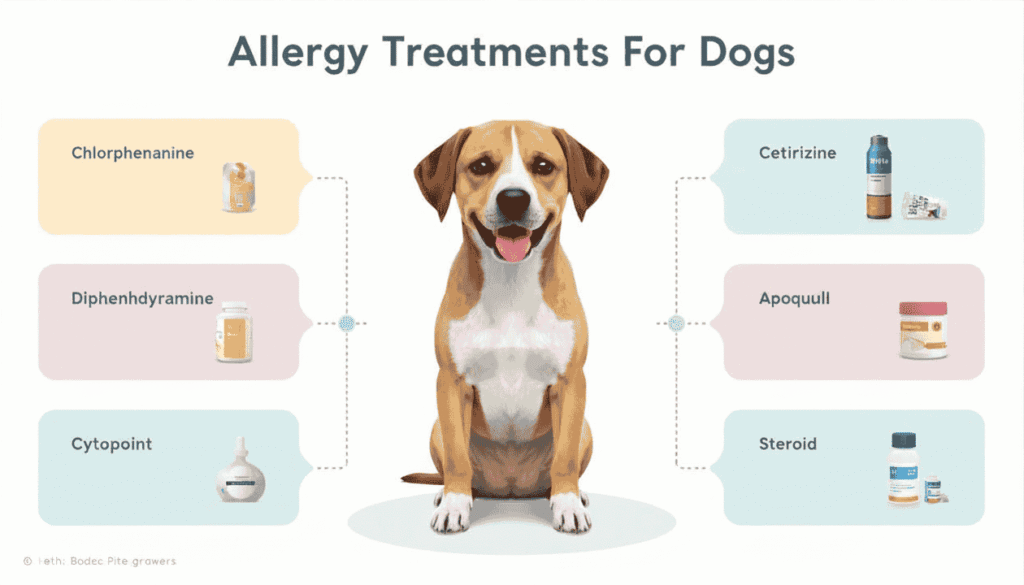
| Medicine/Product | Active Ingredient | Common Use | Main Concern | Vet Guidance Needed |
|---|---|---|---|---|
| Piriton | Chlorphenamine/chlorpheniramine | Mild allergy symptoms | Sedation, wrong dose, unsafe formulas | Yes |
| Piriteze | Usually cetirizine | Allergy symptoms | Not the same as Piriton | Yes |
| Benadryl | Often diphenhydramine, but varies by country | Allergy symptoms | Different formulas by region | Yes |
| Apoquel | Oclacitinib | Chronic allergic itching | Prescription only | Yes |
| Cytopoint | Lokivetmab | Chronic allergic itch | Given by a vet injection | Yes |
| Steroids | Various | Severe inflammation or allergic flare-ups | Side effects, especially with repeated use | Yes |
This comparison does not mean these medicines can be swapped at home. It simply shows why your vet may choose one option over another.
Possible Side Effects
Most dogs tolerate vet-approved chlorphenamine reasonably well, but side effects can happen.
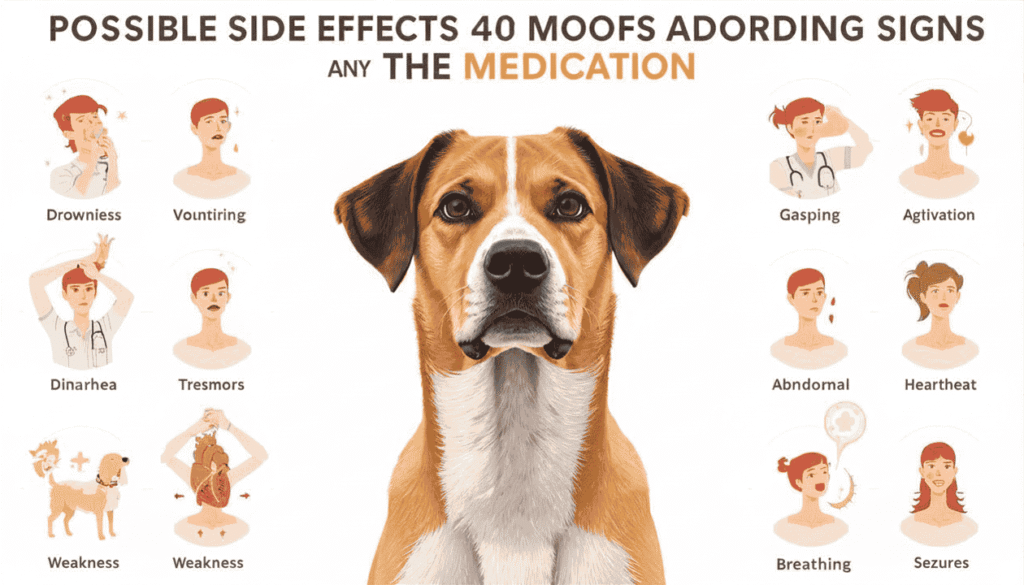
Common side effects include:
- Drowsiness
- Dry mouth
- Mild vomiting
- Diarrhoea
- Reduced appetite
- Increased sleepiness
Giving the tablet with a small amount of food may reduce stomach upset, but only do this if your vet has said the medicine is suitable.
Less common but more serious signs include:
- Trouble urinating
- Extreme weakness
- Agitation or hyperactivity
- Tremors
- Abnormal breathing
- Rapid heartbeat
- Seizures
Some dogs react in the opposite way owners expect. Instead of becoming sleepy, they may become restless or unusually excited.
Contact your vet if side effects are severe, unusual, or do not settle.
Dogs That Need Extra Caution
Some dogs should not take Piriton unless a vet has clearly approved it.
Extra caution is needed for:
- Puppies
- Senior dogs
- Pregnant dogs
- Nursing dogs
- Dogs with glaucoma
- Dogs with heart disease
- Dogs with liver problems
- Dogs with kidney problems
- Dogs with prostate or urinary problems
- Dogs taking sedatives
- Dogs taking other antihistamines
- Dogs already on prescription allergy medication
Antihistamines can affect more than itching. They may influence sleepiness, urination, heart rate, and how other medicines behave in the body.
Common Mistakes Owners Make
These are some of the most common mistakes dog owners make with Piriton:
- Giving it without checking with a vet first
- Guessing the dose
- Using Piriteze thinking it is the same as Piriton
- Giving Benadryl, Piriton, or cetirizine together
- Repeating doses too quickly
- Using a cold and flu product
- Using a liquid product without checking for xylitol
- Treating breathing difficulty at home
- Ignoring fleas as the real cause of itching
- Assuming paw licking always means hay fever
- Continuing daily use without finding the underlying problem
A good rule: if your dog needs allergy medicine repeatedly, your dog needs a proper diagnosis.
What If Your Dog Ate Piriton Accidentally?
If your dog gets into Piriton or any human medicine, do not wait to see what happens. Call your vet, an emergency vet, or an animal poison helpline right away.
Have this information ready:
- Your dog’s weight
- Product name
- Active ingredient
- Tablet strength or liquid concentration
- Number of tablets or amount swallowed
- Time it was eaten
- Any symptoms your dog is showing
- Any other medication your dog takes
Watch for possible overdose signs, including:
- Extreme drowsiness
- Agitation
- Tremors
- Fast heart rate
- Vomiting
- Weakness
- Abnormal breathing
- Seizures
Earlier treatment is usually safer and easier than waiting until symptoms become severe.
Quick Tips
- Always check the active ingredient.
- Never use a combination or multi-symptom product.
- Piriton is not a cure for chronic allergies.
- It may cause sleepiness.
- It may not work for every dog.
- Do not combine antihistamines unless your vet tells you to.
- Call your vet before giving human medicine for the first time.
- Emergency symptoms need emergency care, not home treatment.
Why Your Vet Might Choose Something Else
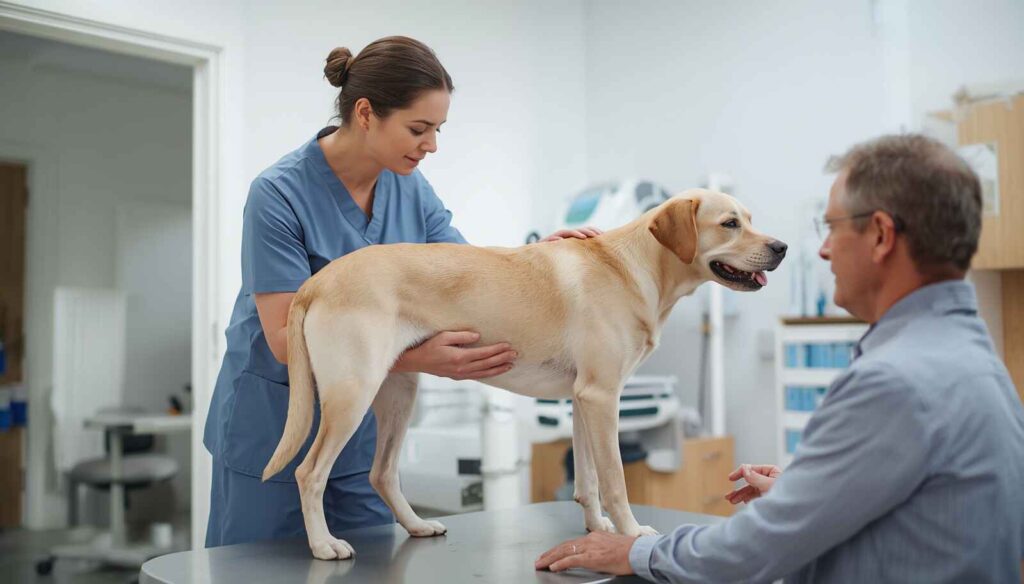
Vets may choose something other than Piriton, especially for chronic or severe itching.
Depending on the cause, your vet may recommend:
- Prescription flea control
- Medicated shampoo
- Ear treatment
- Skin infection treatment
- A strict elimination diet
- Apoquel
- Cytopoint
- Steroids for short-term flare control
- Allergy testing or long-term allergy management
Trusted veterinary resources such as the Merck Veterinary Manual and MSD Veterinary Manual discuss antihistamines and medicine toxicities in animals, but they also make one thing clear: treatment depends on the individual animal and the clinical situation.
A vet visit for ongoing itching may include checking for:
- Fleas
- Mites
- Skin infection
- Ear infection
- Food allergy
- Environmental allergy
- Medication reactions
- Existing health problems
Chronic itching is uncomfortable for dogs. It can also lead to broken skin, infections, poor sleep, and constant licking or chewing. Treating the cause matters more than temporarily reducing symptoms.
Real-Life Situations
Dog stung by a bee
Piriton may be considered by a vet for mild swelling or hives after a sting. But if swelling affects the face, mouth, or throat, or your dog has trouble breathing, this is an emergency.
Do not wait to see if an antihistamine works.
Dog suddenly has hives
Sudden hives can be caused by insect bites, plants, food, medication, vaccines, or unknown triggers. Piriton may help in mild cases, but you should still contact your vet, especially if the hives spread quickly or your dog seems unwell.
Dog keeps licking their paws
Paw licking is often a sign of an ongoing skin issue. It may be linked to allergies, yeast, bacteria, grass irritation, pain, or anxiety. Repeatedly giving Piriton without checking the cause may allow the real problem to get worse.
Puppy is itchy
Do not give Piriton to a puppy without vet advice. Puppies are small, still developing, and more vulnerable to dosing errors.
Senior dog has allergy symptoms
Senior dogs are more likely to have heart, liver, kidney, or eye conditions. They may also be taking other medication. Vet guidance is especially important before giving an antihistamine.
Dog ate several tablets
Treat this as a possible poisoning situation. Call your vet or an animal poison helpline immediately with the product label in front of you.
The Bottom Line
Piriton can be useful for some dogs with mild allergic symptoms, such as hives, mild itching, or certain insect sting reactions. When used in the right dog, with the right product, at the right vet-approved dose, it can be a helpful short-term option.
But it is not a universal fix.
It will not solve fleas, infections, food allergies, hot spots, or long-term skin disease. It is also not something to give repeatedly without understanding why your dog is itchy in the first place.
If your dog is struggling to breathe, collapsing, severely swollen, vomiting repeatedly, or showing signs of overdose, contact an emergency vet immediately.
If the situation is mild but you are unsure, call your vet before giving anything. A quick check is far safer than a guess.
Reference:
This article is for general information only and does not replace advice from your veterinarian. Always check with a vet before giving your dog any human medication.
Always consult your veterinarian before starting any new medication, including over-the-counter antihistamines. This article is for informational purposes only and does not replace professional veterinary advice.
FAQ: Your Questions Answered
1.How long does Piriton take to work in dogs?
Many owners notice some effect within 30 to 60 minutes, although this can vary. If symptoms are getting worse, especially swelling or breathing difficulty, do not wait for it to work — contact a vet immediately.
2.Can senior dogs take Piriton safely?
Some senior dogs can take it with vet approval, but older dogs are more likely to have liver, kidney, heart, eye, or urinary problems. They may also be taking other medication, so always check with your vet first.
3.Is Piriteze the same as Piriton?
No. Piriteze usually contains cetirizine, while Piriton usually contains chlorphenamine/chlorpheniramine. They are different antihistamines and should not be swapped without veterinary guidance.
4.Can I give Piriton alongside flea treatment?
In many cases, antihistamines do not conflict with standard flea control, but you should still ask your vet, especially if your dog uses oral prescription flea medication or has other health issues.
Also remember: if fleas are causing the itching, Piriton may only reduce symptoms slightly. It will not remove the fleas.
5.Why didn’t Piriton help my dog’s itching?
Piriton may not help if the itching is caused by fleas, mites, yeast, bacteria, food allergy, hot spots, or chronic atopic dermatitis. It mainly helps histamine-related symptoms, and many dog skin problems involve other inflammatory pathways.
If it does not help, do not increase the dose without your vet. Get the cause checked.
6.Can I give Piriton together with Apoquel?
Do not combine allergy medicines unless your vet specifically tells you to. Apoquel is a prescription medicine used for allergic itching, and your vet will decide whether any additional medication is appropriate.
7.What if my dog vomits after taking Piriton?
Mild stomach upset can happen. If vomiting is repeated, severe, or your dog seems weak, sleepy, restless, or unwell, contact your vet before giving another dose.
8.Can I use children’s Piriton for my dog?
Only if your vet approves the exact product. Children’s liquid medicines may contain sweeteners, flavourings, alcohol, or different concentrations. Check the full ingredient list, not just the strength.
#. Related Articles: