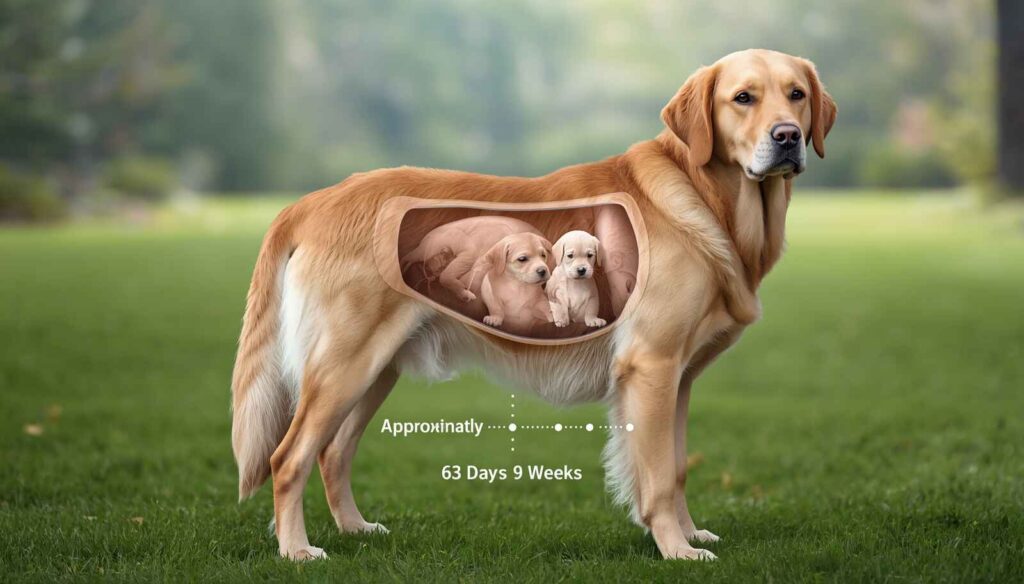
If you’re counting days on a calendar and hoping for a simple answer, here it is: dogs are pregnant for about 63 days on average. If you’ve searched this question before, though, you’ve probably seen different answers—58 days on one website, 65 or even 68 on another. That’s not necessarily incorrect. The variation exists because 63 days is an average calculated from ovulation, while many owners count from the day their dog was mated.
Understanding that difference can save a lot of unnecessary worry. A dog that seems “late” based on the mating date may still be progressing normally.
In this guide, you’ll learn how canine gestation is calculated, why pregnancy length varies, how veterinarians confirm pregnancy, what to expect during each stage, how to care for a pregnant dog, what normal labour looks like, and which warning signs require immediate veterinary attention.
Dog Pregnancy Isn’t Just “63 Days” — Here’s Why
The Average Canine Gestation Period
From the point of ovulation, most dogs give birth approximately 63 days later, although a variation of a few days on either side is considered normal. Veterinarians generally use ovulation rather than the mating date because it provides the most accurate estimate of the expected whelping date.
For owners who don’t know exactly when ovulation occurred—which is common in accidental or unplanned matings—the due date is naturally less precise.
Why Some Dogs Deliver Earlier or Later
No two pregnancies are exactly alike. Several factors can influence when labour begins, including:
- Litter size: Dogs carrying larger litters may go into labour slightly earlier because the uterus becomes full sooner. Smaller litters sometimes result in slightly longer pregnancies and larger puppies.
- Ovulation timing: Differences between mating and ovulation are one of the biggest reasons due dates vary.
- The mother’s health: Underlying health conditions or pregnancy complications can affect timing.
- Individual variation: Even healthy pregnancies don’t always follow the exact same schedule.
Most healthy pregnancies still fall within the normal expected range, so a difference of a few days is not unusual on its own.
Why Counting From Mating Can Be Misleading
Here’s the part many owners don’t realise: mating and ovulation are not the same event.
Female dogs may mate several days before or after ovulation. Because canine sperm can survive inside the reproductive tract for several days, fertilisation may happen well after the mating itself. In addition, a dog’s eggs require time to mature before they can be fertilised.
That means counting exactly 63 days from the mating date can easily produce an estimate that’s several days off. This is one of the main reasons owners often think their dog has “gone overdue” when, biologically, she’s still within the expected gestation period.
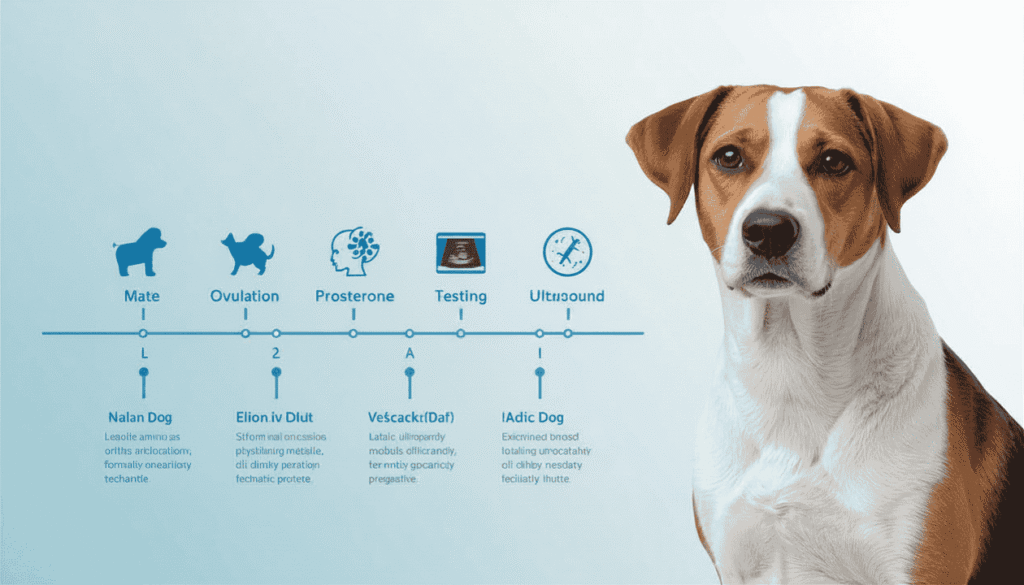
What Veterinarians Use to Estimate a Due Date
When an accurate due date is important—particularly for planned breedings—veterinarians rely on more than the mating date alone.
Depending on the stage of pregnancy, they may use:
- Progesterone testing to estimate ovulation timing.
- Ultrasound to confirm pregnancy and assess fetal viability.
- Physical examination during the appropriate stage of gestation.
- Late-pregnancy X-rays (radiographs) to estimate the number of puppies before delivery.
Because every pregnancy is different, your veterinarian will interpret these findings together rather than relying on a single test.
How Dog Pregnancy Is Calculated
| Method | Accuracy | Best Used For | Limitation |
|---|---|---|---|
| Mating Date | Moderate | General due-date estimate when ovulation is unknown | Doesn’t account for sperm survival or delayed fertilisation |
| Ovulation Date | Highest | Predicting the most accurate due date | Requires veterinary hormone testing |
| Progesterone Testing | High | Pinpointing ovulation during planned breeding | Requires blood tests and veterinary monitoring |
| Ultrasound Estimate | Moderate to High | Confirming pregnancy and estimating gestational stage | Less accurate than ovulation timing for predicting the exact due date |
Your Dog’s Pregnancy Journey (Owner Timeline)
Early Pregnancy — What Owners Usually Notice
During the first two to three weeks, most dogs show few, if any, obvious signs of pregnancy. Around weeks three and four, some owners notice mild changes such as sleeping a little more than usual, a temporary decrease in appetite, or occasional nausea. These early signs can be subtle and aren’t enough to confirm pregnancy on their own, which is why veterinary confirmation is recommended if pregnancy is suspected.
Mid-Pregnancy — Physical Changes Become Obvious
By weeks five and six, your dog’s abdomen usually begins to round noticeably, and her appetite often increases as the puppies grow rapidly. Her nipples may become larger and pinker, and she may seem calmer or tire more easily after exercise. This is also a good time to begin preparing a whelping area and discussing the expected due date with your veterinarian.
Final Weeks Before Puppies Arrive
During the last one to two weeks of pregnancy, you may be able to feel puppy movement by gently resting your hand against your dog’s side—never by pressing on her abdomen. Many dogs also begin nesting by pawing at blankets, searching for quiet places, or becoming either more affectionate or more withdrawn, depending on their personality. Mild restlessness and increased panting can also become more noticeable as labour approaches.
What Changes Are Normal vs Worth Calling the Vet About
A gradually enlarging abdomen, increased appetite, mild tiredness, and nesting behaviour are all normal parts of a healthy pregnancy.
Contact your veterinarian promptly if you notice:
- Vomiting that continues beyond a day or two.
- A complete refusal to eat for more than 24 hours.
- Heavy bleeding or foul-smelling vaginal discharge.
- Collapse, severe weakness, or signs of significant pain.
- Green discharge before the first puppy is delivered.
- Any sudden change that makes your dog appear unwell.
When in doubt, it’s always safer to call your vet rather than wait for symptoms to worsen.
Pregnancy Monitoring Checklist
- Record all breeding or mating dates.
- Schedule veterinary pregnancy confirmation.
- Track appetite and water intake.
- Monitor healthy weight gain.
- Watch for behavioural changes.
- Prepare emergency veterinary contact details.
- Set up the whelping area before the due date.
- Learn the early signs of labour.
How Veterinarians Confirm Pregnancy
Physical Examination
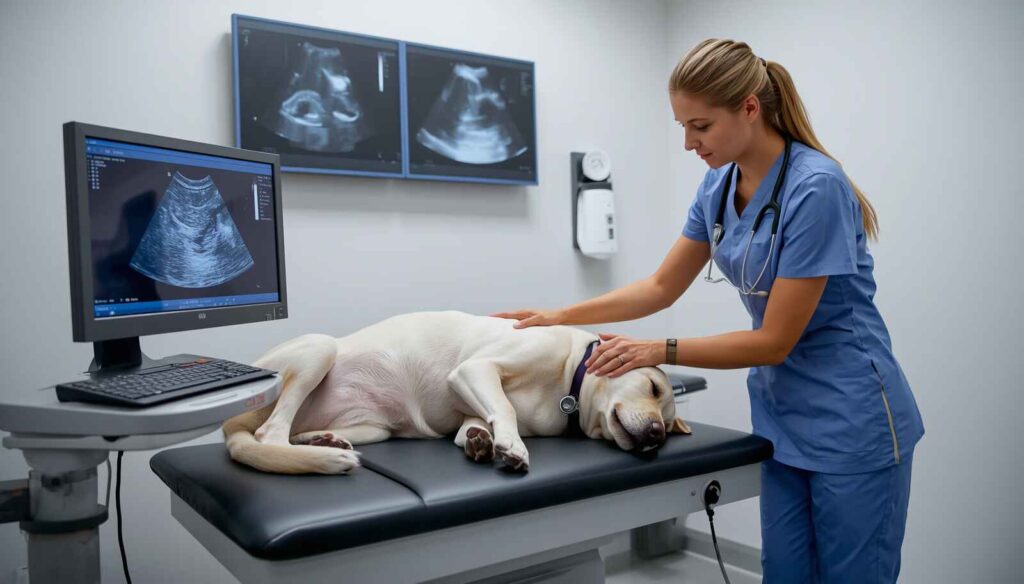
An experienced veterinarian may be able to feel developing embryos through gentle abdominal palpation between approximately days 28 and 32 of pregnancy. After this stage, the uterus contains more fluid, making individual puppies much harder to distinguish by touch. Owners should never attempt abdominal palpation themselves, as excessive pressure could cause injury.
Ultrasound
Ultrasound is usually the earliest reliable method of confirming pregnancy and can often detect fetal heartbeats from around day 25 onward. It also allows the veterinarian to assess fetal viability, although it is not the most accurate method for determining exactly how many puppies are present.
Relaxin Hormone Testing
A relaxin blood test becomes reliable from approximately days 25 to 30 after breeding. Because relaxin is produced only during pregnancy, it provides a dependable confirmation when ultrasound is unavailable or when additional confirmation is needed.
X-Rays for Puppy Count
Once the puppies’ skeletons have mineralised—usually after day 45—radiographs (X-rays) become the most accurate way to estimate litter size. Knowing how many puppies are expected helps both owners and veterinarians recognise when labour has likely finished or if another puppy may still be present.
Which Method Is Best at Each Stage?
Pregnancy Confirmation Methods
| Method | Earliest Time | Confirms Pregnancy | Counts Puppies | Checks Puppy Health |
|---|---|---|---|---|
| Physical Examination | Day 28–32 | Yes (limited) | No | No |
| Ultrasound | Day 25+ | Yes | Approximate only | Yes (fetal heartbeat and viability) |
| Relaxin Blood Test | Day 25–30 | Yes | No | No |
| X-Ray | Day 45+ | Yes | Most accurate estimate | Assesses skeletal development rather than overall fetal health |
What Can Change a Dog’s Due Date?
Ovulation vs Mating Date
This is the biggest reason due dates can appear inaccurate. Because fertilisation may occur several days after mating, veterinarians place greater emphasis on ovulation timing whenever it is known. If your dog had multiple matings, always let your veterinarian know each breeding date.
Litter Size
Dogs carrying larger litters may go into labour slightly earlier, while very small litters can sometimes remain in the uterus a little longer because there is more room for the puppies to continue growing.
Breed Differences
Small differences between breeds do exist, but they are generally measured in days rather than weeks. Breed alone is not a reliable way to predict an exact delivery date.
Maternal Health
The mother’s overall health, reproductive history, and any pregnancy complications may influence the timing of labour. Regular veterinary check-ups help identify problems early and provide the best chance of a healthy delivery.
Why “Exactly 63 Days” Isn’t Always Correct
Think of 63 days as a helpful average rather than a strict deadline. A healthy dog delivering on day 60 or day 66 may still be well within the normal range, particularly if the pregnancy is being calculated from mating rather than confirmed ovulation. Your dog’s overall condition and veterinary assessment are far more important than the calendar alone.
Quick Tips
- Record every mating date, especially if there were multiple breedings.
- Don’t rely solely on online due-date calculators.
- Arrange a veterinary pregnancy check as early as practical.
- Prepare the whelping area at least one to two weeks before the expected due date.
- Know the location and phone number of your nearest emergency veterinary clinic before labour begins.
Caring for a Pregnant Dog From Start to Finish
Nutrition Throughout Pregnancy
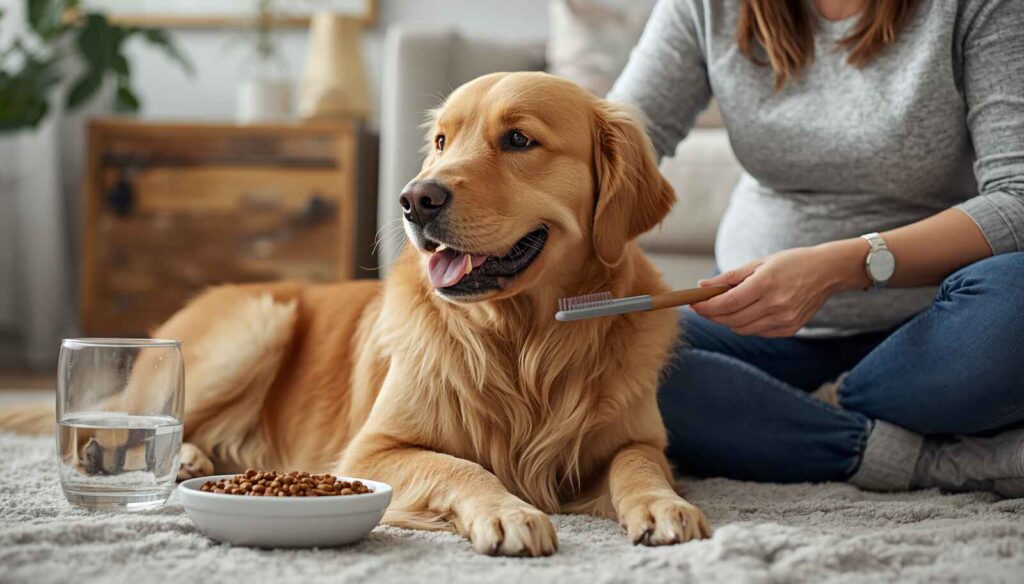
A high-quality adult maintenance diet is usually suitable during the first half of pregnancy. From around week five or six, many veterinarians recommend gradually switching to a nutrient-dense puppy or growth formula, as the puppies grow rapidly and the mother’s energy needs increase.
As the uterus expands, stomach space becomes more limited. Offering smaller, more frequent meals is often more comfortable than feeding one or two large meals.
Avoid giving supplements, homemade diet changes, or raw foods without veterinary guidance, as an unbalanced diet can do more harm than good.
Safe Exercise
Regular, gentle exercise helps maintain muscle tone and overall fitness during pregnancy. Short daily walks are usually ideal.
Avoid:
- High-impact exercise
- Jumping from heights
- Rough play with other dogs
- Agility or strenuous training
- Activities that increase the risk of falling or abdominal injury
As your dog’s due date approaches, let her set the pace and avoid forcing exercise if she appears tired.
Weight Management
Steady, gradual weight gain is expected throughout pregnancy. However, sudden excessive weight gain, obesity, or very little weight gain can all warrant a veterinary assessment.
Rather than focusing only on the scales, monitor your dog’s overall body condition, appetite, and energy level. Your veterinarian can advise whether her weight gain appears appropriate for her stage of pregnancy and expected litter size.
Medication and Supplement Safety
Never give medications—including common human painkillers, herbal products, or over-the-counter supplements—without veterinary approval.
Calcium supplements deserve special caution. Unless specifically recommended by your veterinarian, they should not be given before labour because inappropriate supplementation may interfere with the body’s normal calcium regulation and increase the risk of complications around whelping.
If your dog requires flea, tick, worming, or other preventive treatments during pregnancy, ask your veterinarian which products are considered safe.
Creating a Comfortable Environment
As pregnancy progresses, provide your dog with a quiet, comfortable area away from household noise and constant activity. Keeping her daily routine as consistent as possible can help reduce stress.
If you plan to use a whelping box, introduce it well before the due date so she has time to become familiar with it.
Safe vs Unsafe During Pregnancy
| Usually Safe (With Veterinary Approval) | Avoid Without Veterinary Advice |
|---|---|
| High-quality puppy or pregnancy diet | Calcium or vitamin supplements |
| Gentle daily walks | Strenuous exercise or rough play |
| Vet-approved parasite prevention | Unapproved medications, including human painkillers |
| Routine grooming | New vaccinations unless specifically recommended by your veterinarian |
Preparing for Labour Before It Starts
Signs Labour Is Getting Close
Many dogs show subtle behavioural changes before active labour begins. A drop in rectal body temperature to below approximately 37°C (98.6°F) often occurs 12 to 24 hours before labour, although not every dog follows this pattern.
Other common signs include:
- Nesting behaviour
- Restlessness
- Panting
- Seeking solitude
- Reduced appetite or refusing food
- Increased clinginess or, in some dogs, wanting to be left alone
Watching for several of these changes together is usually more helpful than relying on a single sign.
Building a Safe Whelping Area
Set up the whelping area one to two weeks before the expected due date so your dog can become comfortable using it.
The space should be:
- Quiet and away from heavy household traffic
- Warm and free from drafts
- Large enough for your dog to stretch out comfortably
- Easy for the mother to enter and leave while preventing newborn puppies from wandering
- Lined with clean, washable bedding that can be changed easily
Supplies Every Owner Should Have Ready
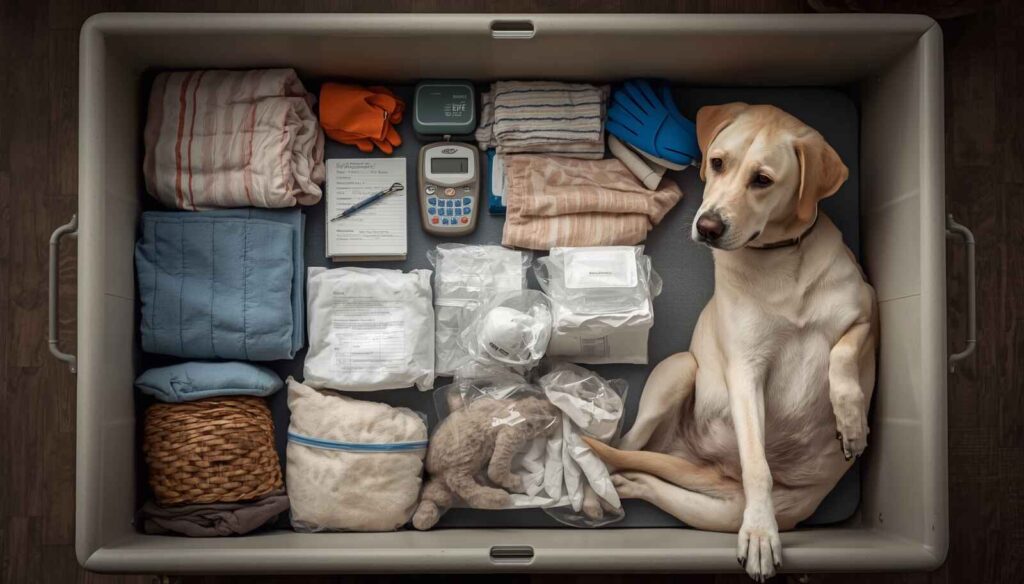
Whelping Box Essentials
- Clean bedding
- Plenty of clean towels
- Safe heating source for newborn puppies
- Digital thermometer
- Kitchen or puppy scale
- Emergency veterinary contact numbers
- Puppy-safe disinfectant
- Disposable gloves
- Milk replacer (only if recommended by your veterinarian)
- Transport carrier or crate for emergencies
Having these supplies ready before labour starts helps avoid unnecessary stress if puppies arrive earlier than expected.
What Happens During Normal Labour
Labour occurs in three stages.
- Stage 1: Restlessness, nesting, panting, and cervical dilation. Some dogs also experience a temperature drop before this stage.
- Stage 2: Active contractions and delivery of the puppies. Puppies commonly arrive every 30 to 60 minutes, although normal variation does occur.
- Stage 3: Passage of the placentas, usually following each puppy or occasionally after several puppies have been delivered.
Many healthy dogs require little assistance during labour, but they should be monitored closely so problems are recognised promptly.
When Dog Labour Becomes an Emergency
Normal Labour vs Difficult Labour
Normal labour shows steady progress, with contractions leading to puppy delivery and the mother remaining comfortable between births.
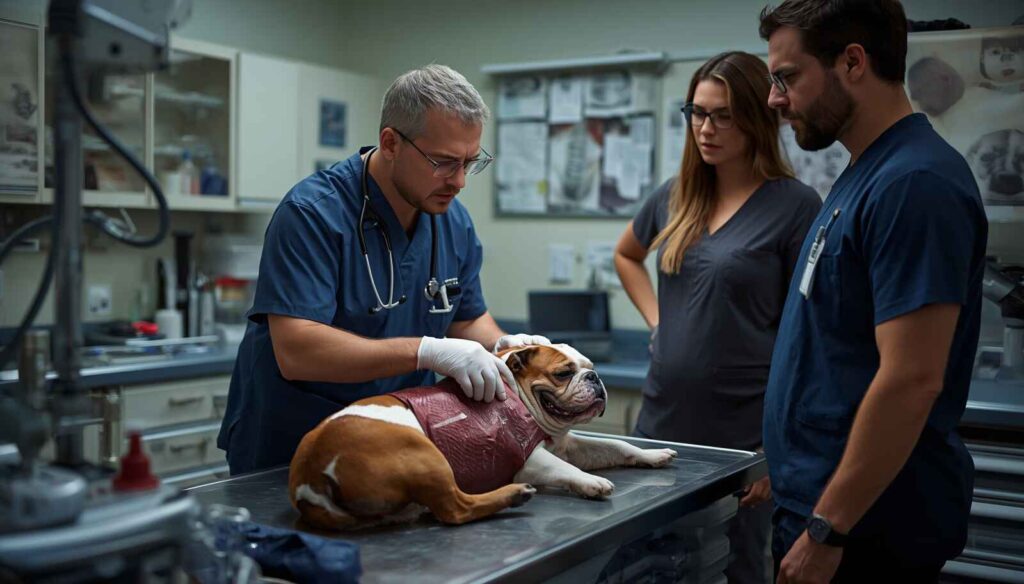
Dystocia, or difficult labour, occurs when labour stops progressing normally. This may involve strong contractions without producing a puppy, a puppy becoming lodged in the birth canal, or unusually long pauses when additional puppies are still expected.
Signs That Need Immediate Veterinary Care
Why Some Dogs Need a C-Section
A Caesarean section (C-section) may be necessary if:
- A puppy is too large to pass through the birth canal.
- A puppy is positioned abnormally.
- The mother’s contractions become too weak to continue labour.
- The pregnancy involves a breed known to have frequent birthing difficulties.
- Your veterinarian determines that continuing with a natural delivery could place the mother or puppies at risk.
Prompt veterinary intervention often gives both the mother and her puppies the best chance of a successful outcome.
High-Risk Breeds That May Need Extra Monitoring
Breeds with relatively large heads and narrow pelvic anatomy—particularly many brachycephalic breeds such as English Bulldogs, French Bulldogs, and Boston Terriers—are more likely to require veterinary assistance or a planned Caesarean section.
If your dog belongs to a high-risk breed or has previously experienced a difficult birth, discuss a delivery plan with your veterinarian before her due date.
🚨 Contact an Emergency Vet Immediately If:
- Green discharge appears before the first puppy is delivered.
- Strong contractions continue without producing a puppy.
- Heavy bleeding occurs.
- A puppy appears stuck in the birth canal.
- The mother collapses or becomes extremely weak.
- Labour stops unexpectedly when more puppies are expected.
- Tremors, seizures, or severe weakness develop.
- Your dog has been straining for an extended period without making progress.
- She appears severely distressed or you are concerned something isn’t right.
When labour doesn’t seem to be progressing normally, it’s always safer to contact your veterinarian or an emergency veterinary clinic immediately rather than waiting to see if the situation improves.
Pregnancy Complications Every Owner Should Know
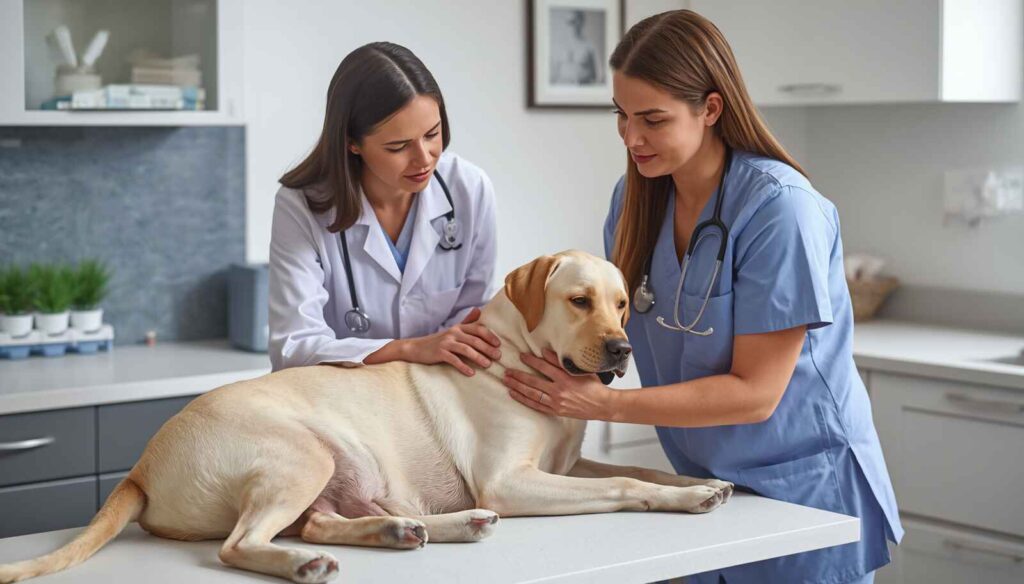
Phantom Pregnancy
Also called pseudopregnancy, this is when a dog develops physical and behavioural signs of pregnancy—such as nesting, enlarged mammary glands, or even milk production—without actually carrying puppies. It happens because of normal hormonal changes after a heat cycle and is relatively common.
Most cases resolve on their own within a few weeks, but if your dog appears distressed, produces excessive milk, or the signs keep returning, it’s worth arranging a veterinary examination to rule out other conditions.
Miscarriage and Pregnancy Loss
Pregnancy loss can occur at any stage. Early embryo loss is often absorbed by the body and may happen without any obvious signs, while later pregnancy loss may cause vaginal discharge, bleeding, or signs of illness.
Because some cases are difficult to recognise at home, routine veterinary checks during pregnancy help monitor both the mother and developing puppies.
Dystocia (Difficult Birth)
As covered earlier, dystocia is one of the most serious pregnancy complications. Prompt veterinary treatment is essential because delays can place both the mother and her puppies at risk.
Eclampsia
Eclampsia is a potentially life-threatening drop in blood calcium that most often develops during the first few weeks after birth while the puppies are nursing. Early signs include restlessness, heavy panting, muscle tremors, stiffness, weakness, and, in severe cases, seizures.
This is a veterinary emergency and requires immediate treatment.
Mastitis
Mastitis is inflammation or infection of the mammary glands. Affected glands may become hot, swollen, firm, painful, or discoloured, and the mother may become reluctant to let the puppies nurse.
Early veterinary treatment helps protect both the mother and her litter.
Retained Placenta or Puppies
If a placenta or puppy remains in the uterus after labour, the mother can develop a serious uterine infection. Signs may include foul-smelling discharge, fever, lethargy, poor appetite, or continued straining after labour appears to have finished.
Knowing the expected puppy count from a late-pregnancy X-ray helps both owners and veterinarians recognise when delivery may be incomplete.
True Pregnancy vs Phantom Pregnancy
| Feature | True Pregnancy | Phantom Pregnancy |
|---|---|---|
| Confirmed by ultrasound or X-ray | Yes | No |
| Nesting behaviour | Common | Common |
| Milk production | Common before or after birth | Sometimes |
| Puppies delivered | Yes | No |
| Usually resolves without treatment | No | Often, within a few weeks |
Common Mistakes First-Time Owners Make
Assuming Every Dog Gives Birth on Day 63
Think of 63 days as an average rather than a deadline. A healthy pregnancy can naturally vary depending on ovulation timing.
Waiting Too Long to Contact a Vet
If something doesn’t seem right during pregnancy or labour, trust your instincts and call your veterinarian. Early advice is often safer than waiting for a problem to become an emergency.
Giving Human Medications
Many common human medications—including painkillers—can be dangerous during pregnancy. Never give any medication unless your veterinarian has confirmed it’s safe.
Overfeeding Too Early
Increasing food too much during the first half of pregnancy can lead to unnecessary weight gain, which may make labour more difficult. Most dogs don’t require significantly more calories until the second half of pregnancy.
Pulling Puppies During Delivery
Never pull on a puppy that appears stuck. Improper handling can seriously injure both the puppy and the mother. Contact a veterinarian immediately if delivery is not progressing normally.
Skipping Veterinary Pregnancy Confirmation
Visual signs alone cannot confirm a healthy pregnancy. Veterinary examination helps estimate the due date, assess the puppies, and identify potential problems before labour begins.
Veterinary Insight
- Pregnancy is generally estimated more accurately from ovulation than from the mating date.
- Smaller litters may result in larger puppies, increasing the risk of a difficult delivery.
- Ultrasound and X-rays serve different purposes and are often used at different stages of pregnancy.
- Every pregnant dog should have an emergency plan, including the contact details of the nearest emergency veterinary clinic before labour begins.
After the Puppies Arrive
Caring for the Mother
After giving birth, your dog will need extra calories, constant access to fresh water, and a quiet place to recover while caring for her puppies. It’s normal for her to spend most of her time with the litter during the first few days, but she should remain alert, interested in her puppies, and willing to eat and drink.
Monitoring Newborn Puppies
Healthy puppies should nurse frequently, stay warm, sleep quietly between feeds, and gain weight steadily. A puppy that cries constantly, struggles to nurse, feels cold, or fails to gain weight should be examined by a veterinarian as soon as possible.
When Recovery Isn’t Normal
Contact your veterinarian promptly if the mother develops:
- Foul-smelling vaginal discharge
- Fever or marked lethargy
- Loss of appetite
- Refusal to care for or nurse the puppies
- Hot, swollen, painful, or discoloured mammary glands
Early treatment often prevents more serious complications.
Scheduling the First Veterinary Check
A postnatal veterinary examination within the first few days after birth helps confirm the mother is recovering normally, the puppies appear healthy, and there are no retained placentas or other postpartum complications.
Final Thoughts
While 63 days is a helpful guideline, every pregnancy follows its own timeline. Rather than focusing only on the calendar, pay attention to your dog’s behaviour, keep accurate breeding records, attend recommended veterinary check-ups, and prepare well before her due date.
Planning ahead—from confirming the pregnancy to setting up a comfortable whelping area and knowing when to seek emergency care—can make the experience much safer and far less stressful for both you and your dog.
If you haven’t already, schedule a veterinary examination to confirm the pregnancy and estimate the due date. You may also find our guides on whelping box setup, feeding a pregnant dog, and caring for newborn puppies helpful as you prepare for the arrival of the litter.
Frequently Asked Question
1.How long are dogs pregnant in weeks?
Most dogs are pregnant for about nine weeks, or approximately 63 days from ovulation.
2.Is every dog pregnant for exactly 63 days?
No. Pregnancy length varies, and healthy dogs may deliver a few days earlier or later depending on when ovulation occurred.
3.Does litter size change the due date?
Sometimes. Larger litters may arrive slightly earlier, while very small litters occasionally remain in the uterus a little longer.
4.What’s the difference between an ultrasound and an X-ray?
Ultrasound is best for early pregnancy confirmation and checking fetal heartbeats, while an X-ray performed later in pregnancy provides the most accurate estimate of how many puppies to expect.
5.Is it normal for my dog to eat the placentas?
Yes. Many mother dogs naturally eat some or all of the placentas after birth. However, if your dog becomes unwell afterwards or you suspect not all placentas have been passed, contact your veterinarian.
6.What should I do if labour stops suddenly?
If contractions stop for an unusually long time and you know—or strongly suspect—that more puppies remain, contact your veterinarian or an emergency veterinary clinic immediately rather than waiting.
7.Can a dog have a false pregnancy?
Yes. Phantom (false) pregnancy is fairly common and can cause nesting, enlarged mammary glands, and even milk production despite there being no puppies.
#. Related Articles:
1. Why Are My Dog’s Eyes Cloudy?