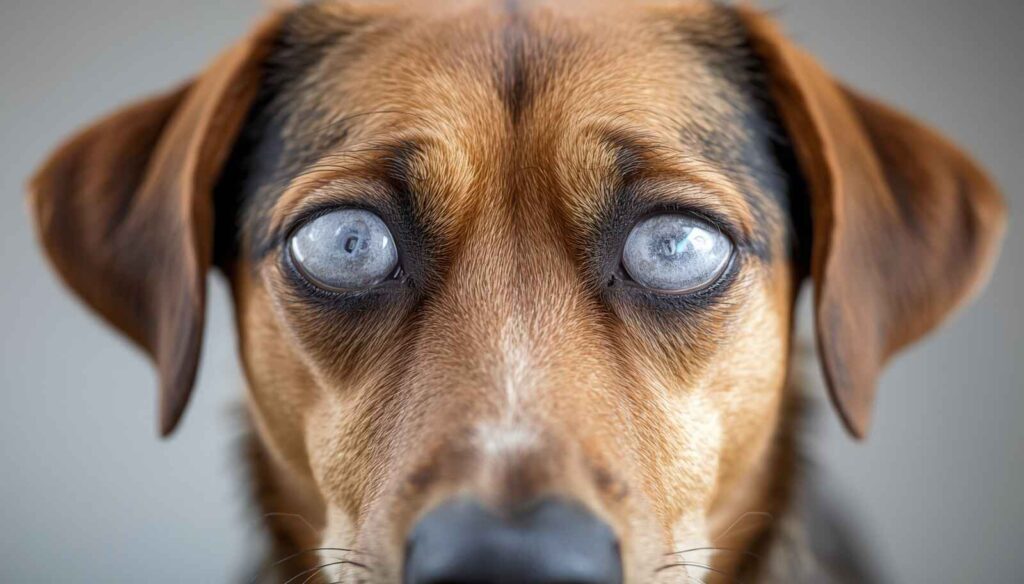
You’re giving your dog a scratch behind the ears when something makes you pause. Their eyes look a little hazy — perhaps blue-grey, milky or less clear than usual. It is easy for your mind to jump straight to cataracts, blindness or an emergency vet visit.
The first thing to understand is that “cloudy” describes how the eye looks; it is not a diagnosis. The haze may be coming from the clear surface of the eye, the lens behind the pupil or inflammation and fluid inside the eye. Each location has different possible causes and a different level of urgency.
A useful way to assess the situation is to focus on three things: how quickly the change appeared, whether one eye or both are affected, and whether your dog seems uncomfortable or visually impaired. These checks cannot identify the cause, but they can help you decide whether to book a routine appointment or seek urgent veterinary care.
Quick answer: Cloudy eyes in dogs may be caused by normal age-related lens changes, cataracts, corneal injury, dry eye, glaucoma, uveitis or other eye disease. A gradual, painless haze in both eyes may be less urgent than sudden cloudiness in one eye. However, any cloudy eye accompanied by redness, squinting, enlargement, trauma, unequal pupils or sudden vision changes needs prompt veterinary assessment.
Start With the Three-Check Cloudy Eye Assessment
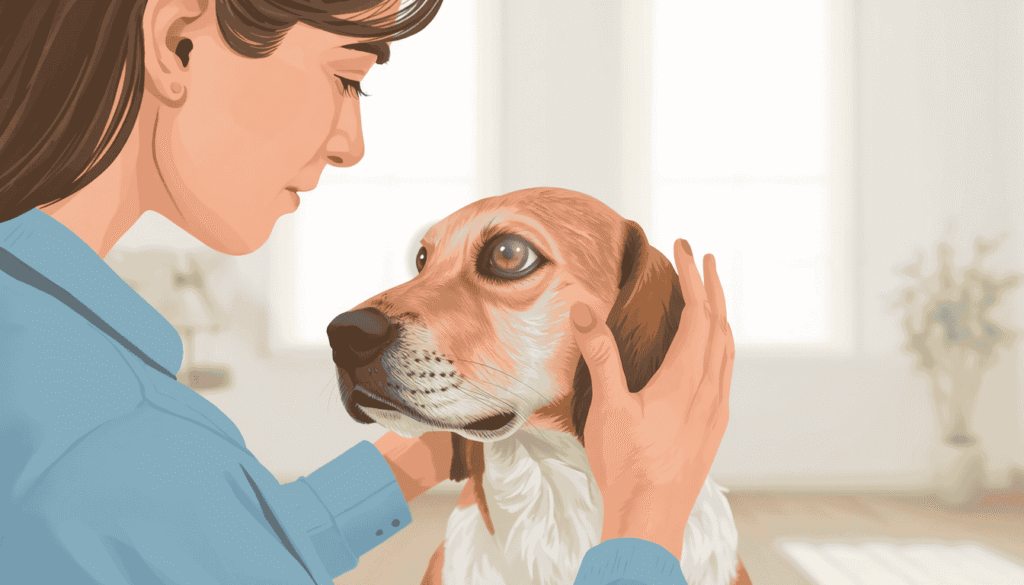
Before trying to work out what the cloudiness looks like, run through these three checks. They will not provide a diagnosis, but they can help you judge urgency and give your veterinarian a clearer description of what is happening.
Check 1 — How Quickly Did It Appear?
Think about whether the change appeared:
- Within a few hours
- Overnight
- Over several days
- Gradually over weeks or months
Sudden cloudiness is generally more concerning because it may be linked to a corneal injury, foreign body, glaucoma, uveitis, lens displacement or another acute problem.
A slow, symmetrical haze in both eyes is more commonly associated with ageing changes in the lens or gradually developing cataracts. Even so, a new change should still be examined rather than assumed to be harmless.
Check 2 — Is One Eye Affected or Both?
Cloudiness affecting one eye, particularly when it develops suddenly, may indicate a local problem such as:
- Trauma
- A grass seed or other foreign body
- A corneal ulcer
- Glaucoma
- Uveitis
- Lens displacement
Cloudiness in both eyes may be associated with:
- Nuclear or lenticular sclerosis
- Cataracts
- Dry eye
- Inherited eye disease
- Diabetes-related cataracts
Do not assume that cloudiness in both eyes is automatically an age-related change. Diabetic cataracts, for example, can affect both eyes and may progress rapidly.
Check 3 — Does the Eye Look Painful or Seem to Be Working Differently?
Signs of eye pain or visual difficulty include:
- Squinting or holding the eye partly closed
- Repeated blinking
- Pawing or rubbing at the face
- Avoiding bright light
- Redness
- Excessive watering or sticky discharge
- One eye appearing larger or more prominent
- Pupils that are different sizes
- Sudden clumsiness or disorientation
- Hesitation around stairs or unfamiliar objects
- Behavioural changes such as hiding, irritability or reduced appetite
Dogs do not always cry or whine when an eye is painful. Subtle changes in behaviour may be the only clue.
What to Check Before You Call the Vet
Having a few details ready can help the veterinary team assess how urgently your dog needs to be seen.
- When did you first notice the cloudiness?
- Did it appear suddenly or gradually?
- Is one eye affected or both?
- Is your dog squinting or holding the eye closed?
- Is there redness?
- Is there discharge? If so, is it clear, sticky, yellow, green or blood-tinged?
- Does one eye look larger or more prominent than the other?
- Are the pupils different sizes?
- Is your dog rubbing or pawing at the face?
- Has there been recent rough play, facial trauma or a walk through long grass?
- Could shampoo, dust, smoke or chemicals have entered the eye?
- Is your dog bumping into objects or hesitating on stairs?
- Does your dog have diabetes?
- Have you noticed increased thirst, urination or unexplained weight change?
- Have any human, leftover or previously prescribed eye drops been used?
- Has your dog recently had eye surgery?
Take a clear photograph in natural light if possible, especially if the appearance is changing. Do not repeatedly shine a bright torch into the eye, press on the eyeball or delay veterinary care while trying to match the cloudiness to photographs online.
Where Does the Cloudiness Seem to Be?
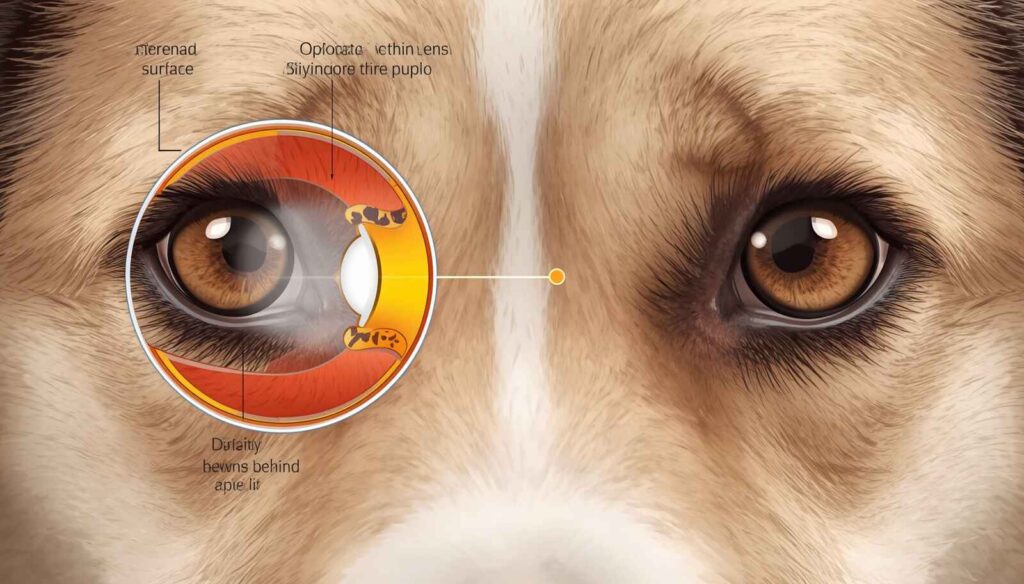
The apparent location of the haze is one of the most useful details you can give your veterinarian, even though it cannot confirm the diagnosis at home.
On the Surface of the Eye
A dull or hazy front layer may be linked to:
- Corneal swelling
- A scratch or corneal ulcer
- Dry eye
- Scarring
- A foreign body trapped under the eyelid
- Corneal degeneration or dystrophy
Surface disease is more likely to cause redness, watering, squinting or rubbing, although not every dog shows obvious pain.
Behind the Pupil
Cloudiness behind the pupil usually involves the lens. Possible causes include:
- Cataracts
- Nuclear or lenticular sclerosis
- A lens that has shifted from its normal position
A lens opacity may look white, grey or blue depending on the lighting and how advanced the change is.
A Diffuse Haze Through the Whole Eye
A haze that seems to affect the whole eye can be more concerning. Possible causes include:
- Uveitis, which is inflammation inside the eye
- Glaucoma
- Corneal oedema
- Lens displacement
- Less commonly, bleeding or other internal eye disease
Worth knowing: A blue-grey tint is not automatically “just old age.” Corneal swelling can look similar to nuclear sclerosis, and more than one condition may be present at the same time. A dog may also have reduced vision even when the cloudiness appears mild.
Corneal Cloudiness vs Lens Cloudiness
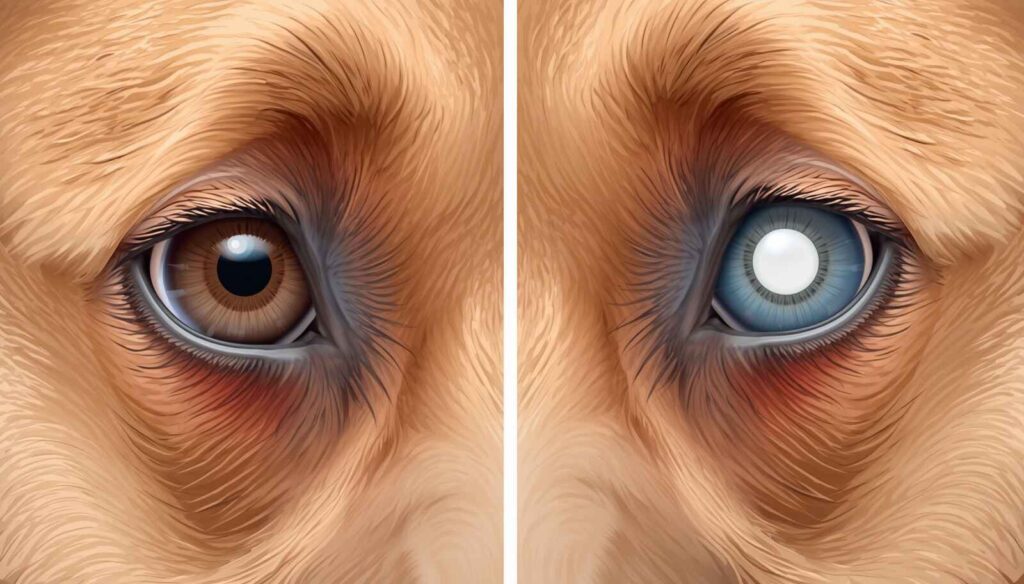
| Comparison Point | Corneal or Surface Cloudiness | Lens Cloudiness |
|---|---|---|
| Apparent location | Across the front of the eye | Behind the pupil |
| Typical appearance | Blue-grey haze, dull surface or focal patch | White, grey or bluish opacity |
| Pain | Often present, especially with ulcers or injury | Often painless at first |
| Redness | Common | Usually absent unless inflammation develops |
| Squinting | Common with irritation or ulceration | Less common unless complications occur |
| Discharge | May be watery or sticky | Usually not the main sign |
| Common causes | Ulcer, swelling, dry eye, trauma, scarring | Cataracts, nuclear sclerosis, lens luxation |
| Veterinary tests | Fluorescein stain, tear test, pressure measurement | Lens, retinal and pressure examination |
Matching the Pattern to a Likely Cause
These patterns may help you understand why your veterinarian asks certain questions, but they should not be used for self-diagnosis.
Gradual Blue-Grey Haze in Both Eyes of an Older Dog
This may be nuclear sclerosis or slowly developing cataracts. Nuclear sclerosis usually causes a transparent bluish haze and has limited effect on everyday vision, while cataracts can progressively block light. A veterinary examination is needed to tell them apart.
White or Milky Opacity Behind the Pupil
This may be a cataract. Its effect on vision depends on its size, density and position within the lens. Cataracts may be associated with genetics, ageing, diabetes, inflammation or previous injury.
Sudden Cloudiness With Squinting or Tearing
This raises concern for a corneal ulcer, foreign body or trauma. Because corneal injuries can deepen or become infected, prompt veterinary assessment is important.
Red, Enlarged and Cloudy Eye
This pattern can indicate glaucoma or another serious internal eye problem. Glaucoma is painful and can cause irreversible vision loss if eye pressure remains high, so it should be treated as an emergency.
Cloudiness With Sticky Discharge
Dry eye is a common possibility, particularly when the discharge is thick or recurrent. Poor tear production can also lead to corneal inflammation, infection and ulceration.
Cloudiness With an Abnormal-Looking Pupil
A pupil that is unusually small, large, fixed or different from the other pupil may occur with uveitis, glaucoma, lens luxation or neurological disease. This needs prompt assessment.
Cloudiness After Running Through Long Grass
Grass seeds, plant material and corneal scratches are common concerns. Do not attempt to remove anything that appears embedded in the eye.
Rapid Cloudiness in a Diabetic Dog
Dogs with diabetes can develop cataracts quickly, often in both eyes. Rapid lens changes warrant prompt assessment of both the eyes and the dog’s diabetic control.
Why Are My Dog’s Eyes Cloudy? The Main Conditions
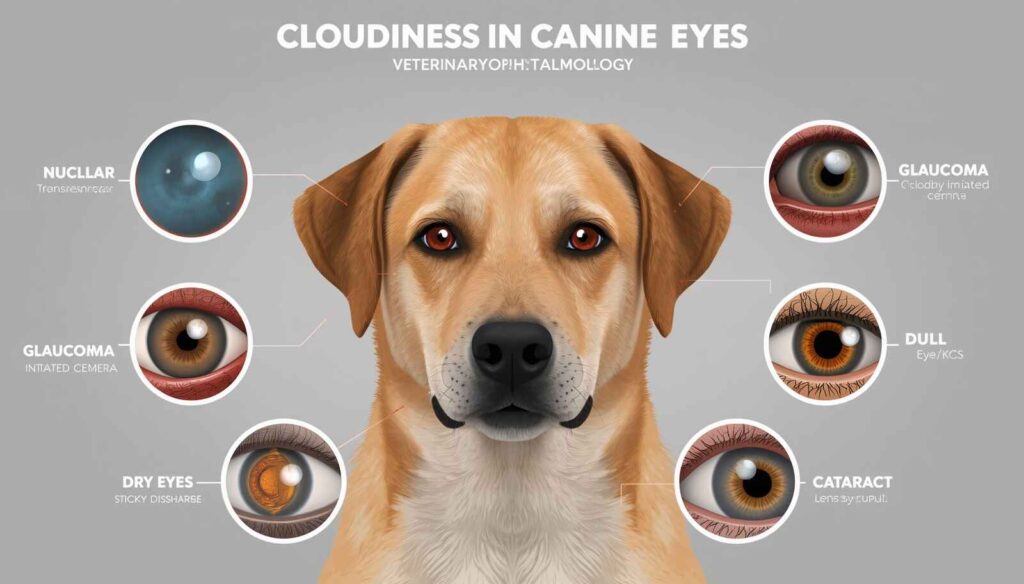
Nuclear Sclerosis
Nuclear sclerosis is a common age-related change in which the centre of the lens becomes denser. It usually develops gradually in both eyes and creates a bluish, semi-transparent haze. Everyday vision is often only mildly affected, although close-focus vision may decline.
Because early cataracts can look similar, nuclear sclerosis should be confirmed by a veterinarian rather than assumed from age alone.
Cataracts
A cataract is a loss of transparency within the lens. It may begin as a small opacity or progress until much of the lens becomes white.
Possible causes include:
- Inherited disease
- Diabetes
- Age-related change
- Inflammation
- Trauma
- Developmental abnormalities
Vision loss depends on how much of the lens is affected. Cataracts may also contribute to inflammation inside the eye, so even dogs that are not having surgery may need ongoing monitoring.
Corneal Ulcer
A corneal ulcer is damage to the clear surface of the eye. Common signs include:
- Squinting
- Excessive blinking
- Watering
- Redness
- Face rubbing
- Light sensitivity
Ulcers can worsen quickly, and deeper ulcers may threaten the integrity of the eye. Veterinary treatment usually includes fluorescein staining to confirm the defect and assess its severity.
Glaucoma
Glaucoma occurs when pressure inside the eye becomes abnormally high. It is usually painful and may cause:
- Corneal cloudiness
- Redness
- An enlarged or bulging eye
- A dilated pupil
- Sudden vision loss
- Nausea, lethargy or reduced appetite
Glaucoma is one of the true eye emergencies because permanent damage can develop quickly.
Uveitis
Uveitis is inflammation inside the eye. It may cause cloudiness, redness, squinting, light sensitivity or an unusually small pupil.
Possible causes include:
- Eye trauma
- Infection
- Immune-mediated disease
- Lens-related inflammation
- Disease elsewhere in the body
Treatment depends on identifying and controlling both the inflammation and its underlying cause.
Dry Eye
Dry eye, or keratoconjunctivitis sicca, occurs when the eye does not produce enough tears. The surface may look dull or cloudy, and a thick, sticky discharge is common.
Without treatment, dry eye can lead to:
- Chronic discomfort
- Recurrent infection
- Corneal ulcers
- Pigmentation or scarring
- Reduced vision
It often requires long-term medication and regular monitoring.
Corneal Oedema
Corneal oedema is fluid accumulation within the cornea, producing a blue-grey haze. It is not a diagnosis by itself and may be associated with:
- Glaucoma
- Uveitis
- Trauma
- Corneal endothelial disease
- Lens luxation
The urgency depends on the underlying cause and whether pain, redness or vision changes are present.
Lens Luxation
Lens luxation occurs when the lens shifts out of its normal position. It may develop suddenly and cause pain, pupil distortion, inflammation or secondary glaucoma.
Some breeds have an inherited predisposition, but it may also occur after trauma or chronic eye disease. Suspected lens luxation requires urgent veterinary assessment.
Corneal Scarring or Dystrophy
Previous injuries, chronic irritation or inherited corneal conditions may leave cloudy patches. Old, stable scars may be painless, but newly developing or worsening opacity needs examination to rule out active ulceration, inflammation or degeneration.
Nuclear Sclerosis or Cataracts? Why You Cannot Tell by Looking
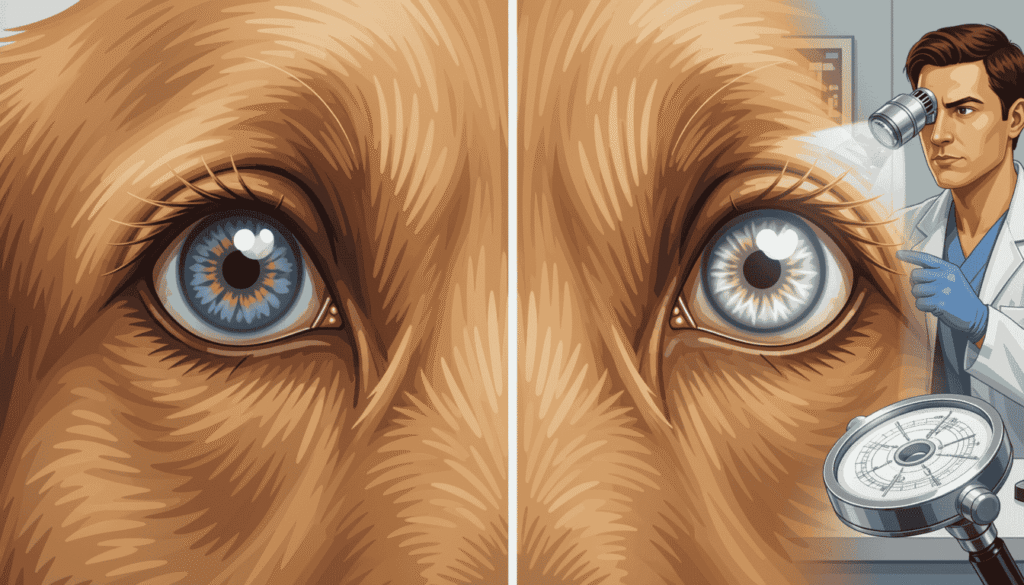
| Feature | Nuclear Sclerosis | Cataracts |
|---|---|---|
| Typical age | Common in older dogs | Can occur at any age |
| Eyes affected | Usually both | One or both |
| Appearance | Bluish-grey and relatively transparent | White, grey or opaque |
| Vision effect | Usually mild | Can be significant |
| Progression | Slow | Variable; sometimes rapid |
| Diabetes link | No direct link | Common association |
| Treatment | Usually monitoring | Monitoring, treatment of complications or surgery in suitable dogs |
| Veterinary confirmation | Required | Required |
Lighting, pupil size and the stage of the condition all affect appearance. Do not assume that blue always means harmless ageing or that every cataract causes immediate blindness. Cataracts and nuclear sclerosis can also occur together.
Is the Cloudy Eye Affecting Your Dog’s Vision?
Dogs often compensate for vision loss better than owners expect, particularly when the change develops slowly or affects only one eye.
Possible signs include:
- Hesitating on stairs or kerbs
- Struggling in dim light
- Bumping into unfamiliar objects
- Missing treats or toys
- Startling when approached from one side
- Becoming less confident in new places
- Moving more cautiously
- Reluctance to go outside after dark
A dog may still navigate a familiar home by relying on memory, smell and hearing, so normal behaviour does not guarantee normal vision.
Home observations can help you describe changes to your veterinarian, but they cannot identify the cause, measure eye pressure or rule out retinal disease. Avoid repeated bright-light tests or obstacle courses that could frighten or injure your dog.
When a Cloudy Eye Is an Emergency
Seek urgent veterinary or out-of-hours care if your dog has:
- Sudden cloudiness
- An eye held closed
- Severe squinting
- Intense redness
- An enlarged or bulging eye
- Pupils that are unequal, fixed or unusually large
- Sudden disorientation or apparent vision loss
- Trauma, a bite wound or suspected puncture
- Chemical exposure
- Blood in or around the eye
- A visible embedded object
- A deep-looking dent or defect on the eye’s surface
- Rapid worsening over a few hours
- Persistent face rubbing
- Cloudiness after recent eye surgery
- Fast-developing white lens changes in a diabetic dog
Glaucoma, deep corneal ulcers, severe uveitis, trauma and lens displacement are among the conditions veterinarians treat as high priority because they can cause severe pain, permanent damage or rapid vision loss.
What to Do While You Arrange Care
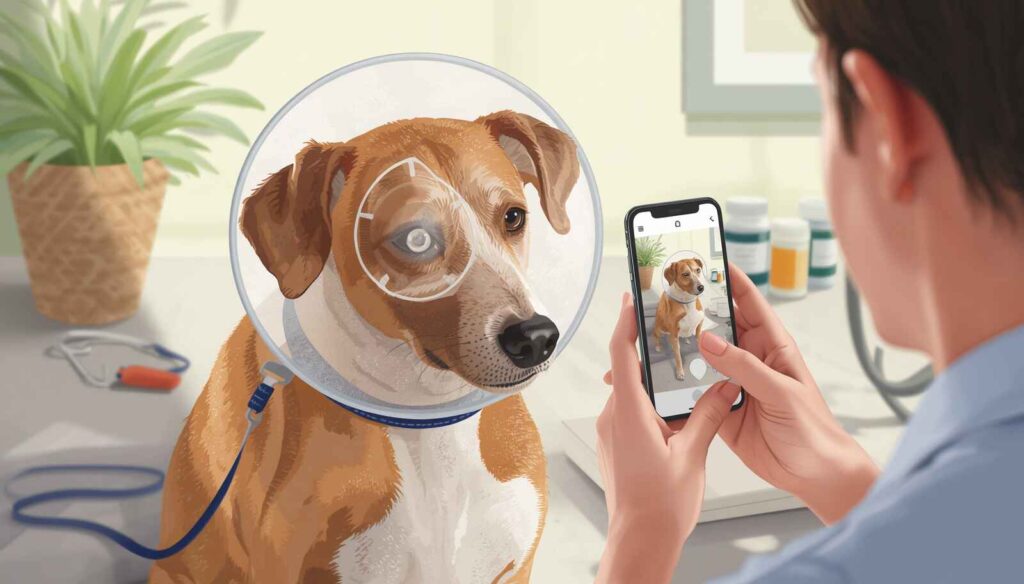
Prevent your dog from rubbing the eye. An appropriately fitted protective collar can help if you already have one available. Keep your dog indoors or on a lead near roads, stairs and unfamiliar areas if vision seems affected.
Take a photograph in natural daylight, note when the change began and gather details of any current medications. These details can help the veterinary team judge urgency.
If shampoo, cleaning products or another chemical has entered the eye, contact your veterinarian or an emergency clinic immediately and follow their flushing instructions. Do not try to neutralise the substance with another product.
What to Avoid
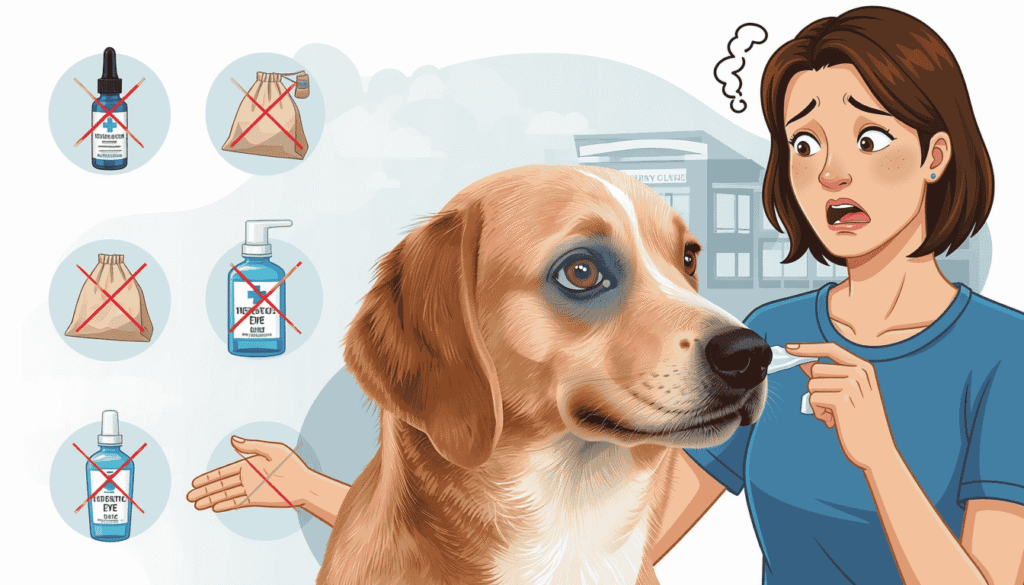
Do not use:
- Human eye drops
- Leftover antibiotic or steroid drops
- Medication prescribed for another pet
- Tea bags
- Essential oils
- Antiseptic solutions
- Herbal or homemade eye remedies
Steroid-containing drops can make a corneal ulcer much worse, so they should never be reused without a veterinary examination.
Do not press on the eye, force painful eyelids open or attempt to remove anything that appears embedded.
What the Vet Will Likely Check
Your veterinarian will usually ask:
- How quickly the cloudiness appeared
- Whether one or both eyes are affected
- Whether your dog is squinting, rubbing or showing vision changes
- Whether there has been trauma, chemical exposure or recent surgery
- Whether your dog has diabetes or another medical condition
- Whether any eye medication has already been used
The eye examination may include checking pupil size and response, eye symmetry, corneal clarity, lens appearance and signs of vision loss.
| Test | What It Checks | Helps Identify |
|---|---|---|
| Fluorescein stain | Corneal surface | Ulcers, scratches and deeper corneal damage |
| Tear-production test | Tear quantity | Dry eye |
| Tonometry | Pressure inside the eye | Glaucoma and uveitis |
| Slit-lamp or focused eye examination | Cornea, front chamber and lens | Corneal disease, cataracts and inflammation |
| Dilated examination | Lens, retina and optic nerve | Cataracts, retinal disease and deeper eye problems |
| Blood glucose test | Blood sugar level | Diabetes-associated cataracts |
| Ocular ultrasound | Structures hidden by severe cloudiness | Lens displacement, retinal detachment or internal masses |
Some dogs may need referral to a veterinary ophthalmologist, particularly if cataract surgery, lens luxation, uncontrolled glaucoma or a deep corneal ulcer is suspected.
Treatment Depends Entirely on the Cause
There is no universal eye drop for cloudy eyes. Treatment must match the diagnosis.
- Nuclear sclerosis is usually monitored once confirmed.
- Cataracts may be monitored, treated for associated inflammation or referred for surgical assessment.
- Corneal ulcers need prescription medication, pain relief, protection from rubbing and repeat examinations.
- Glaucoma requires urgent pressure control and ongoing management.
- Uveitis needs treatment for inflammation as well as investigation of the underlying cause.
- Dry eye often responds well to long-term tear-stimulating medication and lubrication.
- Lens luxation may require urgent medical or surgical treatment.
Recovery and long-term outlook depend on the cause, how quickly treatment begins and whether vision or deeper eye structures have already been damaged. Some conditions resolve with treatment, while others require lifelong management.
Common Mistakes That Can Cost Time or Vision
Assuming Every Cloudy Eye Is a Cataract
This can delay treatment for glaucoma, corneal ulcers, uveitis or other painful conditions.
Blaming the Change on Old Age
Senior dogs can develop both harmless age-related lens changes and urgent eye disease. Age alone cannot confirm the cause.
Waiting for Obvious Blindness
Dogs may compensate well for gradual or one-sided vision loss. By the time they begin bumping into objects, permanent damage may already have occurred.
Reusing Leftover Eye Drops
Medication that helped a previous problem may be inappropriate or dangerous now. Steroid drops are especially risky if the cornea is ulcerated.
Assuming Eye Pain Would Make a Dog Cry
Dogs often show eye pain through squinting, hiding, reduced appetite, irritability or reluctance to have the face touched.
Relying on Online Photographs
Camera flash, lighting and pupil size can dramatically change how an eye looks. Similar-looking conditions may require completely different treatment.
Supporting a Dog With Reduced Vision
If your dog’s vision has declined, a few practical changes can make daily life safer:
- Keep furniture in familiar positions
- Block access to unsafe stairs
- Remove sharp or low obstacles
- Add gentle lighting at night
- Use a lead in unfamiliar places
- Give verbal cues before kerbs and steps
- Maintain predictable feeding and walking routines
- Approach from the side where your dog sees best
Dogs often adapt well when their surroundings remain consistent and they are given time to learn new cues.
Can Cloudy Eyes Be Prevented?
Not every cause can be prevented, but some risks can be reduced by:
- Seeking treatment early for redness, squinting or discharge
- Managing diabetes carefully
- Protecting the eyes during rough outdoor activity
- Preventing rubbing after injury or surgery
- Keeping up with recommended veterinary checks
- Following breed-specific eye-screening advice where relevant
Nuclear sclerosis, inherited cataracts and some forms of glaucoma may still develop despite excellent care. The realistic goal is early detection, prompt treatment and protection of comfort and remaining vision.
Practical Takeaway
Emergency care:
- Sudden blindness
- An enlarged or bulging eye
- Severe pain
- Trauma or chemical exposure
- Abnormal pupils
- Rapid worsening
Same-day veterinary advice:
- Sudden cloudiness
- Squinting
- Redness
- Sticky discharge with discomfort
- Persistent rubbing
- One-eye cloudiness after outdoor activity
Prompt routine appointment:
- Gradual, painless haze in both eyes
- Slowly developing cloudiness in an older dog
- A stable-looking opacity with no redness or discomfort
The rule worth remembering is simple: a newly cloudy eye deserves a diagnosis, even if your dog seems comfortable. Gradual and painless changes may not be emergencies, but they should not be ignored indefinitely.
Frequently asked questions
1.Why Is Only One of My Dog’s Eyes Cloudy?
Cloudiness in one eye is more likely to involve a local problem such as trauma, a foreign body, a corneal ulcer, uveitis, glaucoma or lens displacement. One-sided cloudiness should be assessed promptly, especially if it appeared suddenly or is accompanied by redness, squinting or pupil changes.
2.Are Cloudy Eyes Normal in Older Dogs?
A gradual blue-grey haze in both eyes is common in older dogs and may be caused by nuclear sclerosis. However, cataracts and painful eye disease can also occur with age, so the change should be confirmed by a veterinarian rather than assumed to be normal.
3.Can a Dog Have Eye Pain Without Crying?
Yes. Many dogs do not vocalise when an eye is painful. Instead, they may squint, blink repeatedly, hide, sleep more, eat less, become irritable or avoid having the face touched.
4.Can Diabetes Make a Dog’s Eyes Cloudy?
Yes. Diabetes can cause cataracts, often affecting both eyes. These cataracts may progress quickly, so new lens cloudiness in a diabetic dog should be assessed promptly along with the dog’s overall diabetic control.
5.Can Cataracts Develop Suddenly?
They can. Diabetes-associated cataracts may develop over days or weeks, while inherited or age-related cataracts may progress more slowly. A rapid change in either eye needs veterinary examination.
6.Will Cloudiness in One Eye Spread to the Other?
It depends on the cause. Trauma, a foreign body or a corneal ulcer usually remains limited to one eye. Inherited cataracts, diabetes-related cataracts, dry eye and age-related lens changes may eventually affect both.
7.Does a Cloudy Eye Always Mean Surgery Is Needed?
No. Nuclear sclerosis, mild scarring and many cases of dry eye are managed without surgery. Cataract or lens surgery is considered only after a full eye examination and assessment of the retina, overall eye health and the dog’s suitability for the procedure.
If your dog’s eye has developed a new haze, contact your veterinarian and describe how quickly it appeared, which eye is affected and whether there is pain, redness or a change in vision. Those details will help determine whether your dog needs a routine appointment or care today.
#. Related Articles:
1. Why Does Your Dog Have a Runny Nose?