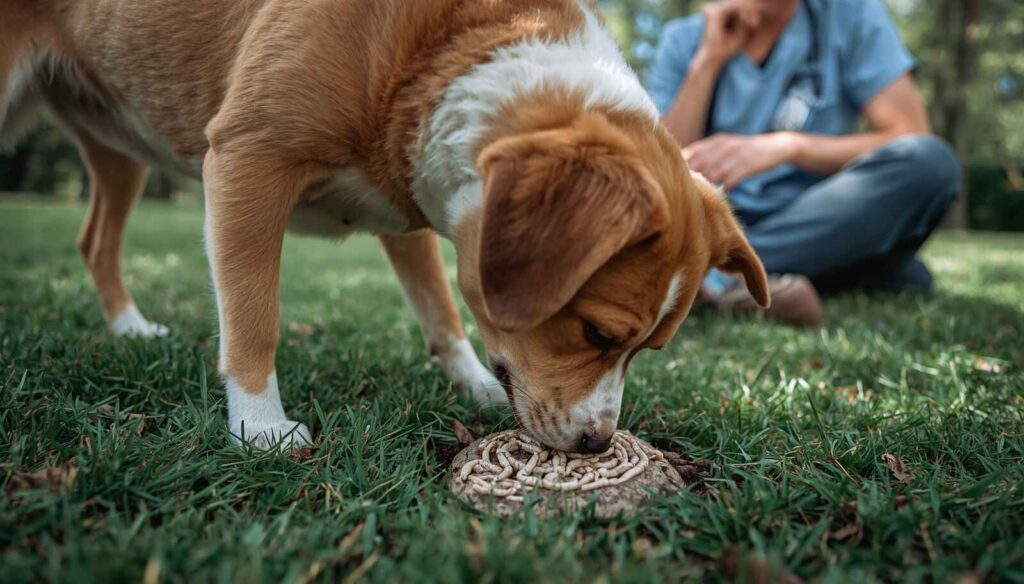
You’re out for the morning walk, you bag up after your dog, and then you see it — tiny white worms squirming around in the poo. Your stomach drops. Your mind races. Is your dog seriously ill? Did it spread to your kids?
Take a breath. You’re not alone, and this is more common than most dog owners realise. But it does need your attention — quickly.
This guide will walk you through exactly what those white worms are, why they appear, what symptoms to watch for, and — most importantly — how to get rid of them for good.
What Are Those White Worms in Your Dog’s Poop?
Not every worm looks the same, and the shape, size, and movement of what you’re seeing matters. Here’s how to tell them apart at a glance.
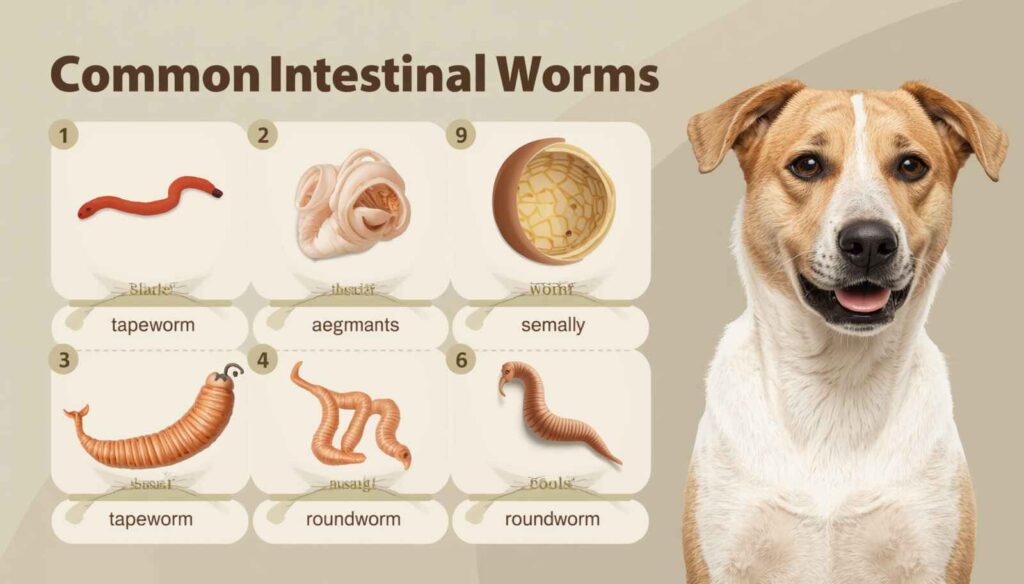
Tapeworm Segments (Look Like Moving Rice Grains)
The most common cause of white worms — or white specks — in dog poo is tapeworms. But here’s the thing: you’re not usually seeing the whole worm. You’re seeing segments that break off and pass out in the stool.
These segments are:
- Flat and rectangular, like a grain of rice
- Cream or off-white in colour
- Sometimes still wriggling when fresh
- About 5–10mm long
You might also spot them stuck around your dog’s bottom or on their bedding. If they dry out, they turn into hard yellowish dots that look like sesame seeds.
Tapeworms in dogs are most commonly caused by swallowing an infected flea during grooming. This is really important — if your dog has tapeworms, there’s a good chance there’s also a flea problem you haven’t spotted yet.
Roundworms (Spaghetti-Like Strings)
Roundworms look very different — they’re long, cylindrical, and look like spaghetti or noodles. They can be several centimetres long and are more likely to appear in puppies than adult dogs.
Adult dogs can carry roundworms without showing obvious signs, but puppies often vomit them up or pass large numbers in their stool. If your puppy’s belly looks bloated and pot-bellied, roundworms are a strong suspect.
What If the Worms Are Tiny and Thread-Like?
Very thin, hair-like white threads could point to whipworms or even threadworms (also called pinworms in some regions). These are less common but worth mentioning to your vet, especially if your dog has chronic soft stools or mucus in their poo.
How Did My Dog Pick Up Worms?
This is one of the most common questions dog owners ask — and the answer often surprises people.
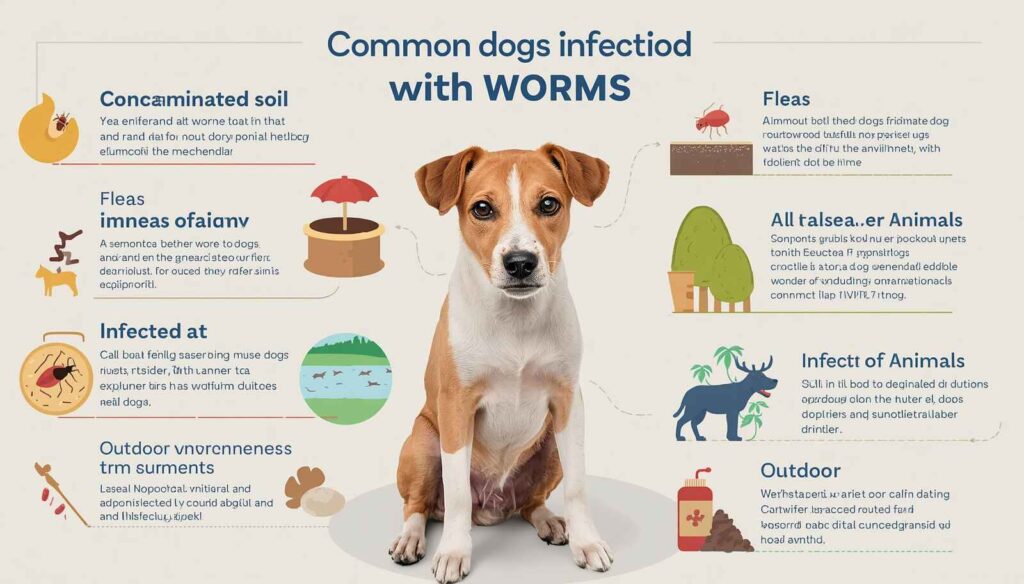
Fleas are the #1 route for tapeworms. When a dog grooms and accidentally swallows a flea carrying tapeworm larvae, the cycle begins inside the gut. You don’t need a severe flea infestation for this to happen — a single flea is enough.
Roundworms spread through contaminated soil and faeces. Parks, dog runs, and gardens where other dogs have toileted are common sources. Dogs sniff everything, and parasite eggs on the ground are microscopic — you’ll never see them.
Puppies can be born with roundworms passed from their mother through the placenta or milk. This is why vets routinely deworm puppies from two weeks of age.
Hunting or scavenging dogs are at higher risk. Eating raw prey, dead animals, or contaminated wildlife can introduce a range of parasites.
Symptoms to Watch For (Beyond What You See in the Poop)
Sometimes worms go unnoticed for weeks. Here are the signs that something’s off, even if you haven’t spotted worms directly:
- Scooting along the floor — a classic sign of tapeworm irritation around the back end
- Bloated or pot-bellied appearance, especially in puppies
- Increased appetite with no weight gain, or sudden weight loss
- Dull, dry, or rough coat — parasites rob the body of nutrients
- Visible worms or segments around the anus or on bedding
- Vomiting, sometimes with worms present
- Soft stools, diarrhoea, or mucus in the poo
- Low energy or general dullness that’s hard to explain
Not every dog will show dramatic symptoms. Some dogs carry a moderate worm burden and seem completely fine — which is exactly why routine worming is so important.
Are These Worms Dangerous to Humans?
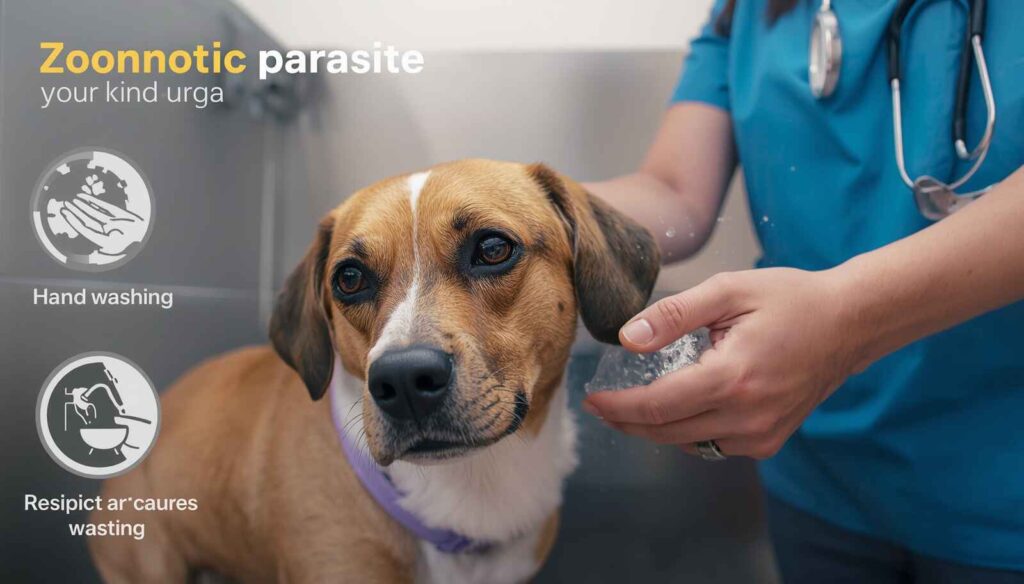
Yes, some dog intestinal parasites can infect people — this is called zoonotic transmission, and it’s a real concern, especially in households with young children.
Roundworm larvae (specifically Toxocara canis) can migrate to human organs, eyes, or the nervous system if accidentally ingested. Children playing in contaminated soil or sandpits and then putting their hands in their mouths are most at risk.
Tapeworms are less commonly passed to humans from dogs, but it can happen if someone accidentally ingests an infected flea.
The practical takeaway: always wash hands after handling dog faeces, keep children away from areas where dogs toilet until the ground has been cleaned, and treat your dog promptly.
Getting a Diagnosis: What Your Vet Will Do
Don’t try to diagnose this entirely on your own. A quick vet visit can confirm exactly what type of parasite you’re dealing with.
Your vet will likely:
- Ask for a stool sample — ideally a fresh one collected within a few hours. They’ll run a faecal floatation test to look for parasite eggs under a microscope.
- Do a physical exam — checking for signs of anaemia, weight loss, or abdominal tenderness.
- Look at your dog’s history — travel, diet, flea treatment, and last worming date all help build the picture.
Bring the stool sample in a clean, sealed container. In the UK, Canada, and Australia, most vets can turn results around quickly — sometimes the same day.
Treatment: What Actually Works
Good news — most intestinal worm infections in dogs are very treatable.

For Tapeworms
The most effective treatment is praziquantel, available as a tablet, chewable, or spot-on. It works by dissolving the worm’s outer layer, killing it within hours. A single dose is often enough, but your vet may recommend a follow-up.
Critically — also treat for fleas at the same time. If you kill the tapeworms but leave the fleas, reinfection is almost guaranteed within weeks.
For Roundworms
Fenbendazole or pyrantel pamoate are the most commonly used treatments. Puppies often need a course of treatment over several days, plus repeat doses at set intervals as part of a puppy worming schedule.
Broad-Spectrum Wormers
Many vets recommend broad-spectrum dewormers that cover multiple parasite types at once — useful if you’re not sure exactly what you’re dealing with. Brands vary between the UK, Canada, and Australia, so ask your vet for what’s licensed in your country.
Never use over-the-counter wormers as your only response to an active infection. They can help prevent, but a confirmed infection usually needs a vet-prescribed product.
Preventing Worms From Coming Back
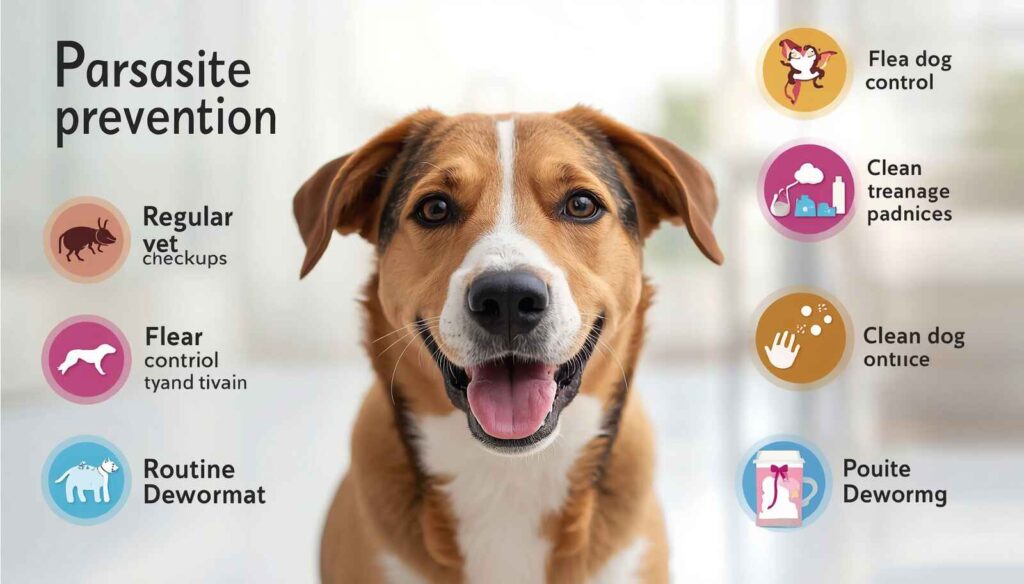
Treating the infection is only half the job. Here’s how to break the cycle:
- Regular worming schedule — adult dogs should typically be wormed every 3 months; puppies more frequently (every 2–4 weeks up to 12 weeks, then monthly until 6 months)
- Year-round flea prevention — use a vet-recommended flea product consistently, not just when you see fleas
- Pick up poo immediately — parasite eggs become infectious in the environment within days
- Wash hands thoroughly after handling poo, especially before eating
- Avoid letting dogs eat raw prey or scavenge outdoors
- Check new puppies and rescue dogs — always have them tested before introducing them to a multi-pet home
If you have multiple dogs, treat them all at the same time to avoid reinfection between pets.
Frequently Asked Questions
1.Can I treat white worms in my dog’s poo without going to the vet?
You can use an over-the-counter broad-spectrum wormer for a mild or suspected case, but a vet visit is strongly recommended. Without knowing the exact parasite type, you might use the wrong treatment. Vets can also check for complications like anaemia in puppies.
2.Are the white worms in my dog’s poo contagious to my other pets?
Yes, potentially. Roundworm eggs in particular can survive in the environment and infect other dogs or cats. Treat all pets in the household and clean the area where your dog toilets thoroughly.
3.The white bits looked like moving rice grains — is that tapeworm?
Almost certainly, yes. Moving rice-grain-sized segments are the classic sign of tapeworm. Start by checking your dog for fleas and contact your vet for praziquantel treatment.
4.My puppy has a big round belly and worms in her poo — should I be worried?
Yes, take her to the vet promptly. A heavily wormed puppy can become anaemic and malnourished quickly. Puppies are far more vulnerable than adult dogs.
5.How long after treatment will the worms stop appearing in poo?
Most treatments work within 24–72 hours. You may still see dead worm segments or pieces in the stool for a day or two after treatment — that’s normal and means it’s working.
6.Can my dog get worms again after treatment?
Absolutely, if the source of infection isn’t removed. That means ongoing flea control, regular worming, and good hygiene habits. Worms are not a one-time problem — they need ongoing prevention.
7.Is it safe for my kids to play in the garden if my dog has had worms?
Use caution until treatment is complete and you’ve cleaned the area. Pick up all faeces and consider using a pet-safe disinfectant on hard surfaces. Keep children away from areas where the dog regularly toilets, especially sandpits.
Final Thoughts
Finding white worms in your dog’s poo is alarming, but it’s a solvable problem. The key is acting quickly — identify the worm type, visit your vet, treat both the worms and the flea problem if tapeworms are involved, and put a proper prevention routine in place going forward.
Most dogs recover quickly with the right treatment, and a simple worming schedule keeps the problem from coming back. Your dog will be back to their tail-wagging self before you know it.
When in doubt, your vet is always the right call — they’ve seen this hundreds of times and can give you the exact treatment your dog needs.
#. Related Articles: