You lean in for a cuddle with your dog — and get a wall of something that smells like a bin left out in summer. Sound familiar? You’re not alone. Stinky dog breath is one of the most common complaints from dog owners, and the good news is: you don’t always need an expensive vet visit to fix it.
This guide covers the most effective home remedies for dog bad breath, why they work, what to avoid, and — importantly — when it’s time to stop trying home fixes and call your vet instead.
Quick note before you start: Bad breath in dogs usually signals one of three things — plaque buildup, diet issues, or an underlying health problem. Most home remedies target the first two. If your dog’s breath smells like nail polish remover, ammonia, or has changed suddenly and dramatically, skip the home remedies and book a vet appointment. That kind of smell is a red flag.
Why Does My Dog Have Bad Breath?
Before throwing a parsley leaf at the problem, it helps to understand what’s actually causing it. Dogs can’t brush their own teeth, so bacteria naturally accumulate in their mouths. That bacteria breaks down food particles and produces sulphur compounds — the same compounds that make human breath smell after eating garlic.
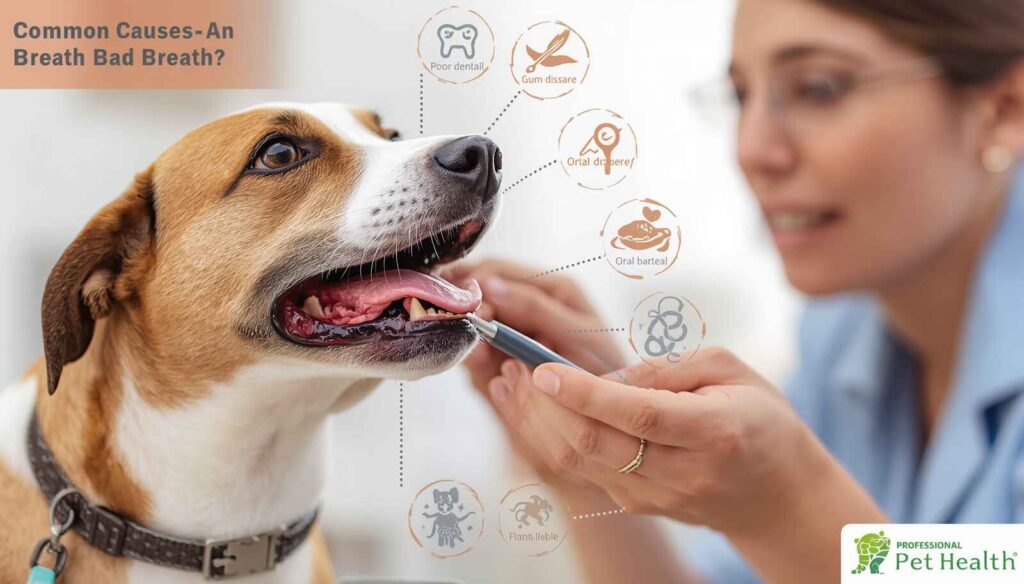
The most common causes
- Plaque and tartar buildup — This is the number one cause. Bacteria in plaque create a biofilm on teeth that produces odour over time.
- Gum disease (periodontal disease) — Over 80% of dogs over age 3 have some degree of gum disease. It’s often painless and invisible until it’s bad.
- Diet — Wet food, low-quality kibble, or too many meat-heavy treats can all feed odour-causing bacteria.
- Eating something disgusting — Dogs eat things they shouldn’t. Rubbish, faeces, dead animals. Enough said.
- Kidney or liver disease — These cause a chemical smell (sweet, fishy, or ammonia-like) that no amount of parsley will fix.
- Diabetes — A fruity or sweet-smelling breath in a dog can indicate uncontrolled diabetes.
Home remedies work brilliantly for everyday bacterial-related bad breath. They won’t fix an organ problem. Keep that distinction in mind.
9 Home Remedies for Dog Bad Breath That Actually Work
1. Brush their teeth — yes, really
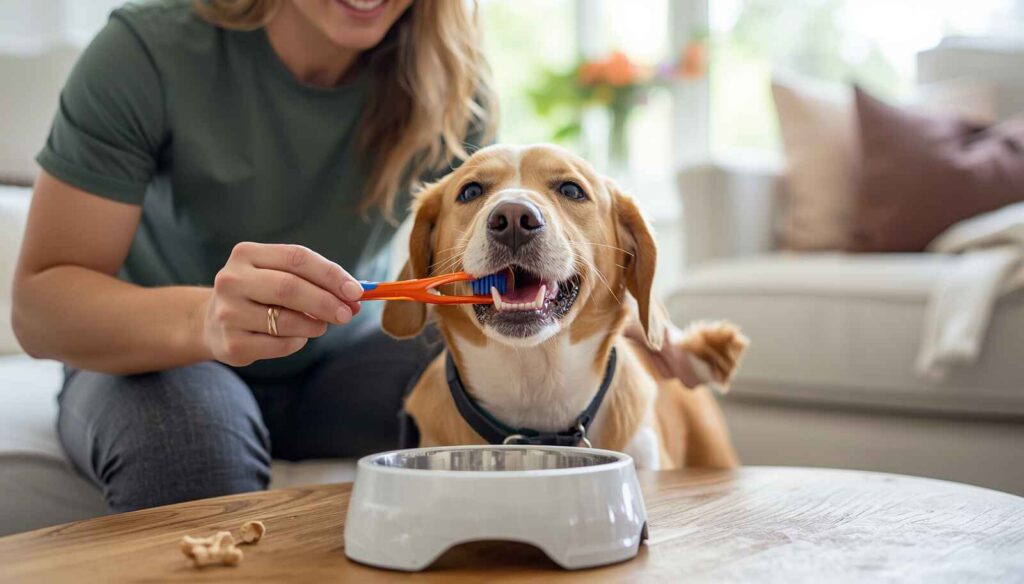
This is the single most effective thing you can do. Nothing replaces mechanical plaque removal. Use a dog-specific toothbrush (or a finger brush) and dog-safe toothpaste only — human toothpaste contains xylitol and fluoride, both toxic to dogs.
Aim for daily brushing, but even three times a week makes a real difference. Start slow — let your dog lick the toothpaste off your finger first, then gradually introduce the brush. Most dogs tolerate it within a week or two.
UK owners: Look for VOHC-accepted (Veterinary Oral Health Council) dental products. Australia/Canada: The same applies — check for the VOHC seal, which means the product’s effectiveness has been independently tested.
2. Fresh parsley (the right kind)
Parsley contains chlorophyll, which neutralises odour compounds at the source. It’s a natural breath freshener — and it works surprisingly well.
Chop a small amount of flat-leaf or curly parsley and sprinkle it over your dog’s food. For a medium-sized dog, one teaspoon is plenty. Don’t use spring parsley (also called spring parsley or fool’s parsley) — it’s toxic to dogs.
Also skip parsley if your dog is pregnant. Large amounts can stimulate uterine contractions.
3. Coconut oil
Coconut oil has lauric acid, which has antibacterial properties that can reduce the bacteria responsible for plaque. It also coats the teeth with a thin layer that makes it harder for plaque to grip.
Add half a teaspoon to small dogs’ food, up to a teaspoon for large dogs, a few times a week. Or use it as a base for homemade dog toothpaste by mixing it with a little turmeric and baking soda.
One caveat: coconut oil is high in saturated fat. Dogs prone to pancreatitis or obesity shouldn’t have it daily.
4. Raw carrot sticks
This one surprises a lot of people. Raw carrots act like a natural toothbrush — the fibrous texture scrubs against teeth as your dog chews, removing light surface debris and stimulating gums. Plus, most dogs absolutely love them.
Give one medium carrot per day as a snack. They’re low in calories, good for gut health, and genuinely helpful for mild breath issues. Freeze them in summer for an extra-special treat.
5. Apple slices (in moderation)
Similar to carrots — the crunchy texture helps, and apples also contain malic acid, which can help break down surface staining and bacteria. Remove the core and seeds first. Apple seeds contain trace amounts of cyanide.
A few thin slices two or three times a week is enough. Don’t overdo it — the natural sugar adds up.
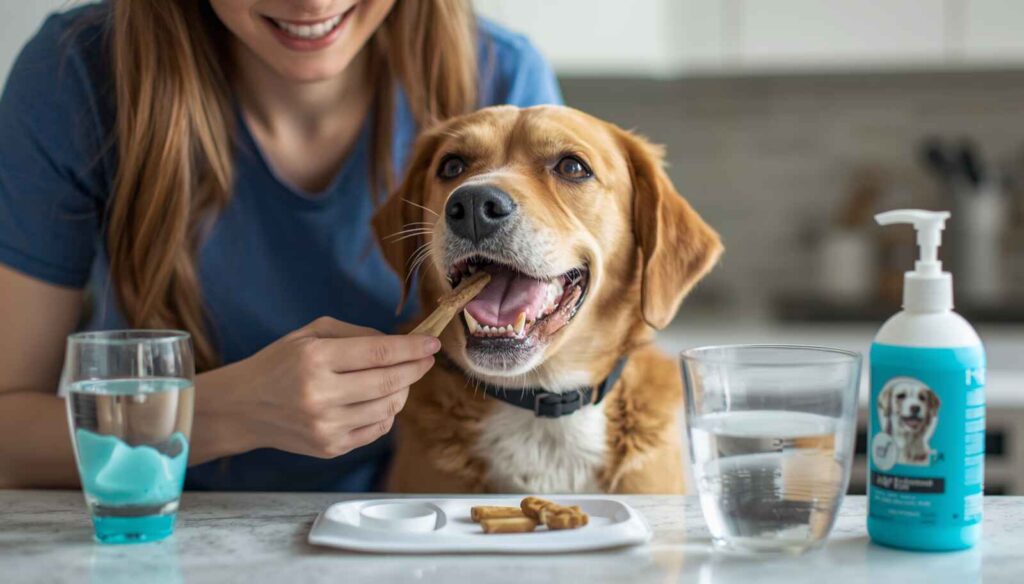
6. Dental water additives
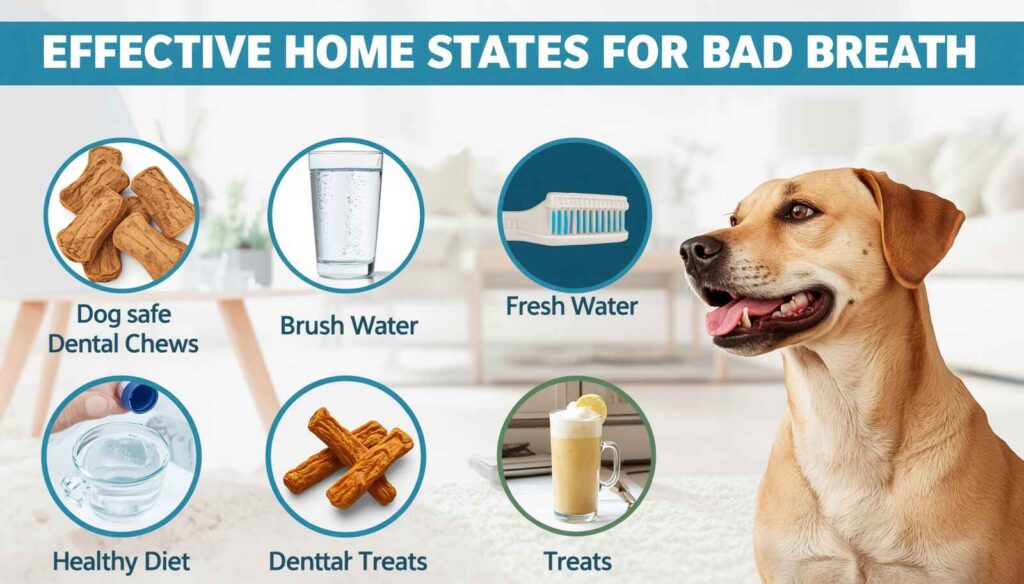
These are liquid products you add to your dog’s water bowl. They usually contain enzymes or antiseptic compounds (like chlorhexidine or zinc) that reduce bacteria throughout the mouth over time.
They’re not a replacement for brushing, but they’re a low-effort daily supplement that genuinely helps — especially for dogs who won’t let you near their teeth. Look for products with the VOHC seal.
Change the water and clean the bowl daily. A dirty bowl cancels out the benefit.
7. Plain, unsweetened probiotic yoghurt
The oral microbiome — the balance of bacteria in your dog’s mouth — matters more than most people realise. Probiotic-rich foods can introduce beneficial bacteria that crowd out the odour-causing kind.
A tablespoon of plain, unsweetened yoghurt a few times a week is safe for most dogs. Some dogs are lactose intolerant, so start small and watch for loose stools. Avoid anything with added sugar, sweeteners, or xylitol.
8. Improve their diet
The connection between diet and breath is underestimated. Cheap dry food full of fillers, or a diet heavy in wet/canned food, creates the perfect environment for odour-causing bacteria.
Switching to a higher-quality kibble — one where meat is listed first, not corn or meat byproducts — can reduce bad breath noticeably within a few weeks. Add raw meaty bones if your vet approves (raw, not cooked — cooked bones can splinter).
Also consider: what is your dog eating between meals? Treats are often overlooked. Many commercial treats are high in sugar and poor quality protein that feeds mouth bacteria.
9. Apple cider vinegar — with caution
Some owners add a small amount (half a teaspoon) of raw, unfiltered apple cider vinegar to their dog’s water. The acetic acid may help reduce bacterial growth.
The evidence here is anecdotal rather than clinical, but it’s generally safe in very small amounts for healthy dogs. Don’t add it undiluted and don’t use it if your dog has kidney issues or stomach sensitivity. And definitely don’t apply it directly to gums — it can irritate soft tissue.
Building a Simple Routine (You’ll Both Stick To)
The problem with most advice is it sounds great on paper and falls apart in real life. Here’s a realistic weekly routine:
- Daily: Add water additive to a clean bowl. Give a carrot stick as a snack.
- 3x per week: Brush teeth. Add parsley or coconut oil to food.
- 2x per week: Give a probiotic yoghurt spoonful.
- Weekly: Give a raw bone or dental chew (if vet-approved).
- Twice yearly: Professional dental scale and clean at the vet.
None of these steps take more than two minutes. The consistency matters far more than doing everything perfectly.
When Home Remedies Aren’t Enough — See a Vet
It’s tempting to keep trying natural fixes, but some situations genuinely need professional care:
- Breath that smells like ammonia or urine (possible kidney disease)
- Sweet or fruity breath (possible diabetes)
- Breath that changed suddenly without any diet change
- Visible brown tartar buildup, bleeding gums, or broken teeth
- Your dog is pawing at their mouth or reluctant to eat
- Home remedies have been consistent for a month with no improvement
A professional dental clean under anaesthetic removes tartar that no home remedy can touch. Many vets in the UK, Australia, and Canada recommend one every 12–18 months for dogs over five years old.
Frequently Asked Questions
1.What’s the fastest home remedy for dog bad breath?
For immediate relief, sprinkle fresh chopped parsley over your dog’s food and make sure they’re drinking plenty of clean water. This won’t cure the underlying cause, but it works quickly as a freshener. For anything lasting, teeth brushing is the fastest effective long-term solution.
2.Can I use human mouthwash or toothpaste on my dog?
No — never. Human toothpaste contains fluoride and often xylitol, both toxic to dogs. Human mouthwash is similarly dangerous. Only use products specifically formulated for dogs.
3.How long does it take to see results with home remedies?
Dietary changes and consistent brushing typically show results within 2–4 weeks. Water additives and parsley can help within days. If there’s no improvement after 4–6 weeks of consistent effort, it’s worth getting a vet checkup to rule out underlying causes.
4.My dog won’t let me brush their teeth. What can I do?
Start by rubbing dog toothpaste on your finger and letting them lick it. Slowly introduce touching the teeth with your finger over several sessions before introducing a brush. A finger brush (a soft rubber cap that fits over your finger) is often less intimidating than a traditional toothbrush. Pair every session with praise and a reward.
5.Are dental chews worth buying?
Some are, some aren’t. Look for products with the VOHC (Veterinary Oral Health Council) seal — these have been independently tested and proven to reduce plaque or tartar. Avoid chews made primarily of rawhide, which can cause digestive blockages. Pressed or digestible chews (like Whimzees or Dentastix, which have VOHC approval) are generally safer choices.
6.Does my dog’s breed affect how quickly they get bad breath?
Yes, significantly. Brachycephalic breeds — pugs, bulldogs, French bulldogs, shih tzus — have crowded teeth that trap food and bacteria more easily. Small breeds in general tend to develop dental disease faster than large breeds. If you have one of these dogs, you need to start dental care earlier and be more consistent.
7.Is it normal for puppies to have bad breath?
Puppy breath is often described as sweet or yeasty — that’s normal and usually fades as they mature. A strong unpleasant odour in a puppy can indicate teething issues, digestive problems, or infection and is worth mentioning to your vet at their next appointment.
Conclusion
Bad dog breath is annoying, but it’s rarely something you just have to live with. The most effective home remedies for dog bad breath — consistent brushing, adding parsley or coconut oil to food, crunchy raw vegetables, and clean water with a dental additive — work because they address the root cause: bacteria in the mouth.
Start with one or two changes, build them into your routine, and within a few weeks you’ll likely notice a real difference. And if the smell persists despite your best efforts, let your vet take a look — sometimes a professional clean is the reset your dog’s mouth needs to let everything else work properly.
Your dog can’t ask for dental care. You’ve got to be their advocate — and now you know exactly how to do it.
#. Related Articles:
1. Why Does My Dog’s Breath Smell Like Fish?