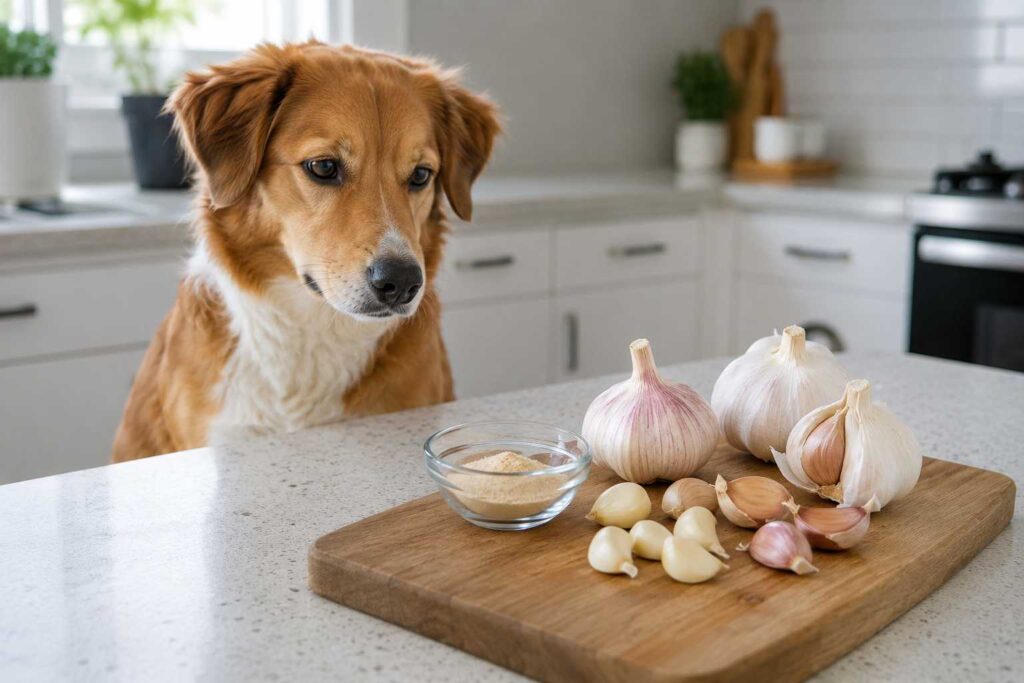
Can dogs eat garlic? No — garlic should not be intentionally fed to dogs, whether it is raw, cooked, dried, or powdered. Garlic belongs to the Allium family, alongside onions, chives, and leeks, and its sulfur-containing compounds can damage a dog’s red blood cells and potentially lead to haemolytic anaemia. Merck Veterinary Manual notes that garlic is particularly potent among commonly encountered Alliums.
If you’re here because your dog has already eaten garlic, though, the more useful question is not simply whether garlic is toxic. You need to work out what was eaten, roughly how much, in what form, and how long ago. Those details help determine how concerning the exposure may be. Symptoms can also be delayed for several days, so a dog looking completely normal right now does not always mean the risk has passed.
If your dog has already eaten garlic, start with the next section. If you’re researching garlic supplements, flea remedies, or whether a small intentional amount is acceptable, those questions are covered further down.
Your Dog Ate Garlic — Start With What Actually Happened
Before trying to calculate a “toxic dose,” work out what your dog actually got into. Exact measurements are often impossible after an accidental food theft, and that’s okay. A sensible estimate plus the packaging or ingredient list is usually more useful than guessing at a precise number.
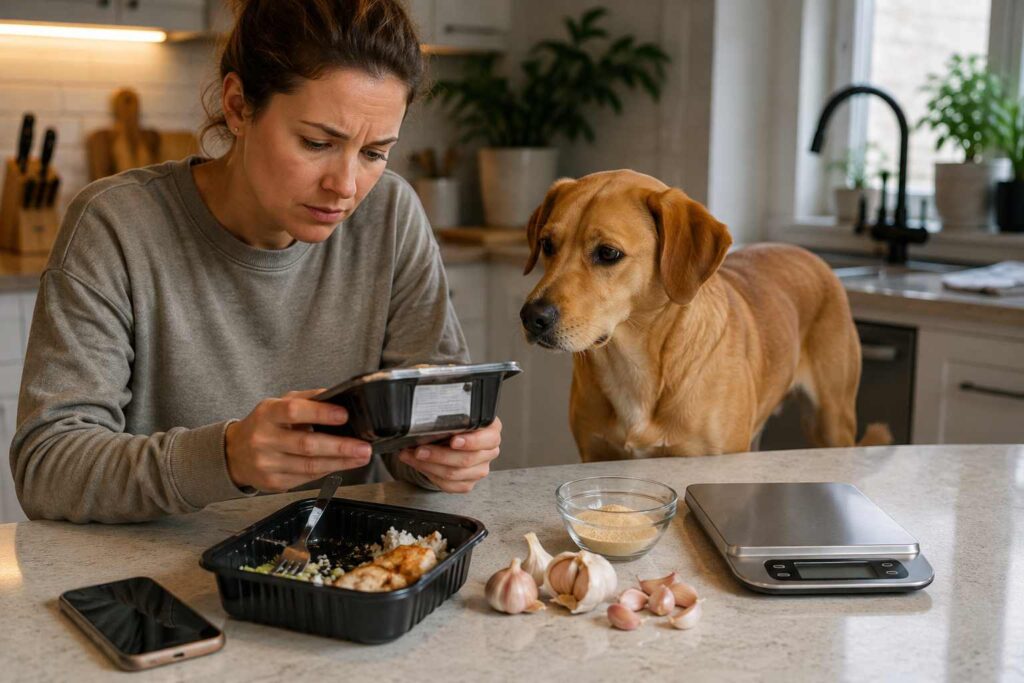
What form of garlic was involved?
The form matters because concentrated garlic can look deceptively small. Check whether your dog ate:
- A fresh garlic clove
- Minced garlic
- Cooked garlic in a meal
- Garlic powder
- Dried garlic flakes
- A seasoning mix containing garlic
- Garlic bread
- A sauce or gravy
- A garlic supplement
Merck Veterinary Manual reports Allium toxicosis in dogs after ingestion of raw, cooked, dehydrated, and granulated forms, with concentrated products such as powders and dehydrated flakes commonly involved.
Estimate the exposure without wasting time chasing an exact number
Try to establish:
- Roughly how much was involved — a sliver, clove, spoonful, portion of a meal, or an unknown amount
- Your dog’s approximate weight
- How long ago the exposure happened
- Whether it happened once or repeatedly
- Whether your dog ate the garlic itself or a food containing it
If you genuinely have no idea how much was eaten, say so when you contact your vet. “Unknown quantity” is more useful than an invented estimate.
Body weight matters because toxicology is partly dose-dependent, but it is not the only consideration. Frequency of exposure, concentration, and the individual dog’s condition also influence poisoning risk.
Check whether other Alliums were in the food
Garlic often comes with other ingredients from the same plant family. Pasta sauce, gravy, soups, seasoning mixes, stir-fries, and ready-made foods may also contain:
- Onion
- Onion powder
- Chives
- Leeks
- Shallots
If any of these were involved, tell your vet. A dish name such as “pasta sauce” or “garlic bread” doesn’t tell the whole story; the ingredient list may be much more useful.
Information to Have Ready Before Calling Your Vet
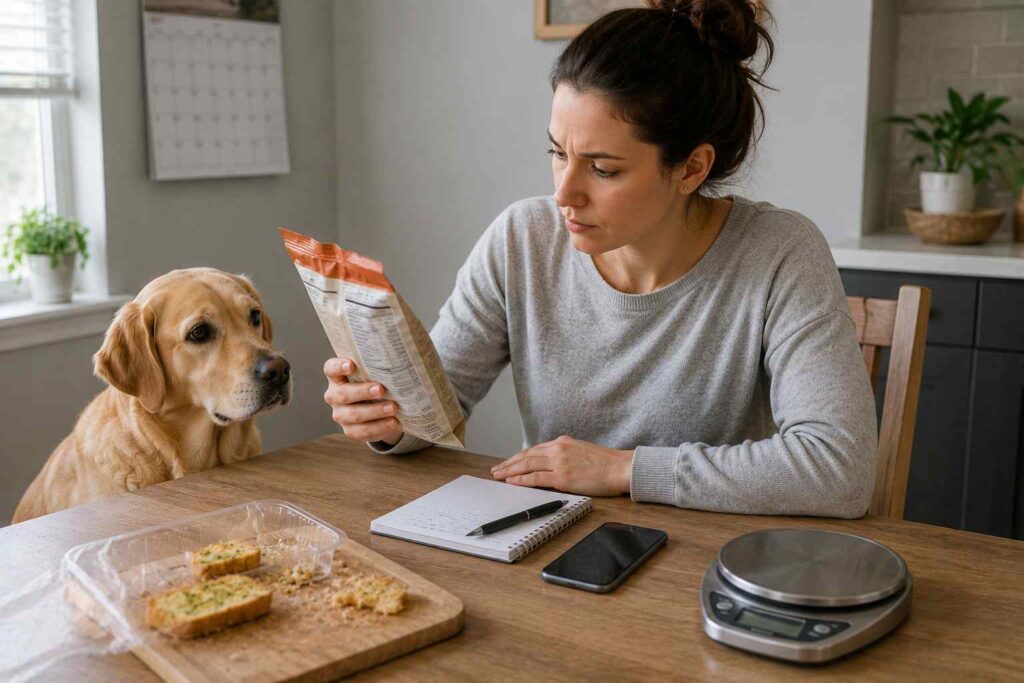
- Your dog’s approximate weight
- Roughly when the garlic was eaten
- The form involved — fresh, cooked, powdered, dried, or another form
- The estimated amount, if known
- The food or product name
- The packaging or ingredient list, if available
- Whether onion, chives, leeks, or shallots were also present
- Whether this was a one-off or repeated exposure
- Any symptoms your dog is showing
- Relevant health conditions or medications
Don’t Wait for Symptoms to Decide Whether This Matters
PDSA advises contacting your vet as soon as possible if your dog has eaten garlic, onion, or leeks rather than waiting to see whether symptoms develop. Early veterinary advice matters because treatment options can depend on how recently the exposure happened.
Warning: Do not try to make your dog vomit unless a veterinarian has specifically instructed you to do so. PDSA explicitly advises owners not to attempt this at home.
Also avoid giving milk, oil, bread, or homemade “neutralisers.” They do not make garlic harmless and may complicate the situation.
Don’t rely on a “cloves per kilogram” calculator either. Garlic cloves vary in size, concentrated products behave differently from fresh garlic, and commonly quoted toxicology figures are not feeding recommendations or guarantees that a smaller exposure is safe.
Seek urgent veterinary care if your dog develops:
- Collapse
- Marked weakness
- Difficulty or unusually rapid breathing
- Very pale gums
- Red or brown-tinged urine
- Severe lethargy or inability to stand normally
These can be signs of significant red-blood-cell damage or anaemia.
Why Garlic Can Cause a Problem Even When the Dog Looks Fine
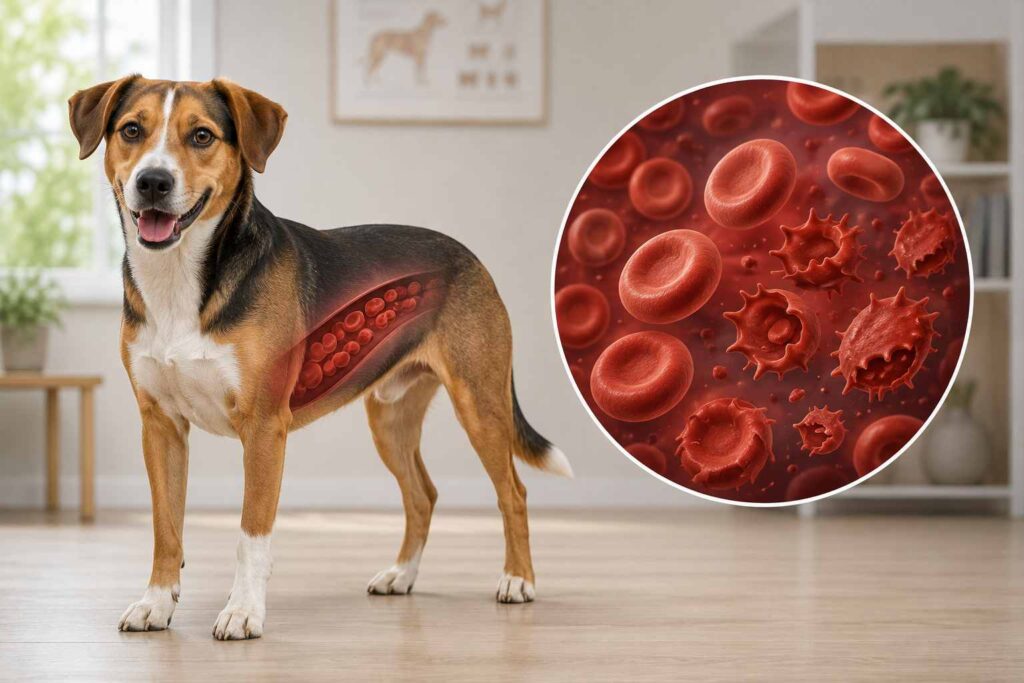
The problem happens inside red blood cells
Garlic contains sulfur-containing oxidants that can [damage canine red blood cells]. This oxidative injury can cause changes including Heinz body formation and make affected cells more likely to break down or be removed from circulation.
If enough red blood cells are lost, the dog can develop haemolytic anaemia. At that point, the blood becomes less effective at carrying oxygen around the body, which helps explain signs such as weakness, exercise intolerance, rapid breathing, pale gums, and collapse.
Heinz bodies, without the jargon overload
You may see the term Heinz bodies in veterinary information about garlic poisoning.
They are abnormal changes that develop within red blood cells after oxidative injury. Their presence can help veterinarians identify the type of red-cell damage associated with Allium poisoning.
You don’t need to inspect for this yourself — Heinz bodies are something a veterinarian may detect during blood testing.
Why signs can appear later
This is one of the most important things to understand about garlic exposure.
A dog may develop gastrointestinal signs such as vomiting, diarrhoea, abdominal discomfort, or reduced appetite relatively early. However, the more serious red-cell effects can take longer to become clinically obvious.
Merck Veterinary Manual reports that oxidative red-cell changes can begin within about 24 hours, while haemolysis commonly develops around 3–5 days after exposure. Clinical signs therefore may not appear until several days after the garlic was eaten.
That means “my dog seems fine today” is reassuring, but it should not be used on its own to rule out a problem after a concerning exposure.
Fresh, Powdered, Cooked, or Hidden in Food — The Form Changes the Assessment
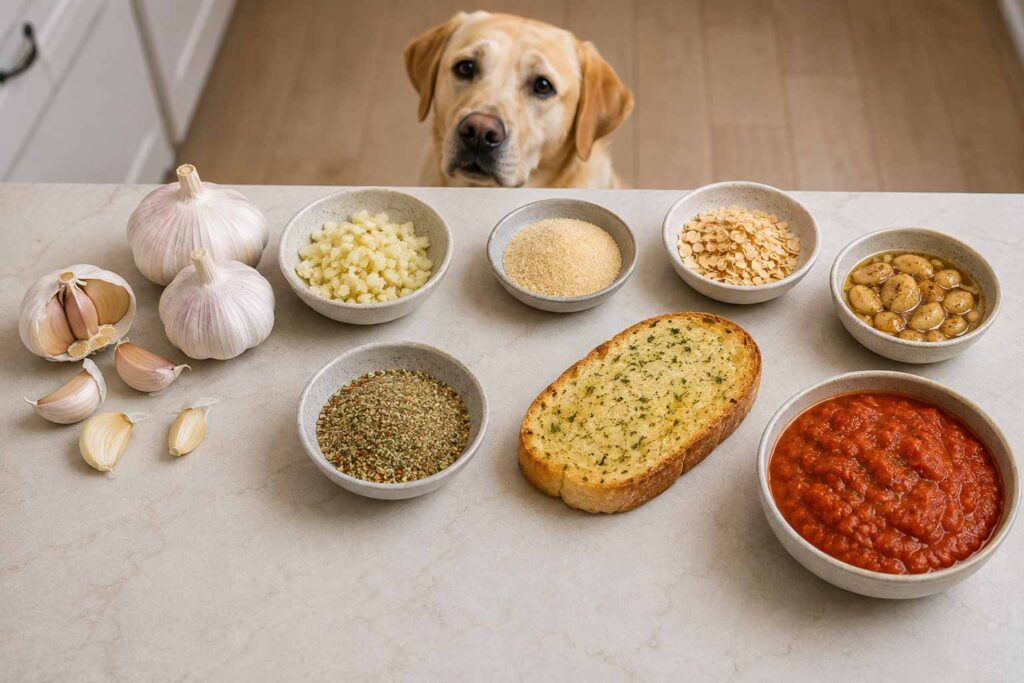
Garlic Exposure Types
| Form | What Makes It Important | Main Uncertainty to Assess |
|---|---|---|
| Fresh clove | Direct garlic exposure | Clove size and amount eaten |
| Minced garlic | A small volume may contain a meaningful amount | How much garlic was in the portion |
| Garlic powder | Concentrated, dried form | A small-looking amount may represent more garlic than expected |
| Garlic flakes | Concentrated, dried form | How much was actually swallowed |
| Cooked garlic | Cooking does not remove the toxicity concern | How much garlic was in the dish |
| Garlic bread | Garlic plus fat, salt, and seasonings | Garlic concentration and other ingredients |
| Sauce or gravy | Often contains several ingredients | Possible garlic and onion exposure together |
| Seasoning blend | May contain several Allium powders | Ingredient concentration and amount eaten |
| Supplement | Strength and preparation vary by product | Product-specific concentration and dose |
Cooking does not make garlic safe for dogs. A baked or cooked dish may contain less garlic per mouthful than a whole clove, but that depends entirely on the recipe. The useful question is not simply whether the garlic was cooked; it is how much garlic-containing food was eaten and what else was in it.
Don’t Use “One Clove” as Your Safety Calculator
Garlic cloves aren’t standardised units
Cloves vary considerably in size, so “one clove” is not a reliable toxicology measurement. The amount of garlic in prepared foods varies even more, which is why estimating exposure from a recipe, label, or remaining food is often more useful than counting cloves alone.
Dog size matters, but it doesn’t create an automatic safe amount
The same amount of garlic represents a larger dose relative to body weight for a small dog than for a large one. For example, a 5 kg terrier and a 30 kg Labrador eating the same amount have not received the same weight-adjusted exposure.
But body size alone cannot tell you that an exposure is safe. Form, concentration, amount, frequency, and the individual dog’s susceptibility also matter.
One exposure and repeated exposure are different situations
A dog stealing a garlic-containing meal once is a different situation from garlic being added to food repeatedly or given every day as a supposed flea or worm remedy.
Repeated exposure deserves particular attention because red-blood-cell damage can occur over time, even when no single serving seemed dramatic. If garlic has been given regularly, stop giving it and tell your vet how much was used, how often, and for how long.
Why experimental toxicology numbers aren’t feeding guidelines
You’ll find “toxic dose” figures online, often taken from controlled studies. Those numbers can help veterinary toxicologists understand risk, but they were not designed to create a household rule that says everything below a particular number is harmless.
They are especially easy to misapply when the exposure involves garlic powder, prepared food, supplements, an unknown amount, or repeated ingestion. Rather than trying to prove that your dog falls below an internet threshold, give your vet the best estimate you can of what was eaten, how much, when, and in what form.
Watch for Two Different Groups of Signs
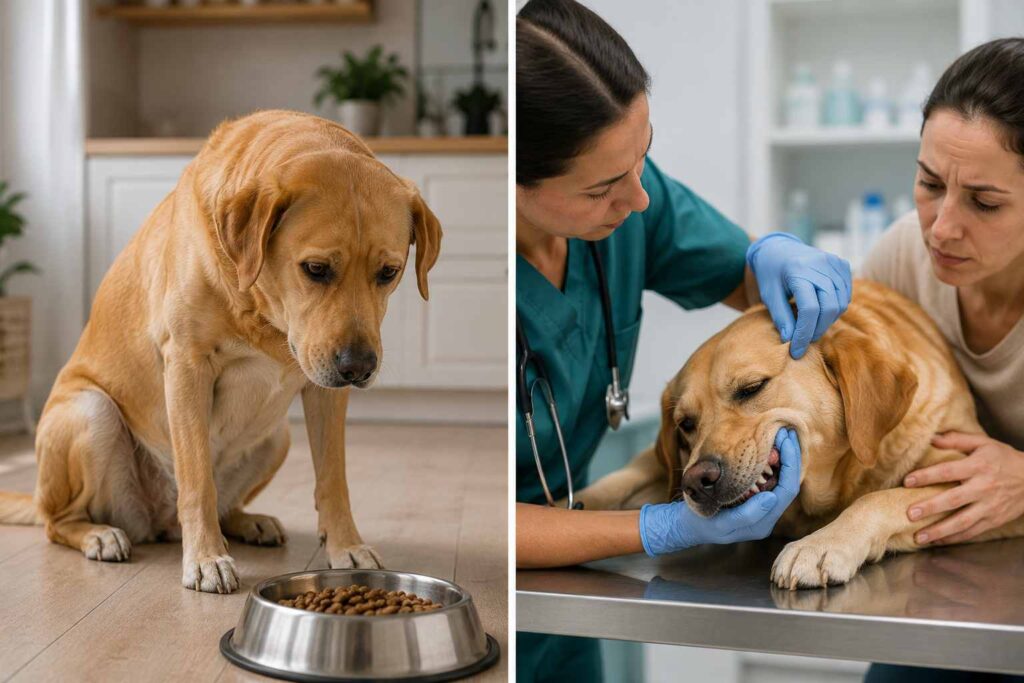
Digestive signs that may appear earlier
- Vomiting
- Diarrhoea
- Abdominal discomfort
- Reduced appetite
Signs that can suggest red-cell damage or anaemia
- Weakness or unusual tiredness
- Pale gums
- Rapid breathing
- Increased heart rate
- Reduced tolerance for exercise
- Red or brown-tinged urine
- Jaundice, such as a yellowish tinge to the gums or whites of the eyes
Signs that mean urgent care, not a wait-and-see approach
- Collapse
- Severe weakness
- Difficulty breathing
- Markedly pale gums
- Red or brown urine together with other signs of illness
What You Notice and Why It Matters
| What You Notice | Why It Matters |
|---|---|
| Vomiting or diarrhoea | May reflect gastrointestinal irritation |
| Normal behaviour shortly after eating garlic | Does not guarantee that delayed effects will not develop |
| Pale gums or weakness | May be associated with anaemia |
| Rapid breathing | Can occur when the body is struggling to deliver enough oxygen |
| Red or brown urine | May occur with red-blood-cell breakdown |
| Collapse | Emergency — seek veterinary care immediately |
Four Real-Life Garlic Situations

The dog stole pasta sauce off the counter
This can be harder to assess than a visible garlic clove because pasta sauce often contains garlic and onion together, sometimes including concentrated powders. Check the ingredient list and estimate how much sauce disappeared rather than focusing on garlic alone.
A small dog swallowed a whole clove
“One clove” still does not tell you the whole story because cloves vary in size. Your dog’s weight, the approximate size of the clove, how recently it happened, and whether anything else was eaten are all useful details to give your vet.
The dog ate garlic bread
Garlic is the main toxicology concern, but garlic bread may also contain butter or oil, salt, onion powder, and other seasonings. Keep the packaging or recipe if possible so the full ingredient exposure can be assessed.
Garlic has been given daily as a “natural remedy”
This is different from a one-off accident. Garlic is sometimes promoted online for flea or worm control, but repeated intentional exposure should not be continued on the assumption that “natural” means harmless. Stop giving it and speak with your vet about the amount, frequency, duration, and a safer evidence-based parasite-control plan.
What Your Veterinarian May Need to Check
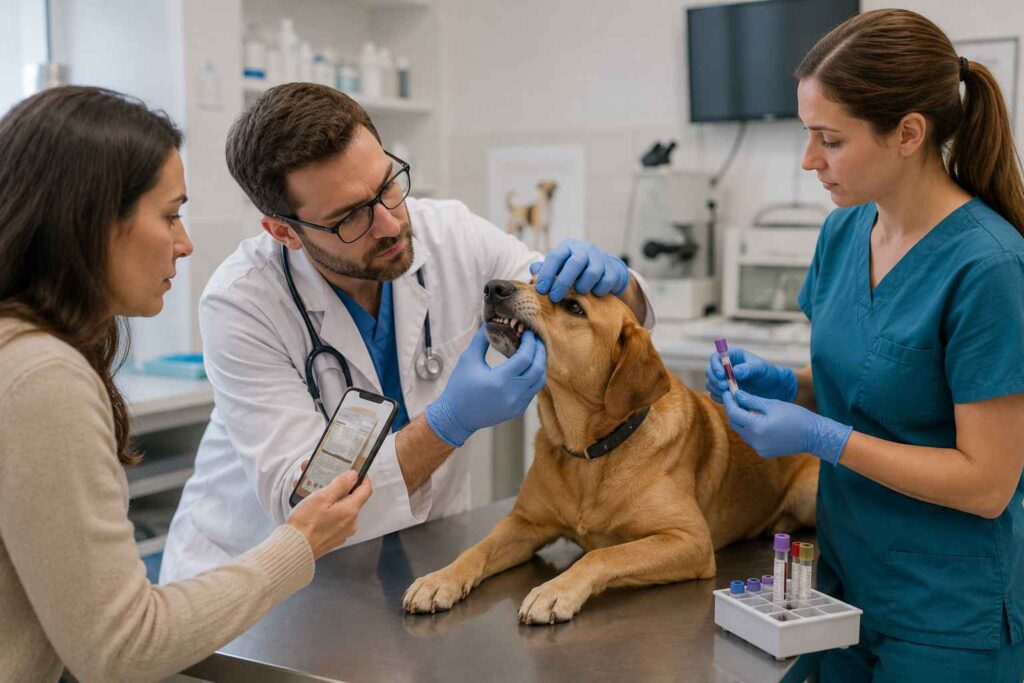
Exposure history is part of the diagnosis
Your vet will want to know what your dog ate, roughly how much, in what form, when it happened, whether it was a one-off or repeated exposure, and what else was in the food. That history helps shape what happens next, so having the checklist above ready can save time.
If the garlic was in a prepared food, bring the packaging or photograph the ingredient list if you can. Onion, chives, leeks, or concentrated seasonings may change the overall exposure.
Blood testing may reveal changes you can’t see at home
A complete blood count and examination of a blood smear can help identify anaemia and oxidative red-blood-cell changes associated with Allium poisoning, including Heinz bodies or other abnormal cell changes.
That matters because a dog can still look fairly normal while red-cell damage is developing. Blood testing gives your vet information that cannot be judged reliably from behaviour or gum colour alone.
Treatment depends on timing and severity
What your vet recommends depends on how recently the garlic was eaten, the estimated exposure, and whether your dog is showing clinical signs.
Management may involve monitoring and supportive care. More seriously affected dogs may need IV fluids, oxygen support, or a blood transfusion if significant anaemia develops. Not every exposure requires aggressive treatment, which is why a veterinary assessment is more useful than trying to apply a household dose calculator.
Recovery depends on the exposure and degree of red-cell damage
There is no single recovery timeline. It depends on how much red-cell damage occurred, whether symptoms developed, and how quickly the problem was recognised and treated.
Dogs with mild exposure may need little more than monitoring, while more significant cases can require repeat blood tests and supportive care until red-cell values stabilise. The outlook is generally better when concerning exposures are assessed early rather than after severe signs appear.
Why Some Garlic Advice Online Sounds Completely Different
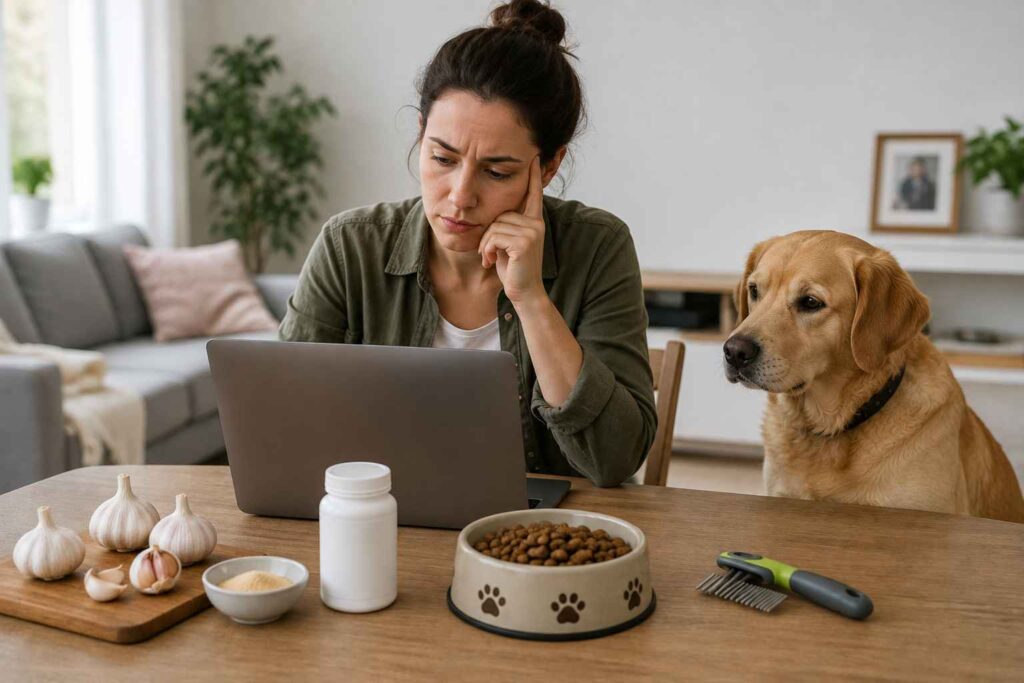
Human garlic benefits don’t automatically apply to dogs
Garlic is widely discussed for possible cardiovascular, antimicrobial, or immune-related effects in people, but human research does not prove that feeding household garlic is beneficial or safe for dogs.
Dogs also have a specific vulnerability to oxidative red-blood-cell damage from Allium compounds, so human nutrition claims should not be used as a canine feeding recommendation.
Aged garlic extract is not the same thing as a raw garlic clove
Some canine research has examined specific, standardised preparations such as aged garlic extract under controlled conditions. That is not the same exposure as fresh garlic, garlic powder, a homemade supplement, or garlic added to food.
Research on one preparation should not be used to justify feeding another. Product type, concentration, and dose all matter.
Why some commercial dog foods list a garlic-derived ingredient
Seeing garlic or a garlic-derived ingredient on a commercial dog-food label can seem contradictory.
A formulated commercial diet uses ingredients at controlled inclusion levels within a complete recipe. That is different from adding fresh garlic, powder, or a supplement to your dog’s food at home, where the amount and concentration may be very different.
A commercial ingredient listing therefore should not be treated as evidence that household garlic is safe to feed freely.
Garlic for fleas or worms — evidence versus folklore
Garlic is often promoted online as a “natural” flea or worm remedy, but reliable evidence does not support using it as a replacement for proven parasite prevention.
The bigger concern is that these remedies are often given repeatedly. Regular small exposures should not be assumed harmless simply because no immediate symptoms are obvious.
If you’re using garlic for parasite control, stop and ask your vet about a safer, evidence-based option that suits your dog’s age, weight, health, and local parasite risks.
If Garlic Is Around Your Dog
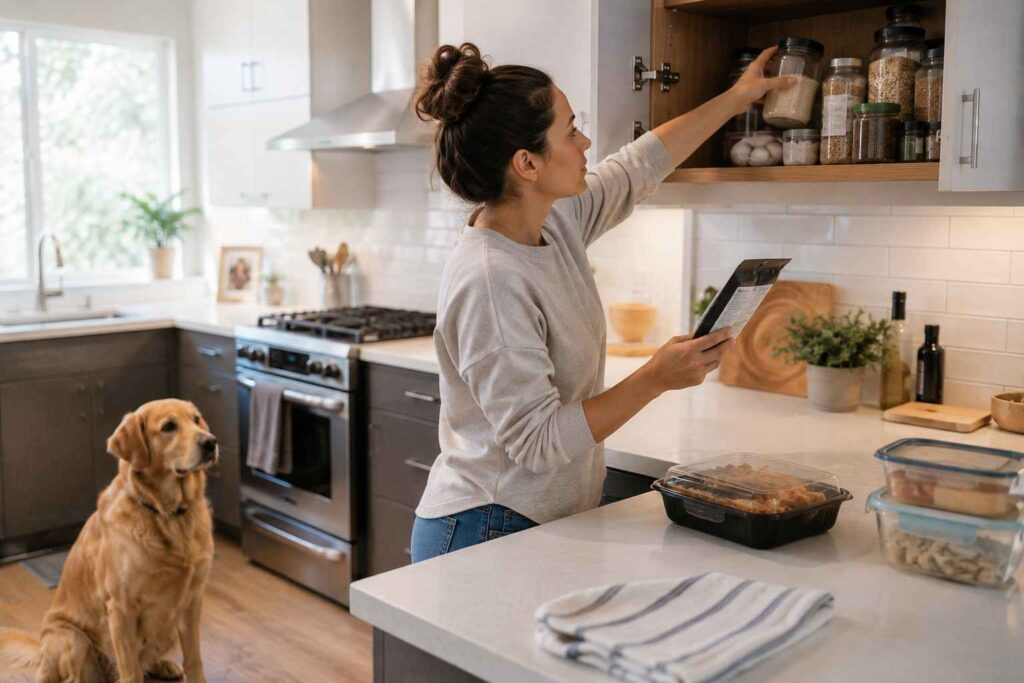
- Keep garlic powder, dried flakes, supplements, and seasoning containers well out of reach.
- Check leftovers for both garlic and onion before sharing food with your dog.
- Don’t assume a cooked or baked dish is automatically safer.
- Keep the packaging if your dog gets into a prepared product; the ingredient list can be useful.
- Photograph the label before calling your vet so you have the exact ingredients in front of you.
- Don’t wait for dramatic symptoms before seeking advice after a concerning exposure.
Common Mistakes That Make Garlic Exposure Harder to Assess
- Counting cloves instead of considering weight, concentration, and form
- Assuming cooked garlic is harmless
- Assuming a larger dog is automatically safe
- Dismissing garlic powder because the amount looked small
- Watching only for vomiting and missing signs of anaemia
- Treating “seems normal after a few hours” as proof that nothing will happen
- Removing visible garlic pieces and assuming the rest of the food is garlic-free
- Forgetting to check for onion powder or other Allium ingredients
- Using garlic intentionally for flea or worm prevention
- Following online instructions to induce vomiting at home
- Treating human garlic research as proof that garlic is beneficial for dogs
Safer Ways to Share Human Food Without Garlic
If you enjoy sharing occasional treats with your dog, there are simpler options that do not carry the same concern. Small portions of plain cucumber, banana, strawberries, or unseasoned cooked chicken may be suitable for many healthy dogs.
Keep portions modest, introduce unfamiliar foods gradually, and check that anything from your plate is free from garlic, onion, rich sauces, and other unsafe ingredients before sharing it.
Key Takeaways
- Garlic should not be intentionally fed to dogs, whether raw, cooked, powdered, or dried.
- Form and concentration matter more than simply counting cloves.
- A dog can appear normal before delayed red-blood-cell effects become obvious.
- Repeated exposure deserves attention even when each individual amount seems small.
- If your dog eats a concerning or unknown amount, contact your vet rather than waiting for symptoms.
Garlic exposure does not need to become a guessing game. The useful questions are straightforward: what was eaten, how much, in what form, when, and how is your dog acting now? Gather what you can, keep the packaging if there is any, and let your vet decide whether monitoring or treatment is needed.
Frequently Asked Questions
1.Can dogs eat a tiny amount of garlic?
Garlic should not be intentionally fed to dogs. A tiny accidental taste is generally less concerning than a larger or concentrated exposure, but there is no useful universal “safe number” that applies to every dog.
If the amount is uncertain, the garlic was powdered or concentrated, exposure was repeated, or your dog is showing symptoms, contact your vet for advice.
2.My dog ate garlic yesterday but looks normal — should I still be concerned?
Yes, it is worth staying alert. The more serious effects of garlic involve red-blood-cell damage, and those signs may take several days to become obvious.
A normal-looking dog shortly after exposure is reassuring, but it does not completely rule out a later problem.
3.Can dogs eat cooked garlic?
No. Cooking does not make garlic safe for dogs.
The actual risk from a cooked dish depends on how much garlic it contained, how much food your dog ate, and whether other Allium ingredients such as onion were present.
4.Is garlic powder more concentrated than fresh garlic?
Yes. Garlic powder is a dried, concentrated form, so a small-looking amount can represent more garlic than owners expect.
This is why powder or seasoning exposure should not be judged by volume alone.
5.Can dogs eat garlic bread?
Garlic bread is best avoided. Along with garlic, it may contain butter or oil, salt, onion powder, and other seasonings.
If your dog has already eaten some, check the ingredient list and estimate how much was consumed before contacting your vet.
6.What if my dog ate both garlic and onion?
Tell your vet about both ingredients. Garlic and onion belong to the same Allium family and can contribute to the same type of oxidative red-blood-cell injury.
Prepared foods often contain both, so checking the full ingredient list is more useful than focusing on garlic alone.
7.Can garlic prevent fleas or ticks on dogs?
Garlic is not a reliable substitute for proven flea and tick prevention. Evidence does not support relying on it as an effective parasite-control method, and repeated intentional exposure creates an unnecessary toxicity concern.
Ask your veterinarian which parasite preventive is appropriate for your dog and the parasites common in your area.
#. Related Articles: