
If you’re holding half a banana and wondering whether to share it with your dog, the short answer is yes, dogs can eat plain banana in small amounts. Remove the peel, keep the portion modest, and consider your dog’s size, usual diet, and health before making it a regular treat.
There are really three different questions hiding behind “Can dogs eat bananas?” You might be offering banana for the first time, trying to work out what to do after your dog stole some — peel included — or wondering whether a health condition changes the answer. Those situations deserve different advice because non-toxic doesn’t automatically mean appropriate for every dog or every situation.
Start With the Banana in Front of You
Plain, Peeled Banana
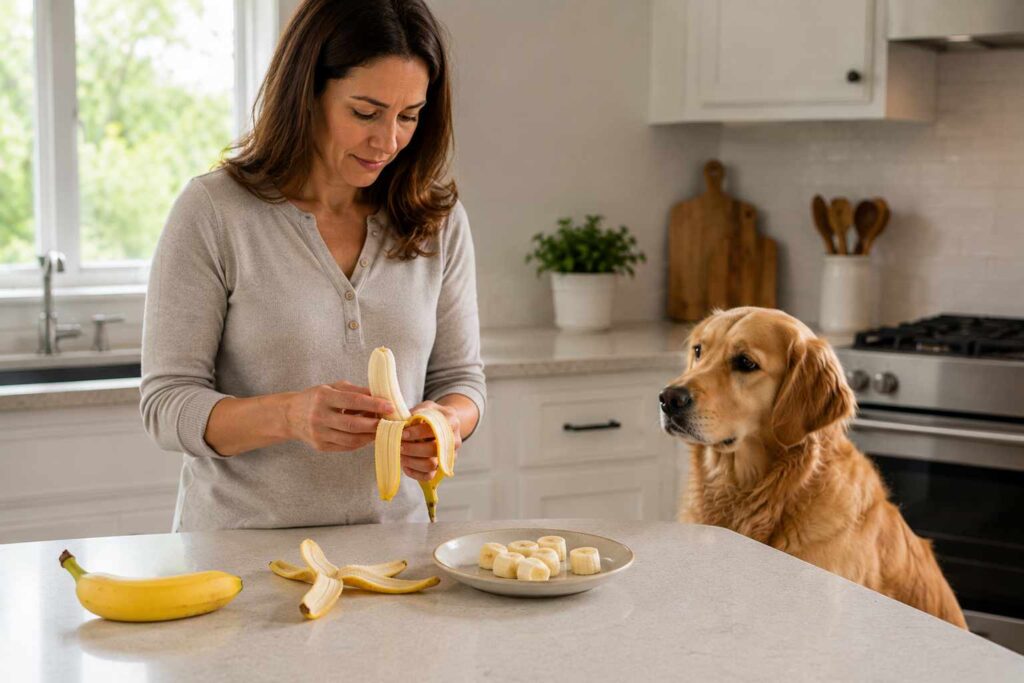
For most healthy dogs, a small amount of banana is considered non-toxic. Plain, peeled banana is the simplest option: fresh or lightly mashed both work. Cut or break it into pieces your dog can comfortably chew rather than handing over a large chunk, especially if you have a small dog or one that tends to gulp food.
Start with less than you think you need. Banana is a treat, not something your dog needs to finish in human-sized portions.
Banana Peel
Banana peel is not considered the same kind of food-toxin problem as chocolate or xylitol, but that doesn’t make it suitable for dogs to eat. The peel is tough and fibrous, making it much harder to digest than the flesh.
A substantial piece can become a choking hazard or potentially cause a gastrointestinal obstruction, with smaller dogs generally having less room for error. That distinction matters: “not poisonous” and “safe to swallow” are not the same thing.
If your dog has already swallowed a significant amount of peel, the appropriate response depends on the dog’s size, how much was eaten, and whether symptoms develop rather than on the peel simply being labelled “non-toxic.”
Banana Mixed Into Human Food
Banana bread, muffins, pancakes, pudding, smoothies, and banana-and-peanut-butter snacks need a separate safety check. Once banana is part of a recipe, the other ingredients often matter more than the banana.
Check for ingredients such as:
- xylitol or other sweeteners
- chocolate
- raisins or sultanas
- macadamia nuts
- large amounts of butter, oil, or sugar
- other ingredients your dog should not eat
Xylitol deserves particular attention because it can cause dangerous hypoglycaemia and, at higher exposures, liver injury in dogs. Some peanut butters and sugar-free foods can contain it, so don’t rely on the product name — read the label.
Quick tips: Choose plain banana, remove the peel completely, keep pieces appropriately sized, start small, count it as part of your dog’s treat intake, and check the full ingredient list of anything processed.
Before You Share a Bite, Run This Quick Check
- Is the banana plain, without added sugar or sweeteners?
- Has the peel been completely removed?
- Is the piece appropriately sized for my dog?
- Is this my dog’s first time eating banana?
- Has my dog already had several treats today?
- Does my dog have diabetes, obesity, pancreatitis, kidney disease, or a gastrointestinal condition?
- Is my dog on a veterinary-prescribed or therapeutic diet?
- Are other ingredients involved, such as yoghurt, peanut butter, or baked goods?
- Does my dog tend to gulp food rather than chew it?
- Am I offering banana as a treat rather than trying to treat diarrhea, constipation, or another medical problem?
If your dog has a medical condition or is eating a prescription diet, “banana isn’t toxic” isn’t enough information to decide whether it belongs in their routine. Ask your veterinarian or veterinary nutrition team before adding it regularly.
How Much Banana Makes Sense for Your Dog?

Why Body Size Matters More Than Breed
Breed alone isn’t a useful way to decide portion size. Body weight, calorie needs, body condition, activity level, life stage, medical history, and everything else your dog eats matter more.
For example, a few banana slices may represent a negligible extra for a large, active dog but a meaningful proportion of the day’s treat calories for a toy-sized dog.
Treat Calories Matter More Than Slice Counts
WSAVA recommends keeping treats to no more than about 10% of a dog’s daily calorie intake, with at least 90% coming from a complete and balanced diet.
That is a limit for all treats and extras combined, not a separate banana allowance. Biscuits, dental chews, training rewards, table scraps, peanut butter, and banana all count toward the same total.
The 10% figure is also a ceiling rather than a target. There’s no benefit in trying to fill it.
Suggested Portion Framework
There is no single medically correct number of banana slices for every dog. These amounts are conservative examples for healthy dogs and should be treated as occasional portions, not daily allowances:
- Extra-small dogs (under 5 kg): one very small bite
- Small dogs (5–10 kg): one or two thin slices
- Medium dogs (10–25 kg): a few small slices
- Large dogs (25–40 kg): several slices
- Extra-large dogs (40 kg+): a small handful of pieces rather than automatically offering half or a whole banana
You don’t need to use the maximum portion simply because your dog’s size could accommodate it. Smaller servings leave more room for training treats and other extras during the day.
First-Time Feeding Should Be Smaller
If your dog has never eaten banana before, start with one small piece, not the full suggested portion.
Keep the rest of the diet familiar and watch for vomiting, loose stool, excessive gas, or other digestive changes. If banana repeatedly causes problems, there’s no reason to keep trying to make it part of your dog’s diet.
Banana Contains Nutrients — But Does Your Dog Need Them?
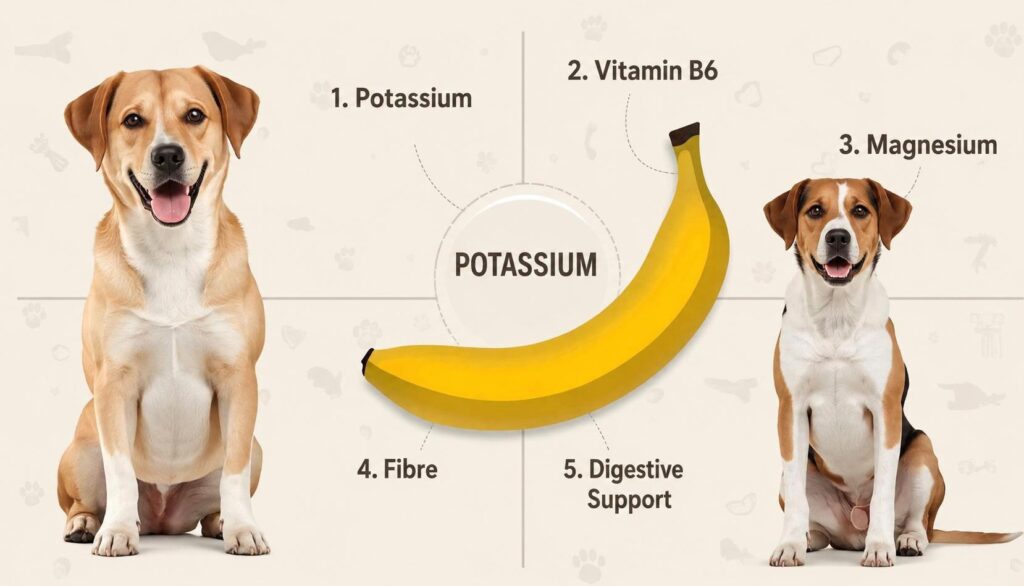
Banana contains carbohydrates, dietary fibre, potassium, magnesium, vitamin B6, and vitamin C. That’s nutritionally interesting, but it doesn’t automatically make banana an important addition to a dog’s diet.
A dog eating an appropriate complete and balanced food should already receive the essential nutrients they need from that diet. Banana is therefore better viewed as an optional treat than as a source of potassium, vitamins, or “natural energy” that needs to be added.
This distinction prevents a common mistake: taking a nutrient that exists in a food and turning it into a health claim. A small slice containing potassium doesn’t mean your dog needs a “potassium boost,” and the presence of fibre doesn’t make banana a treatment for digestive disease.
A useful definition of a healthy treat is much simpler: something safe for the individual dog, offered in an appropriate amount, that doesn’t interfere with the nutritional balance or calorie control of the main diet.
Fresh, Frozen, Dried, or Baked — They Are Not Equivalent
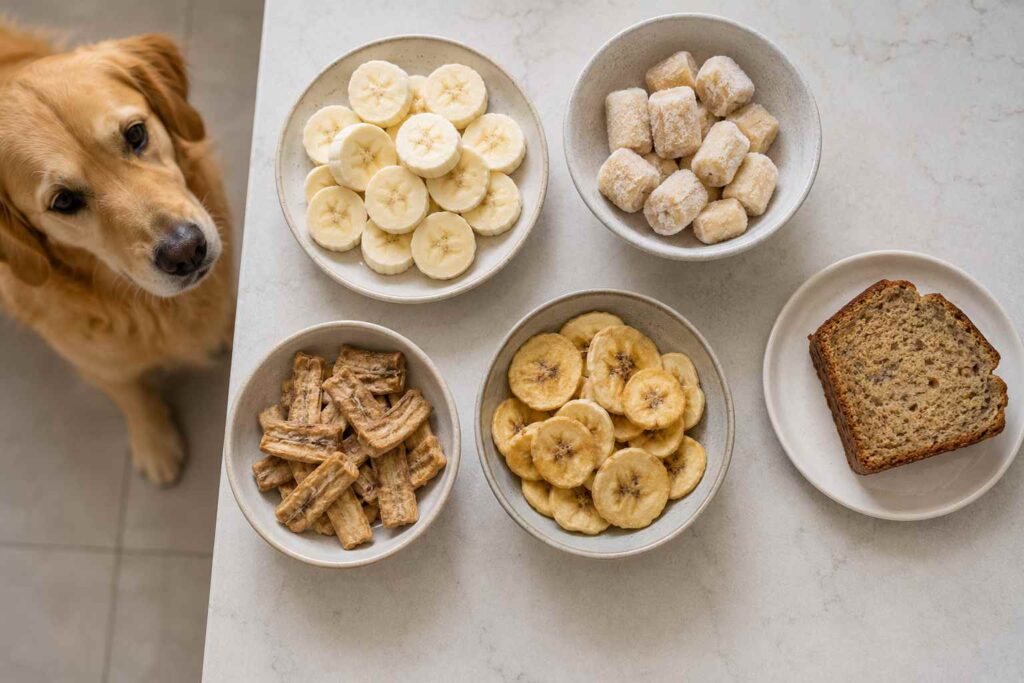
| Banana Form | General Suitability | Main Concern | Ingredient Check Needed? | Practical Use |
|---|---|---|---|---|
| Fresh peeled banana | Generally suitable in small amounts | Calories and natural sugar | No | Occasional treat |
| Mashed banana | Generally suitable | Easy to overfeed | No | Small amount on a lick mat or food |
| Frozen banana | Often suitable | Large, hard pieces and gulping | No | Small appropriately sized pieces |
| Plain dried banana | More concentrated | Calories add up quickly | Check label | Very small amounts |
| Sweetened/fried banana chips | Usually a poorer choice | Added sugar, oils, coatings | Yes | Generally unnecessary |
| Banana peel | Not recommended | Choking or gastrointestinal obstruction | No | Avoid intentionally feeding |
| Banana bread | Recipe-dependent | Other ingredients, sugar, fat | Yes | Usually better skipped |
| Banana pudding | Usually unsuitable | Sugar, fat, dairy, additives | Yes | Avoid as a dog treat |
| Banana with peanut butter | Depends on the product | Extra calories and possible xylitol | Always | Tiny amount only if the peanut butter is dog-safe |
Your Dog Already Ate Banana — Use the Situation, Not Panic, to Decide What Comes Next
A Small Amount of Plain Flesh
If your otherwise healthy dog ate a small piece of plain banana with no peel involved, this is generally a lower-concern situation. In most cases, you can simply monitor them and carry on with their normal routine.

A Large Amount of Banana Flesh
A large serving — especially relative to your dog’s size — may cause digestive upset from the extra sugar, fibre, and calories. A whole banana is far more significant for a Chihuahua than for a Labrador.
Watch for loose stools, gas, vomiting, or reduced appetite. Mild digestive upset may settle on its own, but repeated vomiting, persistent diarrhea, marked lethargy, or abdominal discomfort warrants veterinary advice.
Your Dog Swallowed Banana Peel
This is where amount, dog size, and symptoms matter most.
A tiny chewed piece may pass without causing trouble, but swallowing a substantial section or an entire peel raises concern for choking or gastrointestinal obstruction. Smaller dogs and dogs that swallow food without chewing deserve particular caution.
Watch for:
- repeated vomiting
- gagging or repeated attempts to swallow
- loss of appetite
- abdominal pain or swelling
- unusual lethargy
- difficulty keeping food or water down
Don’t induce vomiting or give home remedies unless a veterinarian specifically tells you to.
Your Dog Ate Banana Bread or Another Mixed Food
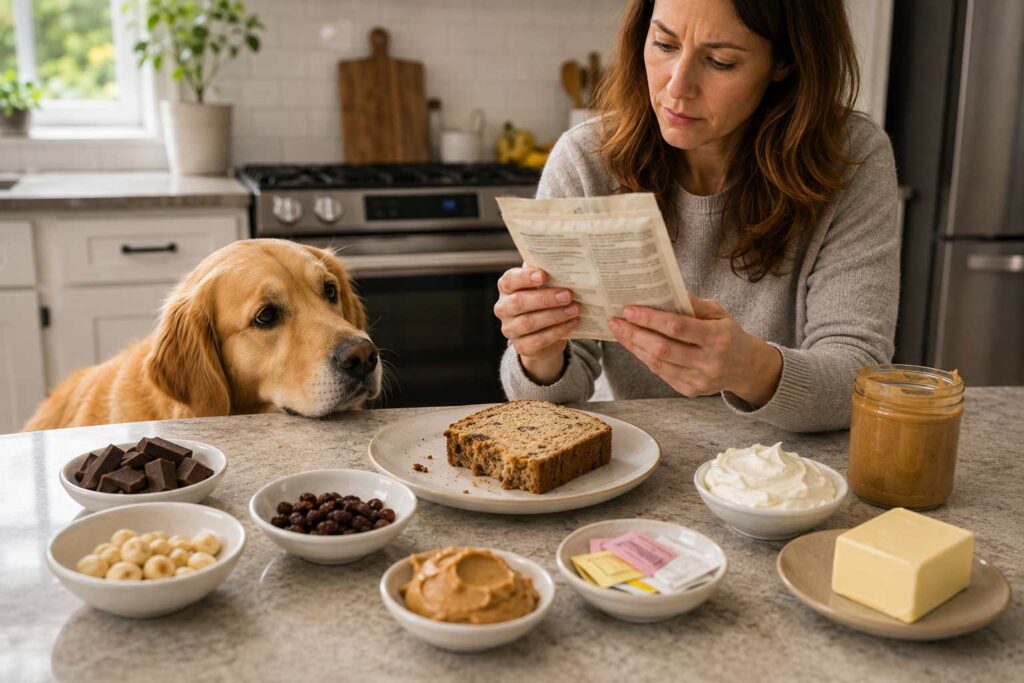
Here, the banana may be the least important ingredient. Check the recipe, packaging, or ingredient list rather than judging the food by its name.
Pay particular attention to:
- xylitol
- chocolate
- raisins, currants, or sultanas
- macadamia nuts
- large amounts of fat
- glazes, frostings, syrups, or other sweeteners
Xylitol can cause a dangerous drop in blood glucose and potentially liver injury in dogs, while chocolate, grapes/raisins, and macadamia nuts carry their own toxicity risks. If any of these ingredients may have been eaten, contact a veterinarian promptly rather than waiting for symptoms to appear.
| Situation | Main Concern | What to Assess |
|---|---|---|
| Tiny amount of plain banana | Individual tolerance | Dog’s size and any symptoms |
| Large amount of flesh | Digestive upset and excess calories | Amount eaten relative to dog size |
| Peel swallowed | Choking or obstruction | Amount, dog size, and symptoms |
| Banana bread or baked food | Other ingredients | Full recipe or label |
| Sugar-free banana product | Sweetener toxicity | Ingredient list, especially xylitol |
| Banana with peanut butter | Sweetener and extra calories | Peanut butter label |
Banana Peel Is a Different Problem From Banana Flesh
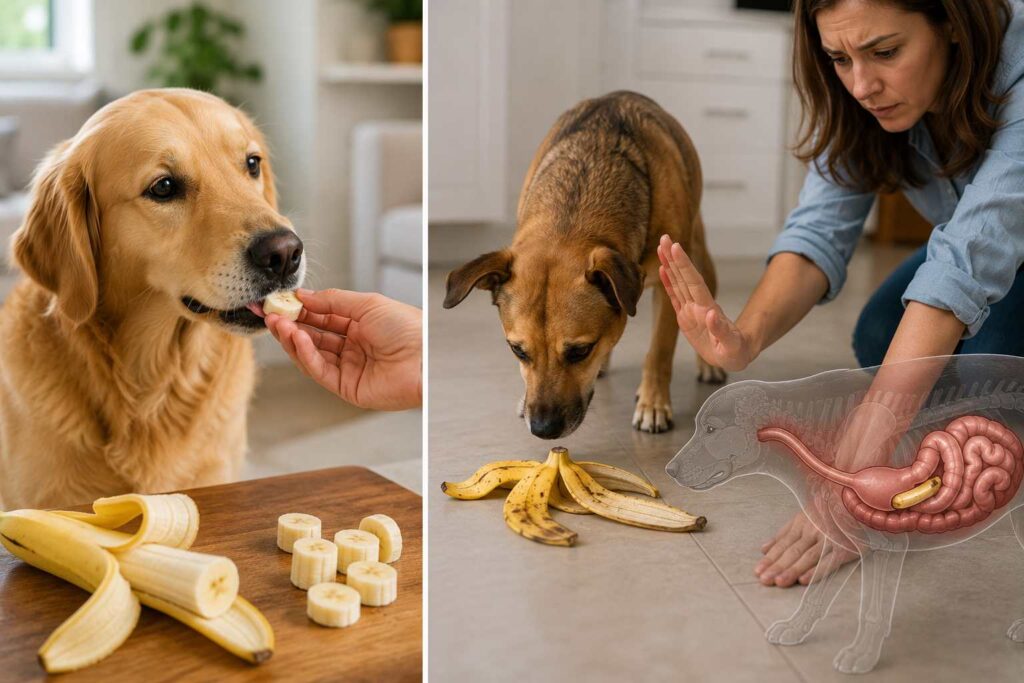
Toxicity and digestibility aren’t the same thing. Banana peel isn’t considered poisonous, but its tough, fibrous texture makes it a poor thing for a dog to swallow.
There are two different risks to understand:
Choking is immediate. A piece may become lodged in the throat or interfere with breathing.
Gastrointestinal obstruction happens farther down the digestive tract and may develop after the peel has been swallowed. Merck Veterinary Manual lists vomiting, loss of appetite, lethargy, abdominal pain, abdominal swelling, and sometimes diarrhea among signs associated with intestinal obstruction.
Seek urgent veterinary care if your dog has difficulty breathing, appears to be choking, collapses, develops severe abdominal pain or swelling, repeatedly retches without bringing anything up, or deteriorates rapidly.
Contact your veterinarian for advice if a substantial amount of peel was swallowed, vomiting becomes repeated, your dog stops eating or drinking normally, or you have any reason to suspect an obstruction. Don’t rely on a fixed “wait 24 hours” rule if symptoms appear sooner.
Some Dogs Need a More Individual Answer
Dogs with diabetes: Banana contains naturally occurring sugar and carbohydrates, so whether it fits into a diabetic dog’s diet depends on the dog’s individual feeding and treatment plan. Don’t make it a routine treat without checking with the veterinarian managing the diabetes.
Overweight dogs or dogs on a weight-loss plan: Fruit still contributes calories. Banana should be counted alongside every other treat, chew, and food extra rather than treated as “free” because it’s fruit.
Dogs with pancreatitis: Banana’s low fat content doesn’t automatically make it appropriate during treatment or recovery. Dogs with pancreatitis may need tightly controlled diets, so the prescribed feeding plan should take priority over optional treats.
Dogs with kidney disease: Don’t make a decision based on banana’s potassium content alone. Kidney disease affects dogs differently, and potassium needs can vary with bloodwork, disease stage, and the therapeutic diet being used.
Dogs with sensitive stomachs or gastrointestinal disease: Even a food that’s tolerated by most dogs can trigger loose stool, vomiting, or discomfort in an individual dog. If your dog already has digestive disease, ask before introducing new extras.
Dogs on prescription or elimination diets: “Not toxic” doesn’t mean “compatible with the diet.” WSAVA specifically notes that conventional treats may be inappropriate for dogs with medical conditions, dietary sensitivities, or veterinary-prescribed diets.
Puppies: Complete and balanced puppy food should provide the nutrition needed for growth. If banana is offered, keep the portion tiny, appropriately sized, and secondary to the puppy’s normal diet.
Senior dogs: Age itself doesn’t determine whether banana is suitable. What matters more is whether the individual dog has conditions such as diabetes, kidney disease, obesity, dental problems, or gastrointestinal disease that change the decision.
Banana Is Not a Home Treatment for Every Digestive Problem
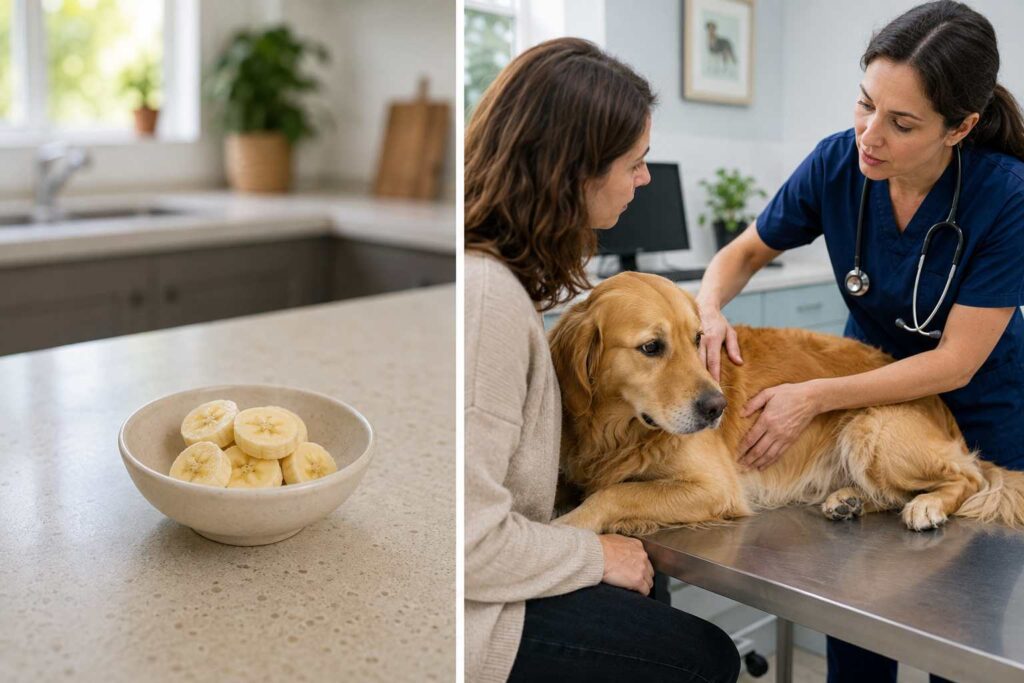
Banana and Diarrhoea
Banana contains fibre, but that doesn’t make it a treatment for diarrhoea. Adding extra food may even complicate matters if your dog’s digestive system is already upset.
A single mild episode in an otherwise bright, comfortable dog is different from repeated or persistent diarrhoea. Contact your vet if diarrhoea continues, is severe, contains blood, or occurs alongside repeated vomiting, lethargy, abdominal pain, or signs of dehydration. Don’t let a home remedy delay assessment of the underlying cause.
Banana and Constipation
The same caution applies to constipation. Fibre alone doesn’t mean banana is the right solution, because constipation can have many causes and simply adding fruit may not address the problem.
If your dog repeatedly strains without producing stool, seems painful, vomits, becomes lethargic, or constipation persists, contact your vet rather than continuing to experiment with food at home.
Allergy vs Intolerance vs Simply Too Much Banana
Don’t assume one loose stool after banana means your dog is allergic to it. Digestive upset is more likely to follow an excessive portion or individual intolerance, and symptoms after banana bread or another mixed food may be caused by a completely different ingredient.
If the same symptoms repeatedly appear after your dog eats plain banana on its own, stop offering it and discuss the pattern with your vet.
Practical Ways to Serve Banana Without Turning It Into a Sugar Bomb
Tiny fresh pieces are the simplest option. Peel the banana and cut it into pieces appropriate for your dog’s size.
A small mashed amount can be spread thinly on a lick mat or placed inside an enrichment toy. Measure the amount first — it’s surprisingly easy to use far more banana when it’s mashed.
Small frozen portions can work as an occasional warm-weather treat, but avoid large, hard chunks for small dogs, dogs that gulp food, or dogs with dental problems.
Banana with another food, such as plain yoghurt or peanut butter, needs an extra check. Make sure the second food is suitable for your dog too, and always check peanut butter and other processed products for xylitol.
Keep preparation simple. Skip added sugar, syrup, chocolate, and dessert toppings, and stop offering banana if it consistently causes digestive upset.
Common Mistakes Dog Owners Make With Banana
- Assuming “safe” means unlimited
- Using human-sized portions for a small dog
- Feeding banana peel intentionally
- Giving half or a whole banana to a tiny dog
- Forgetting that banana counts alongside the day’s other treats
- Assuming potassium means dogs specifically need banana
- Treating banana as a dietary supplement
- Using banana as a treatment for diarrhoea or constipation
- Assuming every banana-flavoured food is dog-safe
- Skipping the ingredient check on peanut butter or processed foods
- Offering sweetened or fried banana chips as though they’re equivalent to fresh banana
- Giving large frozen chunks to dogs that gulp food
- Routinely adding banana to a veterinary-prescribed diet without checking first
- Assuming one episode of loose stool proves a food allergy
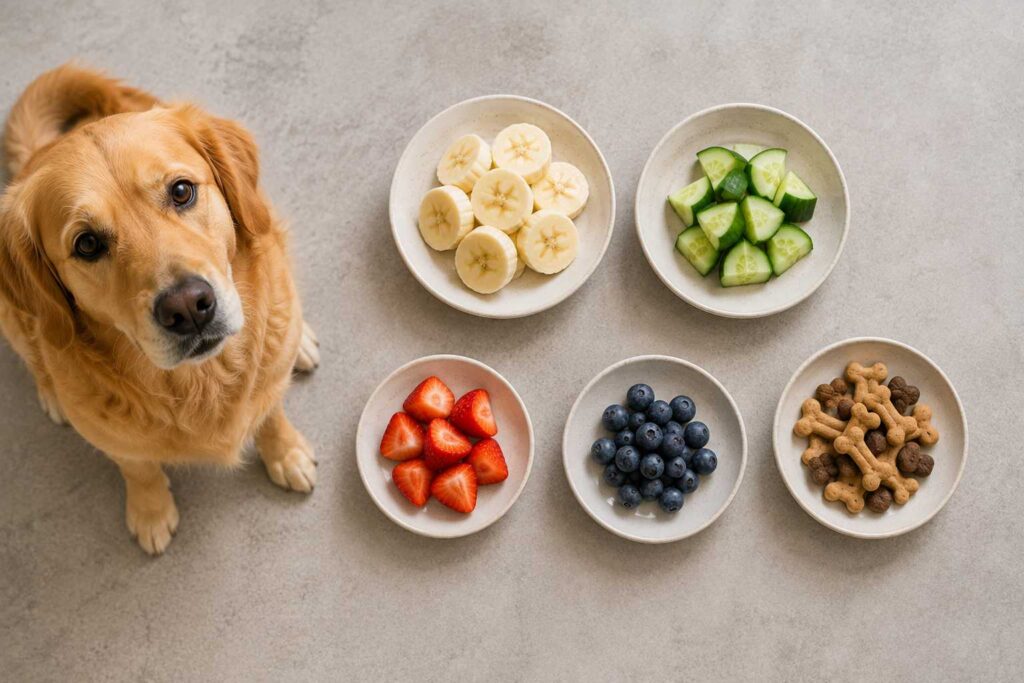
Banana vs Other Common Dog Treats
| Treat | Relative Sugar | Water Content | Practical Advantage | Main Limitation |
|---|---|---|---|---|
| Banana | Higher | Moderate | Soft and easy to portion | Calories and sugar add up |
| Cucumber | Low | Very high | Low-calorie, high-water option | Large pieces can pose a choking risk |
| Strawberries | Moderate | High | Easy to cut into small portions | Still contributes sugar and calories |
| Blueberries | Moderate | High | Naturally bite-sized for many dogs | Easy to overfeed by the handful |
| Commercial dog treats | Varies | Varies | Convenient for training | Calories and ingredients vary widely |
There isn’t one universally “best” treat. A dog needing tighter calorie control may suit a different choice from a highly active dog, while a dog with a medical or prescription diet may need to avoid extras altogether. None of these foods is necessary if the main diet is already complete and balanced.
Vet Advice — When “It’s Only a Banana” Stops Being the Right Question
If you call your vet after your dog eats banana or a banana-containing food, useful information to have ready includes:
- your dog’s approximate weight
- what was eaten
- how much was eaten
- when it happened
- whether peel was swallowed
- the ingredient label or recipe for mixed foods
- any existing medical conditions
- symptoms your dog is showing
Veterinary advice is particularly sensible if your dog has diabetes, kidney disease, pancreatitis, an existing gastrointestinal condition, or a prescribed diet; has swallowed a substantial amount of peel; or develops persistent digestive symptoms.
Seek urgent veterinary care for suspected choking, difficulty breathing, collapse, severe abdominal distress, or other rapidly worsening symptoms.
The useful question isn’t simply “Is banana safe?” Risk depends on what was eaten, how much, the size and health of the dog, any other ingredients involved, and the symptoms now present.
Key Takeaways
- Plain, peeled banana is generally suitable in small amounts for many healthy dogs.
- Banana peel isn’t considered poisonous, but swallowing it can create choking or gastrointestinal obstruction concerns.
- Portion should reflect your dog’s size, calorie needs, and total treat intake.
- Banana contains useful nutrients, but a dog eating a complete and balanced diet doesn’t need banana as a supplement.
- Diabetes, kidney disease, pancreatitis, prescription diets, and other health conditions can change whether banana is appropriate.
- Banana shouldn’t be used as a treatment for diarrhoea or constipation.
- Mixed banana foods need an ingredient check because the biggest risk may have nothing to do with the banana.
The Bottom Line
For most healthy dogs, a small piece of plain, peeled banana is a reasonable occasional treat. There’s no need to make it complicated — keep the portion small, count it with the day’s other treats, and skip the peel.
The answer changes when a dog swallows a substantial amount of peel, eats a banana-containing food with questionable ingredients, develops concerning symptoms, or has a medical condition that affects their diet. In those situations, assess the whole situation rather than the banana alone.
FAQ: Can Dogs Eat Bananas?
1.Can Dogs Eat Bananas Every Day?
A small amount may fit into some healthy dogs’ diets, but there’s usually no reason to make banana a daily habit. All treats and extras combined should remain a small part of the dog’s overall calorie intake, with the main diet providing complete and balanced nutrition.
2.Is Banana Peel Toxic to Dogs?
Banana peel isn’t generally considered poisonous, but it is tough and difficult to digest. The main concerns are choking and gastrointestinal obstruction, particularly when a substantial piece is swallowed.
3.What Should I Do if My Dog Ate a Whole Banana?
If the peel wasn’t eaten, consider the amount relative to your dog’s size and monitor for vomiting, loose stool, abdominal discomfort, or reduced appetite. A whole banana is much more significant for a small dog than a large one. Contact your vet if symptoms become persistent or significant, or if your dog has an underlying medical condition.
If the peel was swallowed too, obstruction risk becomes an additional concern.
4.Can I Use Banana to Hide Medication?
A tiny amount of mashed banana can sometimes make medication easier to give, provided the medication can be given with food. Check with your veterinarian or pharmacist if you’re unsure, because some medicines have specific administration instructions. Dogs with diabetes, weight-management needs, or prescription diets may also need a different option.
5.Does Banana Count Toward My Dog’s Daily Treat Allowance?
Yes. Banana shares the same treat budget as biscuits, chews, training rewards, peanut butter, table scraps, and other extras. It doesn’t receive a separate allowance because it’s fruit.
6.Can Dogs Eat Green, Unripe Bananas?
Plain unripe banana isn’t generally considered toxic, but its firmer texture and higher resistant-starch content may make it less appealing or less well tolerated by some dogs. There’s no particular advantage to choosing it over a small amount of ripe banana.
7.What Symptoms Should I Watch for if My Dog Swallowed Banana Peel?
Watch for repeated vomiting, loss of appetite, abdominal pain or swelling, marked lethargy, difficulty keeping food or water down, gagging, difficulty swallowing, or breathing problems.
Difficulty breathing or suspected choking requires urgent veterinary care. If your dog swallowed a substantial amount of peel or develops signs that could suggest an obstruction, contact your veterinarian rather than waiting for a fixed number of hours to pass.
#. Related Articles: