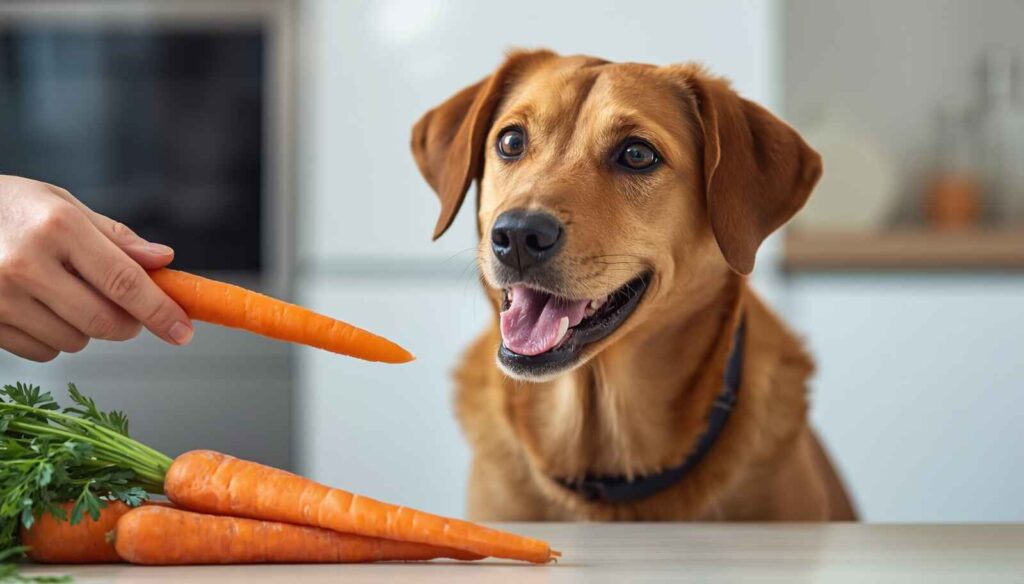
Can Dogs Eat Carrots? Yes, plain carrots are generally safe for most healthy dogs when served in moderation and prepared properly.
You’re chopping carrots for dinner, and there they are—those hopeful eyes and that unmistakable stare only a dog can manage. The real question is not only whether carrots are safe, but also how they should be cut, how much to offer, and whether they suit your dog’s age, teeth, chewing style, and health.
A little grated carrot and a thick raw slice may come from the same vegetable, but they do not present the same choking or digestive risk.
Quick Answer
| Question | Answer |
|---|---|
| Verdict | Plain carrots are generally safe for most healthy dogs in moderation |
| Safest basic preparation | Washed, unseasoned, and cut to suit your dog’s size and chewing style |
| Main risk | Choking, particularly from thick round slices, large chunks, or whole baby carrots |
| Role in the diet | An occasional treat or topper—not a meal replacement |
| Ask a vet first if | Your dog has diabetes, pancreatitis, swallowing difficulties, chronic digestive disease, or follows a prescription or elimination diet |
First, Decide What Kind of Carrot Your Dog Is Actually Eating
“Carrot” covers several very different foods, and the surrounding ingredients can matter more than the vegetable itself.
Plain carrots—fresh, washed, unseasoned, and served raw or lightly cooked—are the type generally considered suitable as an occasional treat.
Carrots prepared for people require more caution. Buttered carrots, honey-glazed carrots, roast-dinner leftovers, soups, stocks, and gravies may contain excessive fat, salt, onion, garlic, or other ingredients that are unsuitable or toxic to dogs.
Processed carrot products, including canned carrots, puree, juice, dehydrated pieces, baby food, and packaged vegetable snacks, should be checked carefully. Some contain added salt, sweeteners, preservatives, onion powder, or other flavourings.
Carrot-based desserts carry the greatest ingredient-related risk. Carrot cake may contain raisins, xylitol, chocolate, macadamia nuts, nutmeg, or rich cream-cheese frosting. In these cases, the carrot is not the main concern.
Warning: The Carrot May Not Be the Dangerous Ingredient
Contact a veterinarian promptly if your dog eats a carrot dish containing raisins, xylitol, onion, garlic, chocolate, or macadamia nuts. Keep the packaging or ingredient list available, and note approximately how much was eaten and when.
Match the Carrot to the Dog, Not Just the Dog’s Weight

Body size matters, but chewing behaviour, dental health, age, and swallowing ability are just as important.
Dogs that chew slowly and thoroughly may manage thin raw sticks or small irregular pieces. Dogs that gulp food are safer with grated carrot, fine dice, or soft mashed carrot. They should still be supervised.
Toy and small breeds can choke on a whole baby carrot. “Baby” describes the carrot’s size, not its suitability for puppies or small dogs. Thick round slices are also best avoided because they may be swallowed whole and can fit closely across the airway.
Large dogs are not automatically protected. A fast-eating Labrador can swallow a large chunk with little chewing, so eating style matters more than jaw size alone.
Puppies may have small amounts of carrot, but treats should not displace complete puppy food. Choose soft, appropriately sized pieces for developing teeth. Frozen carrots are sometimes used during teething, but they are very hard and can damage teeth or break into swallowable chunks. Supervision is essential.
Senior dogs—especially those with missing teeth, periodontal disease, or painful chewing—usually manage steamed, grated, or mashed carrot more comfortably than raw or frozen pieces.
Flat-faced dogs and dogs with previous choking, regurgitation, or swallowing problems need additional caution. Softer preparation and smaller portions may help, but a veterinarian should advise owners when swallowing difficulties are already known.
Shape and Texture Matter More Than “Raw or Cooked”
Many owners focus on whether carrots are raw or cooked, but the shape and hardness of the piece often matter more.
Thick carrot rounds and short cylindrical chunks can be difficult for a dog to break apart. A dog that swallows them whole may choke or develop a blockage further along the digestive tract.
Safer options include:
- Thin sticks that are appropriate for the dog’s mouth
- Small, irregular pieces
- Fine dice
- Grated carrot
- Soft steamed pieces
- Plain mashed carrot
Raw carrot may suit a healthy adult dog with sound teeth and careful chewing habits. It should still be washed, cut appropriately, and offered under supervision.
Cooked carrot is often easier for puppies, seniors, dogs with dental discomfort, and dogs that struggle with hard foods. Steam or boil it until soft, allow it to cool, and serve it without butter, salt, stock, gravy, or seasoning.
Frozen carrot deserves separate consideration. It is a hard chew rather than a universally safe teething snack. Avoid it for dogs with cracked teeth, dental disease, recent dental work, aggressive chewing habits, or a tendency to swallow chunks.
Which Carrot Form Fits Which Dog?
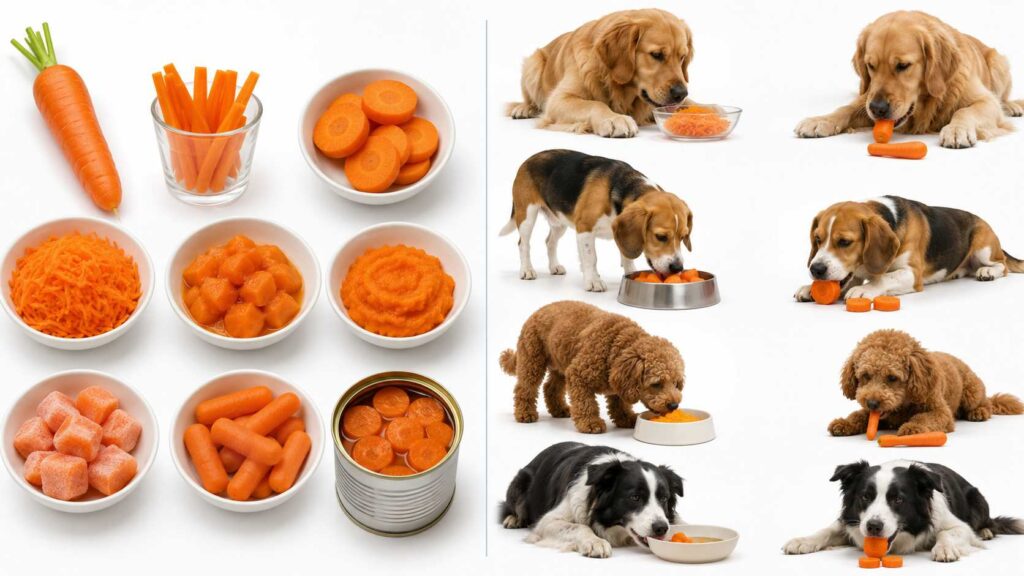
| Carrot form | Texture | Choking concern | Best suited to | Main caution |
|---|---|---|---|---|
| Thin raw stick | Firm | Moderate | Healthy adult dogs that chew carefully | Supervision is still needed |
| Thick round slice | Firm | Higher | Generally unsuitable for gulpers | May be swallowed whole or lodge in the throat |
| Small irregular pieces | Firm | Low to moderate | Dogs that chew reliably | Must still suit the dog’s mouth size |
| Grated carrot | Soft and fine | Lower | Toy breeds, seniors, and dogs with poor teeth | Easy to add more than intended |
| Steamed pieces | Soft | Lower when cut correctly | Puppies, seniors, and sensitive chewers | Keep completely plain |
| Mashed carrot | Very soft | Low | Dogs with dental pain or missing teeth | Check that nothing has been added |
| Frozen carrot | Very hard | Moderate to high | Selected healthy adult chewers | Tooth damage and choking risk |
| Canned carrot | Soft | Low | Occasional use | Check sodium and additives; rinse if appropriate |
| Carrot juice | Liquid | No chewing benefit | Usually unnecessary | Easy to over-serve and lower in fibre than whole carrot |
What Carrots Can Realistically Offer
It is worth keeping the benefits in perspective because online claims about carrots are often overstated.
Carrots can be a useful lower-calorie treat, especially when they replace richer snacks such as cheese or high-calorie biscuits. They will not cause weight loss on their own, though. Progress depends on the dog’s total daily calorie intake, including meals, training rewards, chews, and table scraps.
Their fibre may support normal stool quality in small amounts, but a sudden large serving can lead to gas, loose stools, or abdominal discomfort. More fibre is not always better, particularly for dogs with chronic diarrhoea, inflammatory bowel disease, or other digestive conditions.
Carrots also provide beta-carotene, which contributes to normal vitamin A metabolism. That supports general nutrition, but it does not treat cataracts, glaucoma, retinal disease, or other causes of poor vision. Any change in your dog’s eyesight or eye appearance should be assessed by a vet. For more information on balanced canine nutrition, see the MSD Veterinary Manual guide on nutrition in dogs.
The texture can provide useful enrichment, chewing satisfaction, and variety in food puzzles or training. Dental claims should remain modest: chewing carrot may create limited scraping on the tooth surface, but it does not clean below the gumline, remove tartar, or replace regular toothbrushing and veterinary dental care. The PDSA’s dog dental care advice explains why regular toothbrushing remains the most effective way to maintain your dog’s oral health.
How Much Carrot Is Sensible?
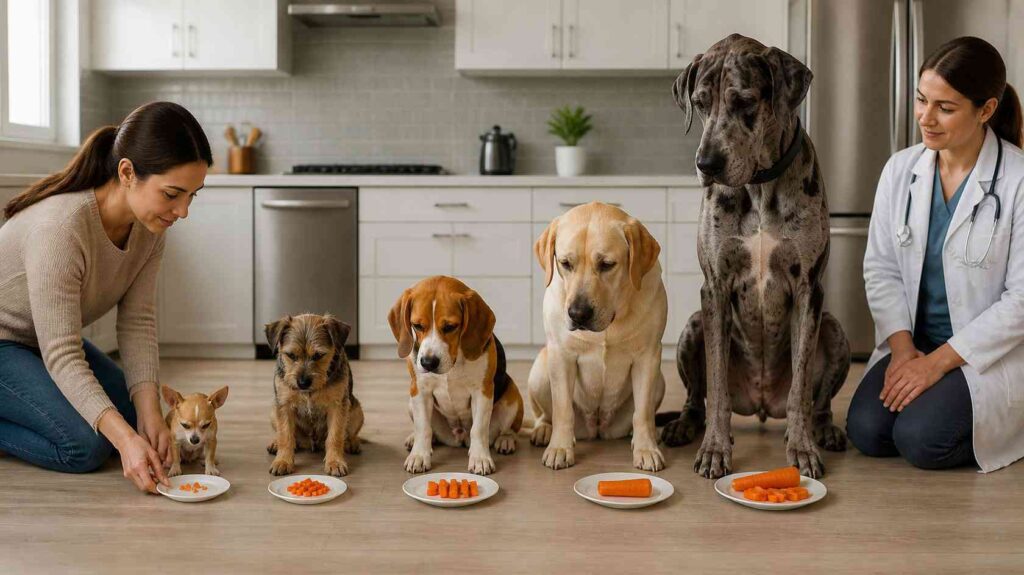
There is no single number that suits every dog. Treat carrots as part of the dog’s overall snack allowance, alongside training treats, chews, and other extras.
For a first serving, offer one or two small pieces. Introduce carrot on its own rather than with several new foods, then monitor appetite, stool quality, vomiting, and comfort over the next 24 hours.
Suggested Portion Framework by Dog Size
| Dog size | Example first portion | Typical treat-sized serving | Best preparation | Key caution |
|---|---|---|---|---|
| Extra-small, under 5 kg | One tiny sliver | A few very small pieces | Grated or softly cooked | Avoid whole baby carrots |
| Small, 5–10 kg | One small piece | A small amount of fine dice | Fine dice, grated, or steamed | Cut baby carrots into safer pieces |
| Medium, 10–25 kg | A few small pieces | Several thin sticks or a small portion of chopped carrot | Raw sticks or steamed pieces | Watch chewing speed |
| Large, 25–40 kg | Several small pieces | Up to about half a medium carrot, divided | Thin sticks or suitable chunks | Large size does not remove choking risk |
| Extra-large, over 40 kg | A few pieces | Up to about one medium carrot, divided | Thin sticks or suitable chunks | Supervise fast eaters |
These are practical starting points, not medical limits. Calorie needs, body condition, activity level, age, and health status vary widely. Regular portions should be adjusted to the dog’s full diet rather than weight alone.
Before Giving Your Dog Carrot: A Quick Checklist
- Is the carrot fresh and thoroughly washed?
- Is it plain, with no onion, garlic, gravy, butter, salt, glaze, or seasoning?
- Is the piece appropriate for your dog’s mouth and chewing style?
- Does your dog chew carefully or swallow food whole?
- Are your dog’s teeth healthy?
- Is your dog following a prescription or elimination diet?
- Is this the first time your dog has eaten carrot?
- Can you supervise while your dog eats it?
- Have you counted it as part of the day’s treat intake?
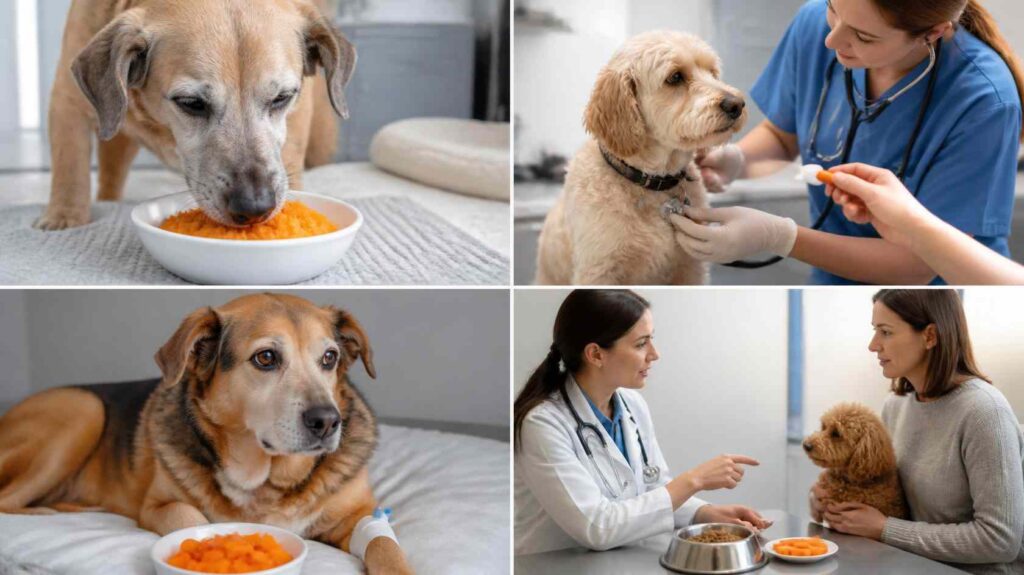
When Carrots Need Extra Caution
Diabetes
Consistency matters in diabetic feeding plans. Carrots should not be added freely outside the dog’s usual meal and treat schedule. Ask your vet whether they fit the prescribed diet and whether they should replace another snack.
Pancreatitis
Plain carrot is naturally low in fat. The greater concern is usually the way it has been prepared, especially with butter, oil, cheese sauce, gravy, or roast drippings. Dogs recovering from pancreatitis should follow the diet recommended by their veterinarian.
Chronic Digestive Conditions
Dogs with inflammatory bowel disease, chronic diarrhoea, recent vomiting, previous intestinal obstruction, or recent gastrointestinal surgery may not tolerate extra fibre well. Even a generally safe food can trigger symptoms in a sensitive dog.
Kidney or Heart Disease
Therapeutic diets may have carefully controlled nutrient targets. Regular extras can alter the intended balance, so obtain veterinary approval before adding carrots routinely.
Food Allergies or Elimination Diets
Carrot allergy appears uncommon, but individual reactions are possible. More importantly, adding carrot during an elimination trial can make the results difficult to interpret, even when the carrot itself seems harmless.
Dental Disease
Avoid raw or frozen carrots if your dog has cracked teeth, loose teeth, periodontal disease, painful chewing, or recent dental extractions. Soft steamed or mashed carrot may be more appropriate, depending on veterinary advice.
Vet Advice
Ask your vet before feeding carrots regularly if your dog has diabetes, pancreatitis, chronic digestive disease, kidney or heart disease, swallowing difficulties, a history of intestinal obstruction, or is following a prescription or elimination diet.
My Dog Ate Carrots—What Should I Check?
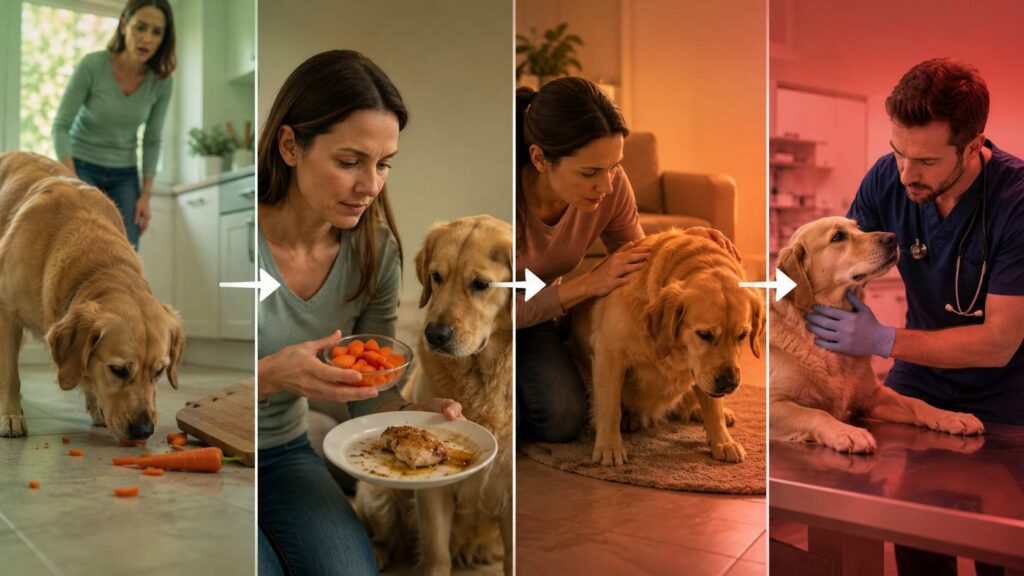
If your dog found carrots without supervision, work through five points:
- How much was eaten? One small piece is very different from a whole bag or several large carrots.
- What form was it in? Grated or soft carrot is usually less concerning than a whole raw chunk, thick round, frozen piece, or dehydrated chew.
- What else was included? Plain carrot differs significantly from carrot cake, soup, glazed carrots, or roast leftovers containing onion, garlic, gravy, butter, or sweeteners.
- What is your dog’s risk profile? Size, age, dental health, chewing style, swallowing history, and existing illness can all change the level of concern.
- Are there symptoms? Breathing, swallowing, vomiting, appetite, comfort, and bowel movements should guide the next step.
| What you observe | Possible concern | Recommended response |
|---|---|---|
| No symptoms after a small amount of plain carrot | Likely tolerated | Monitor at home |
| Mild gas or one soft stool | Temporary digestive upset | Stop carrots and observe |
| Repeated diarrhoea | Significant digestive irritation | Contact your vet |
| Repeated vomiting | Irritation or possible obstruction | Seek prompt veterinary advice |
| Gagging, coughing, or frantic pawing at the mouth | Choking or throat obstruction | Treat as an emergency |
| Difficulty breathing or blue, grey, or very pale gums | Airway emergency | Seek emergency veterinary care immediately |
| Abdominal pain, lethargy, or refusal to eat | Possible obstruction or significant illness | Arrange urgent veterinary assessment |
| No bowel movement after swallowing a large piece | Possible intestinal obstruction | Contact your vet promptly |
| Facial swelling, hives, or sudden weakness | Possible allergic or toxic reaction | Seek urgent veterinary care |
Emergency Warning
Seek immediate veterinary help for difficulty breathing, collapse, pale, blue, or grey gums, repeated unproductive retching, severe abdominal pain, or suspected exposure to xylitol, raisins, onion, garlic, chocolate, or macadamia nuts. Do not wait for symptoms to worsen.
Common Carrot Questions Beyond Raw and Cooked
Carrot peel is generally safe for dogs. Wash the carrot thoroughly, remove any damaged or mouldy areas, and cut it into a suitable shape. Peeling is optional.
Carrot tops are more fibrous than the root and may carry soil, pesticides, or bacteria if not cleaned well. They are not known as a common toxic food, but they offer little practical benefit, so there is no real need to feed them deliberately.
Baby carrots are simply small, trimmed carrots. They are nutritionally similar to regular carrots, but their shape can create a choking risk for toy breeds, puppies, and dogs that swallow food quickly. Cut them into smaller, safer pieces rather than serving them whole.
Canned carrots can be offered occasionally if they are plain. Choose varieties without added salt, sugar, sauces, or seasoning. Draining and rinsing them may help reduce some of the sodium.
Carrot juice is easy to over-serve, provides less fibre than whole carrot, and offers no chewing enrichment. Avoid sweetened juice blends and products containing artificial sweeteners. Plain carrot juice is best treated as an occasional novelty rather than a routine addition.
Carrots Compared With Other Dog-Safe Treats
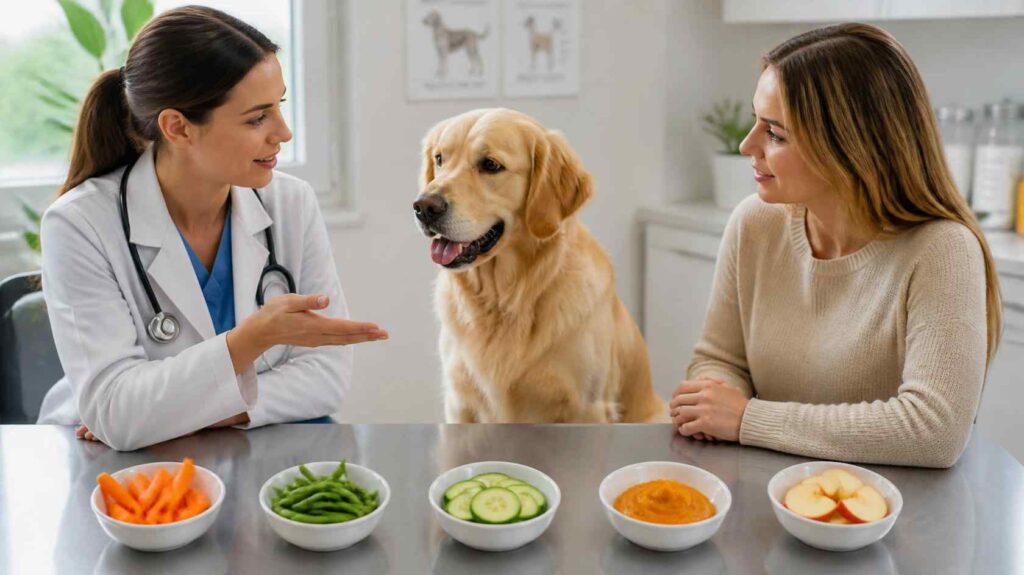
| Treat | Main advantage | Main limitation | Best use |
|---|---|---|---|
| Carrot | Crunchy and relatively low in calories | Choking risk if poorly cut | Training reward or occasional snack |
| Green beans | Adds low-calorie volume | Large amounts may cause gas | Substitute for richer treats |
| Cucumber | High water content | Provides less fibre and may become slippery | Light warm-weather snack |
| Plain pumpkin | Soft and fibre-rich | Too much may worsen digestive upset | Small digestive topper when vet-approved |
| Apple without seeds or core | Crunchy and naturally sweet | Core is a choking risk; seeds must be removed | Occasional treat |
Common Mistakes Dog Owners Make
- Giving a whole baby carrot to a toy breed or gulper
- Cutting carrots into thick round slices
- Assuming frozen carrot is automatically safe for puppies
- Leaving a dog unsupervised with a large or frozen piece
- Overfeeding carrots because they are considered low-calorie
- Adding carrot treats without reducing other daily snacks
- Serving carrots cooked with gravy, butter, onion, garlic, or heavy seasoning
- Assuming carrot cake is safe because plain carrot is safe
- Using carrots as a replacement for toothbrushing
- Ignoring repeated vomiting because carrots are not usually toxic
- Adding carrots during an elimination diet without veterinary approval
- Giving hard carrots to a dog with painful, loose, or cracked teeth
Key Takeaways
- Plain carrots are safe for most healthy dogs in sensible amounts.
- Shape, texture, and chewing behaviour matter more than whether the carrot is raw or cooked.
- Thick rounds, large chunks, and whole baby carrots present the greatest choking concern.
- Carrots can provide variety, fibre, and a lower-calorie treat option, but they do not treat eye or dental disease.
- Dogs with diabetes, pancreatitis, digestive disease, swallowing problems, or prescription diets may need veterinary guidance first.
- After any new food, monitor for vomiting, diarrhoea, discomfort, or difficulty swallowing.
The Bottom Line
Carrots are a simple treat, but a little preparation makes them much safer. That might mean grated carrot for an elderly dog, soft pieces for a puppy, or thin sticks for an adult dog that chews carefully.
Keep carrots plain, serve an appropriate amount, and match the texture to your dog’s teeth and eating habits. For most healthy dogs, that is enough to make carrots a useful, low-fuss addition to their treat rotation.
For dogs with an existing medical condition or therapeutic diet, check with your vet before making carrots a regular snack.
Frequently Asked Questions
1.Can dogs eat carrots every day?
Most healthy dogs can eat small amounts of plain carrot regularly, provided it remains within their overall treat allowance. Daily carrot should not replace complete dog food or push out more nutritionally important parts of the diet.
2.Can puppies eat raw or frozen carrots?
Puppies can eat appropriately sized carrot, but soft steamed or finely grated carrot is often the safest starting point. Raw and frozen carrots are harder and may damage developing teeth or break into chunks, so they should only be offered with close supervision.
3.Can a dog choke on a baby carrot?
Yes. Whole baby carrots can become lodged in the throat, particularly in small dogs and dogs that gulp food. Cut them into thin sticks, fine dice, or other pieces suited to your dog’s mouth and chewing style.
4.Why are there undigested carrot pieces in my dog’s stool?
Dogs do not always break down plant fibre completely, especially when raw carrot is swallowed in larger pieces. Small visible fragments are usually not concerning if your dog otherwise feels well and has normal stools.
Contact your vet if this is accompanied by persistent diarrhoea, vomiting, pain, loss of appetite, or straining.
5.Can diabetic dogs eat carrots?
Possibly, but the portion and timing need to fit the dog’s existing feeding and insulin plan. Do not add carrots regularly without discussing them with the veterinarian managing your dog’s diabetes.
6.Can dogs eat canned carrots or drink carrot juice?
Plain canned carrots can be offered occasionally if they contain no added seasoning, sugar, or sauces. Check the sodium content and rinse them before serving.
Plain carrot juice is not usually toxic, but it is easier to overfeed and contains less fibre than whole carrot. Avoid sweetened blends and any product containing xylitol.
7.What should I do if my dog eats too many carrots?
A large serving may cause gas, loose stools, or temporary stomach discomfort. Stop offering additional treats, provide access to fresh water, and monitor your dog.
Contact your vet if vomiting or diarrhoea is repeated, your dog becomes lethargic, refuses food, appears painful, or swallowed a large piece that could cause an obstruction.
#.Related Articles: