
Can dogs eat grapes? No—grapes should never be offered to dogs. If you’re standing in the kitchen with a grape halfway to your dog’s mouth, put it down. Grapes, raisins, sultanas, and Zante currants have been associated with acute kidney injury in dogs, and it’s difficult to predict which dogs will be affected.
But there are really two different readers landing on this page. One is wondering whether it’s okay to share a grape as a treat. The other has already watched their dog eat one—or several—and is trying to figure out how worried to be.
If your dog has already eaten grapes or a grape-derived dried fruit, contact your veterinarian or an appropriate animal poison service promptly rather than waiting for symptoms. A dog who seems completely fine right now isn’t necessarily in the clear.
If Your Dog Already Ate Grapes, Start Here

What You Know—and Don’t Know—Both Matter
First, remove any remaining grapes or food so your dog can’t eat more. Then try to establish what happened: did your dog definitely swallow grapes, or is ingestion only suspected? Do you know roughly how many are missing? Was it fresh grapes, raisins, sultanas, Zante currants, or a food containing them? Could another dog in the house have eaten some too?
Don’t delay the call while trying to reconstruct every detail. Veterinary toxicology assessments rely heavily on the exposure history, but “I don’t know” is useful information too. The substance, amount, time since exposure, current signs, and relevant medical history can all help the veterinary team assess the situation.
Information Worth Gathering Before You Call
Try to have these details ready, even if some answers are “I’m not sure”:
- Your dog’s approximate weight
- What was eaten
- Whether it was fresh grapes, raisins, sultanas, Zante currants, or a prepared food
- A rough estimate of how much was eaten
- Roughly when it happened
- Any symptoms so far, including vomiting or diarrhoea
- The packaging, recipe, or ingredient list, if available
- How much of the food is left
- Whether another dog could have had access
- Relevant health conditions or medications your vet should know about
If your dog ate a packaged or prepared food, keep the wrapper or take a photo of the ingredient list. This can help identify other ingredients that may also matter.
⚠️ Warning: Don’t Wait for Symptoms to Decide Whether It Matters
- A dog acting completely normal is not a reliable all-clear.
- Don’t use an online “grapes per kilogram” calculator to decide that an individual exposure is safe.
- Don’t try to make your dog vomit unless a veterinarian or appropriate poison professional specifically advises you to do so.
- Skip milk, oil, salt, and homemade “detox” remedies. They aren’t substitutes for veterinary treatment and some home interventions can cause additional problems.
- Don’t spend an hour researching symptoms before calling. With suspected poisoning, prompt veterinary advice matters.
Why a Simple “How Many Grapes?” Answer Can Mislead You

It’s natural to want a number: My dog weighs this much and ate this many grapes—are they safe?
Veterinary references do report amounts associated with potential risk, but they also emphasize that the tartaric acid content of grapes and raisins varies. That makes a simple grape count a poor way to declare an individual dog safe at home.
Your Dog’s Size Is Useful Information, Not a Safety Calculator
Your dog’s weight is useful to the veterinary team when assessing an exposure and planning treatment. But weight shouldn’t be used by itself to decide that a particular number of grapes is harmless.
The exact amount consumed may also be uncertain, and toxicity can be influenced by characteristics of both the exposure and the individual animal.
Quick tip: If you don’t know how many grapes are missing, say exactly that when you call. Don’t delay veterinary advice while trying to calculate a reassuring number.
Why Similar Exposures Don’t Always End the Same Way
Grape toxicity can be frustratingly unpredictable. Some exposed dogs develop gastrointestinal illness and kidney injury, while others may show little or no apparent effect. Variation in tartaric acid content is one factor thought to contribute to this inconsistency.
That’s why another owner’s experience—“my Labrador ate grapes and was fine”—can’t tell you what will happen to your dog.
“But My Dog Ate Grapes Before and Was Fine”
A previous uneventful exposure doesn’t establish that your dog is resistant or that another exposure will end the same way. PDSA specifically notes that it’s impossible to predict whether a dog will be severely affected based on a previous exposure without problems.
Treat a new exposure as a new event.
What Scientists Now Suspect Is Behind Grape Toxicity
Tartaric Acid Is the Leading Suspect
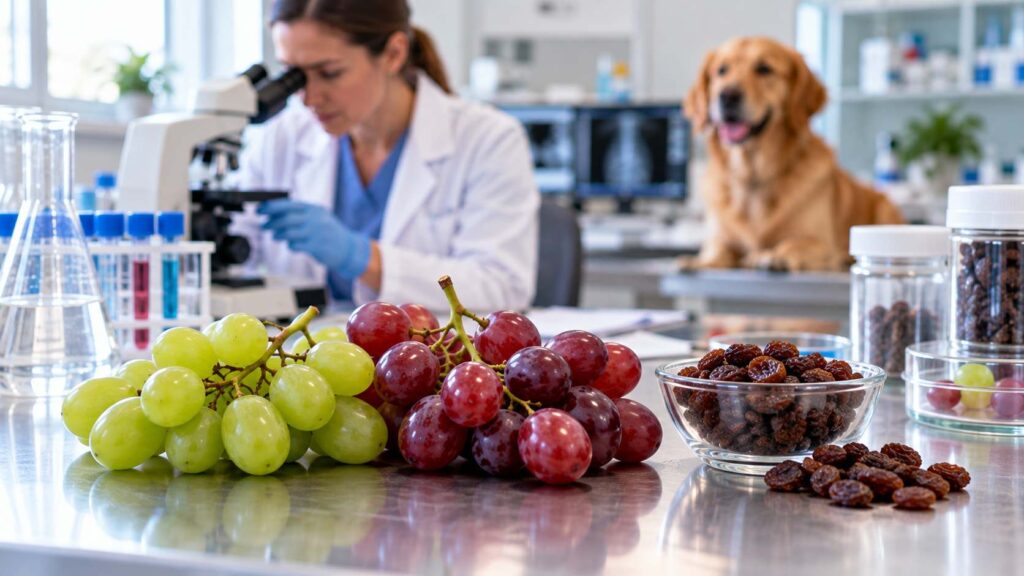
Older explanations often say that the toxic substance in grapes is completely unknown. Current evidence is more specific: tartaric acid is a proposed toxic principle and is now a leading explanation for grape- and raisin-associated kidney injury in dogs. Merck Veterinary Manual notes that tartaric acid concentrations can vary among grapes and raisins, which may help explain why the effects of ingestion are variable.
There are still limits to what this tells an owner at home. You can’t see how much tartaric acid a particular grape contains, and knowing the suspected mechanism doesn’t turn a grape count into a dependable safety test.
The Kidneys Are the Main Concern
The major medical concern is acute kidney injury (AKI)—a sudden decline in kidney function. The kidneys normally filter waste products and help regulate fluid and electrolyte balance. When kidney function is seriously impaired, those processes can be disrupted.
With grape or raisin toxicosis, vomiting or diarrhoea may occur within roughly 6–12 hours in affected dogs, while severe kidney dysfunction can develop over the following 24–72 hours. These are general clinical patterns, not a countdown for an individual dog.
That delay is one reason waiting for visible illness isn’t a sensible way to judge an exposure.
Why “Seedless” Doesn’t Solve the Problem
It’s easy to assume the seeds must be responsible. They aren’t established as the cause of grape toxicosis. Seedless grapes still contain the fruit associated with the toxicity and should not be treated as a safe alternative.
Grapes Change Form, but That Doesn’t Create a Safe Version
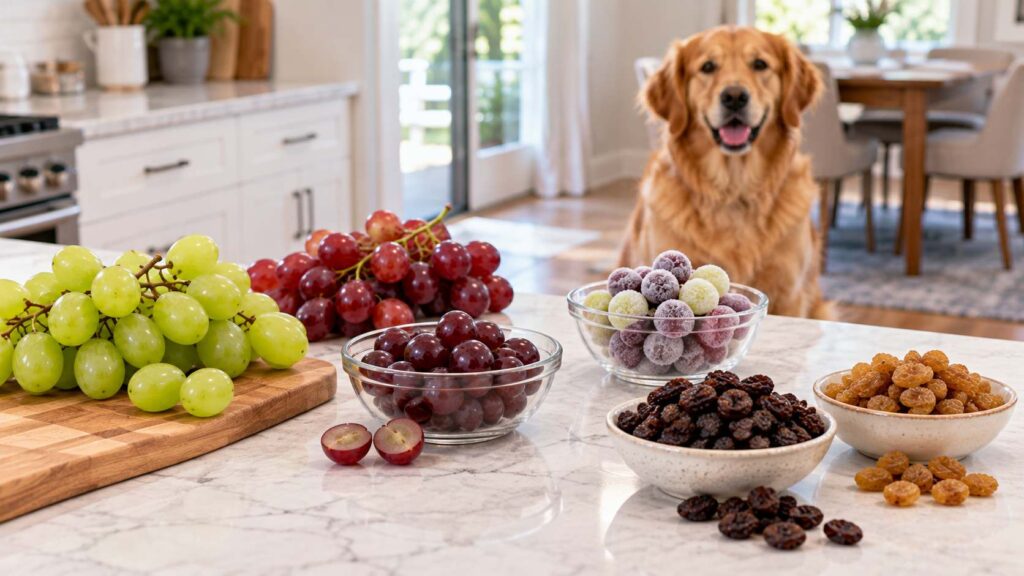
Changing the colour, growing method, or preparation doesn’t turn grapes into an appropriate dog treat.
| Form or product | What owners often assume | What actually matters |
|---|---|---|
| Green grapes | A different variety might be safer | Colour doesn’t provide a reliable safety distinction |
| Red or purple grapes | Risk applies only to certain colours | Don’t treat any ordinary grape colour as dog-safe |
| Seedless grapes | Removing seeds removes the problem | Seedless doesn’t mean safe |
| Organic grapes | Fewer agricultural chemicals mean lower risk | Organic status doesn’t remove the grape-related toxicity concern |
| Peeled or washed grapes | The harmful substance is on the surface | Washing or peeling doesn’t establish safety |
| Frozen grapes | Freezing changes the risk | Freezing doesn’t make grapes an appropriate dog treat |
| Raisins | Their small size means a small concern | They’re dried grapes and are associated with the same kidney-injury risk |
| Sultanas | A different name means a different risk | They should also be treated as a potentially toxic grape-derived food |
| Zante currants | “Currant” means an unrelated fruit | Zante currants are dried Vitis fruit and have been associated with toxicosis |
| Foods containing these ingredients | Only the visible fruit matters | Check the complete ingredient list and tell the vet what the dog ate |
One naming detail is worth knowing: Zante currants are not the same as true currants from the genus Ribes. Merck Veterinary Manual identifies Zante currants as Vitis fruit associated with renal injury, while ingestion of true Ribes currants has not been associated with the same renal injury. If you’re unsure which product your dog ate, keep the package and let your veterinary team identify it rather than guessing.
The “Currant” Problem: One Name, Two Different Fruits
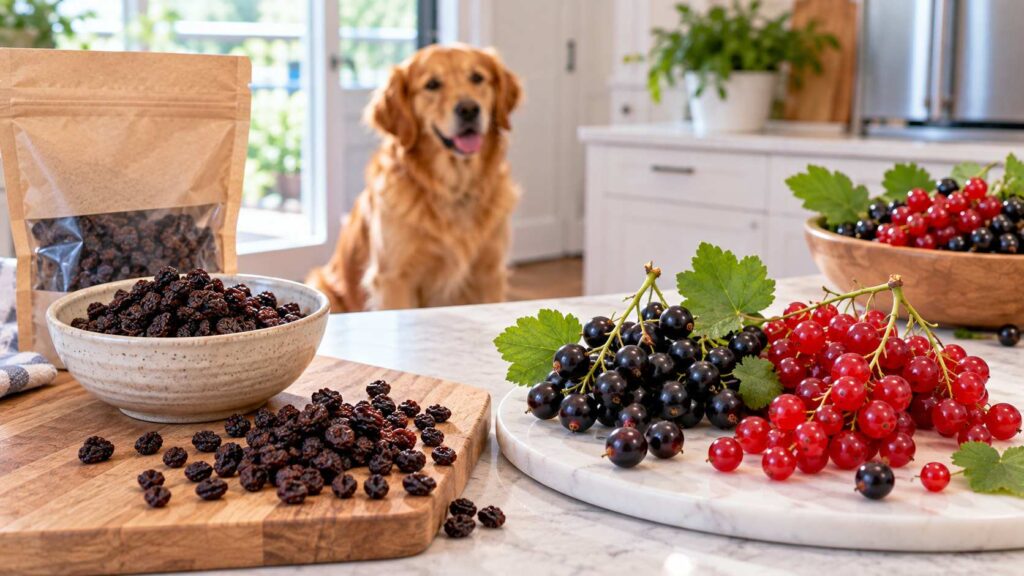
This trips up a lot of owners, so it’s worth spelling out. Zante currants are dried grapes, so they carry the same grape-toxicity concern as raisins and sultanas. True currants from Ribes plants—such as blackcurrants and redcurrants—are botanically different. Merck Veterinary Manual distinguishes Vitis-derived Zante currants from Ribes currants when discussing grape-associated kidney injury.
If your dog has eaten something labelled simply “currants” and you aren’t sure which type it contains, keep the packaging or ingredient list and tell your vet exactly what it says rather than guessing.
Don’t Look Only for Grapes in the Fruit Bowl
Raisins and sultanas turn up in more foods than many owners expect. That matters because accidental exposure may come from a snack, lunchbox, or baked product rather than a bowl of fresh grapes.
Foods Where They’re Easy to Miss
- Raisin bread and fruit loaves
- Fruit cake
- Hot cross buns
- Some breakfast cereals
- Cookies and biscuits
- Trail mix
- Baked goods containing dried fruit
- Certain desserts and puddings
Mixed Foods Raise a Second Question
If your dog got into a mixed food—such as trail mix, cereal, or a baked product—check the entire ingredient list, not just the raisins or sultanas. Depending on the product, it may contain other ingredients that are unsafe for dogs, such as chocolate or xylitol.
Keep the packaging, recipe, or a photo of the ingredients when you contact your vet. That gives the veterinary team more useful information than trying to identify the risk from the food’s appearance alone.
What Changes After Grape Exposure
Rather than treating grape poisoning as a flat symptom list, it helps to understand how signs can develop. Don’t use this timeline to decide when to seek help, though—veterinary advice should come before symptoms appear.
Digestive Changes Often Appear First
Vomiting and diarrhoea are commonly reported early signs and may begin within roughly 6–12 hours in affected dogs. Reduced appetite, abdominal discomfort, weakness, and lethargy may also occur.
Not every dog follows the same pattern, so the absence of digestive signs doesn’t rule out a problem.
Dehydration and Broader Illness Can Follow
Continued vomiting or diarrhoea can contribute to dehydration. An affected dog may become increasingly lethargic, weak, unwilling to eat, or generally unwell as the situation progresses.
Changes in Urination Can Signal Kidney Trouble
As acute kidney injury develops, urine production can fall. Producing very little urine or no urine at all is particularly concerning and requires urgent veterinary care.
You may see the terms oliguria and anuria in veterinary information. They simply refer to abnormally low urine production and an absence of urine production, respectively.
Why “No Symptoms Yet” Isn’t the Same as “No Risk”
This is where owners can get false reassurance. A dog may appear normal early after ingestion even though the exposure still warrants veterinary attention. Merck Veterinary Manual notes that severe kidney dysfunction can develop over the following 24–72 hours in affected dogs.
That’s why waiting to see whether your dog becomes ill is not a reliable way to judge the seriousness of grape or raisin ingestion.
What Happens After You Contact the Vet
The Exposure History Guides the Next Step
Tell the veterinary team whatever you know: your dog’s weight, what was eaten, approximately how much, when it happened, whether symptoms have appeared, and any relevant medical history.
If the amount or timing is unknown, say so. An honest “I don’t know” is more useful than a confident guess.
The veterinary team can then decide what assessment or treatment is appropriate for that individual exposure.
Why Blood and Urine Tests May Be Recommended
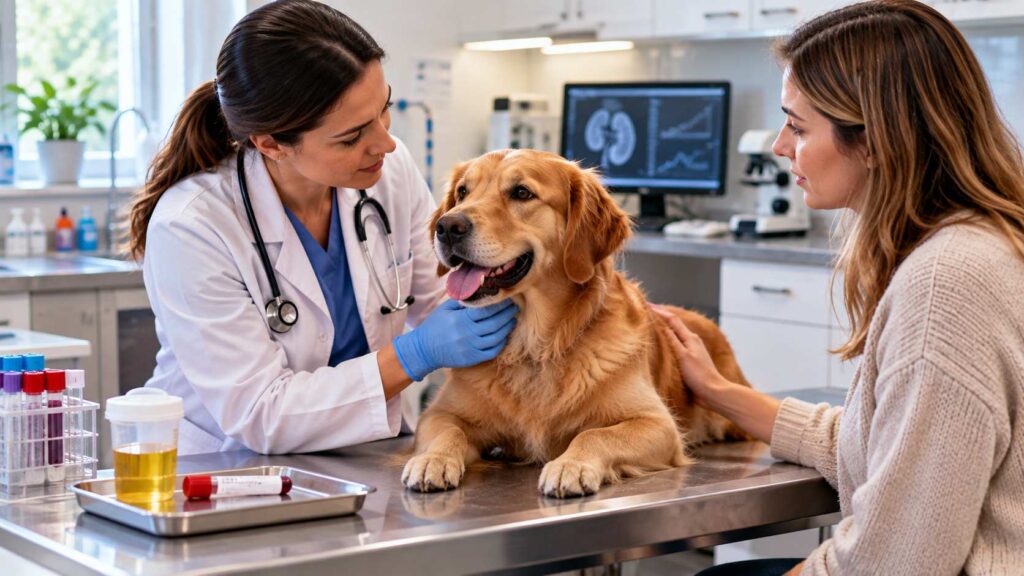
Bloodwork can help assess kidney function and related changes, including measurements such as creatinine and urea/BUN. Urinalysis, hydration assessment, and monitoring urine production can provide additional information about how the kidneys are functioning.
These results need to be interpreted alongside the dog’s exposure history and clinical condition—not as isolated numbers.
Why Repeat Monitoring May Matter
A test performed soon after ingestion may not always capture changes that develop later. For that reason, the veterinary team may recommend repeat blood or urine testing depending on the circumstances.
How long monitoring is needed varies from case to case, so follow the schedule recommended for your dog rather than trying to interpret results at home.
Treatment Depends on the Individual Exposure
Treatment depends on factors such as what was eaten, how much may have been consumed, how long ago it happened, and the dog’s condition.
When appropriate, veterinary treatment may include decontamination, veterinarian-directed induction of vomiting, IV fluids, supportive care, and monitoring of kidney function and urine production. Dogs that develop severe acute kidney injury may require more advanced renal support.
Vet Advice: Don’t attempt to induce vomiting or reproduce veterinary treatments at home unless a veterinarian or appropriate animal poison professional specifically instructs you to do so. What is appropriate depends on the individual dog and circumstances.
Six Real-Life Situations That Don’t Fit a Simple Grape Count

One Grape Disappeared
Don’t automatically dismiss the exposure because the number was small. Call for veterinary advice rather than using a grape-count chart to decide your dog is safe.
The Raisin Bag Is Empty
If you don’t know how much was originally in the bag or how much your dog ate, report the amount as unknown. Keep the bag or packaging if it’s available.
Two Dogs Had Access
Don’t assume which dog ate the food. Tell your vet that multiple dogs had access and provide each dog’s approximate weight and any other useful details.
The Dog Ate Raisin Bread
Check the complete ingredient list. With prepared foods, the raisins may not be the only ingredient your veterinary team needs to know about.
It Happened Hours Ago and the Dog Looks Fine
Looking normal doesn’t provide an all-clear. Contact your vet even if no symptoms have appeared yet.
“He’s Eaten Grapes Before”
A previous exposure without obvious illness doesn’t prove that your dog is resistant or predict what will happen this time. Treat each new exposure separately.
Common Mistakes That Can Waste Valuable Time
- Searching for a guaranteed “safe number” of grapes instead of seeking case-specific advice
- Waiting for vomiting or other symptoms before calling
- Assuming a large dog is automatically safe
- Treating seedless grapes as lower risk
- Thinking green, red, organic, washed, or peeled grapes change the underlying concern
- Trusting a previous uneventful exposure as proof of future safety
- Relying on another dog’s experience from a forum or social media
- Trying home remedies or inducing vomiting without professional guidance
- Overlooking other ingredients in a mixed food
- Guessing the amount or timing instead of saying “I don’t know”
- Forgetting that another pet may also have had access
Vet Advice: What Matters More Than Internet Reassurance

Timing matters. The sooner your veterinary team knows about a suspected exposure, the sooner they can decide what, if anything, needs to be done. Don’t wait for symptoms before calling. A dog can appear normal early on, and symptoms alone can’t reliably confirm or rule out acute kidney injury.
Every exposure also needs to be assessed on its own. Your dog’s weight, what was eaten, the estimated amount, when it happened, current symptoms, and relevant medical history can all matter. There is no dependable rule that “one grape always causes harm” or “one grape is always fine.”
Vet Advice: If your dog has eaten—or may have eaten—grapes, raisins, sultanas, or Zante currants, contact your veterinarian or an appropriate animal poison service promptly. Don’t delay the call while searching online for a supposedly safe dose.
Quick Tips for Preventing the Next Exposure
- Keep grape bowls away from counter and table edges
- Store raisins, sultanas, and baking ingredients in closed cupboards
- Check children’s lunchboxes and snack bags before leaving them within reach
- Teach children and visitors not to share grapes or dried fruit with your dog
- Keep trail mix, cereal, and dried-fruit snacks out of accessible bags and backpacks
- Be especially careful around holidays and baking days, when fruit cakes, hot cross buns, and other raisin or sultana foods may be around
- In multi-dog households, pick up dropped food immediately rather than trying to work out later which dog ate it
Safer Treat Choices
If you’re simply looking for a fruit to share, there are safer options than grapes. Depending on your dog’s individual diet and health, small amounts of plain apple flesh with the seeds and core removed, blueberries, seedless watermelon flesh without the rind, or banana may be suitable occasional treats.
Keep portions modest, introduce unfamiliar foods gradually, and remember that treats and extras shouldn’t replace a nutritionally complete diet. Dogs with medical conditions, food sensitivities, or prescription diets may need different advice from their veterinary team.
Key Takeaways
- Don’t deliberately feed grapes, raisins, sultanas, or Zante currants to dogs.
- There is no dependable grape-count rule that can guarantee an individual dog is safe after an exposure.
- Green, red, seedless, organic, peeled, washed, or frozen grapes shouldn’t be treated as safer versions.
- Tartaric acid is currently considered the leading suspected toxic principle behind grape-associated kidney injury.
- Acute kidney injury is the major medical concern, and a dog may appear normal early after ingestion.
- If your dog has eaten or may have eaten a grape-derived product, contact your veterinarian or an appropriate animal poison service promptly rather than waiting for symptoms.
Grapes are an easy risk to prevent: keep fresh grapes, dried grape products, and foods containing them somewhere your dog can’t reach. If an exposure does happen, focus
Frequently Asked Questions
1. Can one grape hurt a dog?
A single grape shouldn’t be assumed harmless. Grape toxicity is difficult to predict reliably for an individual dog, so if your dog has swallowed even one grape, contact your veterinarian or an appropriate animal poison service for case-specific advice rather than relying on a grape-count rule.
2. My dog ate one grape but seems completely fine—what should I do?
Call your veterinarian or an appropriate animal poison service promptly. Looking normal soon after ingestion doesn’t rule out later problems, and waiting for symptoms can delay assessment and treatment.
3. Are seedless grapes safer for dogs than seeded ones?
No. Grape seeds aren’t established as the cause of the toxicity. Seedless grapes therefore shouldn’t be treated as a safe alternative.
4. What if I genuinely don’t know how many grapes my dog ate?
Tell the veterinary team that the amount is unknown rather than guessing. If possible, check how many grapes or raisins remain, keep the packaging, and provide your dog’s approximate weight and the earliest and latest times the exposure could have occurred.
5. What if my dog vomited after eating grapes?
Still contact your veterinarian. Vomiting doesn’t prove that all of the ingested material has been removed, and it doesn’t establish that your dog is in the clear. Tell the veterinary team when your dog vomited and, if you noticed, whether grape or raisin material was present.
6. Does it matter that my dog has eaten grapes before with no problems?
A previous uneventful exposure doesn’t establish tolerance or predict the outcome of the next one. Treat each suspected ingestion as a new exposure and seek veterinary advice.
7. Are raisins and sultanas dangerous too?
Yes. Raisins and sultanas are dried grape products and are included in the same grape-toxicity concern. Their small size can also make it easy for a dog to consume several quickly.
8. What’s the difference between Zante currants and regular currants?
Zante currants are dried grapes and are included in the grape-toxicity concern. True currants from Ribes plants, such as blackcurrants and redcurrants, are botanically different and aren’t the same grape-derived product.
Because the word “currant” can be ambiguous on its own, keep the packaging or ingredient list and show it to your veterinary team if you’re unsure what your dog ate.
#. Related Articles: