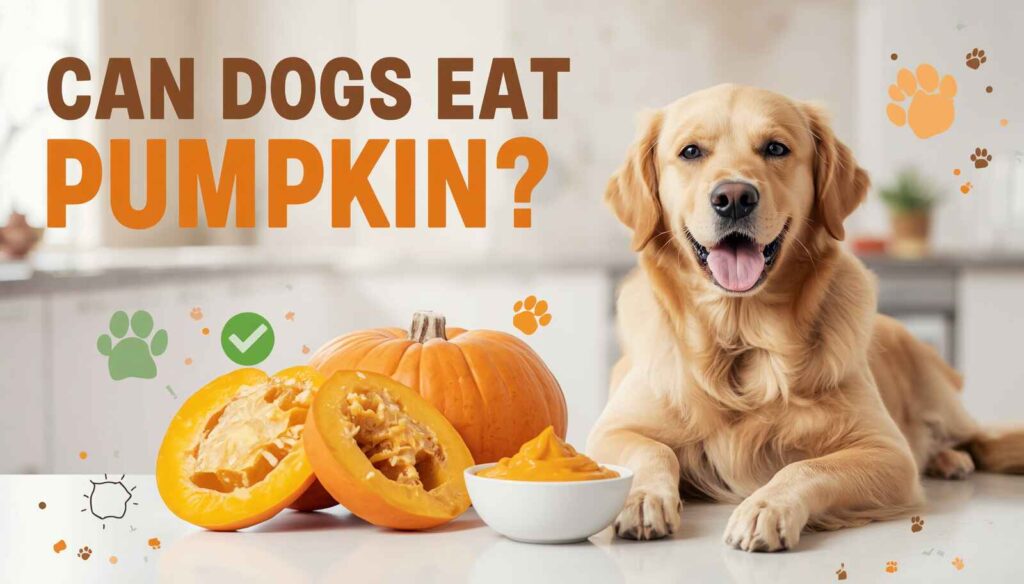
There’s a fair chance you’re reading this for one of two reasons. Either you’ve got a pumpkin on the counter and you’re wondering whether to share it, or your dog has already got into one and you’re trying to work out how worried to be. Can dogs eat pumpkin? Yes, healthy dogs can generally eat small amounts of plain, properly prepared pumpkin — but the form matters.
Plain cooked pumpkin, 100% canned pumpkin, raw pumpkin flesh, pumpkin rind, pumpkin seeds and pumpkin pie are not the same food. They don’t carry the same risks, and they don’t deserve the same answer. Before you feed anything — or worry about something already eaten — take a moment to work out exactly what your dog had.
Whether pumpkin is appropriate comes down to four things: the form it’s in, how much was involved, your dog’s size and health, and why you’re giving it in the first place.
Before You Feed It, Identify Which Pumpkin You Have
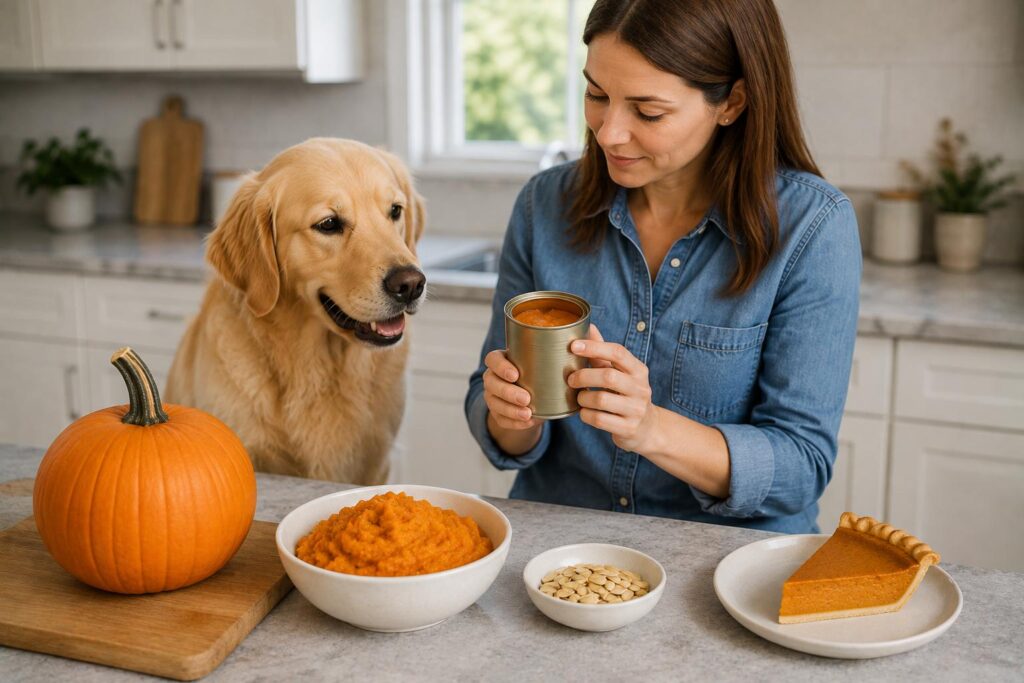
“Pumpkin” covers a surprising range of foods once you look beyond the vegetable itself.
Plain Pumpkin Flesh
Fresh pumpkin flesh that has been cooked, cooled and served without seasoning is generally the simplest option. Mashed or pureed pumpkin is also fine provided nothing else has been added.
It can be offered occasionally as part of your dog’s treat allowance or, in some situations, used as a source of additional fibre.
100% Canned Pumpkin
Pure canned pumpkin can also be suitable, but it is not the same product as pumpkin pie filling even though the tins may sit beside each other on the supermarket shelf.
Always read the ingredient list rather than relying on the front label. Ideally, the only ingredient should be pumpkin. Products containing added sugar, spices, sweeteners or pie-filling ingredients should not be treated as plain pumpkin.
Raw Pumpkin
Raw pumpkin flesh is not considered toxic to dogs, but cooked pumpkin is usually easier to chew, portion and digest.
Large raw chunks are a different concern. Tough pieces may be difficult for a dog to chew properly and could create a choking or gastrointestinal obstruction risk, particularly in smaller dogs or dogs that tend to gulp food.
Pumpkin Seeds
Plain pumpkin seeds are different from salted, seasoned or coated seeds. Whole seeds may also be harder for small dogs to manage than finely ground or appropriately prepared seeds.
Pumpkin seeds are sometimes promoted online as a natural dewormer, but they should not be relied on to diagnose, prevent or treat intestinal parasites. A dog suspected of having worms needs appropriate veterinary testing and treatment.
Skin, Rind and Stem
The main concern with pumpkin rind and stem is not poisoning — it is their tough, fibrous texture.
Large pieces can be difficult to chew and digest and may create a choking or gastrointestinal blockage risk. Remove the tough outer rind and stem before deliberately preparing pumpkin for your dog.
Pumpkin Pie Filling, Bread and Desserts
Once pumpkin appears in pie, bread, cake, biscuits or another dessert, you are no longer assessing pumpkin alone. You need to consider the entire ingredient list.
These foods may contain large amounts of sugar or fat, spices and other ingredients that are unsuitable or potentially dangerous for dogs. Sugar-free products need particular care because xylitol is highly toxic to dogs.
If your dog has eaten a pumpkin-flavoured human food, check the full ingredient list rather than assuming the pumpkin determines the risk.
One Word, Very Different Foods
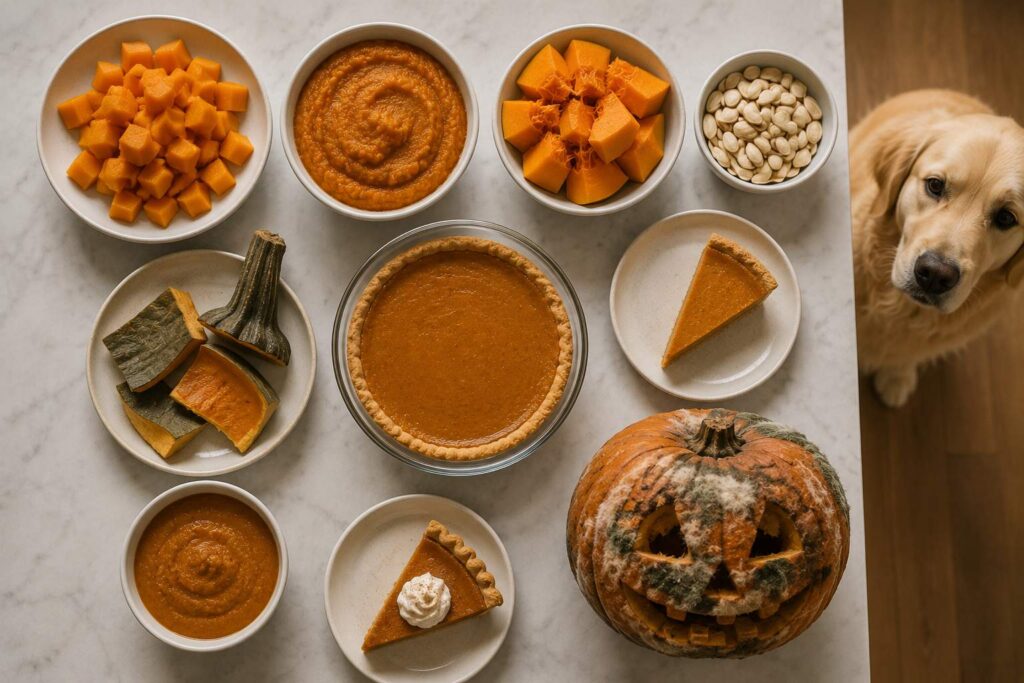
| Pumpkin form | Usually suitable? | Main thing to check | Sensible action |
|---|---|---|---|
| Plain cooked flesh | Yes | Portion size | Start with a small amount |
| 100% canned pumpkin | Yes | Ingredient list | Choose plain pumpkin only |
| Raw flesh | With caution | Tough or oversized pieces | Cook before serving when possible |
| Plain seeds | With caution | Size, quantity and seasoning | Keep portions modest |
| Rind or skin | Best avoided in large pieces | Choking or blockage | Remove before serving |
| Stem | Avoid | Tough, fibrous material | Remove |
| Pumpkin pie filling | No | Sugar, spices and other ingredients | Check the full label |
| Pumpkin desserts | No as a routine treat | Recipe-dependent risks | Assess every ingredient |
| Mouldy carving pumpkin | No | Mould-related toxins | Contact your vet promptly |
Your Dog Already Ate Pumpkin? Work Through This First

If your dog has already helped themselves, don’t start by asking only whether pumpkin is poisonous. Work out what actually happened. That will usually tell you far more about the level of concern.
Five Details That Change the Answer
- What exactly did your dog eat? Plain pumpkin, rind, seeds, pie, bread or an old carving pumpkin?
- Roughly how much was eaten?
- How large and how old is your dog?
- When did it happen?
- Are there any symptoms now?
A large healthy dog that licks a little plain cooked pumpkin from a chopping board is in a very different situation from a small puppy that eats half a pumpkin pie.
If you need to call your vet, having the packaging or ingredient list beside you can make the assessment much easier.
The Pumpkin May Not Be the Real Problem
If your dog got into pumpkin pie, bread, cake, biscuits or another flavoured product, the pumpkin itself may be the least important part of the exposure.
Look for:
- xylitol or other sweeteners
- chocolate
- raisins or sultanas
- alcohol
- large amounts of fat
- unfamiliar spice or flavouring ingredients
Treat the situation as “my dog ate this particular food”, not simply “my dog ate pumpkin.”
If xylitol may be involved, contact a veterinarian or animal poison service immediately rather than waiting for symptoms.
A Large Piece Is a Different Kind of Problem
Swallowing pumpkin rind, stem or a large raw chunk is primarily a physical obstruction concern, not a poisoning concern.
Seek veterinary advice promptly if your dog develops:
- repeated vomiting or unproductive retching
- significant abdominal discomfort
- a swollen or tense abdomen
- marked lethargy
- refusal to eat
- difficulty passing stool
- persistent restlessness or inability to get comfortable
A suspected blockage is not something to manage by feeding more fibre at home.
Pumpkin Has Three Different Jobs — Don’t Mix Them Up
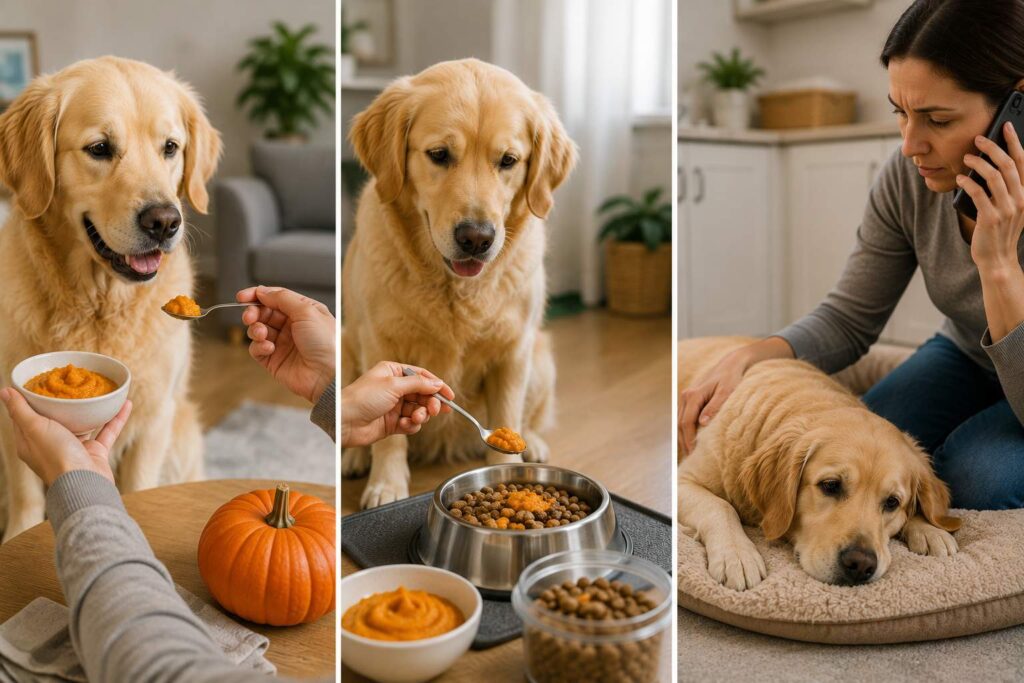
A lot of conflicting pumpkin advice makes more sense once you separate why it is being given.
Pumpkin as an Occasional Treat
For a healthy dog, a little plain pumpkin can simply be an occasional extra. It does not need to provide a special health benefit to be acceptable.
As with other treats and food toppers, pumpkin should complement rather than replace a complete and balanced diet.
Pumpkin as a Fibre Addition
Some dogs are given a small amount of pumpkin to increase dietary fibre or help maintain normal stool consistency.
Whether that helps depends on the individual dog and what is already in the diet. Commercial dog foods vary in fibre content, so adding pumpkin is not automatically useful for every dog.
If you introduce it, start conservatively and watch how your dog’s stools and appetite respond.
Pumpkin for an Active Digestive Problem
This is a different situation.
If your dog currently has diarrhoea or constipation, pumpkin may sometimes be used as a supportive dietary measure, but it does not treat the underlying cause. Gastrointestinal symptoms can result from something as simple as a sudden food change or as important as parasites, infection, pancreatitis, a foreign body or another illness.
Do not keep increasing the amount of pumpkin because symptoms have failed to improve.
Contact your vet sooner if your dog is a young puppy, elderly, medically vulnerable, repeatedly vomiting, painful, unusually lethargic or dehydrated. Persistent or worsening diarrhoea or constipation also deserves veterinary assessment rather than continued home treatment.
Why Does Pumpkin Seem to Help Both Loose and Hard Stools?
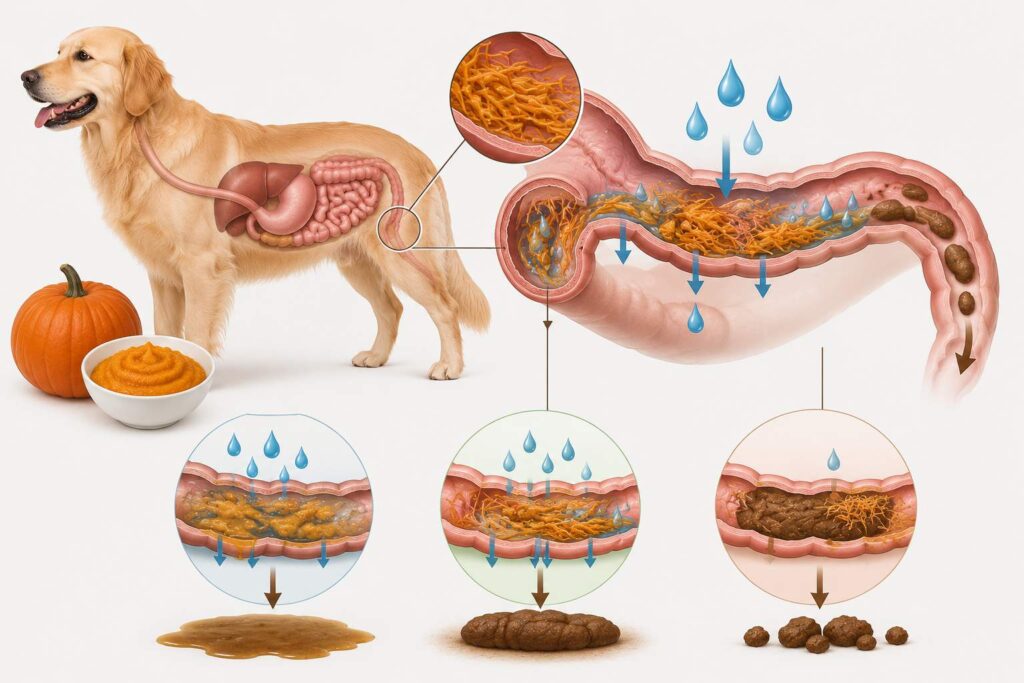
It sounds contradictory: how can one food be associated with both firmer stools and easier bowel movements?
The answer is largely about fibre and water, not pumpkin acting as a medicine.
What Fibre Actually Does
Pumpkin provides dietary fibre that can influence stool bulk and the way water is held within the intestinal contents.
That means a modest amount may help some dogs produce better-formed stools, while increased fibre can also support bowel movement in certain mildly constipated dogs.
The response is not identical in every dog, which is why “pumpkin regulates digestion” is too simplistic. The amount fed, the rest of the diet, hydration and the cause of the digestive problem all matter.
With Loose Stools
A little plain pumpkin may help improve stool consistency in some dogs with mild, short-lived loose stool.
What it cannot do is tell you why the diarrhoea started. If diarrhoea is persistent, worsening or accompanied by vomiting, blood, black or tarry stool, abdominal pain, poor appetite, marked lethargy or dehydration, the priority should be veterinary assessment rather than adding more pumpkin.
With Constipation
Fibre is only part of the picture when a dog is constipated. Adequate hydration matters too. The Merck Veterinary Manual notes that animals should be well hydrated before fibre supplementation is started, because adding fibre to a constipated animal without adequate hydration can increase the risk of impaction.
Repeated straining, pain, vomiting or an inability to pass stool should not be treated by repeatedly adding pumpkin. It is also worth remembering that owners can sometimes mistake difficulty urinating for constipation, which needs prompt veterinary attention.
Why More Isn’t Better
Increasing the portion because a little “seemed to help” is a common mistake.
Too much pumpkin, or a sudden increase in dietary fibre, can cause:
- gas
- bloating
- softer or more frequent stools
- reduced appetite for the dog’s normal food
- unnecessary disruption to an otherwise balanced diet
If pumpkin makes your dog’s digestive symptoms worse, stop increasing it and reassess the situation rather than assuming more fibre will eventually fix the problem.
How Much Pumpkin Is Sensible?
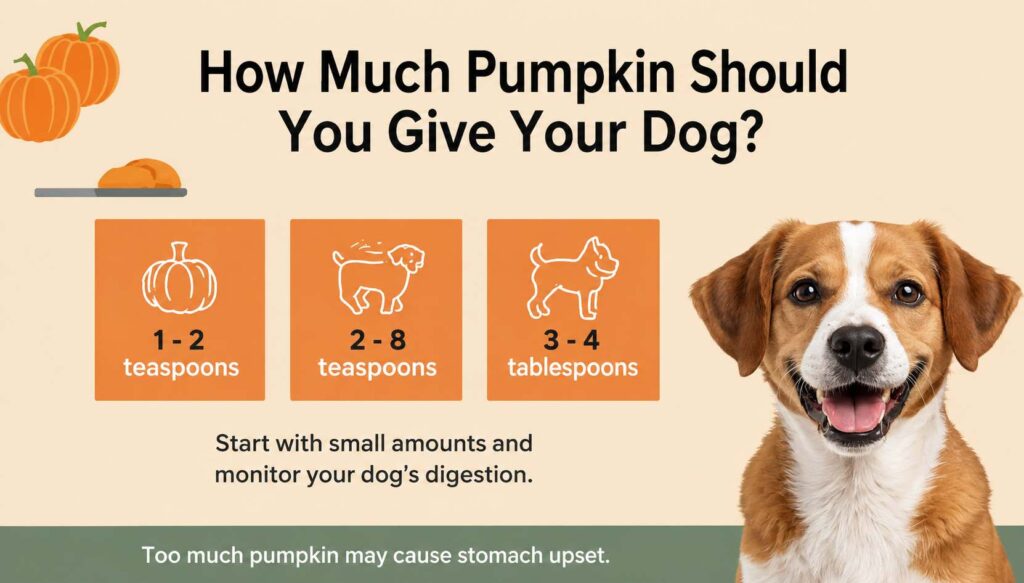
There’s no single tablespoon chart that fits every dog, and treating one like a medical dose can be misleading. A sensible amount depends on your dog’s size, usual diet, the form of pumpkin, why you’re giving it, and any underlying health conditions.
For a Healthy Dog Trying Pumpkin as Food
Start conservatively. A small spoonful of plain pumpkin is enough to see how your dog tolerates it before offering more.
There’s no advantage to starting with a large portion. Introduce it gradually and watch for changes such as gas, softer stools, vomiting or reduced appetite.
If Pumpkin Is Being Used Because Your Dog Is Unwell
This is not the time to keep experimenting with larger amounts.
If you’re using pumpkin because your dog has diarrhoea or constipation, think of it as a supportive food, not a treatment for the underlying cause. If symptoms are persistent, worsening, or accompanied by vomiting, pain, lethargy, dehydration, blood in the stool or loss of appetite, contact your vet rather than increasing the pumpkin.
Where the 10% Treat Rule Fits
The World Small Animal Veterinary Association (WSAVA) recommends that treats and other extras make up no more than about 10% of a healthy dog’s daily calories. That does not mean 10% of your dog’s diet should be pumpkin. It is an upper limit for all treats and extras combined, while the remaining diet should come from a complete and balanced food.
A few quick guardrails:
- Start with a small amount and keep it plain
- Introduce one dietary change at a time
- Keep fresh water available
- Watch your dog’s appetite and next few bowel movements
- Stop adding pumpkin if symptoms worsen
- Speak to your vet before adding it regularly to a prescription diet
Safe Preparation Is Mostly About What You Leave Out
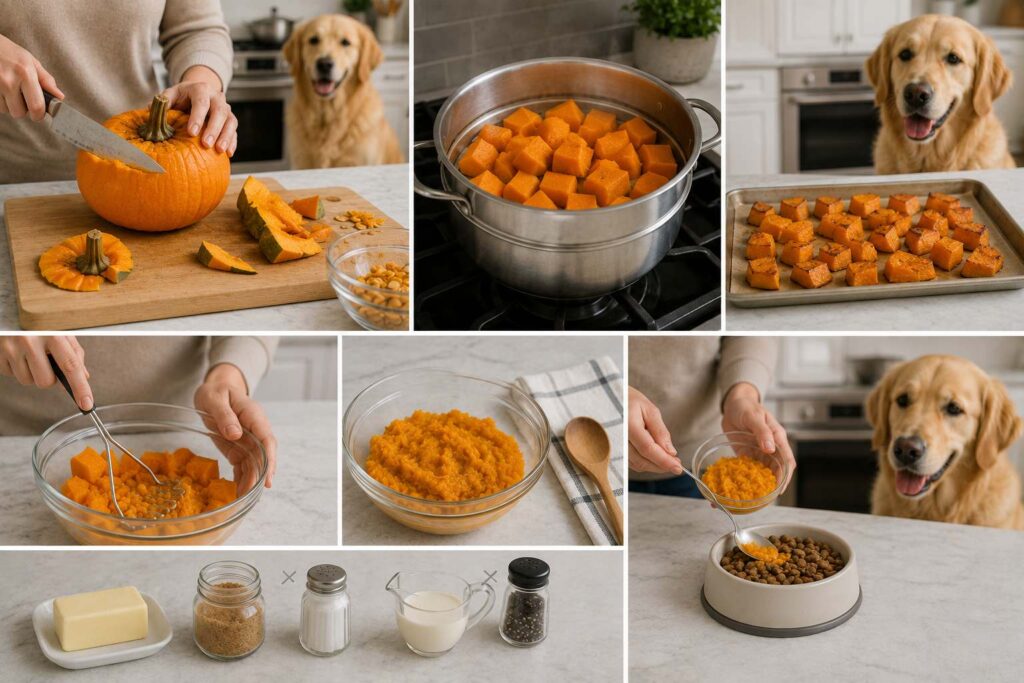
Preparing Fresh Pumpkin
Remove the stem, tough rind and fibrous material, then cook the edible flesh without seasoning. Steaming, baking or roasting it plainly all work well.
Let it cool completely, then mash it or cut it into pieces appropriate for your dog’s size. Avoid butter, oil, salt or seasoning.
Using Canned Pumpkin
Check the full ingredient list rather than relying on the front of the tin. Ideally, the product should contain 100% pumpkin and nothing else.
Opened canned pumpkin is perishable, so follow the manufacturer’s storage instructions. If you will not use it quickly, freezing small portions can be a practical way to reduce waste.
What Doesn’t Belong in the Bowl
Avoid adding:
- butter or cream
- added oil
- sugar, syrup or honey
- salt
- spice blends
- onion or garlic seasoning
- sweeteners you have not verified as dog-safe
Be especially careful with sugar-free products. Xylitol is highly toxic to dogs and requires urgent veterinary attention if ingested.
Plain really does mean plain.
Pumpkin Seeds Deserve a Reality Check
Plain vs Seasoned
Plain pumpkin seeds are very different from flavoured seeds sold as human snacks.
Salted seeds are unnecessary for dogs, while seasoned varieties may contain onion, garlic or other ingredients that are unsuitable or potentially harmful. If seeds are offered at all, choose plain, unseasoned ones and keep the amount modest.
What About Whole Seeds?
Whole seeds can be awkward for small dogs to chew and may present a choking concern.
Grinding or crushing them can make them easier to manage, but seeds are not nutritionally essential and there is no need to add them simply because you are feeding pumpkin flesh.
Can Pumpkin Seeds Deworm a Dog?
This claim is common online, but pumpkin seeds should not be relied on as a deworming treatment.
There is not strong clinical evidence that feeding pumpkin seeds will reliably clear intestinal parasites in dogs. If you suspect worms, your vet can recommend appropriate testing and parasite treatment based on the organism involved and your dog’s individual risk.
Seven Pumpkin Situations That Look Similar but Aren’t
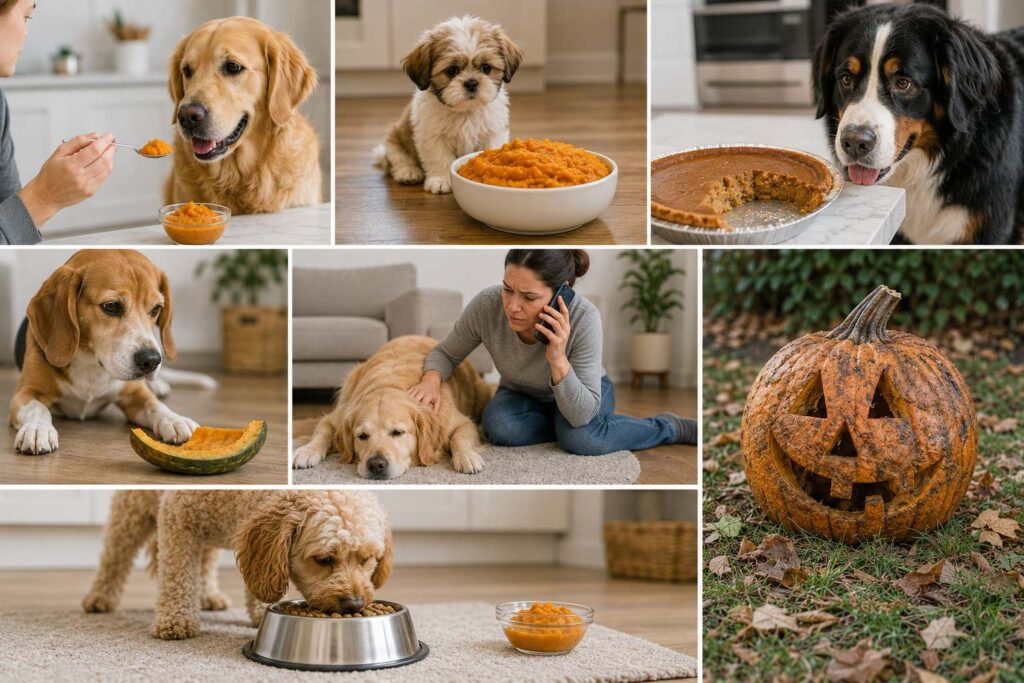
A healthy adult dog gets a little plain cooked pumpkin.
This is generally a low-risk situation. Keep the portion modest and make sure nothing has been added.
A small puppy eats a large amount of pumpkin puree.
The pumpkin itself may not be toxic, but the quantity matters more in a small body. Watch for vomiting, diarrhoea, bloating or reduced appetite, and contact your vet sooner if the puppy seems unwell.
A large dog steals a slice of pumpkin pie.
Treat this as a dessert exposure rather than a pumpkin exposure. Check the full ingredient list and consider the fat, sugar, spices, sweeteners and any other ingredients before deciding how concerned to be.
A dog with diarrhoea keeps getting more and more pumpkin.
This is a common mistake. If symptoms are not improving, increasing the fibre repeatedly can make matters worse or delay diagnosis of the real cause.
A dog swallows a thick piece of rind.
The main concern is physical obstruction rather than poisoning. Repeated vomiting, abdominal pain, reduced appetite or marked lethargy warrant prompt veterinary advice.
A dog gets into an old Halloween carving.
Age and spoilage change the risk completely. Mouldy pumpkin should not be treated like fresh pumpkin.
A dog on a veterinary prescription diet gets pumpkin added every day.
Even a generally safe food can alter a diet that has been formulated for a specific medical condition. Check with your veterinary team before adding regular extras.
The Halloween Pumpkin Has Its Own Rules
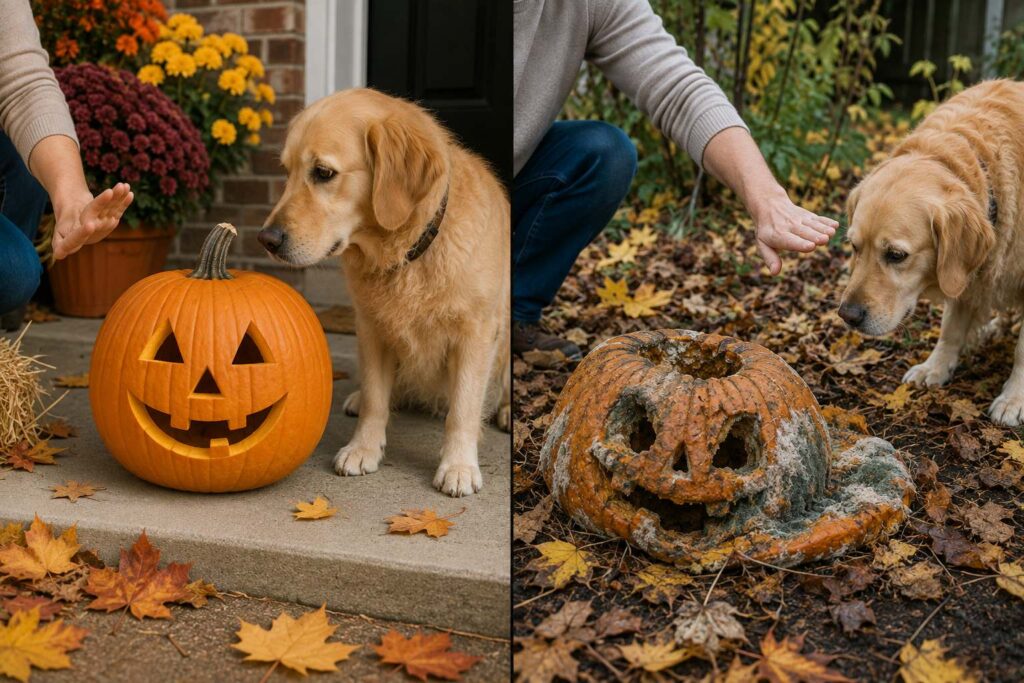
A carving pumpkin that has been sitting outside for days is not the same food as a fresh pumpkin prepared in the kitchen.
Fresh Carving Pumpkin vs Old Carving Pumpkin
As carved pumpkin sits exposed to moisture, warmth, insects and microorganisms, it can begin to spoil.
The more important concern is visible or suspected mould. Some moulds can produce toxins capable of causing serious illness in dogs, including neurological signs such as tremors or seizures.
If your dog eats mouldy pumpkin or develops shaking, tremors, unusual agitation, weakness or seizures after getting into an old carving, contact a vet urgently.
Rind, Stem and Large Chunks
The fact that a dog can chew through pumpkin rind does not make it a suitable chew.
Large pieces of rind or stem are tough, fibrous and difficult to digest. The main risks are choking and gastrointestinal obstruction, particularly if a dog tends to swallow food without chewing thoroughly.
If your dog has swallowed a large piece and later develops repeated vomiting, abdominal discomfort, loss of appetite, marked lethargy or difficulty passing stool, seek veterinary advice promptly.
When Mould Changes the Situation
Certain moulds can produce toxins that cause neurological illness in dogs, including tremors and seizures. If your dog has eaten a mouldy carving pumpkin, this is not a situation to manage with home remedies while waiting for symptoms to develop.
Contact your vet promptly if you notice or suspect:
- Mouldy pumpkin has been eaten
- A large piece of rind or stem has been swallowed
- Repeated vomiting
- Significant lethargy
- Abdominal pain or a visibly distended abdomen
- Blood in the stool, or black and tarry stool
- Tremors, wobbliness, seizures, or other neurological changes
- Signs of significant dehydration
- Gastrointestinal symptoms that are persistent or getting worse
If neurological signs are already present, seek urgent veterinary care.
Common Pumpkin Mistakes Worth Avoiding
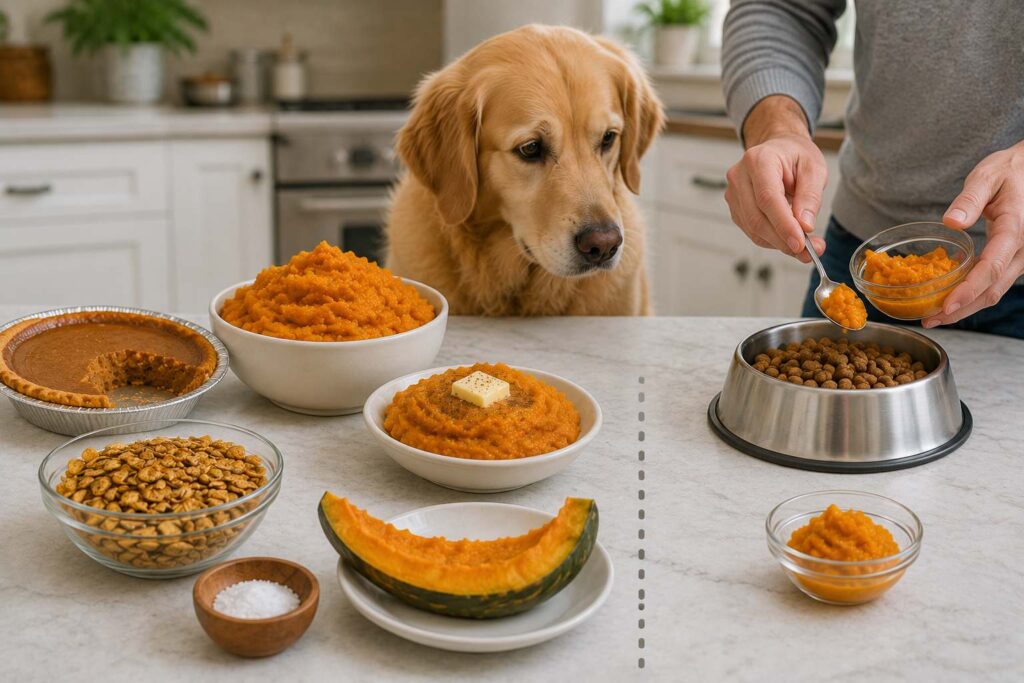
- Grabbing pumpkin pie filling instead of pure pumpkin
- Starting with a large first portion
- Assuming “natural” means unlimited
- Adding butter, sugar, salt, oil, or seasoning
- Using pumpkin indefinitely for ongoing diarrhoea instead of investigating the cause
- Increasing the amount when symptoms are getting worse
- Forgetting about hydration when dealing with constipation
- Letting a dog chew large pieces of rind or stem
- Treating pumpkin seeds as a substitute for proper parasite treatment
- Following a viral tablespoon chart as though it were an exact veterinary dose
- Forgetting to count pumpkin among the day’s treats and extras
- Adding pumpkin to a prescription diet without checking first
Some Dogs Need a Different Decision
Puppies deserve extra caution because their smaller size means diarrhoea, vomiting, and dehydration can become more significant more quickly. A large accidental portion also represents more food relative to their body size.
Dogs with chronic digestive problems should not have recurring symptoms repeatedly masked with pumpkin. Repeated diarrhoea, constipation, or straining deserves proper investigation.
Dogs with diabetes or other medical conditions may need dietary changes discussed with a veterinarian first. Even a generally safe food can affect an existing feeding or treatment plan.
Dogs with a history of pancreatitis need the whole food assessed, not just the pumpkin. Plain pumpkin is very different from a rich pumpkin dessert containing butter, cream, or other high-fat ingredients.
Dogs on prescription diets should not automatically have extras added. WSAVA advises checking with the veterinary team before giving treats or additional foods to dogs with medical conditions or prescribed diets.
When Pumpkin Stops Being a Food Question and Becomes a Vet Question
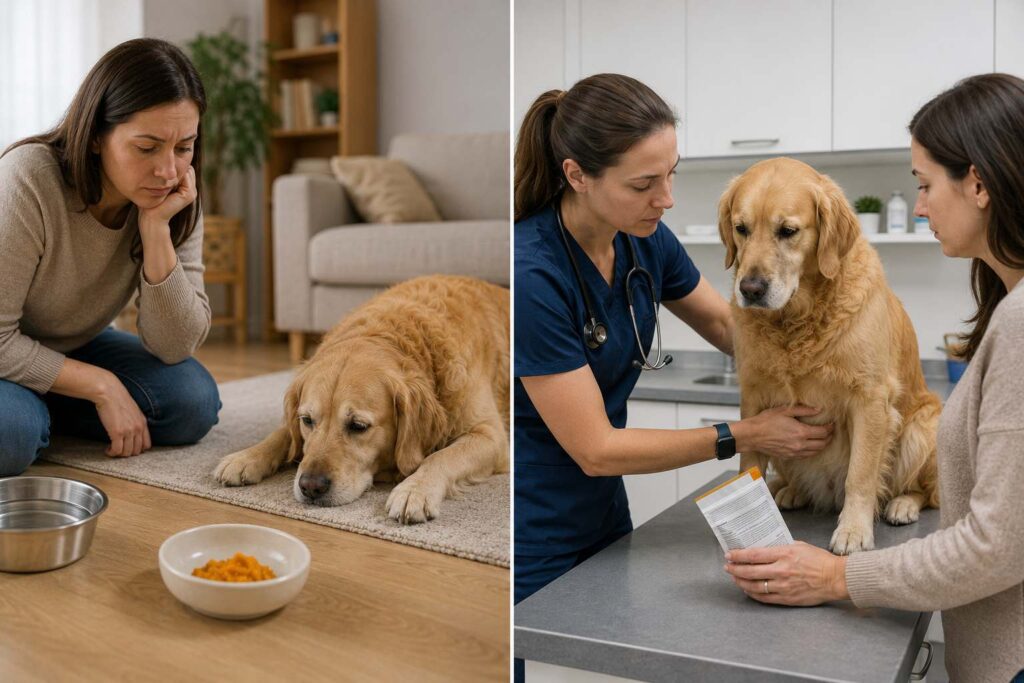
Diarrhoea Red Flags
Contact your vet if diarrhoea is persistent or worsening, or if it occurs alongside:
- Blood in the stool
- Black or tarry stool
- Repeated vomiting
- Marked lethargy
- Refusal to eat
- Dehydration
- Abdominal pain
Young puppies and dogs with existing medical problems may need veterinary advice sooner.
Constipation Red Flags
Repeated unsuccessful straining, obvious pain, vomiting, marked lethargy, abdominal swelling, or an inability to pass stool should be checked promptly. These signs can occasionally indicate a more serious problem, including an obstruction.
Adding more pumpkin is not appropriate when a blockage is suspected.
A Quick Note on Straining
Straining does not always mean constipation. Difficulty urinating and other painful conditions can look surprisingly similar from the outside.
If you are not sure whether your dog is trying to pass stool or urine, or they are repeatedly straining without producing anything, seek veterinary advice rather than assuming constipation and adding fibre.
Pumpkin can be a useful food. What it cannot do is diagnose why your dog is having gastrointestinal symptoms.
Before You Decide, Run This Final Check
- Is it actually plain pumpkin?
- Have you checked the full ingredient list?
- Have you removed tough rind and stem?
- Are you starting with a small amount?
- Are you feeding it as a treat, or trying to manage a symptom?
- Is your dog’s normal diet complete and balanced?
- Is fresh water available?
- Does your dog have an existing medical condition?
- Is your dog on a prescription diet?
- Are symptoms improving, unchanged, or getting worse?
- Are any of the red flags above present?
If those checks raise no concerns, a small amount of plain pumpkin may be a reasonable addition for a healthy dog. If the product contains questionable ingredients, your dog has swallowed a large tough piece, or symptoms are developing, contact your vet instead of trying to solve the problem with more pumpkin.
Frequently Asked Questions
1.Can dogs eat pumpkin every day?
Small amounts of plain pumpkin can be suitable for many healthy dogs, provided they tolerate it well and it remains part of their overall treat allowance rather than replacing a meaningful portion of a complete and balanced diet. Daily pumpkin is not necessary for most dogs.
2.Can puppies eat pumpkin?
Yes, small amounts of plain pumpkin can be suitable for puppies, but portions should be modest. If a puppy has diarrhoea, vomiting, or constipation, avoid relying on pumpkin alone because young dogs can become dehydrated more quickly.
3.Can dogs eat pumpkin skin or rind?
It is best removed before serving. Pumpkin rind is tough and fibrous, offering little practical benefit while creating more of a choking or gastrointestinal obstruction concern if swallowed in large pieces.
4.Is pumpkin better than sweet potato for dogs?
Neither is automatically better. Plain cooked pumpkin and plain cooked sweet potato can both be used as occasional extras, but they differ in calorie and nutrient content. The better choice depends on your dog’s diet, portion size, tolerance, and reason for offering it.
5.Can pumpkin help with a dog’s anal gland issues?
Increasing stool bulk may help some dogs empty their anal glands more effectively, which is why fibre is sometimes discussed in this context. However, pumpkin is not a treatment for recurrent anal gland disease. Repeated scooting, licking, swelling, pain, or discharge should be assessed by a vet.
6.Why did my dog’s poop turn orange after eating pumpkin?
Pumpkin’s natural pigments can temporarily change stool colour, particularly after a larger serving. If your dog otherwise feels well and the stool is normally formed, this alone is usually less concerning than changes accompanied by diarrhoea, blood, black stool, vomiting, or lethargy.
7.How long does opened canned pumpkin keep in the fridge?
Follow the storage instructions on the product once opened rather than relying on a fixed number of days for every brand. Keep it refrigerated in a covered container and discard it if you notice mould, an unusual smell, or other signs of spoilage. Freezing small portions is useful if you will not use the remainder soon.
#. Related Articles: