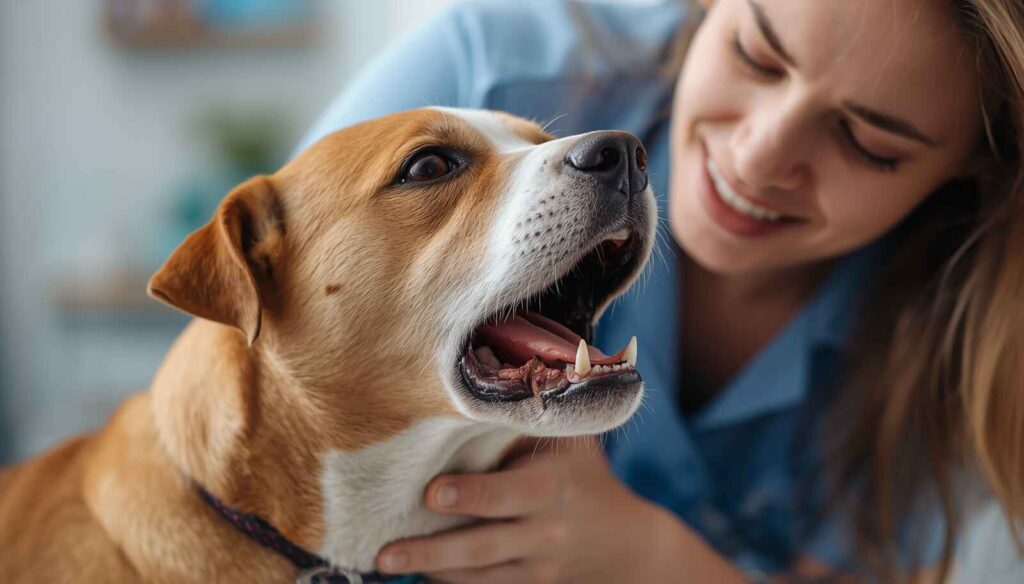
Can dogs get sore throats? Yes, they can. However, “sore throat” isn’t a diagnosis. It’s a description of symptoms such as unusual swallowing, gagging, coughing, a changed bark, or discomfort while eating.
The challenge is that several structures can cause similar signs when irritated or diseased, including the mouth, tonsils, pharynx, larynx, trachea, and oesophagus. Some causes are mild, while others—such as a lodged object or airway swelling—need urgent treatment.
This guide will help you recognise possible throat discomfort, understand what the symptoms may mean, and decide when your dog needs veterinary care. A veterinarian may still need to examine the mouth and deeper throat structures to identify the actual cause.
Seek Emergency Veterinary Care Now If You See:
- Laboured or open-mouth breathing at rest
- Blue, grey, purple, or unusually pale gums
- Collapse, severe weakness, or disorientation
- Inability to swallow
- Continuous choking or frantic pawing at the mouth
- Sudden severe symptoms after chewing a bone, stick, toy, or rawhide
- Rapid swelling around the throat, neck, or face
- Blood in the saliva
- Suspected exposure to chemicals, batteries, medication, or another caustic substance
If any of these signs are present, do not try home remedies. Do not blindly reach into your dog’s mouth, pull at an embedded object or visible string, induce vomiting after a sharp-object or chemical exposure, or force food, water, honey, or medicine into a dog that cannot swallow normally.
A dog that can still breathe may have a partial obstruction, so continued airflow does not always mean the throat is clear. Contact a veterinarian or emergency veterinary clinic immediately.
First, Decide What You’re Actually Seeing

Signs That Suggest Throat Pain or Irritation
Possible signs of throat discomfort include:
- Repeated swallowing or gulping with an empty mouth
- Frequent lip licking
- Excessive drooling
- Gagging or retching
- A cough that ends with gagging
- A hoarse, weak, quieter, or noticeably changed bark
- Stretching the neck while swallowing
- Dropping food from the mouth
- Refusing kibble or hard treats while still showing interest in softer food
- Bad breath
- Swelling under the jaw or around the neck
- Fever, lethargy, nasal discharge, or reduced appetite
No single sign confirms a sore throat. For example, drooling can also occur with dental disease, nausea, poisoning, or something lodged in the mouth.
The “Hungry but Can’t Swallow Comfortably” Clue
This is an important distinction that many owners miss.
A dog with painful swallowing may still feel hungry. They may approach the bowl eagerly, take a bite, and then hesitate, chew strangely, drop the food, or repeatedly gulp as though it isn’t going down properly.
A dog that accepts wet food but refuses kibble may be experiencing throat, mouth, or dental pain rather than a true loss of appetite. However, soft food should only be offered if the dog can swallow water comfortably and is not gagging, choking, or regurgitating.
Symptoms That May Point Somewhere Else Entirely
Not every apparent “throat” symptom begins in the throat:
- Difficulty picking up or chewing food may indicate dental disease, a fractured tooth, an oral wound, or another mouth problem.
- Regurgitation soon after swallowing may suggest an oesophageal disorder rather than a stomach problem.
- Coughing after drinking can occur with airway irritation or poor coordination of swallowing.
- Reverse sneezing usually involves rapid inward snorting caused by irritation around the nose or back of the throat.
- Vomiting with abdominal heaving points more toward nausea or a digestive problem.
- A bark that becomes progressively weaker or hoarser over several weeks may indicate laryngeal disease and should not be dismissed as simple throat irritation.
Because these problems can look similar at home, recording a clear video of the episode can be extremely helpful for your veterinarian.
Coughing, Gagging, Choking — Telling Them Apart
| Behaviour | What It Looks or Sounds Like | Can the Dog Breathe? | Common Triggers | Urgency |
|---|---|---|---|---|
| Coughing | Forceful expulsion of air from the chest or throat | Usually | Excitement, exercise, collar pressure, drinking, respiratory irritation | Depends on breathing effort and other symptoms |
| Gagging | Retching centred around the throat, sometimes after a cough | Usually | Coughing spells, swallowing irritation, foreign material | Arrange a veterinary check if persistent or sudden |
| Choking | Distress, pawing at the mouth, little or no airflow | Possibly not | Sudden onset while eating or chewing | Emergency |
| Reverse sneezing | Rapid inward snorting, often with the neck extended | Usually | Nasal or upper-throat irritation, excitement | Usually not an emergency unless severe or frequent |
| Vomiting | Abdominal contractions followed by stomach contents | Usually | Nausea, dietary upset, illness | Depends on frequency and the dog’s overall condition |
| Regurgitation | Passive return of food or fluid without abdominal heaving | Usually | Often occurs soon after eating or drinking | Veterinary assessment if repeated |
A quick note: the volume or drama of the episode does not reliably show how serious it is. A dog with a partial obstruction may still be able to breathe. Watch breathing effort, gum colour, swallowing ability, and overall distress rather than judging the sound alone.
Where a “Sore Throat” Can Actually Originate
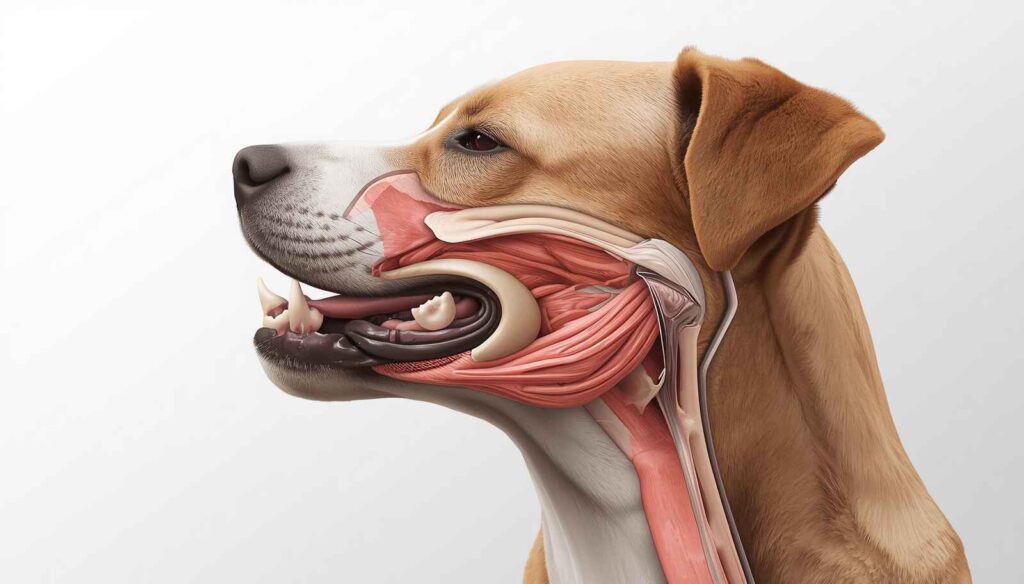
- Pharynx (pharyngitis): the area behind the mouth involved in swallowing. Painful or difficult swallowing is a common sign of pharyngeal disorders in dogs.
- Larynx (laryngitis or laryngeal disease): the voice box and entrance to the airway. Problems here can cause a hoarse bark, coughing, or noisy breathing. In older, large-breed dogs, a persistent voice change may raise concern for laryngeal paralysis.
- Tonsils and back of the mouth: tonsillitis, oral wounds, dental infection, or foreign material may be hidden deeper than an owner can safely see.
- Trachea: kennel cough, tracheal irritation, and tracheal collapse can all sound like a throat problem.
- Oesophagus: oesophagitis and acid reflux may cause pain after swallowing, repeated gulping, drooling, or regurgitation.
What Can Cause Throat Discomfort in Dogs?
Infectious Causes
Kennel cough and other forms of canine infectious respiratory disease can irritate the throat and airways. Other possibilities include viral or bacterial infections, canine influenza, and distemper in unvaccinated or under-vaccinated dogs.
Exposure often occurs in places where dogs gather closely, such as kennels, daycare centres, shelters, grooming facilities, dog parks, training classes, and veterinary waiting areas.
Foreign Objects and Physical Injuries
Bones, sticks, rawhide, toy fragments, grass awns, string, fishing hooks, and sharp food pieces can scratch, puncture, or become lodged in the mouth, throat, or oesophagus.
A dog may still breathe with a partial obstruction, so normal airflow does not rule out a foreign object. Sudden gagging, drooling, repeated swallowing, pawing at the mouth, or reluctance to eat after chewing something should be treated seriously.
Irritation Without Infection
Throat irritation may also result from:
- Excessive barking
- Pulling hard against a neck collar
- Smoke or vaping aerosol
- Household sprays and strong fragrances
- Dust and other airborne irritants
- Chemical fumes
- Very hot food or liquid
These triggers can inflame sensitive tissues without causing an infection.
Oral and Dental Problems That Mimic Throat Pain
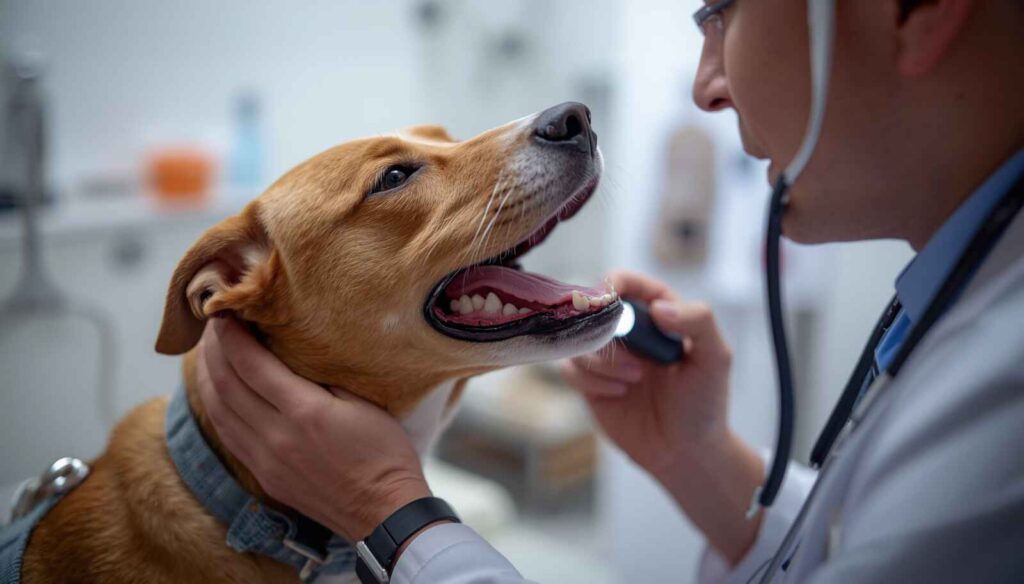
A tooth-root abscess, fractured tooth, gum disease, oral ulcer, mouth injury, or oral mass can look like a sore throat because chewing and swallowing both become uncomfortable.
A dog that drops food, chews on one side, or refuses hard food may have dental or oral pain rather than inflammation deeper in the throat.
Digestive and Oesophageal Causes
Acid reflux and oesophagitis can cause painful swallowing, lip licking, drooling, repeated gulping, and regurgitation. Repeated exposure to stomach acid may also irritate tissues higher in the throat.
Persistent regurgitation is not normal and increases the risk of material entering the lungs.
Airway and Structural Disorders
Possible structural or airway-related causes include:
- Laryngeal paralysis
- Tracheal collapse
- Brachycephalic obstructive airway disease
- Salivary-gland swelling
- Abscesses
- Allergic airway swelling
These conditions may affect breathing as well as swallowing and should not be managed as a simple sore throat.
Persistent or Progressive Causes
Less common but important causes include masses in the mouth, tonsils, pharynx, larynx, or oesophagus, as well as enlarged lymph nodes.
Seek prompt veterinary advice if symptoms are progressive or accompanied by:
- Weight loss
- Blood-tinged saliva
- One-sided swelling
- Persistent bad breath
- Difficulty swallowing
- A lasting change in the bark
- Increasing breathing noise
These signs are not suitable for a prolonged wait-and-see approach.
Which Dogs May Need Faster Assessment?
- Puppies: incomplete vaccination and a greater risk of dehydration make fever, lethargy, nasal discharge, or poor intake more concerning.
- Senior dogs: they are more prone to dental disease, laryngeal paralysis, and masses, and may cope less well with breathing difficulty.
- Brachycephalic breeds: Bulldogs, Pugs, French Bulldogs, and similar breeds already have restricted upper airways, so added swelling or inflammation can become serious more quickly.
- Dogs with recent communal exposure: boarding, daycare, grooming, shelters, dog parks, training classes, and close contact with coughing dogs increase the likelihood of infectious respiratory disease.
- Dogs that chew sticks, bones, or damaged toys: they face a higher risk of throat injury or a lodged foreign object.
- Dogs that pull hard on a collar: repeated neck pressure can worsen coughing and airway irritation. A well-fitted harness may be safer while the cause is being assessed.
Owner Observation Checklist Before Calling the Vet

Before you call, it helps to have a few details ready:
- When did the symptoms start, and was the onset sudden or gradual?
- Can your dog breathe comfortably at rest?
- Are the gums their normal colour?
- Can your dog swallow water normally?
- Do they approach food but hesitate, drop it, or struggle to swallow?
- Is dry food harder to eat than wet food?
- Are you seeing coughing, gagging, choking, reverse sneezing, vomiting, or regurgitation?
- Does the episode happen after eating, drinking, exercise, excitement, barking, or collar pressure?
- Has your dog’s bark changed?
- Is there drooling, blood, bad breath, or swelling around the neck?
- Has your dog recently chewed sticks, bones, rawhide, or a damaged toy?
- Have they recently been around coughing dogs?
- Is there any possible exposure to chemicals, batteries, or medications?
- Can you safely record a short video of the episode?
A video can be especially useful when symptoms come and go. Your dog may appear completely normal by the time you reach the clinic, and seeing the actual episode can help your vet distinguish a cough from gagging, reverse sneezing, or regurgitation.
What You Can Safely Do While Arranging Advice
These steps apply only if your dog is breathing comfortably, swallowing normally, not choking, and has no suspected foreign object or severe swelling:
- Let your dog rest quietly.
- Offer fresh water, but never force them to drink.
- Offer soft or moistened food if swallowing appears comfortable.
- Skip hard treats, bones, sticks, and rawhide.
- Use a well-fitted harness instead of a neck collar.
- Avoid smoke, vaping aerosol, sprays, strong fragrances, and dusty environments.
- Limit strenuous exercise and activities that trigger heavy coughing.
- Keep your dog away from other dogs if an infectious respiratory illness is possible.
- Note when symptoms occur and what seems to trigger them.
- Call the clinic before arriving with a coughing dog so staff can arrange appropriate isolation if needed.
Quick tip: watch your dog’s breathing while they’re calm and resting. Breathing immediately after exercise, excitement, or a coughing episode can make the situation look worse than their true resting pattern.
What Not to Give a Dog for a Suspected Sore Throat
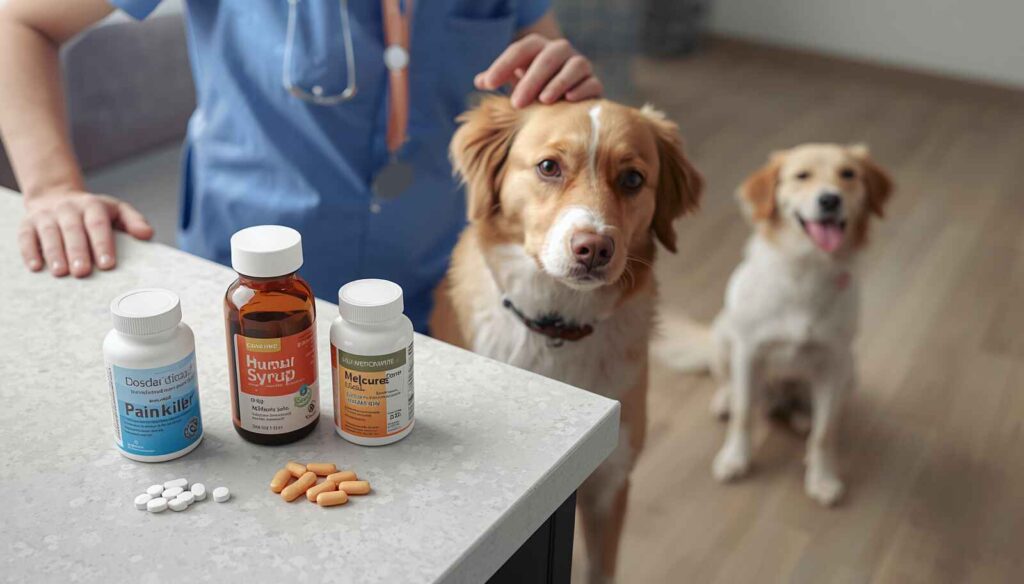
Do not give human medication unless your veterinarian specifically directs you to use a particular product for your dog.
This includes:
- Ibuprofen
- Naproxen
- Paracetamol or acetaminophen
- Aspirin
- Human cough syrups
- Cold-and-flu medicines
- Decongestants
- Throat sprays or lozenges
- Leftover antibiotics
- Unprescribed steroids or antihistamines
Some human products contain several active ingredients, making them particularly risky. Others may contain xylitol, alcohol, menthol, or essential oils that are unsafe for dogs.
Home remedies deserve caution too.
What About Honey?
Honey is sometimes mentioned as a way to soothe mild coughing or throat irritation, but it does not diagnose or treat the underlying cause. It will not remove a foreign object, treat an airway disorder, or replace veterinary care for an infection or painful swallowing.
Never force honey—or any food, water, or liquid medicine—into a dog that is struggling to swallow. Doing so may increase the risk of material entering the airway.
Extra caution is also appropriate for puppies, diabetic dogs, and immunocompromised dogs. If you’re unsure whether honey is suitable for your dog, ask your veterinarian first.
Common Mistakes Dog Owners Make
- Assuming every cough is kennel cough
- Treating “sore throat” as a complete diagnosis
- Waiting despite obvious breathing difficulty
- Forcing a painful or frightened dog’s mouth open
- Performing a blind finger sweep in the throat
- Pulling visible string or embedded material without veterinary guidance
- Inducing vomiting after suspected sharp-object or chemical exposure
- Giving human painkillers or cough medicine
- Using leftover antibiotics from another illness
- Forcing food, water, honey, or medicine into a dog that cannot swallow safely
- Continuing to use a neck collar when pressure clearly triggers coughing
- Taking a coughing dog to daycare, dog parks, or other communal dog settings
- Assuming a playful dog cannot have a significant medical problem
One of the easiest mistakes to make is waiting because a dog seems normal between episodes. The pattern matters. Repeated gagging after drinking, progressive voice changes, or sudden swallowing problems after chewing a stick still deserve attention even if your dog is wagging their tail five minutes later.
Monitor, Call Today, or Seek Emergency Care?
Monitoring at Home May Be Reasonable Only If
Brief monitoring may be appropriate when:
- Breathing is completely normal.
- Swallowing is normal.
- Symptoms are mild and occasional.
- Your dog remains bright and hydrated.
- They are still interested in food.
- There is no suspected foreign object, toxin, chemical exposure, or injury.
If symptoms persist, become more frequent, or new signs develop, contact your veterinarian rather than continuing to wait.
Contact Your Vet the Same Day If
Arrange veterinary advice for:
- Persistent coughing or gagging
- Repeated swallowing or gulping
- Refusal of food or water
- Pain or difficulty when swallowing
- A hoarse or noticeably changed bark
- Excessive drooling
- Fever or unusual lethargy
- Coughing after drinking
- Repeated regurgitation
- Symptoms following boarding, daycare, or close contact with coughing dogs
- Symptoms beginning after chewing sticks, bones, or damaged toys
- Progressive signs in a senior dog
Seek Emergency Veterinary Care Immediately If
Go to an emergency clinic for:
- Difficulty breathing
- Open-mouth breathing at rest
- Blue, grey, purple, or very pale gums
- Collapse or severe weakness
- Inability to swallow
- Severe or continuous choking behaviour
- Rapid facial, neck, or throat swelling
- Suspected airway obstruction
- Blood in the saliva with obvious distress
- Suspected caustic chemical or battery exposure
When breathing or swallowing is affected, do not wait to see whether the problem improves overnight.
How a Vet Investigates the Problem
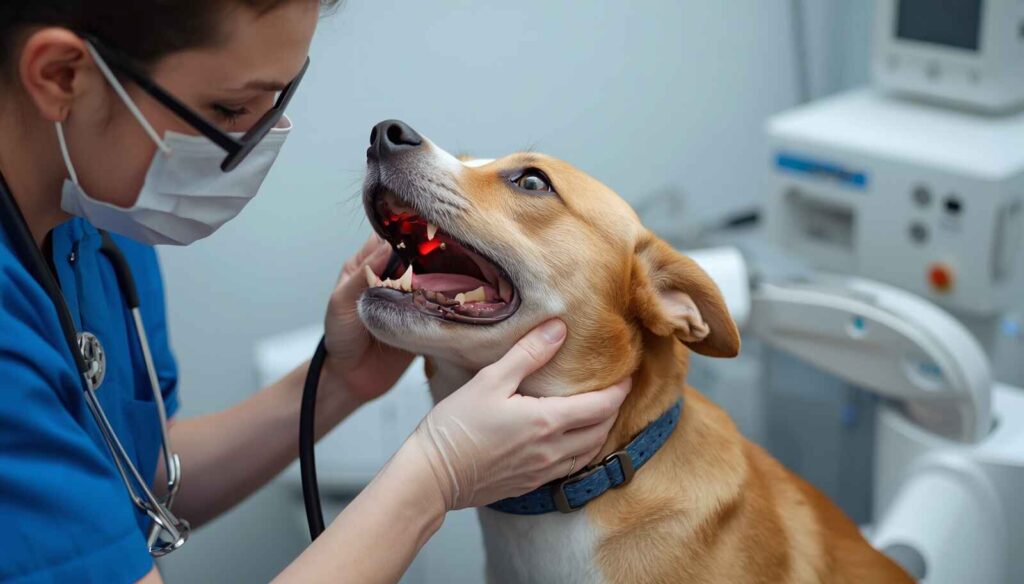
Your vet will usually begin with the history. Be ready to explain when the symptoms started, what triggers them, whether your dog has recently mixed with other dogs, and whether they have chewed bones, sticks, rawhide, or damaged toys.
The physical examination may include checking:
- Breathing effort and airway noise
- Gum colour
- Body temperature
- Hydration
- Mouth and teeth
- Neck and lymph nodes
- Heart and lung sounds
A proper examination of the back of the mouth, tonsils, pharynx, and larynx may require sedation. Most dogs will not tolerate a thorough examination of these deeper structures while awake, especially if the area is painful.
Depending on the suspected cause, your vet may recommend:
- Neck or chest X-rays
- Laryngoscopy
- Endoscopy
- Infectious-disease testing
- Blood tests
- Swabs or culture
- Cytology
- Biopsy of abnormal tissue
Chest imaging may also be needed when there is concern about material entering the lungs and causing aspiration pneumonia.
Treatment Depends on the Cause
- Infectious respiratory disease: rest, temporary separation from other dogs, and supportive care. Antibiotics are used only when a veterinarian considers bacterial infection or complications likely.
- Foreign object or injury: a sedated examination, removal of the object, wound treatment, and appropriate pain relief.
- Dental or oral disease: dental imaging, professional treatment, extraction where necessary, or treatment of an abscess.
- Reflux or oesophagitis: treatment of the underlying digestive problem, reflux-control medication, and appropriate diet changes.
- Laryngeal or structural disease: airway assessment, exercise and weight management where appropriate, harness use, and surgery in selected cases.
- Masses or persistent swelling: imaging, cytology or biopsy, and further treatment based on the diagnosis.
Vet Advice
Antibiotics are not an automatic treatment for a dog’s sore throat. They do not treat viral infections, reflux, foreign objects, mechanical irritation, laryngeal paralysis, or masses.
A normal-looking front of the mouth also does not rule out disease further back, and a dog may still breathe with a partial obstruction.
Persistent changes in your dog’s bark deserve attention, particularly when accompanied by coughing or noisy breathing. Most importantly, never force oral medication into a dog that cannot swallow safely.
Is a Dog’s Sore Throat Contagious?

It depends on the cause. Kennel cough and other infectious respiratory diseases can spread between dogs, particularly in close-contact settings such as boarding kennels, daycare, shelters, training classes, and dog parks. If an infectious cough is possible, keep your dog away from other dogs and call your vet clinic before arriving so staff can arrange appropriate precautions.
Throat discomfort caused by a foreign object, acid reflux, collar irritation, excessive barking, or dental disease is not contagious.
What about catching an illness from you? Human and canine respiratory infections are generally caused by different organisms, so human-to-dog transmission is not a common explanation for a dog’s sore throat. Canine throat inflammation also should not be assumed to be the same as human strep throat.
If you and your dog are both unwell, sensible hygiene—such as washing your hands before handling food or medication—and veterinary advice are appropriate.
Supporting Recovery After Veterinary Assessment
Follow your vet’s feeding and medication instructions closely. Offer soft food only if swallowing has been assessed as safe, and avoid bones, rawhide, sticks, and hard chews until your dog has recovered.
Keep the environment calm and smoke-free, avoid strong sprays and fragrances, and use a well-fitted harness instead of a neck collar if pressure triggers coughing.
Recovery is not always a straight line, but contact your vet if you notice:
- A worsening or more frequent cough
- New or increasing breathing noise
- Refusal of water
- Continued or excessive drooling
- Repeated regurgitation
- Difficulty swallowing
- Weight loss
- Blood in the saliva
- A progressively weaker or hoarser bark
- Symptoms returning after they appeared to improve
These signs may mean the original problem is not resolving or that a complication needs further investigation.
Preventing Future Throat and Airway Problems
- Discuss an appropriate vaccination schedule with your vet, especially if your dog regularly mixes with other dogs.
- Avoid close contact with coughing dogs and choose reputable boarding or daycare facilities with sensible illness policies.
- Discourage stick chewing, avoid cooked bones, and choose sturdy, appropriately sized toys.
- Replace damaged toys before pieces can break off and become lodged.
- Use a correctly fitted harness and work on reducing lead pulling.
- Keep your dog’s environment free from tobacco smoke, vaping aerosol, and irritating sprays.
- Maintain routine dental care and arrange a veterinary check for persistent bad breath, oral pain, or eating changes.
- Do not ignore repeated swallowing, progressive voice changes, or coughing after drinking.
Final Thoughts
Dogs can get sore or inflamed throats, but the symptoms owners notice—coughing, gagging, repeated swallowing, drooling, or a changed bark—can come from several different areas and many different conditions. That’s why guessing the cause from one symptom is rarely reliable.
Focus first on breathing and swallowing. If either is compromised, seek emergency veterinary care. For symptoms that are persistent, painful, sudden, or getting worse, contact your vet promptly rather than relying on home remedies.
If you can, record a short video of the episode and note what triggers it. Those simple observations may give your vet useful clues. And when it comes to treatment, leave the human medicine cabinet closed unless your veterinarian specifically tells you otherwise.
Frequently Asked Questions
1. Can dogs get sore throats without coughing?
Yes. A dog with throat discomfort may show repeated swallowing, drooling, lip licking, a changed bark, or reluctance to eat without coughing. Problems involving the mouth, pharynx, or oesophagus may be more noticeable during eating and swallowing than during breathing.
2. How can I tell if my dog is coughing or choking?
A coughing dog can usually move air and breathe between episodes, although severe respiratory disease can still cause distress. Choking tends to begin suddenly and may involve frantic pawing at the mouth, severe distress, and reduced or absent airflow.
If you’re unsure and your dog is struggling to breathe, treat it as an emergency.
3. Why does my dog keep swallowing and licking its lips?
Repeated swallowing and lip licking can occur with throat or oesophageal irritation, but they are not specific to a sore throat. Nausea, acid reflux, oral pain, and a foreign object can cause similar behaviour.
Watch for drooling, gagging, regurgitation, food refusal, or breathing changes, and contact your vet if the behaviour persists.
4. Why does my dog want food but struggle to eat it?
A dog may still feel hungry but find chewing or swallowing painful. They might approach the bowl, take food, hesitate, drop it, or repeatedly gulp after a bite.
This can occur with throat inflammation, dental disease, oral injuries, or oesophageal problems. Persistent difficulty eating deserves a veterinary assessment.
5. Why will my dog eat wet food but not kibble?
Wet food is softer and may be easier to chew and swallow than dry kibble. A sudden preference for soft food can therefore suggest dental, oral, or swallowing discomfort rather than simple pickiness.
It does not identify the exact cause, so arrange a veterinary check if the change persists or is accompanied by drooling, gagging, bad breath, or weight loss.
6. Can pulling on a collar hurt a dog’s throat?
Repeated pressure from pulling against a neck collar can irritate the neck and airway and may trigger coughing in some dogs. A well-fitted harness can reduce pressure on the neck, but it does not treat an underlying airway disorder.
If coughing continues after switching to a harness, have your dog assessed by a veterinarian.
7. Should a coughing dog be isolated from other dogs?
Yes, if an infectious respiratory disease such as kennel cough is possible. Keep your dog away from daycare, boarding facilities, dog parks, training classes, and unfamiliar dogs until you’ve received veterinary advice.
Call the clinic before your appointment and mention the cough so staff can arrange appropriate precautions and reduce exposure to other dogs.
#. Related Articles:
1. Why Is My Dog Panting at Night?