
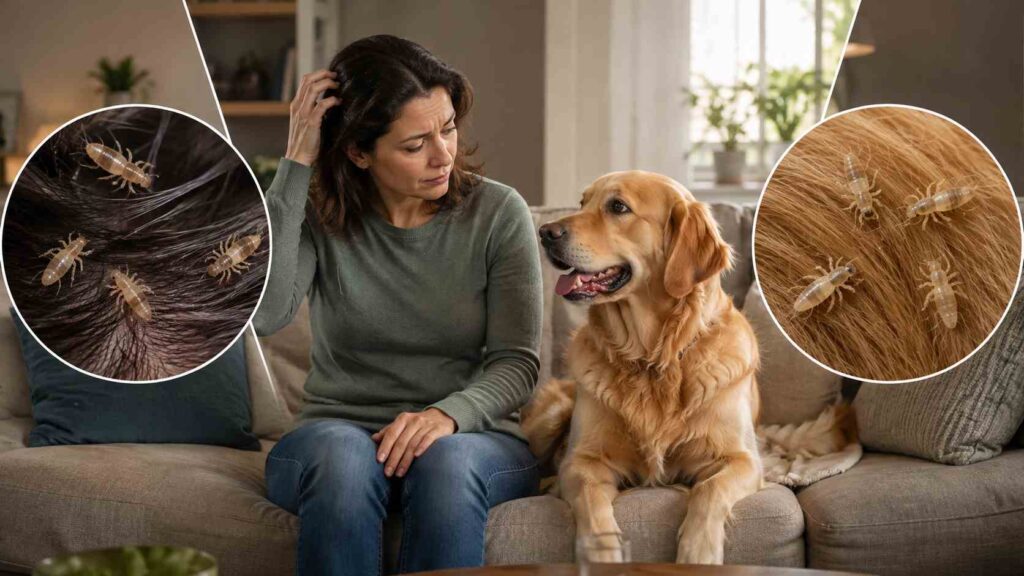
Someone in your house has just come home with a note from school: head lice. Cue the panic scan of the living room — and your dog, curled up on the sofa where the kids have been sitting all week, suddenly looks suspicious too.
Here’s the reassurance you need straight away: human head lice do not establish infestations on dogs. The CDC specifically states that dogs, cats, and other pets do not carry or spread human lice.
But that’s not quite the end of the story. Dogs can get lice — just canine lice rather than the head lice affecting your family. So if your dog has started scratching at the same time as a lice outbreak at home, don’t assume the two problems are connected. It makes more sense to check the dog’s coat for canine lice, fleas, skin irritation, or another cause of itching.
Quick answer: No, your dog won’t develop an infestation of human head lice, and your dog isn’t considered a source of head-lice reinfestation for your family. Dogs can, however, get their own host-adapted lice. If your dog is unusually itchy or you find insects or eggs attached to the coat, have the problem identified before treating it.
The Short Answer: Can Dogs Get Lice From Humans?
Human Head Lice and Dog Lice Need Different Hosts
Lice aren’t one generic parasite that moves successfully between any warm-blooded animal nearby. Different lice are adapted to particular hosts. Human head lice (Pediculus humanus capitis) are adapted to people, while dogs are affected by canine lice such as Trichodectes canis and Linognathus setosus.
That distinction matters because simply coming into contact with another species is not the same as being able to live, feed, reproduce, and maintain an infestation on it. This is why treating the family dog for human head lice is unnecessary.
Could Human Lice Land on Dog Fur Temporarily?
A human louse could conceivably end up on dog fur briefly through close physical contact, but that is very different from the dog becoming infested. Veterinary sources describe lice as generally host-specific, and the CDC does not consider pets carriers or spreaders of human head lice.
So you don’t need to inspect or medicate your dog simply because a child with head lice has cuddled, slept beside, or played with them.
Can Your Dog Carry Head Lice Back to Your Child?
No. Your dog is not considered a reservoir for human head lice. If head lice keep appearing in the household, focus on human-to-human transmission and whether the recommended treatment has been completed correctly rather than blaming the pet.
Head lice spread mainly through direct head-to-head contact. Depending on the treatment used, a second application may also be required because some products kill crawling lice but not all eggs.
Dogs Can Still Get Lice — Just Not Your Head Lice
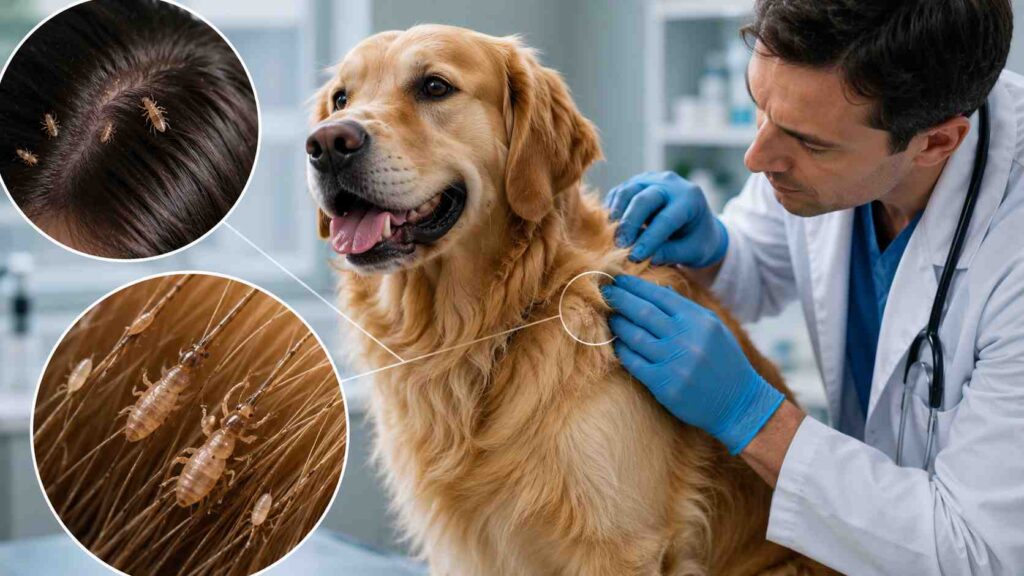
Dogs have their own lice, entirely separate from human head lice. Two important types are worth knowing about because they feed differently and heavy infestations can affect dogs in different ways.
Chewing Lice (Trichodectes canis)
Trichodectes canis is a chewing louse found on dogs. It feeds at the surface of the skin rather than sucking blood. Infested dogs may develop scratching, coat changes, and skin irritation, particularly when parasite numbers are high.
There is another reason veterinarians recognize this species: Trichodectes canis can act as an intermediate host for the tapeworm Dipylidium caninum. That doesn’t mean every dog with lice has tapeworms, but it is one reason a genuine lice infestation deserves appropriate parasite management rather than a DIY remedy.
Sucking Lice (Linognathus setosus)
Linognathus setosus feeds on blood. Dogs with lice may experience itching, self-trauma, and a roughened coat, but a very heavy sucking-louse infestation can become more medically significant.
Severe infestations may contribute to anaemia, with debilitated or poorly conditioned dogs potentially at greater risk. Pale gums, unusual weakness, marked lethargy, or a heavily parasitized coat are reasons to contact a veterinarian rather than trying repeated home treatments.
Why the Difference Matters
Two dogs with lice may both appear itchy, yet the underlying concerns are not necessarily identical. Chewing lice primarily irritate the skin and coat, while sucking lice take blood and can become more serious when infestations are heavy.
It’s also easy for an owner to mistake lice, flea dirt, dandruff, or another skin problem for one another. A veterinary examination can identify what is actually present and help ensure the treatment is appropriate for the dog’s age, health, and parasite involved. If your dog begins scratching during a human head-lice outbreak, treat the timing as a clue to investigate — not proof that your dog caught lice from a person.
Your Dog Is Scratching During a Lice Outbreak at Home — What Now?

Step 1: Don’t Assume the Two Problems Are Connected
It’s a natural connection to make, but a dog that starts scratching during a human head-lice outbreak hasn’t necessarily caught anything from the family. Human head lice don’t establish infestations on dogs, so the itching should be investigated as a separate problem.
More likely causes include fleas, mites, allergies, dry or irritated skin, bacterial or yeast skin infections, or contact irritation from something new, such as shampoo or bedding. Stress can also make some dogs more restless or prone to scratching, but persistent itching deserves a physical cause to be ruled out first.
Step 2: Check the Coat Under Bright Light
Part the fur in good natural light and inspect all the way down to the skin. Pay particular attention to the head and neck, along the back, and around the tail, while also checking any areas your dog repeatedly scratches or chews.
Look for:
- Moving insects
- Small pale eggs firmly attached to individual hairs
- Dark flea dirt that resembles ground pepper
- Red or inflamed skin
- Scabs or scratch wounds
- Areas of thinning or missing hair
Don’t diagnose lice from white specks alone. Skin flakes, dried debris, and other material can easily be mistaken for nits.
Step 3: Think About Recent Exposure
If you find something suspicious, consider where your dog has been recently. Contact with an infested dog is the usual route for canine lice, while contaminated grooming equipment can also spread them.
Recent exposure might include:
- Boarding kennels or doggy daycare
- Grooming facilities
- Shelters or rescue centres
- Close contact with unfamiliar dogs
- Multi-dog households
- Shared brushes or combs
This exposure history is much more relevant to suspected canine lice than whether someone in your household currently has human head lice.
Checklist: Could My Dog Actually Have Lice?
☐ Persistent scratching or chewing at the coat
☐ Visible insects moving through the fur
☐ Tiny eggs firmly attached to individual hairs
☐ Rough or dull-looking coat
☐ Patchy hair loss
☐ Red or irritated skin
☐ Scabs or scratch wounds
☐ Noticeable restlessness
☐ Recent close contact with unfamiliar dogs
☐ Shared brushes, combs, or grooming tools
☐ Recent kennel, boarding, shelter, or rescue exposure
☐ Other dogs in the household showing similar signs
If several of these apply — particularly if you can see insects or attached eggs — arrange a veterinary check rather than treating the dog based on appearance alone.
Are Those White Specks Really Lice Eggs?
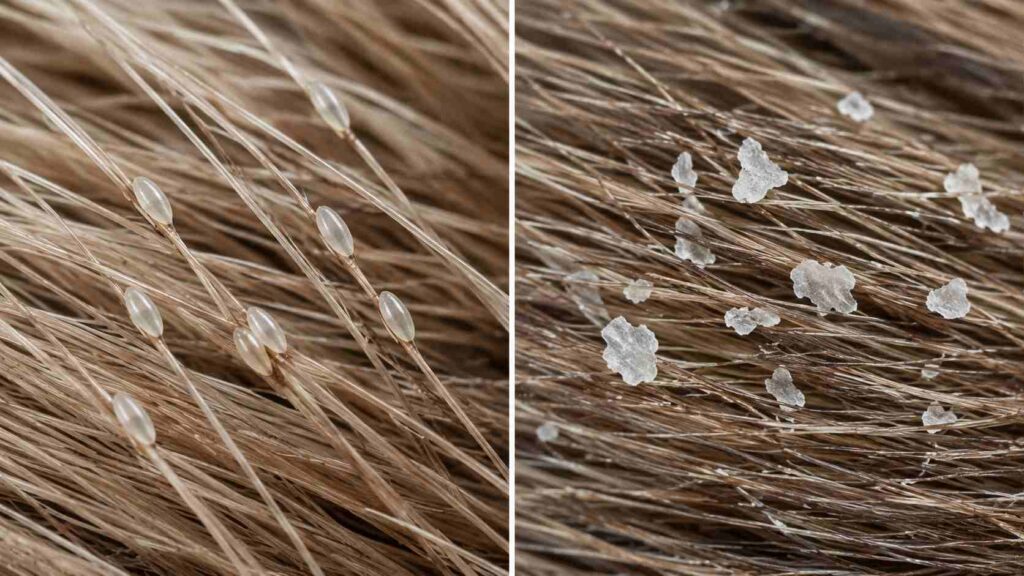
What Lice Eggs Actually Look Like
Lice eggs, or nits, are attached firmly to individual hair shafts rather than simply resting on the coat. They can therefore be difficult to remove with ordinary brushing.
Seeing firmly attached particles makes lice worth considering, but appearance alone isn’t always enough for a reliable diagnosis. A veterinarian can examine the coat and parasite closely if you’re unsure.
What Dandruff Usually Looks Like
Dandruff is generally much looser. The flakes sit on or between the hairs and tend to move or come away during brushing rather than remaining firmly attached to one hair shaft.
Persistent flaking shouldn’t automatically be dismissed as harmless dandruff, though. Dryness, allergies, parasites, and other skin conditions can all produce scaling.
Why Fleas Confuse the Picture Too
Adult fleas move quickly and can disappear into the coat before you get a good look. Owners often notice flea dirt instead — tiny dark specks that resemble ground pepper.
One useful home check is to place suspicious dark debris on damp white paper or tissue. Flea dirt may dissolve into a reddish-brown halo because it contains digested blood. This can support suspicion of fleas, but it isn’t a substitute for veterinary diagnosis when your dog has significant skin problems.
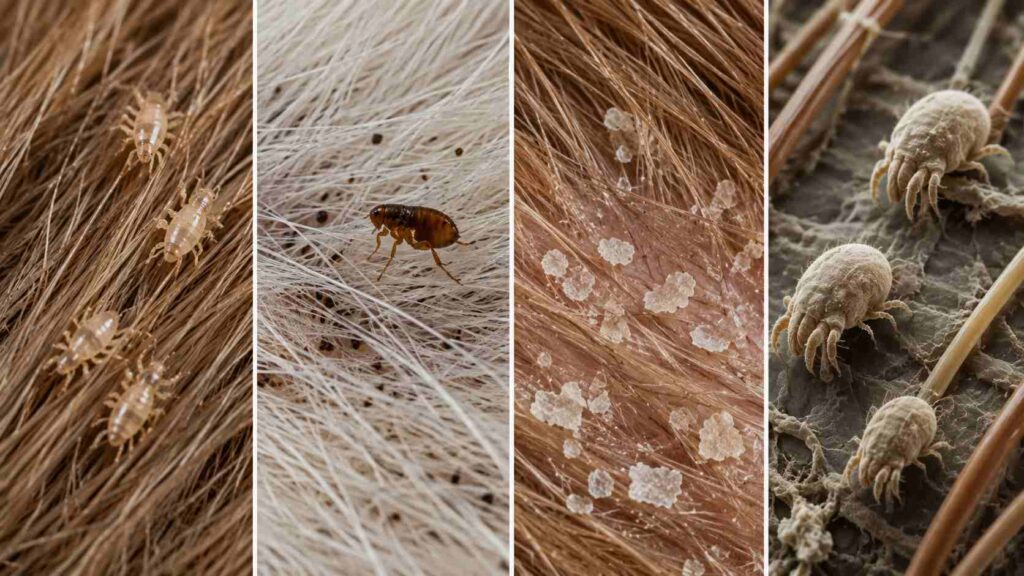
Dog Lice vs Fleas vs Dandruff vs Mites
| Feature | Dog Lice | Fleas | Dandruff | Mites |
|---|---|---|---|---|
| Parasite? | Yes | Yes | No | Yes |
| Usually visible? | Often with close inspection | Adults may be visible but move quickly | Yes, as flakes | Many are difficult to see unaided |
| Attached to hair shaft? | Nits can be firmly attached | Flea eggs are not cemented to hairs | No | Depends on the species |
| Typical clue | Attached nits, itching, coat changes | Fleas or dark flea dirt, itching | Loose skin flakes | Itching, inflammation or other skin changes |
| Hair loss possible? | Yes | Yes | Possible if underlying skin disease causes itching | Yes |
| Can spread between dogs? | Yes | Yes | No | Depends on the mite |
| Vet assessment useful? | Yes | Yes, especially with significant symptoms | If persistent, severe, or recurrent | Usually |
How Dogs Actually Get Canine Lice
Canine lice spread mainly through close contact with an infested dog. Kennels, shelters, rescue environments, boarding facilities, and crowded multi-dog homes can provide opportunities for transmission. Brushes, combs, and other contaminated grooming equipment can also contribute to spread.
Puppies, elderly dogs, and dogs that are debilitated or in poor health may be more severely affected by an infestation. Finding lice doesn’t automatically mean a dog or household is dirty, either; exposure to another infested dog can be enough.
If one dog in a multi-dog household is confirmed to have lice, tell your veterinarian about the other dogs as well. Close-contact animals may need to be checked and, depending on the product and circumstances, treated appropriately.
What a Lice Infestation Can Actually Do to a Dog
In mild to moderate infestations, you may notice itching, chewing at the coat, skin irritation, a rough coat, or localised hair loss. Persistent scratching can damage the skin and create an opportunity for secondary infection.
Heavy infestations deserve more attention. Sucking lice feed on blood, so a substantial burden can contribute to anaemia, particularly in vulnerable dogs. Pale gums, weakness, unusual tiredness, extensive skin damage, or a heavily infested puppy are reasons to contact a veterinarian promptly.
There’s another less obvious connection worth knowing. Trichodectes canis, a chewing louse of dogs, can serve as an intermediate host for the tapeworm Dipylidium caninum. A dog can become infected if it swallows an infected louse while grooming.
That doesn’t mean every dog with lice also has tapeworms. It does mean that a confirmed infestation is worth managing properly rather than repeatedly trying shampoos or home remedies without knowing exactly what you’re treating.
When Your Dog Needs Veterinary Attention
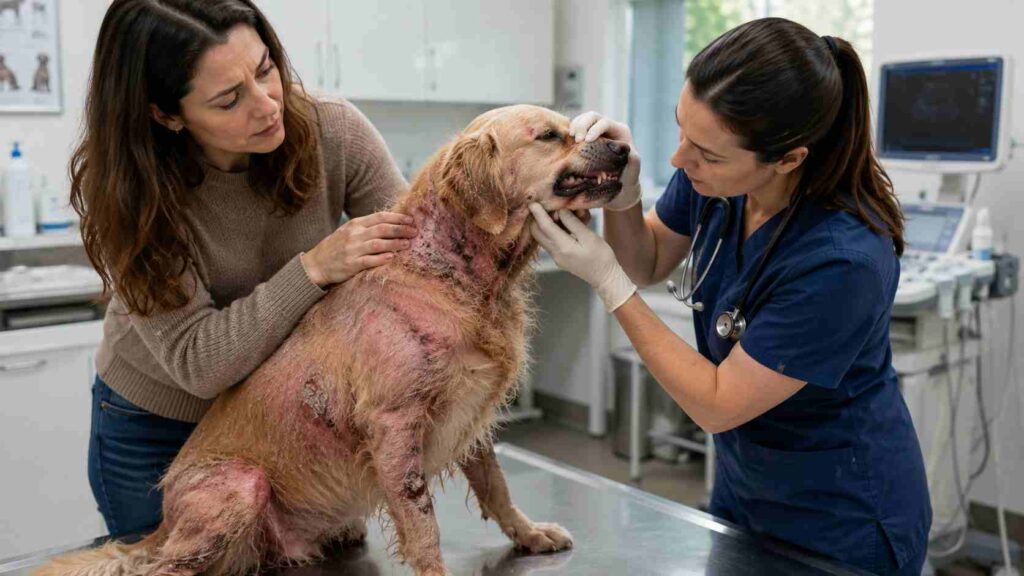
Book a vet visit if you notice any of the following:
- Severe or persistent scratching that isn’t settling
- Large patches of hair loss
- Bleeding, open sores, or widespread skin inflammation
- Visible parasites you can’t confidently identify
- A puppy, elderly dog, or unwell dog with a heavy infestation
- Pale gums, weakness, or lethargy — possible signs of anaemia
- Symptoms continuing despite parasite treatment
- More than one dog in the household developing similar signs
Pale gums, marked weakness, or a heavily infested puppy deserve prompt veterinary attention, particularly if sucking lice are suspected because these parasites feed on blood.
Never Treat Your Dog With Human Head-Lice Products
This deserves a clear warning because using the wrong parasite product can cause more harm than the lice themselves.
- Don’t use human head-lice shampoo on your dog unless a veterinarian specifically tells you to.
- Don’t apply household insecticides directly to your dog.
- Don’t guess doses based on body weight.
- Don’t assume a product intended for cats is safe for dogs, or vice versa.
- Don’t repeatedly reapply treatment because you can still see insects or eggs.
- Don’t rely on essential oils as a substitute for proven veterinary treatment.
- Don’t assume every flea preventive also treats lice — parasite coverage varies by product.
Approved products, formulations, age restrictions, and parasite claims can differ between the United States, United Kingdom, Canada, and Australia. Use a product specifically labelled for your dog’s species, age, weight, and the parasite being treated, and follow veterinary or label directions exactly.
If Canine Lice Are Confirmed: What Happens Next
Your veterinarian can recommend an appropriate treatment based on your dog’s age, weight, health, and the product options available where you live. Treatment may involve a veterinary antiparasitic shampoo, spray, spot-on, or another licensed product.
Other dogs that have had close contact with the affected dog should also be checked. Depending on the product and level of exposure, your veterinarian may recommend treating in-contact dogs at the same time even if they aren’t yet showing obvious symptoms.
Wash or clean items that regularly contact the dog’s coat, particularly:
- Bedding
- Brushes and combs
- Grooming equipment
- Collars or harnesses, where appropriate
Lice eggs can be harder to eliminate than mobile lice, so some treatment plans require repeat treatment or a follow-up check to deal with newly hatched parasites. The timing depends on the product being used; don’t repeat a dose early or stop treatment simply because the scratching has improved.
What About Your Home, Bedding, and Furniture?

If only a family member has human head lice, your dog does not need lice treatment. Follow the recommended head-lice guidance for the affected person rather than treating the pet “just in case.”
If your dog has confirmed canine lice, focus your cleaning on the dog’s immediate environment and frequently used items. Wash bedding and clean grooming tools and other objects that have had close contact with the coat.
There’s generally no reason to fumigate the entire home for canine lice. They depend heavily on their host and survive away from a dog for only a limited period, so targeted cleaning alongside proper treatment is more useful than spraying every surface.
Three Real-Life Scenarios
Scenario A: A Child Has Head Lice, but the Dog Has No Symptoms
The dog doesn’t need head-lice treatment. Human head lice do not establish infestations on dogs, so concentrate on treating the affected family member according to appropriate human head-lice guidance.
Scenario B: A Child Has Head Lice, and the Dog Starts Scratching
Treat these as two separate problems rather than assuming one caused the other. Check the dog for fleas, canine lice, mites, skin irritation, allergies, or another dermatological problem.
If the scratching persists or the skin looks inflamed, let your veterinarian examine the dog.
Scenario C: A Newly Adopted Rescue Dog Has White Specks in Its Coat
Don’t automatically assume the specks are lice eggs. Dandruff, skin debris, flea dirt, and nits can look similar at first glance.
Have suspicious parasites properly identified before treating the dog, and check other dogs in the household if canine lice are confirmed.
Common Mistakes to Avoid

- Treating the dog because a family member has head lice
- Assuming every white speck is a nit
- Confusing lice with fleas
- Confusing nits with dandruff
- Using human lice shampoo on a dog
- Treating itching without identifying the cause
- Assuming canine lice normally infest people
- Assuming cats and dogs share the same lice
- Ignoring other dogs that have had close contact with an affected dog
- Reapplying parasite medication more often than directed
- Using essential oils or household pesticides as DIY treatments
- Assuming lice automatically mean poor hygiene or poor ownership
- Ignoring pale gums, weakness, severe skin damage, or a heavy infestation
- Fumigating the whole house unnecessarily
- Assuming every flea preventive also treats lice
The Bottom Line
Human head lice and canine lice are different, host-adapted parasites. Your dog won’t develop a human head-lice infestation, and canine lice don’t establish normal infestations on people.
If your dog starts scratching during a household head-lice outbreak, don’t treat the timing as proof of transmission. Check the coat for fleas, canine lice, attached nits, skin irritation, or other changes, and involve your veterinarian if the cause isn’t obvious.
That approach is safer — and far more useful — than treating your dog for a human parasite it doesn’t have.
Frequently Asked Questions
1.Can my dog carry head lice on its fur and pass them back to my child?
Dogs are not considered a source or reservoir for human head lice. Human head lice are adapted to people, and pets do not maintain a head-lice infestation that can keep reinfecting a family.
If head lice repeatedly return, follow human head-lice guidance and consider ongoing person-to-person exposure or whether the recommended treatment process has been completed correctly.
2.Should my child stop cuddling the dog while they have head lice?
You don’t need to separate a child from the family dog for the purpose of preventing the dog from becoming infested. Human head lice do not establish themselves on dogs.
Continue following the appropriate treatment and household recommendations for the person who has head lice.
3.Can indoor-only dogs get lice?
Yes. An indoor dog can still acquire canine lice through contact with an infested dog or contaminated grooming equipment.
Possible exposures include grooming appointments, boarding, newly introduced dogs, rescue environments, or shared brushes and combs.
4.Can puppies get lice, and is it more serious for them?
Yes. Puppies can develop canine lice, and a heavy infestation deserves particular attention.
Sucking lice feed on blood, so a substantial parasite burden can contribute to anaemia, especially in young, debilitated, or otherwise vulnerable dogs. Contact your veterinarian promptly if a puppy has numerous visible parasites, pale gums, weakness, or significant skin damage.
5.How long can dog lice survive away from a dog on bedding or brushes?
Canine lice are highly dependent on their host and generally survive away from a dog for only a limited period. Even so, bedding, brushes, combs, and other frequently used items should be cleaned when an infestation is confirmed.
Targeted cleaning is usually more useful than aggressive whole-house fumigation.
6.Should every dog in the household be treated if one is diagnosed with lice?
Every dog that has had close contact with the affected animal should at least be checked. Your veterinarian may recommend treating in-contact dogs at the same time, depending on their exposure and the parasite product being used.
Don’t automatically give every pet the same medication, particularly if your household includes different species, ages, or health conditions.
7.Why is my dog still scratching even though I can’t find any parasites?
Not every itchy dog has visible parasites. Flea allergy, mites, environmental or food-related allergies, dry or irritated skin, bacterial infection, yeast overgrowth, and other skin conditions can all cause scratching.
If the itching is persistent, worsening, causing hair loss, or damaging the skin, a veterinary examination is the safest way to identify the underlying cause.
#. Related Articles: