
You’ve just sat down with a plate of grilled cod. Your dog is parked next to your chair, eyes locked on the fork, and you’re wondering whether a flake or two is okay.
Usually, yes. Plain, thoroughly cooked, boneless fish can be an occasional extra for most healthy dogs. But “fish” is too broad a word for a simple yes or no. The species, how it was prepared, what else is in the dish, whether any bones remain, how much your dog eats and your dog’s health all change the answer.
This guide walks through those questions in the order you’d actually ask them at the dinner table. If your dog has already eaten fish, skip straight to that section rather than assuming the fish itself is the only thing that matters.
Can Dogs Eat Fish? Start With These Six Questions

Run through these before any fish goes near the bowl.
What Kind of Fish Is It?
Fish species differ in fat content, nutrients and mercury exposure. As a general rule, smaller, shorter-lived fish tend to accumulate less mercury than large, long-lived predatory fish.
That doesn’t mean one accidental bite of a higher-mercury fish is automatically an emergency. Mercury is more relevant when considering which fish to feed repeatedly and how often, rather than treating every small exposure as poisoning.
If you can’t identify the fish, don’t guess. Unknown fish from a buffet, takeaway or barbecue is better left off your dog’s menu.
Is It Raw, Cooked or Processed?
Plain, thoroughly cooked fish is the most straightforward option for an occasional treat. Raw or undercooked fish can expose dogs to parasites and harmful bacteria, while smoked, fried, brined, battered and sauced fish introduce different concerns such as salt, fat and added ingredients.
Are There Any Bones?
Even fillets sold as boneless can contain small pin bones. Check the fish carefully before offering any to your dog rather than assuming a fillet is completely bone-free.
Fish bones deserve particular caution because their small, sharp shape can cause problems in the mouth, throat, oesophagus or farther along the digestive tract.
What Else Is in the Dish?
Sometimes the fish isn’t the most concerning part of the meal.
Check for onion, garlic, heavy seasoning, salty sauces, butter, cream, cooking oil, batter and marinades. Onion and garlic are unsafe for dogs, while rich or fatty preparations can cause digestive upset and may be particularly unsuitable for dogs that need a fat-restricted diet.
Check the full recipe or ingredient label rather than simply removing visible pieces of seasoning.
How Much, and How Often?
A few flakes of plain fish are very different from an entire fillet, and an occasional treat is different from feeding the same fish every day.
The appropriate amount depends on your dog’s size, body condition, usual diet, the type of fish and how it was prepared. Fish offered as an extra also counts alongside all the other treats, chews and table scraps your dog receives.
Does Your Dog Have a Dietary or Medical Restriction?
Don’t assume that a generally dog-safe food is suitable for every dog.
Extra fish may be inappropriate for dogs on prescription or elimination diets, and additional care may be needed for dogs with a history of pancreatitis or fat intolerance, gastrointestinal problems, excess weight or known food reactions.
If your dog is eating a veterinary diet for a medical or diagnostic reason, check with your vet before adding fish or other extras.
7 Checks Before Fish Goes Into the Bowl
- Identify the type of fish.
- Make sure it’s thoroughly cooked.
- Check carefully for bones.
- Check the full ingredient list and seasonings.
- Consider how fatty or salty the preparation is.
- Keep the portion appropriate for your dog and their normal diet.
- Make sure it doesn’t interfere with a veterinary-prescribed or elimination diet.
Your Dog Already Ate Fish: Change the Question

Plenty of owners arrive here after the fish has already disappeared from the plate. At that point, the useful question isn’t simply “Can dogs eat fish?” It’s what fish your dog ate, how it was prepared, how much they ate and whether anything else was in it.
First, Work Out What Was Actually Eaten
Try to establish:
- The fish species, if known
- Whether it was raw, undercooked or fully cooked
- Whether bones or skin were present
- Any seasoning, sauce, marinade, batter or other ingredients
- Roughly how much your dog ate
- How long ago it happened
- Your dog’s approximate weight
- Any symptoms you’ve noticed
Keep the packaging, recipe or ingredient list if you have it. If the food came from a restaurant or takeaway, save the menu information where possible. These details can help your vet assess the exposure more accurately.
When a Small Amount May Be Lower Concern
For example, suppose a healthy adult dog steals a small piece of plain, fully cooked, boneless cod and remains completely normal. That is a very different situation from a dog swallowing several sharp bones or eating a large portion of heavily seasoned, fatty fish.
For a small amount of plain cooked fish with no concerning ingredients or bones, monitor your dog and continue their usual routine unless your vet has given different dietary instructions.
Situations That Need More Caution
Contact your vet for case-specific advice if you’re unsure about the exposure, particularly when:
- The fish was raw or undercooked.
- You cannot identify what was eaten.
- Sharp or numerous bones may have been swallowed.
- The dish contained onion, garlic or another potentially harmful ingredient.
- Your dog ate a large amount relative to their size.
- The fish was heavily fried, fatty, salty or seasoned.
- Your dog is on an elimination or prescription diet.
- Your dog has a relevant medical condition such as previous pancreatitis.
A useful rule is to assess the whole dish, not just the fish. A dog that steals battered takeaway fish may face a very different set of concerns from one given a small piece of plain baked fish.
Symptoms That Change the Situation

Seek veterinary advice promptly if your dog develops:
- Gagging, retching or repeated coughing
- Trouble swallowing or excessive drooling
- Difficulty breathing
- Repeated vomiting
- Obvious abdominal pain or a tense abdomen
- Blood in vomit or stool
- Marked lethargy, weakness or other significant changes in behaviour
Difficulty breathing, choking or severe distress requires urgent veterinary attention.
Symptoms aren’t the only reason to call. If you know your dog swallowed a sharp fish bone or ate a potentially toxic ingredient, don’t wait for signs to appear before asking your vet what to do.
Fish Bones: Why They’re a Special Case
Fish bones can be small, sharp and difficult to spot. Depending on their size and where they travel, they may cause injury in the mouth or throat, become lodged in the oesophagus, or cause obstruction or damage farther along the gastrointestinal tract.
A dog that suddenly gags, drools, repeatedly swallows, paws at the mouth or has difficulty swallowing after eating fish needs veterinary attention. Breathing difficulty is an emergency.
Warning: Suspected Fish Bone
If you think your dog swallowed a sharp fish bone, don’t try to make them vomit or use food to force the bone down. A sharp object can cause additional injury as it moves. Don’t reach deep into your dog’s throat to retrieve something you cannot easily and safely remove.
Call your veterinarian and explain what was eaten, the approximate size and number of bones, when it happened, your dog’s size and whether any symptoms are present. Follow their advice on whether your dog needs to be examined.
Not All Fish Belong in the Same “Safe” List
Fish That Usually Work as Occasional Plain Treats
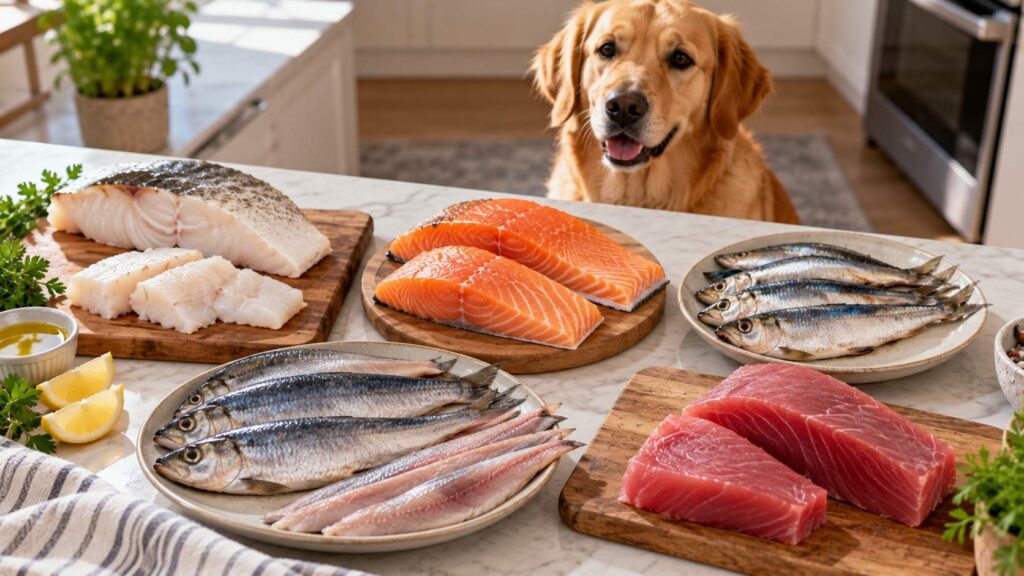
Cod, haddock, whiting, fully cooked salmon, sardines and herring can all be reasonable occasional treats for many healthy dogs when they’re plain, appropriately prepared and free of bones.
“Usually fine” still depends on preparation and portion. A suitable species doesn’t make every serving safe: smoked herring, salmon in garlic butter and plain poached cod are very different foods from a dog’s point of view.
Fish Where Frequency Matters More
Tuna is the classic example. As a larger predatory fish, tuna can contain more mercury than many smaller fish. A healthy dog stealing a small piece once is a different situation from being given tuna routinely, so an occasional nibble isn’t a reason to assume mercury poisoning.
Large predatory fish such as swordfish and shark are poor choices for regular treats because of their greater mercury exposure. For routine extras, there is little reason to choose them when more suitable alternatives are available.
What If You Can’t Identify the Fish?
Don’t guess. Keep the packaging, menu description or a photo if available, and ask the restaurant or whoever prepared the food if they know the species and ingredients.
If your dog ate a large amount of unidentified fish, swallowed possible bones, ate it raw or develops concerning symptoms, contact your vet with whatever information you have.
Fish Choices at a Glance
| Fish | Main consideration | Best way to serve | Watch out for |
|---|---|---|---|
| Cod, haddock, whiting | Lean white fish | Plain, cooked, boneless | Bones, seasoning |
| Salmon | Oily fish; preparation matters | Fully cooked, plain, boneless | Raw-fish risks, rich additions |
| Sardines | Small fish; product choice matters | Plain; check canned ingredients | Salt, oil, sauces |
| Herring | Oily fish | Plain, cooked, boneless | Pickling, curing, salt |
| Tuna | Greater mercury concern with repeated feeding | If offered, keep it occasional and plain | Frequency, preparation |
| Swordfish, shark | Higher-mercury predatory fish | Better not chosen as treats | Repeated exposure |
The Same Fish Can Become a Very Different Meal
Plain Cooked Fish
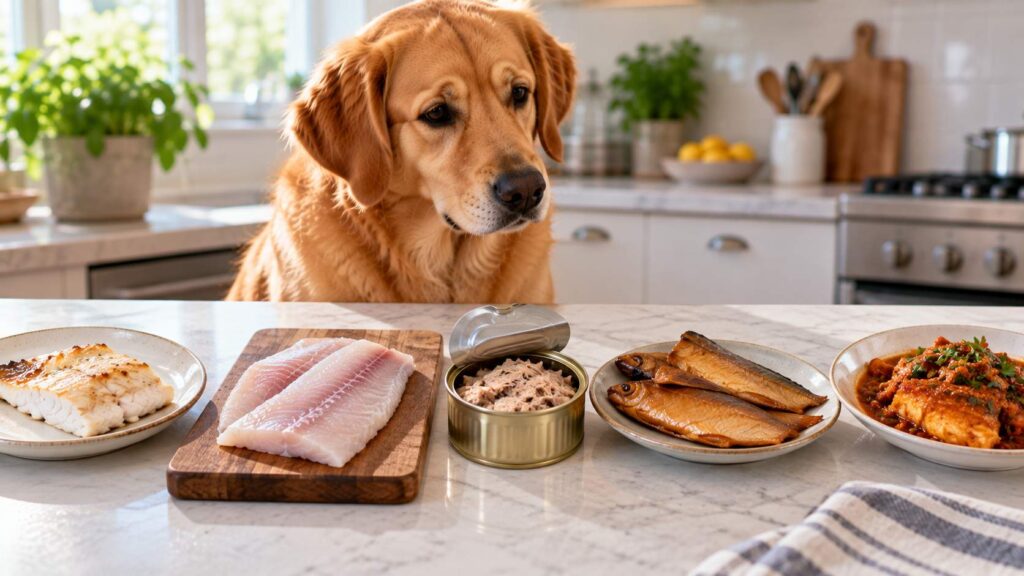
This is the simplest option. Bake, steam or poach the fish without salt, butter, garlic, onion, sauces or seasoning. Cook it thoroughly, let it cool, check carefully for bones and break it into pieces appropriate for your dog’s size.
There’s no need to make your dog’s portion complicated. Plain is the advantage.
Raw or Undercooked Fish
Raw fish can expose dogs to parasites and harmful bacteria, and handling raw animal products also creates a hygiene concern for people in the household.
There are some fish-specific risks worth knowing about. Salmon poisoning disease can occur when dogs eat raw or undercooked infected salmonids from affected areas of the Pacific Northwest. Despite its name, this is an infectious disease involving Neorickettsia bacteria carried by a parasitic fluke, not mercury or a “poison” naturally present in salmon.
Repeated feeding of certain raw fish creates another concern: some contain thiaminase, an enzyme that destroys thiamine (vitamin B1). The Merck Veterinary Manual notes that thiaminases occur in raw fish and are destroyed by cooking. This is mainly a dietary concern with inappropriate repeated raw-fish feeding, not a reason to panic over one accidental bite.
Freezing should not be treated as a universal guarantee that raw fish is safe. Parasite and bacterial risks are separate issues, so cooking remains the more straightforward choice for owners who simply want to share some fish.
Canned Fish
Canned fish can be convenient, but read the actual label rather than relying on the picture on the tin.
A plain product packed in water or spring water is generally the simplest option. Oil adds extra fat and calories, while brine can add substantial salt. Flavoured products may contain sauces, seasonings, onion or garlic.
Drain the fish where appropriate and keep the portion small. If the ingredient list is complicated, choose something simpler.
Smoked and Dried Fish
Smoked, cured and many dried fish products can be high in salt. Cold-smoked fish also hasn’t undergone the same cooking process as thoroughly cooked fish.
Rather than trying to calculate whether a salty human product is “safe enough,” choose a small piece of plain cooked fish instead.
Fried, Breaded and Battered Fish
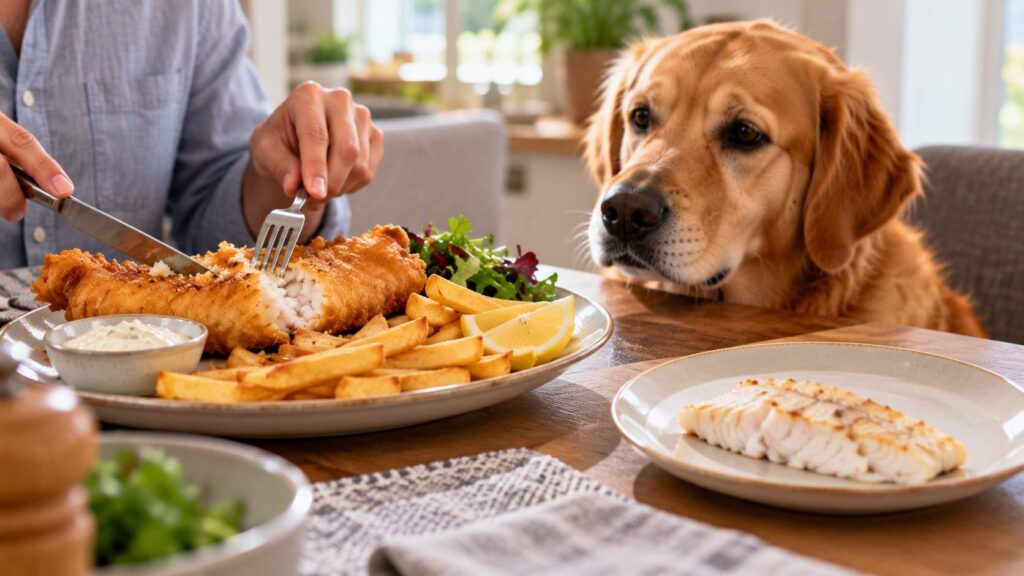
The problem here is often everything surrounding the fish.
Frying adds fat, while batter or breadcrumbs may add salt and seasonings. Rich, fatty foods are particularly inappropriate for dogs that require fat restriction or have a history of pancreatitis.
If you’re having fish and chips, the practical solution isn’t to peel off some batter after cooking. Set aside a small plain piece before seasoning or frying it, or give your dog their usual treat instead.
Fish Cooked in Human Sauces
Garlic butter, creamy sauces, curries, stocks and marinades can contain ingredients that make an otherwise suitable fish a poor choice.
Pay particular attention to onion, garlic, leeks, shallots and chives. WSAVA includes these among human-food ingredients that are unsafe for dogs.
Check the recipe or ingredient list rather than relying on appearance. Removing a visible piece of onion doesn’t remove onion or garlic already cooked into a sauce.
Preparation Changes the Answer
| Form | Main issue | Good for an occasional treat? |
|---|---|---|
| Plain, thoroughly cooked | Bones, portion size | Generally the simplest option |
| Raw or undercooked | Parasites, bacteria, fish-specific risks | Higher concern |
| Canned in water | Salt and other ingredients vary | Product dependent |
| Canned in oil | Extra fat and calories | Less ideal |
| Brined | Salt | Less ideal |
| Smoked or cured | Salt, processing; some products aren’t fully cooked | Less ideal |
| Fried or battered | Fat, salt, seasoning | Poor choice |
| Sauced | Hidden ingredients | Depends on the full recipe |
Fish Has Nutritional Value, but Don’t Oversell It
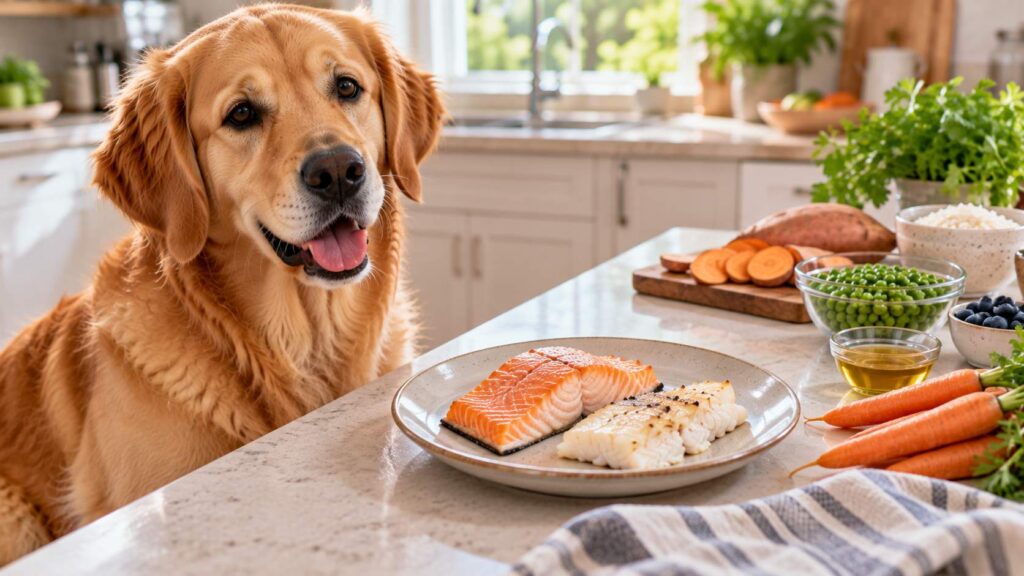
Fish provides protein and other nutrients, while oily fish can supply the omega-3 fatty acids EPA and DHA. But the nutritional profile varies considerably by species and serving.
A piece of salmon isn’t the same thing as a measured fish-oil supplement, and feeding fish shouldn’t be presented as a treatment for itchy skin, arthritis or another medical condition. If your dog has a condition for which omega-3 supplementation might be useful, ask your vet about an appropriate product and dose rather than trying to achieve a therapeutic intake with table scraps.
The practical takeaway is simple: fish can be nutritious without needing to become a large or frequent part of the diet.
How Much Fish Can a Dog Have?
Think in Treat Calories, Not Spoonfuls
Fish offered alongside your dog’s normal food counts as an extra. WSAVA advises that treats should provide no more than about 10% of an average healthy dog’s daily calorie intake, with the main diet providing the rest.
That doesn’t mean 10% of the diet should be fish. The allowance includes all extras—fish, biscuits, training rewards, chews and table scraps.
There’s no useful universal serving size in tablespoons or grams. A dog’s calorie needs vary with body size, body condition, activity and other factors, and the calorie content of different fish preparations also varies.
For an occasional treat, think small addition, not second meal.
First-Time Feeding
Start with a small amount of plain cooked fish. If your dog develops vomiting, diarrhoea, itching or another unexpected reaction, stop offering it and seek veterinary advice if symptoms are significant, persistent or worsening.
Introduce one unfamiliar food at a time. If several new foods are offered together and your dog becomes unwell, it becomes much harder to identify what caused the problem.
Can Dogs Eat Fish Every Day?
It depends what “fish every day” actually means:
- Plain fish as an extra: There’s usually no need to add it daily, and frequent extras can displace calories from the dog’s balanced diet.
- A complete commercial fish-based dog food: This is different because a food labelled as nutritionally complete is formulated to provide the nutrients dogs need in appropriate proportions.
- A homemade fish-based diet: Don’t assume fish plus a few other ingredients creates a balanced diet. Merck notes that diets made from a limited selection of foods can be nutritionally inadequate and that properly formulated homemade diets require careful nutritional planning.
If you want fish to form a substantial part of a long-term homemade diet, work with a veterinarian with appropriate nutrition expertise rather than improvising the recipe.
Treat, Topper or Whole Diet?
These aren’t interchangeable.
A treat is a small extra. A topper still adds calories and nutrients on top of the normal food. A complete fish-based dog food is formulated to function as the diet itself. A homemade bowl built mainly around fish is a fourth category and needs proper formulation if it’s going to replace a complete diet.
The common mistake is assuming that because fish is nutritious, more of it automatically makes a dog’s diet healthier. What matters is the balance of the whole diet, not the reputation of one ingredient.
Dogs That Need a More Individual Answer
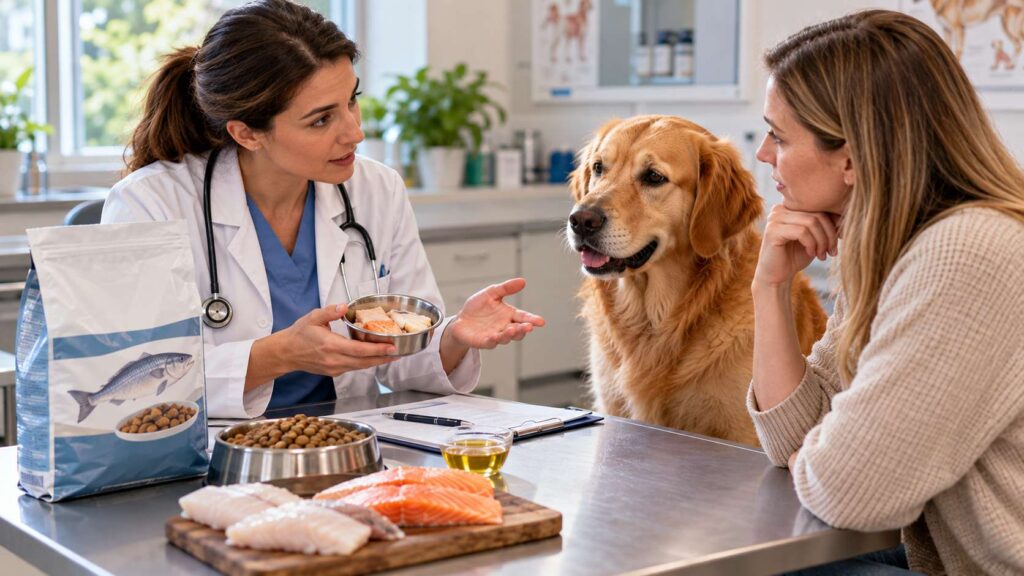
Suspected food allergies. Don’t assume fish is automatically “hypoallergenic.” Dogs can develop adverse reactions to dietary proteins, and itching, recurrent ear or skin problems, vomiting or diarrhoea can have many causes. A food allergy can’t be confirmed from symptoms alone; a properly controlled elimination diet followed by a dietary challenge is the standard approach.
Elimination diets. An unplanned fish treat can interfere with a food trial. During an elimination trial, even table scraps, treats and flavoured products can introduce proteins that make the results harder to interpret. Feed only what your veterinary team has approved.
Pancreatitis or fat restrictions. The type of fish and how it’s prepared matter. Oily fish, oil-packed products and anything fried or buttered add fat, so don’t assume a normally acceptable fish is suitable for a dog that needs dietary fat restriction. Ask your vet before adding it.
Overweight dogs. Treat calories still count. WSAVA recommends keeping all treats and extras combined to no more than about 10% of daily calories for an average healthy dog, and less may be appropriate when weight loss is the goal.
Puppies. Their complete growth diet should do the nutritional heavy lifting. A small amount of suitable plain cooked fish may be used as an occasional extra, but it shouldn’t displace food formulated to support growth.
Dogs on prescription diets. Check with your vet before adding fish. A veterinary diet may have been chosen to control a particular nutrient, investigate a food reaction or manage disease, so an apparently harmless extra can work against the reason the diet was prescribed.
Common Mistakes Dog Owners Make With Fish
- Treating all fish as identical
- Assuming raw means healthier
- Missing small bones
- Sharing fish after it has been seasoned or sauced
- Assuming canned fish is automatically plain
- Treating tuna as either completely harmless or immediately poisonous
- Feeding too much because fish is considered “healthy”
- Using plain fish to replace a complete diet
- Assuming fish can’t cause food reactions
- Giving unapproved extras during an elimination or prescription diet
- Assuming a home freezer makes raw fish risk-free
- Focusing on the fish while overlooking the batter, sauce, salt or cooking fat
When Should You Call a Vet?
You don’t need to diagnose the problem before making the call. What matters is telling your vet what was eaten, how it was prepared, roughly how much and what your dog is doing now.
After Suspected Bone Ingestion
Seek veterinary advice promptly if your dog is gagging or retching repeatedly, struggling to swallow, drooling heavily, vomiting, showing obvious pain or has blood in the mouth, vomit or stool.
Difficulty breathing or choking is an emergency.
If you know or strongly suspect that your dog swallowed a sharp fish bone, don’t automatically wait for symptoms. Call your vet for case-specific advice, and don’t induce vomiting unless a veterinary professional specifically tells you to.
After Raw or Unknown Fish
Contact your vet if your dog becomes unwell after eating raw or unidentified fish, particularly with repeated vomiting, diarrhoea, marked lethargy, weakness or other worsening symptoms. Also call if a large amount was eaten or you’re unsure about the risk.
Tell the vet what type of fish it may have been and where it came from, if known. Those details can matter when assessing raw-fish exposures.
After Fish With Unsafe Ingredients
If the dish contained onion, garlic, leeks, shallots, chives or another potentially harmful ingredient, contact your vet or an appropriate animal poison service rather than waiting for symptoms. WSAVA lists these Allium ingredients among human foods that are unsafe for dogs.
Have the recipe, packaging or ingredient list ready if possible. The amount eaten and your dog’s weight will help the veterinary professional assess the exposure.
What to Have Ready
- Fish species, if known
- Packaging, recipe or ingredient list
- Whether it was raw, undercooked or cooked
- Whether bones were present
- Other ingredients or seasonings
- Approximate amount eaten
- When it was eaten
- Your dog’s approximate weight
- Any current symptoms
- Relevant medical conditions or prescription diets
Key Takeaways
- Plain, thoroughly cooked, boneless fish is the most straightforward way to share fish with a healthy dog.
- Check the species, preparation, bones and added ingredients before sharing.
- Think of tuna and other higher-mercury predatory fish mainly as a repeated-exposure and frequency issue, not a reason to panic over every tiny accidental bite.
- Fish offered alongside normal food is a treat or topper; it isn’t automatically a nutritionally complete meal.
- Dogs with medical conditions, food trials or prescription diets may need an individual answer.
- If your dog has already eaten fish, work out what they ate, how it was prepared, how much they ate and whether symptoms are developing.
The Bottom Line
Fish can be a useful occasional treat, but the safest choice is simple: plain, thoroughly cooked, carefully checked for bones and served in a small amount.
Don’t judge the meal by the fish alone. Batter, oil, salt, sauces, bones and hidden ingredients can completely change the answer. If your dog has already helped themselves, identify what they ate and watch for the warning signs above. When bones, potentially toxic ingredients or concerning symptoms are involved, contact your vet rather than trying to manage the exposure at home.
Frequently Asked Questions
1. Can dogs eat fish skin?
Plain, thoroughly cooked fish skin can be offered in small amounts to many healthy dogs, provided it is free from scales, bones and seasoning. Skin can be relatively fatty, so it isn’t a good extra for every dog—particularly those that need a fat-restricted diet or are watching their calorie intake.
Skip skin that is fried, heavily salted, smoked or coated in sauces and seasoning.
2. Is tinned fish in water better than fish in oil?
Usually, a plain product packed in water or spring water is the simpler choice because it doesn’t come with the extra oil and calories.
That doesn’t make every water-packed product suitable. Check the ingredient and sodium information, drain it where appropriate and avoid products in brine or flavoured sauces containing unsuitable ingredients.
3. Can dogs eat smoked fish?
It’s better to choose plain cooked fish instead. Smoked and cured fish can contain substantial salt, and cold-smoked products haven’t undergone the same cooking process as thoroughly cooked fish.
There’s little benefit in trying to make a salty human product fit your dog’s diet when a small piece of plain cooked fish is a simpler option.
4. Can dogs eat fish and chips?
Fish and chips isn’t a good dog treat. Batter, frying oil and salt add unnecessary fat and sodium, and sauces or seasonings can introduce further problems.
If a healthy dog steals a tiny piece, assess what was actually eaten rather than assuming an emergency. For intentional sharing, set aside a small piece of plain fish before it is battered, seasoned or fried.
5. Can puppies eat fish?
A small amount of suitable plain, thoroughly cooked, boneless fish can be an occasional extra for a healthy puppy, but the puppy’s complete growth diet should remain the priority.
Puppies have specific nutritional requirements for growth, so don’t use plain fish to replace part of a properly formulated puppy diet on a regular basis.
6. Can dogs be allergic to fish?
Yes. Fish shouldn’t be described as universally hypoallergenic simply because it is sometimes used in diets for dogs with suspected food reactions.
Possible adverse food reactions can involve itching, recurrent skin or ear problems, vomiting or diarrhoea, but these signs have many other causes. The Merck Veterinary Manual describes a controlled elimination diet followed by dietary challenge as the reliable way to confirm food allergy rather than diagnosing it from symptoms or unvalidated food-allergy tests.
If your dog is already undergoing an elimination trial, don’t introduce fish unless your vet has specifically included it in the plan.
7. Is fish oil the same as feeding fish?
No. A piece of fish provides protein, calories and various nutrients, with EPA and DHA amounts varying by species and serving. A fish-oil supplement is a concentrated product intended to provide omega-3 fatty acids in a measurable amount.
Don’t try to reproduce a veterinary-recommended omega-3 dose by simply feeding more fish. If you’re considering supplementation for a health condition, ask your vet whether it is appropriate and what product and amount suit your dog.
#. Related Articles: