
Can dogs eat apples? Yes, plain apple flesh is safe for most healthy dogs when served in moderation. But handing your dog a few clean slices is very different from discovering they’ve swallowed a whole apple core off the kitchen floor.
The part of the apple, how it’s prepared, how much your dog eats, and your dog’s health all affect the level of risk.
This guide covers both situations: how to share apples safely and what to do if your dog has already eaten something they shouldn’t.
Before You Share an Apple, Identify What You’re Holding
An apple isn’t one uniform food. Some parts are safe to eat, while others pose unnecessary risks.
The Flesh and Skin: Usually Fine When Prepared Properly
The crisp flesh is the safest part. It contains water, fibre, and natural sugars, making it a reasonable occasional treat for most healthy dogs.
The skin is generally safe too, provided you wash the apple thoroughly to remove dirt and surface residues.
Some dogs with sensitive stomachs tolerate peeled apples better. Peeling is an optional adjustment, not a universal safety requirement.
The Seeds, Stem and Core: Three Different Concerns
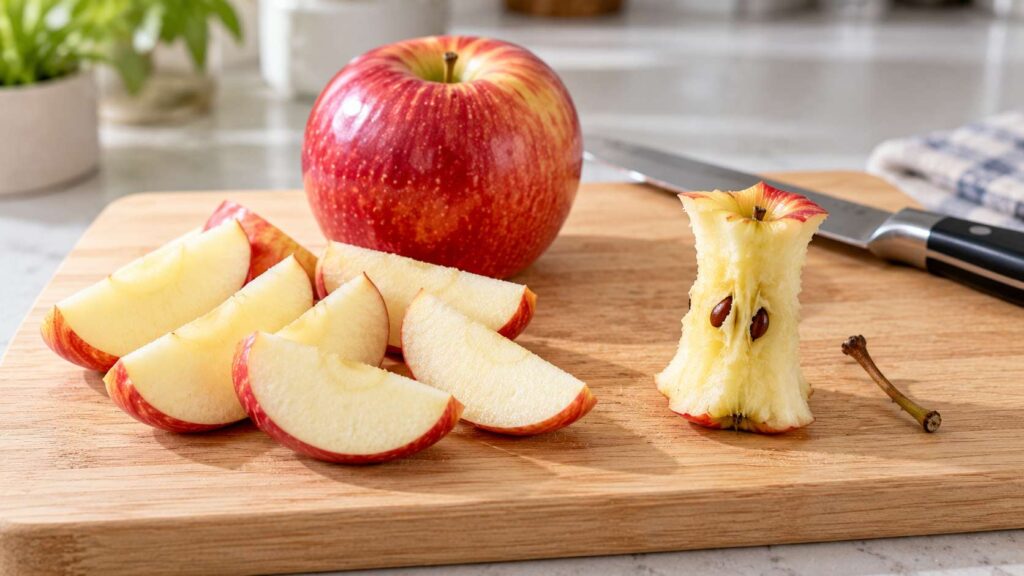
Apple seeds contain amygdalin, a naturally occurring compound that can release cyanide when seeds are chewed or crushed.
Swallowing an occasional intact seed is unlikely to cause poisoning because the protective seed coating limits exposure. However, the risk depends on how many seeds were consumed, whether they were crushed, and the dog’s size.
There is no reliable universal number of seeds that can be declared safe for every dog. Removing them before feeding is the simplest precaution.
The core presents a different problem. Its tough, fibrous structure can become a choking hazard or cause a gastrointestinal obstruction if swallowed in a sufficiently large piece.
Small dogs may be particularly vulnerable, although larger dogs can also develop complications.
The stem offers no nutritional advantage and should be removed. Apple tree leaves also contain cyanogenic compounds, making them unsuitable for dogs to eat.
A Whole Apple Is Not the Same as a Few Slices
Dogs differ considerably in their chewing habits.
A Labrador that swallows food quickly may gulp down a large chunk without chewing properly. A Chihuahua might struggle with a piece that a larger dog could manage easily.
Even a dog that normally chews carefully can swallow an unexpectedly large piece.
Always cut apples into manageable pieces and remove the core before serving.
| Apple part | Suitable? | Main concern | What to do |
|---|---|---|---|
| Fresh flesh | Generally yes | Excessive portions | Cut into suitable pieces |
| Washed skin | Usually yes | Digestive upset in some dogs | Peel if necessary |
| Seeds | Avoid | Amygdalin exposure | Remove |
| Core | Avoid | Choking or intestinal obstruction | Discard |
| Stem | Avoid | Tough plant material; cyanogenic compounds | Remove |
| Leaves | Avoid | Cyanogenic compounds | Prevent access |
Your Dog Already Ate Some Apple: What Changes the Next Step?

If your dog has stolen an apple, the important questions are what they ate, how much they swallowed, and whether they’re showing symptoms.
Not every exposure is an emergency, but some require veterinary advice before symptoms develop.
A Few Plain Apple Pieces
This is generally a low-risk situation.
If an otherwise healthy dog steals a few small pieces of plain apple flesh, serious complications are unlikely.
Some dogs may experience mild gas or loose stools, particularly if they aren’t accustomed to fruit.
Provide access to fresh water, avoid offering additional unfamiliar treats, and observe your dog.
If vomiting or diarrhoea persists, worsens, or occurs alongside lethargy or abdominal discomfort, contact your veterinarian.
One or More Apple Seeds
An isolated intact apple seed is unlikely to cause poisoning.
The situation changes when a dog chews or crushes multiple seeds because this can increase exposure to cyanogenic compounds.
The number of seeds, the dog’s body weight, and whether the seeds were damaged all influence the assessment.
If your dog swallowed several seeds, chewed a substantial quantity, or you cannot establish how many were consumed, contact your veterinarian or an animal poison service.
Do not rely on online claims about a specific number of seeds being safe or fatal. Such figures cannot reliably account for individual exposure.
An Apple Core or a Whole Apple
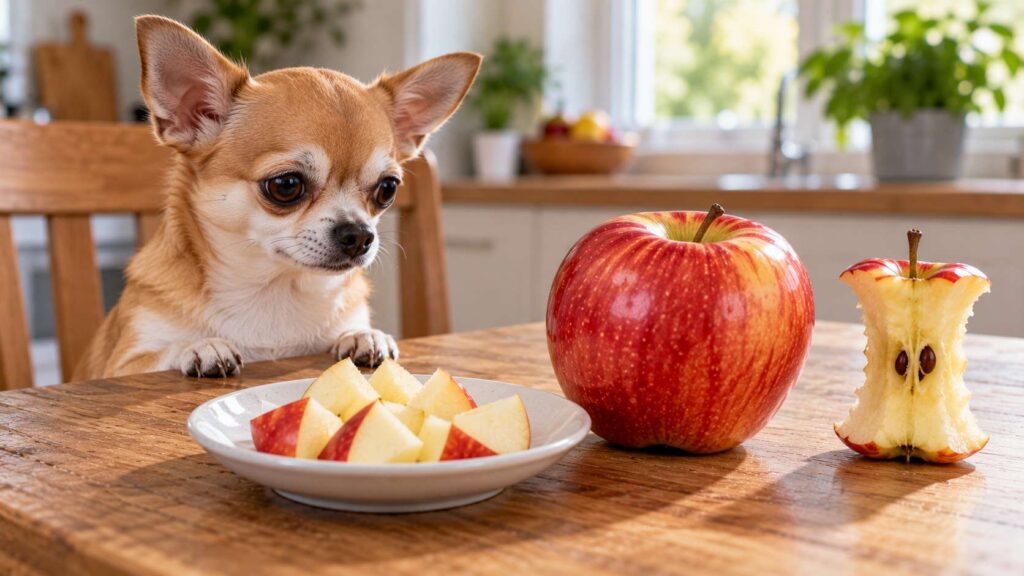
Here, the immediate concern may be physical rather than chemical.
An apple core or large piece can become lodged in the throat or, after swallowing, potentially obstruct the digestive tract.
Small dogs face particular risks because of their narrower airways and gastrointestinal passages, but large dogs aren’t immune.
Signs of an obstruction may develop hours or even days after ingestion.
If your dog swallowed an apple core or a whole apple, contact your veterinarian promptly for an individual assessment, even if your dog currently appears comfortable.
Don’t wait for vomiting or abdominal pain before seeking advice.
Fallen Apples From the Garden
Apples that fall from trees introduce additional hazards.
As fruit deteriorates, it may develop mould or begin fermenting. Fermentation can produce alcohol, while some moulds can produce harmful toxins.
A dog that eats several fallen apples may also consume seeds, cores, and spoiled material.
Possible signs of illness include:
- Vomiting or diarrhoea
- Unusual sleepiness
- Unsteady walking
- Excessive drooling
- Weakness or behavioural changes
These symptoms can have several causes and should not be used to diagnose poisoning at home.
Contact your veterinarian promptly if your dog eats rotten or mouldy apples, particularly if the quantity is substantial or symptoms develop.
Regularly collect fallen fruit and prevent unsupervised access to areas where apples are rotting.
| What was eaten | Key risk factors | Possible symptoms | Recommended action |
|---|---|---|---|
| A few plain slices | Large portion, sensitive stomach | Gas, loose stools | Observe if otherwise healthy |
| One or two intact seeds | Small body size, uncertain exposure | Usually none | Generally low risk; call if uncertain |
| Multiple chewed seeds | Quantity, degree of chewing, body weight | Weakness, breathing difficulty, neurological signs in serious poisoning | Contact a vet or poison service promptly |
| Core or whole apple | Size swallowed, dog’s size, chewing behaviour | Gagging, vomiting, abdominal pain, appetite loss | Contact your vet promptly |
| Rotten or fallen apples | Fermentation, mould, quantity | Vomiting, unsteadiness, lethargy | Seek veterinary advice promptly |
When Apple Ingestion Is an Emergency

Seek emergency veterinary care immediately if your dog develops:
- Choking or difficulty breathing
- Collapse, seizures, or severe weakness
- Repeated vomiting or significant abdominal pain
- A swollen, painful abdomen or inability to keep water down
- Severe unsteadiness or reduced responsiveness
Suspected significant chewed-seed exposure and any known or suspected xylitol ingestion also warrant immediate veterinary or animal poison-service advice, even before symptoms appear.
Warning: Never induce vomiting or give home remedies unless a veterinarian specifically instructs you to do so.
Vomiting can be dangerous in certain situations, particularly when an obstruction or choking hazard is involved.
Make the First Apple Serving a Small Experiment
Every dog’s digestive tolerance is different. If your dog has never eaten apple before, introduce it gradually rather than offering a full serving immediately.
The Five-Step Preparation Checklist
- Choose a fresh apple. Avoid mouldy, rotten, or fermented fruit.
- Wash it thoroughly. Rinse under running water to remove dirt and surface residues.
- Remove the unwanted parts. Cut away the stem, core, and all visible seeds.
- Prepare manageable pieces. Adjust their size and texture to your dog’s chewing ability.
- Start small. Offer a little plain apple and watch for digestive changes over the following 24 hours.
If your dog has an existing medical condition or follows a prescribed diet, ask your veterinarian before introducing a new treat.
Skin On or Skin Off?
Most healthy dogs can eat washed apple skin without problems.
The peel contains fibre, but that doesn’t mean every dog needs it.
If your dog has a sensitive digestive system, removing the skin may improve tolerance. However, peeling won’t necessarily prevent digestive upset caused by excessive portions.
For dogs that tolerate apples well, leaving the washed skin on is generally reasonable.
What If Your Dog Gulps Instead of Chewing?
Some dogs swallow food almost immediately.
For these dogs, large wedges can be especially risky.
Try finely chopping or grating the apple, and supervise your dog while they eat. The pieces should be small enough to manage comfortably without encouraging gulping.
Dogs with dental disease, swallowing difficulties, or a history of choking may need a different texture or an alternative treat recommended by their veterinarian.
Quick Tips
- Offer plain apple without added sugar or seasoning.
- Introduce new treats gradually.
- Include apple in your dog’s daily treat allowance.
- Supervise feeding, especially with puppies and dogs that gulp food.
- Stop offering apples if they repeatedly cause digestive problems.
How Much Apple Fits Into Your Dog’s Day?

You’ll find plenty of online charts suggesting a fixed number of slices for small, medium, and large dogs.
Those recommendations can be misleading because apple slices vary in size, and dogs have different calorie requirements.
Start With the Total Treat Allowance, Not a Slice Count
A commonly recommended veterinary nutrition guideline is that treats should contribute no more than approximately 10% of a dog’s daily calorie intake.
That includes every extra your dog receives, not just apples.
For example, if your dog already gets training rewards, a dental chew, and occasional table scraps, those calories count towards the same allowance.
The remaining 90% or more should generally come from an appropriate complete and balanced diet.
The 10% guideline is an upper limit for treats, not a target amount of apple your dog should eat.
Why Two Slices Can Mean Different Things
A thin slice from a small apple contains less food than a thick wedge from a large one.
Likewise, a small, relatively inactive dog needs fewer daily calories than a large, highly active dog.
For a first serving, a few small pieces are a sensible starting point for many healthy dogs. The amount can then be adjusted according to body size, total calorie needs, and digestive tolerance.
For dogs with weight problems or medical dietary restrictions, your veterinarian can recommend an appropriate allowance.
Does Every Day Make Sense?
A small daily apple treat may be acceptable for some healthy dogs, provided it fits their overall diet and doesn’t cause digestive upset.
However, there is no nutritional requirement for dogs to eat apples every day.
Variety can be enjoyable, but consistency matters more for dogs with sensitive digestion.
If your dog already receives a complete and balanced diet, apples should remain an optional extra rather than a dietary necessity.
The Apple Changes When It Leaves the Fruit Bowl

Plain apple and an apple-flavoured snack aren’t the same thing. Processing can change the sugar concentration, texture and ingredients, so check what you’re offering before sharing it with your dog.
Plain Cooked Apple and Unsweetened Applesauce
Plain cooked apple is generally safe in small amounts, provided it’s prepared without added sugar, butter or other ingredients. Its softer texture may suit older dogs or those with difficulty chewing, although dogs with swallowing problems should follow their vet’s advice.
Unsweetened applesauce can also be an occasional treat, but always check the ingredient list. Ideally, choose a product made entirely from apples.
Watch for added sweeteners, spices and other ingredients. Xylitol, sometimes labelled as birch sugar, is highly toxic to dogs and requires immediate veterinary attention if ingested.
Even when the ingredients are safe, applesauce should be served in small amounts because it’s easy to give more than intended.
Dried Apples and Apple Juice
Dried apples contain less water than fresh apples, making their sugar and calories more concentrated by weight. A small portion can therefore provide more calories than you might expect.
Choose plain, unsweetened dried apple without additives, and cut it into manageable pieces. Avoid tough or chewy pieces that your dog might swallow whole.
Apple juice offers little nutritional advantage over fresh fruit. It usually contains less fibre and may have added sugar.
Fresh water should always be your dog’s main drink. There’s no need to introduce apple juice into their diet.
Apple Pie, Caramel Apples and Packaged Snacks
These products are best avoided.
Apple pie and other baked desserts often contain substantial amounts of sugar and fat. Some recipes also include ingredients that are dangerous for dogs, such as raisins, chocolate or xylitol.
Caramel apples add a sticky, sugary coating, while packaged apple snacks may contain sweeteners or other unsuitable ingredients.
A small taste of a dessert isn’t automatically a poisoning emergency, but the exact ingredients matter.
If your dog eats a packaged apple product, check the label before deciding what to do. Keep the packaging available for your veterinarian.
If the product contains xylitol, raisins or chocolate, contact your veterinarian or an animal poison service immediately. Don’t wait for symptoms to appear.
Red, Green or Cooking Apples?
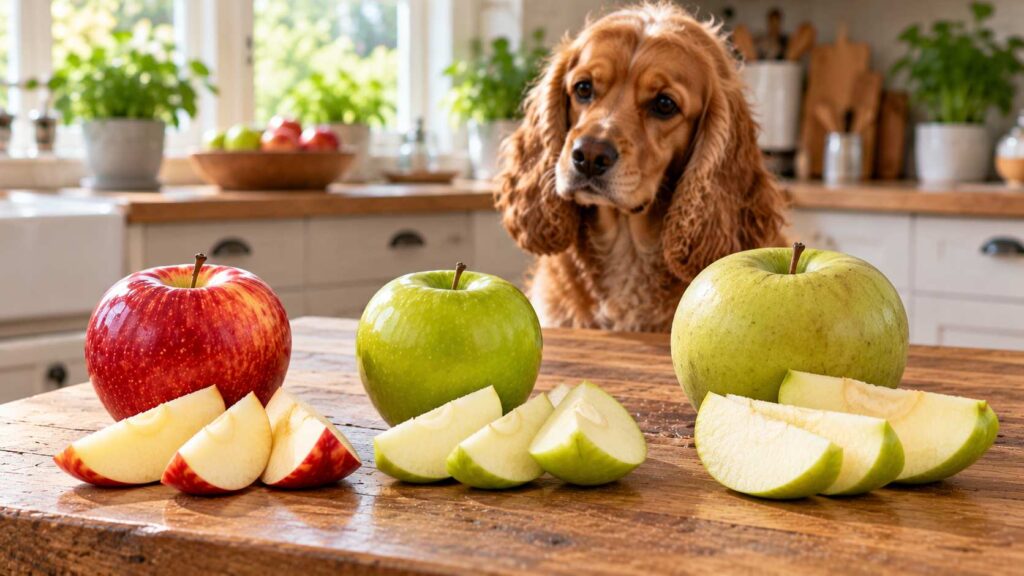
For most healthy dogs, apple colour isn’t an important safety distinction.
Red, green and yellow eating apples can all be offered when properly washed, cored and cut into suitable pieces.
Cooking apples are often more tart, but they aren’t inherently unsafe simply because they’re intended for cooking. Some dogs may find their acidity less appealing or tolerate them poorly.
Preparation, portion size and your dog’s individual tolerance matter more than the apple variety.
| Apple form | Main concern | When it may be suitable | When to avoid it |
|---|---|---|---|
| Fresh slices | Portion size and choking | Washed, cored and cut appropriately | Seeds, core or large pieces remain |
| Plain cooked apple | Added ingredients | Soft, cooled and prepared without additives | Contains unsuitable ingredients |
| Unsweetened applesauce | Hidden ingredients and portions | Plain, preferably apple-only | Contains xylitol or other unsafe ingredients |
| Dried apple | Concentrated sugar, calories and chewy texture | Small amounts of plain, unsweetened pieces | Large portions or choking risk |
| Apple juice | Sugar and limited nutritional benefit | Not necessary as a treat | Contains unsafe additives or replaces water |
| Apple pie or caramel apple | Sugar, fat and potentially toxic ingredients | Not recommended | Best avoided |
Some Dogs Need a Different Answer
A food can be generally safe for dogs and still be unsuitable for an individual animal. Age, medical conditions and existing dietary restrictions can change the recommendation.
Puppies and Senior Dogs
Puppies can try small amounts of properly prepared apple once they’re eating an appropriate solid diet.
Start with a tiny portion, remove the seeds and core, and cut the flesh into pieces they can manage comfortably.
For very young puppies, unfamiliar foods should never displace their nutritionally complete puppy diet.
Senior dogs may have dental pain, missing teeth or difficulty chewing. Small pieces of soft, plain cooked apple may be easier for some, but a dog that coughs, gags or struggles to swallow needs veterinary assessment rather than simply a softer treat.
Dogs With Diabetes or Weight Problems
Apples contain natural sugars and calories, so portion control matters.
For a dog with diabetes, even a seemingly healthy snack needs to fit into a consistent feeding plan. Ask your veterinarian before adding apples to a diabetic dog’s diet, particularly if their food intake and insulin treatment are closely coordinated.
For an overweight dog, a small amount of apple may be a lower-calorie alternative to certain commercial treats.
However, replacing one treat with another only helps weight management when the dog’s overall calorie intake remains appropriate.
Dogs With Digestive Disorders or Pancreatitis
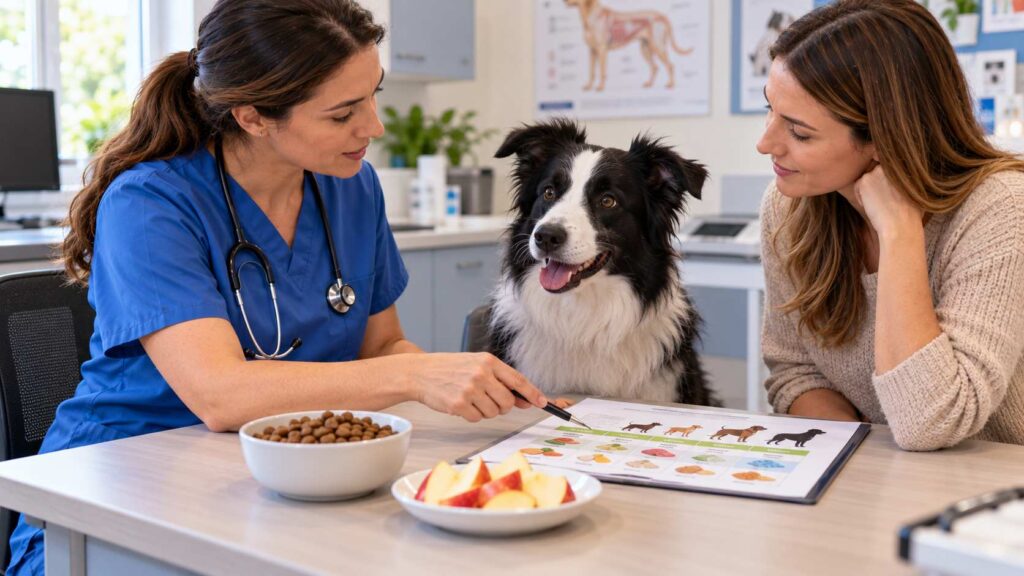
Dogs with chronic gastrointestinal problems or a history of pancreatitis often benefit from a carefully managed diet.
Although plain apple is naturally low in fat, that doesn’t automatically make it appropriate for every dog with pancreatitis.
Its fibre and natural sugars may aggravate digestive symptoms in some individuals, especially when introduced suddenly or fed in large amounts.
If your dog has a diagnosed digestive condition, follow their veterinary feeding plan rather than experimenting with fruit.
Apples aren’t a treatment for pancreatitis, diarrhoea or other gastrointestinal diseases.
Dogs on Prescription or Elimination Diets
If your dog receives a veterinary prescription diet, check whether additional treats are permitted.
This is particularly important during an elimination diet used to investigate possible food allergies.
Even a small amount of an unapproved food can interfere with the trial and make the results harder to interpret.
Your veterinarian may recommend using part of your dog’s prescribed food as a reward instead.
Allergy or Just an Upset Stomach?
Not every reaction to apple is an allergy.
A dog that develops gas or loose stools after eating too much apple may simply be experiencing digestive intolerance.
Food allergies can involve itching, skin inflammation, recurring ear problems or gastrointestinal symptoms, but these signs have many possible causes.
If your dog repeatedly develops symptoms after eating apple, stop offering it and speak with your veterinarian.
Facial swelling, breathing difficulty or collapse after eating any food requires emergency veterinary care.
What Apples Actually Contribute, and What They Don’t
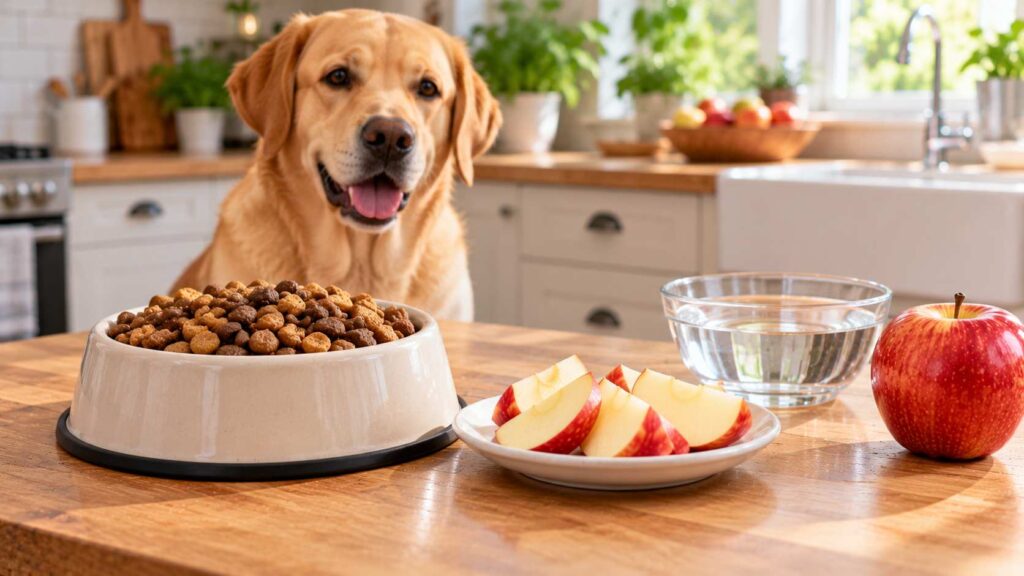
Apples can be a pleasant addition to a dog’s treat rotation, but they aren’t a nutritional necessity.
Their benefits are modest, and they shouldn’t be presented as a substitute for balanced dog food or veterinary treatment.
Fibre, Water and Natural Sugars
Apples contain water and dietary fibre, including pectin.
Fibre can influence stool consistency and digestive function, but its effects depend on the amount consumed and the individual dog’s tolerance.
A little apple may be well tolerated, while too much can contribute to gas, soft stools or diarrhoea.
Apples also contain naturally occurring sugars. Although they can be a reasonable treat for healthy dogs, those sugars still contribute to the overall calorie intake.
More apple doesn’t necessarily mean better digestion.
Vitamins and Antioxidants: Keep the Claims in Perspective
Apples provide small amounts of vitamin C, potassium and various plant compounds, including antioxidants.
However, healthy dogs can produce their own vitamin C and generally don’t need apples to meet their nutritional requirements.
There’s also an important difference between a food containing antioxidants and that food being proven to prevent disease.
Claims that apples boost immunity, detoxify the body or protect dogs against illness go beyond what can reasonably be promised.
Think of apples as an optional treat with some nutritional value, not a supplement or treatment.
The Crunchy-Apple Dental Myth
You may have heard that chewing apple slices naturally cleans a dog’s teeth.
Crunching firm food may provide some mechanical contact with the teeth, but there’s insufficient evidence that apple slices provide meaningful plaque control or prevent periodontal disease.
They certainly don’t replace regular toothbrushing, appropriate veterinary dental care or proven dental products.
If your dog’s breath remains unpleasant, don’t rely on apples to mask it. Persistent bad breath can be a sign of dental disease or another health problem that needs veterinary attention.
| Common claim | What’s supported | What shouldn’t be promised |
|---|---|---|
| “Apples clean teeth” | Chewing creates some contact with tooth surfaces | Reliable plaque removal or prevention of dental disease |
| “Apples boost immunity” | They contain vitamins and plant compounds | Improved immunity or disease prevention |
| “Apples improve digestion” | They contain dietary fibre | Treatment for constipation, diarrhoea or digestive disease |
| “Apples are a healthy low-calorie treat” | Plain fresh apple can fit into a balanced treat allowance | Unlimited portions or suitability for every dog |
Six Mistakes That Turn a Simple Treat Into a Problem

Even a generally safe treat can cause problems when it’s prepared incorrectly or given in excessive amounts. These are six common mistakes worth avoiding.
1. Offering the whole apple. A whole apple encourages gulping and increases the chance of swallowing the core. Remove the core and cut the flesh into manageable pieces before serving.
2. Leaving the seeds and core in. Apple seeds contain amygdalin, which can release cyanide when chewed or crushed. The core also presents choking and intestinal obstruction risks. Remove both every time.
3. Cutting pieces too big. A piece that’s manageable for a Labrador may be dangerous for a Chihuahua. Consider your dog’s size, chewing habits and ability to swallow safely.
4. Giving too much. Excessive apple can cause digestive upset and contribute unnecessary sugar and calories. Start with a small portion and include it in your dog’s daily treat allowance.
5. Treating processed apple products like fresh fruit. Apple pie, sweetened applesauce and packaged snacks may contain unsuitable or toxic ingredients. Always check the label, particularly for xylitol, raisins and chocolate.
6. Ignoring health conditions or new symptoms. A treat that’s fine for a healthy dog may not suit one with diabetes, digestive disease or a prescribed diet. Stop offering apple if your dog develops symptoms, and seek veterinary advice when necessary.
When the Best Apple Advice Comes From Your Vet
Most healthy dogs can enjoy properly prepared apple without problems. However, accidental ingestion, concerning symptoms and certain medical conditions call for professional guidance.
Situations That Need Immediate Help
Contact an emergency veterinarian immediately if your dog experiences:
- Choking or difficulty breathing
- Collapse, seizures or severe weakness
- Severe abdominal pain or a swollen, painful abdomen
- Repeated vomiting with an inability to keep water down
- Marked unsteadiness or reduced responsiveness after eating spoiled fruit
Suspected significant apple-seed poisoning or ingestion of a product containing xylitol also requires immediate veterinary or animal poison-service advice, even if your dog appears normal.
Do not attempt to induce vomiting or administer home remedies unless a veterinarian specifically instructs you to do so.
Situations That Need Prompt Veterinary Assessment
Contact your veterinarian promptly if:
- Your dog swallowed an apple core, whole apple or another large piece.
- You suspect they chewed or swallowed a substantial number of seeds.
- They develop repeated vomiting, reduced appetite or abdominal discomfort.
- Diarrhoea persists, worsens or occurs alongside other signs of illness.
- They ate mouldy or fermented apples.
- They have an existing medical condition that could affect their response.
A possible intestinal obstruction deserves particular attention because symptoms may not appear immediately.
For example, a small dog that swallows an apple core might initially behave normally. That doesn’t guarantee the core will pass safely.
If you suspect a blockage, seek veterinary advice rather than waiting for symptoms to develop.
What to Tell the Veterinary Team
Having a few details ready can help your veterinarian assess the situation more quickly:
- Your dog’s age and approximate weight
- What they ate: flesh, seeds, core, whole apple or a processed product
- Estimated quantity: how much was swallowed and whether seeds were chewed
- Time of ingestion: when it happened or when you discovered it
- Current symptoms: vomiting, coughing, weakness, abdominal discomfort or behavioural changes
- Product information: packaging or ingredient list, if applicable
If you’re unsure about the amount eaten, say so rather than guessing.
Your veterinarian may recommend observation, examination or further treatment depending on the exposure and your dog’s condition. A dog that remains well after a few plain apple pieces generally needs a different approach from one that has swallowed a large core.
This article provides general educational information and cannot replace veterinary advice tailored to your dog.
Key Takeaways
- Plain, washed apple flesh is generally safe for most healthy dogs in moderation.
- Remove the seeds, core and stem, and cut the apple into pieces your dog can manage safely.
- Include apples within your dog’s total daily treat allowance.
- Check processed apple products for unsafe ingredients, especially xylitol, raisins and chocolate.
- Ask your veterinarian before offering apples to dogs with diabetes, digestive disorders or prescribed dietary restrictions.
- Seek veterinary advice promptly after suspected core ingestion or significant seed exposure, and emergency care for serious symptoms.
Frequently Asked Questions
1. Can Dogs Eat Apples With the Skin On?
Yes. Most healthy dogs can eat apple flesh with the skin attached.
Wash the apple thoroughly before serving, remove the seeds and core, and cut it into suitable pieces.
If your dog has a sensitive stomach, peeling may help improve tolerance. However, the skin itself isn’t considered toxic to dogs.
2. Can Puppies Eat Apples Every Day?
Puppies can eat small amounts of properly prepared apple once they’re eating solid food, but daily servings aren’t necessary.
Their main diet should provide complete and balanced nutrition for growth.
Start with a tiny, seedless piece and watch for digestive upset. Keep the pieces small enough to reduce choking risks.
If your puppy has dietary restrictions or digestive problems, ask your veterinarian before introducing fruit.
3. What if My Dog Swallowed One Apple Seed?
Swallowing one intact apple seed is unlikely to cause poisoning.
Apple seeds contain amygdalin, but exposure is generally lower when a seed remains whole rather than being chewed or crushed.
If your dog swallowed a single seed and appears healthy, serious effects are unlikely.
However, contact your veterinarian if multiple seeds were chewed, the amount is uncertain or your dog develops concerning symptoms.
4. Can an Apple Core Cause an Intestinal Blockage?
Yes. An apple core can cause choking or gastrointestinal obstruction, particularly if a small dog swallows it whole.
The risk depends on the core’s size, how much was swallowed and the dog’s anatomy.
Possible signs of obstruction include vomiting, abdominal pain, reduced appetite and lethargy.
Contact your veterinarian promptly if your dog swallowed an apple core, even if they initially seem fine. Symptoms may take time to develop.
5. Can Diabetic Dogs Eat Apples?
Some diabetic dogs may be able to eat carefully measured amounts of apple, but only when their veterinarian considers it appropriate.
Apples contain natural sugars and calories, which must be accounted for in a diabetic dog’s feeding plan.
Avoid introducing apple treats without discussing them with the veterinarian managing your dog’s diabetes.
Consistency in meals and treats is especially important when diabetes treatment involves insulin.
6. Are Green Apples as Safe as Red Apples for Dogs?
Yes. Green and red eating apples are generally equally suitable for healthy dogs when prepared properly.
Green apples may taste more tart, while some red varieties are sweeter.
Neither colour makes an apple automatically safer or more nutritious for dogs.
Remove the seeds, stem and core, wash the fruit, and offer a modest portion regardless of variety.
7. Can Apples Cause Diarrhoea or Constipation?
Yes, apples can affect stool consistency, particularly when eaten in large amounts or introduced suddenly.
Their fibre and natural sugars may contribute to gas or loose stools in sensitive dogs.
Although apples contain fibre, they shouldn’t be used as a home treatment for constipation without veterinary guidance.
If your dog develops persistent diarrhoea, repeated vomiting, straining or abdominal discomfort, contact your veterinarian. Difficulty passing stool can sometimes indicate a more serious problem.
The Question to Ask Before You Offer Another Slice
Before sharing another piece of apple, run through this quick checklist:
- Is it plain and properly prepared? The seeds, core and stem should be removed.
- Can my dog chew and swallow it safely? Consider their size and eating habits.
- Does it fit within today’s treat allowance? Account for other snacks and rewards.
- Is there a medical reason to avoid it? Diabetes, digestive disorders and prescription diets may change the advice.
- Has my dog tolerated apple before? Previous digestive reactions are worth taking seriously.
- Are there any concerning symptoms? If your dog seems unwell, seek veterinary guidance rather than offering more food.
For most healthy dogs, a few properly prepared apple pieces can be an enjoyable occasional treat.
The important thing isn’t simply whether a food is labelled safe for dogs. It’s which part you’re offering, how much you’re giving and whether it suits your individual dog.
That same approach is worth taking with other fruits, including oranges. Check what’s safe before sharing something new, rather than assuming that all fruits carry the same risks.
#. Related Articles: