
Can dogs eat donuts? They’re best avoided. A small bite of a plain donut is unlikely to cause serious harm to most healthy dogs, but donuts aren’t suitable treats. Some varieties contain ingredients that can make dogs seriously ill, even when they seem perfectly fine at first.
Maybe you’re eyeing your last glazed donut while your dog stares at you. Or perhaps you’ve returned to an empty box and a suspiciously innocent-looking dog. Either way, what matters now is identifying what your dog ate, how much they swallowed, and whether veterinary attention is needed.
The Short Answer
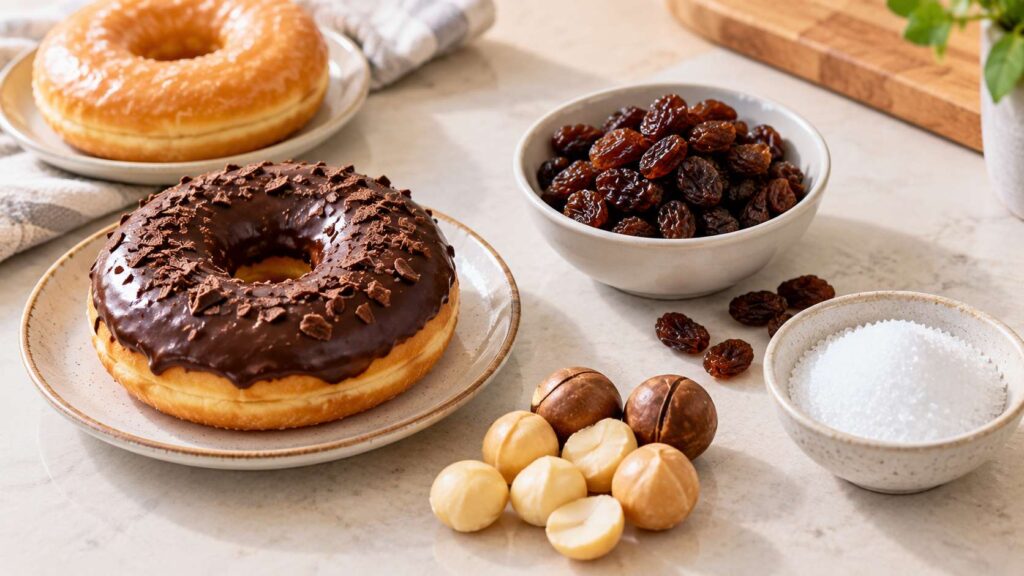
Plain donuts made without toxic ingredients aren’t inherently poisonous, but they’re high in fat and sugar and offer little nutritional value for dogs. The more serious risks come from ingredients such as xylitol, chocolate, raisins, sultanas and macadamia nuts.
If your dog has eaten a donut containing a potentially toxic ingredient, contact your veterinarian immediately. If the ingredients are unknown, seek veterinary advice rather than assuming the donut was harmless.
Which Situation Are You In?

You’re thinking about sharing a bite
It’s better not to. Even a plain donut contains unnecessary fat, sugar and calories that can upset your dog’s stomach. Fillings, glazes and toppings may also contain ingredients that aren’t obvious from the donut’s appearance.
Choose a treat made for dogs instead.
Your dog has already eaten one
Start by identifying the donut, estimating how much was eaten and checking when it happened. Look for potentially toxic ingredients, and note any unusual behaviour.
If you discover chocolate, xylitol, raisins, sultanas or macadamia nuts, contact your veterinarian promptly. Suspected xylitol or raisin ingestion is particularly urgent, even if your dog appears normal.
You have no idea what was in it
This is common with bakery boxes, mixed trays and food taken from the bin.
If you cannot identify the ingredients, contact your veterinarian or an emergency veterinary clinic for guidance. An unknown filling or sweetener can change the risk considerably.
Don’t rely on the donut’s appearance or your dog’s current behaviour to decide whether it’s safe.
Six Details That Change the Risk

Veterinarians don’t assess a donut incident by looking at the food alone. They consider several factors together.
- What was in it and on it. Check the dough, glaze, filling, toppings and sweeteners. Hidden ingredients may matter more than the donut itself.
- How much was eaten. A small bite is different from an entire donut. If your dog ate donut holes, estimate how many were missing.
- Your dog’s weight. The same amount of a potentially toxic ingredient can represent a much greater exposure for a Chihuahua than for a Labrador.
- Your dog’s age and health. Puppies, older dogs and dogs with diabetes, previous pancreatitis or digestive conditions may need extra caution.
- When it happened. The time since ingestion can influence veterinary treatment decisions.
- How your dog is behaving. Vomiting, weakness or unusual behaviour may indicate a problem, but appearing normal doesn’t rule out poisoning.
There’s no universal safe number of donuts for dogs. The risk depends on the ingredients, quantity, body weight and individual health circumstances.
What to Have Ready Before Calling Your Vet
- Your dog’s approximate weight and age
- The donut’s brand, bakery or ingredient list
- Details of the filling, glaze and toppings
- The estimated quantity eaten
- When the ingestion occurred
- Any vomiting, diarrhoea, weakness or unusual behaviour
- Existing medical conditions and medications
- Whether your dog swallowed a wrapper or other packaging
If possible, photograph the packaging or keep the ingredient label available.
Don’t delay calling your veterinarian while collecting this information. If a toxic ingredient may be involved, make the call first and provide the remaining details as you find them.
The Ingredients That Turn a Snack Into a Vet Visit
Xylitol
Xylitol, sometimes listed as birch sugar, is a sweetener found in certain sugar-free and reduced-sugar products.
According to the US Food and Drug Administration (FDA), xylitol can cause a dangerous drop in a dog’s blood sugar. Severe poisoning may also result in liver injury or liver failure.
Sugar-free and keto-style donuts deserve particular attention, although not every product in these categories contains xylitol.
Check the ingredient list rather than relying on marketing labels. Other sweeteners do not necessarily carry the same risks.
If your dog has eaten a product containing xylitol, or you strongly suspect exposure, contact an emergency veterinarian immediately. Do not wait for symptoms.
Chocolate
Chocolate contains theobromine and caffeine, substances that dogs metabolise more slowly than humans.
The amount of these compounds varies considerably between chocolate products:
- Dark chocolate: Generally contains higher concentrations of theobromine.
- Milk chocolate: Usually contains less theobromine than dark chocolate, but can still be dangerous.
- White chocolate: Contains very little theobromine, although its fat and sugar content can still cause problems.
A chocolate-covered donut and a donut filled with rich chocolate ganache may contain very different quantities of cocoa.
Veterinarians assess chocolate exposure using the chocolate type, estimated quantity, dog’s weight and clinical signs.
Possible symptoms include vomiting, diarrhoea, restlessness, an increased heart rate and tremors. Severe poisoning can cause seizures or dangerous heart rhythm abnormalities.
If your dog eats a chocolate donut, contact your veterinarian promptly with as much information about the chocolate as possible.
Raisins and Sultanas
Raisins and Sultanas
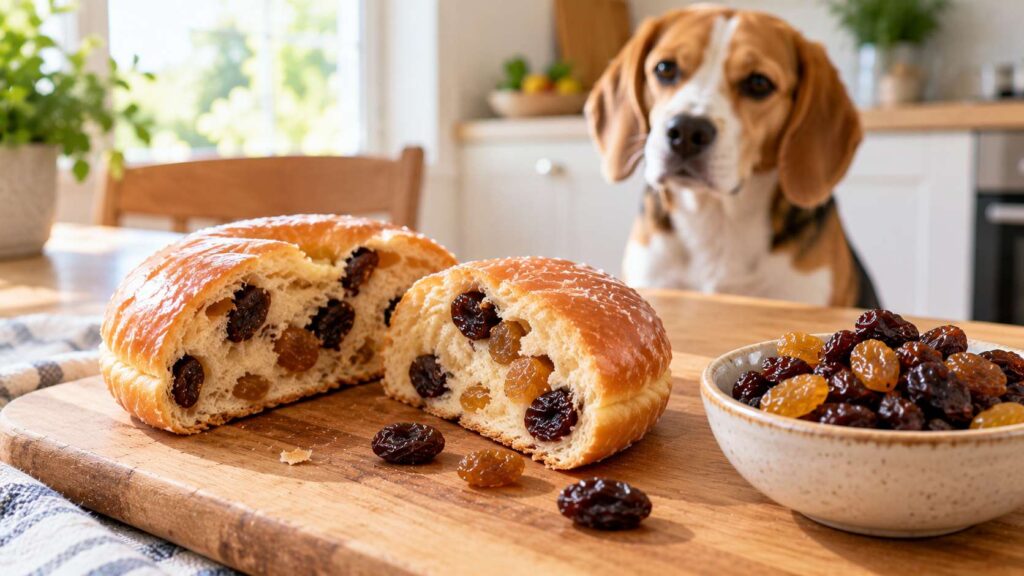
Raisins and sultanas can cause acute kidney injury in dogs. The Merck Veterinary Manual explains that grape and raisin ingestion can cause serious kidney damage in some dogs.
The risk is unpredictable. Some dogs develop serious illness after relatively small exposures, while others may show no immediate symptoms.
There is no reliably established safe amount.
A donut or pastry containing raisins or sultanas should therefore be treated as a potential poisoning incident.
Contact your veterinarian immediately if your dog has eaten raisins or sultanas, even if they appear healthy.
Other Add-Ins
Macadamia nuts are another concern. Ingestion can cause weakness, vomiting, tremors and difficulty walking, particularly affecting the hind legs.
Nutmeg contains compounds that can cause toxicity when enough is consumed. However, the small amount of spice in an ordinary cinnamon-sugar donut is generally less concerning than a substantial exposure to nutmeg itself.
Cinnamon is not considered toxic to dogs in typical culinary amounts, although larger quantities can cause irritation and other problems.
The important distinction is that not every spice presents the same risk.
A donut containing several ingredients also needs to be assessed as a whole rather than focusing on one topping.
Warning: Don’t Wait for Symptoms
Seek emergency veterinary care if your dog develops:
- Collapse or loss of consciousness
- Seizures or pronounced tremors
- Marked weakness or difficulty standing
- Breathing difficulties
- Severe abdominal pain
- Repeated vomiting, especially with significant lethargy
Suspected xylitol or raisin ingestion requires immediate veterinary advice even before symptoms appear. Chocolate exposure also needs prompt assessment.
Never attempt to induce vomiting or give hydrogen peroxide, activated charcoal or human medication unless specifically directed by a veterinarian or animal poison specialist.
Some treatments are unsafe in particular circumstances, and attempting them at home may delay appropriate care.
Donut Types at a Glance

Different donuts carry different risks, but their names don’t tell you everything about their ingredients.
| Donut type | Main concern | What to check |
|---|---|---|
| Plain | Fat, sugar and digestive upset | Ingredients and quantity eaten |
| Glazed | Sugar, fat and possible additives | Glaze ingredients |
| Powdered or cinnamon | Sugar, fat and possible spices | Recipe and ingredient label |
| Chocolate | Theobromine and caffeine | Chocolate type and amount |
| Cream-filled | Fat, sugar and additional ingredients | Filling composition |
| Jelly-filled | Sugar and potentially unsuitable ingredients | Exact filling and sweeteners |
| Raisin-containing | Potential acute kidney injury | Contact your vet immediately |
| Sugar-free | Possible xylitol poisoning | Verify ingredients; seek urgent advice if xylitol is suspected |
| Donut holes | Same ingredient-related risks as larger donuts | Number eaten and ingredients |
Baked versus fried donuts: Baked donuts may contain less fat than fried versions, depending on the recipe. However, baking doesn’t eliminate risks from chocolate, xylitol or raisins.
Homemade versus shop-bought donuts: Homemade donuts aren’t automatically safer. Their suitability depends on the ingredients, preparation and portion size.
Branded donuts: Products from chains such as Krispy Kreme or Dunkin can have different ingredients depending on the variety and country. Check the specific product rather than assuming every donut from the same brand has the same safety profile.
The most useful rule is simple: judge the ingredients, not the flavour name or appearance.
When It Isn’t Poisoning: Fat, Sugar and the Stomach

Not every donut incident involves poisoning. Sometimes the problem is simply that a dog has eaten something much richer and fattier than their usual food.
That doesn’t make every reaction harmless, though. Digestive upset and more serious conditions can share similar early symptoms.
Why a Donut Upsets a Dog’s Stomach
The combination of fat and sugar can cause digestive upset, particularly in dogs with sensitive stomachs or those unaccustomed to rich foods.
Possible symptoms include:
- Vomiting
- Diarrhoea or loose stools
- Abdominal discomfort
- Reduced appetite
- Excessive gas
A small amount of plain donut may cause no noticeable problems in a healthy dog. Larger amounts are more likely to cause digestive upset, although individual responses vary.
Regularly sharing donuts also adds unnecessary calories, potentially contributing to weight gain and making it harder to maintain a balanced diet.
Where Pancreatitis Comes In
Pancreatitis is inflammation of the pancreas, an organ involved in digestion and blood sugar regulation.
Eating fatty foods can be associated with pancreatitis in dogs, although not every case has an identifiable dietary trigger.
A single donut doesn’t automatically cause pancreatitis. However, dogs with a history of the condition may be particularly vulnerable to rich, fatty foods.
Signs that warrant veterinary attention include:
- Repeated vomiting
- Loss of appetite
- A painful or tense abdomen
- A hunched posture
- Unusual tiredness or weakness
These symptoms aren’t specific to pancreatitis. Other gastrointestinal problems can look similar, so a veterinarian may need to perform an examination, blood tests or imaging to determine the cause.
Dogs Who Need Extra Caution
Some dogs may be more vulnerable to problems after eating donuts:
- Puppies and small breeds: Their size can make a given amount of food or a toxic ingredient more significant.
- Dogs with diabetes: Sugary foods can interfere with dietary management and blood glucose control.
- Dogs with previous pancreatitis: Fatty foods may increase concern about another episode.
- Dogs with digestive conditions: Rich foods may aggravate existing symptoms.
- Dogs on veterinary-prescribed diets: Unplanned treats may interfere with nutritional treatment.
If your dog belongs to one of these groups, contact your veterinarian for advice after a significant donut exposure, even if the donut contains no known toxic ingredients.
What Symptoms Can and Can’t Tell You
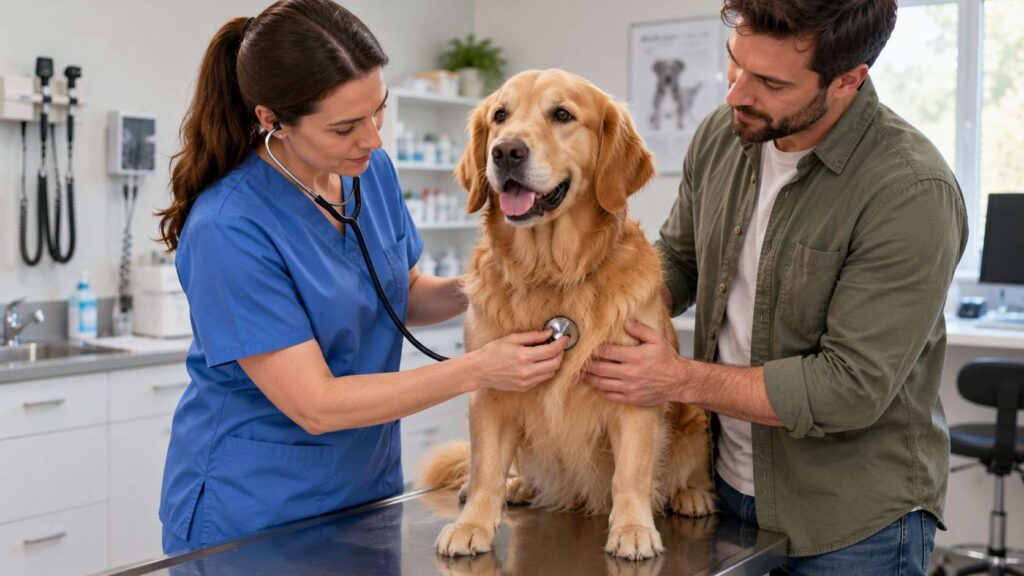
Your dog’s behaviour can provide useful clues, but symptoms alone cannot reliably distinguish ordinary digestive upset from poisoning or another medical problem.
Signs of a Mild Stomach Upset
A dog that has eaten a small amount of a known plain donut might develop:
- A single episode of vomiting
- Mildly loose stools
- Temporary loss of appetite
- Minor abdominal discomfort
Mild digestive symptoms sometimes resolve without treatment, but don’t assume that every episode is harmless.
If symptoms persist, worsen, recur or occur in a puppy or medically vulnerable dog, contact your veterinarian.
Signs That Need Urgent Attention
Seek urgent veterinary care if your dog develops:
- Repeated vomiting or inability to keep water down
- Severe abdominal pain or a swollen, painful belly
- Marked lethargy or weakness
- Tremors or seizures
- Collapse or difficulty standing
- Trouble breathing
These signs can indicate serious illness, regardless of whether a donut was responsible.
Why Symptom Timing Isn’t a Safety Test
Different ingredients can cause problems at different times.
Xylitol-related hypoglycaemia may develop rapidly, although signs can sometimes be delayed. Chocolate toxicity may take several hours to become apparent, while kidney injury associated with raisins may develop later.
A dog that looks perfectly normal shortly after eating a potentially toxic donut isn’t necessarily safe.
If xylitol, raisins or a potentially dangerous amount of chocolate may have been consumed, contact your veterinarian immediately rather than waiting for symptoms.
Three Donut Scenarios That Look Alike but Aren’t
These hypothetical examples show why the ingredients and circumstances matter more than simply knowing that a dog ate a donut.
A Large Adult Dog Nibbles a Known Plain Donut
A healthy Labrador takes a small bite of a plain donut. The owner checks the ingredients and confirms there are no known toxic additions.
This is generally less concerning than exposure to a toxic ingredient. After considering the dog’s health and the amount eaten, brief observation may be reasonable.
However, if vomiting, diarrhoea, abdominal pain or unusual behaviour develops, the owner should contact a veterinarian.
A Small Dog Eats an Unknown Sugar-Free Donut
A Chihuahua eats a sugar-free donut from an unlabelled bakery box.
The owner doesn’t know which sweetener was used. Because xylitol exposure cannot be ruled out, the safest response is to contact an emergency veterinarian immediately.
Waiting for weakness, vomiting or other symptoms could delay essential treatment.
A Dog Swallows a Chocolate Donut and Its Wrapper
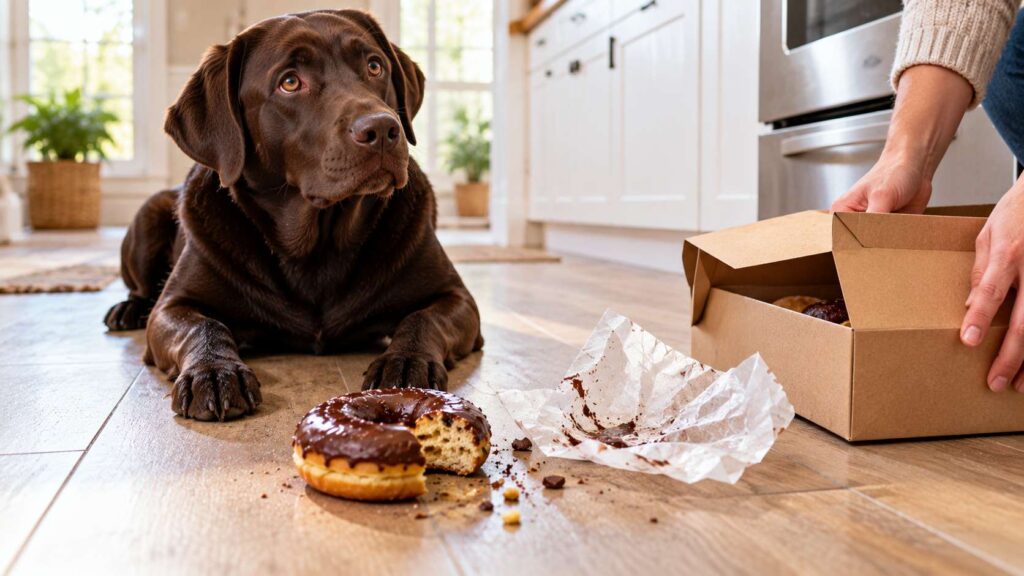
A dog steals a chocolate-covered donut and swallows part of its paper wrapper.
Now there are two separate concerns:
- Chocolate exposure: The type and amount of chocolate must be assessed against the dog’s weight.
- Foreign-body ingestion: The swallowed wrapper could cause choking or gastrointestinal obstruction.
The owner should contact a veterinarian promptly and explain both exposures.
The key lesson is that two dogs can eat similar-looking donuts and face very different risks.
Mistakes That Make a Donut Incident Worse
- Assuming plain-looking means harmless. Fillings, sweeteners and toppings aren’t always obvious. Check the ingredients whenever possible.
- Waiting for symptoms after suspected poisoning. Early veterinary intervention can be important, particularly with xylitol or raisins.
- Trusting a “sugar-free” label. Some sugar-free products contain xylitol, which is highly toxic to dogs.
- Comparing your dog with another dog. Body weight, health and the amount consumed can change the outcome.
- Trying to induce vomiting at home. Never use hydrogen peroxide or other methods unless specifically instructed by a veterinarian.
- Giving human medicines. Some medications can be dangerous for dogs or complicate treatment.
- Forgetting about packaging. Wrappers, plastic and cardboard may present choking or obstruction risks.
- Relying entirely on online toxicity calculators. They may provide general information but cannot account for every ingredient or individual medical factor.
- Assuming a previous harmless exposure guarantees safety. Different donuts can contain different ingredients, and a dog’s response may change.
Better Treats and How to Prevent the Next Raid
What Makes a Treat Suitable for Dogs?
Choose treats made specifically for dogs or suitable plain foods that your dog can safely tolerate.
Good treat choices should:
- Contain no ingredients known to be toxic to dogs
- Be appropriate for your dog’s age, size and health
- Be served in manageable portions
- Fit within your dog’s daily calorie needs
As a general nutritional guideline, treats should provide no more than about 10% of a dog’s daily calorie intake, with the remaining calories coming from a complete and balanced diet.
Dogs with diabetes, pancreatitis, food allergies or other medical conditions may need stricter dietary rules.
If your dog follows a prescription diet, ask your veterinarian which treats are appropriate.
Are Homemade Dog Donuts a Good Idea?
Homemade dog donuts can be an occasional option when the recipe is specifically designed for dogs and uses suitable ingredients.
Avoid:
- Chocolate and cocoa
- Xylitol and other ingredients whose safety hasn’t been established
- Raisins and sultanas
- Macadamia nuts
- Rich glazes and sugary toppings
Keep portions small, even when every ingredient is considered suitable.
Remember that homemade doesn’t automatically mean healthy or safe. The recipe, preparation and serving size still matter.
How to Stop Your Dog Stealing Donuts
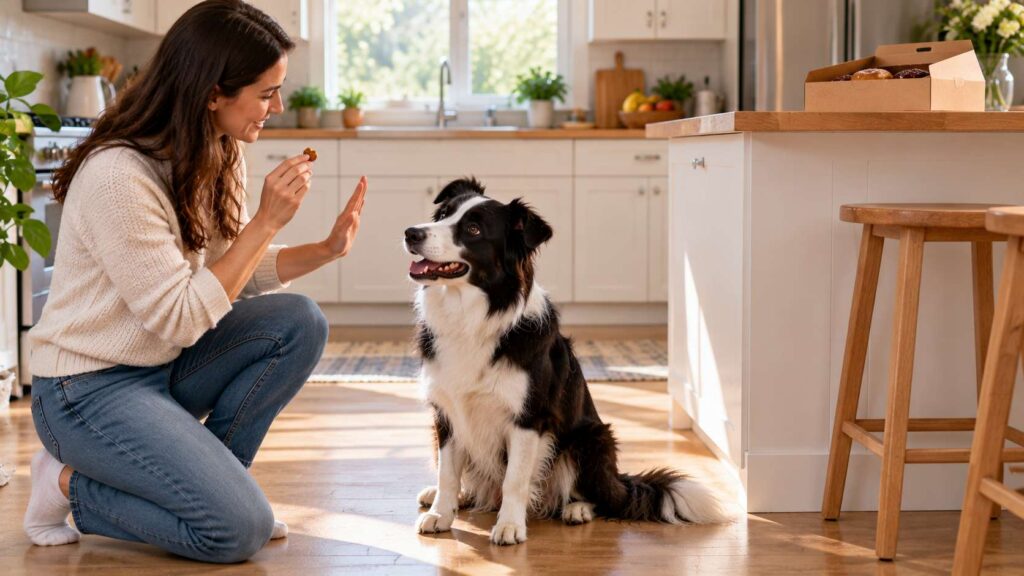
- Store bakery boxes inside cupboards or other secure areas.
- Keep kitchen counters and low tables clear of unattended food.
- Use bins with secure lids.
- Dispose of wrappers and packaging promptly.
- Teach a reliable “leave it” cue using reward-based training.
- Supervise dogs around food during family gatherings and parties.
Quick Tip: Keep a small supply of suitable dog treats available. When your dog begs for a donut, you can reward them with something appropriate instead of sharing your dessert.
What Your Vet Will Want to Know and What Happens Next
What Helps Them Assess the Exposure
When you contact your veterinarian, provide:
- Your dog’s weight, age and breed
- The donut’s brand or ingredient list, if available
- The estimated quantity consumed
- The approximate time of ingestion
- Any symptoms you’ve noticed
- Existing health conditions and medications
- Details of any packaging or other items swallowed
A photograph of the ingredient label can be particularly helpful.
Don’t delay an urgent call because you haven’t gathered every detail.
Why Treatment Depends on the Ingredient
There isn’t one standard treatment for every dog that eats a donut.
Depending on the suspected exposure, a veterinarian may recommend:
- Xylitol: Blood glucose monitoring, intravenous glucose when indicated, liver function assessment and supportive treatment.
- Chocolate: Assessment of the estimated toxic dose, possible veterinary-supervised decontamination, and monitoring or treatment of heart and neurological effects.
- Raisins or sultanas: Prompt assessment, possible decontamination, intravenous fluids when indicated, and kidney function monitoring.
- Digestive upset: Clinical assessment and supportive care based on symptom severity.
- Suspected pancreatitis: Examination, appropriate diagnostic testing, pain management, fluid therapy and nutritional support.
- Swallowed packaging: Assessment for choking or obstruction, with imaging or further treatment when necessary.
Not every dog requires hospitalisation. Some dogs with minor exposures may need only veterinary advice and observation, while others require urgent treatment or monitoring.
Recovery depends on the ingredient, amount consumed, severity of illness and how quickly treatment begins. Avoid assuming that a dog is fully recovered simply because the first symptoms disappear.
Vet Advice: Never Start Home Treatment Without Guidance
Don’t induce vomiting, administer activated charcoal or give medications unless your veterinarian or an animal poison specialist specifically instructs you to do so.
Some treatments are inappropriate or dangerous depending on the substance consumed and your dog’s condition.
Where to Get Help
Start with your regular veterinarian. If the clinic is closed, contact an emergency veterinary hospital.
Animal poison advice services are also available in the United Kingdom, Canada, Australia and the United States, although their availability, fees and access requirements differ.
Keep your veterinarian’s emergency contact details somewhere accessible before an accident happens.
Key Takeaways
- Plain donuts without toxic ingredients aren’t inherently poisonous, but they’re unsuitable as regular dog treats.
- Xylitol, chocolate, raisins, sultanas and macadamia nuts are important ingredient-related concerns.
- The risk depends on the ingredients, amount consumed, dog’s weight and medical history.
- Fatty donuts can cause digestive upset and may be particularly problematic for dogs prone to pancreatitis.
- A dog that appears normal after eating a potentially toxic ingredient may still need urgent treatment.
- If the donut’s ingredients are unknown, contact your veterinarian for advice rather than guessing.
The Better Question Before the Next Bite
Instead of asking, “Can my dog eat this?” try asking, “Is this a sensible treat for my dog?”
With donuts, the answer is usually no.
A small accidental bite of a known plain donut may cause no problems, but deliberately sharing sugary, fatty foods offers little benefit. And when toxic ingredients are involved, even an apparently minor incident can become serious.
Keep donuts out of reach, choose suitable dog treats and check ingredients before sharing human food.
If your dog has eaten something potentially toxic, contact your veterinarian immediately.
Frequently Asked Questions
1. Can dogs eat a tiny piece of plain donut?
A tiny piece of a plain donut made without toxic ingredients is unlikely to cause serious problems for most healthy dogs. However, donuts are high in fat and sugar, so they aren’t recommended as treats.
Check the ingredients carefully. If your dog has an existing medical condition or develops symptoms after eating the donut, contact your veterinarian.
2. My dog ate a donut but seems fine. Should I worry?
It depends on the ingredients, amount eaten and your dog’s health.
A small amount of a known plain donut may not cause problems. However, if the donut contained xylitol, raisins, sultanas or chocolate, seek veterinary advice promptly.
Some toxic effects are delayed, so appearing healthy immediately after ingestion doesn’t guarantee safety. If the ingredients are unknown, contact your veterinarian for guidance.
3. Are baked donuts safer than fried ones?
Baked donuts may contain less fat than fried donuts, depending on the recipe. However, they can still contain substantial sugar and potentially toxic ingredients.
Baking doesn’t make chocolate, xylitol or raisins safe for dogs.
Neither baked nor fried donuts are recommended as regular treats.
4. Can dogs eat Krispy Kreme or Dunkin’ donuts?
Donuts from Krispy Kreme, Dunkin’ and other bakery chains aren’t recommended for dogs.
Ingredients vary between products and countries, so you cannot determine safety from the brand name alone.
If your dog has eaten one, identify the exact product, check its ingredients and contact your veterinarian if a potentially toxic ingredient is present or cannot be ruled out.
5. What if my dog swallowed the wrapper too?
Donut wrappers and packaging can create additional problems, including choking or gastrointestinal obstruction.
The risk depends on the material, size and amount swallowed, as well as your dog’s size.
Contact your veterinarian and explain what packaging may have been eaten. Seek emergency care if your dog is choking, repeatedly vomiting, showing severe abdominal pain or having difficulty breathing.
Don’t try to make your dog vomit without veterinary instructions.
6. Can one donut cause pancreatitis?
A fatty meal may contribute to pancreatitis in susceptible dogs, but eating one donut doesn’t automatically cause the condition.
Dogs with previous pancreatitis or certain underlying health problems may be at greater risk.
Repeated vomiting, abdominal pain, loss of appetite and lethargy are reasons to seek veterinary assessment. These signs can have several causes, so pancreatitis cannot be diagnosed from symptoms alone.
7. Are donut holes safer than full-size donuts?
Donut holes are smaller, but they generally contain the same ingredients as full-sized donuts.
A single plain donut hole may represent a smaller portion, but several can add up quickly. Chocolate, xylitol or raisins remain concerning regardless of the donut’s shape.
If your dog eats donut holes, record how many were consumed and check the ingredients before discussing the exposure with your veterinarian.
#. Related Articles: