
Can dogs eat hamburgers? A small piece of plain, fully cooked beef is usually safe for an otherwise healthy dog. A complete hamburger is different. The bun, seasonings, onions, sauces, cheese and fatty toppings can introduce risks that plain beef doesn’t have.
If your dog has already eaten a hamburger, what was in it matters more than the fact that it contained beef.
Some burger ingredients are generally harmless in small amounts, others can cause digestive upset, and a few can be genuinely toxic. The amount eaten, your dog’s size and their medical history also affect the level of concern.
If you suspect your dog ate onion, garlic, xylitol or another potentially toxic ingredient, contact your veterinarian or an animal poison-control service promptly. Don’t wait for symptoms.
Before You Decide, Identify the Burger
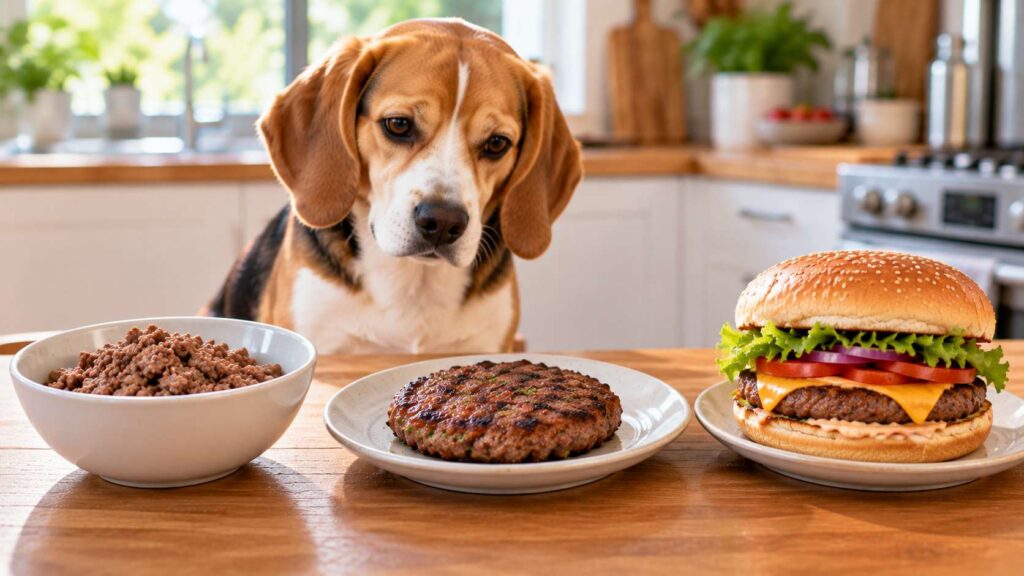
Most advice treats a hamburger as a single food. In practice, you’re usually dealing with one of three situations.
A Small Piece of Plain Cooked Beef
This is generally the lowest-risk scenario.
The beef (minced beef, as it’s commonly called in the UK and Australia) is fully cooked, with no onion, garlic or added seasoning.
Relatively lean beef is preferable to fatty beef, particularly for dogs with sensitive stomachs. A small amount as an occasional treat is also very different from regularly replacing balanced dog food with hamburger meat.
Even plain beef may be unsuitable for dogs with beef allergies, pancreatitis or certain veterinary-prescribed diets.
A Seasoned Patty or Complete Hamburger
Here, the beef is only part of the picture.
Seasoning blends may contain onion or garlic powder. Buns add calories, sauces can contribute salt and fat, and toppings may introduce additional ingredients that aren’t suitable for dogs.
Commercial patties can also contain ingredients that aren’t immediately obvious. A burger without visible onions isn’t necessarily onion-free.
The safest assumption is that an unfamiliar burger needs an ingredient check before you share it.
A Burger Your Dog Ate Without Permission
This is the situation that often sends owners searching for answers in a hurry.
What matters is:
- What was in the hamburger
- How much your dog ate
- How long ago they ate it
- Your dog’s size and age
- Any existing health conditions
- Whether symptoms have appeared
Some effects can develop quickly, while others may take hours or days.
Your Dog Ate a Hamburger: What Details Change the Next Step?
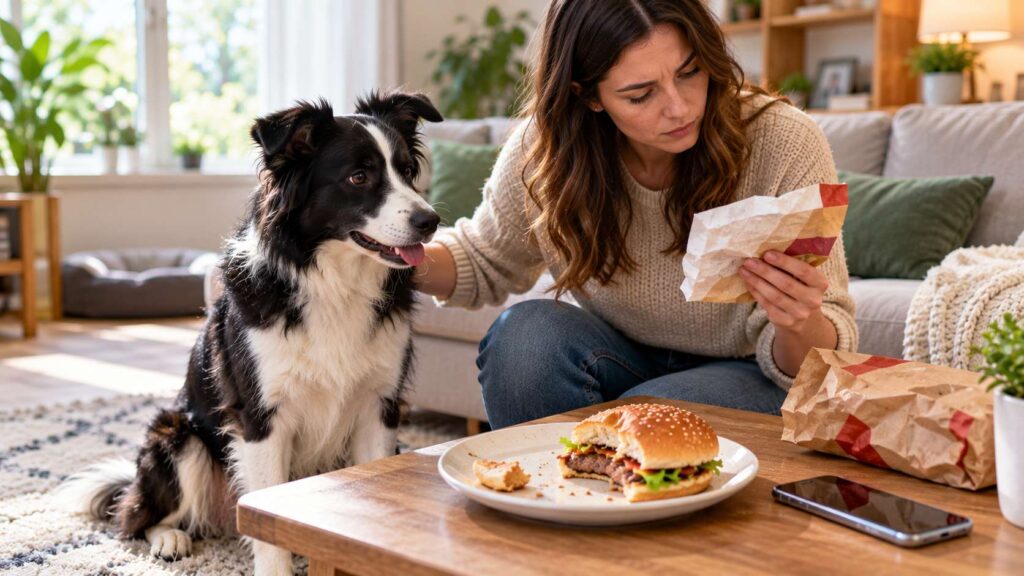
There’s no single response that fits every dog that eats a hamburger. A healthy Labrador stealing a small piece of plain beef is a different situation from a Yorkshire Terrier swallowing an entire onion-seasoned cheeseburger.
Gathering a few facts helps you and your veterinarian assess the risk.
Six Facts to Check Before Calling the Vet
- Ingredients: Check the patty, seasonings, sauces, toppings and bun.
- Amount: Estimate whether your dog ate a bite, half a burger or the whole thing.
- Timing: Note approximately when the hamburger was eaten.
- Dog’s details: Have their weight and age ready.
- Symptoms: Record vomiting, diarrhoea, unusual behaviour or other changes.
- Medical history: Mention existing conditions, medications and prescribed diets.
If the burger came from a restaurant, check its published ingredient information. Keep the packaging or receipt if available.
Don’t delay an urgent veterinary call while trying to identify every ingredient.
Three Situations That Need Different Responses
1. A small amount of verified plain cooked beef in an otherwise healthy dog
Brief observation at home may be reasonable if your dog is behaving normally and has no relevant dietary restrictions.
Provide access to fresh water, avoid additional rich treats and watch for digestive upset.
2. A hamburger containing suspected onion, garlic, xylitol or another toxic ingredient
Contact your veterinarian or an animal poison-control service promptly, even if your dog appears normal.
The appropriate response depends on the ingredient, amount, timing and your dog’s individual circumstances.
3. A large fatty meal, concerning symptoms or possible swallowed packaging
Seek prompt veterinary advice.
A large fatty meal can cause gastrointestinal problems and may trigger pancreatitis in susceptible dogs. Swallowed wrappers, toothpicks or skewers can create choking, injury or obstruction hazards.
Suspected sharp-object ingestion or severe symptoms require emergency assessment.
Why Acting Before Symptoms Appear Can Matter
It’s tempting to wait and see, especially when your dog looks perfectly normal.
But some toxic ingredients can cause problems before obvious signs appear. Onion and garlic exposure, for example, can damage red blood cells, with signs of anaemia sometimes developing days later.
Veterinary treatment options may also depend on how recently the food was eaten.
A dog that seems fine an hour after swallowing an onion-containing burger hasn’t necessarily escaped harm.
Warning: Don’t Wait for Symptoms After Suspected Poisoning
- If your dog may have eaten onion, garlic or xylitol, seek prompt veterinary or animal poison-control advice.
- Collapse, difficulty breathing, severe weakness, marked abdominal swelling or repeated unproductive retching require emergency veterinary care.
- Repeated vomiting, significant abdominal pain or inability to keep water down also warrant urgent assessment.
- Never induce vomiting or give home remedies unless specifically instructed by a veterinarian.
Do not assume that the absence of symptoms means a potentially toxic exposure is harmless.
Look Inside the Burger, Not Just at the Beef

A hamburger’s ingredients determine much of its risk. Some can cause poisoning, while others are more likely to cause digestive problems or contribute unnecessary calories.
Ingredients That Can Create Toxicity Concerns
Onion
Raw, cooked, dried and powdered onion can damage a dog’s red blood cells, potentially causing haemolytic anaemia.
According to the Merck Veterinary Manual, onion and garlic toxicity can cause delayed symptoms, with signs of anaemia sometimes appearing several days after ingestion.
Onion powder is especially easy to overlook because it may be mixed directly into a burger patty or seasoning blend.
Cooking does not reliably remove the toxic compounds.
The amount consumed and the dog’s size influence the risk, but there is no universal amount that can be declared safe for every dog.
Garlic
Garlic belongs to the same Allium family as onion and can also cause oxidative damage to red blood cells.
Fresh, cooked and powdered garlic are all relevant exposures. Garlic powder may be present in commercial burger seasoning, sauces and marinades.
If your dog has eaten a burger containing garlic, contact your veterinarian for an individual risk assessment rather than waiting for symptoms.
Xylitol
Xylitol, sometimes labelled birch sugar, is highly toxic to dogs. It can cause a rapid drop in blood sugar and, in some cases, serious liver injury.
It’s uncommon in ordinary hamburgers, but certain unusual sugar-free condiments or other products may contain it.
If xylitol appears on an ingredient label and your dog has consumed the product, seek immediate veterinary advice.
Hidden ingredients
Seasoning blends, marinades, sauces and commercial patties may contain ingredients that aren’t visible in the finished burger.
Generic descriptions such as “spices” or “flavourings” don’t necessarily provide enough information to establish safety.
When the exact ingredients are uncertain, contact the manufacturer or restaurant. If a potentially toxic exposure is suspected, consult your veterinarian without delay.
Ingredients More Likely to Cause Digestive Problems
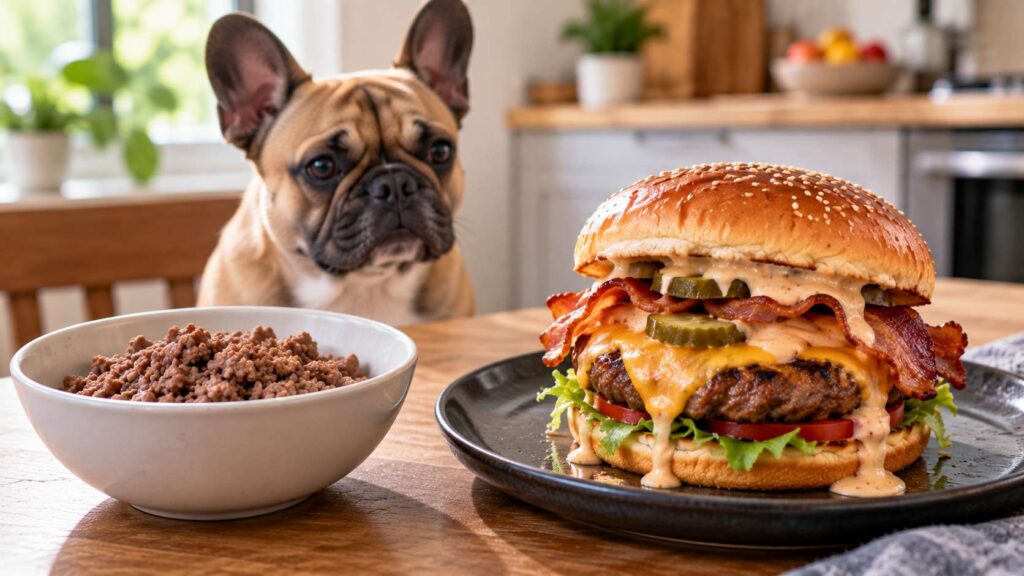
These ingredients aren’t necessarily poisonous, but they can cause problems, particularly in large amounts:
- Fatty beef: May trigger vomiting, diarrhoea or pancreatitis in susceptible dogs.
- Cheese: Adds fat and may cause digestive upset in dogs that don’t tolerate lactose well.
- Bacon: Often contains substantial fat and salt.
- Rich sauces: May contain fat, salt, spices or potentially harmful ingredients.
- Very salty toppings: Contribute unnecessary sodium and may be especially concerning in large quantities.
- Pickles: Often contain salt, vinegar and seasonings, including potentially harmful garlic.
A dog that develops vomiting after eating a rich cheeseburger may simply have gastrointestinal upset, but pancreatitis and other illnesses cannot be ruled out from symptoms alone.
Persistent or worsening signs need veterinary assessment.
Ingredients That Depend on Preparation
A plain, fully baked hamburger bun is generally not toxic, although it provides little nutritional benefit. Buns containing raisins, certain sweeteners or other harmful ingredients require separate consideration.
Plain lettuce and ripe tomato flesh are generally suitable in small amounts.
Fully cooked, unseasoned turkey or chicken patties may also be appropriate for some dogs, provided they’re prepared without harmful ingredients.
Plant-based patties require particular caution. Their ingredients vary considerably, and some contain onion, garlic, high levels of salt or other unsuitable additives.
Here’s a practical comparison:
| Burger component | Main concern | Guidance |
|---|---|---|
| Plain cooked lean beef | Fat content, portion size | May be suitable in small amounts |
| Seasoned beef patty | Hidden onion, garlic, salt | Check the complete ingredient list |
| Onion or garlic | Red blood cell damage | Seek prompt veterinary advice after suspected ingestion |
| Plain bun | Calories, possible intolerance | Generally low concern if plain and fully baked |
| Cheese | Fat, lactose intolerance | Depends on individual tolerance |
| Bacon and rich sauces | High fat, salt, possible additives | Avoid as routine treats |
| Pickles | Sodium and seasonings | Check ingredients; generally best avoided |
| Plant-based patty | Variable ingredients and additives | Assess the exact product |
| Raw ground beef | Bacterial contamination | Not recommended |
Remember: A burger containing one low-risk ingredient isn’t automatically safe. The bun might be harmless while the patty contains onion powder.
Always assess the entire hamburger, not just the part your dog appeared to eat.
If cheese is your main concern, a separate guide to whether dogs can eat cheese can help explain lactose tolerance, fat content and appropriate portions.
Why Two Dogs Can React Differently to the Same Hamburger
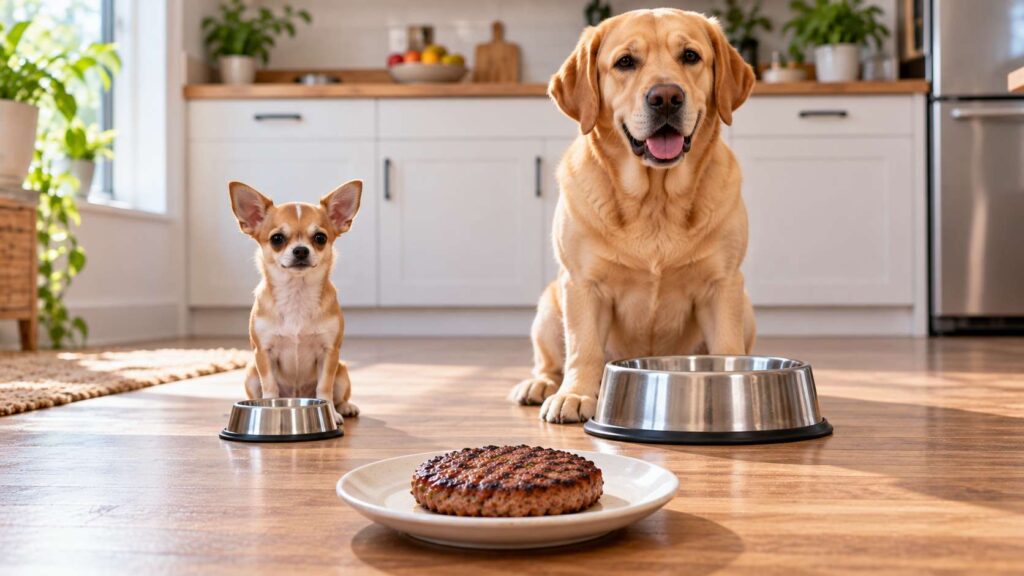
Body Size Changes the Exposure
A bite of burger is a modest snack for a Labrador but can be a significant amount of food for a Chihuahua. The same quantity of onion, garlic or fat represents a much larger exposure relative to a small dog’s body weight.
That’s why fixed “safe portions” for hamburgers can be misleading. The amount eaten, the ingredients and the dog’s individual health all matter.
A small dog isn’t automatically going to become ill after eating a burger, but an exposure that seems minor for a large dog may deserve more concern in a smaller one.
Fat Tolerance and Previous Pancreatitis
Pancreatitis is inflammation of the pancreas. A rich, fatty meal can trigger an episode in susceptible dogs, although not every dog that eats fatty food will develop the condition.
Dogs with a history of pancreatitis need particular caution. Even a plain beef patty may contain more fat than their prescribed diet allows.
Possible signs include:
- Vomiting, sometimes repeatedly
- Loss of appetite
- Abdominal pain or a hunched posture
- Lethargy
- Diarrhoea
These symptoms aren’t specific to pancreatitis. A veterinarian may need to examine your dog and perform diagnostic tests to determine the cause.
If your dog has previously had pancreatitis and eats a fatty hamburger, contact your veterinarian for advice rather than waiting for symptoms.
Age, Allergies and Existing Health Problems
Puppies have developing digestive systems and specific nutritional needs, making rich table scraps a poor choice. Senior dogs may have underlying conditions that affect how well they tolerate unfamiliar foods.
A dog with a diagnosed beef allergy may react to the meat itself, even when it’s plain and fully cooked.
Dogs with diabetes, gastrointestinal disease or veterinary-prescribed diets may also need to avoid hamburger meat unless their veterinarian approves it.
Individual medical history matters more than breed stereotypes.
Here’s how these differences play out in four realistic situations:
- A healthy adult dog eating a small piece of plain cooked beef: Usually a low-risk situation if the dog has no relevant dietary restrictions and remains well.
- A small dog eating a large cheeseburger: The amount of fat and food relative to body size is concerning. Contact your veterinarian for advice, particularly if the burger was seasoned or the dog develops symptoms.
- A dog with previous pancreatitis eating a fatty patty: Contact your veterinarian promptly because the dog’s medical history increases concern.
- A dog eating a burger containing onion powder: This is a potential poisoning exposure. Seek veterinary advice promptly, even if the dog appears normal.
What Symptoms Mean, and What They Don’t
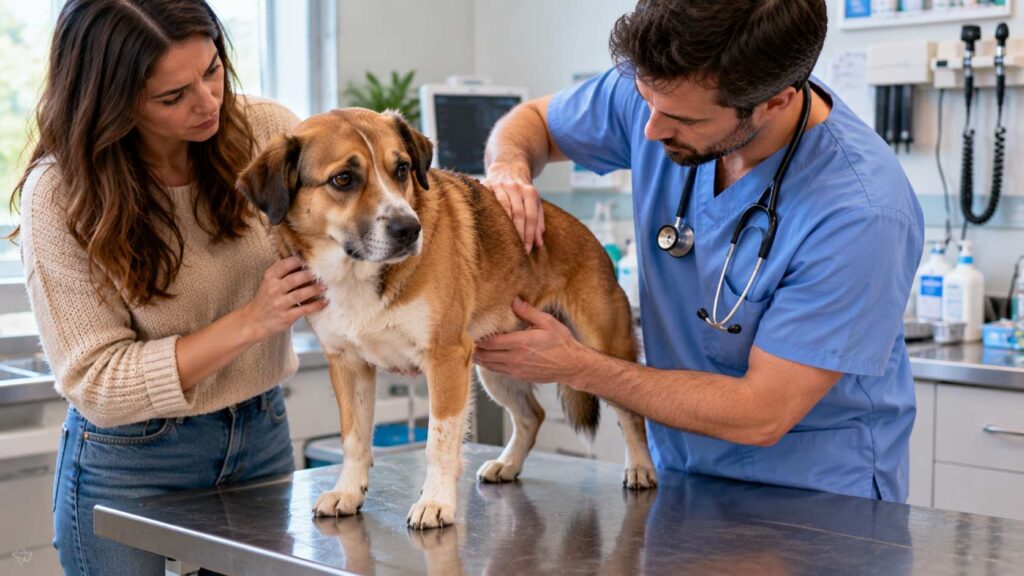
Digestive Symptoms After a Rich Meal
After eating a fatty or unfamiliar meal, a dog may develop vomiting, loose stools, reduced appetite or abdominal discomfort.
A brief episode of mild digestive upset may resolve without treatment in an otherwise healthy adult dog. However, these symptoms can also occur with more serious conditions, including pancreatitis.
If your dog has vomited once but remains bright, comfortable and interested in water, contact your veterinarian if you’re unsure whether observation is appropriate. Seek advice earlier for puppies, senior dogs and dogs with existing medical conditions.
Repeated vomiting, worsening discomfort or an inability to keep water down shouldn’t be managed by simply waiting for the stomach to settle.
An upset stomach in dogs can have many causes, so don’t assume the hamburger is the only possible explanation.
Signs That May Suggest Something More Serious
Contact a veterinarian promptly if you notice:
- Repeated vomiting or persistent diarrhoea
- Significant abdominal pain
- Refusal to eat accompanied by lethargy
- Pale gums
- Unusual weakness
- Signs of dehydration
Seek emergency veterinary care for:
- Collapse or severe weakness
- Difficulty breathing
- Marked abdominal swelling
- Repeated attempts to vomit without producing anything
- Severe or rapidly worsening abdominal pain
Pale gums and weakness can also occur with anaemia following onion or garlic toxicity, although other serious conditions can cause these signs.
Important: If you know or suspect that your dog consumed a toxic ingredient, contact your veterinarian before symptoms develop.
Why Symptom Timing Is Not a Safety Test
Some digestive symptoms may appear within hours of eating an unfamiliar meal. Other problems can take longer to become apparent.
With onion or garlic toxicity, for example, damage to red blood cells may lead to signs of anaemia several days after exposure.
There is no universal waiting period after which every hamburger-related risk can be ruled out.
You also cannot reliably diagnose pancreatitis, poisoning or anaemia at home. A veterinarian may need to perform an examination, blood tests or other investigations.
The important distinction is between a dog that appears well and a dog whose exposure has been assessed as low risk. Those aren’t necessarily the same thing.
The Cooking Method Can Change the Risk
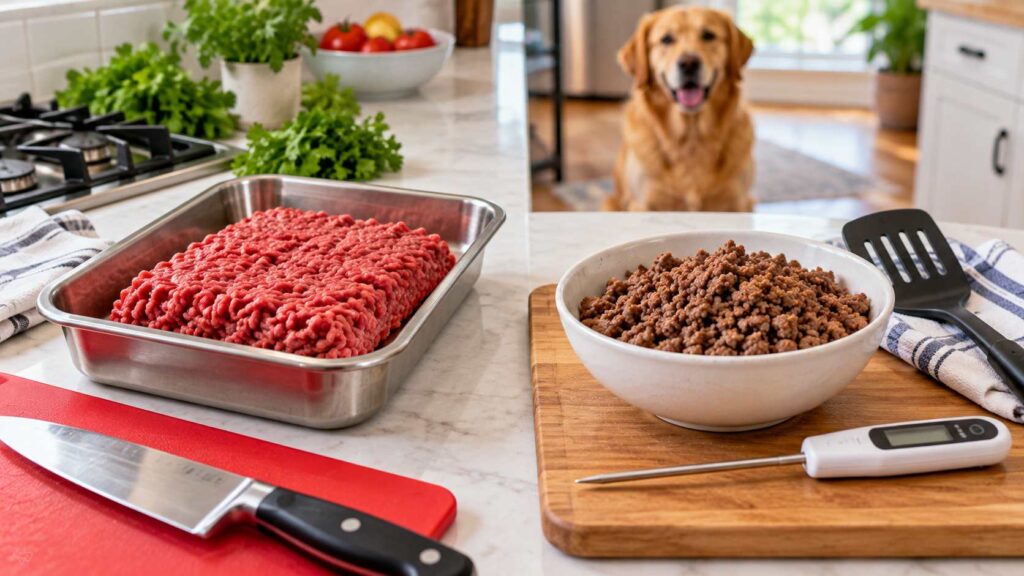
Raw, Undercooked and Fully Cooked Beef
Raw ground beef can contain harmful bacteria, including Salmonella and certain strains of E. coli.
Grinding can distribute bacteria throughout the meat, which is why ground beef needs to be cooked thoroughly rather than simply browned on the outside.
The CDC’s pet food safety guidance advises against feeding raw animal-based foods to dogs and cats because harmful bacteria can make both pets and people sick.
For food safety, ground beef should reach an internal temperature of 71°C (160°F), measured with a food thermometer.
Cooking reduces bacterial risk, but it doesn’t make harmful seasonings safe. A fully cooked burger containing onion or garlic can still be dangerous to dogs.
Basic kitchen hygiene matters too:
- Keep raw beef separate from ready-to-eat food.
- Wash hands after handling raw meat.
- Clean utensils, chopping boards and preparation surfaces.
- Refrigerate perishable ingredients promptly.
- Avoid feeding raw or undercooked patties.
The CDC advises against feeding raw animal-based pet foods because they can expose both animals and people to harmful pathogens.
The Difference Between Homemade and Commercial Patties
Plain homemade beef is generally easier to assess because you control the ingredients.
If you cook a separate portion without onion, garlic, seasoning or added fat, you know exactly what your dog is receiving.
Frozen supermarket patties, restaurant burgers and takeaway patties require more caution. Some contain only beef, while others include salt, seasoning blends, fillers or additional ingredients.
Recipes can also differ between brands and countries.
Don’t assume a patty is unseasoned simply because you can’t see onion or garlic.
Check the packaging or the restaurant’s published ingredient information. If the ingredients cannot be confirmed, choose a different treat rather than guessing.
What About Turkey and Plant-Based Burgers?
Fully cooked, unseasoned turkey can be an alternative to beef, but turkey burgers aren’t automatically lower in fat. Their nutritional content depends on the cut of meat and any added ingredients.
Avoid turkey patties containing onion, garlic or unsuitable seasonings.
Plant-based burgers need a separate ingredient check.
Although they don’t contain conventional meat, some products include:
- Onion or garlic
- High amounts of sodium
- Seasoning blends
- Oils and other added fats
- Ingredients that may not suit an individual dog’s diet
Meat-free doesn’t automatically mean dog-safe. Judge each product by its actual ingredients rather than its marketing description.
If You Want to Share Beef, Make the Decision Deliberately
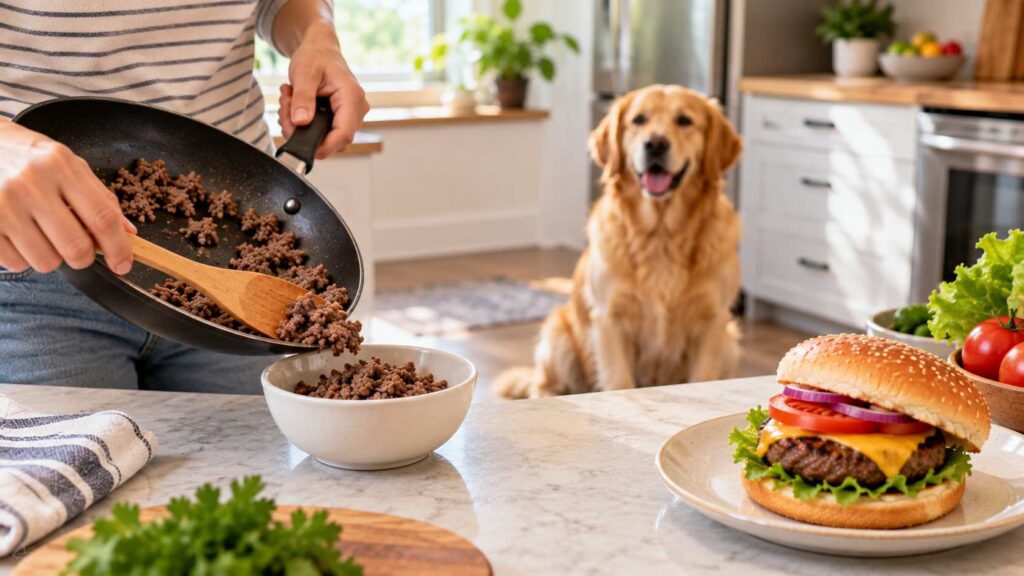
A Practical Preparation Checklist
If you’d like to offer your dog a little beef, keep the preparation simple:
- Choose relatively lean beef. Avoid heavily marbled or high-fat options.
- Cook it thoroughly. Ground beef should reach 71°C (160°F).
- Leave out onion, garlic and seasoning. Prepare your dog’s portion separately.
- Drain excess fat. Don’t add butter, oil or rich sauces.
- Allow the beef to cool. Avoid serving it while hot.
- Offer a small amount. Adjust the portion to your dog’s calorie needs and health.
- Watch for digestive upset. Stop offering it if your dog doesn’t tolerate it.
- Follow veterinary dietary restrictions. Check with your vet before introducing beef if your dog has a relevant medical condition.
You don’t need to make an entire dog-friendly hamburger. A small amount of plain cooked beef is simpler and avoids the unnecessary bun, sauces and toppings.
How Much Is Reasonable?
There’s no standard hamburger portion suitable for every dog.
A dog’s calorie requirements depend on factors such as body size, age, activity level, body condition and health.
The World Small Animal Veterinary Association (WSAVA) recommends that treats contribute no more than approximately 10% of a dog’s daily calorie intake.
That allowance includes all extras, not just hamburger meat.
For example, if your dog already receives training treats, a dental chew and occasional table scraps, those calories count toward the same daily limit.
The remaining calories should generally come from an appropriate complete and balanced diet.
Remember that the 10% guideline is an upper limit for treats, not a target amount of beef to feed.
Hamburger meat alone is not a complete and balanced diet. Although beef provides protein and other nutrients, regularly replacing balanced dog food with plain meat can create nutritional deficiencies or imbalances.
Better Choices Than a Fully Assembled Burger
If you want to give your dog something enjoyable without the uncertainty of a complete hamburger, consider:
- A small amount of plain cooked lean beef: Suitable for many healthy dogs when served occasionally.
- Their regular complete and balanced dog food: A reliable option that avoids introducing unfamiliar ingredients.
- Suitable commercial dog treats: Choose products appropriate for your dog’s size, age and dietary needs.
- Veterinary-approved alternatives: Particularly important for dogs with pancreatitis, allergies or prescribed diets.
There’s no nutritional reason your dog needs a hamburger. If they enjoy beef and can tolerate it, a little plain cooked meat is usually the more sensible choice.
Quick Tips: Small Decisions That Make a Difference
- Set aside a small portion of plain beef before seasoning the family’s meal.
- Read commercial ingredient labels instead of judging patties by appearance.
- Check the entire burger, including sauces and toppings.
- Keep wrappers, skewers, packaging and leftovers out of reach.
- Count all treats toward your dog’s daily calorie allowance.
- Don’t assume that previous uneventful burger snacks guarantee future safety.
- If your dog has a medical condition requiring dietary control, ask your veterinarian before sharing human food.
Five Hamburger Assumptions Worth Correcting

“Beef is safe, so the whole hamburger is safe.” Plain, fully cooked beef may be suitable for many dogs, but the seasoning, toppings and sauces can introduce additional risks. Always consider the complete ingredient list, not just the meat.
“Cooking removes the danger from onions and garlic.” It doesn’t. Cooked, dried and powdered onion or garlic can still damage a dog’s red blood cells. Removing visible onion pieces also doesn’t make a seasoned patty safe.
“My dog ate burgers before and was fine.” Previous uneventful exposures don’t guarantee future safety. Ingredients, portion sizes and your dog’s health can change. Some harmful effects may also develop without obvious early symptoms.
“A small dog can eat the same portion as a large dog.” Body weight matters. The same amount of food or a potentially toxic ingredient represents a greater exposure relative to a smaller dog’s size. Portion decisions should also account for age, health and calorie needs.
“If my dog has no symptoms yet, there’s no problem.” Not necessarily. Some complications develop hours or days after ingestion. If a toxic ingredient is suspected, seek veterinary advice rather than waiting for your dog to become unwell.
What Your Veterinarian Needs to Know
Information Worth Having Ready
When you contact your veterinarian, a few details can help them assess the situation more quickly:
- Your dog’s weight and age: These help the vet evaluate the amount consumed relative to body size.
- The burger brand or recipe: Include the restaurant name if relevant.
- An ingredient label or receipt: Keep the packaging or take a photograph if available.
- How much your dog ate: Estimate whether it was a bite, half a burger or the entire meal.
- When they ate it: Give the approximate time of ingestion.
- Any symptoms: Describe what you’ve noticed and when the signs began.
- Existing health conditions and medications: Mention previous pancreatitis, allergies, gastrointestinal disease or prescribed diets.
- Possible foreign objects: Tell the vet if your dog may have swallowed a wrapper, toothpick, skewer or other non-food item.
Don’t delay an urgent call while trying to gather every detail. Your veterinarian can advise you on what information matters most.
When Professional Assessment Should Not Be Delayed
Contact your veterinarian promptly if:
- Your dog has eaten or may have eaten onion, garlic, xylitol or another potentially toxic ingredient.
- The hamburger contained unknown seasonings and a potentially significant amount was consumed.
- Your dog develops repeated vomiting, significant abdominal pain, unusual lethargy or worsening diarrhoea.
- Your dog has a history of pancreatitis or another condition that makes dietary changes risky.
- You suspect your dog swallowed packaging or another foreign object.
Seek emergency veterinary care if your dog collapses, struggles to breathe, develops severe weakness, has a markedly swollen abdomen or repeatedly tries to vomit without bringing anything up.
Your veterinarian may recommend home observation, an examination or additional treatment depending on the exposure. The appropriate plan cannot be determined from the word “hamburger” alone.
Vet Advice: If your dog has eaten a potentially toxic ingredient, don’t attempt to induce vomiting or give medications, oils or other home remedies unless a veterinarian specifically instructs you to do so.
Frequently Asked Questions
1. Can dogs eat McDonald’s or Burger King hamburgers?
It’s best not to offer fast-food hamburgers to dogs. They may contain seasonings, onions, sauces, excess fat or salt, and ingredients vary by product and country.
If your dog steals one, check the exact burger’s ingredient information rather than assuming every item from the same restaurant is identical.
Contact your veterinarian promptly if onion, garlic or another potentially toxic ingredient was present or is suspected.
2. My dog ate a whole hamburger but seems fine. What should I do?
First, identify the ingredients, estimate how much was eaten and consider your dog’s size and medical history.
If the hamburger contained only plain cooked beef and other low-risk ingredients, your veterinarian may recommend observation, depending on the amount consumed.
However, a whole burger can represent a substantial fatty meal, particularly for a small dog or one with previous pancreatitis. Contact your veterinarian for individual advice.
If onion, garlic or another potentially toxic ingredient was present or suspected, don’t wait for symptoms.
3. Can dogs eat hamburger buns?
A small amount of plain, fully baked hamburger bun is generally not toxic to dogs, although it provides little nutritional benefit.
Check for ingredients such as garlic, onion, raisins or xylitol-containing sweeteners. Dogs with wheat allergies or certain dietary restrictions may also need to avoid buns.
Raw yeast dough is a separate and potentially dangerous exposure that requires urgent veterinary advice.
4. Can puppies eat hamburger meat?
A small amount of plain, fully cooked, unseasoned beef may be tolerated by some puppies, but it shouldn’t replace their complete and balanced puppy food.
Puppies have specific nutritional requirements, and rich or unfamiliar foods can cause digestive upset.
Very young puppies and those with vomiting, diarrhoea or reduced appetite need particular caution. Ask your veterinarian before introducing unfamiliar treats.
5. Can dogs eat hamburgers every day?
A complete hamburger isn’t a suitable everyday food for dogs.
Even plain cooked beef shouldn’t routinely replace a nutritionally complete diet unless it forms part of a properly formulated feeding plan.
Regular burger treats can also contribute excess calories and fat. For most healthy dogs, occasional small amounts of plain cooked lean beef are a better choice than frequent hamburgers.
6. Can dogs eat leftover burgers from the fridge?
Refrigeration doesn’t remove harmful ingredients. A leftover burger containing onion, garlic or unsuitable seasoning remains inappropriate for dogs.
Food storage matters too. Cooked meat that has been improperly stored or left at room temperature for too long may present a bacterial risk.
If the beef was prepared plain, refrigerated promptly and stored safely, a small amount may be suitable for an otherwise healthy dog. Reheat it thoroughly when appropriate and allow it to cool before serving.
When storage conditions or ingredients are uncertain, discard the leftovers rather than feeding them to your dog.
7. Can dogs eat vegan or plant-based burgers?
It depends on the exact product.
Some plant-based burgers contain onion, garlic, high amounts of sodium, added fats or other ingredients that may be unsuitable for dogs.
The absence of meat doesn’t make a burger automatically safe or nutritionally appropriate.
Check the complete ingredient list, and avoid offering the product if you cannot establish what’s in it.
The Question to Ask Before Sharing Your Next Burger
Before handing your dog a bite, ask yourself:
Do I know exactly what’s in this burger, and is it appropriate for my dog’s health and dietary needs?
Plain, fully cooked beef is very different from a seasoned patty or a complete hamburger. The ingredients, portion size and your dog’s medical history determine whether sharing is sensible.
If you’re unsure, choose a small, familiar dog treat instead.
And if your dog has already eaten a hamburger containing potentially toxic ingredients—or develops concerning symptoms—contact your veterinarian rather than waiting to see what happens.
#. Related Articles: