

Imagine three different situations involving the same mango.
In the first, your dog gets one small cube of peeled mango as a treat—no drama, just a wagging tail. In the second, your dog raids the kitchen bin and eats several mango peels. In the third, you turn around and realise the mango stone has disappeared.
Same fruit. Three very different levels of risk.
The answer to “Can dogs eat mango?” is yes: plain, ripe mango flesh is generally safe for most healthy dogs in small amounts. However, the correct response depends on which part was eaten, how much your dog consumed, their size and health, and whether any symptoms have developed.
Start Here: Which Part of the Mango Did Your Dog Eat?
Before deciding what to do, identify exactly what your dog swallowed. Peeled flesh, fibrous skin and the hard central stone do not carry the same risks.
Peeled Mango Flesh
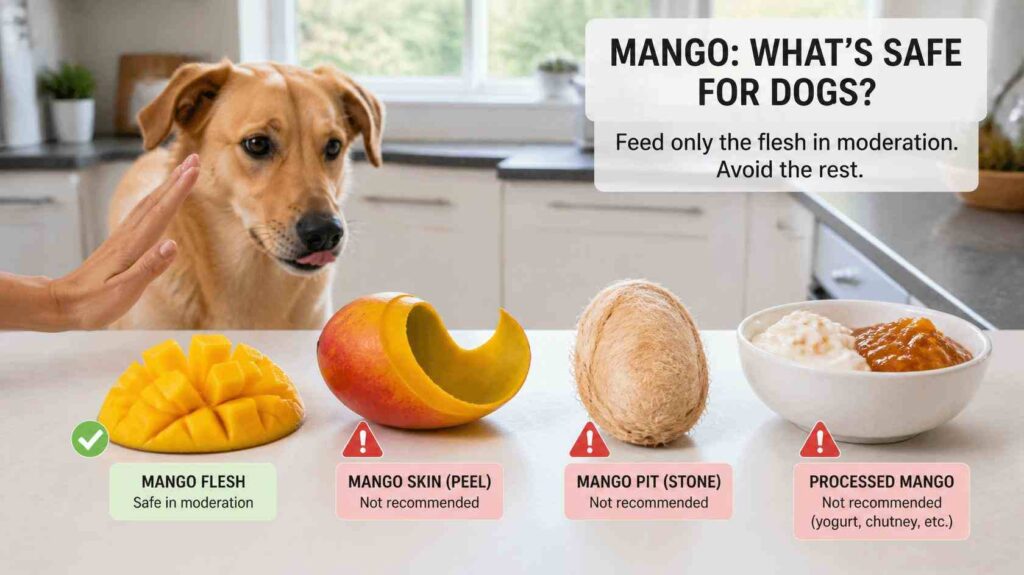
Plain mango flesh is the safest part. Most healthy dogs can tolerate a small amount when it is soft, peeled and cut into appropriately sized pieces.
The main concerns are:
- Eating too much at once
- Pieces that are too large
- Natural sugar and extra calories
- A sensitive digestive system
- Introducing a new food too quickly
Some dogs tolerate fruit without any problem, while others may develop gas, vomiting or loose stools after only a small serving.
Mango Skin or Peel
Mango skin is not recommended for dogs. It is tough, fibrous and more difficult to digest than the flesh, which may increase the likelihood of vomiting, diarrhoea or abdominal discomfort.
Long strips may also become a choking hazard, particularly for:
- Puppies
- Toy and small breeds
- Senior dogs
- Dogs with dental problems
- Dogs that swallow food without chewing
A tiny piece of peel may only require monitoring, but a large quantity or long strips justify a call to your veterinarian for advice.
The Mango Stone or Pit
Never intentionally give a dog a mango stone to chew or lick.
The stone is large, hard and difficult to digest. It can become lodged in the throat, stomach or intestines. A swallowed stone may cause a serious foreign-body obstruction even in a large dog.
A dog can appear comfortable immediately after swallowing it, so the absence of symptoms does not confirm that the stone will pass safely. Contact your veterinarian promptly if you know or suspect that your dog swallowed a whole stone or a large fragment.
Mango-Flavoured Foods and Desserts
Mango yoghurt, smoothies, chutney, sorbet, ice cream, juice and sweets should not be judged by the mango alone. Their other ingredients may create the greater risk.
Check the full ingredient list for:
- Xylitol or other sweeteners
- Onion or garlic
- Raisins or grapes
- Chocolate
- Alcohol
- Added sugar or syrup
- Excessive salt
- Dairy
- High levels of fat
- Spices or flavourings
Keep the packaging if your dog eats a processed mango product. It can help your veterinarian identify the ingredients and assess the risk.
Mango Parts at a Glance
| Mango item | General suitability | Main concern | Recommended response |
|---|---|---|---|
| Small amount of peeled flesh | Usually suitable for a healthy dog | Mild digestive upset or excess sugar | Monitor your dog |
| Large amount of flesh | Not recommended | Vomiting, diarrhoea and extra calories | Monitor closely and seek advice if symptoms develop |
| Small piece of skin | Avoid | Difficult digestion | Monitor based on the amount and your dog’s size |
| Large strips of peel | Unsafe | Choking or digestive blockage | Contact a veterinarian for advice |
| Chewed stone | Unsafe | Sharp fragments, choking or obstruction | Contact a veterinarian promptly |
| Swallowed whole stone | Potential emergency | Stomach or intestinal obstruction | Contact a veterinarian immediately |
| Mango dessert or processed product | Depends on ingredients | Toxic or unsuitable additives | Check the label and contact a veterinarian if uncertain |
Is Mango Actually Good for Dogs?
Mango contains dietary fibre, beta-carotene, potassium and vitamins A, B6, C and E. It also has a relatively high water content.
That nutritional list sounds impressive, but it needs context. A dog eating a complete and balanced diet should already receive the nutrients needed for normal health. The few pieces of mango offered as a treat are unlikely to produce a measurable improvement in immunity, digestion, hydration, skin or coat condition.
Mango is therefore best viewed as:
- An occasional treat
- A source of food variety
- A soft reward for some senior dogs
- A small enrichment ingredient
- An alternative to some highly processed treats
It should not be used as a treatment for constipation, dehydration, vitamin deficiency or any medical condition.
A small amount of mashed mango may work in a lick mat or enrichment toy, but it should still count toward your dog’s total daily treat allowance.
The Real Risks and Why They Are Different
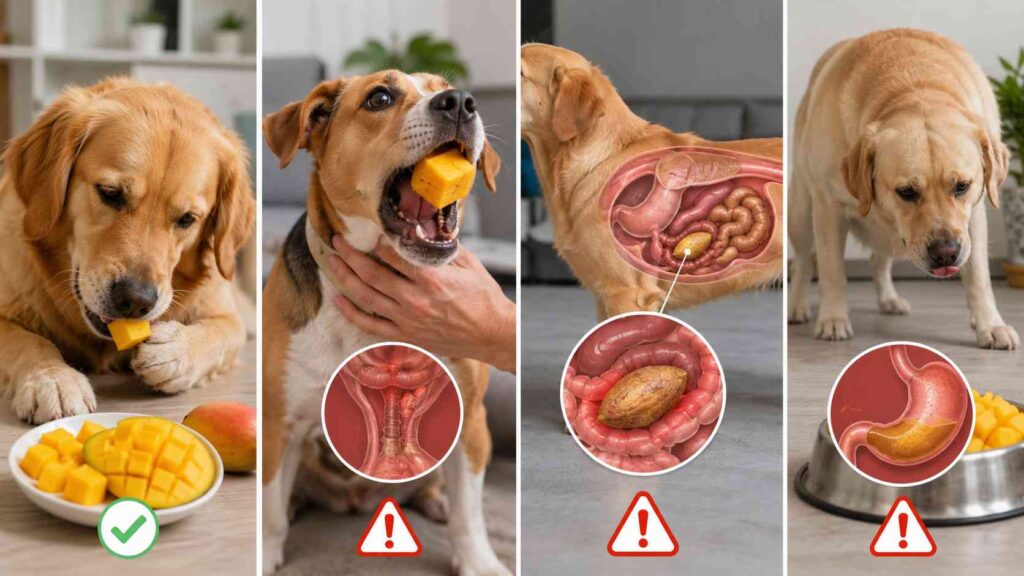
“Mango can be risky” is too vague to help an owner make a safe decision. The main hazards need to be considered separately.
Choking
Large mango cubes, long strips of peel, hard frozen chunks and the stone itself may become lodged in the throat.
The risk is higher in:
- Small dogs
- Puppies
- Senior dogs
- Fast eaters
- Dogs with swallowing difficulties
- Dogs with missing or painful teeth
Cutting mango into smaller pieces reduces risk, but dogs that gulp food may be safer with a small amount of mashed fruit rather than cubes.
Intestinal Obstruction
The mango stone is the most serious concern. It cannot be properly digested and may become trapped in the stomach or intestines.
Possible signs include:
- Repeated vomiting or retching
- Refusing food
- Abdominal pain
- Restlessness
- Lethargy
- Straining to pass stool
- Reduced or absent bowel movements
- A swollen or tense abdomen
- Inability to keep water down
These signs may not appear immediately. Do not wait for them before contacting a veterinarian after a known stone ingestion.
Digestive Upset
Too much mango, a sudden dietary change or individual sensitivity may cause:
- Soft stools
- Diarrhoea
- Gas
- Vomiting
- Abdominal discomfort
A single mild episode in an otherwise bright, comfortable dog may settle after mango is removed from the diet. Repeated vomiting, ongoing diarrhoea, lethargy, pain or inability to drink warrants veterinary advice.
Puppies, toy breeds, senior dogs and dogs with existing illnesses can become dehydrated more quickly and should be monitored carefully.
Weight, Diabetes and Dental Concerns

Mango contains natural sugar, but “natural” does not mean calorie-free or suitable for every dog.
Extra caution is needed for dogs with:
- Diabetes
- Obesity
- A weight-loss plan
- Dental disease
- Chronic gastrointestinal problems
- A prescription diet
Diabetic dogs often need consistent meals and controlled carbohydrate intake. Mango should only be added with the approval of the veterinarian managing the dog’s condition.
Repeatedly feeding sticky, sugary fruit may also be a poor choice for dogs with plaque, gum disease or limited dental care.
Digestive Intolerance Versus an Allergic-Type Reaction
Vomiting, gas, loose stool and mild abdominal discomfort are more consistent with digestive intolerance or overfeeding.
Possible allergic-type signs include:
- Hives
- Intense itching
- Facial swelling
- Swelling around the mouth or eyes
- Breathing difficulty
- Collapse
Breathing difficulty, significant swelling or collapse requires emergency veterinary care.
Warning: If Your Dog Swallowed a Mango Stone
Contact your veterinarian promptly, even if your dog currently appears normal.
Before calling, note:
- The time the stone was swallowed
- Whether it was whole or chewed
- Your dog’s approximate weight
- The size of the stone
- Any symptoms already present
Do not induce vomiting unless a veterinarian specifically instructs you to do so. A large or irregular object may cause further injury or become lodged while coming back up. Do not assume that a large dog will pass the stone safely, and do not wait for repeated vomiting before seeking help.
How Much Mango Can a Dog Have?

Start with a tolerance test: offer one small, soft piece and avoid introducing any other new foods that day. Even if your dog eats it eagerly and asks for more, wait to see how their stomach responds before offering mango again.
Portions should remain modest. These examples are general starting points, not exact veterinary dosages.
| Dog size | First serving | Occasional serving | Piece-size guidance | Extra caution |
|---|---|---|---|---|
| Toy | Tiny taste | Very small amount | Finely diced or mashed | Choking and calorie intake |
| Small | One small piece | A few small pieces | Smaller than a standard cube | Sensitive digestion |
| Medium | One small cube | Several bite-sized pieces | Soft and easy to chew | Total daily treat calories |
| Large | One or two small cubes | Small, controlled serving | Cut into manageable pieces | Large dogs can still develop an obstruction |
| Giant | Small test portion | Modest serving only | Avoid oversized chunks | Body size does not make the stone safe |
Two separate risks are being managed here:
- Portion size controls sugar and calories.
- Bite size reduces choking risk.
A small serving offered as one large chunk can still be unsafe, especially for a dog that gulps food.
Mango must also fit within your dog’s total daily treat allowance. Count training rewards, dental chews, table scraps and other snacks together rather than treating each one as a separate allowance. Complete and balanced dog food should continue to provide the overwhelming majority of your dog’s nutrition.The American Animal Hospital Association (AAHA) Nutrition and Weight Management Guidelines also emphasize that treats should remain a small part of a dog’s overall diet, while complete and balanced nutrition should remain the priority.
Quick Tips
- Choose ripe, fresh mango.
- Wash the fruit before cutting it.
- Remove all the skin.
- Remove the entire stone.
- Cut pieces to suit your dog’s mouth and eating habits.
- Mash the fruit for fast eaters or dogs with dental problems.
- Offer one tiny piece the first time.
- Supervise your dog while eating.
- Count mango within the total daily treat allowance.
- Dispose of the stone where your dog cannot reach it.
Safe Preparation: From Whole Fruit to Dog Treat

Wash your hands and the mango before cutting it. Check the fruit for mould, fermentation or an unusual smell, then remove the skin and cut the flesh completely away from the stone.
Dispose of the stone securely rather than leaving it in an open bin that your dog can raid. Cut or mash the flesh, measure the serving before offering it, and serve it plain.
Ripe mango is softer and easier to portion. Unripe mango is firmer, more acidic and harder to chew, so it is not the best choice. Never feed fruit that is mouldy, fermented or spoiled.
Fallen mangoes also need caution. Fruit left outdoors may be fermented, contaminated, damaged by insects or accessible with the stone still inside.
Suitable Serving Formats
- Tiny pieces of fresh, peeled mango
- A small amount of mashed mango
- A thin topping on the dog’s regular food
- A measured portion spread inside an enrichment toy
- A small amount of mashed mango frozen in a lick mat
Formats to Avoid
- Large or hard frozen chunks
- Whole mango slices
- Pieces with skin attached
- The stone offered for licking or chewing
- Sweetened mango purée
- Mango served in syrup
- Fruit mixed with sweetened yoghurt or dessert ingredients
Fresh, Frozen, Dried or Processed: Which Forms Are Suitable?
Plain fresh mango is the easiest form to control, but other products may contain concentrated sugar, unsafe ingredients or pieces that create a choking hazard.
| Mango format | Main concern | General suitability | What to check |
|---|---|---|---|
| Fresh peeled mango | Portion size | Best-controlled option | Ripeness and spoilage |
| Frozen mango | Hardness and choking | Suitable only in small, manageable portions | Piece size and firmness |
| Dried mango | Concentrated sugar and calories | Rare, very small amounts only | Added sugar and preservatives |
| Freeze-dried mango | Concentrated serving | Limited use | Ingredients and portion size |
| Canned mango | Syrup or sweeteners | Usually best avoided | Packing liquid and added sugar |
| Mango juice | High sugar and little fibre | Not recommended | Added sweeteners |
| Mango yoghurt or smoothie | Sugar, dairy and mixed ingredients | Not automatically safe | Xylitol, lactose and additives |
| Mango sorbet or ice cream | Sugar, fat and sweeteners | Avoid | Xylitol and dairy |
| Mango chutney | Onion, garlic, salt and spices | Avoid | Complete ingredient list |
Frozen mango is not automatically safer than fresh mango. Large, hard pieces can be difficult to chew and may damage teeth or become a choking hazard. For a cooling treat, a measured amount of mashed mango spread thinly in a lick mat is safer than a whole frozen cube.
Dried and freeze-dried mango contain less water than fresh fruit, so the sugar and calories are more concentrated. A dried piece should not be treated as equivalent to the same-sized piece of fresh mango.
Which Dogs Need Extra Caution?

Puppies
Puppies should receive no more than a tiny first taste once their normal diet is well established. Complete puppy food must remain the priority because treats can displace the nutrients needed for growth.
Avoid introducing mango when a puppy already has diarrhoea, vomiting or a recent diet change.
Dogs With Diabetes
Mango contains natural sugar, which can still affect blood-glucose management. A diabetic dog should only receive mango if the veterinarian managing the condition approves it.
Overweight Dogs
Mango is not a calorie-free “healthy” snack. Any serving must be counted within the dog’s weight-loss or calorie-control plan. A lower-calorie training treat may be a better choice for frequent rewards.
Dogs With Sensitive Stomachs
Dogs with chronic digestive problems or a history of food intolerance may develop diarrhoea, gas or vomiting after fruit. Mango is best avoided during an active digestive flare-up.
Dogs With Pancreatitis
Plain mango is low in fat, but dogs recovering from pancreatitis are often kept on carefully controlled diets. Unapproved extras can still trigger digestive upset or interfere with the feeding plan. Mango desserts may also contain substantial fat.
Dogs on Prescription or Elimination Diets
Even a small amount of mango can interfere with:
- Food-allergy elimination trials
- Hydrolysed diets
- Gastrointestinal diets
- Kidney diets
- Diabetes diets
- Veterinary weight-management diets
Do not introduce mango during a diet trial or therapeutic feeding plan without veterinary approval.
Dogs With Swallowing or Dental Problems
Dogs that gulp food, have missing teeth, experience mouth pain or have difficulty swallowing may not handle mango cubes safely. A tiny mashed serving may reduce the risk for some dogs, but veterinary guidance is sensible when swallowing problems are known.
Vet Advice: Ask Before Feeding Mango If Your Dog
- Has diabetes
- Has chronic gastrointestinal disease
- Has a history of pancreatitis
- Is on a prescription diet
- Is undergoing an elimination trial
- Is significantly overweight
- Has swallowing difficulties
- Has reacted badly to fruit before
- May have swallowed a mango stone
My Dog Already Ate Mango—What Should I Do?

The correct response depends on the part eaten, the amount, your dog’s size and health, and whether symptoms are developing.
One Small Piece of Peeled Flesh
Remove any remaining mango, note approximately how much was eaten and keep fresh water available. Monitor your dog for vomiting, diarrhoea, gas or discomfort.
Avoid offering more mango or any other new food that day.
A Large Amount of Mango Flesh
The main concerns are digestive upset, excess sugar and extra calories rather than poisoning.
Consider:
- Your dog’s size
- How much was eaten
- Whether your dog has diabetes
- Whether your dog has a sensitive stomach
- Whether symptoms are developing
Contact a veterinarian if vomiting or diarrhoea continues, your dog becomes lethargic, appears painful or cannot keep water down.
Mango Skin
Work out whether your dog swallowed a few small fragments or several long strips.
Contact a veterinarian for advice if:
- A large amount was eaten
- Your dog is very small
- Repeated vomiting begins
- Your dog appears painful or lethargic
- Your dog strains without producing stool
- Bowel movements become reduced or absent
A Chewed or Swallowed Mango Stone
Call a veterinarian promptly, even if your dog appears normal.
Do not:
- Wait for symptoms
- Try to make your dog vomit unless instructed
- Give extra food in an attempt to push the stone through
- Assume the stone will pass because your dog is large
Record when the incident occurred and whether the stone was swallowed whole or chewed. If possible, keep another mango or photograph the remaining fruit so the veterinarian can estimate the stone’s size.
A Mango Dessert or Packaged Product
Save the packaging and read the complete ingredient list.
Look specifically for:
- Xylitol
- Onion
- Garlic
- Raisins or grapes
- Chocolate
- Alcohol
- Excess salt
- High-fat dairy ingredients
Contact a veterinarian or animal poison service promptly if the product contains a known harmful ingredient, the label is unclear, or your dog develops symptoms. If you’re unsure whether an ingredient is safe, the ASPCA’s guide to people foods that should not be fed to pets can help you identify common foods that are dangerous for dogs.
When to Worry: A Quick Symptom Guide

| Level | Possible signs | What to do |
|---|---|---|
| Monitor | Mild gas, one soft stool, otherwise bright and comfortable | Stop feeding mango and continue monitoring |
| Contact a vet | Repeated vomiting, ongoing diarrhoea, reduced appetite or abdominal discomfort | Contact your veterinarian for advice |
| Urgent | Repeated retching, inability to keep water down, marked lethargy, a swollen abdomen or obvious pain | Seek urgent veterinary care |
| Emergency | Trouble breathing, pale or blue gums, collapse, severe facial swelling or suspected choking | Go to an emergency veterinary clinic immediately |
A single soft stool after a first taste may settle once mango is removed. Symptoms that are repeated, worsening or accompanied by pain, weakness or difficulty breathing should not be managed at home.
Common Mistakes Dog Owners Make With Mango
- Letting the dog use the stone as a chew toy
- Leaving the skin attached
- Assuming natural fruit sugar does not count
- Feeding dried mango in fresh-fruit-sized portions
- Offering large, hard frozen chunks
- Giving too much during the first taste
- Allowing fruit to replace part of a complete meal
- Feeding mango daily because it contains vitamins
- Offering it during an elimination diet
- Assuming a large dog cannot develop an obstruction
- Waiting for symptoms after a stone is swallowed
- Inducing vomiting without veterinary instruction
- Feeding mango chutney or sweetened mango products
- Forgetting to count mango within the daily treat allowance
One of the most common errors is focusing only on the amount eaten. A small serving can still be unsafe if it includes a large chunk, a strip of peel or part of the stone.
Mango vs Other Occasional Fruit Treats
| Fruit | Preparation needed | Sweetness | Main hazard | Best suited for |
|---|---|---|---|---|
| Mango | Remove skin and stone | Higher | Stone and oversized pieces | Occasional variety |
| Blueberries | Wash and portion | Moderate | Overfeeding or gulping | Small training rewards |
| Strawberries | Remove leaves and cut | Moderate | Sweetened toppings | Soft fresh treat |
| Watermelon | Remove rind and seeds | Lower to moderate | Rind and large chunks | Warm-weather treat |
| Banana | Peel and portion | Higher | Excess calories | Tiny soft servings |
| Apple | Remove core and seeds | Moderate | Core, seeds and large pieces | Crisp occasional treat |
For a healthy dog, any of these fruits can work as an occasional treat when properly prepared and portioned. The better choice depends on the dog.
Blueberries or small pieces of seedless watermelon may suit dogs that need lower-calorie treats. Mango or banana may be less suitable for dogs with diabetes, excess weight or poor dental health because they are relatively sweet and easy to overfeed.
Fruit is optional, not a nutritional requirement. A dog that does not tolerate fruit is not missing anything essential if it already eats a complete and balanced diet.
The Bottom Line
Dogs can eat small amounts of ripe, peeled mango flesh, but safe preparation matters more than the fruit’s nutritional benefits.
Remove the skin and stone, cut the flesh into manageable pieces and offer only a modest amount. Mango should remain an occasional extra that fits within your dog’s total treat allowance.
If your dog eats the peel, swallows the stone or gets into a processed mango product, identify exactly what was eaten and how much. Contact your veterinarian promptly if a stone may have been swallowed, an unsafe ingredient is involved or symptoms are developing.
When the situation is unclear, a quick veterinary call is safer than waiting for a preventable problem to become an emergency.
Frequently Asked Questions
1.Can Puppies Eat Mango?
Yes, but only as a tiny occasional taste once the puppy is settled on a complete diet. Puppy food is formulated to support growth, so fruit should never displace regular meals.
Cut the mango very small or mash it, supervise closely and avoid introducing it during diarrhoea, vomiting or a recent food change.
2.Can Dogs Eat Mango Every Day?
Mango is better kept as an occasional treat rather than a daily habit. Frequent servings can add unnecessary sugar and calories, and some dogs may develop loose stools or gas from the extra fibre.
Dogs that enjoy mango do not need it every day to receive its nutrients.
3.Can a Mango Stone Pass Through a Dog Naturally?
It may pass in some cases, but there is no safe way to predict that at home. A mango stone is large, hard and irregularly shaped, so it can become trapped in the throat, stomach or intestines.
Contact a veterinarian promptly after a known or suspected stone ingestion, even if the dog appears normal. Do not induce vomiting unless specifically instructed to do so.
4.Can Dogs Eat Frozen Mango?
Small portions of frozen mango may be suitable, but hard chunks can become a choking hazard or damage teeth.
A safer option is to mash the mango and spread a thin layer on a lick mat before freezing it. Always supervise your dog and keep the serving modest.
5.Can Dogs Eat Dried Mango?
Plain dried mango is not usually toxic, but it is much more concentrated in sugar and calories than fresh mango. It should only be offered rarely and in very small pieces.
Avoid products containing added sugar, syrup, sweeteners, spices or preservatives your dog has not previously tolerated.
6.Can Diabetic Dogs Eat Mango?
Only with approval from the veterinarian managing the diabetes. Mango contains natural sugar, which can affect blood-glucose control and interfere with a carefully planned feeding routine.
Do not assume a food is suitable for a diabetic dog simply because it is natural.
7.Can Dogs Be Allergic to Mango?
An allergic reaction is possible, although digestive intolerance is more common.
Vomiting, gas or loose stools usually suggest that the food did not agree with the dog. Hives, intense itching, facial swelling, breathing difficulty or collapse are more concerning and require urgent veterinary care.
#. Related Articles: