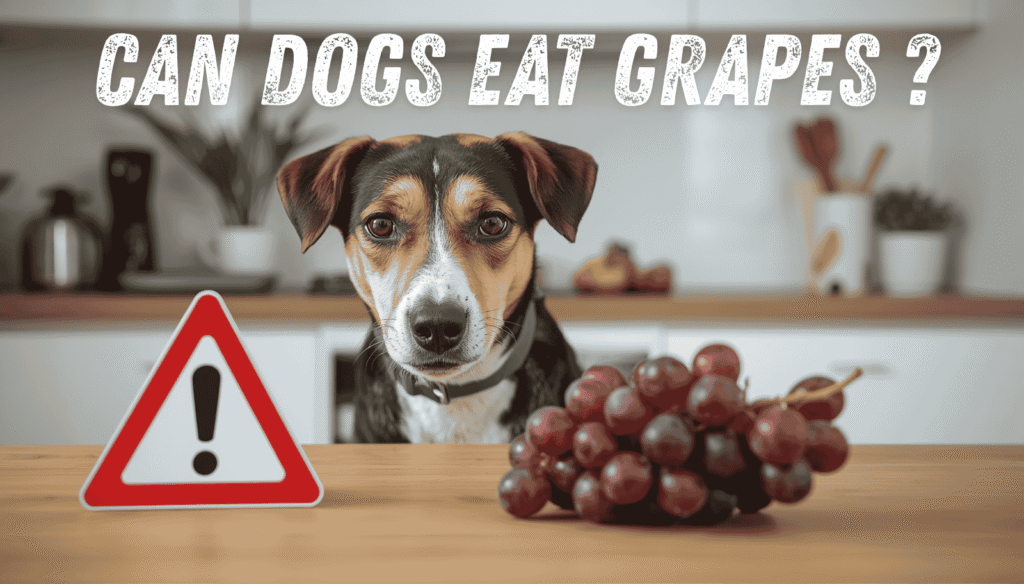
⚠️ Short answer: No. Grapes are toxic to dogs — even a single grape can trigger life-threatening kidney failure in some dogs. If your dog just ate grapes, scroll down to the “What To Do” section immediately.
You’re snacking on a bunch of grapes, your dog gives you those eyes, and you almost toss one over — we’ve all been there. It seems harmless. After all, grapes are a natural fruit, right?
But here’s the thing: grapes are one of the most dangerous foods you can accidentally give your dog. And what makes this scarier is that vets still don’t fully understand why they’re so deadly. There’s no safe dose. No “just one is fine.” The risk is completely unpredictable.
This guide will explain everything clearly — the science, the symptoms, exactly what to do in an emergency, and safer treat alternatives your dog will love just as much.
Why Are Grapes Toxic to Dogs?
This is where it gets interesting — and a little unsettling. Despite years of research, veterinary scientists have not pinpointed the exact compound in grapes that causes poisoning. Several theories exist: tartaric acid (a naturally occurring compound in grapes) is currently the most supported suspect, but it hasn’t been definitively proven.
What we do know is this: grapes cause acute kidney injury in dogs. The kidneys essentially stop filtering waste products from the blood, which can be fatal if not treated quickly.
📌 Important: The toxicity isn’t limited to one type of grape. Red grapes, green grapes, seedless grapes, peeled grapes, homegrown grapes — all are potentially dangerous. The form doesn’t matter.
What about raisins, sultanas, and currants?
These are dried forms of grapes — and they’re actually more concentrated in toxicity per gram. A small box of raisins is far more dangerous than a single fresh grape. Sultanas and currants (common in UK baking) carry the same risk.
This matters in the UK especially, where foods like hot cross buns, Christmas cake, mince pies, and fruit scones are household staples — and all contain raisins or currants. Keep these completely out of reach of your dog year-round, not just at Christmas.
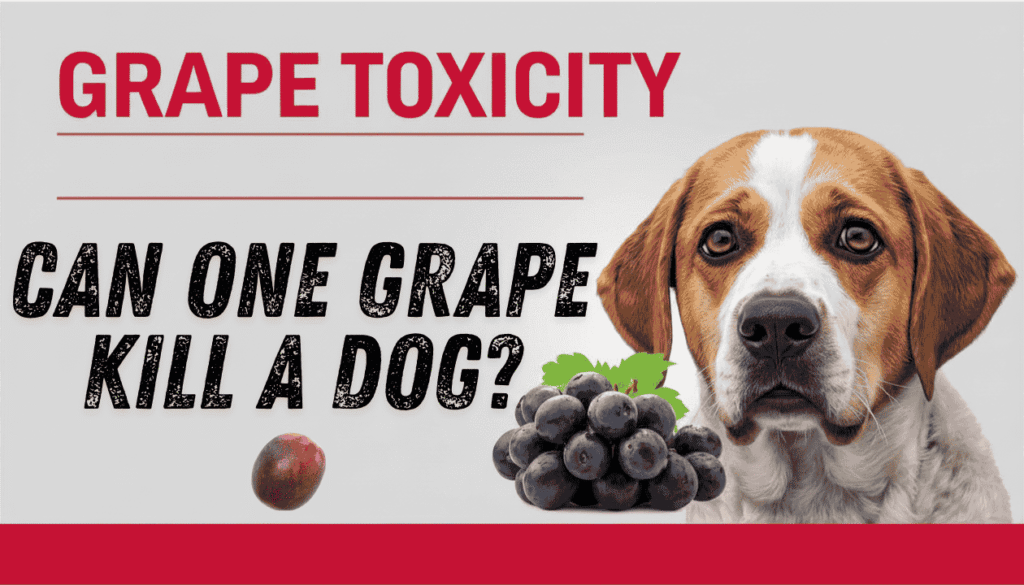
Can One Grape Kill a Dog?
Potentially, yes — and this is not an exaggeration. Some dogs have experienced severe kidney failure from eating just one or two grapes. Others have consumed more and shown no symptoms at all.
That unpredictability is exactly why vets treat every case of grape ingestion as a potential emergency.
There is no established “safe” amount. Body weight, age, individual sensitivity, and even the specific grape variety may all play a role — but since we can’t predict which dog will react severely, the guidance from vets across the UK, Australia, and Canada is consistent: zero grapes, zero risk.
Symptoms of Grape Poisoning in Dogs
Symptoms can begin within 6–12 hours of eating grapes, though kidney failure signs may not appear until 24–72 hours later. Here’s what to watch for:
Early signs (0–12 hrs) -> Vomiting, diarrhoea, lethargy, loss of appetite, abdominal pain
Later signs (12–48 hrs) -> Decreased or no urination, excessive thirst, weakness, tremors
Severe signs (kidney failure) -> Complete inability to urinate, seizures, loss of consciousness, coma
Vomiting is often the very first sign — and it’s actually a good thing in this context, because it means your dog’s body is trying to expel the toxin. But vomiting alone does not mean your dog is safe. Kidney damage can still be occurring silently.
🐾 Real example: A 10kg Beagle who ate four grapes may show no symptoms for 24 hours, then suddenly go into kidney failure. This is why you cannot “wait and see.”
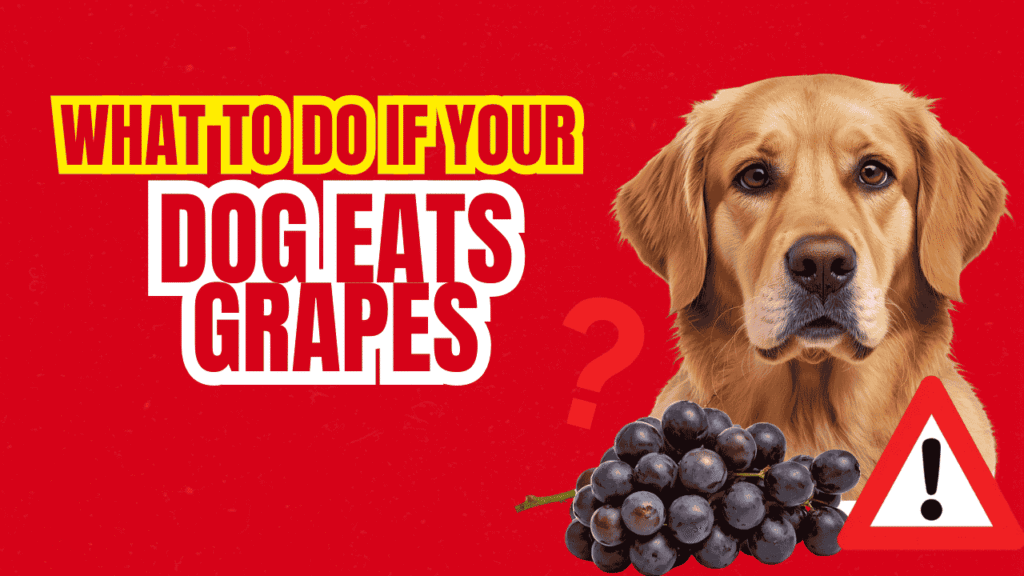
What To Do If Your Dog Eats Grapes
Act fast. Time matters a great deal here. The sooner your vet can induce vomiting and start treatment, the better your dog’s prognosis.
- Stay calm and don’t wait for symptoms. Do not adopt a “wait and see” approach. Symptoms showing up later doesn’t mean your dog is fine.
- Call your vet or emergency animal poison line immediately. In the UK, you can contact the Animal Poison Line (01202 509000). In Australia, contact the Animal Poisons Helpline (1300 869 738). In Canada, call the ASPCA Poison Control or your nearest emergency vet.
- Note how many grapes were eaten and when. Your vet will want to know the approximate amount, the time of ingestion, and your dog’s weight. Even rough estimates are helpful.
- Do NOT induce vomiting at home unless specifically instructed by a vet. Some home methods can cause more harm than good.
- Get to a vet clinic — don’t drive there waiting for a callback. Frequently Asked QuestionsHead in while you’re on the phone if needed.
How vets treat grape poisoning
Your vet may induce vomiting if ingestion was recent (typically within 1–2 hours). They’ll likely administer activated charcoal to absorb any remaining toxins, followed by IV fluids to flush the kidneys and support kidney function. Blood and urine tests will be used to monitor kidney health over 48–72 hours.
Dogs caught early and treated aggressively have a much better outlook. Dogs that develop full kidney failure before treatment begins have a more guarded prognosis.
Grape Products Dogs Must Avoid
It’s not just fresh grapes you need to worry about. Here’s a full list of grape-derived products that are toxic to dogs:
- Raisins — in cereals, trail mix, baked goods
- Sultanas — in fruit cakes, muffins, hot cross buns
- Currants — in Christmas cake, scones, mince pies
- Grape juice and grape-flavoured drinks
- Wine and wine-based products
- Grape seed extract supplements
- Fruit salads containing grapes
- Homemade jams containing grape products
🚨 A reminder for UK dog owners: mince pies, Christmas pudding, and fruit cake all contain raisins or currants. Keep these off tables and counters during the holiday season.
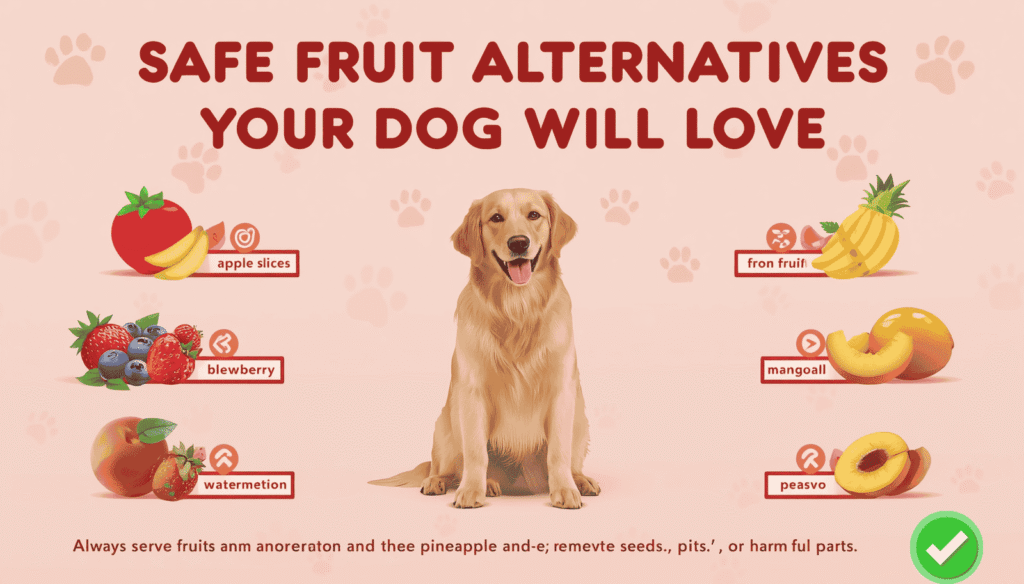
Safe Fruit Alternatives Your Dog Will Love
Your dog doesn’t need to miss out on fruity treats. Plenty of fruits are safe and nutritious for dogs in moderate amounts. Here are some crowd-pleasers:
🍎 Apple slices 🫐 Blueberries 🍓 Strawberries 🍉 Watermelon
🍌 Banana 🍍 Pineapple 🥭 Mango 🍑 Peach (no pit)
Always remove seeds and pits before giving fruit to your dog, and keep portions small. Too much fruit — even safe fruit — can cause digestive upset due to natural sugars.
💡 Tip: Freeze blueberries or small watermelon chunks for a cooling summer treat. Your dog gets the fun of a “snack toss” moment — safely.
Frequently Asked Questions
1.My dog ate one grape an hour ago. Should I go to the vet?
Yes, call your vet or an animal poison helpline right now. One grape can be enough to cause harm in some dogs. Acting within the first hour gives vets the best chance to induce vomiting and prevent kidney damage. Never wait for symptoms to appear.
2.Are green grapes safer than red grapes for dogs?
No. The colour of the grape makes no difference. Both green and red grapes are equally toxic to dogs. The same applies to seedless varieties — removing seeds does not remove the toxin.
3.My dog ate grapes before and seemed fine. Does that mean they’re safe for my dog?
Not at all. Grape toxicity in dogs is unpredictable — a dog can eat them with no reaction one time and suffer severe kidney failure the next. There’s no way to predict which exposure will cause damage. It’s not worth the risk.
4.Can dogs recover fully from grape poisoning?
Yes — if treated early. Dogs that receive prompt veterinary care (within 1–2 hours of ingestion) often recover fully with no lasting kidney damage. Dogs who develop severe acute kidney failure before treatment have a significantly worse prognosis. Speed of treatment is everything.
5.Are raisins more dangerous than grapes for dogs?
Yes — raisins are dried grapes, which means the toxic compounds are more concentrated per gram. Even a small amount of raisins is considered more dangerous than the equivalent weight in fresh grapes. Common household foods like hot cross buns, mince pies, and fruit cake all contain raisins or currants and should be kept far away from dogs.
6.How long after eating grapes will a dog get sick?
Initial symptoms like vomiting and lethargy can appear within 6–12 hours. However, the most serious sign — kidney failure — may not be obvious until 24–72 hours later. This is why you must not wait for symptoms. Your dog may seem fine for a day and still be suffering internal kidney damage.
7.Can cats eat grapes? Is this only a dog problem?
While grape toxicity is best documented in dogs, vets advise keeping grapes away from cats too, as a precaution. Cats are obligate carnivores and generally less likely to eat fruit, but the risk is not worth taking.
Final Thoughts
Grapes might be a healthy snack for humans, but for dogs they’re a genuine danger — one that vets treat as an emergency every single time. The most important thing to remember is this: there is no safe amount, and there is no “wait and see.” If your dog eats even one grape, call a vet immediately.
Keep grapes, raisins, and grape products out of reach at all times. Swap out the grape habit for blueberries or apple slices — your dog will be just as excited, and you’ll both be safe.
When in doubt about any food, your vet is always your best first call. No question is too small when it comes to your dog’s safety.
#. Related Articles: