
If your dog just swiped a chip off the floor, or you’re wondering whether to share a little of your baked potato, the real question isn’t simply “is potato good for dogs?” It’s which potato, prepared how, and how much?
Plain, fully cooked, non-green potato can be an occasional extra for many healthy dogs. Raw, green, or sprouted potato is a different situation, and seasoned or fried potato can introduce additional risks from ingredients such as onion, garlic, excess fat, and salt.
If your dog has already eaten potato and you’re worried, skip ahead to the section on accidental ingestion. Otherwise, start by identifying exactly what kind of potato you’re dealing with.
Before You Decide Whether Potato Is “Good,” Identify the Potato
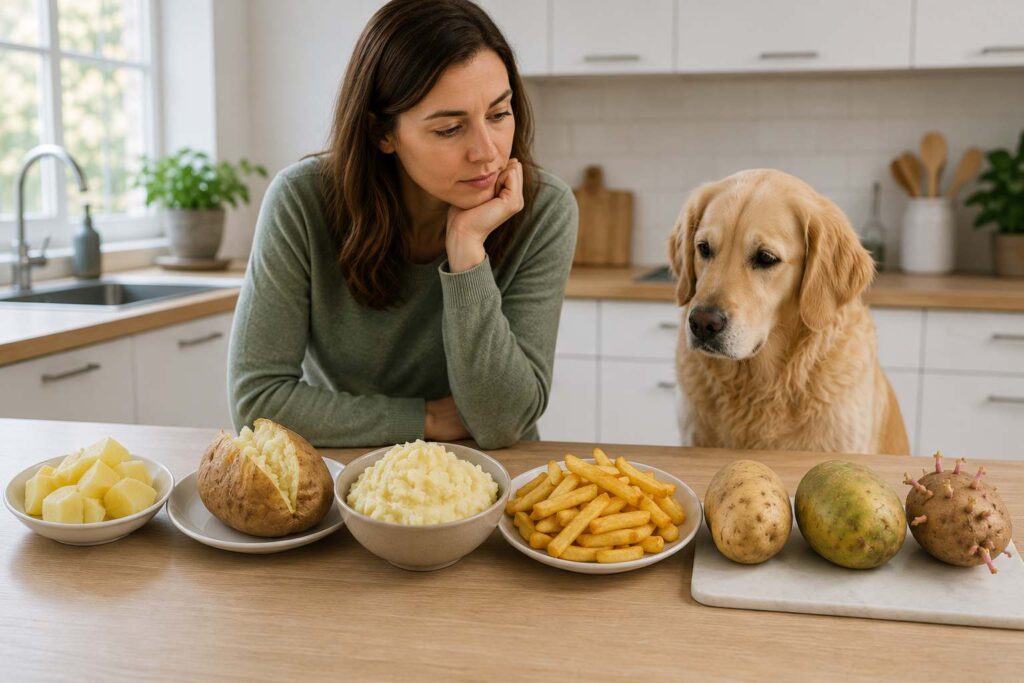
“Potato” can describe several very different foods, and they don’t all carry the same risk.
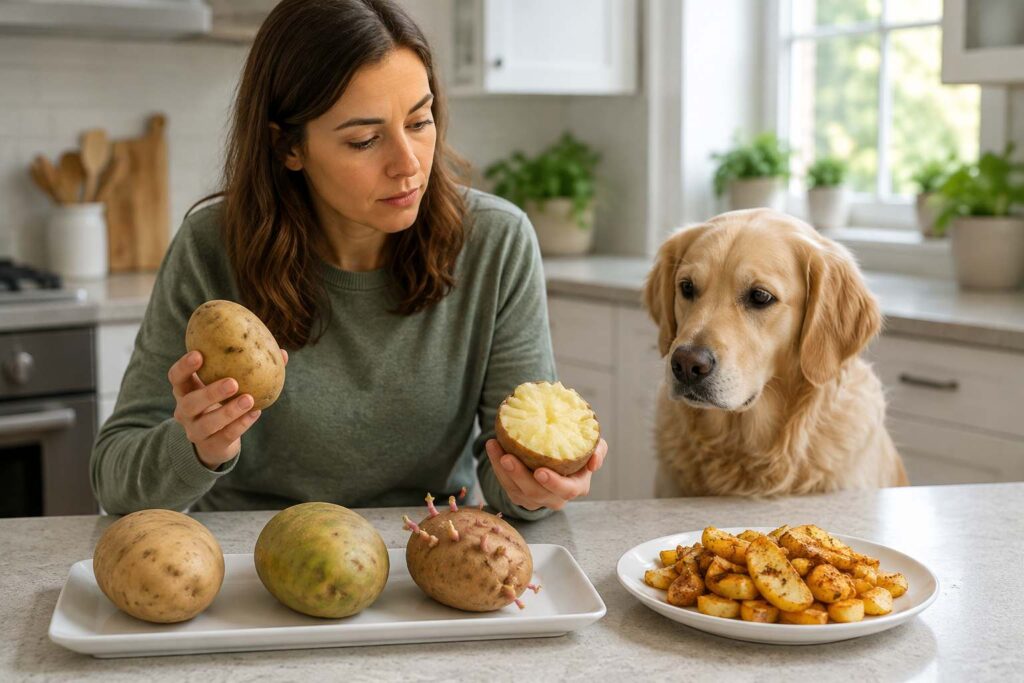
Plain, fully cooked potato: Boiled, baked, or steamed potato that isn’t green and has no added seasoning, butter, oil, or sauce. This is the form that may be suitable as an occasional extra.
Raw potato: Not a good choice for intentional feeding. Raw potato contains naturally occurring glycoalkaloids and is also firm and less digestible than cooked potato.
Green potato: Green colouring is a useful warning sign that the potato may contain increased concentrations of glycoalkaloids. Don’t intentionally feed green potatoes, even after cooking.
Sprouted potato: Sprouts and surrounding areas can contain higher concentrations of glycoalkaloids. Sprouting potatoes should be kept away from dogs rather than trimmed and used as treats.
Potato in a human meal: Mashed potatoes, roast potatoes, fries, hash browns, potato salad, and loaded baked potatoes need to be judged by the entire recipe. Onion, garlic, rich fats, sauces, and excessive salt may matter more than the potato itself.
Quick Potato Safety Check
Before offering potato to your dog, check:
- Is it fully cooked?
- Is it completely free from green colouring?
- Are there no sprouts?
- Is it plain and unseasoned?
- Is there no onion or garlic?
- Is there no gravy, cream, or rich sauce?
- Is it free from excessive butter, cheese, oil, and salt?
- Is the piece soft and appropriately sized for your dog?
- Is the portion genuinely small?
- Does it fit your dog’s current health and diet?
- Is it an occasional extra rather than a regular part of meals?
If you’re answering “no” or “I’m not sure” to several of these questions, don’t intentionally feed it until you know what you’re dealing with.
The Potato Risk Map
| Potato Situation | General Assessment | Main Concern | What to Do |
|---|---|---|---|
| Plain boiled potato | Usually lower concern | Portion and individual tolerance | Offer only a small amount |
| Plain baked potato | Usually lower concern | Portion size | Serve plain with no toppings |
| Plain mashed potato | Depends on recipe | Added ingredients | Check everything that went into it |
| Raw potato | Avoid intentionally | Glycoalkaloids, GI upset, firm texture | Assess what and how much was eaten |
| Green potato | Avoid | Increased glycoalkaloid concern | Contact your vet if a meaningful amount was eaten or you’re unsure |
| Sprouted potato | Avoid | Glycoalkaloids, especially around sprouts | Prevent access and seek advice after concerning exposure |
| Potato skin | Depends on its condition | Green/sprouted areas are more concerning | Inspect the potato rather than treating all skin alike |
| Fries or chips/crisps | Poor treat choice | Fat, salt, and seasonings | Don’t use as a routine treat |
| Loaded or seasoned potato | Potentially unsafe | Other ingredients may change the risk | Check the full recipe |
| Potato in commercial dog food | Different situation | Overall nutritional formulation | Assess the complete diet, not potato alone |
Why Green and Sprouted Potatoes Change the Answer

Potatoes belong to the nightshade family and naturally contain compounds called glycoalkaloids, principally α-solanine and α-chaconine. The amount isn’t identical in every potato and can be influenced by factors such as variety, storage conditions, light exposure, damage, and sprouting.
That variation is important because the risk from an ordinary cooked potato cannot simply be applied to a green or heavily sprouted one.
Green Doesn’t Mean “Green Poison”
The green colour itself comes from chlorophyll, not solanine. However, greening can occur under conditions that also favour increased glycoalkaloid concentrations.
For a dog owner, the practical lesson is simple: visible green colouring is a warning sign. Don’t deliberately feed that potato or assume that removing one green patch makes the rest suitable as a dog treat.
Sprouts Deserve Particular Attention
Sprouts are easy to overlook. Potatoes stored for too long can begin developing shoots while sitting in a cupboard or pantry, creating an opportunity for a curious dog to get into them.
Don’t deliberately feed the sprouts or a heavily sprouted potato. Store ageing potatoes where pets cannot reach them, and dispose of questionable potatoes securely.
Cooking Isn’t a Rescue Plan for a Questionable Potato
Cooking can affect glycoalkaloid concentrations, but it should not be used as a reason to deliberately feed a visibly green or heavily sprouted potato.
For dog owners, there’s no benefit in trying to salvage one. If it’s green or significantly sprouted, choose another food.
Warning: Don’t Calculate a “Toxic Number of Potatoes” at Home
There isn’t a dependable household rule such as “one raw potato is safe but two are dangerous.” Glycoalkaloid concentrations vary between potatoes, while the dog’s body weight, health, amount eaten, potato condition, and any developing symptoms all affect the assessment.
If your dog has eaten a meaningful amount of green or sprouted potato, or you cannot work out what was eaten, contact your veterinarian rather than relying on an online dose calculator.
Is Cooked Potato Actually Nutritious for a Dog?
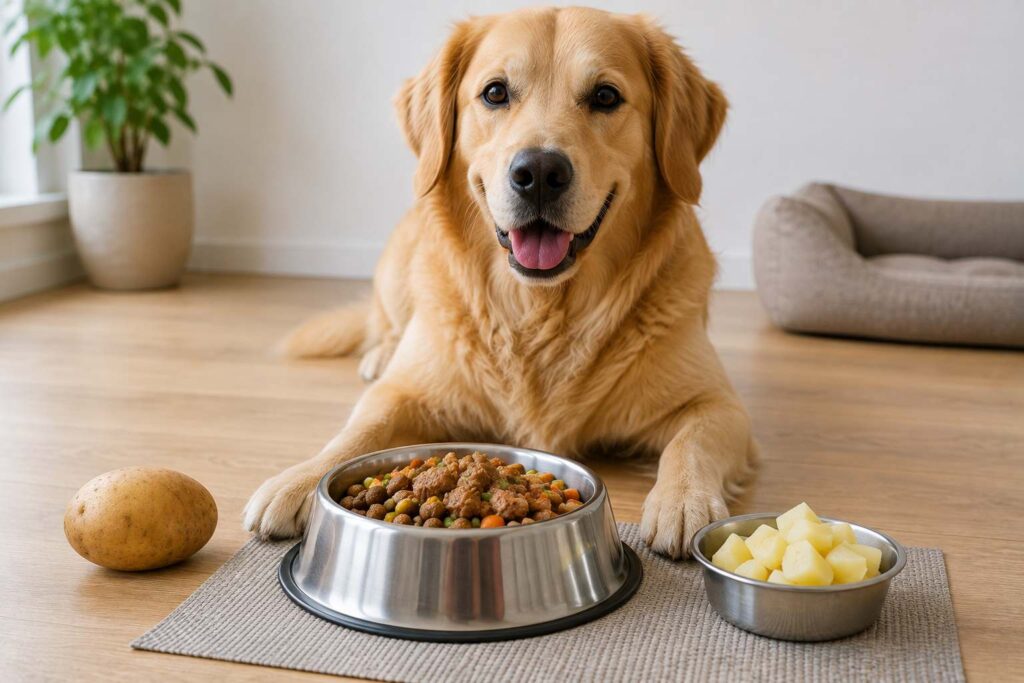
Plain cooked potato does provide some nutritional value, mainly carbohydrate for energy, along with some fibre, potassium, and vitamins. So it isn’t nutritionally empty.
But the more useful question is: does your dog actually need those nutrients from potato? If your dog already eats a complete and balanced diet appropriate for their life stage, potato isn’t filling an essential nutritional gap. It’s an extra food—and its calories still count.
It’s helpful to separate three ideas that often get blurred together: safe, nutritious, and necessary. A food can be safe and contain useful nutrients without being something your dog needs regularly. For most healthy dogs, plain cooked potato fits that description: an optional extra rather than an important part of the diet.
How Much Potato Makes Sense?
Think in terms of your dog’s overall calorie intake rather than human-sized servings. There’s no useful universal “one tablespoon” rule—a portion that’s insignificant for a Labrador could take up a much larger share of a Chihuahua’s daily calories.
WSAVA recommends that treats and other extras generally make up no more than about 10% of a healthy dog’s daily calories, with the rest coming from a complete and balanced diet. Potato has to share that allowance with every other treat and extra your dog receives.
The first time you offer plain cooked potato, start with a small piece. Even a safe new food can cause loose stools, gas, or other digestive upset in an individual dog.
There’s usually no reason to add potato every day. Regular extras can add unnecessary calories and, if given generously enough, begin to displace nutritionally complete food.
Your Dog Already Ate Potato? Here’s How to Assess It

Don’t judge the situation from the word “potato” alone. Work through what actually happened:
- Identify what was eaten. Was it cooked or raw? Normal or green? Sprouted? Flesh, skin, or both? Was it part of another dish?
- Check the other ingredients. Onion, garlic, rich sauces, butter, cream, cheese, salt, and cooking fats can change the assessment.
- Estimate the exposure. Note roughly how much was eaten, when it happened, and your dog’s approximate weight.
- Watch for changes. Vomiting, diarrhoea, abdominal discomfort, unusual weakness or lethargy, tremors, wobbliness, or other abnormal behaviour warrant attention.
- Know when to call your vet. Seek veterinary advice after concerning green or sprouted potato exposure, a substantial or uncertain raw-potato exposure, potentially toxic added ingredients, or if your dog develops symptoms. When in doubt—particularly with a very small dog or one with an existing medical condition—call rather than trying to calculate the risk yourself.
Vet Advice
If you call your vet, have your dog’s weight, the type of potato, whether it was raw, green, or sprouted, the approximate amount eaten, the time of exposure, the full ingredient list if it was part of a dish, current symptoms, and relevant medical conditions or medications ready.
Don’t induce vomiting unless a veterinarian or veterinary poison professional specifically instructs you to do so.
Sometimes the Potato Isn’t the Real Problem
Many “can my dog eat this potato dish?” questions are really ingredient questions.
- Mashed potato: Plain mash is different from mash containing lots of butter, cream, cheese, salt, onion, or garlic.
- Fries, crisps/chips, and hash browns: These are typically high in fat and salt and aren’t suitable routine treats.
- Roast potatoes and wedges: Oil, salt, garlic, onion, and seasoning blends can change the risk.
- Potato salad: Recipes vary considerably and may contain ingredients such as onion, mayonnaise, mustard, or other seasonings.
- Loaded baked potatoes: Cheese, bacon, sour cream, chives, sauces, and other toppings make this very different from plain baked potato.
Check the whole dish before deciding what to do. Onion, garlic, and related Allium ingredients deserve particular attention because they present a separate toxicity concern for dogs.

Some Dogs Need a Different Answer
Puppies: Their main food needs to support growth and remain nutritionally complete. Extras shouldn’t crowd out puppy food.
Overweight dogs: Potato adds calories, so even a technically safe serving may not be a useful treat choice.
Dogs with diabetes: Don’t make dietary changes based on general advice about carbohydrates or glycemic index. Ask your veterinarian how extras fit into your dog’s individual management plan.
Dogs with a history of pancreatitis: Rich potato dishes are particularly poor choices because butter, cream, cheese, oil, and other fatty additions may be more important than the potato itself.
Dogs on prescription diets: Check with your veterinarian before adding extras. Therapeutic diets are prescribed for a reason, and seemingly harmless additions can interfere with the intended feeding plan.
Dogs with suspected food intolerance or allergy: Introduce new foods cautiously and one at a time so any reaction is easier to identify.
Potato Skin: A Better Answer Than “Yes” or “No”
Potato skin deserves more nuance than simply calling all peel “toxic.”
Skin from a normal, non-green potato isn’t the same situation as green or sprouted skin, where glycoalkaloid concentrations are a greater concern. Inspect the whole potato rather than judging risk from the presence of skin alone.
There’s also a separate physical consideration: tough or large pieces can be harder for some dogs to chew and swallow. If you’re deliberately offering plain cooked potato, soft, appropriately sized pieces are the simpler option.
White Potato vs Sweet Potato
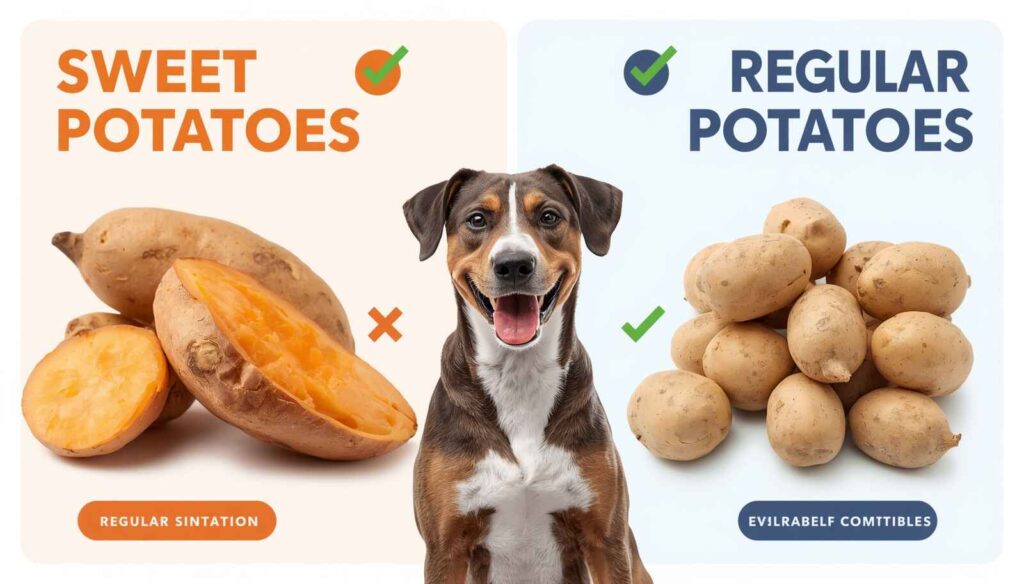
They’re different plants, so their safety considerations aren’t identical.
| Question | White Potato | Sweet Potato |
|---|---|---|
| Nightshade family? | Yes | No |
| Main potato-specific concern | Green or sprouted material and glycoalkaloids | Different safety profile; greening-related glycoalkaloids aren’t the same concern |
| Plain cooked form | Suitable as an occasional extra for many healthy dogs | Suitable as an occasional extra for many healthy dogs |
| Calories still matter? | Yes | Yes |
| Automatically the “healthier” choice? | No | No |
Sweet potato doesn’t carry the same greening and sprouting issue associated with white-potato glycoalkaloids. But that doesn’t automatically make it the better choice for every dog.
Both are starchy extras whose suitability depends on preparation, portion size, the dog’s overall diet, and individual health needs.
Potato in Commercial Dog Food Is a Different Question
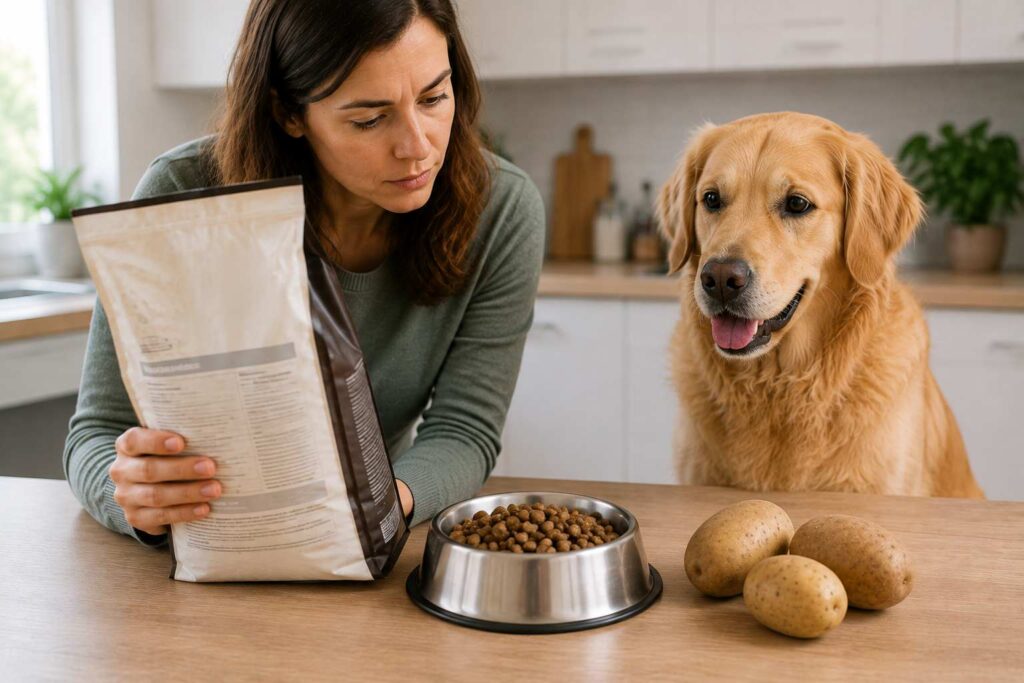
Potato as one ingredient in a complete and balanced dog food isn’t the same as feeding potato from your plate. The nutritional quality of a commercial diet depends on the finished formulation, nutrient balance, and whether it is appropriate for your dog’s life stage—not on one ingredient viewed in isolation.
You may also have seen concerns about certain grain-free diets and dilated cardiomyopathy (DCM) in dogs. The FDA has investigated reports involving diets that frequently contained ingredients such as peas, lentils, other pulses, and potatoes. However, non-hereditary DCM appears to be a complex issue involving multiple factors, and the evidence does not establish potato itself as a direct cause of DCM.
That also doesn’t mean every diet containing potato is automatically appropriate for every dog. If you’re concerned about your dog’s food—particularly a grain-free diet—discuss the complete diet and your dog’s individual needs with your veterinarian rather than removing a single ingredient on your own.
Common Potato Mistakes Dog Owners Make
- Assuming “cooked” means unlimited amounts are fine
- Feeding raw potato intentionally
- Cooking a green or heavily sprouted potato and feeding it anyway
- Treating every piece of potato skin as equally risky
- Using human-sized portions for a dog
- Ignoring the other ingredients in mash or leftovers
- Giving fries, chips/crisps, or other fried potato products regularly
- Using potato as a home remedy for diarrhoea or an upset stomach without veterinary guidance
- Letting treats and extras displace part of a complete and balanced diet
- Relying on an online toxicity calculator for reassurance after a questionable exposure
- Assuming potato in commercial dog food is equivalent to feeding table potato
- Assuming sweet potato is automatically the better choice for every dog
Before Potato Goes in the Bowl: A Final Check
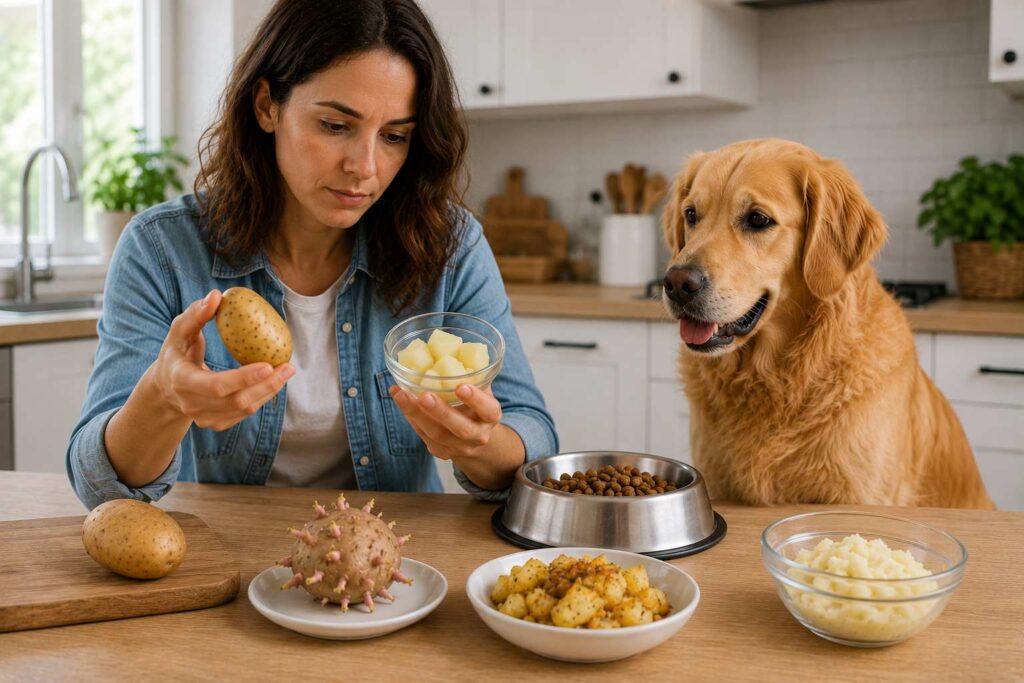
Before intentionally offering potato, make sure it is:
- Fully cooked
- Not green
- Not sprouted
- Plain and unseasoned
- Soft and appropriately sized for your dog
- Given in a small portion
- Free from onion, garlic, and other unsafe additions
- Appropriate for your dog’s health and current diet
- Counted as an occasional extra, not a meal replacement
- Not displacing your dog’s complete and balanced main food
If it doesn’t pass those checks, there’s little reason to take the chance. Choose a simpler treat instead.
The Bottom Line
Is potato good for dogs? Plain, fully cooked, non-green potato can be an occasional extra for many healthy dogs, but it isn’t something they need for a balanced diet.
Raw, green, and sprouted potatoes deserve more caution, while fries, mash, roast potatoes, and other human dishes need to be assessed by their full ingredient list, not by the potato alone.
If your dog has already eaten a questionable potato, don’t try to judge the risk from a generic serving-size or toxicity calculator. What was eaten, how much, whether it was green or sprouted, your dog’s size and health, and any developing symptoms all matter. When the exposure is concerning or uncertain, contact your veterinarian for advice.
Frequently Asked Questions
1. Can dogs eat potato skins from a normal, non-green potato?
A small amount of plain, thoroughly cooked skin from a non-green, non-sprouted potato is different from green or sprouted peel. However, skin can be tougher than the flesh, so there is little reason to deliberately give large pieces. Soft, appropriately sized cooked potato is the simpler option.
2. Does peeling a potato remove the need to check for green colouring?
No. Inspect the whole potato before cooking. Greening and sprouting aren’t concerns limited to a removable strip of peel, so don’t assume peeling makes a questionable potato suitable for your dog.
3. How quickly can symptoms appear after a dog eats a problematic potato?
There isn’t a reliable at-home timeline that can tell you whether your dog is safe. Depending on the exposure, concerning signs may include vomiting, diarrhoea, abdominal discomfort, weakness, unusual lethargy, tremors, or wobbliness.
If your dog ate a significant or uncertain amount of green or sprouted potato, don’t wait for symptoms before asking your veterinarian for advice.
4. Can dogs eat potatoes that have been stored for a long time?
Age alone isn’t the deciding factor. Check stored potatoes carefully for sprouting, green areas, damage, soft patches, or deterioration, and don’t deliberately feed questionable potatoes to your dog. Store potatoes where pets cannot raid the bag or cupboard.
5. Is it safe to give a dog potato water or the water potatoes were boiled in?
There’s no useful reason to give dogs potato cooking water. Water containing salt, stock, seasonings, onion, garlic, or other ingredients should be avoided. Fresh drinking water remains the appropriate choice for hydration.
6. Can dogs eat potato as part of a homemade diet?
Potato can be included in a properly formulated homemade diet, but potato itself doesn’t make that diet nutritionally complete. Homemade feeding needs the correct balance of protein, fat, essential fatty acids, vitamins, minerals, and other nutrients.
If you want to feed a long-term homemade diet, ask your veterinarian about obtaining a recipe formulated for your individual dog by an appropriately qualified veterinary nutrition professional rather than building meals around individual ingredients.
7. Should I stop giving my dog potato if they’ve eaten it before without problems?
Not necessarily. If your healthy dog has previously tolerated a small amount of plain, fully cooked, non-green potato, occasional servings may still be reasonable.
Past tolerance doesn’t override the basic safety checks, though. Inspect the potato, check the preparation and ingredients, keep the portion small, and consider your dog’s current health each time.
#. Related Articles: