

You’ve probably heard that rice is the go-to food when your dog has an upset stomach. But is it actually safe? Is it healthy? And does it matter whether you reach for white rice or brown? If you’ve ever stood in your kitchen wondering whether to toss some rice in your dog’s bowl, this guide answers it all — clearly, and without the fluff.
Is Rice Safe for Dogs?
Yes — rice is safe for dogs. Plain, cooked rice is one of the most widely recommended foods by vets when a dog’s digestive system is under stress. It’s gentle, easy to digest, and unlikely to cause any adverse reaction in most healthy dogs.
The key word there is plain. Rice cooked with garlic, onion, butter, salt, or sauces? That’s a different story, and we’ll get to that shortly.
For now, the short answer: yes, your dog can eat rice — and there are situations where it can genuinely help them feel better.
What Does Rice Actually Give Your Dog?
Rice isn’t a superfood for dogs, but it’s not empty calories either. Here’s what it brings to the bowl:
- Easily digestible carbohydrates — a quick, gentle source of energy that won’t tax a sensitive gut
- Small amounts of B vitamins — especially niacin and thiamine, which support energy metabolism
- Manganese — a trace mineral that supports bone development and enzyme function
- Low fat and low sodium — helpful for dogs on restricted diets
Rice is not a significant source of protein, fat, or fibre on its own — which is exactly why it works so well as a base when your dog is unwell. It doesn’t overload their system.
Quick note on arsenic: You may have read that rice contains arsenic. This is true — rice does absorb small amounts of inorganic arsenic from the soil. But the levels found in plain cooked rice (especially white rice) are very low and not considered a health risk when fed in normal amounts. Feeding rice occasionally or in small daily portions poses no documented arsenic risk for dogs.
White Rice vs Brown Rice for Dogs
This is where most dog owners get confused. Are they interchangeable? Actually, no — they serve slightly different purposes.
| Feature | White Rice | Brown Rice |
|---|---|---|
| Digestibility | Very easy to digest | Harder to digest (bran layer intact) |
| Fibre content | Low | Higher |
| Nutrients | Some B vitamins, manganese | More vitamins, minerals & antioxidants |
| Glycaemic index | Higher (raises blood sugar faster) | Lower (slower energy release) |
| Best used for | Upset stomachs, recovery | Regular healthy feeding in small amounts |
| Cooking time | Faster (~15 min) | Longer (~40 min) |
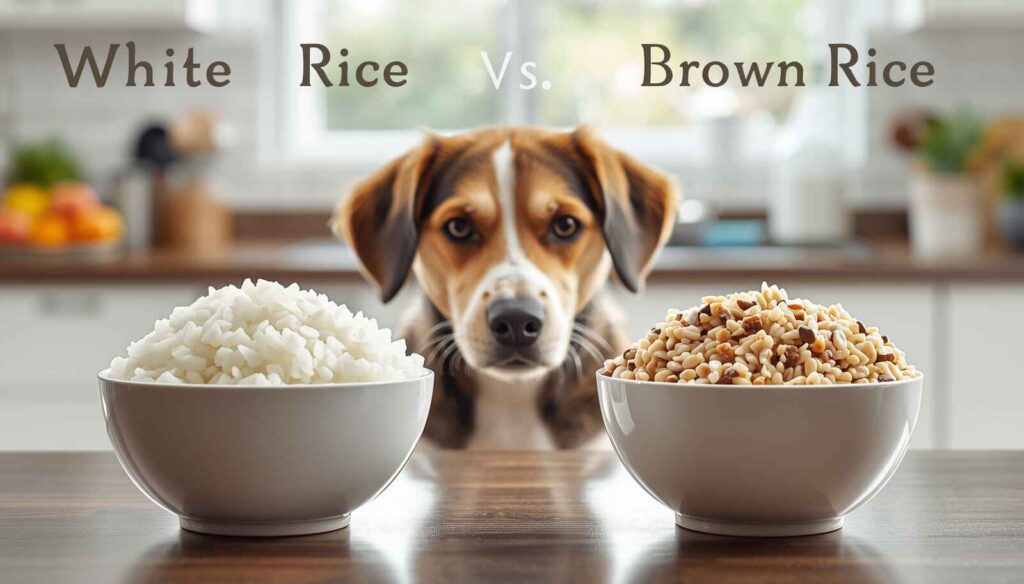
When to choose white rice
White rice is your friend when your dog has diarrhoea or a sensitive stomach. It’s easy on the gut, binds loose stools, and acts as a gentle buffer. This is the chicken-and-rice combination vets have recommended for decades — and it works.
When to choose brown rice
Brown rice is better suited for healthy dogs who eat rice as a regular part of a balanced home-cooked diet. It contains more fibre and nutrients, but it’s harder to digest — so don’t give it to a dog with a stomach issue.
Important: Brown rice is not suitable as a stomach remedy. If your dog is unwell, always use white rice.
When Rice Actually Helps Your Dog
There are a few specific situations where adding rice to your dog’s diet makes real sense:
Upset stomach or diarrhoea
This is the classic use case. A bland diet of boiled chicken breast and white rice gives the digestive tract a break. It’s easy to absorb, doesn’t irritate inflamed intestines, and helps firm up loose stools. Most vets in the UK, Australia, and Canada recommend this approach for mild GI upsets.
Stick to this for 2–3 days, then gradually reintroduce your dog’s normal food.
After surgery or illness
If your dog is recovering and has a reduced appetite, plain white rice mixed with a protein like chicken or fish can help get calories in without stressing their system.
As a filler for underweight dogs
White rice is calorie-dense relative to its volume. Adding a modest amount to meals can help a dog gain weight in a controlled, gentle way — though protein should still be the foundation.
How to Prepare Rice for Dogs (The Right Way)

Preparing rice for your dog is genuinely simple. Here’s all you need to do:
- Use plain long-grain white or brown rice
- Rinse it under cold water first
- Cook it in plain water — no stock, no salt, no butter, no oil
- Let it cool completely before serving
- Serve plain or mix with plain boiled protein
Never feed your dog: fried rice, rice cooked with garlic or onion, seasoned rice, rice pilaf, or rice from a takeaway. Garlic and onion are toxic to dogs, even in small amounts.
Can dogs eat cold or reheated rice?
Yes, but with a caveat. Cooked rice that’s been stored in the fridge for up to 24 hours is fine to reheat and serve. However, reheated rice that’s been left at room temperature for several hours can harbour bacteria (Bacillus cereus) — the same risk it poses to humans. When in doubt, make a fresh batch. It only takes 15 minutes.
How Much Rice Can Dogs Eat?
Rice shouldn’t make up more than 10% of your dog’s daily calories in normal circumstances. Here’s a rough guide:
| Dog size | Example breed | Max rice per meal |
|---|---|---|
| Small (up to 10 kg) | Chihuahua, Cavoodle | 1–2 tablespoons |
| Medium (10–25 kg) | Cocker Spaniel, Border Collie | ¼ cup |
| Large (25–40 kg) | Labrador, Golden Retriever | ⅓ cup |
| Extra large (40 kg+) | Great Dane, Rottweiler | ½ cup max |
These are guidelines, not hard rules. If your dog is already eating a complete commercial dog food, you don’t need to add rice at all — their nutritional needs are being met.
When Rice Is Not a Good Idea
Rice is generally safe, but there are situations where you should hold off:
- Diabetic dogs: Rice — especially white rice — has a high glycaemic index. It raises blood sugar faster than most foods. If your dog is diabetic or insulin-resistant, avoid rice or speak to your vet first.
- Overweight dogs: Rice adds carbohydrates and calories. For a dog already on a weight management plan, rice can slow progress.
- Dogs with grain sensitivities: While rare, some dogs don’t tolerate grains well. If your dog shows signs of skin irritation, itching, or loose stools after eating rice, it may not agree with them.
- Long-term exclusive diets: Rice alone is nutritionally incomplete. It must be paired with protein, fat, and other nutrients. Using rice as a sole food source for more than a few days can lead to deficiencies.

What About Rice Cakes, Fried Rice & Other Forms?
Rice cakes
Plain, unsalted rice cakes are generally safe as an occasional treat. The problem is that most commercial rice cakes are lightly salted or flavoured. Check the ingredients — if they contain salt, artificial flavourings, onion powder, or xylitol (a common sweetener), keep them away from your dog.
Jasmine rice
Yes, plain cooked jasmine rice is fine for dogs. It’s simply a variety of long-grain white rice. Same rules apply: cook it plain, let it cool, and serve without seasonings.
Rice Krispies and cereals
No. Breakfast cereals like Rice Krispies are processed, contain added sugar and salt, and often include malt flavouring. These are not suitable for dogs. They’re made for human palates, not canine digestive systems.
Rice in Commercial Dog Food
You’ll spot rice near the top of the ingredients list on many dry and wet dog foods in the UK, Australia, and Canada. Brands use it because it’s a digestible, cost-effective carbohydrate source that most dogs tolerate well.
This doesn’t mean a rice-based food is inferior — it just means rice plays a supporting role alongside meat proteins, fats, vitamins, and minerals. If your dog is doing well on a complete commercial food, there’s no need to add extra rice on the side.
Can Puppies Eat Rice?
Yes, puppies can eat plain cooked white rice — and it’s often recommended by vets when puppies experience loose stools, which is common during transitions to new food. Keep portions small and always ensure their main diet comes from a complete puppy food that meets their higher protein and calcium requirements.
FAQ
1.Can dogs eat rice every day?
Yes, in small amounts — but rice shouldn’t dominate their diet. If you’re feeding a complete commercial dog food, adding rice daily isn’t necessary. If you’re home-cooking, rice can be part of a balanced mix, but protein and fat must still be the foundation. For diabetic or overweight dogs, daily rice isn’t recommended.
2.Is white rice or brown rice better for dogs?
It depends on the situation. White rice is better for sick or sensitive dogs due to its easy digestibility. Brown rice is nutritionally richer and lower GI, making it a better choice for healthy dogs eating rice regularly. Never give brown rice to a dog with diarrhoea — it’s too fibrous.
3.How long should I feed my dog the chicken and rice diet?
Typically 2–3 days. If your dog’s symptoms (diarrhoea, vomiting, lethargy) haven’t improved after 48 hours on a bland diet, contact your vet. Don’t extend the bland diet beyond 5–7 days without veterinary guidance, as it’s nutritionally incomplete.
4.My dog ate leftover rice from my plate — should I worry?
Check what was in it. Plain cooked rice is fine. Rice cooked with garlic, onion, butter, salt, soy sauce, or spices can be harmful — garlic and onion in particular are toxic to dogs even in small amounts. If the rice contained any of these, monitor your dog and contact your vet if you notice vomiting, lethargy, or pale gums.
5.Can dogs eat jasmine rice or basmati rice?
Yes — both jasmine and basmati rice are safe for dogs as long as they’re cooked plain. They’re both varieties of long-grain white rice and behave the same way nutritionally. The key is that they’re plain, unseasoned, and fully cooked.
6.Does rice cause diabetes in dogs?
No — rice doesn’t cause diabetes. However, because white rice has a high glycaemic index, it can spike blood sugar levels. This is a problem if your dog is already diabetic or prone to blood sugar issues. For healthy dogs, occasional or moderate rice consumption doesn’t cause diabetes.
7.What’s a simple homemade dog-friendly rice meal?
A simple, vet-approved option: boil one chicken breast (no skin, no seasoning) and cook half a cup of white rice in plain water. Shred the chicken, mix with the cooled rice, and serve. This is the classic bland diet used for upset stomachs. For regular feeding, always ensure your dog’s full diet is balanced — consult a vet or veterinary nutritionist for ongoing home-cooked diets.
The Bottom Line
Rice is one of the safest, most practical foods you can give your dog — when it’s prepared correctly and used in the right context. It’s not a daily essential, but it’s an incredibly useful tool in your dog-care toolkit, especially for stomach upsets and recovery periods.
Use white rice for sick dogs, brown rice for healthy dogs (in small amounts), and always cook it plain. Pair it with quality protein, keep portions appropriate for your dog’s size, and don’t let it replace a balanced diet.
When in doubt — especially for puppies, senior dogs, or dogs with health conditions — always check with your vet before making dietary changes.
#. Related Articles: