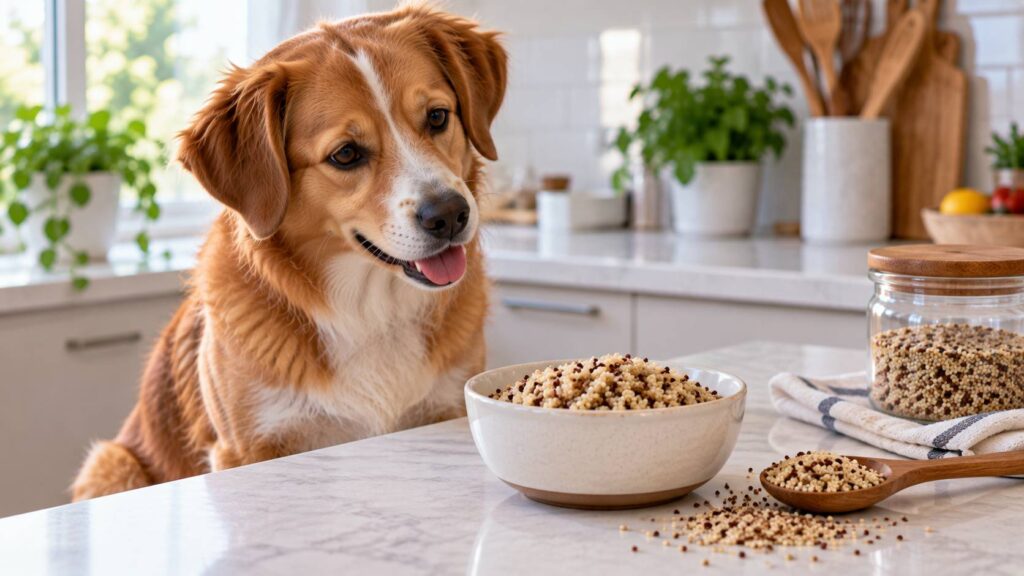
Can dogs eat quinoa? Yes, plain, fully cooked quinoa can generally be offered to most healthy dogs in small amounts. But before you drop a spoonful into your dog’s bowl, check what you’re actually serving—because plain quinoa and a seasoned quinoa dish are very different questions.
Your dog may have just noticed you’re eating quinoa and started staring at your bowl, but whether you can safely share some depends on more than the quinoa itself. Quinoa mixed with onion, garlic, rich sauces, or other ingredients may be unsafe, and dogs on prescription diets may need a different answer.
Before feeding it—or deciding what to do after your dog has already eaten some—ask four questions:
- What form of quinoa was it?
- What else was mixed in?
- How much did your dog eat?
- Does your dog have any medical or dietary restrictions?
Those answers usually matter more than quinoa’s reputation as a “healthy” human food.
First, Work Out Which Quinoa Situation You’re Actually In
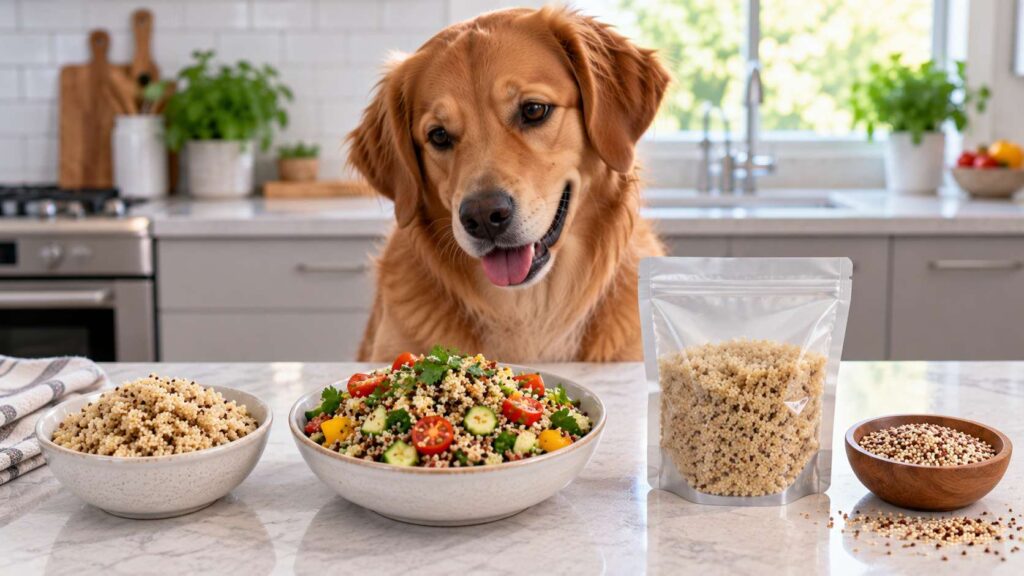
Not everything described as “quinoa” presents the same level of concern.
Plain Cooked Quinoa
Unseasoned, fully cooked quinoa offered in a small amount is the simplest scenario. For a healthy dog that tolerates it well, this is generally the lowest-concern form.
Quinoa From a Human Meal
Salads, Buddha bowls, restaurant sides, and leftovers need a closer look. The quinoa itself may be fine, while the ingredients mixed through it are not.
Packaged or Flavoured Quinoa
Microwave pouches, seasoning sachets, and ready meals may contain high levels of salt, onion or garlic powders, oils, sauces, or other ingredients that aren’t appropriate for dogs. Always read the full ingredient list rather than judging the product by the word “quinoa” on the front.
Raw, Dry, or Poorly Prepared Quinoa
Dry quinoa is not a sensible food to offer deliberately. Cooking makes it easier to eat and digest, while rinsing helps remove some of the naturally bitter compounds on the seed’s surface.
If your dog stole a small amount of dry quinoa, the useful questions are how much was eaten and whether any symptoms develop, rather than assuming the quinoa itself is poisonous.
Once you know which situation you’re dealing with, the decision becomes much easier.
The 30-Second Quinoa Check
Before feeding quinoa—or deciding how concerned to be after an accidental snack—run through this checklist:
- Is it fully cooked?
- Is it plain, with nothing added?
- Was onion or garlic used anywhere in the dish?
- Was it cooked in broth or stock?
- Is there butter, oil, cheese, or a rich sauce involved?
- Is it from a flavoured packet or seasoning sachet?
- How much did your dog actually eat?
- Is this the first time your dog has eaten quinoa?
- Is your dog showing vomiting, diarrhoea, discomfort, or unusual behaviour?
- Is your dog on a prescription or restricted diet?
A known toxic ingredient, a large accidental portion, or an existing medical condition usually deserves more attention than whether the quinoa was perfectly rinsed.
The Ingredient May Be Fine — The Dish Might Not Be
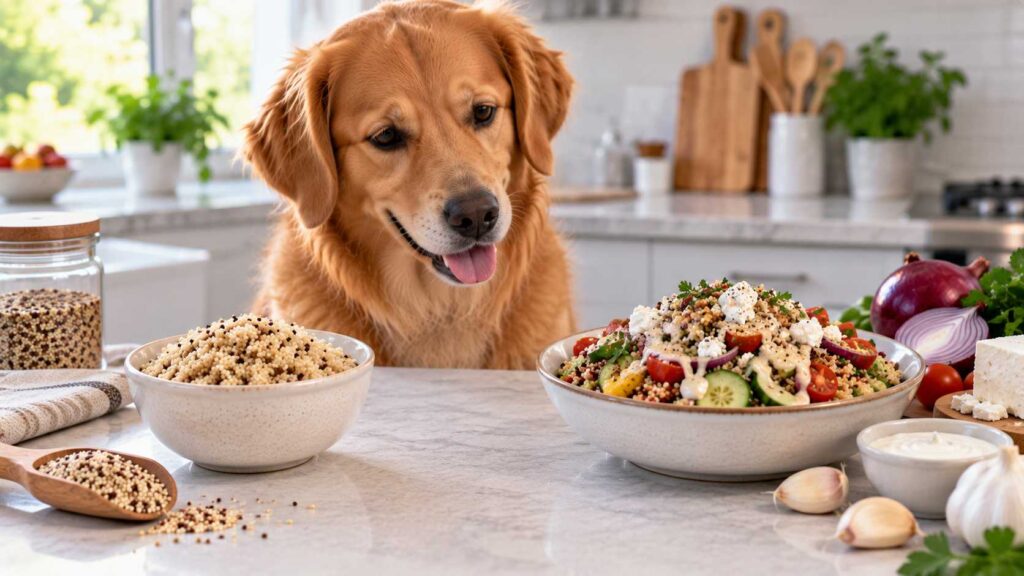
This distinction matters because many accidental exposures involve quinoa meals, not plain quinoa.
Onion and Garlic Change the Situation
Onion and garlic are toxic to dogs whether fresh, cooked, dried, or powdered. They may also be hidden in stock cubes, sauces, seasoning mixes, and prepared foods. PDSA advises contacting a vet if a dog has eaten onion, garlic, or related alliums because they can damage red blood cells and cause anaemia.
If your dog stole quinoa containing onion or garlic, treat it as a potential allium exposure, not simply a quinoa incident.
Rich Additions Matter Too
Butter, oils, cheese, and creamy dressings can turn a relatively simple food into a much richer meal. That is especially relevant for dogs that need a low-fat diet or have a history of pancreatitis.
The presence of quinoa does not make a rich human dish suitable for a dog.
Quinoa Salads Need an Ingredient-by-Ingredient Check
Look beyond the quinoa itself. Common additions can include:
- Onion or garlic
- Grapes, raisins, currants, or sultanas
- Rich dressings
- Large amounts of cheese
- Excess salt
- Other ingredients your dog does not normally eat
WSAVA specifically lists onions, garlic, grapes, raisins, currants, and several other human-food ingredients among foods that should not be given to dogs.
Leftover Dinner Isn’t Automatically Dog Food
Even a meal that looks healthy to you may contain hidden seasoning, stock, salt, or fat. Before sharing leftovers, check the whole recipe, not just its main ingredient.
Warning
A small amount of plain, cooked quinoa eaten by an otherwise healthy dog is generally a much lower-concern situation than a quinoa dish containing toxic ingredients.
Contact your vet promptly if your dog has eaten onion, garlic, grapes, raisins, or another known toxin. Don’t wait for symptoms to appear before asking for advice about a known toxic exposure.
Seek veterinary help if your dog develops repeated vomiting, severe or persistent diarrhoea, marked lethargy, abdominal pain, weakness, or other concerning changes.
What Quinoa Actually Offers — Without the Superfood Hype
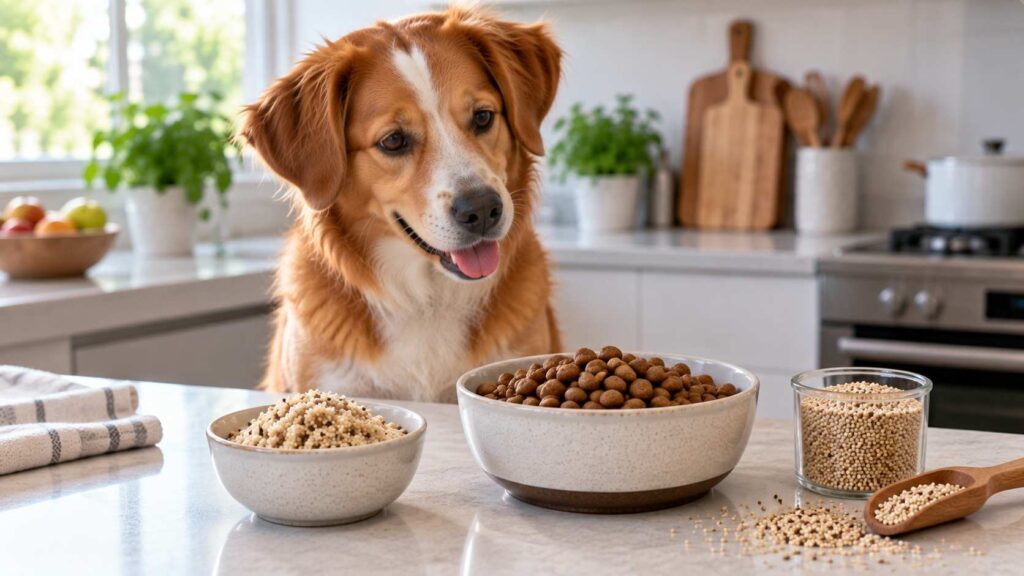
Quinoa contains useful nutrients, but that doesn’t make it an essential addition to a dog’s diet.
Protein, but Not a Complete-Diet Replacement
Quinoa provides plant-based protein and amino acids, but that doesn’t mean it should replace your dog’s normal food or primary protein sources.
What matters nutritionally is the balance of the entire diet, not whether one ingredient happens to be high in protein. A properly formulated complete dog food can use ingredients from both animal and plant sources while still meeting a dog’s nutritional requirements.
Fibre Can Help or Hinder Depending on the Dog
Quinoa contains fibre, but “more fibre” isn’t automatically better.
Some dogs tolerate it without a problem. Others may develop:
- Gas
- Softer stools
- Diarrhoea
- Changes in stool volume
If quinoa repeatedly causes digestive upset, there’s little reason to keep feeding it simply because it is considered nutritious for humans.
Vitamins and Minerals Don’t Make It Essential
Quinoa contains nutrients including magnesium, phosphorus, iron, manganese, and B vitamins. That’s useful nutritional information, but it shouldn’t be turned into claims that quinoa will improve immunity, coat condition, heart health, or other outcomes.
A dog eating a complete and balanced diet should already be receiving the nutrients they need without quinoa being added.
Gluten-Free Doesn’t Automatically Mean Better
Quinoa is naturally gluten-free, but most dogs do not need a gluten-free diet.
Likewise, gluten-free does not mean hypoallergenic. If a dog is being investigated for a food allergy or is on a veterinary elimination diet, adding a new food without discussing it with the vet can make the dietary trial harder to interpret.
The useful distinction is simple:
Safe to eat, nutritionally interesting, and necessary are three different things. Quinoa can meet the first two without ever needing to become a regular part of your dog’s diet.
Saponins, Oxalates, and the Things You’ve Probably Read Online
Quinoa tends to attract two extremes online: either it is promoted as a canine “superfood,” or its naturally occurring compounds are made to sound frightening. Neither approach is particularly useful.
What About Saponins?
Saponins are naturally occurring, bitter-tasting compounds found around the outside of quinoa seeds. They help protect the plant, and they are one reason quinoa is commonly rinsed and processed before eating.
Saponins can irritate the digestive tract, which is why they’re often mentioned in discussions about feeding quinoa to dogs. However, quinoa sold for human consumption is typically processed, and the amount present is not a reason to classify properly prepared quinoa as poisonous.
The American Kennel Club notes that quinoa is generally safe for dogs but recommends washing and cooking it and starting with a small amount because some dogs may experience digestive problems.
Rinsing Is Sensible, Not a Safety Switch
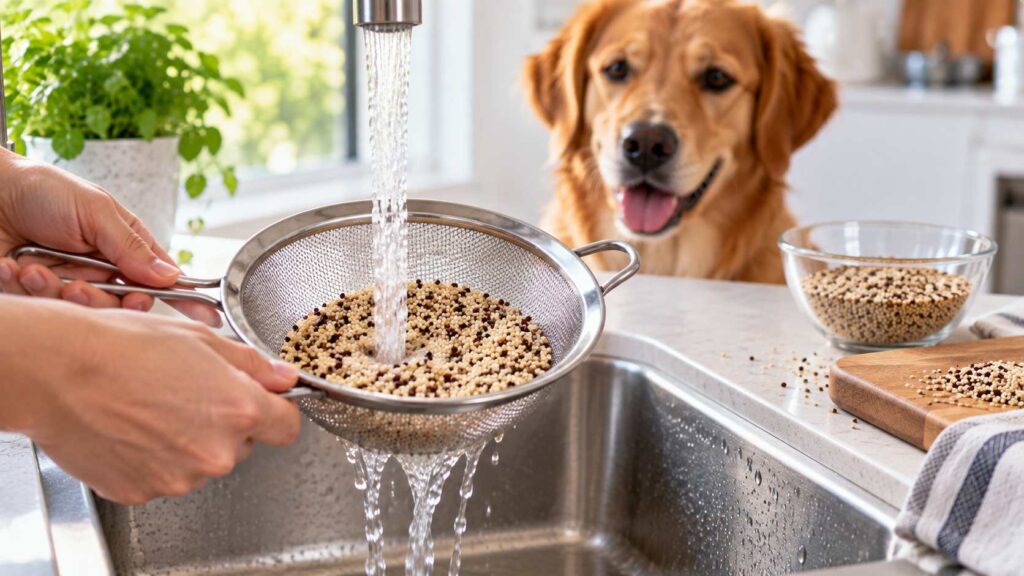
Rinse quinoa thoroughly under cold running water in a fine-mesh strainer before cooking, unless the product instructions say otherwise.
Rinsing helps remove residual bitterness and surface compounds, but avoid treating it as a guarantee that every trace of saponin has disappeared. Preparation reduces a potential irritant; it does not transform quinoa from “toxic” to “safe.”
What About Oxalates?
Quinoa contains oxalates, but that does not justify a blanket claim that feeding quinoa causes kidney or bladder stones in dogs.
For a healthy dog eating an occasional small amount, this is unlikely to be the deciding issue. A dog with a history of urinary stones, kidney disease, or a veterinary urinary diet is different: dietary changes should be discussed with the vet managing that dog’s condition.
Other “Antinutrients”
You may also see phytates, tannins, and trypsin inhibitors mentioned online. These naturally occurring plant compounds do not make an occasional portion of properly prepared quinoa inherently dangerous to a healthy dog.
For most owners, preparation, quantity, the rest of the recipe, and the dog’s individual health matter far more.
If You Do Feed It, Here’s How to Do It Properly
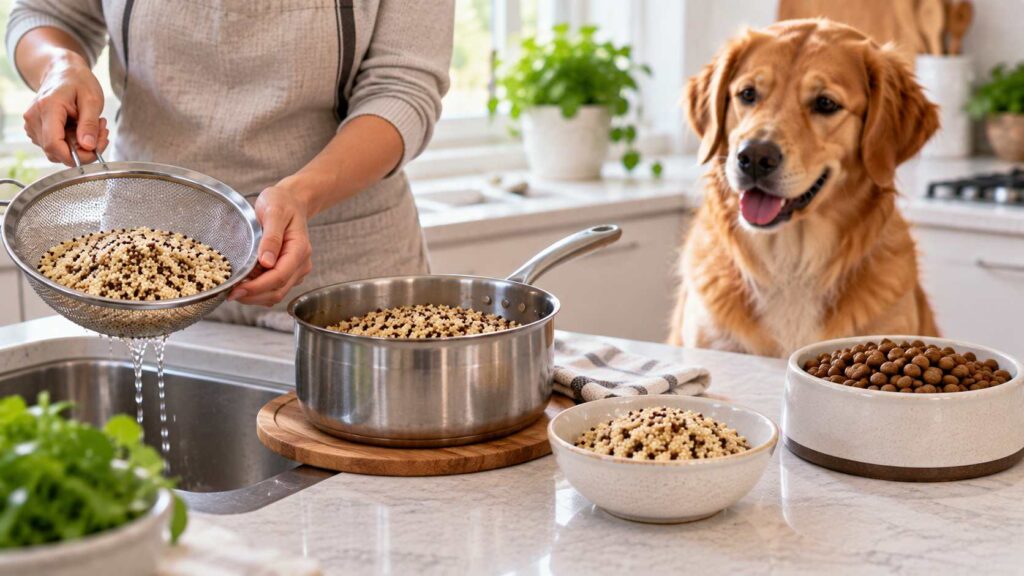
Keep It Plain
Use quinoa without:
- Salt
- Onion
- Garlic
- Stock containing unsafe ingredients
- Butter
- Sauces
- Seasoning blends
Rinse Before Cooking
Place the quinoa in a fine-mesh strainer and rinse it thoroughly under cold water. If the packet is labelled pre-rinsed, following the manufacturer’s preparation instructions is reasonable.
There’s no need to obsess over an exact rinsing time.
Cook It Fully
Cook the quinoa according to the package directions, preferably using plain water when you’re preparing a portion intended for your dog.
The finished quinoa should be soft rather than dry or crunchy.
Let It Cool
Allow freshly cooked quinoa to cool before offering any to your dog. Food that is safe nutritionally can still cause a burn if served too hot.
Introduce It on Its Own
When trying quinoa for the first time, avoid introducing several new foods on the same day.
That way, if your dog develops gas, vomiting, loose stool, or another reaction, you have a much clearer idea of what may have triggered it.
Quick Tips
- Start with a small amount rather than a human-sized portion.
- Keep quinoa plain and fully cooked.
- Treat it as an optional extra, not a meal replacement.
- Don’t introduce it during an active stomach upset unless your vet recommends it.
- Watch your dog’s appetite and stools after the first few servings.
- Check the ingredient list every time you use a packaged or flavoured product.
- Stop feeding quinoa if it repeatedly causes digestive problems.
- If your dog has a medical condition or eats a veterinary-prescribed diet, ask your veterinary team before making quinoa a regular addition.
WSAVA recommends that all treats and extras combined—not quinoa alone—make up no more than about 10% of an average healthy adult dog’s daily calories, while dogs with medical conditions or veterinary-prescribed diets may need different guidance.
How Much Is Reasonable?
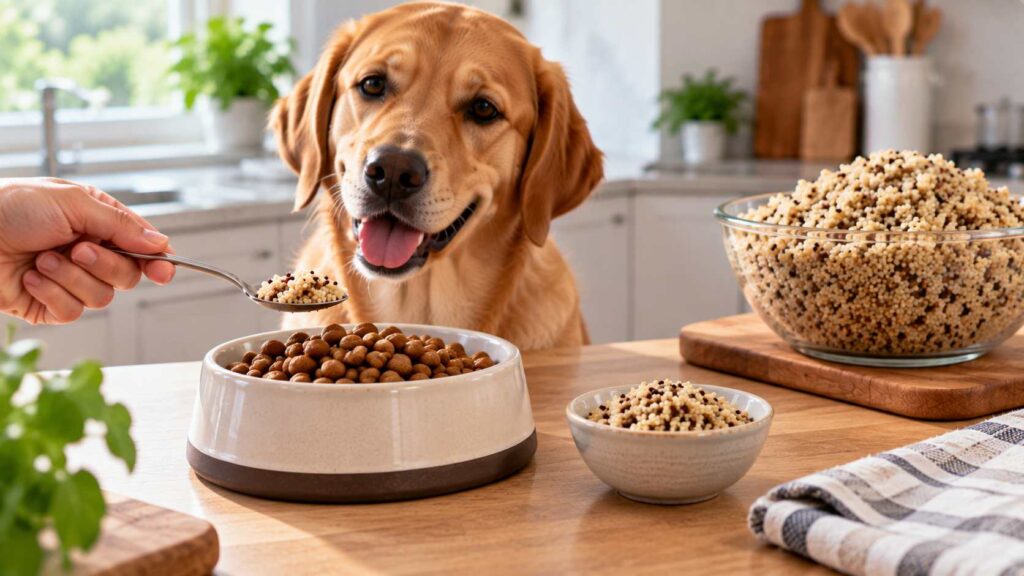
There isn’t a single medically established “safe dose” of quinoa for every dog. A better way to think about it is as one of several extras in your dog’s diet. Treats, toppers, table foods, and training rewards all count toward the same total.
WSAVA recommends that treats and other extras provide no more than about 10% of an average healthy dog’s daily calories, with the remaining calories coming from a complete and balanced diet. That 10% is for all extras combined, not 10% quinoa.
Body size matters, but so do calorie needs, health status, and the rest of the diet. Exact spoon-based charts can therefore give a false sense of precision. For a first taste, keep the portion small and see how your dog responds before offering it again.
Feeding quinoa occasionally is also different from making it a daily habit. However often you use it, quinoa shouldn’t gradually replace a meaningful part of a complete dog food. Once extras begin displacing balanced meals, calories and nutrients can shift in ways that aren’t obvious from the bowl.
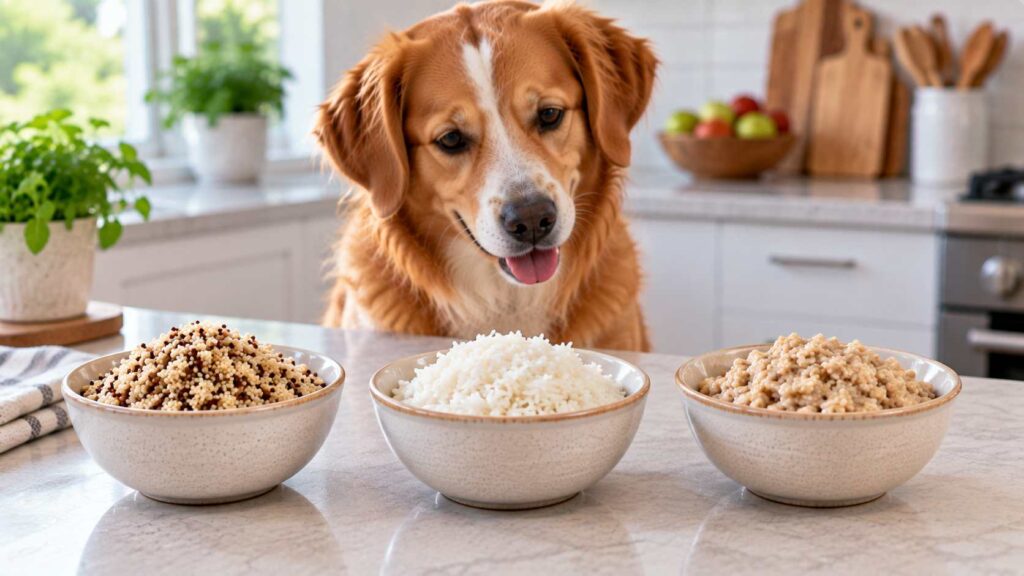
Quinoa vs Rice vs Oats
| Factor | Quinoa | White Rice | Oats |
|---|---|---|---|
| Role in the diet | Optional carbohydrate/topper | Optional carbohydrate | Optional carbohydrate/fibre source |
| Gluten | Naturally gluten-free | Naturally gluten-free | Naturally gluten-free, although cross-contact with gluten-containing grains can occur |
| Fibre | Moderate | Generally lower | Often higher |
| Preparation | Rinse as directed, then cook | Cook thoroughly | Cook thoroughly |
| GI tolerance | Varies by dog | Varies by dog | Varies by dog |
| Protein | Higher than white rice | Lower | Moderate |
| Best for every dog? | No | No | No |
There is no universal winner here.
White rice is simple and relatively low in fibre, which is one reason it appears in some veterinary feeding plans, but that doesn’t make plain rice an automatic home treatment for every dog with diarrhoea. Quinoa offers a different nutrient and fibre profile, while oats provide another option for dogs that tolerate them well.
The best choice depends on why you’re adding the food, how your dog tolerates it, and what the rest of the diet already provides.
Homemade Quinoa Isn’t the Same as Quinoa in Dog Food
Seeing quinoa on a dog-food ingredient list doesn’t mean your dog needs extra quinoa at home.
In a commercially formulated complete diet, quinoa is only one part of a recipe designed around specific calorie and nutrient targets. Its presence does not prove that adding spoonfuls of quinoa to an already balanced diet will provide additional health benefits.
The reverse is also important: a bowl made from quinoa, meat, and vegetables may look wholesome without being nutritionally complete. Homemade diets can fall short on essential nutrients or provide them in the wrong proportions unless the entire recipe has been properly formulated.
If homemade food will make up more than an occasional extra, work with your veterinarian or a veterinary nutrition specialist who is appropriately credentialed in your country rather than relying on ingredient-by-ingredient internet advice.
When Your Dog Needs a Different Answer
Some dogs shouldn’t have new foods added casually, even when those foods are generally considered safe.
Extra caution is sensible for dogs with:
- Chronic digestive problems, including recurring diarrhoea, frequent vomiting, or diagnosed gastrointestinal disease.
- Prescription diets, including GI, renal, urinary, weight-management, low-fat, hydrolysed, or other therapeutic diets.
- A history of urinary stones, where dietary changes may affect a carefully managed feeding plan.
- Diabetes or another condition requiring controlled calories or carbohydrate intake.
- A history of pancreatitis, particularly when quinoa is part of a meal containing butter, oil, cheese, or other high-fat ingredients.
- An elimination diet trial, where adding even a generally safe new food can interfere with the purpose of the trial.
Vet Advice
Ask your veterinary team before making quinoa a routine addition if your dog has a medical condition, eats a therapeutic diet, has unexplained weight changes, or if you’re planning to use quinoa as part of a homemade diet rather than as an occasional extra.
Your Dog Already Ate Quinoa — What Now?
Small Amount of Plain Cooked Quinoa
If an otherwise healthy dog ate a small amount of plain, cooked quinoa, serious problems are unlikely. Monitor their behaviour, appetite, and stool rather than trying to make them vomit or giving home remedies.
A Large Amount of Plain Quinoa
A larger portion is more likely to cause digestive upset than poisoning. Watch for:
- Vomiting
- Diarrhoea
- Excessive gas
- Abdominal discomfort
- Reduced appetite
If symptoms are repeated, severe, or your dog seems unwell, contact your veterinarian.
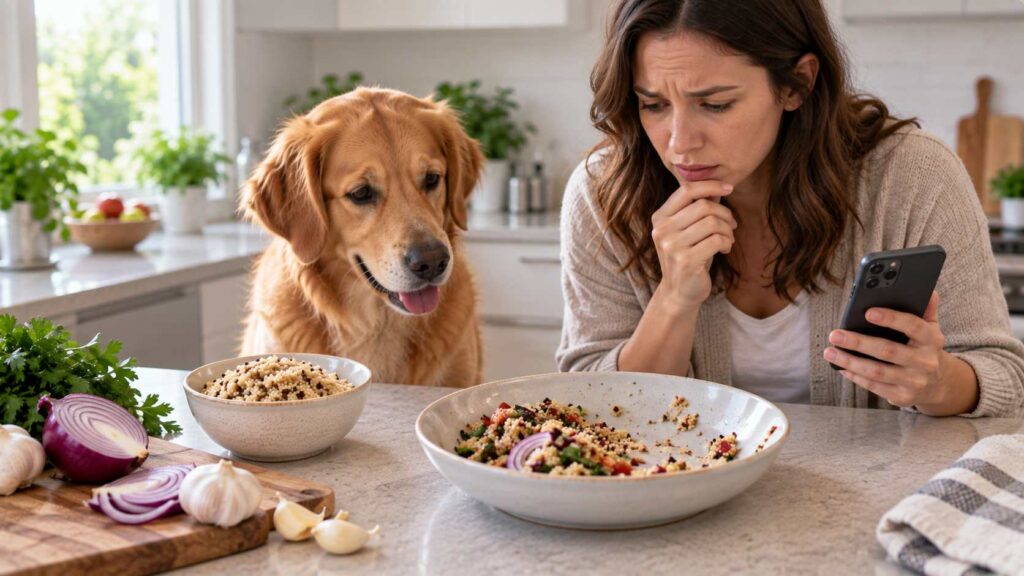
Quinoa Mixed With Other Ingredients
This is where the situation can change quickly.
Check the entire recipe for ingredients such as:
- Onion
- Garlic
- Grapes or raisins
- Rich sauces or dressings
- Large amounts of butter, oil, or cheese
- Other ingredients you know may be unsafe for dogs
If a known toxin was involved, contact your veterinarian or an appropriate animal poison service promptly rather than waiting to see whether symptoms develop.
Dry or Raw Quinoa
Plain dry quinoa is generally more of a digestive-tolerance concern than a poisoning concern. The amount eaten, your dog’s size, and any symptoms are more useful than the fact that it was uncooked.
Your Dog Seems Fine So Far
That’s reassuring, but it doesn’t always close the case.
With plain quinoa, a symptom-free dog after a small exposure is usually reassuring. If the quinoa dish contained a potentially toxic ingredient, however, some effects can be delayed. Base your response on the whole meal, not on how your dog looks in the first few minutes.
Reading Your Dog’s Reaction

A little gas or a softer stool after trying a new food may simply mean quinoa doesn’t agree with that particular dog. One digestive reaction also doesn’t prove a food allergy; intolerance and allergy are not the same thing.
If quinoa repeatedly leads to vomiting, diarrhoea, gas, or reduced appetite, stop offering it. There is no nutritional reason to keep trying to make quinoa work for a dog that doesn’t tolerate it.
Contact your veterinarian if you notice:
- Repeated vomiting
- Severe or persistent diarrhoea
- Blood in vomit or stool
- Marked lethargy or weakness
- Obvious abdominal pain
- Refusal to eat that persists
- Signs that are worsening rather than settling
- Any suspected exposure to a known toxic ingredient
For an otherwise healthy dog with mild, short-lived digestive upset after a small amount of plain quinoa, stopping the new food and monitoring may be all that’s needed. If you’re unsure—especially with a puppy, senior dog, very small dog, or a dog with existing health problems—it’s safer to check with your veterinary team.
Common Mistakes Owners Make With Quinoa
- Treating quinoa as a canine “superfood” rather than an optional extra.
- Feeding it straight from the family dinner bowl without checking every ingredient.
- Overlooking onion or garlic in broth, stock, sauces, or seasoning mixes.
- Assuming gluten-free automatically means hypoallergenic.
- Using human portion sizes for a dog.
- Offering a large first serving instead of introducing it gradually.
- Letting quinoa replace a meaningful part of a complete and balanced diet.
- Assuming its protein content makes it a substitute for meat or complete dog food.
- Blaming saponins for every digestive symptom without considering the quantity eaten or other ingredients in the meal.
- Believing rinsing removes every potential concern.
- Adding quinoa to a prescription or therapeutic diet without checking with the veterinary team.
- Using quinoa to treat diarrhoea simply because it contains fibre.
- Adding it during an elimination diet, when even an otherwise safe extra can interfere with the food trial. Veterinary elimination diets generally need to be fed exclusively for the results to be meaningful.
The Bottom Line
Plain, fully cooked, unseasoned quinoa can be an occasional extra for many healthy dogs. It isn’t a necessary addition to a complete diet, and there is no advantage in forcing it into your dog’s meals if they don’t tolerate or enjoy it.
In practice, three things usually matter more than quinoa itself:
- What else was in the dish?
- How much did your dog eat?
- Does your dog have a medical or dietary reason to avoid extras?
A spoonful of plain quinoa eaten by a healthy dog is very different from quinoa salad containing onion or garlic, or quinoa added to a carefully controlled prescription diet. WSAVA specifically advises that human foods can be inappropriate for some dogs and that pets with medical conditions, dietary sensitivities, or veterinary-prescribed diets may need individualized treat advice.
If quinoa is going to become more than an occasional topper—or your dog has a medical condition—check with your veterinary team first.
Frequently Asked Questions
1. Can Dogs Eat Quinoa Cooked in Chicken Broth?
Only if you have checked the complete ingredient list and know the broth is suitable for your dog. Many stocks and broths contain onion, garlic, or substantial amounts of salt. Onion and garlic are among the human-food ingredients WSAVA advises should not be given to dogs.
If you’re cooking quinoa specifically to share with your dog, plain water is the simplest option.
2. Is Quinoa Suitable for Settling an Upset Stomach?
Don’t rely on quinoa as a treatment for diarrhoea or vomiting.
Although quinoa contains fibre and some dogs digest it without difficulty, others develop gas or looser stools—especially when it is introduced suddenly. If your dog already has an upset stomach, adding an unfamiliar food can make it harder to tell what is helping and what is making things worse.
For mild digestive problems, follow your veterinarian’s feeding advice rather than assuming a particular homemade “bland” food is appropriate. Persistent vomiting, diarrhoea, lethargy, pain, or blood in the stool warrants veterinary advice.
3. Can Puppies Have Quinoa?
A small amount of plain, fully cooked quinoa is unlikely to be a problem for most healthy puppies, but it should remain an occasional extra.
Growth places specific demands on calories and nutrients, so a complete food formulated for the puppy’s life stage should remain the foundation of the diet. Avoid allowing toppers and table foods to displace it.
4. Does the Colour of Quinoa — White, Red, or Black — Make a Difference for Dogs?
Not enough to create separate safety rules.
White, red, and black quinoa differ somewhat in texture and nutritional composition, but the practical advice remains the same: choose plain quinoa, prepare it properly, keep the portion modest, and judge it by your dog’s individual tolerance.
5. Can Quinoa Cause Constipation in Dogs?
It can affect stool consistency, but there isn’t one predictable response.
Some dogs may develop softer stools, gas, or diarrhoea after a new food, while another dog’s bowel movements may change differently. If constipation or any other digestive change repeatedly follows quinoa, stop feeding it and discuss persistent symptoms with your vet rather than trying to correct them by adding more fibre.
6. What Should I Do if My Dog Ate a Whole Bowl of Plain Quinoa?
First confirm that it really was plain quinoa and not a seasoned dish.
If it contained onion, garlic, grapes, raisins, or another potentially toxic ingredient, contact your veterinarian promptly and assess the exposure based on that ingredient.
If it was simply a large quantity of plain, cooked quinoa, digestive upset is the more likely concern. Watch for:
Repeated vomiting
Significant diarrhoea
Abdominal discomfort or swelling
Marked lethargy
Loss of appetite
Any behaviour that suggests your dog is unwell
Avoid giving additional treats or rich foods while you assess how your dog is doing. Contact your vet if symptoms are severe, persistent, worsening, or if the amount eaten was substantial relative to your dog’s size.
7. Can Dogs With Food Allergies Eat Quinoa?
Possibly, but quinoa should not automatically be described as hypoallergenic.
Food allergies in dogs are most often reactions to dietary proteins, and virtually any food ingredient can potentially trigger an individual dog. More importantly, a suspected food allergy is best investigated through a structured veterinary elimination-and-challenge diet rather than by repeatedly swapping foods at home.
If your dog is already on an elimination or hydrolysed diet, don’t introduce quinoa unless the veterinarian supervising the trial approves it. Even a small unplanned extra can make the results harder to interpret.
#. Related Articles: