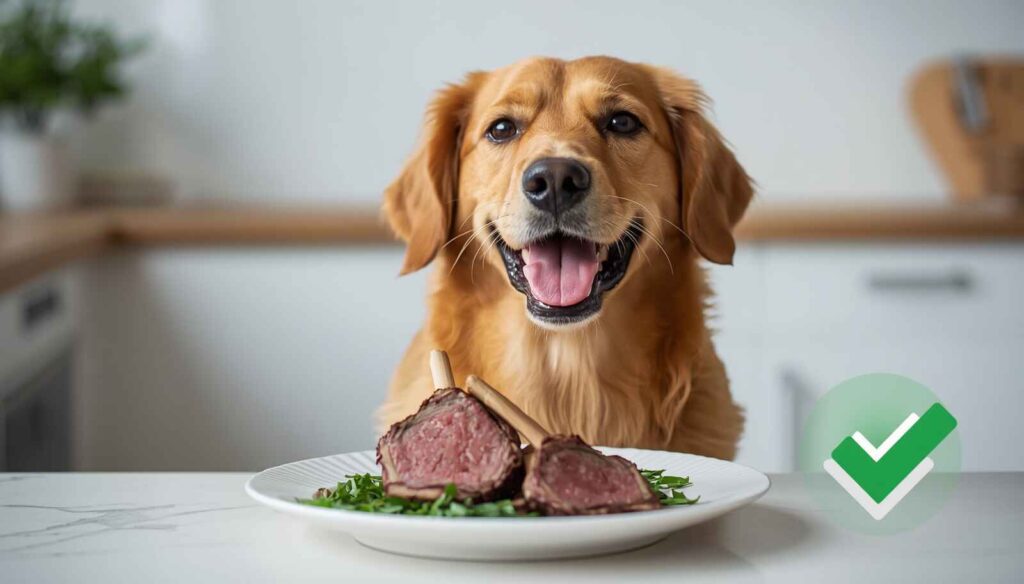
Sunday roast is on the table, your dog is watching every slice, and a piece of lamb falls from the carving board. Is it safe to let them have it?
Plain, lean, fully cooked, boneless lamb with no seasoning is generally safe for most healthy dogs in small amounts. The bigger risks usually come from what is served with it: bones, excess fat, gravy, onion, garlic, rich sauces, and oversized portions.
Before sharing lamb—or deciding what to do after your dog steals some—ask five questions:
- What form of lamb was it?
- What was it cooked with?
- How much did your dog eat?
- Does your dog have a medical condition that increases the risk?
- Are any symptoms already developing?
These details matter more than the word “lamb” on its own.
The Lamb Safety Check Every Dog Owner Should Use
Check 1: What Form Is the Lamb?
Plain cooked meat, fatty roast lamb, mince, raw lamb, processed products, organ meat, and bone-in cuts all carry different risks.
A small piece of trimmed roast lamb is very different from a greasy chop bone, a seasoned kebab, or a piece of lamb sausage.
Check 2: What Was It Cooked With?
Onion and garlic are toxic to dogs and may be present in gravy, stock, stuffing, sauces, and marinades. Removing visible pieces does not necessarily make the remaining meat safe if it cooked in the same mixture.
Butter, oil, salt, and rich pan juices are not usually toxic in the same way, but they can trigger vomiting, diarrhoea, or pancreatitis in vulnerable dogs.
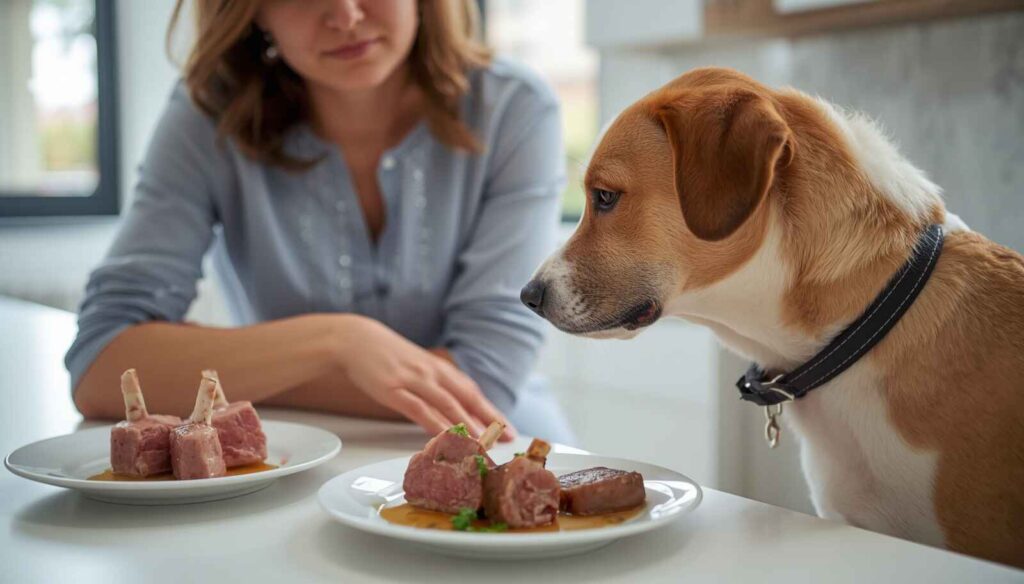
Check 3: How Much Did They Eat?
One small, plain piece is unlikely to cause a problem in most healthy dogs. A whole chop, a large amount of roast scraps, or repeated servings create a much higher risk because they contain more fat, calories, and potentially harmful ingredients.
A “small amount” should mean a few treat-sized pieces, not a small human portion.
Check 4: Which Dog Ate It?
Body size matters, but medical history is just as important.
Extra caution is needed for:
- Puppies and senior dogs
- Small dogs
- Overweight dogs
- Dogs with previous pancreatitis
- Dogs with chronic gastrointestinal problems
- Dogs on low-fat, prescription, or elimination diets
- Dogs known to react badly to rich foods
A portion that causes no problem in a large, healthy adult dog may be significant for a small dog or one with a sensitive digestive system.
Check 5: Are There Any Symptoms Already?
Contact a veterinarian promptly if your dog develops:
- Gagging or repeated retching
- Excessive drooling
- Vomiting
- Persistent diarrhoea
- Abdominal pain or a swollen abdomen
- Lethargy or weakness
- Refusal to eat
- Straining without passing stool
- Blood in vomit or stool
- Breathing difficulty
Breathing difficulty, collapse, active choking, or severe abdominal pain should be treated as an emergency.
Common Lamb Forms and Their Risk Level
| Lamb form | General suitability | Main concern | What to do |
|---|---|---|---|
| Plain, lean, cooked, boneless lamb | Usually suitable in small amounts | Excess calories or mild digestive upset | Offer only as an occasional treat |
| Fatty roast lamb | Higher risk | Vomiting, diarrhoea, pancreatitis | Avoid, or offer only a tiny piece after removing all visible fat |
| Lamb mince | Depends on fat content | Hidden fat and excess calories | Choose lean mince and drain it thoroughly |
| Raw lamb | Not risk-free | Bacterial contamination and household exposure | Fully cooked lamb is the lower-risk choice |
| Lamb with gravy or stock | Usually unsuitable | Onion, garlic, salt, and concentrated fat | Check the ingredients and contact a vet if harmful ingredients were eaten |
| Lamb sausage or kebab | Usually unsuitable | Fat, salt, spices, onion, garlic, and additives | Do not feed deliberately |
| Lamb liver | Suitable only in small amounts | Excess vitamin A and dietary imbalance if overfed | Use as an occasional organ treat |
| Lamb heart | Can be suitable when plain and cooked | Portion size and overall dietary balance | Feed sparingly |
| Lamb kidney | Can be suitable when plain and cooked | Richness and digestive upset | Introduce cautiously |
| Cooked lamb bone | Unsafe | Splintering, choking, obstruction, and internal injury | Contact a veterinarian if swallowed |
| Raw lamb bone | Still carries meaningful risk | Broken teeth, choking, obstruction, and bacteria | Do not treat it as a risk-free chew |
| Lamb fat, skin, or dripping | Unsuitable for many dogs | Pancreatitis and gastrointestinal upset | Avoid |
Which Part of the Lamb Meal Is Actually Dangerous?
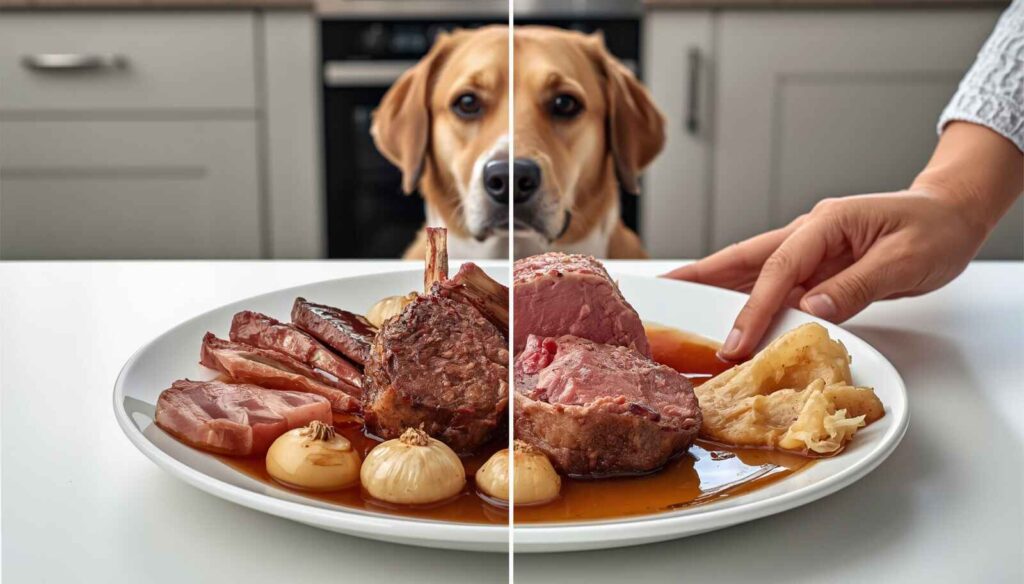
The Meat Usually Is Not the Main Problem
Plain lamb and a Sunday roast dinner are not the same food.
Even a piece taken from the centre of the roast may carry cooking fat, gravy, stock, or seasoning. Removing visible onion or garlic does not remove substances that may have cooked into the meat or sauce.
Always assess the entire dish, not just the piece of lamb you can see.
Fat Is a Bigger Deal Than Many Owners Realise
Fatty edges, skin, dripping, pan juices, and high-fat mince are common reasons dogs become unwell after eating lamb.
Rich food may cause vomiting or diarrhoea in any dog, but dogs with previous pancreatitis, hyperlipidaemia, obesity, or a prescribed low-fat diet face greater risk. For these dogs, even a modest amount of fatty lamb may justify veterinary advice.
Seasonings and Sauces
The greatest concern may be an accompanying ingredient rather than the lamb itself.
Common problem ingredients include:
- Onion
- Garlic
- Concentrated stock
- Gravy
- Stuffing
- Marinades
- Excess salt
- Butter
- Cooking oil
- Seasoning blends
Processed products such as lamb sausages and kebabs are especially difficult to assess because the full ingredient mixture may not be obvious.
Large Boneless Pieces Can Still Be a Choking Risk
Boneless does not mean choking-proof.
Dogs that gulp food may swallow a chunk before chewing it properly. This is particularly risky for small dogs, puppies, flat-faced breeds, and dogs that become overexcited around food.
Cut lamb into small, soft pieces suited to your dog’s size, and do not offer whole strips or chunks.
When to Contact a Vet Right Away
Contact your veterinarian promptly if:
- A cooked lamb bone was swallowed
- Your dog is choking or struggling to breathe
- There is repeated gagging, retching, or excessive drooling
- The lamb contained onion, garlic, or unknown ingredients
- A dog with a history of pancreatitis ate fatty lamb
- Vomiting or diarrhoea is persistent
- The abdomen looks swollen or appears painful
- Your dog becomes weak, unusually quiet, or collapses
- There is blood in the vomit or stool
- Your dog is straining without passing stool
Breathing difficulty, collapse, active choking, or severe abdominal pain should be treated as an emergency.
Do not try to induce vomiting unless a veterinarian specifically tells you to. This is especially important after bone ingestion, because bringing sharp material back up can cause further injury.
Meat, Fat, Bones, and Organs Aren’t the Same Food
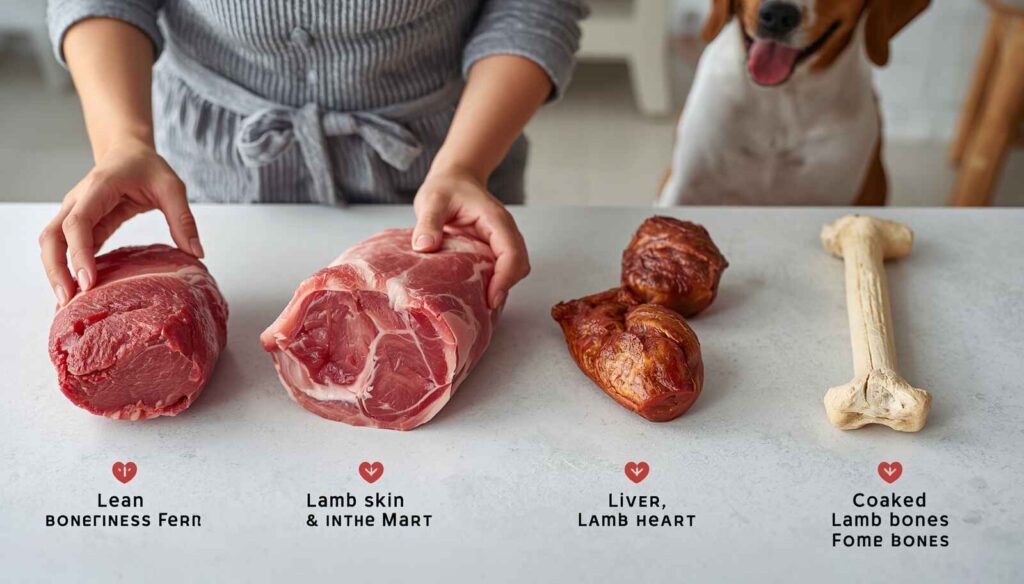
Plain Muscle Meat
Plain, lean, boneless lamb is the lowest-risk option. It provides useful protein, but it should be treated as an occasional extra rather than a meal replacement.
Fat and Skin
Lamb fat and skin are calorie-dense and more likely to cause vomiting, diarrhoea, or pancreatitis. The risk is higher in dogs with previous pancreatitis, obesity, high blood fat levels, or a prescribed low-fat diet.
Liver, Kidney, and Heart
These organs contain different concentrations of nutrients and should not be treated like ordinary muscle meat.
Small, occasional portions are the safest approach. Feeding large amounts of organ meat regularly can unbalance the diet over time, particularly if it replaces complete dog food.
Bones
Cooked lamb bones can splinter, but splintering is not the only concern. Bones may also cause broken teeth, choking, oesophageal obstruction, constipation, intestinal blockage, or internal injury.
Raw bones are not risk-free either. Problems may develop hours or even days after ingestion, so a dog that currently appears normal may still need veterinary advice.
Safe Treat or Complete Meal?
Plain lamb provides protein, iron, zinc, and vitamin B12, and many dogs find it highly palatable. That does not make it a complete food on its own.
A nutritionally complete commercial dog food is formulated to provide the correct balance of protein, fat, vitamins, minerals, and other essential nutrients. Plain muscle meat cannot provide that balance by itself. Feeding too much lamb also adds calories and may displace the food your dog actually needs.
Lamb is best used as:
- An occasional treat
- A small food topper
- A tiny high-value training reward
- Part of a professionally formulated homemade diet
It should not replace normal meals long-term, especially for:
- Growing puppies
- Pregnant or nursing dogs
- Dogs with medical dietary needs
- Dogs on prescription or elimination diets
Lamb should also not be used for unsupervised allergy testing. A suspected food allergy is usually assessed through a controlled elimination diet and veterinary-guided reintroduction.
How to Prepare Lamb With the Lowest Practical Risk
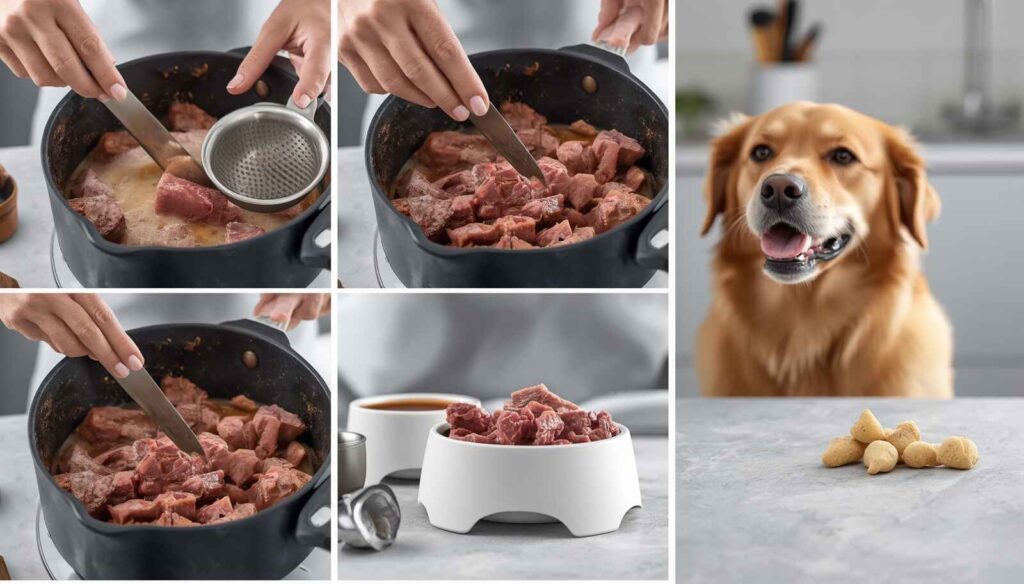
Start with a fresh, lean, boneless, unseasoned cut. Boil, bake, or grill it without oil, butter, salt, sauces, or seasoning. Do not cook it alongside onion or garlic.
After cooking:
- Trim away visible fat and skin
- Drain lamb mince thoroughly
- Allow the meat to cool
- Cut it into small, soft pieces
- Check carefully for bone fragments
When introducing lamb for the first time, offer only one or two small pieces. Avoid introducing another new food at the same time, and monitor your dog’s appetite, stools, skin, and general comfort over the next day or two.
Safe-Preparation Checklist
- Lamb is fresh and properly stored
- The meat is lean
- Every bone has been removed
- Lamb is thoroughly cooked
- No onion or garlic was used
- No gravy, stock, or stuffing is attached
- No butter, salt, oil, or marinade was added
- Visible fat and skin have been removed
- Lamb mince has been drained
- The meat has cooled before serving
- Pieces are appropriate for your dog’s size
- The portion is treat-sized
- Your dog is not on a conflicting veterinary diet
- The lamb is included within the daily treat allowance
How Much Lamb Is Reasonable?
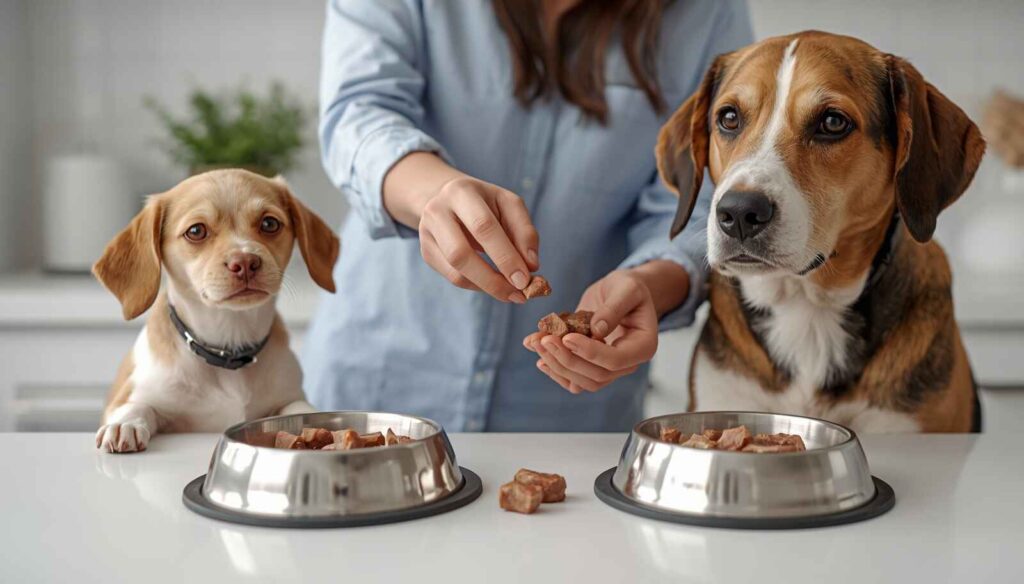
Lamb should count within your dog’s total daily treat allowance, not be added on top of it. As a general guide, treats and extras combined should make up no more than about 10% of daily calories for a dog eating a complete diet.
Portion size depends on more than body weight. Consider:
- The lamb’s fat content
- Your dog’s activity level
- Their usual diet
- Whether lamb is new to them
- Any history of digestive or weight problems
A few small, lean pieces may suit a healthy adult dog, while the same amount could be inappropriate for a small, overweight, or medically vulnerable dog.
For some dogs, there is no useful general portion. Speak with your veterinarian before feeding lamb to a dog with:
- Previous pancreatitis
- A prescribed low-fat diet
- Active vomiting or diarrhoea
- A known lamb allergy
- A prescription diet
- An ongoing elimination-food trial
My Dog Already Ate Lamb — What Should I Do?
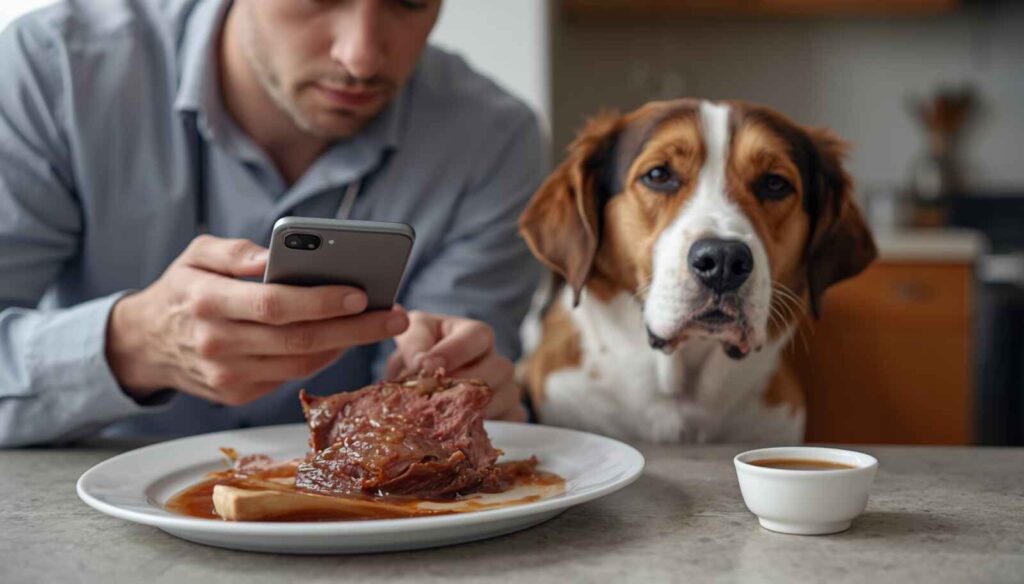
First, identify exactly what your dog ate:
- Plain meat
- Fat or skin
- A bone
- Gravy or stuffing
- Sausage or kebab
- Raw meat
- Spoiled leftovers
If you contact a veterinarian, be ready to provide:
- Your dog’s age and weight
- Relevant medical conditions
- The exact food or product
- The approximate amount eaten
- When it happened
- Any symptoms already present
Lower-Concern Scenario
A healthy adult dog ate one small piece of plain, lean, boneless, fully cooked lamb and has no symptoms.
Remove any remaining food and monitor for vomiting, diarrhoea, loss of appetite, or unusual behaviour.
Call-the-Vet Scenario
Contact your veterinarian for advice if your dog ate:
- A large or fatty portion
- Lamb with unknown seasoning
- Sausage, kebab, gravy, or stuffing
- Raw or spoiled lamb
- Lamb containing onion or garlic
- Any amount while at increased risk from pancreatitis or another medical condition
Veterinary advice is also sensible for puppies, frail senior dogs, and dogs on prescription diets.
Emergency Scenario
Seek urgent veterinary care for:
- Breathing difficulty
- Active choking
- Collapse or marked weakness
- Severe abdominal pain
- Repeated unproductive retching
- A swollen abdomen
- Blood in vomit or stool
- Signs of obstruction
- Persistent vomiting
- Symptoms after swallowing a bone
Lamb Bones Deserve Their Own Decision
Cooked bones can dry out and splinter, causing injuries to the mouth, throat, stomach, or intestines. They may also cause choking, constipation, or an obstruction.
Raw bones are not automatically safe. They can still:
- Fracture teeth
- Become lodged in the throat
- Cause gastrointestinal blockage
- Lead to constipation
- Carry harmful bacteria
If your dog swallows a lamb bone:
- Remove any remaining bones from reach.
- Do not induce vomiting.
- Do not give bread, oil, or other home remedies unless your veterinarian advises it.
- Contact your veterinarian and describe the type and size of bone.
- Monitor closely for delayed symptoms.
Symptoms may not appear immediately. Watch for vomiting, gagging, drooling, abdominal pain, reduced appetite, lethargy, straining, or blood in the stool.
Appropriately sized veterinary-approved chews and supervised chew toys are safer choices than lamb bones.
Is Lamb Really Better for Dogs With Allergies?
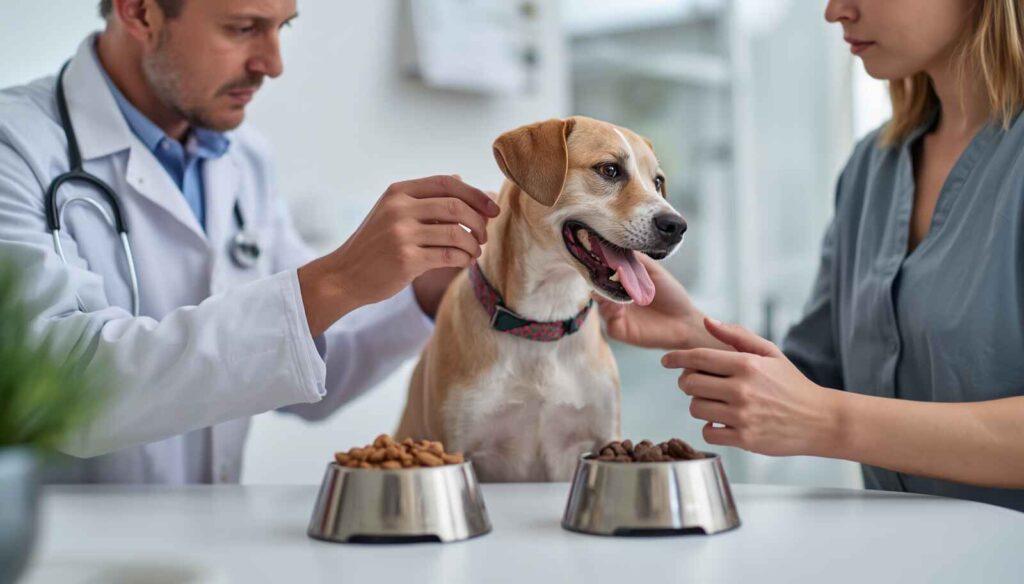
Lamb is sometimes marketed as hypoallergenic, but that description is misleading. Dogs can develop an allergy to lamb, especially if they have eaten it before in food, treats, chews, or flavoured medicines.
Whether lamb is a novel protein depends entirely on the individual dog’s dietary history.
It also helps to distinguish an allergy from an intolerance.
Possible Food-Allergy Signs
- Persistent itching
- Recurrent ear problems
- Red or inflamed skin
- Paw licking
- Digestive signs in some dogs
Possible Food-Intolerance Signs
- Vomiting
- Diarrhoea
- Gas
- Abdominal discomfort
These signs can have many causes, so symptoms alone do not confirm that lamb is responsible.
Randomly switching proteins at home is not a reliable way to diagnose a food reaction. Treats, flavoured medicines, chews, and accidental extras can all interfere with the results.
For persistent itching, recurring ear disease, or ongoing digestive problems, a veterinarian may recommend a controlled elimination diet followed by a carefully managed food challenge.
Vet Advice
Talk to your veterinarian before feeding lamb regularly if your dog has:
- Previous pancreatitis
- Chronic vomiting or diarrhoea
- Obesity
- Kidney or liver disease
- A known food allergy
- A prescription diet
- An elimination-food trial
Veterinary guidance is also important for puppies, pregnant or nursing dogs, and dogs eating a homemade diet.
Raw Lamb vs. Cooked Lamb
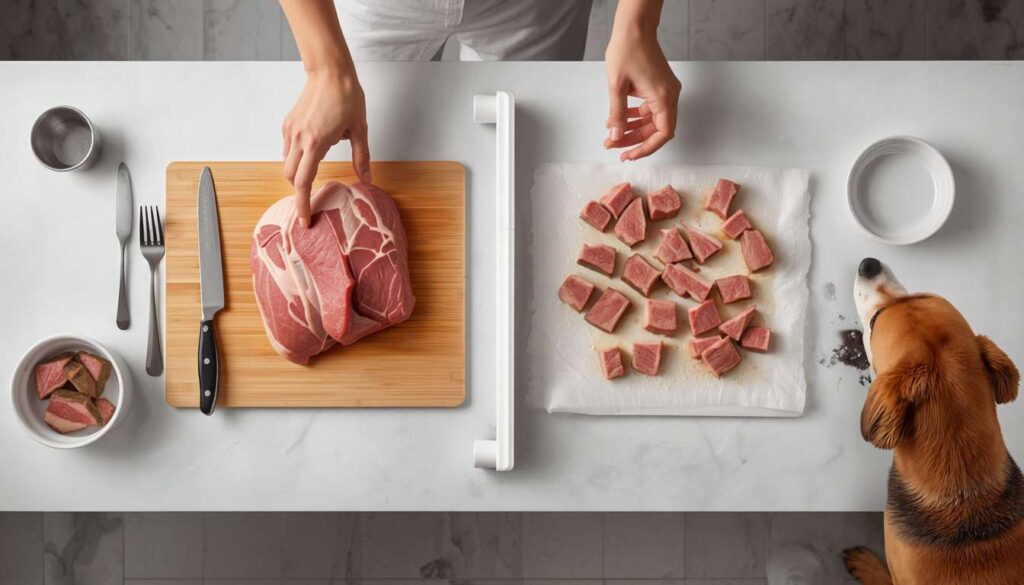
Properly handled, fully cooked lamb carries a lower bacterial risk and makes it easier to remove bones and visible fat.
Raw lamb may expose dogs and people to harmful bacteria. Contamination can spread through:
- Hands
- Bowls
- Chopping boards
- Worktops
- Utensils
- Saliva
- Faeces
Raw diets may also be nutritionally incomplete if they are not professionally formulated.
Households containing young children, elderly adults, pregnant people, or anyone immunocompromised should be particularly cautious about raw meat.
Anyone feeding raw lamb should use strict food hygiene:
- Keep it properly refrigerated
- Wash hands thoroughly
- Use separate utensils and chopping boards
- Disinfect preparation surfaces
- Clean food bowls after every meal
- Store and dispose of leftovers safely
Lamb Compared With Other Common Proteins
| Factor | Lamb | Chicken | Beef |
|---|---|---|---|
| Protein value | Useful animal protein | Useful animal protein | Useful animal protein |
| Fat variability | Often higher, depending on the cut | Can be lean when skinless | Varies by cut and mince percentage |
| Allergy suitability | Novel only for some dogs | Commonly encountered | Commonly encountered |
| Best preparation | Plain, lean, cooked, and boneless | Plain, skinless, cooked, and boneless | Plain, lean, cooked, and boneless |
| Main household risk | Fatty scraps, seasoning, and bones | Skin, seasoning, and bones | Fat, seasoning, and bones |
There is no single best protein for every dog. The right choice depends on individual tolerance, dietary history, fat content, medical needs, and whether the overall diet is complete and balanced.
Common Mistakes Dog Owners Make With Lamb
- Feeding seasoned roast leftovers
- Giving cooked chop or rib bones
- Assuming raw bones are completely safe
- Offering lamb skin, fat, or dripping
- Serving a human-sized portion
- Treating plain lamb as a complete meal
- Feeding it regularly without counting the calories
- Assuming lamb is automatically hypoallergenic
- Testing a suspected allergy without veterinary supervision
- Ignoring the fat content of lamb mince
- Feeding sausages or kebabs
- Allowing a dog to gulp large pieces
- Giving lamb during an elimination-food trial
- Inducing vomiting after bone ingestion
- Waiting for severe symptoms before contacting a vet
The Bottom Line
Most healthy dogs can eat a small amount of plain, lean, fully cooked, boneless lamb.
Keep the portion treat-sized, remove visible fat, and avoid gravy, onion, garlic, seasoning, processed products, and bones. Dogs with pancreatitis, food allergies, digestive disease, or prescription diets need more caution.
When your dog has stolen lamb, judge the risk by what was eaten, how much, your dog’s medical history, and whether symptoms are developing. When bones, toxic ingredients, or concerning symptoms are involved, contact your veterinarian rather than waiting for the problem to worsen.
FAQ: Can Dogs Eat Lamb?
1.Can dogs eat lamb every day?
Plain lamb should not become a daily extra unless it fits within a complete, balanced feeding plan. Regular portions can add unnecessary fat and calories or displace nutritionally complete food.
A few small pieces occasionally are more appropriate for most healthy dogs. Dogs eating a professionally formulated lamb-based dog food can have lamb as part of their regular diet because the product contains the additional nutrients they need.
2.Is lamb or chicken better for dogs?
Neither protein is universally better.
Skinless chicken is often leaner, while lamb may be useful for some dogs that have not previously eaten it. However, either protein can cause digestive upset or an allergic reaction in an individual dog.
The better choice depends on your dog’s tolerance, medical history, dietary needs, and the quality of the complete food containing it.
3.Can dogs eat lamb cooked with rosemary?
A small amount of rosemary is not usually the main concern. The problem is that rosemary-seasoned lamb may also contain onion, garlic, salt, butter, stock, or rich sauces.
The safest option is to set aside a plain piece before adding herbs or seasoning.
4.How long after eating lamb can a dog become unwell?
Digestive upset may begin within a few hours, but problems involving bones, obstruction, or pancreatitis may take longer to become obvious.
Do not rely on a fixed monitoring window. Continue watching for vomiting, loss of appetite, abdominal pain, lethargy, straining, or changes in stool, and contact your veterinarian if symptoms appear.
5.Does a lamb treat interfere with an elimination diet?
Yes. Even a small amount may make the results of a veterinary elimination trial unreliable.
During a food trial, every treat, chew, supplement, and flavoured medicine must be checked with your veterinarian. Do not add lamb unless it is specifically included in the prescribed plan.
6.Can dogs choke on boneless lamb?
Yes. A large piece of boneless meat can still block the airway or become lodged in the oesophagus, particularly in small dogs or fast eaters.
Cut lamb into small, soft pieces and supervise your dog while eating.
7.At what age can puppies have lamb?
Puppies eating solid food may be able to try a very small amount of plain, lean, fully cooked, boneless lamb, provided it does not replace their complete puppy food.
Introduce it gradually and avoid fatty meat, seasoning, and all bones. Check with your veterinarian before adding new foods if your puppy has digestive problems, poor growth, or a prescribed diet.
#. Related Articles: