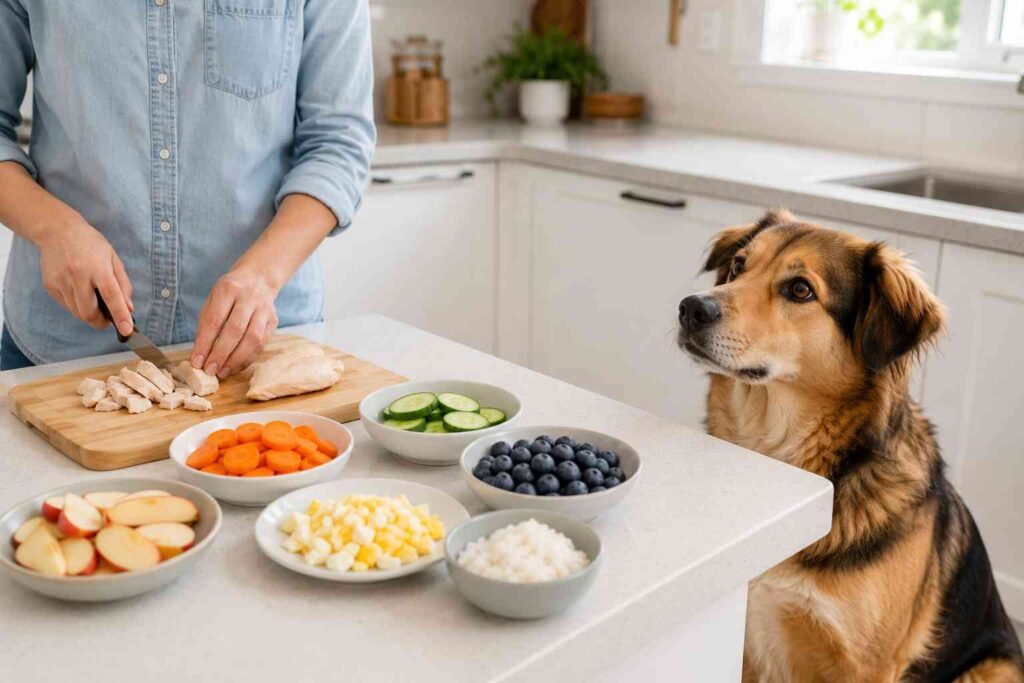
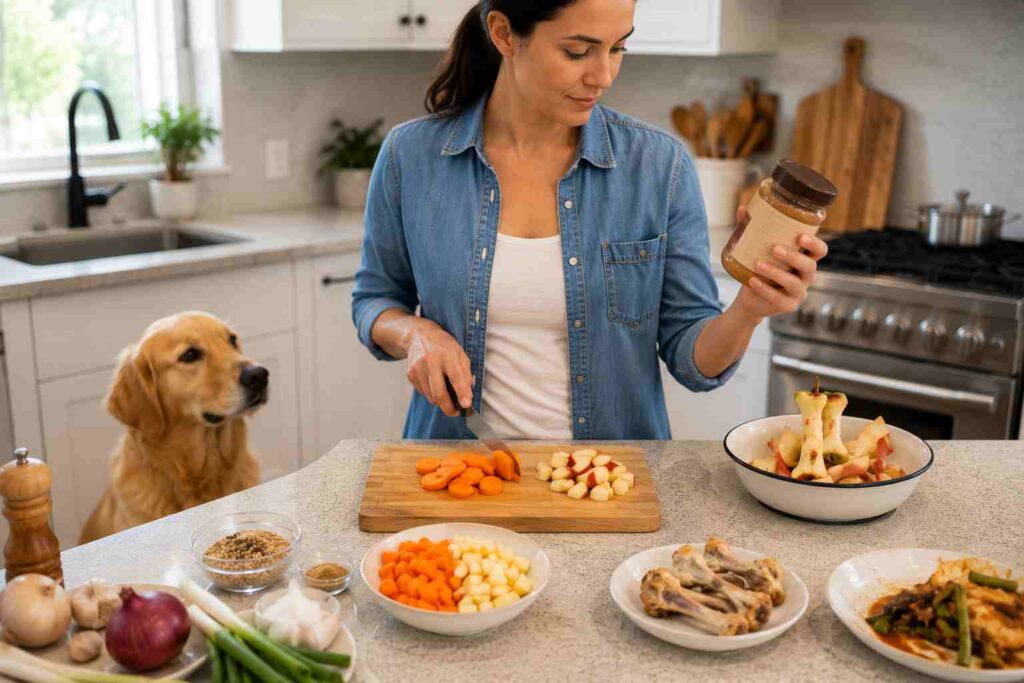
You’re cutting up vegetables for dinner, and there he is — sitting by your feet, staring up like he hasn’t eaten in a week. You toss him a piece of carrot without thinking twice. But then your partner offers him a piece of onion bhaji, and suddenly you’re not so sure anymore.
What human food can dogs eat? The answer isn’t as simple as sorting everything into “safe” and “unsafe.” You need to consider the food itself, how it was prepared, what other ingredients are hiding in it, whether it presents a choking or blockage hazard, and whether it suits your particular dog.
Instead of giving you another giant alphabetical list to scroll through, this guide gives you a five-point check you can use right there in the kitchen before you hand anything over.
Before You Share Anything, Check These 5 Things
Is the Main Ingredient Actually Safe?
Start with the base ingredient. Plain cooked chicken, carrots, and rice can generally be offered to healthy dogs in appropriate amounts. Grapes and raisins, onions and garlic, and chocolate are different: they can be toxic and shouldn’t be intentionally fed. Grapes, raisins, currants, and sultanas can cause kidney injury, while onions and other alliums can damage red blood cells.
How Was It Prepared?
A piece of plain, cooked chicken breast is very different from a piece taken out of butter chicken. Frying, heavy seasoning, fatty sauces, and marinades can add ingredients or amounts of fat and salt that make the finished dish a poor choice even when the main ingredient itself is safe.
This is an easy mistake to make: a dog-safe ingredient doesn’t automatically make the whole recipe dog-safe.
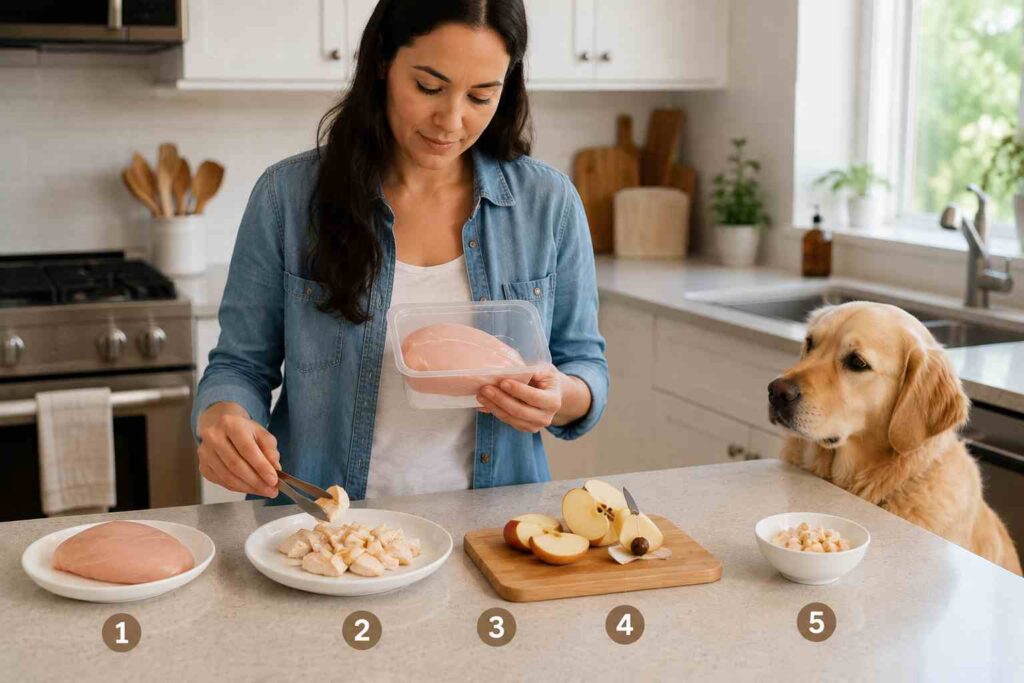
What’s Hiding in the Recipe?
Check the ingredient list rather than judging a dish by its name. Onion and garlic can turn up in sauces, stocks, gravies, seasoning mixes, and prepared foods, and they remain toxic even when cooked or dried. Sugar-free products also deserve a label check because some contain xylitol, a sweetener that can cause a dangerous fall in blood sugar and liver injury in dogs.
Could the Shape Be Dangerous?
Not every food emergency is poisoning. Corn cobs, fruit stones or pits, cooked bones, skewers, and food packaging can cause choking, injury, or an intestinal blockage. Cooked bones are particularly risky because they can splinter, but bones in general can cause dental, throat, stomach, or intestinal injuries.
Is It Right for Your Dog?
A bite that seems tiny to you can represent far more food for a Chihuahua than for a Labrador. Age, body weight, existing medical conditions, and the dog’s usual diet also matter.
Be especially cautious if your dog has pancreatitis, diabetes, kidney or heart disease, obesity, food sensitivities, or is eating a veterinary therapeutic diet. A food that is acceptable for a healthy adult dog may not fit that dog’s nutritional plan. Large amounts of table scraps and inappropriate foods are also recognised risk factors for pancreatitis in dogs.
Quick Answer: Safe, Limit, or Avoid
| Food | General Status | Best Form | Main Concern |
|---|---|---|---|
| Plain cooked chicken | Usually fine | Boneless, unseasoned | Extra calories; avoid fatty/seasoned preparations |
| Carrots | Usually fine | Plain, bite-sized pieces | Choking if pieces are too large |
| Blueberries | Usually fine | Plain | Portion size |
| Cooked egg | Usually fine | Plain, fully cooked | Extra calories |
| Plain rice | Usually fine | Fully cooked, unseasoned | Adds carbohydrates and calories |
| Cheese | Limit | Small amounts | Fat, salt, lactose tolerance |
| Peanut butter | Depends | Small amount after checking the label | Xylitol and high calorie content |
| Grapes/raisins | Toxic | None | Potential kidney injury/failure |
| Onion/garlic | Toxic | None | Red blood cell damage and anaemia |
| Cooked bones | Dangerous | None | Splintering, choking, or blockage |
Foods You Can Reasonably Share
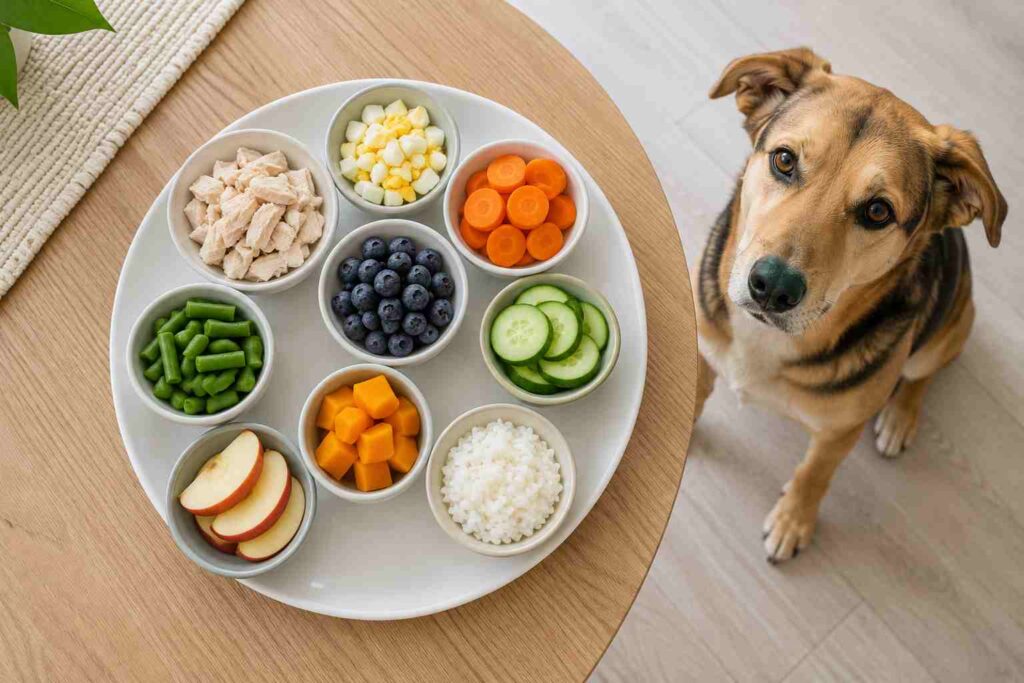
Fruits. Blueberries, strawberries, peeled banana, and properly prepared apple can all work as occasional treats. Remove apple seeds and the core, and serve watermelon without seeds or rind. Fruit should still be given in dog-sized portions rather than treated as an unlimited healthy snack. PDSA recommends serving dog-friendly fruits plain, in bite-sized pieces, with relevant seeds, stones, cores, or rinds removed.
Keep grapes, raisins, currants, and sultanas out of reach altogether. There isn’t a reliably safe amount that owners can use at home because susceptibility varies between dogs, and even relatively small exposures can be serious.
Vegetables. Plain carrots, green beans, cucumber, and pumpkin can be practical choices, especially when you want an alternative to richer treats. Cut firm vegetables into pieces appropriate for your dog’s size, and avoid butter, salt, garlic, onion, or rich sauces.
Pumpkin deserves one extra label check: plain pumpkin and pumpkin pie filling are not the same product. If you’re using canned pumpkin, choose plain pumpkin without added sugar, spices, or other ingredients.
Proteins. Plain, fully cooked chicken, turkey, eggs, and suitable fish can be shared in small amounts with many healthy dogs. Keep them boneless and unseasoned, and trim away excessive fat.
With salmon or other fish, don’t assume that something cooked for the family is automatically suitable for the dog. Check for bones, marinades, sauces, butter, garlic, or onion first. The goal here is a small portion of the plain protein, not a serving of the finished human meal.
Grains. Plain cooked rice and oats are generally suitable for many dogs, and small amounts of plain pasta aren’t inherently toxic either. But they don’t need to be added simply because they’re safe. If your dog already eats a complete and balanced diet, extra grains mostly mean extra calories.
If your dog has ongoing vomiting or diarrhoea, don’t rely on chicken-and-rice or another homemade bland meal indefinitely. Persistent digestive signs deserve veterinary advice rather than repeated dietary guesswork.
Dairy. This category is more “it depends” than a clear yes. Some dogs tolerate small amounts of plain, unsweetened yogurt or cheese, while others develop gas, loose stools, or other digestive upset. Cheese can also pack a surprising amount of fat, salt, and calories into a small piece, so it is better treated as an occasional extra than a routine snack.
Peanut butter needs a different kind of caution. Choose only a small amount and read the ingredient label every time. Some sugar-free products and nut butters can contain xylitol, sometimes labelled birch sugar, which is extremely dangerous to dogs.
The Same Food Can Flip From Safe to Unsafe
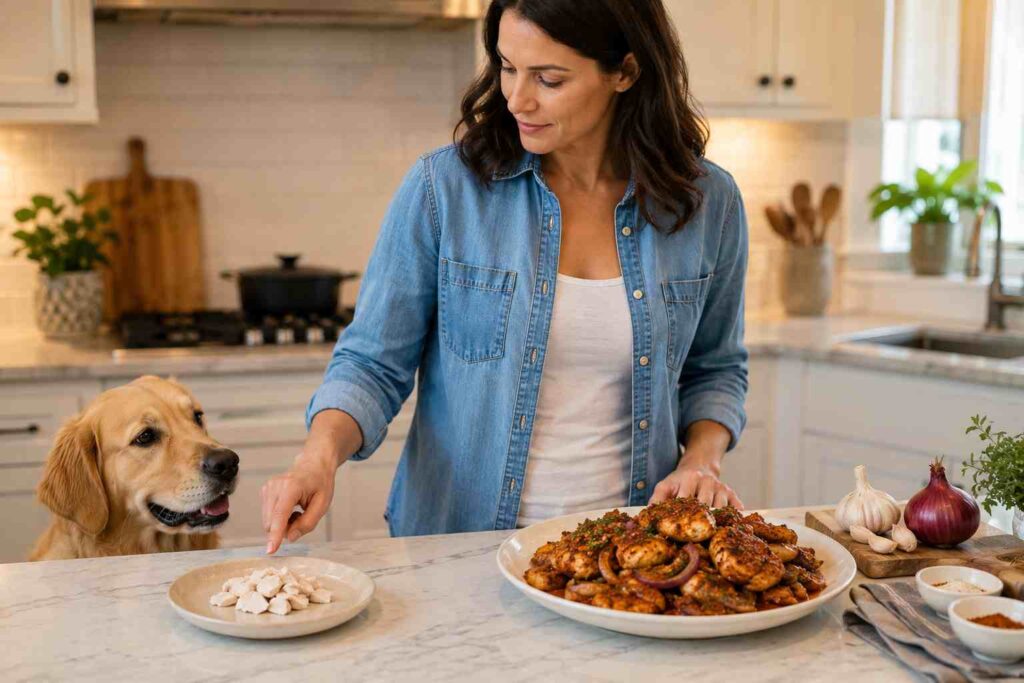
This is the part most food lists skip, and it may be the most useful thing to understand.
Plain chicken breast, boiled or baked with nothing added, can be a reasonable treat. The same chicken cooked in curry sauce with onion and garlic is not — even though it’s still technically “chicken.” Plain pumpkin is very different from pumpkin pie filling, and plain unsweetened yogurt is different from a flavored or sugar-free version.
The better rule is: don’t judge a finished dish by its main ingredient. Check what was added during cooking, too.
Foods That Belong on the “Never” List
Genuinely toxic: Chocolate, grapes, raisins and sultanas, onions, garlic, leeks and chives, xylitol, alcohol, caffeine, macadamia nuts, and raw yeast dough should not be intentionally fed. Xylitol is especially important to watch for in sugar-free products and some nut butters.
Dangerous because of shape or structure: Cooked bones, corn cobs, fruit pits, skewers, and other hard or indigestible objects can cause choking, internal injury, or intestinal blockage. And bones deserve a correction to a common myth: raw bones are not automatically safe either. PDSA advises against feeding bones whether cooked or raw because both can damage teeth or the digestive tract, although cooked bones are particularly prone to splintering.
Not necessarily toxic, but still a poor choice: Fried foods, fatty scraps, heavy gravy, and very salty leftovers can cause digestive upset and may be especially risky for dogs prone to pancreatitis. Merck Veterinary Manual lists eating large amounts of table scraps or other inappropriate foods as a recognised pancreatitis risk factor in dogs.
If Your Dog Eats Something on the Toxic List
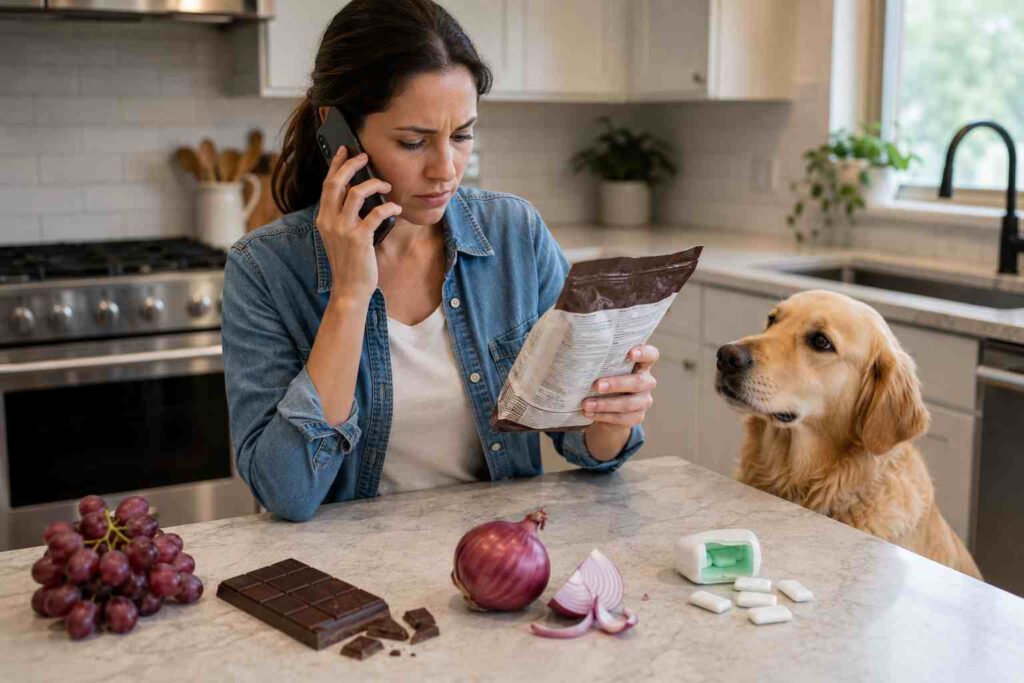
Don’t wait for symptoms before getting professional advice when a known or suspected toxin is involved. Some poisoning cases need treatment even before obvious signs appear.
Have this information ready:
- What was eaten, including the product or brand
- Roughly how much was eaten
- When it happened
- Your dog’s age, breed, and approximate weight
- The ingredient label or packaging, if available
- Any symptoms your dog is already showing
Don’t try home remedies or induce vomiting unless a veterinarian or veterinary poison specialist specifically tells you to. The right response depends on the substance, dose, timing, and your dog’s condition.
In Australia, the Animal Poisons Helpline can be reached on 1300 869 738. The same service currently lists +1 917-722-5958 for callers in Canada and the United States. In the UK, Animal PoisonLine is available 24 hours a day on 01202 509 000. If your dog has collapsed, is having seizures, or is struggling to breathe, contact an emergency veterinarian immediately rather than relying on telephone triage.
“Safe” Still Doesn’t Mean Unlimited
A useful rule is to keep treats and table scraps to no more than about 10% of your dog’s daily calories, with the rest coming from a complete and balanced diet. Merck Veterinary Manual gives the same 10% limit for table scraps.
That percentage matters more than a universal rule such as “one spoonful” or “a small handful.” A cube of cheese or spoonful of peanut butter represents a much larger share of a small dog’s daily calories than it does for a large dog.
It’s also worth noticing when several people in the house are feeding treats independently. That’s often how overfeeding sneaks in: each person thinks they’re giving “just a little,” but nobody is counting the total.
Kitchen Rules Worth Remembering
- Choose plain over seasoned whenever possible
- Check the label on processed foods every time
- Remove pits, cores, cobs, skewers, and bones
- Cut food into pieces appropriate for your dog’s size
- Introduce one unfamiliar food at a time
- Count human food within the daily treat allowance
- Don’t assume a food is safe because another dog ate it without a problem
- Don’t assume raw bones are automatically safer than cooked ones
- If you’re unsure about the ingredients in a finished dish, skip it
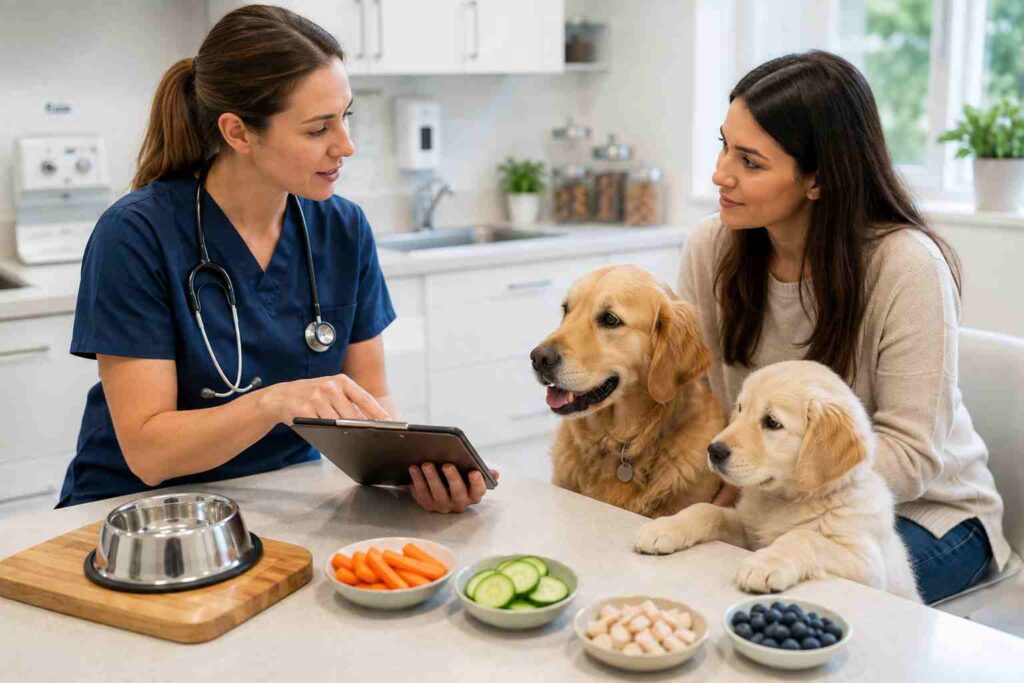
What About Puppies and Dogs With Health Conditions?
Puppies can eat some of the same dog-safe human foods as adults, but extras need to stay small. Their main diet has a bigger job to do: supporting growth with the right balance of energy and nutrients. If you introduce a new food, offer a small amount first and watch for digestive upset rather than adding several unfamiliar foods at once.
Dogs with health conditions need more individual rules. A dog with pancreatitis or a history of it may need strict limits on fatty foods. An overweight dog may be better suited to lower-calorie treats such as small pieces of carrot or cucumber. And if your dog is eating a prescription or therapeutic diet for kidney, heart, digestive, allergy, or another medical problem, a generic “safe food” list shouldn’t override that plan. WSAVA recommends nutrition be tailored to the individual patient, and PDSA likewise advises speaking with a vet when a dog’s health needs affect its diet.
The same caution applies during a veterinary food trial. Even an otherwise harmless treat can interfere with the results if your dog is supposed to eat only the prescribed trial diet.
Common Mistakes Owners Make
Calling every non-toxic food “healthy” is one of the biggest. Non-toxic only means it isn’t known to poison your dog; it doesn’t mean the food is nutritionally useful, suitable in unlimited amounts, or appropriate for every dog.
Another common mistake is sharing the finished dish instead of the plain ingredient. The chicken may be fine; the onion, garlic, gravy, butter, or seasoning around it may not be.
And don’t use past experience as proof of safety. A dog eating something once without becoming visibly ill does not mean a known toxin is safe next time. With onions and garlic, for example, Merck notes that clinical signs of red blood cell damage may not appear until days after exposure, and raw, cooked, dried, and powdered forms can all cause toxicosis.
The Bottom Line
Sharing an occasional piece of dog-safe human food can be a nice way to include your dog, but the safest habit is to check the ingredient, preparation, portion, and your dog’s individual needs every time.
If the food is plain, known to be safe, appropriately sized, and suitable for your dog’s diet, a small amount may be reasonable. If you don’t know what’s in a finished dish, skipping it is safer than guessing.
FAQ: What Human Food Can Dogs Eat?
1.Can dogs eat food straight off my plate?
Sometimes, but only when you know exactly what’s in it. A small piece of plain, boneless, cooked meat is very different from meat covered in sauce, gravy, seasoning, onion, or garlic. When the ingredients aren’t clear, don’t guess.
2.Does cooking make onion or garlic safe for dogs?
No. Dogs have developed toxicosis after eating raw, cooked, dehydrated, and granulated onions or garlic. Concentrated forms such as powders can be particularly concerning because a small volume can contain more of the ingredient.
3.How much human food is genuinely too much?
There isn’t one portion that fits every dog. Treats and extras need to be considered alongside your dog’s total calorie intake, size, body condition, activity level, and main diet. WSAVA’s nutrition guidance emphasizes individualized calorie and nutrition assessment rather than relying on a universal spoonful or handful.
4.Can a food that’s technically safe still give my dog diarrhoea?
Yes. Toxicity and digestive tolerance are different things. A new or rich food can cause vomiting, diarrhoea, gas, or discomfort without being poisonous. If symptoms are persistent, severe, recurrent, or accompanied by lethargy, pain, blood, or poor appetite, contact your vet rather than repeatedly testing the food.
5.What if I don’t know how much of something toxic my dog ate?
Contact your vet or an appropriate animal poison service anyway. Give your best estimate of the food, amount, time of exposure, your dog’s weight, and any ingredients listed on the packaging. With some toxins, waiting for symptoms can lose valuable treatment time.
6.Are homemade dog food combinations better than commercial dog food?
Not automatically. A homemade meal can contain individually safe ingredients and still be nutritionally incomplete or unbalanced. PDSA notes that homemade diets are difficult to formulate correctly without specialist nutritional input and recommends a complete diet as the safer default.
7.Can dogs eat human food if I’ve run out of dog food?
A short interruption is different from creating a long-term homemade diet. If you need a temporary meal, use simple ingredients you already know are appropriate for your dog, keep them plain, and avoid bones, seasoning, sauces, onions, garlic, and other hazards. Return to your dog’s complete usual diet as soon as practical. If your dog has a medical condition, is a puppy, or needs a therapeutic diet, ask your vet rather than improvising a substitute.
#. Related Articles: